Short answer: Cycle syncing means changing your workouts to match the phases of your menstrual cycle, usually training harder in the first half and easing off in the second. Current research doesn’t support it for strength training. A 2026 trial found that women built the same muscle and strength whether they trained the same way all month or loaded up in one phase. What does matter is how you feel. Symptoms like fatigue and cramps are common, so adjusting a session on a rough day makes sense. Rebuilding your whole program around your cycle isn’t necessary.
This guide is for women who lift, or want to, and have seen cycle syncing plans online. I cover what cycle syncing is, what the research shows and a simple way to train through your cycle.
What is cycle syncing?
A typical menstrual cycle has two main phases:
- The follicular phase starts on the first day of your period and runs until ovulation. Estrogen rises during this phase.
- The luteal phase runs from ovulation until your next period. Progesterone is higher during this phase.
Cycle syncing plans usually tell you to do heavy, high-volume training in the follicular phase and lighter training, like yoga or walking, in the luteal phase. The idea is that hormone changes affect how strong you are and how well you adapt to training.
Where the idea came from
A 2022 review discussed a small number of studies suggesting that training mainly in the follicular phase might build more strength and muscle than training mainly in the luteal phase (Kissow et al., 2022). That sparked interest in phase-based training. But those studies were small, and newer research has tested the idea more directly.
What the research says
Your strength barely changes across your cycle
- A 2020 systematic review and meta-analysis that included 78 studies found that exercise performance might be trivially lower in the early follicular phase, around your period, compared with other phases (McNulty et al., 2020). The effect was so small, and the studies so varied, that the authors said no general guidelines could be made. They recommended a personal approach instead.
- A 2023 umbrella review, which looked at the existing reviews, concluded it is premature to say that menstrual cycle phase meaningfully affects strength, performance or muscle growth from resistance training (Colenso-Semple et al., 2023).
- A 2026 study tracked 28 trained women over about 8 weeks of bench press and trap bar deadlift training (Munteanu et al., 2026). Bar speed changed only very slightly across cycle phases. Motivation to train predicted performance better than cycle phase did. The authors supported consistent training across the cycle.
Phase-based training didn’t build more muscle
The most direct test so far is a 2026 randomized trial in 24 women with regular cycles (D’Souza et al., 2026). Over three cycles, about 12 weeks, each woman trained her legs in different ways:
- Steady training across the whole cycle
- High volume in the follicular phase and low volume in the luteal phase
- High volume in the luteal phase and low volume in the follicular phase
All three approaches built similar leg muscle and strength. Total training volume mattered more than timing. The authors concluded that phase-based adjustments aren’t needed for muscle growth, though women can use them if they prefer.
Symptoms are the real issue
Hormones may not change your strength much, but symptoms can change how you feel about training. A survey of 6,812 women who exercise found that the most common menstrual cycle symptoms were mood changes or anxiety (90.6%), tiredness (86.2%), stomach cramps (84.2%) and breast tenderness (83.1%) (Bruinvels et al., 2021). Women with more symptoms were more likely to miss or change their training.
So the useful question isn’t “Which phase am I in?” It is “How do I feel today?”
How I suggest training through your cycle
This section is my coaching view, not research findings.
- Keep your training consistent. Stick to your normal program through the month. Steady training and gradually adding weight or reps is what builds results.
- Track your symptoms for two or three cycles. Note your energy, sleep and any symptoms alongside your workouts. You may spot a pattern, or you may find there isn’t one.
- Adjust on the day, not in advance. If you feel rough, lower the weight a little, do fewer sets or stop each set a few reps further from failure. My guide to RPE and RIR shows how to rate effort.
- Have a lighter backup session. On days with strong cramps or fatigue, a short session of easier exercises or some mobility work still keeps your routine going.
- Don’t skip your best days. If you feel strong during the luteal phase, there’s no reason to hold back.
A few things to keep in mind
- Most studies are in women with regular cycles who weren’t using hormonal contraception. If your cycle is irregular or you use hormonal contraception, the research may apply less directly.
- Severe symptoms are worth checking. If your periods are very painful or heavy, or they stop, speak to a doctor.
- Preference is fine. If adjusting your training by phase helps you feel more in control and keeps you consistent, the research suggests it won’t hurt your results, as long as your total training over the month stays the same.
Watch: box squat and a gentle mobility move
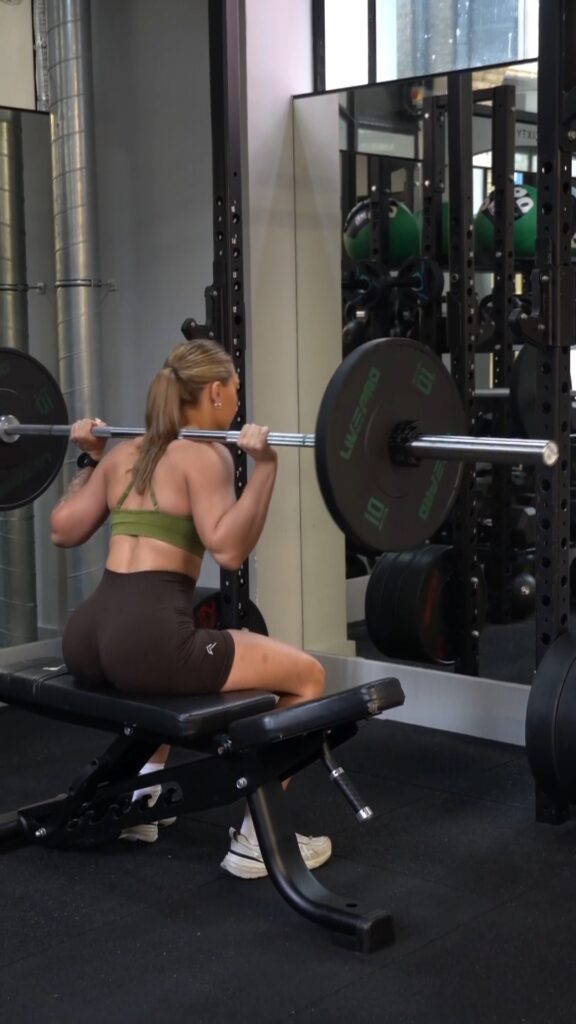
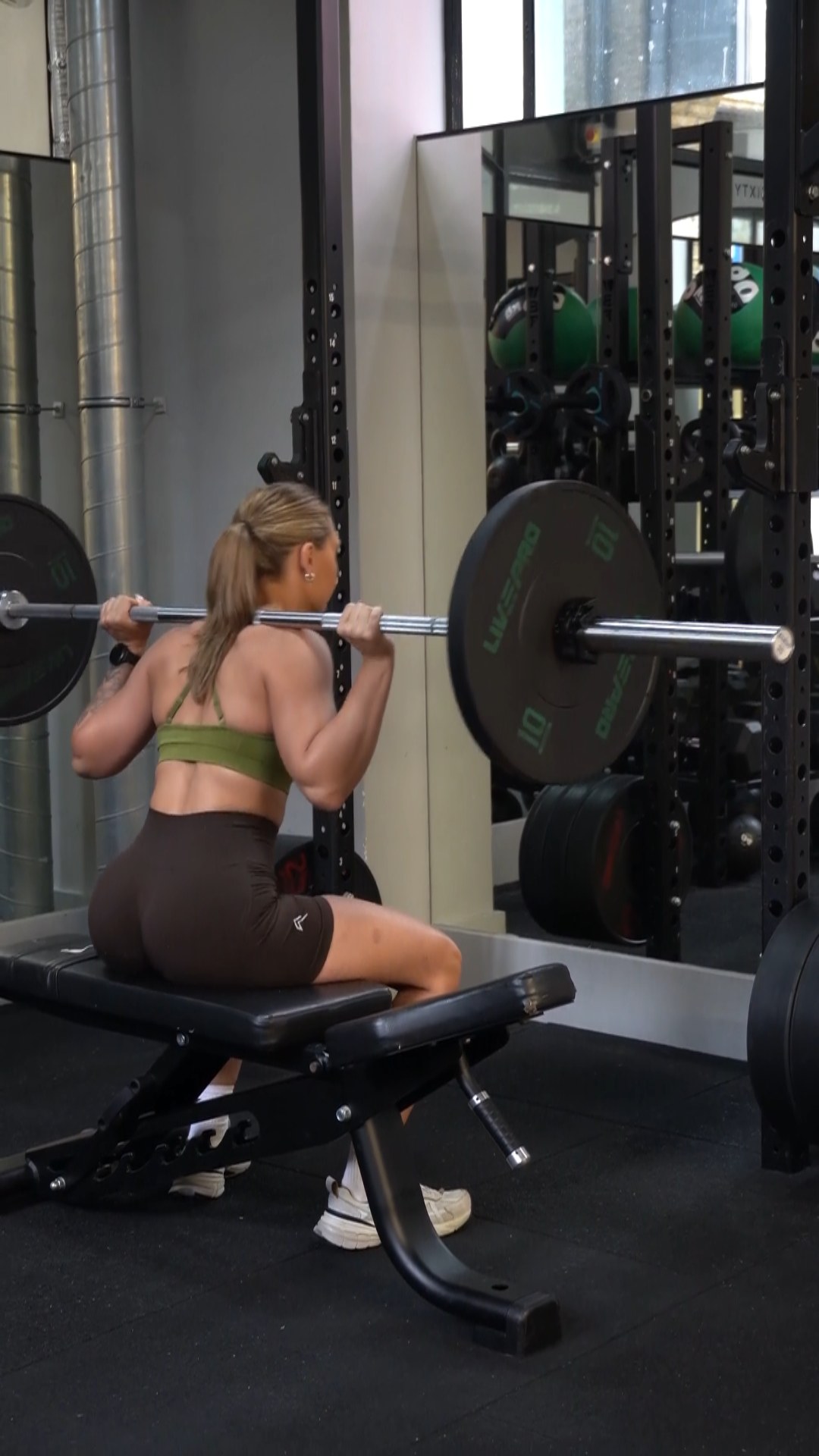
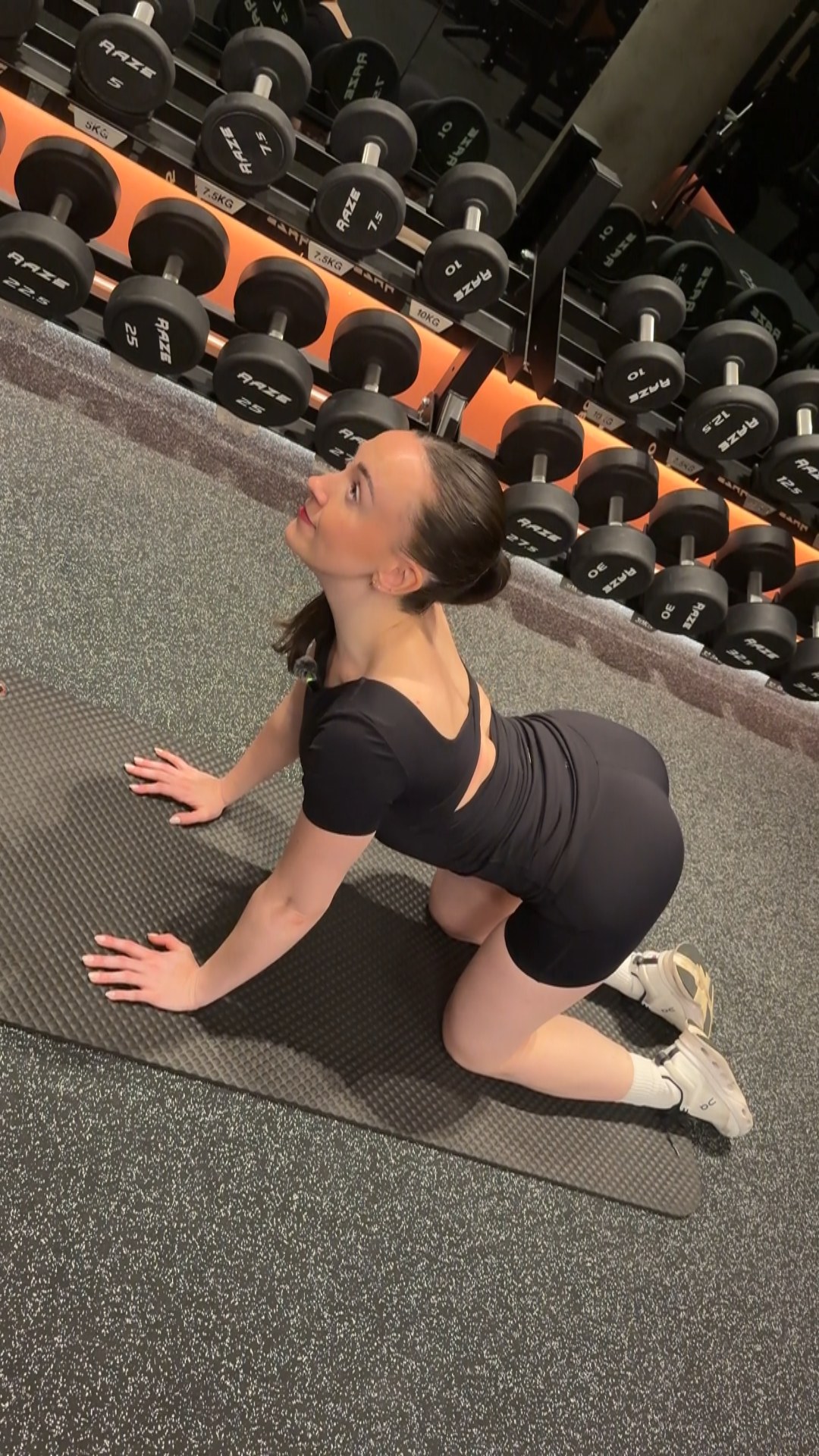
Here are two 12REPS demonstrations: a barbell box squat, a good lower-body lift for any day, and the cat-cow stretch, an easy option for lighter days.
Summary
- Cycle syncing means changing your workouts based on menstrual cycle phase.
- Research shows strength changes very little across the cycle.
- A 2026 trial found phase-based training built no more muscle or strength than steady training.
- Symptoms like fatigue and cramps are common and can affect training, so adjust on the day based on how you feel.
- Keep training consistent, track your symptoms and see a doctor if symptoms are severe.
A plan that adapts to your day
Consistency matters more than perfect timing. That’s what I built 12REPS to help with. You set your goal, your available time and your equipment, and the app builds your workouts. Every exercise comes with a trainer demonstration, and you can log your sets and reps to see your progress over time.
Download 12REPS and see what you’ll get:
Sources
- D’Souza ACD, Van Every DW, Bhinder A, Elango S, Lamont GAC, et al. Menstrual cycle phase does not influence training-induced muscle hypertrophy or strength: a randomized controlled trial. Med Sci Sports Exerc. 2026;58(10):2255–2273.
- Munteanu G, Halson SL, Huynh M, Jukic I, García-Ramos A, et al. The effect of menstrual cycle phase, symptoms, motivation, and readiness to perform on resistance training performance. Sports Med. 2026;56(9):2325–2339.
- McNulty KL, Elliott-Sale KJ, Dolan E, Swinton PA, Ansdell P, et al. The effects of menstrual cycle phase on exercise performance in eumenorrheic women: a systematic review and meta-analysis. Sports Med. 2020;50(10):1813–1827.
- Colenso-Semple LM, D’Souza AC, Elliott-Sale KJ, Phillips SM. Current evidence shows no influence of women’s menstrual cycle phase on acute strength performance or adaptations to resistance exercise training. Front Sports Act Living. 2023;5:1054542.
- Kissow J, Jacobsen KJ, Gunnarsson TP, Jessen S, Hostrup M. Effects of follicular and luteal phase-based menstrual cycle resistance training on muscle strength and mass. Sports Med. 2022;52(12):2813–2819.
- Bruinvels G, Goldsmith E, Blagrove R, Simpkin A, Lewis N, et al. Prevalence and frequency of menstrual cycle symptoms are associated with availability to train and compete: a study of 6812 exercising women recruited using the Strava exercise app. Br J Sports Med. 2021;55(8):438–443.
Related reading
- How Many Days a Week Should Women Strength Train?
- Rest Days for Women Who Strength Train: How Many and What to Do
- How Heavy Is Too Heavy? When Women Should Increase Their Weights
- RPE vs RIR: How to Rate Effort in Strength Training
- Box Squats: How to Do Them, Benefits and Box Squat vs Regular Squat
I’m Will Duru, a personal trainer and the founder of 12REPS. I hold a BSc (Hons) in Sport and Exercise Science and have more than a decade of experience coaching people in strength training.
This article is for general education and isn’t medical advice.