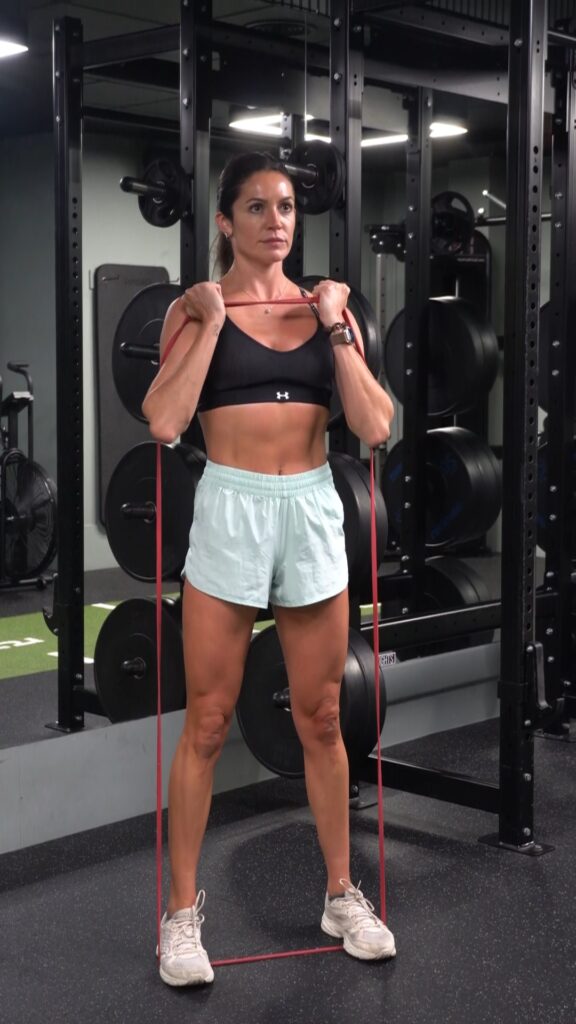
Short answer: Adding bands or chains to a barbell is called accommodating resistance. The load gets heavier as you move toward the top of the lift, where you are naturally strongest, and lighter at the bottom, where you are weakest. A few small studies found that bands helped people gain more squat and bench press strength than regular barbell training. Another found similar strength gains but better power. The evidence is promising but limited. It is a useful tool for experienced lifters, not something you need to make progress.
This guide is for lifters who have seen bands or chains on the bar and want to know whether they are worth using. I explain how they work, what the research says and how to set them up safely.
What is accommodating resistance?
In most barbell lifts, there is a point where the lift feels hardest. This is called the sticking point. In the squat and bench press, it is usually near the bottom. Once you get past it, the lift feels easier, because your muscles and joints are in a stronger position.
With plates alone, the bar weighs the same all the way up. So the heaviest weight you can lift is limited by your weakest point. Bands and chains change this:
- Bands are anchored to the rack or the floor and looped over the bar. As you stand or press up, they stretch and pull down harder.
- Chains hang from the ends of the bar. At the bottom, most of the links rest on the floor. As you lift, more links come off the floor and the load increases.
The result is a load that “accommodates” your strength curve: lighter where you are weak and heavier where you are strong.

What the research says
- Bigger strength gains in trained athletes. Forty-four college athletes trained for 7 weeks, with one group adding elastic bands to their squats and bench presses (Anderson et al., 2008). The band group improved their back squat by about 16.5 kg (36 lb) compared with 6.8 kg (15 lb) for the plates-only group. Their bench press improved by 6.7 kg (15 lb) compared with 3.3 kg (7 lb). The authors noted the long-term effects are unclear.
- Better bench press gains in beginners. Eleven untrained college men did 3 weeks of bench press training with 15% of the load from bands and 85% from plates, and 3 weeks with plates only (Bellar et al., 2011). The band phase produced larger gains in one-rep max: about 10 kg (22 lb) vs 7.6 kg (17 lb).
- Similar strength, more power in trained women. Nineteen strength-trained women trained for 7 weeks with or without bands and chains (Parten et al., 2023). Both groups gained similar squat and bench press strength. Only the accommodating resistance group improved peak power on a 30-second cycling sprint.
These studies are small and short, and the results are mixed. A 2015 meta-analysis on this topic was later retracted, so I haven’t relied on it here. The fair summary is that bands and chains seem to work at least as well as plates alone, and may give a small edge for strength or power. They aren’t essential.
Bands vs chains
| Bands | Chains | |
|---|---|---|
| How the load changes | Rises sharply as the band stretches | Rises steadily as links leave the floor |
| Extra pull on the way down | Yes, the band pulls the bar down faster, so you must control it | No |
| Cost and space | Cheap, light and portable | Expensive, heavy and bulky |
| Setup | Needs secure anchor points | Hang from the bar sleeves |
Who should use bands or chains?
This section is my coaching view.
- Intermediate and advanced lifters. If you’ve been lifting for a while and progress has slowed, they are a way to change the stimulus.
- Athletes training for power. Because the bar gets heavier near the top, you are pushed to drive hard through the whole rep.
- Lifters who struggle at lockout. If you fail near the top of your bench press or deadlift, bands and chains load that range more.
- Beginners can skip them. Learn solid technique with plates first. You will make plenty of progress by adding weight gradually.
How to set up bands and chains
Bands
- Anchor the bands securely. Use band pegs on the rack, the bottom of a power rack or a pair of heavy dumbbells. Check both sides are even.
- Loop them over the bar sleeves, inside the collars, so they can’t slide off.
- Start light. The bench press study used about 15% of the load from bands. Start with your lightest bands and reduce the plates on the bar a little.
- Control the lowering phase. Bands pull the bar down faster than gravity alone. Lower under control.
- Check your bands for wear. A worn band can snap. Replace any with cracks or tears.
Chains
- Hang the chains from the bar sleeves, using a smaller lead chain or collar so they hang straight down.
- Adjust the length so most links rest on the floor at the bottom of the lift, and most are off the floor at the top.
- Keep them even on both sides so the bar stays balanced.
How to program them
My suggestion is to use them on one main lift, such as the squat, bench press or deadlift, for a training block of 4 to 8 weeks. Keep your reps fairly low, around 2 to 5, and focus on moving the bar fast. Log the bands or chains you use, along with the plates, so you can repeat or progress the setup next time.
Watch: band squat and bench press technique
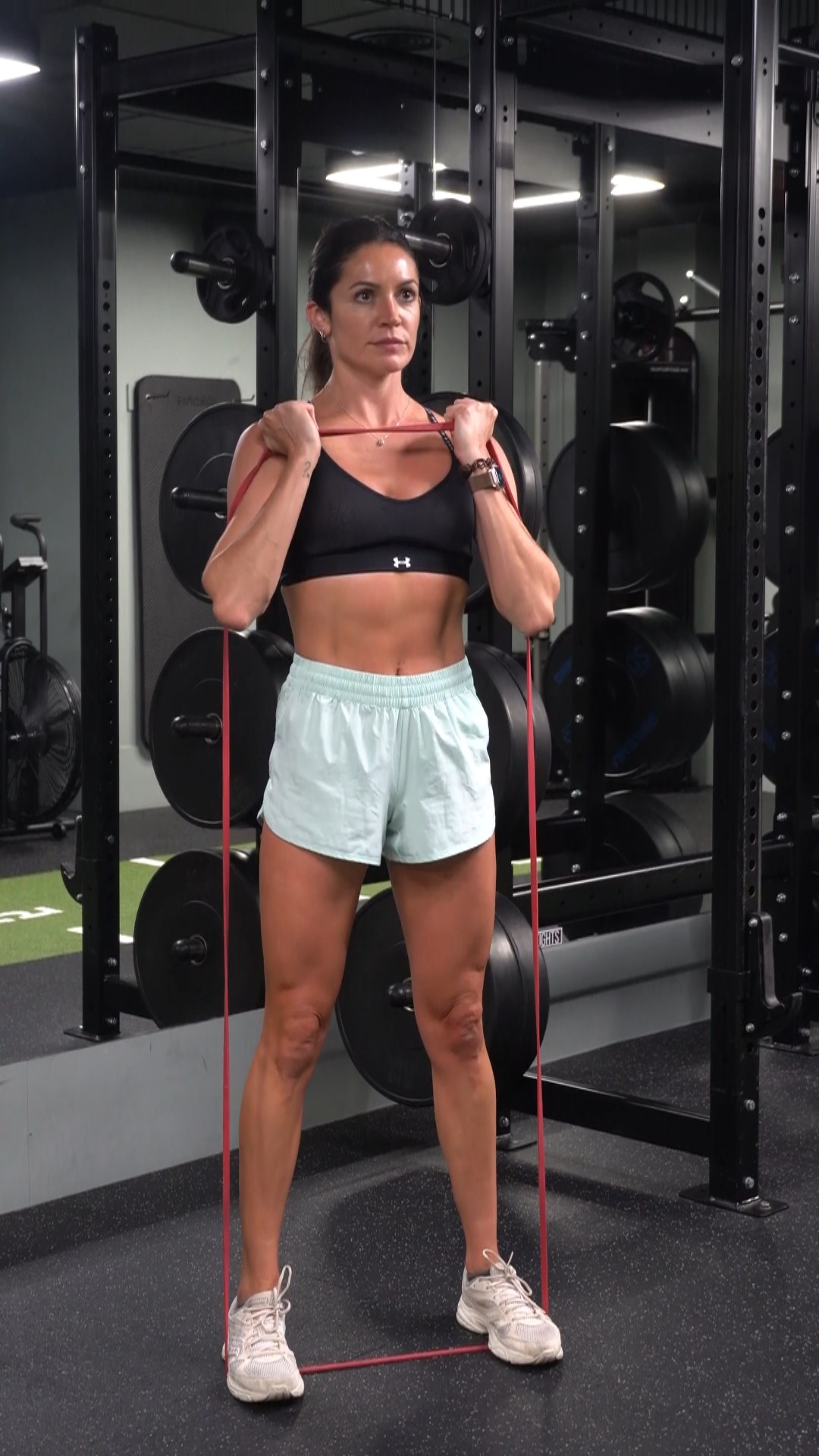
There isn’t a 12REPS video of bands on a barbell yet. Here are two related demonstrations with form cues: a loop band front squat and the barbell bench press.
Summary
- Bands and chains make the bar heavier at the top of a lift and lighter at the bottom.
- Small studies found equal or greater strength gains compared with plates alone, and one found better power.
- The research is limited and short-term, so bands and chains are a useful extra, not a must.
- They suit intermediate and advanced lifters and athletes more than beginners.
- Anchor bands securely, start light and control the bar on the way down.
Train with a plan that progresses
Bands and chains are one way to keep progressing. A structured plan is another. That’s what I built 12REPS to help with. You set your goal, your available time and your equipment, and the app builds your workouts. Every exercise comes with a trainer demonstration, and you can log your sets and reps to see your progress over time.
Download 12REPS and see what you’ll get:
Sources
- Anderson CE, Sforzo GA, Sigg JA. The effects of combining elastic and free weight resistance on strength and power in athletes. J Strength Cond Res. 2008;22(2):567–574.
- Bellar DM, Muller MD, Barkley JE, Kim CH, Ida K, et al. The effects of combined elastic- and free-weight tension vs. free-weight tension on one-repetition maximum strength in the bench press. J Strength Cond Res. 2011;25(2):459–463.
- Parten AL, Barker GA, O’Neal EK, Waldman HS. Seven-week accommodating resistance training improves Wingate peak power but not muscular strength or endurance in strength-trained females. J Strength Cond Res. 2023;37(9):1789–1794.
- Retraction notice: Effects of variable resistance training on maximal strength: a meta-analysis. J Strength Cond Res. 2018;32(11):e56.
Related reading
- How to Get Stronger: The Complete Guide to Building Real Strength
- How to Bench Press: Step-by-Step Form Guide for Beginners
- Free Weights vs Machines: Which Is Better for Building Muscle?
- Progressive Overload Plan: How to Keep Getting Stronger for Months
I’m Will Duru, a personal trainer and the founder of 12REPS. I hold a BSc (Hons) in Sport and Exercise Science and have more than a decade of experience coaching people in strength training.