




By Will Duru, personal trainer and founder of 12REPS.
What Is a Cable Woodchop?
A cable woodchop is a core exercise where you pull a cable handle diagonally across your body, from high to low or low to high, by turning through your hips and upper back. It trains your obliques, the muscles on the sides of your waist, along with the rest of your core, your hips and your shoulders.
It is a useful exercise if you want a stronger core for lifting, sport or everyday tasks that involve turning and reaching. This guide covers how to set it up, how to do it, the most common mistakes and the best variations.

How to Do a Cable Woodchop
Setup
- Set the pulley above shoulder height and attach a single handle or a rope.
- Stand side-on to the machine, about one big step away, so the weight lifts off the stack when your arms are straight.
- Place your feet a little wider than shoulder width, knees slightly bent.
- Hold the handle with both hands above the shoulder nearest the machine, arms almost straight.
- Brace your stomach and stand tall.
Movement
- Pull the handle down and across your body toward the outside of your opposite knee.
- Turn through your hips and upper back as you pull. Let your back foot pivot so your hips can turn with you.
- Keep your arms nearly straight. They guide the handle, but your trunk and hips do the work.
- Pause briefly at the bottom.
- Return slowly along the same path to the start.
- Finish all your reps on one side, then turn around and repeat on the other side.
Coaching cues
- “Turn with your hips, not just your arms.”
- “Pivot your back foot.”
- “Long arms, strong middle.”
- “Slow on the way back.”
Muscles Worked
| Muscle | What it does in the woodchop |
|---|---|
| Obliques (internal and external) | Turn your trunk and control the rotation |
| Rectus abdominis and transverse abdominis | Brace your trunk so you stay stable |
| Glutes and hips | Turn your hips and keep your legs stable |
| Shoulders and upper back | Hold the handle in position and guide the cable |
What the Research Says
There is little research on the cable woodchop itself, so I want to be clear about what we know.
- A 2011 study by Palmer and Uhl used diagonal chop and lift movements as a test of trunk control in 18 healthy adults. The test gave consistent results from one day to the next, which suggests these patterns are a reliable way to measure how well you control your trunk while you move.
- A 2007 study by Szymanski and colleagues looked at 49 high school baseball players. Players who added rotational and full-body medicine ball exercises to their strength training improved torso rotational strength more than players who did the strength training alone. The study did not show whether this improved hitting.
So rotational training can build rotational strength, but the evidence for specific benefits, such as preventing back pain, is limited. My view is that the woodchop is a good way to train your core to control turning, as long as the movement comes from your hips and upper back and you use a weight you can control.
Is the Woodchop Safe for Your Lower Back?
For most people with healthy backs, a controlled woodchop is a reasonable exercise. Pivoting your back foot lets your hips share the rotation, so your lower back does not have to twist on its own.
If you have back pain or a disc problem, start with exercises that resist rotation, such as the side plank and the dead bug, and check with a qualified professional before adding rotation. I cover this in more detail in my article on whether Russian twists are bad for your back.
Common Mistakes
- Pulling with your arms. Bending your elbows turns it into a cable row. Keep your arms long and turn your body.
- Locking your hips. If your feet stay planted and your hips cannot turn, your lower back takes all the twisting. Let your back foot pivot.
- Going too heavy. A weight you have to jerk into place takes the work away from your core. Choose a weight you can move smoothly.
- Rushing the return. Letting the cable snap back misses half the exercise. Control it all the way.
- Standing too close. If the weight stack rests between reps, there is no tension. Step farther from the machine.
- Hunching over. Keep your chest up and your back long throughout.
Woodchop Variations
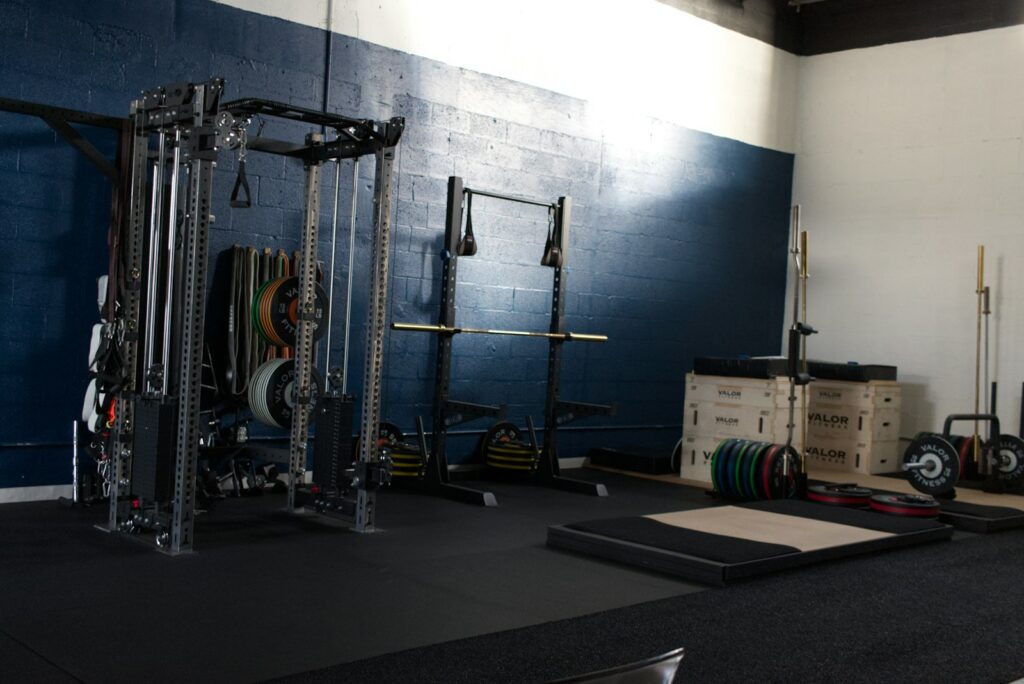
- High-to-low woodchop: the standard version described above, with the pulley set high.
- Low-to-high woodchop: set the pulley low and lift the handle up and across your body to above your opposite shoulder. This is sometimes called a reverse woodchop or cable lift.
- Horizontal woodchop: set the pulley at chest height and turn across your body at the same height.
- Half-kneeling woodchop: kneel on the knee nearest the machine. Your hips move less, so your core has to work harder to control the movement. This is a good place to start if you are new to the exercise.
- Band or dumbbell woodchop: use a resistance band anchored high or a single dumbbell if you train at home.
Sets, Reps and Where to Put Them
These are general starting points, not fixed rules.
| Goal | Sets and reps | Rest | Tips |
|---|---|---|---|
| Core strength and control | 2 to 3 sets of 8 to 12 reps per side | 45 to 60 seconds | Slow, controlled reps |
| Rotational power | 3 sets of 5 to 6 reps per side | 60 to 90 seconds | Turn quickly, return slowly |
| Beginner | 2 sets of 10 reps per side, half-kneeling | 45 seconds | Use a light weight and learn the pattern |
Add woodchops to the end of a strength workout once or twice a week. They pair well with cable crunches, planks and farmer’s carries for a complete core session.
When you can do all your reps with control, add a rep or move up one plate on the stack. The American College of Sports Medicine recommends progressing gradually like this.
Summary
- The cable woodchop trains your obliques and core by turning against resistance.
- Set the pulley high, stand side-on and pull the handle diagonally across your body.
- Turn through your hips and upper back and pivot your back foot.
- Keep your arms long and control the return.
- Start half-kneeling and light if you are new to it, and talk to a professional first if you have back pain.
Build a Stronger Core With a Plan
Not sure which core exercises to do, or how often? 12REPS builds a strength program around your goal, schedule and equipment, with core work built in.
Every exercise has a demo and a coach tutorial from me, so you can see the setup and form before you start. Your log tracks your weights and reps, so you know when to progress.
Download 12REPS and see what you’ll get:
Sources
- Palmer TG, Uhl TL. Interday reliability of peak muscular power outputs on an isotonic dynamometer and assessment of active trunk control using the chop and lift tests. J Athl Train. 2011;46(2):150–159.
- Szymanski DJ, et al. Effect of twelve weeks of medicine ball training on high school baseball players. J Strength Cond Res. 2007;21(3):894–901.
- American College of Sports Medicine. Progression models in resistance training for healthy adults. Med Sci Sports Exerc. 2009;41(3):687–708.
Related Reading
- Are Russian twists bad for your back?
- How to do a dead bug
- Cable crunches: how to do them
- How to do a plank properly
- How to do a farmer’s carry
I’m Will Duru, a personal trainer and the founder of 12REPS. I hold a BSc (Hons) in Sport and Exercise Science and have more than a decade of experience coaching people in strength training. This article is for general education and isn’t medical advice.
