
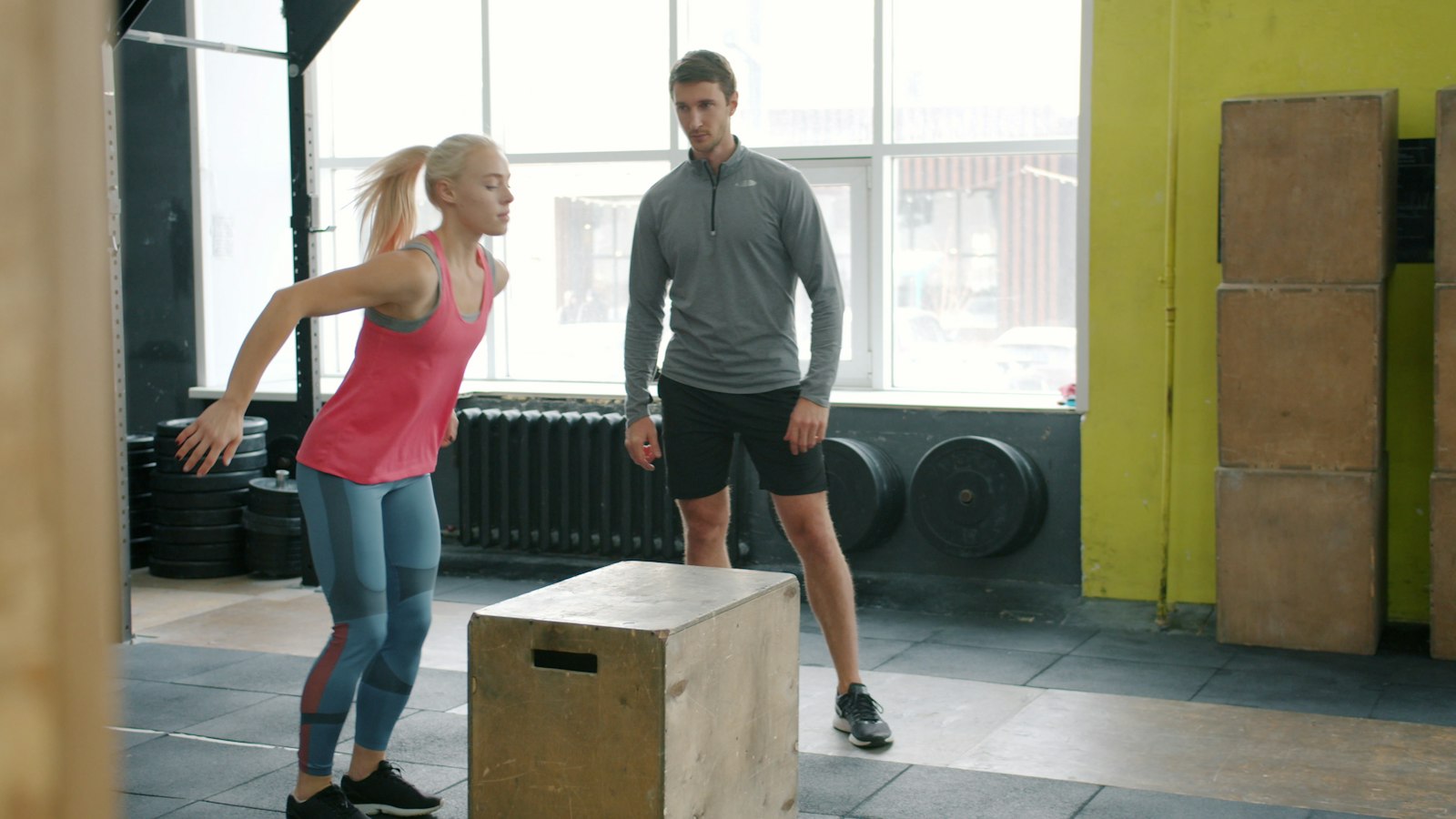



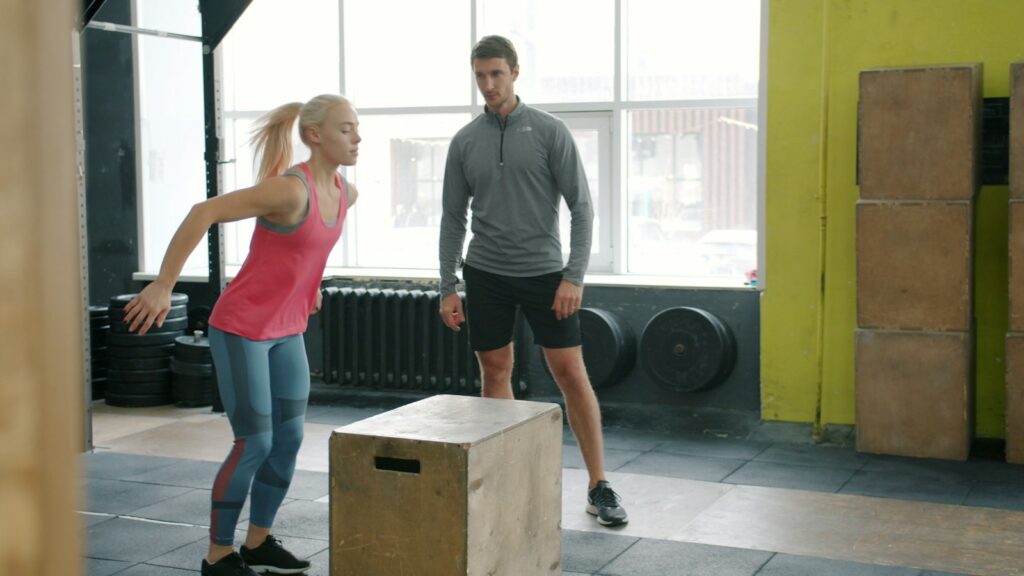
The short answer: box jumps are a simple way to train explosive leg power. Research shows that plyometric training, which includes jumps like these, improves vertical jump height by roughly 5–9% on average. Box jumps also let you land on a raised surface, which means a shorter drop and a softer landing than jumping on the spot. The box height doesn’t matter much for power. Choose a box you can land on softly in the same squat depth you jumped from, focus on quality over quantity, and keep the reps low.
This guide is for anyone who wants to jump higher, move more athletically or add some power work to their strength training. I’ll cover what box jumps train, what the research shows, how to do them, how high your box should be and how to fit them into your week.
What do box jumps train?
- Power: the ability to produce force quickly. It’s what lets you jump, sprint and change direction.
- Leg muscles: your quads, glutes, hamstrings and calves all work together to launch you upward.
- Landing control: landing softly on the box trains your hips, knees and ankles to absorb force.
- Coordination: timing your arm swing and leg drive to jump as high as you can.
What the research says
- Plyometric training improves jump height. A 2007 meta-analysis of 26 studies found that plyometric training improved countermovement jump height by about 8.7%, countermovement jump with an arm swing by about 7.5%, and squat jump and drop jump height by about 4.7% each. The author concluded that plyometrics give a meaningful improvement in vertical jump for healthy people.
- Jump training can work for older adults too. A 2019 systematic review of 12 randomized trials with 289 adults aged about 58–79 found that plyometric training most consistently improved muscle power and jump performance, with smaller gains in strength. Results for balance were mixed, and evidence for bone benefits was weak. No study reported injuries directly caused by the jumps, and injury-related dropouts were at most 1.4%.
The studies used a range of jumping exercises, not box jumps specifically. But box jumps are a common, easy-to-scale way to do this kind of training. The advice below comes from that research and my coaching experience.
How to do a box jump
- Stand about a foot in front of a sturdy box, feet about hip width apart.
- Swing your arms back as you dip into a quarter squat.
- Swing your arms forward and up as you drive through your feet and jump.
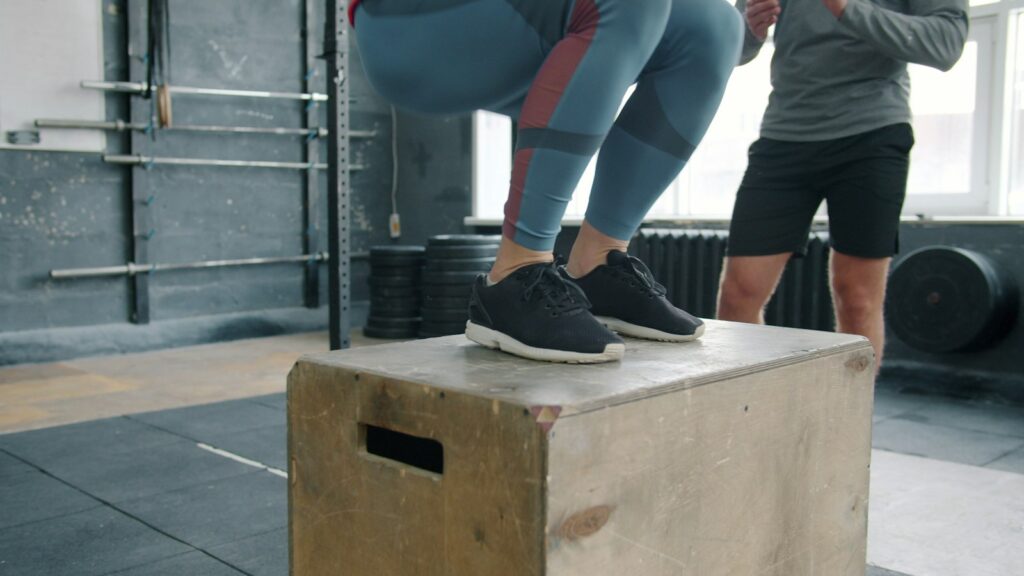
- Land softly on the whole foot in the middle of the box, knees bent and in line with your toes.
- Stand up tall on the box.
- Step down one foot at a time. Don’t jump back down.
Coaching cues I use: “land quiet,” “knees out over your toes” and “step down, don’t jump down.” If your landing is loud, the box is too high or you’re tired.
How high should your box be?
Your box should be low enough that you land in roughly the same squat depth you jumped from. If you have to tuck your knees up to your chest to make it onto the box, you’re training your hip flexors and flexibility, not your jump. A higher box doesn’t mean a higher jump.
| Level | Box height (approximate) |
|---|---|
| Beginner | 12–18 inches |
| Intermediate | 18–24 inches |
| Advanced | 24–30 inches or more |
Soft foam boxes are a good choice if you’re nervous, because they’re more forgiving if you clip the edge.
Easier and harder versions
- Easier: jump squats on the floor (shown below), or step-ups onto the box.
- Standard: box jumps from a standing start.
- Harder: seated box jumps (start sitting on a bench), single-leg box jumps or box jumps after a hurdle hop.
Common mistakes and how to fix them
| Mistake | Why it matters | Fix |
|---|---|---|
| Box too high | You land in a deep squat and the jump becomes a flexibility test | Lower the box until you land in a quarter-to-half squat |
| Jumping back down | Adds hard landings and stress on your knees and ankles | Step down one foot at a time |
| Knees caving in on landing | Increases stress on the knees | Land with your knees in line with your toes |
| Doing high reps for conditioning | Fatigue ruins your technique and raises injury risk | Keep reps low and rest fully between sets |
| Loud, stiff landings | Your joints take the impact instead of your muscles | Land softly and absorb with your hips and knees |
Sets, reps and where they fit
These are starting points I use with most people.
| Goal | Sets | Reps | Rest |
|---|---|---|---|
| Power | 3–5 | 3–5 | 60–120 seconds |
| Beginner practice | 2–3 | 3–5 | 60–90 seconds |
- Do box jumps early in your session, after your warm-up and before heavy lifting, while you’re fresh.
- One or two sessions a week is plenty for most people.
- Count your total jumps. For beginners, around 20–40 landings per session is a sensible range.
- If you have knee, ankle or back pain, or haven’t done any jumping in years, start with jump squats on the floor or step-ups and progress slowly.
Summary
- Box jumps train explosive leg power, landing control and coordination.
- A meta-analysis found plyometric training improved vertical jump height by about 5–9%.
- Plyometrics appeared safe and improved power in older adults too.
- Pick a box you can land on softly in the same squat depth you jumped from.
- Keep reps low, rest fully, step down instead of jumping down and do them early in your session.
Add power training to your plan
Power training works best alongside strength training in a balanced plan. That’s where 12REPS helps.
12REPS gives you trainer-built programs with two demo videos for every exercise, including box jump squats and jump squats. The gym log tracks your sets and reps, Build Your Routine lets you add box jumps to your own week, and the built-in timer keeps your rest periods on track. Every new account starts with a 7-day free trial.
Download 12REPS and see what you’ll get:
Sources
- Markovic G. Does plyometric training improve vertical jump height? A meta-analytical review. British Journal of Sports Medicine. 2007;41(6):349–355.
- Vetrovsky T, Steffl M, Stastny P, Tufano JJ. The efficacy and safety of lower-limb plyometric training in older adults: a systematic review. Sports Medicine. 2019;49(1):113–131.
Related reading
- Push Press vs Strict Press
- 12-Week Strength Training Program for Female Runners
- Lifting Weights at 50
- Bodyweight Box Jump Squat: exercise demo
I’m Will Duru, a personal trainer and the founder of 12REPS. I hold a BSc (Hons) in Sport and Exercise Science and have more than a decade of experience coaching people in strength training.
