



Written by Will Duru, BSc (Hons) Sport and Exercise Science, award-winning Personal Trainer with over 10 years of experience in strength training and optimising recovery .
This 12-week upper body workout routine uses only dumbbells, kettlebells and resistance bands with handles. It runs in four 3-week phases, from 3 to 5 sessions a week, moving from technique and endurance to muscle growth and then strength. It works in a home gym, a hotel room or a busy gym floor.
The routine at a glance
- Length: 12 weeks in four phases.
- Days per week: 3 in phase 1, 4 in phases 2 and 3, 4 to 5 in phase 4.
- Equipment: dumbbells, one or two kettlebells, resistance bands with handles and a bench or sturdy chair.
- Muscles: chest, back, shoulders, biceps and triceps, plus core work.
- Level: beginners can start with phase 1; experienced lifters can use it as a portable block.
This plan covers your upper body only. Pair it with leg training on other days, such as my lower body power workout.
Why dumbbells, kettlebells and resistance bands work
Can you build real upper body muscle without machines? Yes. What matters is that the work is hard enough and gets harder over time.
- Free weights vs machines: a 2023 meta-analysis found no significant difference in muscle growth between free-weight and machine training. Strength gains were specific to what people trained with.
- Bands vs weights: a 2019 meta-analysis found elastic resistance gave similar strength gains to conventional weights, for both upper and lower body.
- Lighter loads still build muscle: muscle growth was similar with low and high loads in a 2017 meta-analysis, as long as sets were hard. Heavy loads were better for maximal strength.
Kettlebells add something different. The weight sits below and behind the handle, so your grip, shoulders and core work harder to control it. Bands get harder as you stretch them, which changes where the effort peaks in each rep.
12-week upper body workout routine: program overview
| Phase | Weeks | Focus | Reps | Sets | Rest | Days per week |
|---|---|---|---|---|---|---|
| 1: Foundation | 1-3 | Movement quality, endurance | 12-15 | 3-4 | 60-90 sec | 3 |
| 2: Hypertrophy | 4-6 | Muscle growth | 8-12 | 4-5 | 90-120 sec | 4 |
| 3: Strength | 7-9 | Strength | 5-8 | 4-6 | 2-3 min | 4 |
| 4: Peak | 10-12 | Strength and muscular endurance | 6-15 | 4-5 | 60-180 sec | 4-5 |
Hypertrophy means muscle growth. The rep ranges move from higher to lower, which fits the ACSM guidance to use a wide range of loads and move toward heavier work over time.
Leave at least one rest day between sessions that hit the same muscles. Pressing work also trains your shoulders and triceps, and rows also train your biceps.
Video: Dumbbell upper-body workout with the 12REPS app. Watch a full dumbbell upper body session to see how the moves and rest periods flow together.
Phase 1: Foundation (weeks 1 to 3)
Three sessions a week. Use a moderate weight and focus on clean, controlled reps.
Workout A: Chest and triceps
| Exercise | Sets | Reps | Load | Rest |
|---|---|---|---|---|
| Dumbbell bench press | 3-4 | 12-15 | Moderate | 60-90 sec |
| Kettlebell floor press | 3 | 12-15 | Moderate | 60-90 sec |
| Resistance band chest fly | 3 | 12-15 | Medium band | 60 sec |
| Dumbbell triceps extension | 3 | 12-15 | Light to moderate | 60 sec |
| Resistance band triceps pushdown | 3 | 12-15 | Medium band | 60 sec |
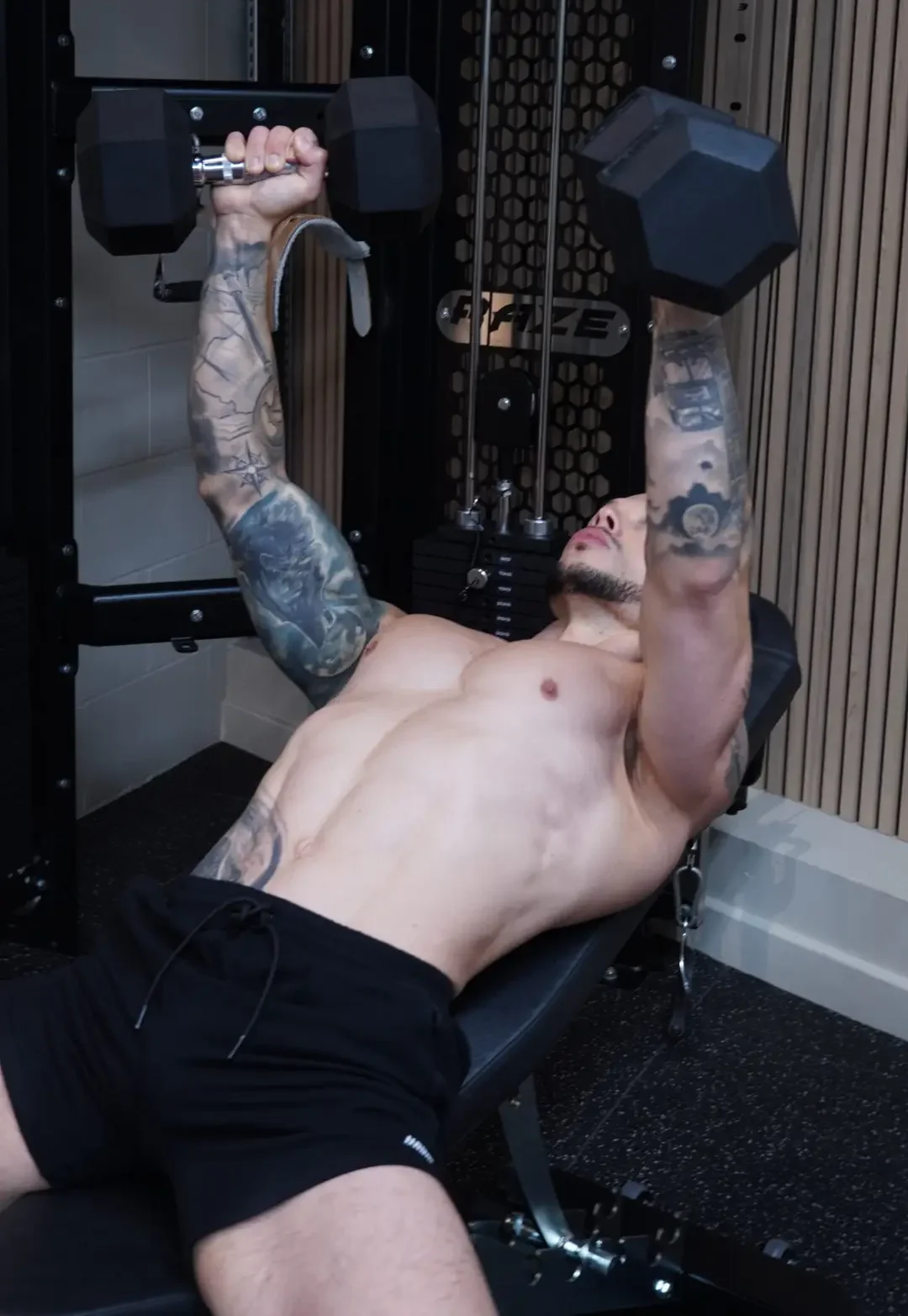
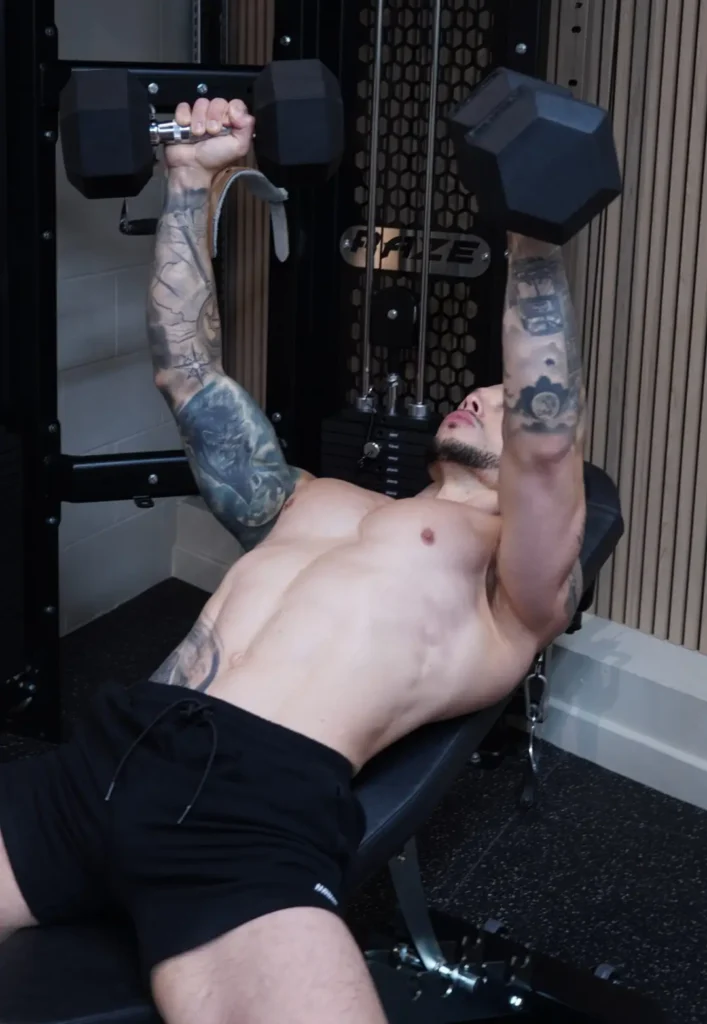
Video: How to do a dumbbell chest press. Check your setup and elbow angle before your first set of the dumbbell bench press.
Workout B: Back and biceps
| Exercise | Sets | Reps | Load | Rest |
|---|---|---|---|---|
| Dumbbell bent-over row | 4 | 12-15 | Moderate | 90 sec |
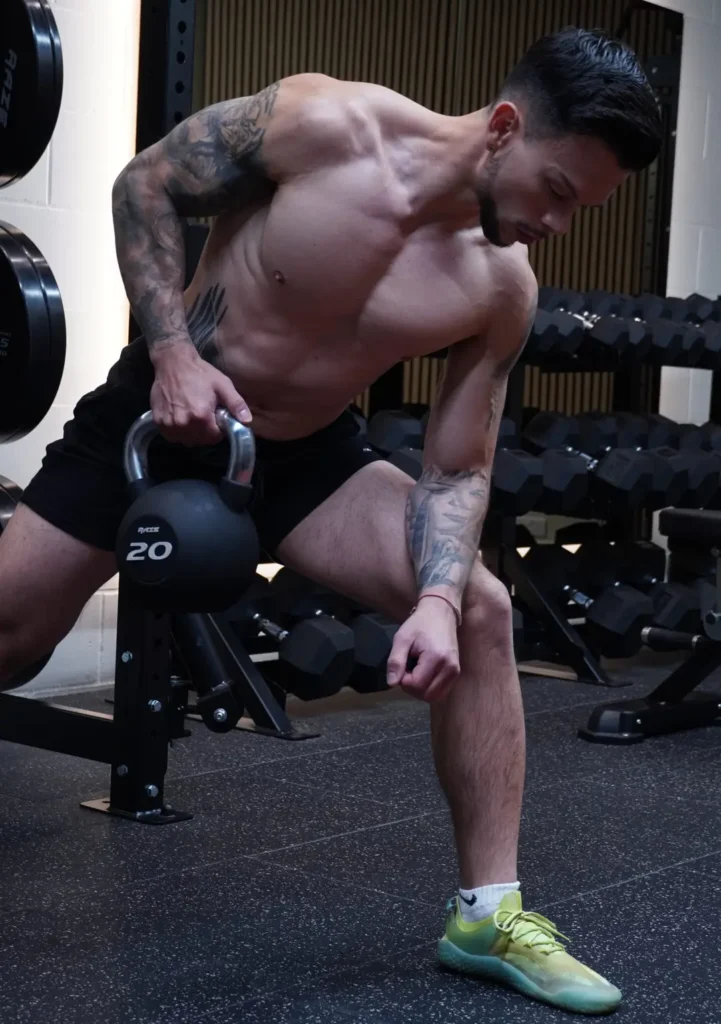
| Kettlebell single-arm row | 3 each arm | 12-15 | Moderate | 60 sec |
| Resistance band face pull | 3 | 15-20 | Medium band | 60 sec |
| Dumbbell biceps curl | 3 | 12-15 | Light to moderate | 60 sec |
| Kettlebell hammer curl | 3 | 12-15 | Moderate | 60 sec |
Workout C: Shoulders and core
| Exercise | Sets | Reps | Load | Rest |
|---|---|---|---|---|
| Dumbbell shoulder press | 4 | 12-15 | Moderate | 90 sec |
| Kettlebell upright row | 3 | 12-15 | Moderate | 60 sec |
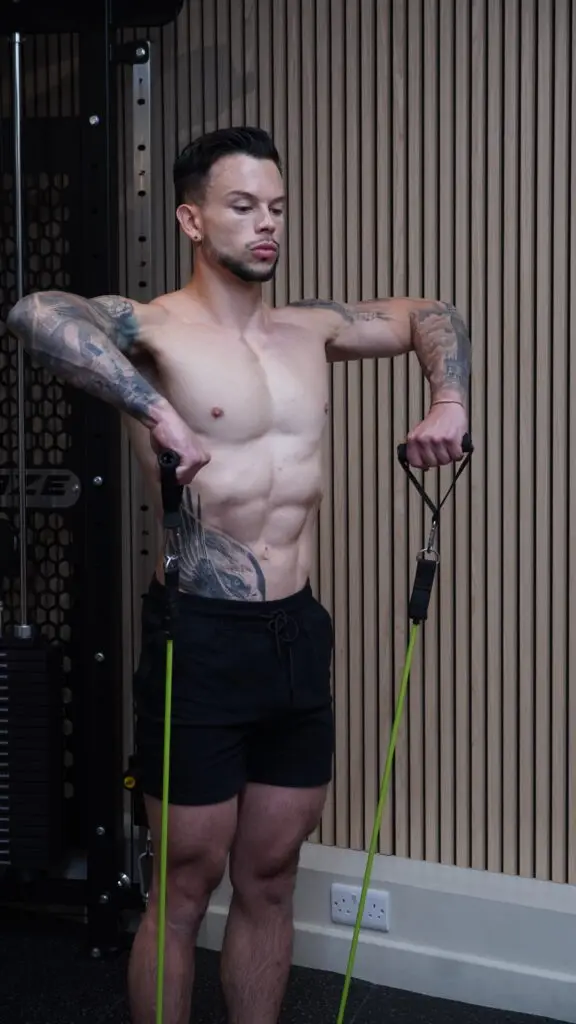
| Resistance band lateral raise | 3 | 15-20 | Light to medium band | 60 sec |
| Dumbbell rear delt fly | 3 | 12-15 | Light | 60 sec |
| Kettlebell halo | 2 | 10 each direction | Light to moderate | 60 sec |
Phase 2: Hypertrophy (weeks 4 to 6)
Four sessions a week. The weights go up and the reps come down to 8 to 12.
Workout A: Chest and triceps
| Exercise | Sets | Reps | Load | Rest |
|---|---|---|---|---|
| Dumbbell incline press | 4 | 8-12 | Moderate to heavy | 90-120 sec |
| Kettlebell single-arm press | 4 each arm | 8-12 | Moderate to heavy | 90 sec |
| Resistance band chest press | 4 | 10-15 | Medium to heavy band | 90 sec |
| Dumbbell close-grip press | 4 | 8-12 | Moderate | 90 sec |
| Kettlebell triceps extension | 3 each arm | 10-15 | Moderate | 60 sec |
Workout B: Back and biceps
| Exercise | Sets | Reps | Load | Rest |
|---|---|---|---|---|
| Chest-supported dumbbell row | 5 | 8-12 | Moderate to heavy | 120 sec |
| Kettlebell bent-over row | 4 | 8-12 | Moderate to heavy | 90 sec |
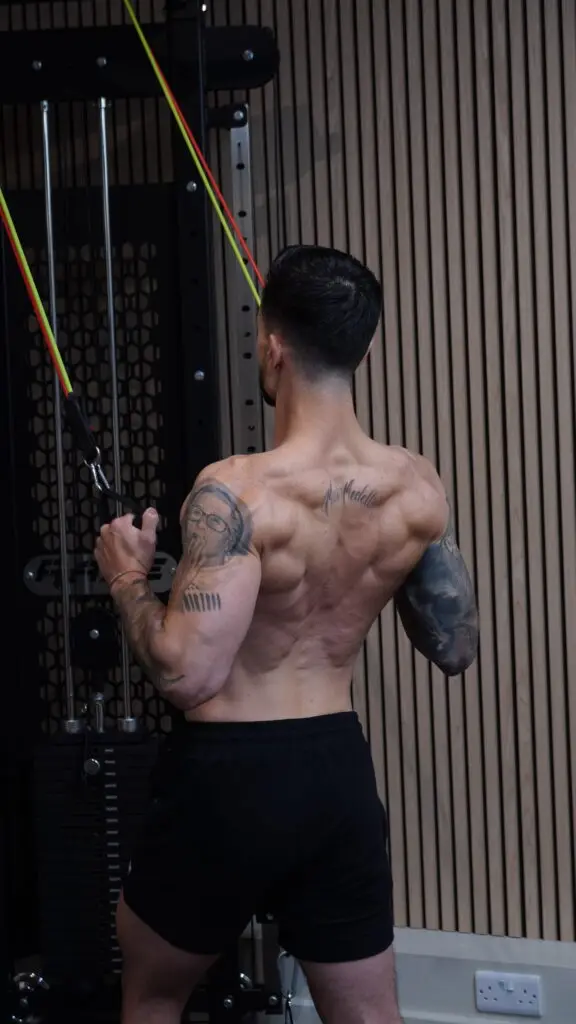
| Resistance band high row | 4 | 12-15 | Medium to heavy band | 90 sec |
| Dumbbell concentration curl | 3 each arm | 10-15 | Moderate | 60 sec |
| Kettlebell bottoms-up curl | 3 | 8-12 | Moderate | 90 sec |
Workout C: Shoulders
| Exercise | Sets | Reps | Load | Rest |
|---|---|---|---|---|
| Dumbbell Arnold press | 4 | 8-12 | Moderate | 120 sec |
| Kettlebell clean and press | 4 each arm | 6-10 | Moderate to heavy | 120 sec |
| Resistance band front raise | 3 | 12-15 | Medium band | 90 sec |
| Dumbbell lateral to front raise | 3 | 10-12 each direction | Light to moderate | 90 sec |
Workout D: Arms
| Exercise | Sets | Reps | Load | Rest |
|---|---|---|---|---|
| Dumbbell hammer curl to press | 4 | 8-12 | Moderate | 120 sec |
| Bench dip with a kettlebell on your lap | 3 | 8-15 | Bodyweight plus kettlebell | 90 sec |
| Resistance band 21s | 2 | 21 total | Medium band | 120 sec |
Phase 3: Strength (weeks 7 to 9)
Four sessions a week with fewer exercises and heavier sets. Rest longer so each set stays strong.
Workout A: Pressing
| Exercise | Sets | Reps | Load | Rest |
|---|---|---|---|---|
| Dumbbell bench press | 5 | 5-8 | Heavy | 2-3 min |
| Double kettlebell press | 4 | 5-8 | Heavy | 2-3 min |
| Band-assisted dip | 4 | 6-10 | Bodyweight with band help | 2 min |
Workout B: Pulling
| Exercise | Sets | Reps | Load | Rest |
|---|---|---|---|---|
| Dumbbell single-arm row | 5 each arm | 5-8 | Heavy | 2-3 min |
| Kettlebell gorilla row | 4 | 6-10 each arm | Heavy | 2 min |
| Band-assisted pull-up | 4 | 5-10 | Bodyweight with band help | 2-3 min |
Workout C: Shoulders
| Exercise | Sets | Reps | Load | Rest |
|---|---|---|---|---|
| Dumbbell shoulder press | 5 | 5-8 | Heavy | 2-3 min |
| Kettlebell single-arm press | 4 each arm | 5-8 | Heavy | 2-3 min |
| Resistance band high pull | 4 | 8-12 | Heavy band | 2 min |
Workout D: Arms
| Exercise | Sets | Reps | Load | Rest |
|---|---|---|---|---|
| Dumbbell biceps curl | 4 | 6-10 | Heavy | 2 min |
| Kettlebell triceps extension | 4 | 6-10 | Heavy | 2 min |
| Resistance band hammer curl | 3 | 8-12 | Heavy band | 90 sec |
Phase 4: Peak (weeks 10 to 12)
Four or five sessions a week. Heavy main lifts are paired with higher-rep accessory work. Workout E is optional.
Workout A: Chest and triceps
| Exercise | Sets | Reps | Load | Rest |
|---|---|---|---|---|
| Dumbbell bench press | 4 | 6-10 | Heavy | 2 min |
| Kettlebell floor press | 3 | 12-15 | Moderate | 90 sec |
| Resistance band chest fly | 3 | 15-20 | Light to medium band | 60 sec |
| Dumbbell triceps extension | 4 | 8-12 | Moderate to heavy | 90 sec |
Workout B: Back and biceps
| Exercise | Sets | Reps | Load | Rest |
|---|---|---|---|---|
| Dumbbell bent-over row | 5 | 6-10 | Heavy | 2-3 min |
| Kettlebell single-arm row | 4 each arm | 10-15 | Moderate to heavy | 90 sec |
| Resistance band face pull | 4 | 20-25 | Medium band | 60 sec |
| Dumbbell biceps curl | 4 | 8-15 | Moderate to heavy | 90 sec |
Workout C: Shoulders
| Exercise | Sets | Reps | Load | Rest |
|---|---|---|---|---|
| Dumbbell Arnold press | 4 | 8-12 | Moderate to heavy | 2 min |
| Kettlebell clean and press | 4 each arm | 6-8 | Heavy | 2 min |
| Resistance band lateral raise | 4 | 15-20 | Medium band | 60 sec |
| Dumbbell rear delt fly | 3 | 12-20 | Light to moderate | 60 sec |
Workout D: Arms circuit
| Exercise | Sets | Reps | Load | Rest |
|---|---|---|---|---|
| Dumbbell hammer curl | 4 | 10-15 | Moderate | 90 sec |
| Kettlebell triceps extension | 4 | 10-15 | Moderate | 90 sec |
| Resistance band 21s | 3 | 21 total | Medium band | 2 min |
Workout E (optional): Full-body finisher
| Exercise | Sets | Reps | Load | Rest |
|---|---|---|---|---|
| Dumbbell thruster | 3 | 12-15 | Moderate | 60 sec |
| Kettlebell swing to chest height | 3 | 15-20 | Moderate to heavy | 60 sec |
| Resistance band pull-apart | 3 | 20-25 | Medium band | 45 sec |
| Dumbbell renegade row | 3 | 8-12 | Moderate | 90 sec |
Thrusters and swings use your legs and hips as much as your upper body, so count Workout E as conditioning and keep it away from your hardest leg day.
How to progress through the 12 weeks
Progressive overload means doing a little more over time. Write down every set so you can beat it next session.
- Weights: once you can do one or two reps more than the top of your range, add weight. The ACSM suggests a 2 to 10% increase.
- Effort: finish most sets with 1 to 2 reps in reserve, meaning you could do 1 or 2 more with good form. A 2023 meta-analysis found at most a trivial extra growth benefit from going all the way to failure.
- Bands: start with a light band to learn the move, then move to a heavier band or stand farther from the anchor. Slow, controlled reps make a band harder.
- Dumbbells and kettlebells: if the next weight is too big a jump, add reps or slow the lowering phase first.
For lighter kit to build muscle, sets need to be close to your limit. A 2021 review suggests loads above about 30% of your max can work when sets are taken close to failure.
Training while traveling
A pair of resistance bands packs into any bag and covers most of this plan. A space of about 6 x 6 feet (2 x 2 meters) is enough.
| If you are missing | Use instead |
|---|---|
| Dumbbells | Resistance bands, filled water bottles or a loaded backpack |
| Kettlebell | A dumbbell held by one end, or a loaded bag |
| Resistance bands | A towel for isometric pulls, or bodyweight moves |
| Bench | The edge of a bed, a sturdy chair or the floor |
- Keep your schedule. A shorter session beats a skipped one.
- Log every workout, even away from home, so you can pick up where you left off.
- Use parks: playground bars can work for dips and pull-ups.
For more band-only ideas, see my guide to resistance band strength training.
Upper body routine FAQs
Can I build muscle with only dumbbells, kettlebells and bands?
Yes. Research shows similar muscle growth with free weights and machines, and similar strength gains with bands and weights. Progress and effort matter more than the tool.
What if I miss a workout?
Carry on with the next workout in the plan. Do not double up to make up for it.
Can beginners follow this plan?
Yes. Start with lighter weights and stay in phase 1 until every move feels controlled. Repeating phase 1 is fine.
How often should I train each muscle?
Most people do well training each muscle at least twice a week. Read my guide to strength training frequency for more. If you have access to a full gym later, the PHUL workout is a good next step.
If you want each session set out for you, 12REPS builds workouts around your goal, the equipment you have and your time, with a trainer demonstration for every exercise. See how the 12REPS app works.

Sources
- Effect of free-weight vs. machine-based strength training on maximal strength, hypertrophy and jump performance: a systematic review and meta-analysis. Haugen ME et al., BMC Sports Science, Medicine and Rehabilitation, 2023. https://doi.org/10.1186/s13102-023-00713-4
- Effects of training with elastic resistance versus conventional resistance on muscular strength: a systematic review and meta-analysis. Lopes JSS et al., SAGE Open Medicine, 2019. https://doi.org/10.1177/2050312119831116
- Strength and hypertrophy adaptations between low- vs. high-load resistance training: a systematic review and meta-analysis. Schoenfeld BJ et al., Journal of Strength and Conditioning Research, 2017. https://pubmed.ncbi.nlm.nih.gov/28834797/
- Loading recommendations for muscle strength, hypertrophy, and local endurance: a re-examination of the repetition continuum. Schoenfeld BJ et al., Sports, 2021. https://pmc.ncbi.nlm.nih.gov/articles/PMC7927075/
- American College of Sports Medicine position stand: Progression models in resistance training for healthy adults. American College of Sports Medicine, Medicine & Science in Sports & Exercise, 2009. https://pubmed.ncbi.nlm.nih.gov/19204579/
- Influence of resistance training proximity-to-failure on skeletal muscle hypertrophy: a systematic review with meta-analysis. Refalo MC et al., Sports Medicine, 2023. https://doi.org/10.1007/s40279-022-01784-y



