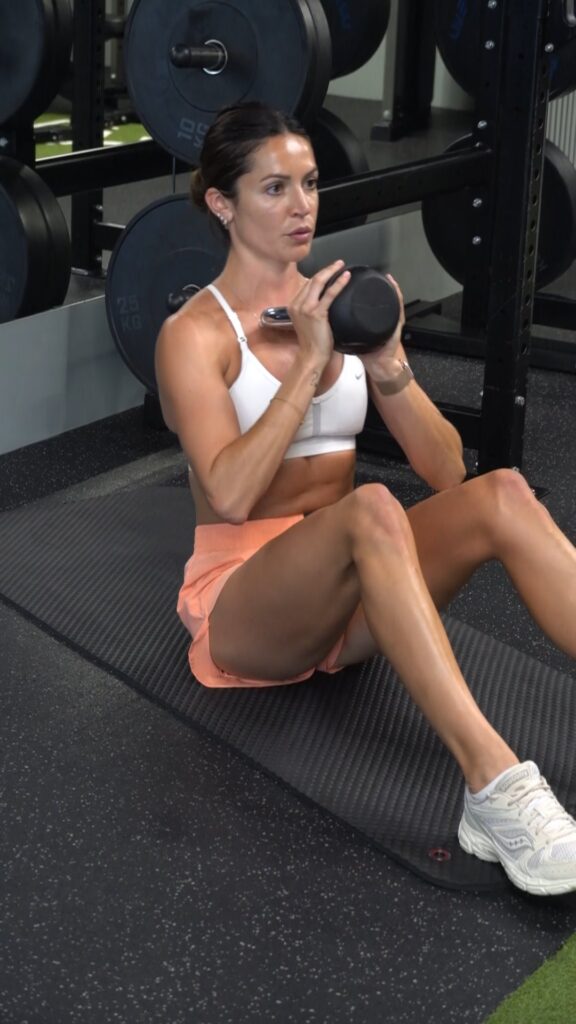
Short answer: Mostly, no. Most studies find that exercising one body part, such as doing crunches for your stomach or arm exercises for your upper arms, does not burn much more fat from that area than from anywhere else. When people lose fat, it tends to come from all over the body. A few small recent studies suggest there may be a small local effect in specific situations, but it is far smaller than the effect of losing fat overall. If you want to lose fat from one area, focus on overall fat loss and strength training for your whole body.
This guide is for anyone who has tried endless crunches or arm exercises to lose fat from one spot. I explain what the research shows, why it is not quite a simple yes or no, and what actually works.
What is spot reduction?
Spot reduction is the idea that exercising a specific muscle will burn the fat directly on top of it. For example, doing sit-ups to lose belly fat, or doing triceps exercises to lose fat from the backs of your arms.
It sounds logical, which is why the idea has lasted so long. But muscles do not simply use the fat that sits on top of them. Stored fat is released into your bloodstream and used by working muscles throughout your body.
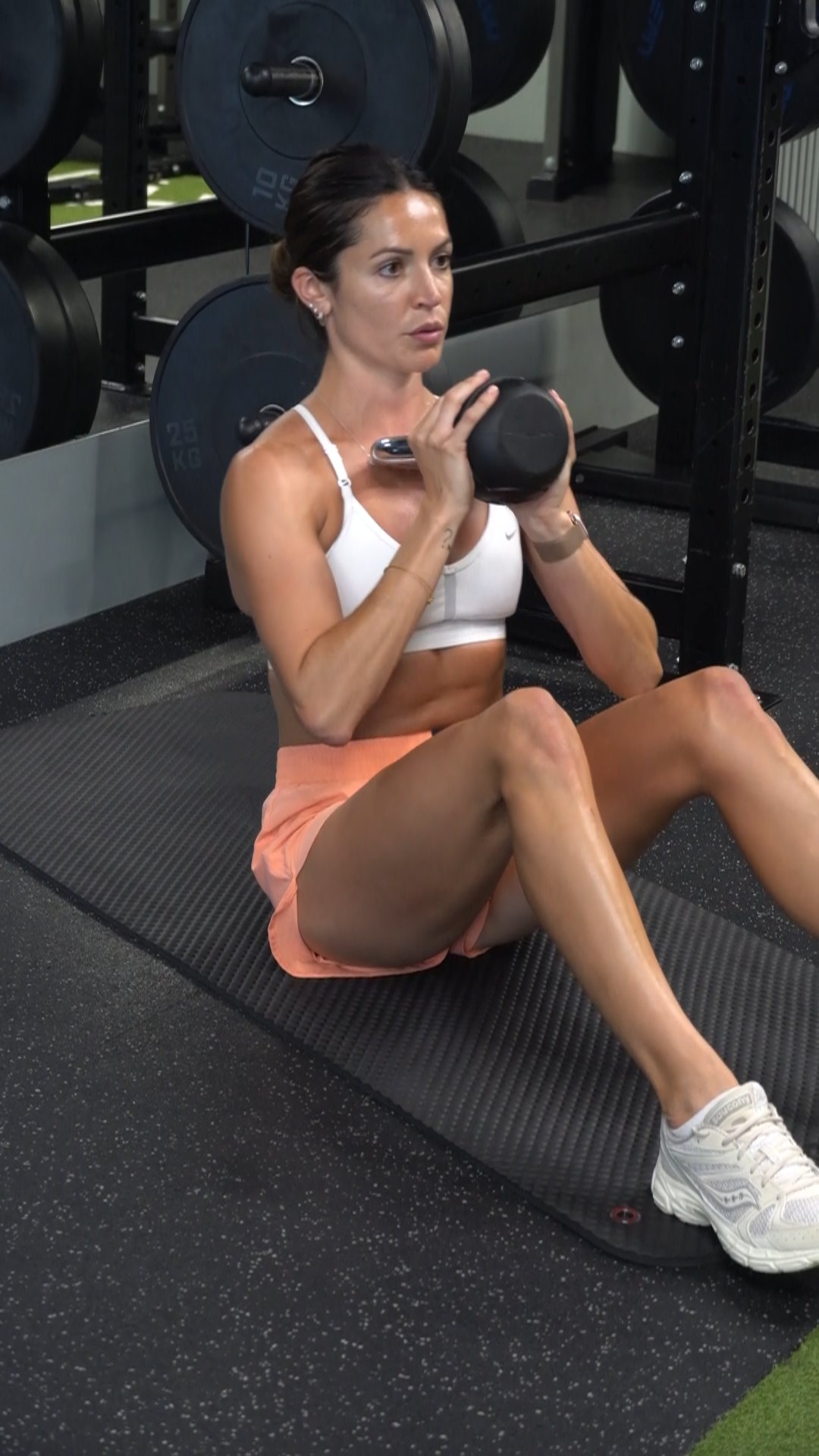
What the research says
Studies that found no spot reduction
- Ab exercises alone did not reduce belly fat. In 24 sedentary adults, doing 7 ab exercises 5 days a week for 6 weeks did not change body fat, belly fat, waist size or abdominal skinfolds compared with a control group. Their abdominal endurance did improve (Vispute et al., 2011).
- Training one arm did not burn fat from that arm. In 104 adults who trained only their non-dominant arm for 12 weeks, MRI scans showed fat loss in both arms, not just the trained one. A skinfold measurement suggested a local effect in men only, but the authors concluded that the more detailed MRI results did not support spot reduction (Kostek et al., 2007).
- Training one leg burned fat elsewhere. In 11 young adults who trained one leg with very high-rep leg presses for 12 weeks, body fat went down overall. But the fat loss came from the arms and trunk, not from the trained leg (Ramírez-Campillo et al., 2013).
Studies that suggest a small local effect
- Ab exercise plus running reduced more trunk fat. In 16 overweight men, 10 weeks of combined running and ab exercises reduced trunk fat by about 700 grams more than running alone, with energy use matched between groups. Total fat loss was similar in both groups (Brobakken et al., 2023).
- A circuit program reduced belly fat in a small group. In 14 adults, 8 weeks of a circuit designed to target the stomach reduced subcutaneous abdominal fat (Paoli et al., 2021).
These newer studies are small and use very specific programs. They do not show that crunches on their own will flatten your stomach. At most, they suggest that a local effect might exist in some conditions and is small compared with overall fat loss.
My take: I would not plan your training around spot reduction. The best way to lose fat from any area is to lose fat overall, while training your whole body for strength.
Why does fat come off in some areas first?
Where you store fat, and where you lose it first, is influenced by factors you can’t control, such as your genes, sex and age. Many people find that the areas where they store the most fat are the last to change. That is normal and does not mean your training is not working.
What actually helps you lose fat from a stubborn area
These are the principles I use with my own training plans:
| What to do | Why it helps |
|---|---|
| Eat in a small calorie deficit | Fat loss happens when you use more energy than you eat over time. My guide on how many calories to eat explains how to set it. |
| Strength train your whole body 2 to 4 times a week | It helps you keep and build muscle while you lose fat, so you look firmer as fat comes off. |
| Eat enough protein | It supports muscle and helps you feel full while eating less. |
| Stay active outside the gym | Daily steps and general movement add to your total energy use. |
| Be patient | Stubborn areas often change last. Track progress over months, not weeks. |
Should you still train your abs and arms?
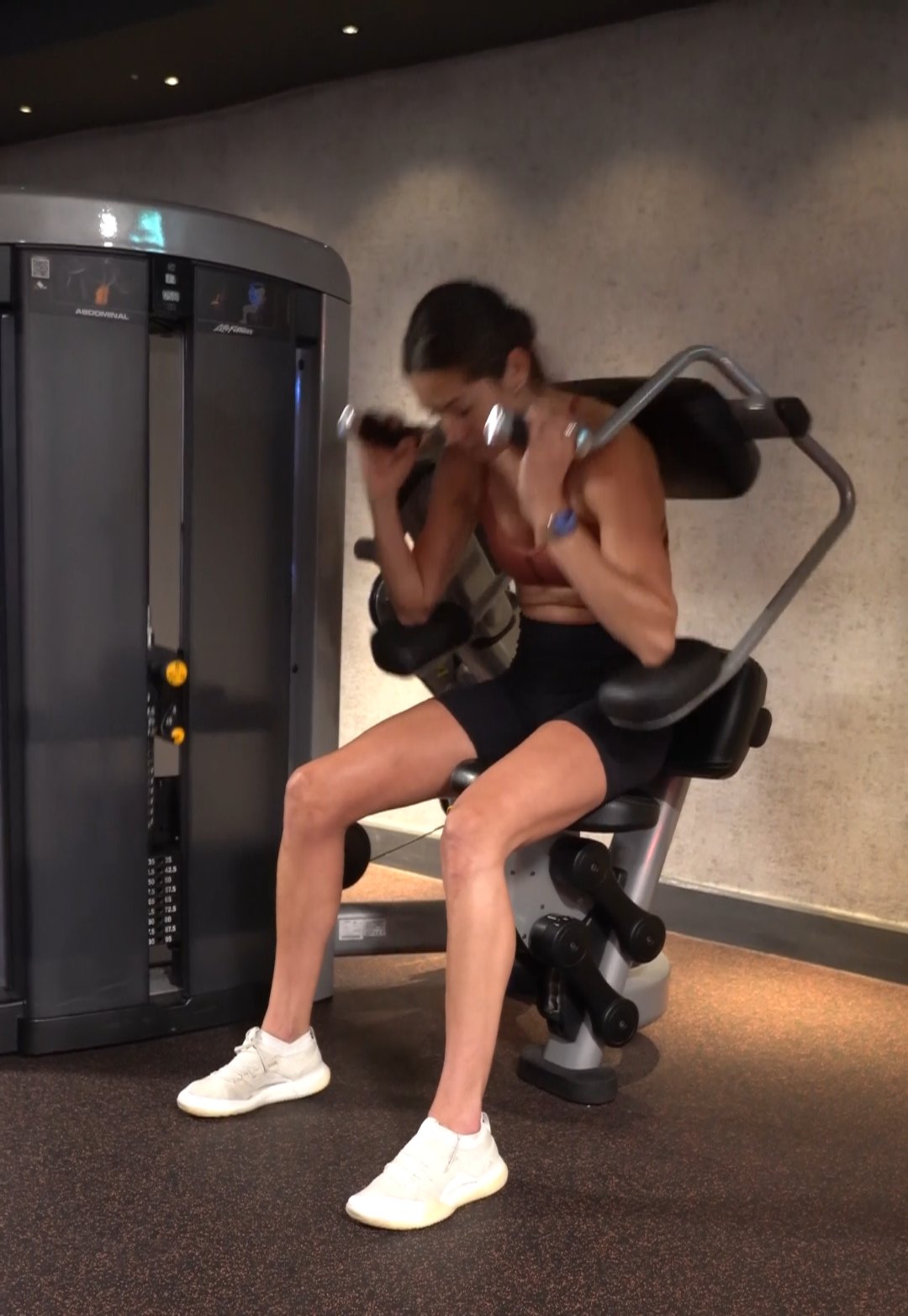
Yes. Training a muscle makes it stronger and can make it bigger, which changes how that area looks once body fat comes down. Ab training also improves core strength and endurance, as the 6-week study showed. Just don’t expect it to burn the fat on top on its own.
For ab training that is worth your time, see my guides to lower ab exercises and oblique exercises.
Summary
- Most studies show that training one area does not burn much more fat from that area.
- A few small recent studies suggest a small local effect in specific conditions, but overall fat loss matters far more.
- Where you lose fat first is influenced by factors such as your genes, sex and age.
- To lose fat from a stubborn area, aim for overall fat loss with a calorie deficit, enough protein and full-body strength training.
- Keep training your abs and arms for strength and shape, not to burn the fat on top.
Train your whole body with a plan
The quickest way to change a stubborn area is a consistent plan for your whole body, not more reps for one spot. The hard part is knowing what to do each session and sticking with it.
That is what I built 12REPS to help with. You set your goal, your available time and your equipment, and the app builds your workouts. Every exercise comes with a trainer demonstration, and you can log your sets and reps to see your progress over time.
Download 12REPS and see what you’ll get:
Sources
- Vispute SS, Smith JD, LeCheminant JD, Hurley KS. The effect of abdominal exercise on abdominal fat. J Strength Cond Res. 2011;25(9):2559–2564.
- Kostek MA, Pescatello LS, Seip RL, et al. Subcutaneous fat alterations resulting from an upper-body resistance training program. Med Sci Sports Exerc. 2007;39(7):1177–1185.
- Ramírez-Campillo R, Andrade DC, Campos-Jara C, et al. Regional fat changes induced by localized muscle endurance resistance training. J Strength Cond Res. 2013;27(8):2219–2224.
- Brobakken MF, Krogsaeter I, Helgerud J, Wang E, Hoff J. Abdominal aerobic endurance exercise reveals spot reduction exists: a randomized controlled trial. Physiol Rep. 2023;11(22):e15853.
- Paoli A, Casolo A, Saoncella M, et al. Effect of an endurance and strength mixed circuit training on regional fat thickness: the quest for the “spot reduction”. Int J Environ Res Public Health. 2021;18(7):3845.
Related reading
- Lower Ab Exercises: Can You Really Target Your Lower Abs?
- How to Lose Belly Fat and Build Muscle: A Men’s Guide
- Getting Rid of Bingo Wings: The Complete Guide to Toned Upper Arms
- Body Recomposition: Can You Build Muscle and Lose Fat at Once?
- Strength Training for Fat Loss: The Most Effective Method
- How Many Calories Should You Eat to Build Muscle or Lose Fat?
I’m Will Duru, a personal trainer and the founder of 12REPS. I hold a BSc (Hons) in Sport and Exercise Science and have more than a decade of experience coaching people in strength training.