



By Will Duru, personal trainer and founder of 12REPS.
The Short Answer
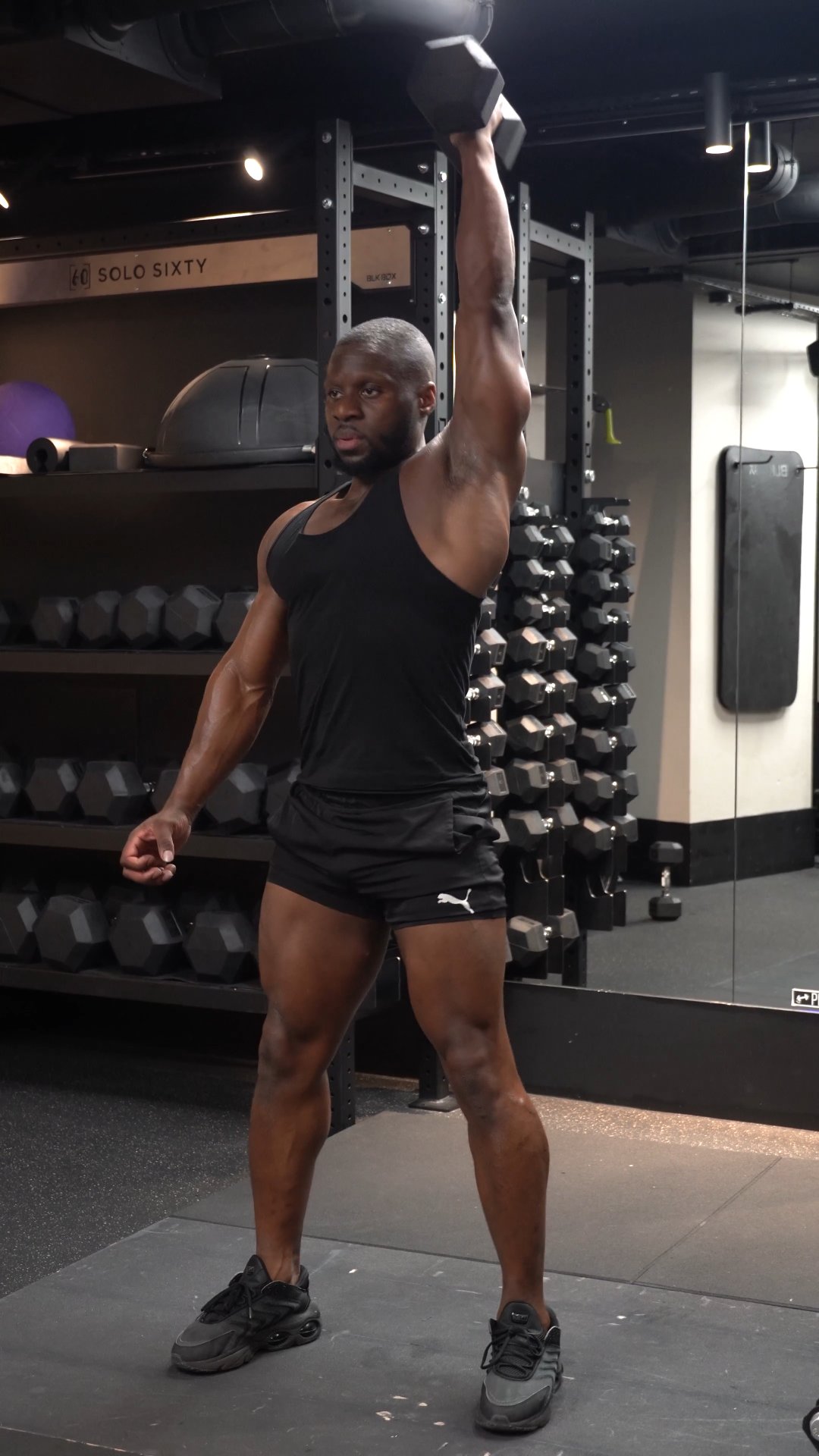
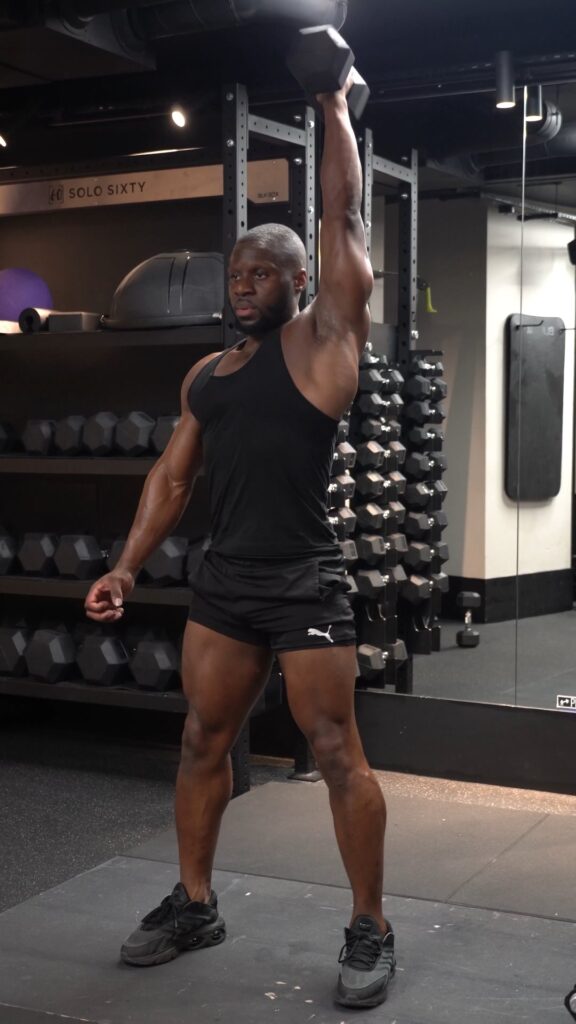
The dumbbell snatch is a one-arm exercise where you lift a dumbbell from the floor to overhead in one fast movement. You drive with your legs and hips, pull the dumbbell up close to your body, and punch it overhead to finish.
It’s one of the simplest ways to train power, which is strength produced quickly. It’s easier to learn than the barbell snatch, and it works your legs, glutes, back and shoulders in a single rep.
What Muscles Does the Dumbbell Snatch Work?
- Glutes, hamstrings and quads: They create most of the power.
- Upper back and traps: They pull the dumbbell up.
- Shoulders and triceps: They catch and hold the weight overhead.
- Core: It keeps you stable, especially because you hold the weight on one side.
What the Research Says
There’s very little research on the dumbbell snatch itself. But there is research on Olympic weightlifting, which uses the same fast triple extension of the ankles, knees and hips.
A 2016 meta-analysis by Hackett and colleagues in the British Journal of Sports Medicine combined 6 studies. Weightlifting training improved vertical jump height by about 7.7% more than no extra training and about 5.1% more than traditional resistance training. It worked about as well as jump training.
Those studies used barbell lifts, not dumbbells, so they don’t prove the dumbbell snatch has the same effect. In my coaching, I use the dumbbell snatch as an easier way to bring that fast, explosive hip drive into general training.
How to Do a Dumbbell Snatch
- Stand with your feet about hip-width apart and a dumbbell on the floor between your feet.
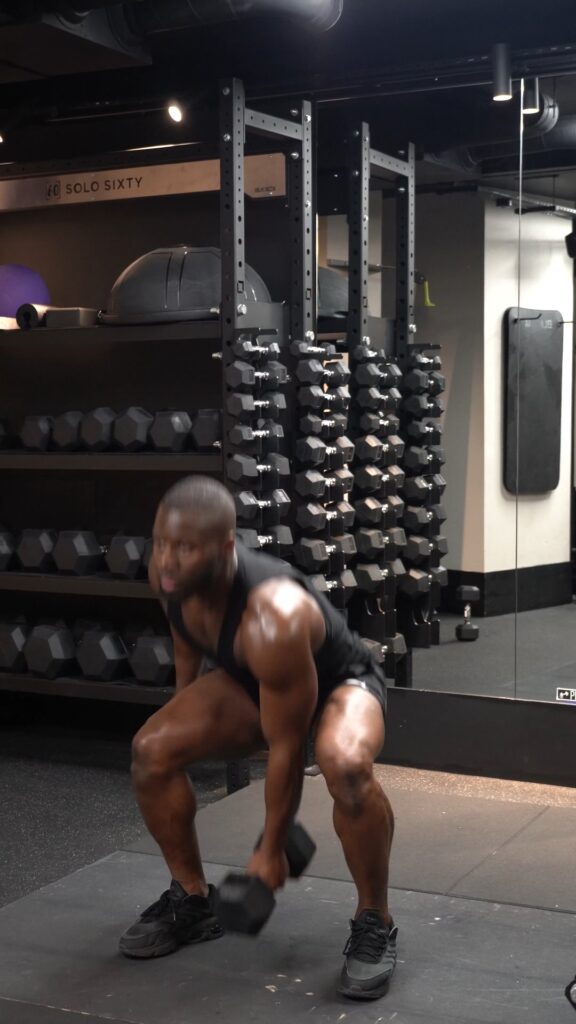
- Push your hips back and bend your knees to grip the dumbbell with one hand. Keep your back flat and your other arm out for balance.
- Drive through your feet and stand up fast, extending your hips, knees and ankles.
- As the dumbbell rises, keep it close to your body and pull your elbow high.
- Punch the dumbbell up to lock your arm out overhead as you drop slightly under it.
- Stand tall with the dumbbell overhead, then lower it to your shoulder and then to the floor with control.
Coaching cues I use:
- “Jump, don’t lift.” The power comes from your legs and hips, not your arm.
- “Keep it close.” A dumbbell that swings away from you is harder to control.
- “Punch the ceiling.” Finish with a strong, straight arm.
- “Reset each rep.” Quality matters more than speed when you’re learning.
Dumbbell Snatch vs Kettlebell Snatch
| Dumbbell snatch | Kettlebell snatch | |
|---|---|---|
| Start position | From the floor or a hang | Usually from a swing between the legs |
| Path | Straight up, close to the body | Arc, with the bell flipping over the wrist |
| Learning curve | Easier for most people | Needs a good swing first |
| Best for | Power and general training | Conditioning and kettlebell sport |
Both are great. If you want the kettlebell version, read how to do a kettlebell snatch.
How to Program It
These are my coaching recommendations, not rules from the research:
- For power: 3–5 sets of 3–5 reps each arm, with full rest (about 2 minutes). Do it near the start of your workout.
- For conditioning: Alternate arms for 30–40 seconds in a circuit, using a lighter dumbbell.
- Weight: Start light enough to move fast with perfect form. If the dumbbell slows down, it’s too heavy.
- Pair it with: Box jumps or kettlebell swings for a power-focused session.
Common Mistakes
- Lifting with your arm. Drive with your legs and hips first.
- Rounding your back at the start. Set up like a deadlift with a flat back.
- Letting the dumbbell swing out. Keep it close to your body.
- Pressing it out at the top. Punch up and get under it in one movement.
- Going heavy too soon. Learn the speed first, then add weight.
If you have shoulder pain when your arm is overhead, get it checked before training overhead movements like this.
Summary
- The dumbbell snatch takes a dumbbell from the floor to overhead in one fast movement.
- It trains power through your legs, hips, back and shoulders.
- Research shows Olympic weightlifting improves jump height, but no study has tested the dumbbell version.
- Use low reps with full rest for power, or lighter weights in circuits.
- Drive with your hips, keep the dumbbell close and punch it overhead.
Add Power Training With 12REPS
In 12REPS, pick your workout time and the equipment you have, and the app builds a session that fits, including explosive moves like this one.
Every exercise has a demo and a coach tutorial from me, and your log shows what you lifted last time, so you know when to progress.
Download 12REPS and see what you’ll get:
Sources
Related Reading
- How to do a kettlebell snatch
- Kettlebell clean and press
- Push press vs strict press
- Dumbbell thrusters
- How to overhead press properly
I’m Will Duru, a personal trainer and the founder of 12REPS. I hold a BSc (Hons) in Sport and Exercise Science and have more than a decade of experience coaching people in strength training.
