



By Will Duru, personal trainer and founder of 12REPS.
The Short Answer
For building muscle, research shows that reps lasting anywhere from about half a second to eight seconds work similarly well. Very slow reps, lasting 10 seconds or more, appear to work less well.
For most people, a simple tempo works: lift the weight with intent, then lower it under control over about two to three seconds. Focus on effort and good form, not a stopwatch.
What Does Rep Tempo Mean?
Tempo is how fast you move during each part of a rep. Programs often write it as four numbers, for example 3-1-1-0:
| Number | Phase | Example: 3-1-1-0 on a squat |
|---|---|---|
| First | Lowering (eccentric) | 3 seconds down |
| Second | Pause at the bottom | 1 second pause |
| Third | Lifting (concentric) | 1 second up |
| Fourth | Pause at the top | No pause |
Not every program writes tempo in the same order, so check what the numbers mean before you follow one. An “X” usually means “as fast as you can with control.”
What the Research Says
- For muscle growth, a wide range of speeds works. A 2015 review by Schoenfeld and colleagues included eight studies. Reps lasting 0.5 to 8 seconds produced similar muscle growth. Very slow reps, longer than 10 seconds, appeared to work less well. The authors noted that few studies exist.
- For strength, fast and moderate speeds both work. A 2017 review by Davies and colleagues included 15 studies. Fast and moderate-to-slow training produced similar strength gains overall. With moderate loads, around 60 to 79% of your one-rep max, there was a trend toward slightly bigger gains with fast lifting, but it was not statistically significant.
So there is no single “best” tempo. Within a sensible range, how hard you train matters more than exactly how fast you move.
Is Time Under Tension the Secret to Growth?
Time under tension is how long your muscle works during a set. It sounds important, but slowing every rep down doesn’t automatically build more muscle. Very slow reps usually force you to use a much lighter weight, and the research above suggests they work less well.
My view: effort matters more than the clock. Take your sets close to the point where you can’t do another good rep, and use a controlled tempo that lets you keep good form. Read how to know if you’re training hard enough for more.
A Simple Tempo Guide by Goal
These are practical starting points based on the research and common coaching practice, not strict rules.
| Goal | Lifting phase | Lowering phase | Notes |
|---|---|---|---|
| Muscle growth | Controlled, about 1 to 2 seconds | About 2 to 3 seconds | Train close to failure |
| Strength | As fast as you can with control | About 1 to 3 seconds | Heavier loads, longer rest |
| Power | As fast as possible | Controlled | Lighter loads, stop well before failure |
| Learning a new exercise | Slow and controlled | About 3 seconds | Use a light weight and focus on positions |
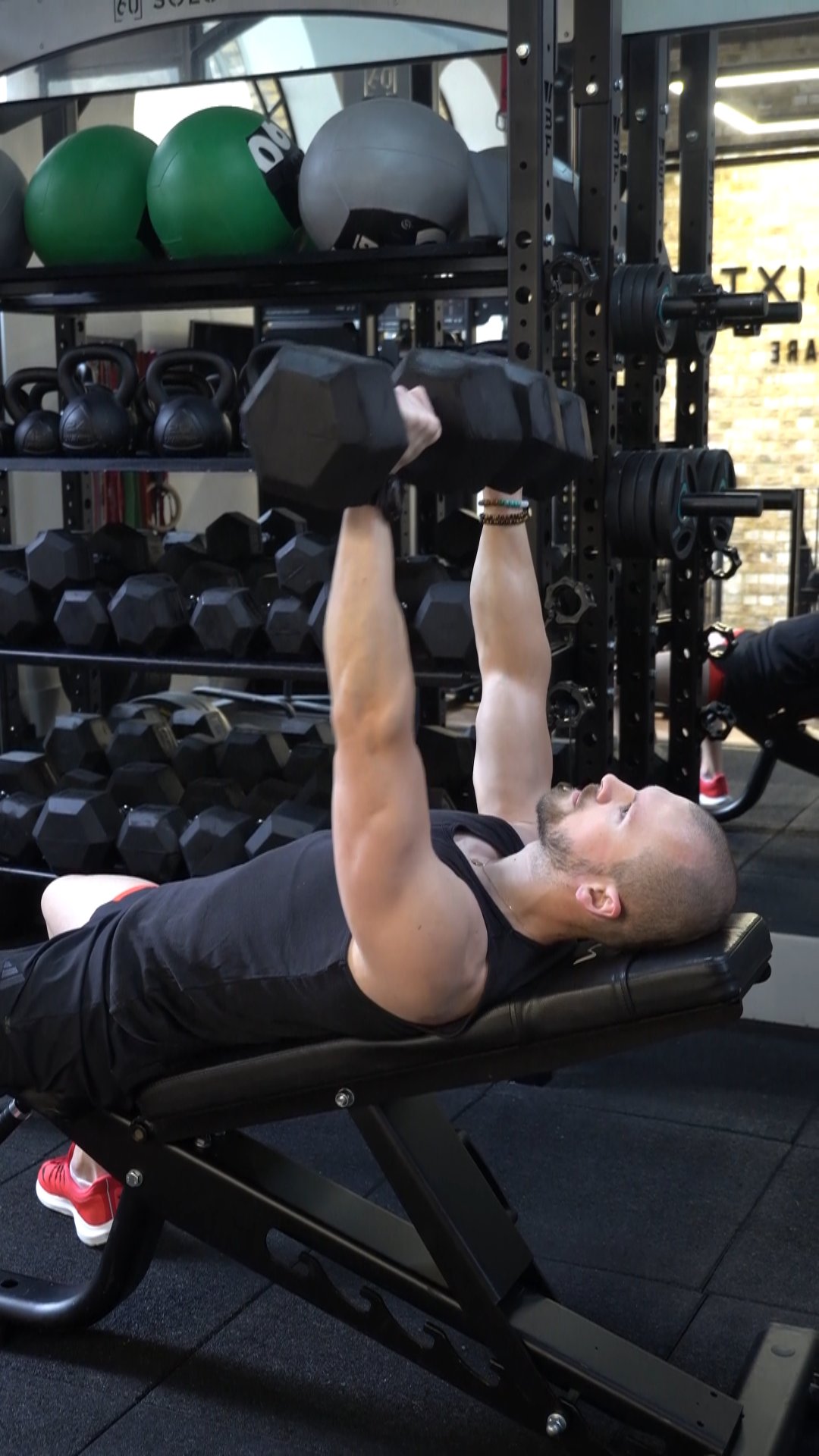
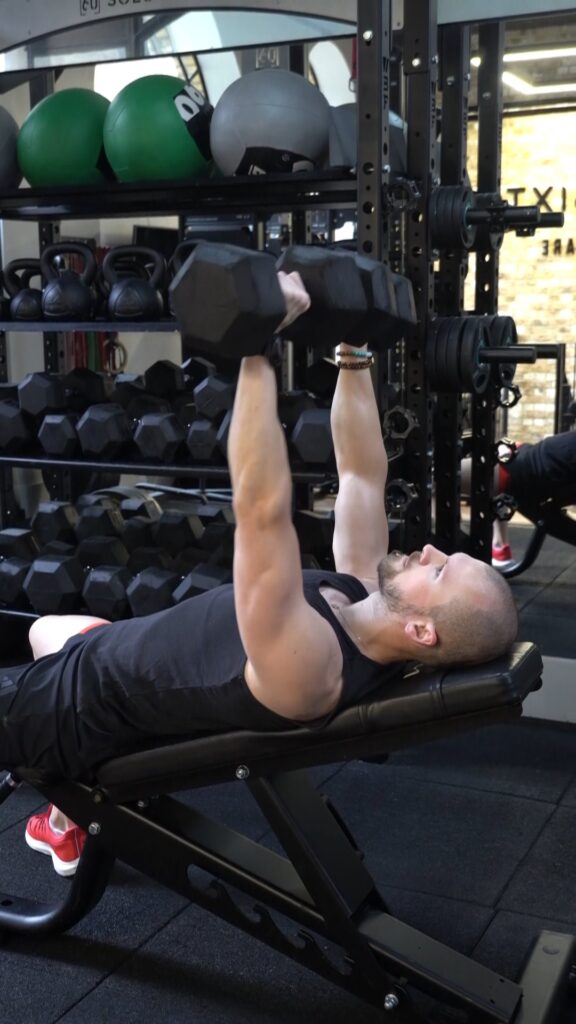
See a controlled tempo in action in this incline dumbbell press demo from the 12REPS exercise library:
When Slower Tempos Help
- Learning technique. Slowing down helps you feel and fix your positions.
- Training with light weights. At home with limited equipment, a slower lowering phase makes light weights more challenging.
- Pauses for control. A short pause at the bottom of a squat or bench press removes bounce and builds control.
Common Mistakes
- Dropping the weight. Letting the weight fall loses control and adds stress to your joints.
- Going super slow on every rep. This often forces very light weights and may reduce your results.
- Bouncing. Using rebound at the bottom of a lift takes work away from your muscles.
- Counting instead of working. A perfect tempo means little if the set is too easy.
Summary
- Reps lasting about 0.5 to 8 seconds build similar amounts of muscle.
- Very slow reps, longer than 10 seconds, appear to work less well.
- Fast and moderate lifting speeds both build strength.
- A good default: lift with intent, lower over two to three seconds.
- Effort and good form matter more than exact tempo.
Train With a Clear Plan
Want to know how many sets, reps and how much weight to use in every session? 12REPS builds a strength program around your goal, schedule and equipment.
Every exercise has a demo and a coach tutorial from me showing how to perform each rep, and your log shows what you lifted last time, so you always know what to beat.
Download 12REPS and see what you’ll get:
Sources
- Schoenfeld BJ, Ogborn DI, Krieger JW. Effect of repetition duration during resistance training on muscle hypertrophy: a systematic review and meta-analysis. Sports Med. 2015;45(4):577–585.
- Davies TB, Kuang K, Orr R, Halaki M, Hackett D. Effect of movement velocity during resistance training on dynamic muscular strength: a systematic review and meta-analysis. Sports Med. 2017;47(8):1603–1617.
- American College of Sports Medicine. Progression models in resistance training for healthy adults. Med Sci Sports Exerc. 2009;41(3):687–708.
Related Reading
- How to train for muscle growth
- Understanding rep ranges
- Training to failure
- How long to rest between sets
- The mind-muscle connection
- Strength vs hypertrophy training
I’m Will Duru, a personal trainer and the founder of 12REPS. I hold a BSc (Hons) in Sport and Exercise Science and have more than a decade of experience coaching people in strength training.
