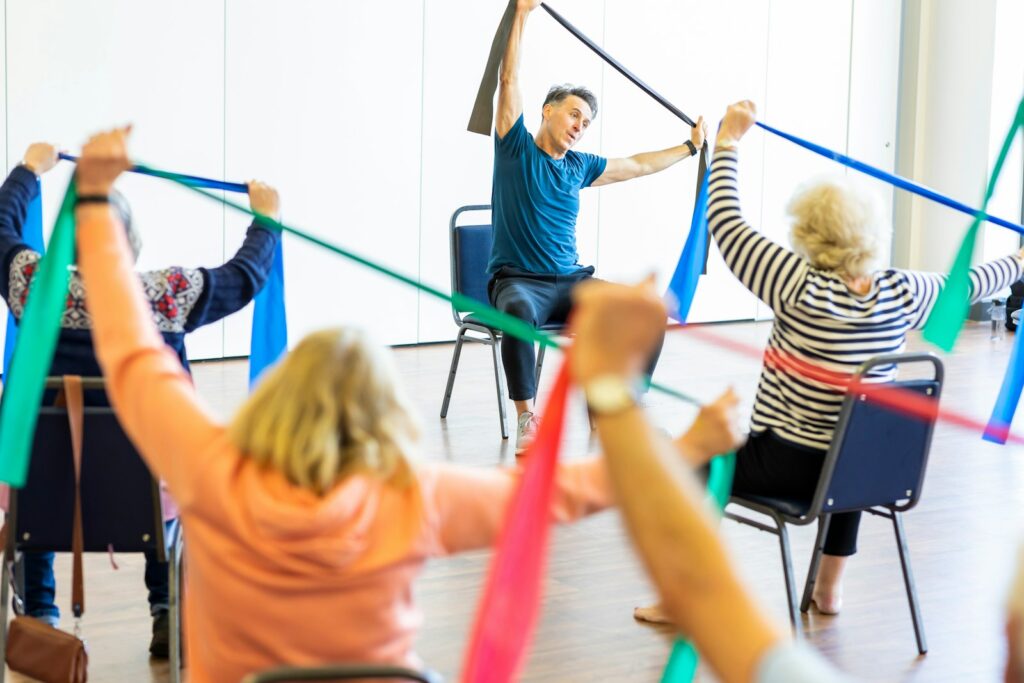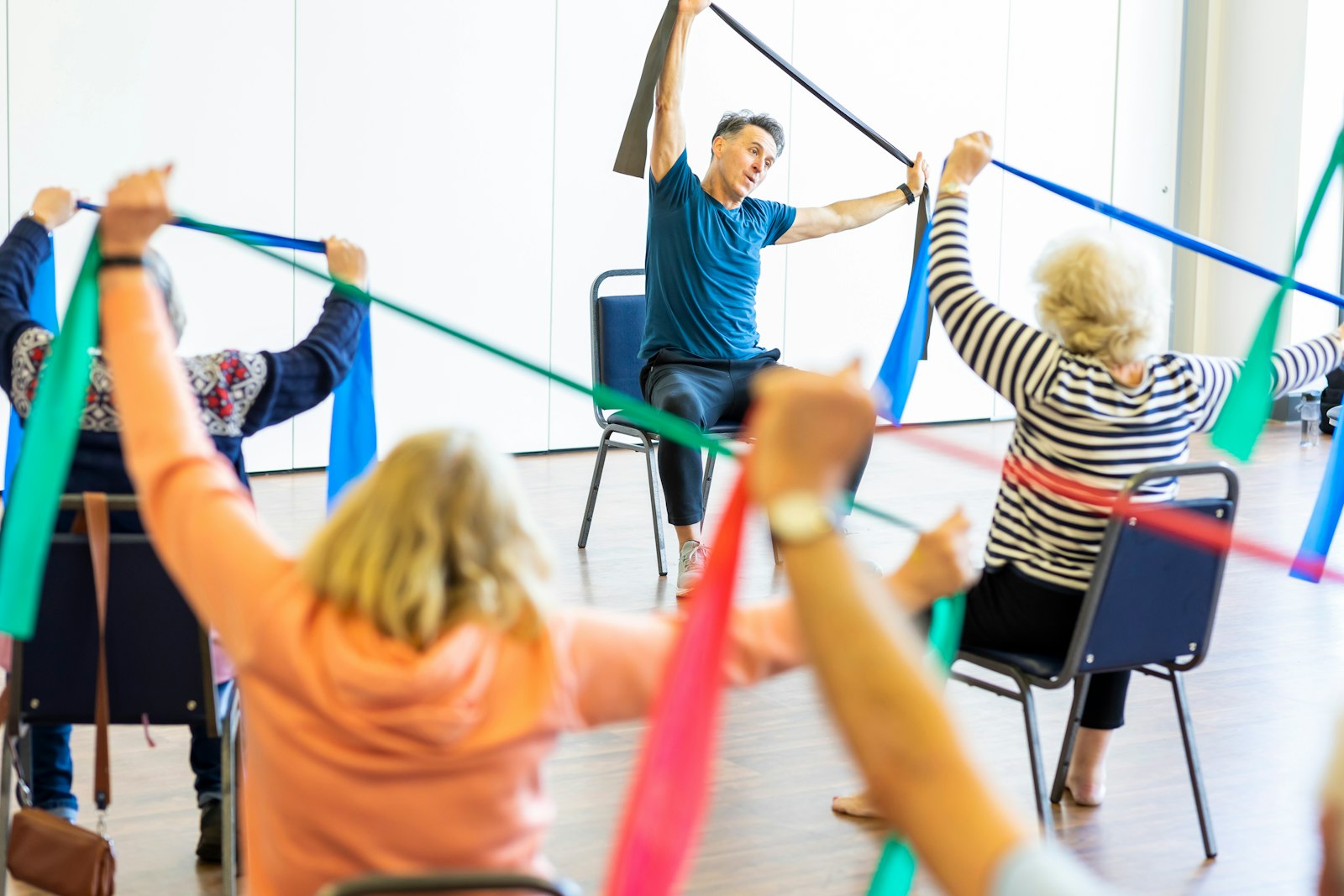



Yes, you can start strength training after 60, and for most people it’s one of the best things they can do for their health. Start with 2 sessions a week, 6 to 8 simple exercises and a weight you can lift 10 to 15 times with good form. Check with your doctor first if you have a heart condition, high blood pressure or a recent injury.
That’s the short answer.
I’ve trained dozens of clients who started lifting weights in their 50s, 60s and even 70s. If you’re asking whether you’re too old to start, my answer is no.
This guide is for you if:
- You’re 60 or older and have never lifted weights.
- You used to train and want to start again safely.
- You want to stay strong enough to carry groceries, climb stairs and get up off the floor.
- You’re helping a parent or partner get started.
I’m Will Duru, a personal trainer and the founder of 12REPS. Below, I’ll cover what the research shows, how to start safely, eight beginner exercises and a simple twice-weekly workout.
Why strength training matters after 60
Muscle and strength fall as we age, especially if we stop using them. Strength training is one of the best-studied ways to slow that down. Here’s what the evidence shows, and where it’s less clear.
What the research says
- Health guidelines include it. The CDC recommends that adults 65 and older do muscle-strengthening activity at least 2 days a week, working the legs, hips, back, abdomen, chest, shoulders and arms. It also recommends balance activities, plus 150 minutes of moderate activity like brisk walking each week. CDC
- Strength coaches back it. The National Strength and Conditioning Association (NSCA) calls resistance training a powerful way to counter the loss of muscle and strength with age. It links training to better mobility, independence and quality of life. Fragala et al., 2019
- Exercise lowers the rate of falls. A Cochrane review of 108 trials with more than 23,000 people, average age 76, found exercise reduced the rate of falls by 23%. The evidence was rated high quality. Most programs focused on balance and functional exercises. Sherrington et al., 2019
What the research doesn’t say
- Most fall prevention programs mixed balance and functional work. The review said resistance training on its own needs more study. That’s why the workout below includes balance practice.
- Results vary from person to person. Your health, medications and starting fitness all play a part.
- Strength training doesn’t replace medical care for conditions like osteoporosis or arthritis. It works alongside it.
Why I care about this
Strength training for longevity is what I’m most passionate about as a coach. The goal isn’t to lift heavy. It’s to stay strong enough to keep living the way you want.
My rule is simple: work around limitations, not through them.
Before you start
A few minutes of preparation makes your first weeks safer.
Talk to your doctor first if you:
- Have high blood pressure that isn’t under control. The NSCA advises against resistance training until it is. Kravitz, University of New Mexico
- Have a heart condition, or any unstable medical condition.
- Have had recent surgery, a fall or a joint injury.
- Have osteoporosis or arthritis. You can usually still train, but you may need to adjust some exercises.
Safety rules I give every beginner
These follow guidance from the National Institute on Aging. NIA
- Breathe. Breathe out as you lift or push. Breathe in as you lower. Never hold your breath.
- Rest between sessions. Leave at least one day between workouts for the same muscles.
- Don’t lock your joints. Keep a slight bend in your knees and elbows at the end of each rep.
- Start light. It’s fine to start with no weight at all.
- Listen to your body. Normal muscle tiredness is fine. Sharp pain, joint pain or exhaustion means stop.
Stop exercising and get medical help right away if you feel chest pain or pressure, severe shortness of breath or dizziness.
How hard should it feel?
Pick a weight you could lift 2 or 3 more times at the end of each set. You should finish feeling worked, not wiped out. You don’t need to train to failure. The NSCA notes it hasn’t been shown to add benefit for older adults.
8 beginner exercises for strength after 60
These moves match things you do every day: standing up, climbing stairs, pushing, pulling and carrying. Most use your bodyweight or a gym machine, which gives you more support while you learn.
1. Squat to a chair
For: getting up from a chair, the car or the toilet. Works: thighs and glutes.
Stand in front of a sturdy chair, feet hip-width apart. Push your hips back and lower until you lightly touch the seat. Stand back up by pressing through your whole foot.
Cue: “Sit back, stand tall.” Make it easier: use a higher seat or push off with your hands. Watch the demo
2. Step-up
For: stairs and curbs. Works: thighs, glutes and balance.
Stand facing a low step. Place one whole foot on it, then press through that foot to step up. Step down slowly with the same leg. Hold a rail or wall if you need to.
Cue: “Push through the top foot.” Make it easier: use a lower step. Watch the demo
3. Incline push-up
For: pushing yourself up from the floor or a bed. Works: chest, shoulders and arms.
Place your hands on a bench or kitchen counter, a little wider than your shoulders. Step back so your body is in a straight line. Lower your chest toward the edge, then push back up.
Cue: “Body in one straight line.” Make it easier: use a higher surface, like a wall. Watch the demo
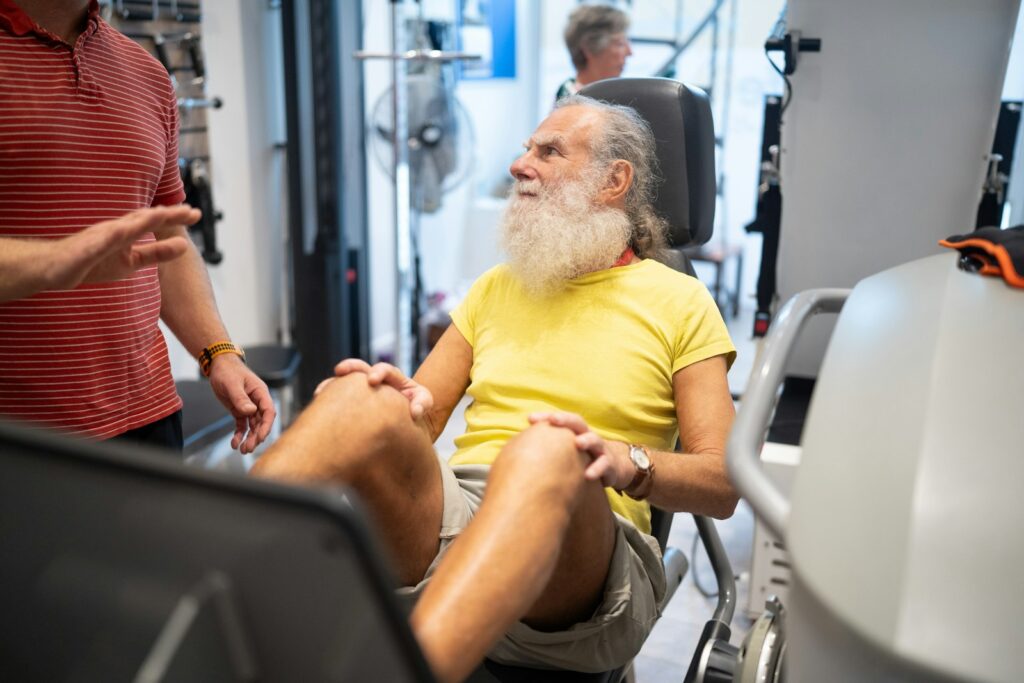
4. Seated machine row
For: posture and pulling open heavy doors. Works: upper back and arms.
Sit with your chest against the pad and feet flat. Pull the handles toward your body, squeezing your shoulder blades together. Return slowly.
Cue: “Elbows back, chest tall.” Watch the demo
5. Lat pulldown
For: reaching up and lifting things down from shelves. Works: back and arms.
Sit with your thighs under the pad. Hold the bar a little wider than your shoulders. Pull it down to your upper chest, then let it rise slowly.
Cue: “Pull your elbows toward your back pockets.” Watch the demo
6. Hip thrust
For: walking, standing up and a stronger lower back. Works: glutes and hamstrings.
Sit on the floor with your upper back against a bench, knees bent and feet flat. Press through your heels to lift your hips until your body is level from shoulders to knees. Lower slowly.
Cue: “Squeeze your glutes at the top.” Make it easier: do a glute bridge lying flat on the floor. Watch the demo
7. Farmer’s carry
For: carrying groceries and bags. Works: grip, shoulders, core and legs.
Hold a light dumbbell in each hand at your sides. Stand tall and walk 20 to 30 steps, then turn and walk back.
Cue: “Tall posture, steady steps.” Watch the demo
8. Calf raise
For: balance and walking. Works: calves and ankles.
Stand tall holding a wall or chair. Rise onto the balls of your feet, pause, then lower slowly.
Cue: “Up for one, down for three.” Watch the demo. In the gym, try the machine standing calf raise.
Plus: daily balance practice
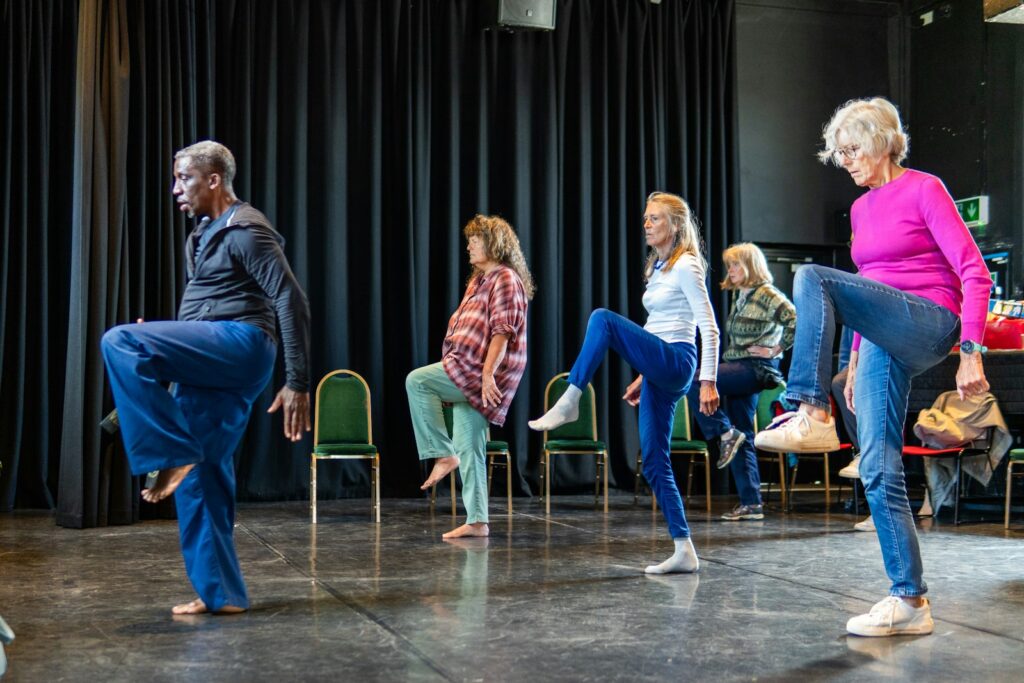
The CDC recommends balance activities for adults 65 and older. Two easy ones:
- Single-leg stand. Hold the back of a chair and stand on one foot for up to 30 seconds. Switch sides.
- Heel-to-toe walk. Walk in a straight line, placing one heel directly in front of the other toes, for 10 to 20 steps. Stay near a wall.
Your beginner workout after 60
Do this workout twice a week, with at least two days in between, such as Monday and Thursday. That meets the CDC’s two-day minimum.
Warm up for 5 to 10 minutes first with an easy walk, marching in place or a few arm circles.
| Exercise | Weeks 1 to 4 | Weeks 5 to 8 | Rest |
|---|---|---|---|
| 1. Squat to a chair | 1 set of 10 to 15 | 2 sets of 10 to 15 | 1 to 2 minutes |
| 2. Step-up | 1 set of 8 each leg | 2 sets of 10 each leg | 1 to 2 minutes |
| 3. Incline push-up | 1 set of 10 to 15 | 2 sets of 10 to 15 | 1 to 2 minutes |
| 4. Seated machine row | 1 set of 10 to 15 | 2 sets of 10 to 15 | 1 to 2 minutes |
| 5. Lat pulldown | 1 set of 10 to 15 | 2 sets of 10 to 15 | 1 to 2 minutes |
| 6. Hip thrust | 1 set of 10 to 15 | 2 sets of 10 to 15 | 1 to 2 minutes |
| 7. Farmer’s carry | 2 walks of 20 steps | 3 walks of 30 steps | 1 to 2 minutes |
| 8. Calf raise | 1 set of 12 to 15 | 2 sets of 12 to 15 | 1 to 2 minutes |
| Balance practice | 2 × 30 seconds each leg | 3 × 30 seconds each leg | As needed |
These numbers follow the NSCA’s guidance for older beginners: start with one set of 10 to 15 reps, rest about 2 minutes, and build to 2 or 3 sets. Kravitz, University of New Mexico
No gym? Do exercises 1, 2, 3, 6 and 8 at home, and swap the machines for a resistance band row.
How to progress
Change one thing at a time, every 1 to 2 weeks:
- Add reps until you reach the top of the range.
- Then add a set.
- Then add a small amount of weight and drop back to the lower reps.
If an exercise ever causes joint pain, go back a step, or swap it for an easier version.
On your other days, aim for regular walking. The CDC recommends 150 minutes of moderate activity a week for adults 65 and older.
Strength training after 60 in brief
- It’s not too late. Health guidelines recommend strength training at least 2 days a week for adults 65 and older.
- Check with your doctor first if you have a heart condition, uncontrolled blood pressure or a recent injury.
- Start with 1 set of 10 to 15 reps of 8 everyday movements, twice a week.
- Add balance practice and regular walking.
- Progress slowly: reps first, then sets, then weight.
Want a trainer to guide every session?
Starting is the hardest part. Knowing which exercises to do, and how to do them safely, makes it easier to keep going.
That’s why I built 12REPS. Here’s what you get:
- Programs written by a real personal trainer. I write them, with progression built in.
- A demo before every lift. Each exercise has a video demonstration and a coach’s guide, so you can check your form.
- Workouts built around you. Tap the muscles you want to train, set your time and hit generate.
- Saved workouts. Save a session and it’s ready to start next time.
- Every set saved. Log your reps and weight, and check your history any time.
Download 12REPS and see what you’ll get:
Sources
- Centers for Disease Control and Prevention. Older Adult Activity: An Overview. Last reviewed December 4, 2025.
- National Institute on Aging. Three Types of Exercise Can Improve Your Health and Physical Ability.
- Fragala MS, Cadore EL, Dorgo S, Izquierdo M, Kraemer WJ, Peterson MD, Ryan ED. Resistance training for older adults: position statement from the National Strength and Conditioning Association. Journal of Strength and Conditioning Research. 2019;33(8):2019–2052.
- Kravitz L. Summary of the NSCA position statement on resistance training for older adults. University of New Mexico.
- Sherrington C, et al. Exercise for preventing falls in older people living in the community. Cochrane Database of Systematic Reviews. 2019;(1):CD012424.
Related reading
- Lifting Weights at 50: The Complete Guide to Building Strength After 50 Years Old
- Strength Training for Longevity: How to Stay Strong, Independent, and Healthy as You Age
- Creatine for Older Adults: Boost Muscle Mass and Strength
- 15-Minute Daily Stretching Routine for Over-45s
About the author: Will Duru is a personal trainer, the founder of 12REPS and holds a BSc (Hons) in Sport and Exercise Science.