
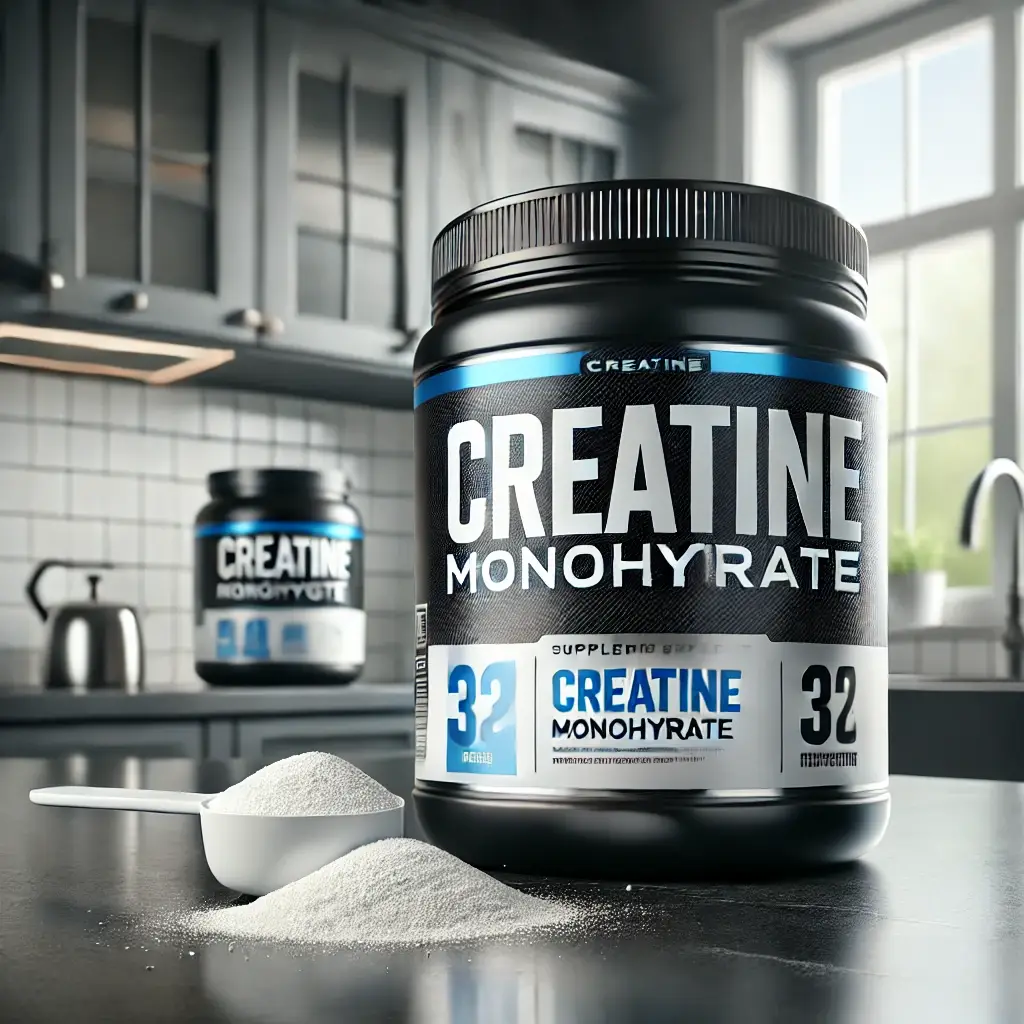



Creatine for older adults is one of the best-studied supplements for keeping muscle and strength with age. Adults over 50 who take creatine monohydrate alongside strength training tend to gain a little more muscle and strength than with training alone. The extra effect is modest, and the training does most of the work.
This guide covers what the research shows, the doses used in studies, safety, and who should check with a doctor first.
Why muscle matters as you get older
Muscle mass and strength tend to fall as you get older. When the loss becomes large enough to affect strength and daily life, it is called sarcopenia.
Strength helps with everyday tasks like climbing stairs, carrying shopping and getting up from a chair. The NHS advises adults aged 65 and over to do activities that improve strength, balance and flexibility on at least 2 days a week.
Strength training is the foundation. Creatine is an optional extra that may help you get a bit more from that training. For a full guide, see strength training after 60 or lifting weights at 50.
What the research shows for older adults
More lean mass with training
Creatine raises the store of phosphocreatine in your muscles. Phosphocreatine is a fast fuel for short, hard efforts, like a set of squats. The exact reasons creatine adds to training results in older adults are still being studied.
A 2017 meta-analysis by Chilibeck and colleagues pooled 22 randomized trials with 721 adults. Average ages ranged from 57 to 70, and everyone did resistance training 2 to 3 days a week. People who took creatine gained about 1.4 kg more lean tissue mass than those who took a placebo.
Lean tissue mass includes muscle, organs and body water. So not all of that extra weight is new muscle.

A small boost to strength
The same meta-analysis found small extra gains in chest press and leg press strength with creatine. Stronger legs and arms help with everyday tasks like lifting, climbing stairs and getting up from a chair.
A 2023 meta-analysis in Nutrients by Burke and colleagues looked at scans of muscle size in 10 trials, 6 of them in older adults. Creatine plus training gave a very small extra increase in muscle size. Younger adults may benefit slightly more than older adults, but the difference was modest.

What the research does not show yet
Creatine looks promising, but the evidence has limits. In the Chilibeck review, only 12 of the 22 trials found a clear benefit on their own. Many trials were small, and their quality varied.
Some trials combined creatine with other supplements. That makes it harder to know what caused the effect. Researchers are also still testing why creatine helps and which older adults benefit most.
The reviews above focused on muscle and strength. They do not show that creatine on its own reduces falls or speeds up recovery in older adults.
How to take creatine
Choose creatine monohydrate. This is the form covered by the ISSN position stand and used in most research.
Typical studied dose. A summary of the ISSN position stand describes 3 to 5 g a day. Some people start with a loading phase of about 0.3 g per kg of body weight a day for 5 to 7 days. They then drop to 3 to 5 g a day. Without loading, muscle stores rise over about 3 to 4 weeks.
Pair it with training. The benefits in older adults were seen alongside regular resistance training, not with creatine alone.
Take it daily. Pick a time that fits your routine and follow the dose on the label.

Is creatine safe for older adults?
For healthy people, creatine has a good safety record. The ISSN position stand concluded that short- and long-term use at studied doses is safe and well tolerated. This covered healthy people and many patient groups, from infants to the elderly.
Side effects can still happen. Some trials in older adults reported stomach upset or muscle cramping. The trials were also too small to rule out rare problems.
Speak to your doctor or pharmacist before taking creatine if you:
- have kidney disease or any other kidney problem.
- take regular medication.
- have diabetes, heart disease or another long-term condition.
- have blood tests coming up, so your doctor knows what you take.
Creatine works best with a good training plan
Creatine adds a small boost on top of training. The basics matter more. Lift 2 to 3 times a week, as in the trials above. Add weight or reps over time, which is called progressive overload. And eat enough protein, as covered in how much protein you really need.
For more on supplements, read do you need supplements for strength training? and our guide on taking whey protein and creatine.
If you want a plan that fits your goal, your equipment and your time, 12REPS sets out each session with trainer demonstrations. It remembers what you lifted, so you can watch your strength go up week by week.
Sources
- Effect of creatine supplementation during resistance training on lean tissue mass and muscular strength in older adults: a meta-analysis (Chilibeck et al.). Open Access Journal of Sports Medicine, 2017. https://pmc.ncbi.nlm.nih.gov/articles/PMC5679696/
- The Effects of Creatine Supplementation Combined with Resistance Training on Regional Measures of Muscle Hypertrophy: A Systematic Review with Meta-Analysis (Burke et al.). Nutrients, 2023. https://pmc.ncbi.nlm.nih.gov/articles/PMC10180745/
- International Society of Sports Nutrition position stand: safety and efficacy of creatine supplementation in exercise, sport, and medicine (Kreider et al.). Journal of the International Society of Sports Nutrition, 2017. https://doaj.org/article/4a276c2d31944beaab82cdc923c69c83
- New ISSN position stand on creatine supplementation. Exercise and Sport Nutrition Laboratory, Texas A&M University, 2017. https://exerciseandsportnutritionlab.com/new-issn-position-stand-on-creatine-supplementation/
- Physical activity guidelines for older adults. NHS, accessed 2026. https://www.nhs.uk/live-well/exercise/physical-activity-guidelines-older-adults/
