

By Will Duru | PT Will | Sport and Exercise Science BSc (Hons)
You can run several times each week and still feel as though your legs lack power.
Your posture may begin to fade during the final miles of a long run. Hills might expose a lack of lower-body strength. The same calf, hamstring or hip discomfort may return whenever your mileage increases.
The usual response is to run more. But more running does not always address the physical quality that is limiting you.
In my experience as a personal trainer, many runners avoid proper strength training because they fear heavy legs, soreness or unwanted muscle gain. Some complete a few light resistance-band exercises but never progress the resistance.
Others follow random social media circuits that make them tired without creating measurable strength gains.
You do not need to become a powerlifter or spend five days in the gym.
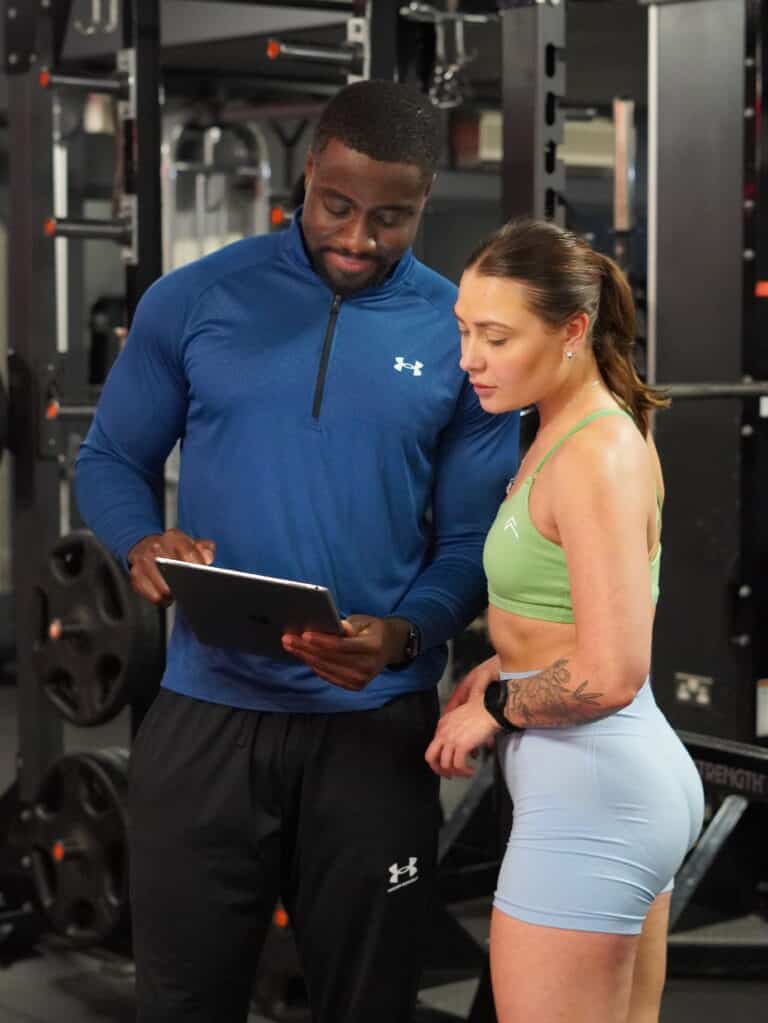
This strength-training programme for female runners provides two focused sessions each week. Each workout contains six exercises and trains your legs, glutes, back, chest, shoulders and core.
Why Female Runners Need Strength Training
Running is a repeated single-leg activity.
Every stride asks one leg to absorb force, support your body and push you forward. Your hips, calves, hamstrings, quadriceps and trunk must repeat that process hundreds or thousands of times.
Strength training may help you improve your physical capacity to handle those demands.
A balanced running strength training plan can support:
- Lower-body strength
- Force production
- Single-leg control
- Hip and knee stability
- Calf capacity
- Hamstring strength
- Trunk stability
- Upper-body posture
- Arm drive
- Sprinting and hill-running ability
- Running economy
- Long-term muscle retention
Strength training may also help reduce injury risk by improving the capacity of the muscles and tissues involved in running.
It cannot guarantee that you will remain injury-free. Running injuries can involve training load, recovery, previous injury, footwear, movement habits and individual anatomy.
You aim to become better prepared for the work you ask your body to perform.
Will Strength Training Make Runners Bulky?
Strength training does not automatically produce large increases in muscle size.
Building a substantial amount of muscle normally requires:
- Progressive resistance training over a long period
- Enough weekly training volume
- Suitable protein intake
- Enough total food
- Consistent recovery
- Individual genetic potential
This programme uses moderate training volume. You will train twice per week, complete six exercises in each workout and keep most sets away from muscular failure.
You may build some lean muscle. That can support strength, physical confidence and body composition. Muscle gain is not something you need to fear. It also does not happen suddenly because you lifted a challenging kettlebell.
Can This Programme Support Fat Loss?
Strength training can support body-composition goals by helping you maintain or build muscle while losing weight.
Fat loss still requires a sustainable calorie deficit.
Your food intake, daily movement, sleep, running volume and long-term consistency all contribute.
Strength training does not remove fat from one specific area. Doing more glute exercises will not selectively reduce fat around your hips, just as abdominal exercises will not directly remove stomach fat.
Avoid increasing your running volume purely to compensate for food.
Aggressive calorie restriction can affect training quality, energy, recovery and concentration. Your programme should help you perform well, not leave you constantly depleted.
Why Two Strength Workouts Per Week?
Two sessions work well for many recreational runners because they are easier to schedule around running.
They provide enough opportunity to train the whole body while leaving room for:
- Easy runs
- Interval sessions
- Tempo runs
- Long runs
- Rest days
- Family and work commitments
Consistency matters more than adding extra gym days that you cannot maintain. Two well-planned sessions may be more useful than four rushed workouts completed without progression.
The quality of each set matters too. A controlled squat, row or Romanian deadlift gives you a clear stimulus. Turning every exercise into a fast circuit may raise your heart rate, but it can make strength progression harder to measure.
How Push, Pull, Legs and Core Work Together
This is not a bodybuilding-style push, pull and legs split. Both sessions train the whole body.
Push movements
Push exercises involve moving resistance away from your body. Examples include press-ups, chest presses and shoulder presses. For runners, upper-body pushing strength may support arm drive, upper-body control and general physical strength.
Pull movements
Pull exercises bring resistance towards your body. Rows and pulldowns strengthen the back, shoulders and arms. These muscles may help you maintain your upper-body position when fatigue builds during longer runs.
Leg movements
The programme includes squats, lunges, step-ups, hip hinges, calf raises and jumping exercises. These movements train strength and control through the hips, knees and ankles.
Core movements
Your core does more than produce crunches. During running, your trunk must control extension, rotation and side-to-side movement. Rows, unilateral exercises and loaded positions can all train your core stability.
Explore the 12REPS Exercise Library
You can find every main movement in the 12REPS Strength Training Exercise Library.
The library allows you to explore exercises by body part, equipment and training level.
- Watch exercise demonstrations
- Review setup instructions
- Check technique cues
- Understand common mistakes
- Find home alternatives
- Find gym alternatives
- Replace unavailable equipment
- Prepare before entering the weights area
Watching an exercise first can reduce uncertainty, particularly when you are learning a new machine or movement. A demonstration does not guarantee perfect technique. Begin with resistance you can control and seek individual coaching when needed.
Recommended Weekly Schedule
Try to avoid placing your hardest lower-body strength session immediately before your hardest run. Your individual schedule may vary.
Option One
- Monday: Easy run
- Tuesday: Strength Workout A
- Wednesday: Rest or recovery run
- Thursday: Running intervals
- Friday: Strength Workout B
- Saturday: Rest or easy run
- Sunday: Long run
Option Two
- Monday: Strength Workout A
- Tuesday: Easy run
- Wednesday: Running intervals
- Thursday: Rest
- Friday: Strength Workout B
- Saturday: Easy run
- Sunday: Long run
You can also place strength training after a harder running session on the same day. This groups demanding training together and allows the following day to remain easier. Do this only when it fits your recovery and schedule.
The Four Training Phases
Phase One: Weeks 1 to 3 – Movement and Control
- Learn each exercise
- Use controlled repetitions
- Leave around three repetitions in reserve
- Complete two working sets for most exercises
- Rest for 60 to 120 seconds
- Keep jumping low in volume
- Record every set
Phase Two: Weeks 4 to 6 – Build Strength
- Increase most exercises to three working sets
- Add repetitions before increasing load
- Leave two to three repetitions in reserve
- Rest up to three minutes after demanding exercises
- Keep technique consistent
Phase Three: Weeks 7 to 9 – Strength and Running Power
- Place power exercises first
- Use low repetitions and full recovery
- Stop when speed or landing quality declines
- Use three sets for main strength exercises
- Leave one to three repetitions in reserve
Phase Four: Weeks 10 to 12 – Performance and Consolidation
- Maintain or slightly increase working weights
- Reduce unnecessary repetitions
- Keep power movements quick and controlled
- Do not test one-repetition maximums
- Compare week 12 with week one
- Reduce strength volume during an important race week
Workout A: Squat, Push and Core Emphasis
Workout A includes a faster power movement, a squat, unilateral leg work, horizontal pushing, horizontal pulling and anti-rotation core training.
Exercise | Weeks 1-3 | Weeks 4-6 | Weeks 7-9 | Weeks 10-12 | Rest | Home alternative | Gym alternative |
2 x 4 | 3 x 4 | 3-4 x 4-5 | 3 x 3-5 | 60-90 sec | Fast bodyweight squat without leaving floor | Low box jump | |
2 x 8-10 | 3 x 8-10 | 3 x 6-10 | 3 x 6-8 | 90-150 sec | Dumbbell goblet squat to bench | Leg press or barbell squat | |
2 x 8 each | 3 x 8-10 each | 3 x 8 each | 2-3 x 6-8 each | 75-120 sec | Bodyweight reverse lunge | Cable step-up | |
2 x 8-12 | 3 x 8-12 | 3 x 6-10 | 3 x 6-10 | 75-120 sec | Elevated press-up | Chest press machine | |
2 x 10-12 | 3 x 8-12 | 3 x 8-10 | 3 x 6-10 | 75-120 sec | Kettlebell bent-over row | Cable incline seated row | |
2 x 6 each | 3 x 6-8 each | 3 x 6-8 each | 2-3 x 6 each | 60-90 sec | Bodyweight bird dog | Cable kneeling single-arm row |
How to Perform Workout A
Bodyweight Jump Squat
Main muscles: Quadriceps, glutes, hamstrings, calves and core.
Why runners benefit: Jump squats train you to apply force quickly. This may support sprinting, hill running and general athletic power when used alongside appropriate running sessions.
Technique: Lower into a controlled squat, drive through the floor and jump. Land softly with your knees tracking over your toes.
Common mistake: Continuing when landing quality drops. End the set before fatigue changes the movement.
Home option: Perform a fast squat and calf raise without jumping.
Gym option: Use a low box jump once landing control is consistent.
12REPS video: The linked 12REPS guide contains an exercise demonstration.
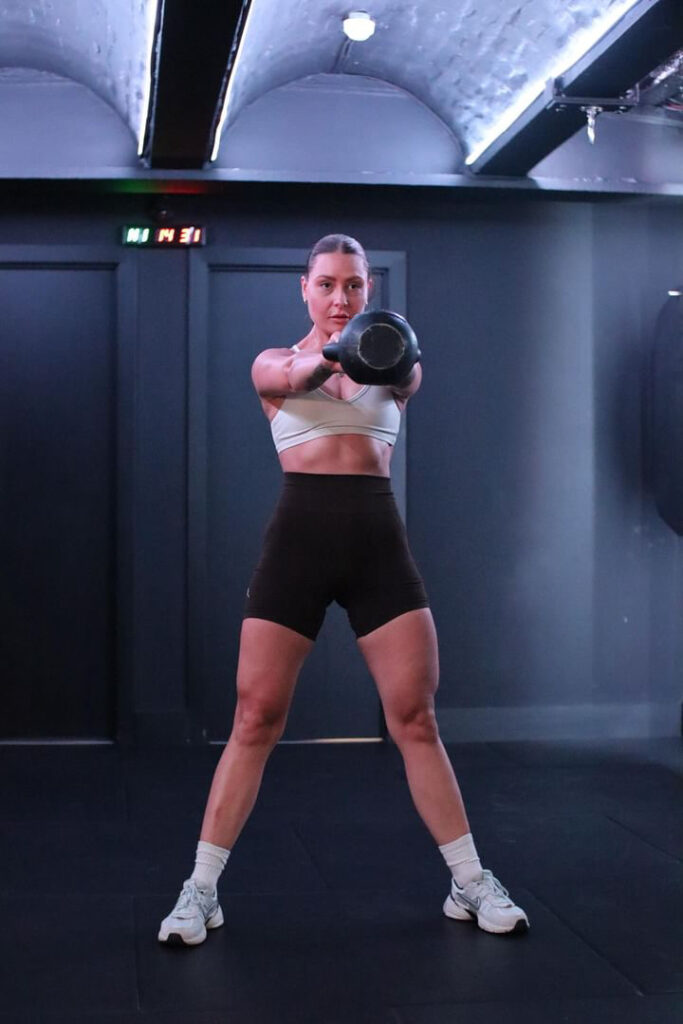
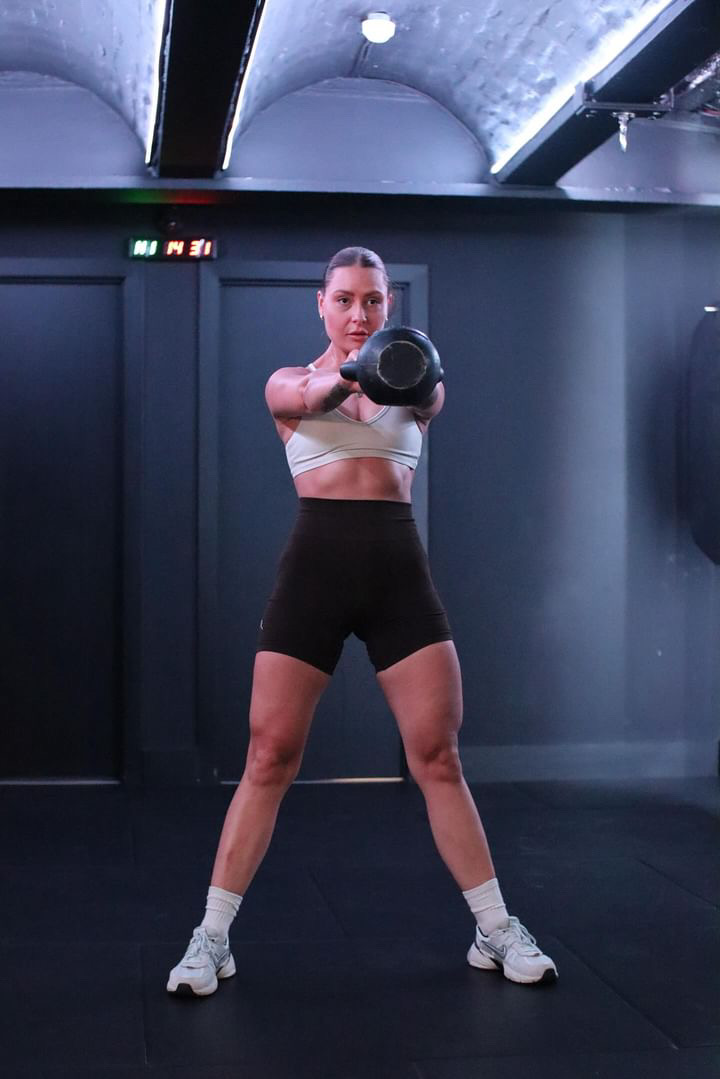
Kettlebell Box Front Squat
Main muscles: Quadriceps, glutes, hamstrings and core.
Why runners benefit: Squats develop lower-body force production through the hips and knees. The box provides a repeatable depth target.
Technique: Hold the kettlebell near your chest. Sit towards the box, touch it lightly and drive through your feet to stand.
Common mistake: Relaxing completely on the box. Maintain tension before standing.
Home option: Use one dumbbell or kettlebell and a stable bench.
Gym option: Use a leg press, Smith-machine squat or barbell squat.
12REPS video: The linked 12REPS guide contains an exercise demonstration.
Kettlebell Walking Lunge
Main muscles: Glutes, quadriceps, hamstrings, calves and core.
Why runners benefit: Walking lunges train one leg at a time and challenge balance while moving forwards.
Technique: Keep your chest lifted, take a controlled step and lower both knees. Drive through the front foot into the next repetition.
Common mistake: Taking steps that are too short and losing knee control.
Home option: Use bodyweight reverse lunges when space or load is limited.
Gym option: Use cable step-ups or dumbbell walking lunges.
12REPS video: The linked 12REPS guide contains an exercise demonstration.
Incline Dumbbell Chest Press
Main muscles: Chest, front shoulders and triceps.
Why runners benefit: Pressing strength supports upper-body control and balances the pulling work in the programme.
Technique: Set the bench to a low incline. Pull your shoulder blades back and press the dumbbells above your upper chest.
Common mistake: Setting the bench too upright and turning the movement into a shoulder press.
Home option: Use an elevated press-up against a stable bench.
Gym option: Use an incline chest press machine.
12REPS video: The linked 12REPS guide contains an exercise demonstration.
Dumbbell Incline Row
Main muscles: Lats, upper back, rear shoulders and biceps.
Why runners benefit: A chest-supported row builds back strength without requiring you to hold a demanding hinge position.
Technique: Lie chest-down on an incline bench. Pull the dumbbells towards your lower ribs and lower them under control.
Common mistake: Shrugging the shoulders towards the ears.
Home option: Perform a kettlebell bent-over row.
Gym option: Use a cable incline seated row or supported machine row.
12REPS video: The linked 12REPS guide contains an exercise demonstration.
Kettlebell Bird Dog Row
Main muscles: Upper back, lats, glutes and core.
Why runners benefit: This combines rowing with anti-rotation trunk control and single-leg stability.
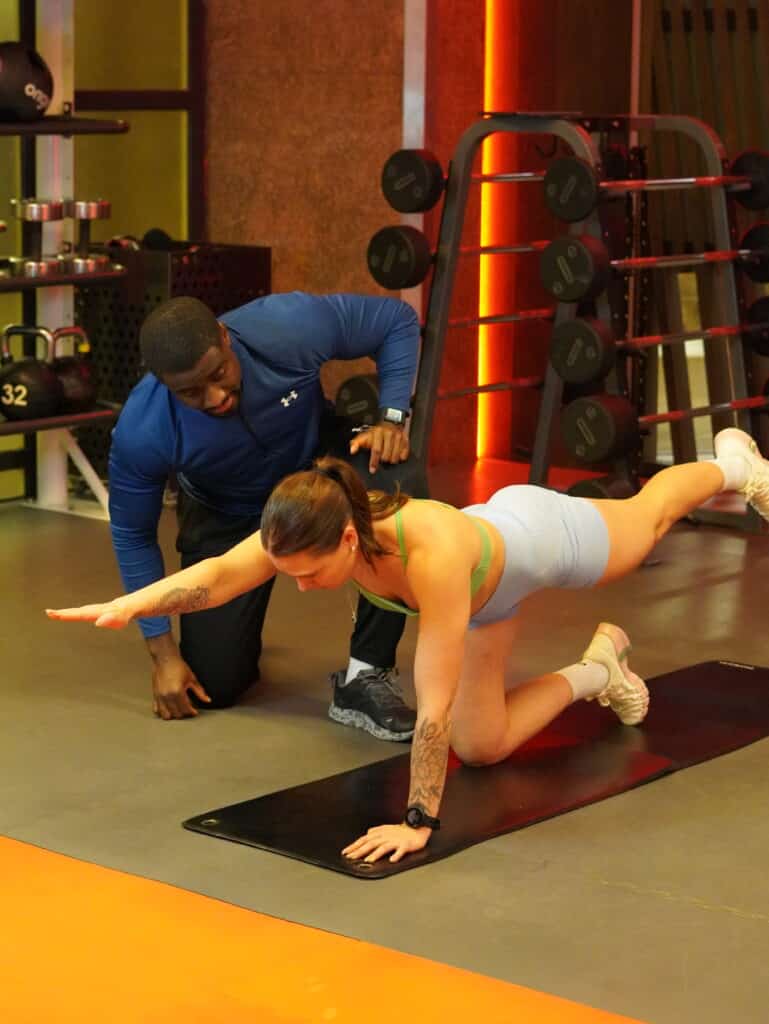
Technique: Set up on your hands and knees. Extend the opposite leg and row without rotating your hips.
Common mistake: Using a weight that causes the pelvis to twist.
Home option: Remove the kettlebell and perform a standard bird dog.
Gym option: Use a half-kneeling cable single-arm row.
12REPS video: The linked 12REPS guide contains an exercise demonstration.
Workout B: Hip Hinge, Pull and Core Emphasis
Workout B includes lower-impact power, a hip hinge, unilateral leg strength, vertical pulling, vertical pushing and direct calf training.
Exercise | Weeks 1-3 | Weeks 4-6 | Weeks 7-9 | Weeks 10-12 | Rest | Home alternative | Gym alternative |
2 x 3 | 3 x 3-4 | 3-4 x 3-5 | 3 x 3 | 75-120 sec | Fast step-up or squat to calf raise | Low box jump | |
2 x 8-10 | 3 x 8-10 | 3 x 6-10 | 3 x 6-8 | 90-180 sec | Dumbbell or kettlebell RDL | Barbell RDL or leg-curl machine | |
2 x 8 each | 3 x 8-12 each | 3 x 8-10 each | 2-3 x 6-10 each | 75-120 sec | Low step-up | Cable step-up | |
2 x 8-12 | 3 x 8-12 | 3 x 6-10 | 3 x 6-10 | 75-120 sec | Resistance-band pulldown | Assisted pull-up | |
2 x 8 each | 3 x 8-10 each | 3 x 6-10 each | 3 x 6-8 each | 75-120 sec | Single-dumbbell kneeling press | Shoulder press machine | |
2 x 12-15 | 3 x 12-15 | 3 x 10-15 | 3 x 8-12 | 60-90 sec | Single-leg bodyweight calf raise | Leg-press calf raise |
How to Perform Workout B
Bodyweight Box Jump Squat
Main muscles: Quadriceps, glutes, hamstrings, calves and core.
Why runners benefit: This trains rapid force production and controlled landing. Use it only when you already have comfortable squat and landing mechanics.
Technique: Use a low box. Jump with intent, land quietly and stand before stepping down.
Common mistake: Choosing a high box and pulling the knees excessively towards the chest.
Home option: Perform a fast step-up or squat to calf raise.
Gym option: Use a low, stable plyometric box.
12REPS video: The linked 12REPS guide contains an exercise demonstration.
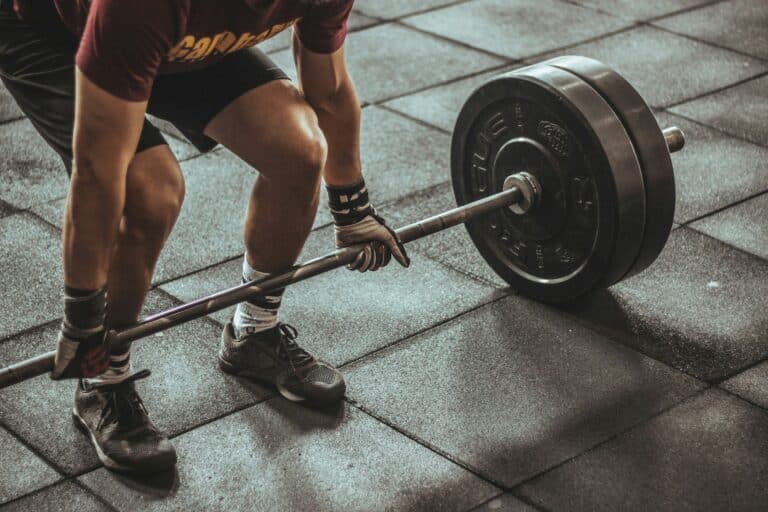
Cable Straight-Bar Romanian Deadlift
Main muscles: Hamstrings, glutes and spinal stabilisers.
Why runners benefit: The Romanian deadlift develops posterior-chain strength and teaches the hips to produce force.
Technique: Keep a soft bend in your knees. Push your hips backwards and keep the bar close to your legs.
Common mistake: Squatting down instead of hinging.
Home option: Use dumbbells or kettlebells.
Gym option: Use a barbell Romanian deadlift or a leg-curl machine when hinging is unsuitable.
12REPS video: The linked 12REPS guide contains an exercise demonstration.
Bodyweight Step-Up
Main muscles: Glutes, quadriceps, hamstrings, calves and core.
Why runners benefit: Step-ups resemble the single-leg force production used during running, climbing and hill work.
Technique: Place your whole foot on the platform. Drive through the working leg and lower slowly.
Common mistake: Pushing hard from the foot that remains on the floor.
Home option: Use a low stable step or bench.
Gym option: Add dumbbells or use a cable step-up.
12REPS video: The linked 12REPS guide contains an exercise demonstration.
Cable Machine Lat Pulldown
Main muscles: Lats, upper back and biceps.
Why runners benefit: Vertical pulling strengthens the back and supports upper-body control during longer runs.
Technique: Secure your thighs, pull the bar towards your upper chest and keep your torso controlled.
Common mistake: Leaning backwards and using momentum.
Home option: Anchor a resistance band overhead and perform a pulldown.
Gym option: Use an assisted pull-up machine.
12REPS video: The linked 12REPS guide contains an exercise demonstration.
Kettlebell Kneeling Shoulder Press
Main muscles: Shoulders, triceps and core.
Why runners benefit: The kneeling position reduces help from the legs and asks the trunk to remain stable during pressing.
Technique: Squeeze your glutes, keep your ribs controlled and press overhead without leaning.
Common mistake: Arching the lower back to finish the repetition.
Home option: Use one dumbbell or kettlebell.
Gym option: Use a shoulder press machine.
12REPS video: The linked 12REPS guide contains an exercise demonstration.
Machine Standing Calf Raise
Main muscles: Gastrocnemius and soleus.
Why runners benefit: Your calves absorb and produce force during every stride. Direct calf work can improve lower-leg strength and capacity.
Technique: Lower your heels under control, press through the balls of your feet and pause at the top.
Common mistake: Bouncing through short repetitions.
Home option: Perform single-leg calf raises while holding a dumbbell.
Gym option: Use the standing calf machine or leg-press calf raise.
12REPS video: The linked 12REPS guide contains an exercise demonstration.
How to Progress Across the 12 Weeks
Use double progression for the strength exercises:
- Begin near the lower end of the repetition range.
2. Keep the same weight while adding controlled repetitions.
3. Reach the top of the range across your sets.
4. Increase the load by the smallest practical amount.
5. Return to the lower end.
6. Repeat.
Example: week one – 12 kg for 8 and 8 repetitions. Week two – 12 kg for 9 and 8. Week three – 12 kg for 10 and 9. Week four – 12 kg for 10, 10 and 9. Later, reach the top of the range across all sets, then increase the weight and return to the lower range.
Do not add weight when your balance, range or technique is getting worse. A cleaner repetition is progress. So is using a fuller range, needing less support or completing every planned session.
How to Progress Power Exercises
Power training is not progressed in the same way as muscle-building work. Do not chase fatigue.
Focus on movement speed, landing quality, low repetitions, full recovery, consistent technique and appropriate exercise difficulty.
Most power sets should contain three to six repetitions. Rest for 60 to 120 seconds. End the set when you can no longer jump quickly or land quietly. Do not perform jumps to muscular failure.
Beginners can use fast squats, controlled step-ups or squat-to-calf raises instead of jumping.
Home Equipment Options
You can follow this programme at home with one or two dumbbells, one or two kettlebells, a stable training bench, a mat, a resistance band and a safe step or platform.
When weights are limited, progress by adding repetitions, slowing the lowering phase, adding a pause, increasing the range, using one leg, improving control or choosing a harder variation.
Do not use unstable furniture. A chair that slides or a table that tips is not a suitable exercise platform.
Gym Equipment Options
A gym gives you access to dumbbells, kettlebells, barbells, cable machines, leg press, leg curl, lat pulldown, chest press machine, shoulder press machine, Smith machine and calf raise machine.
Machines are not inferior to free weights. They can provide stability, make resistance easier to control and help you train effectively when balance or technique is limiting the load.
Choose the option that helps you train the intended muscles with consistent form.
Warm-Up Before Each Workout
Keep your warm-up between five and eight minutes.
- Two to four minutes of easy cycling, rowing or walking
- Ankle rocks for six to ten repetitions per side
- Hip rotations or controlled lunges
- Eight bodyweight squats
- Ten glute bridges
- Ten controlled calf raises
- One light warm-up set of your first strength exercise
Do not complete long static stretches immediately before jumping or heavy lifting. The aim is to increase your temperature and prepare the movements you are about to perform.
Cooldown
- Two to five minutes of easy walking
- Slow controlled breathing
- Light mobility where it feels useful
- Rehydration
- Recording your sets and weights
Stretching may feel comfortable, but it does not remove all soreness or guarantee injury prevention.
How to Combine Strength Training With Running
Running three days per week
- Monday: Strength Workout A
- Tuesday: Easy run
- Wednesday: Rest
- Thursday: Intervals or tempo
- Friday: Strength Workout B
- Saturday: Rest
- Sunday: Long run
Running four days per week
- Monday: Easy run
- Tuesday: Strength Workout A
- Wednesday: Intervals
- Thursday: Rest
- Friday: Strength Workout B and short easy run
- Saturday: Rest
- Sunday: Long run
Running five days per week
- Monday: Easy run and Strength Workout A
- Tuesday: Recovery run
- Wednesday: Intervals
- Thursday: Rest or easy run
- Friday: Strength Workout B
- Saturday: Easy run
- Sunday: Long run
Keeping some hard sessions on the same day can leave other days genuinely easy. This approach will not suit everyone. Monitor your energy, soreness and running quality. Move the strength workout when it repeatedly affects your most important run.
What to Do During Race Week
- Reduce your strength sets
- Use lighter resistance
- Remove demanding jump exercises
- Avoid unfamiliar movements
- Maintain movement quality
- Prioritise sleep and recovery
For a key race, you might complete one short strength session early in the week and remove the second session. Race week is not the time to gain extra fitness.
Strength Training and Injury Risk
Strength training may improve the capacity of your muscles, tendons, bones, joints, trunk and single-leg movement patterns.
It does not make you immune to injury. Training errors, previous injuries, sudden mileage increases and poor recovery can still cause problems.
Seek individual guidance from a suitable healthcare professional when you have current pain, a recent injury or a medical concern. Do not use this programme to diagnose or treat an injury.
Running Power and Speed
Stronger muscles may allow you to produce more force. Power exercises train your ability to apply that force quickly.
- Accelerating
- Sprinting
- Running uphill
- Changing pace
- Finishing strongly
Strength training alone will not guarantee faster race times. Speed also depends on running sessions, interval exposure, running technique, recovery, experience and consistent training. Treat strength as one part of your performance plan.
Lean Muscle and Body Composition
This programme may support lean muscle through progressive resistance, suitable training volume, adequate protein, enough recovery and consistency.
Fat loss requires a sustainable calorie deficit. Avoid cutting food aggressively while increasing running and strength training at the same time. You need enough energy to train, recover and manage your daily responsibilities.
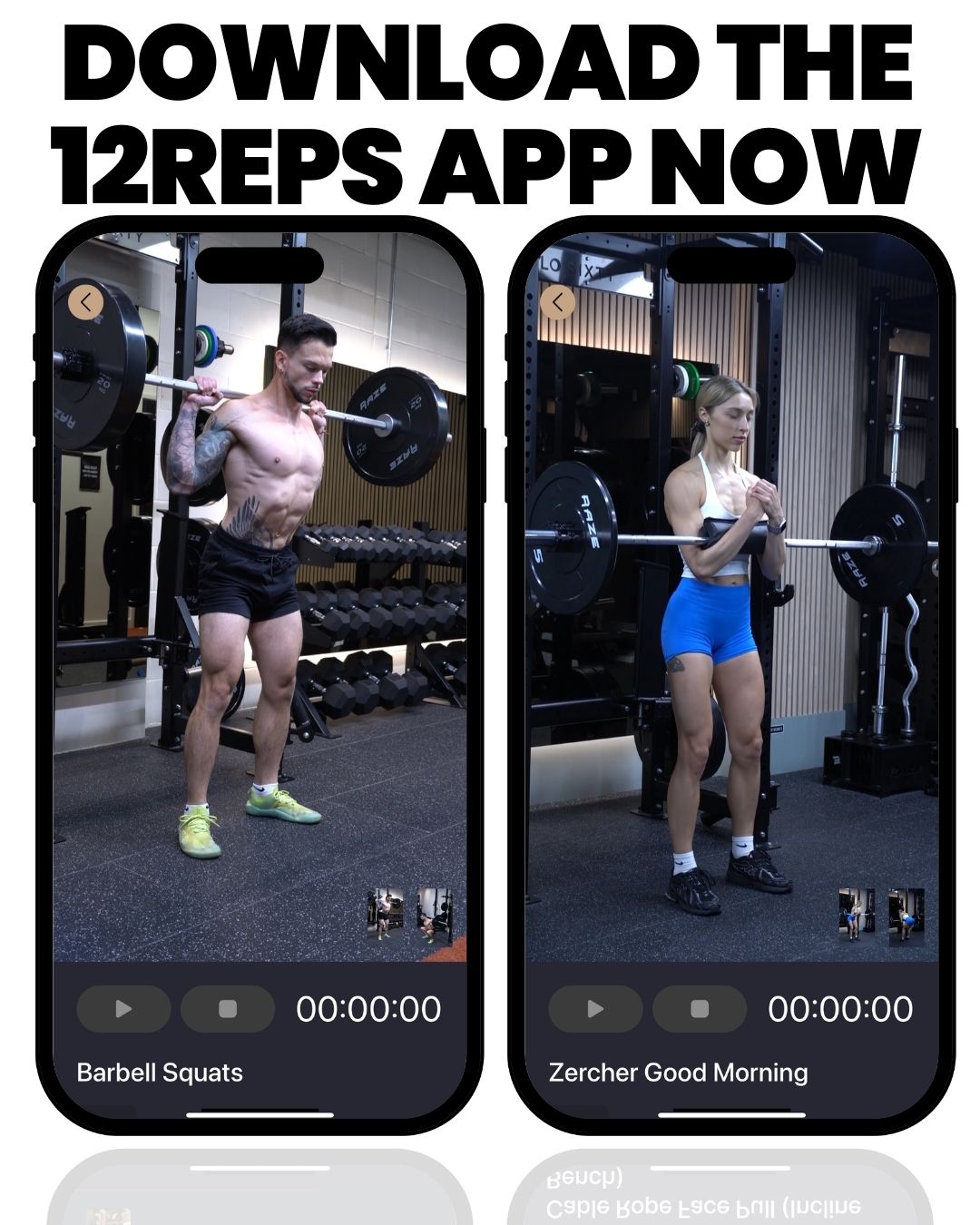
Download the 12REPS App and Track the Full 12 Weeks
Download the 12REPS app, save Workout A and Workout B and track every workout across the full 12 weeks.
- Build both workouts
- Save your sessions
- Record sets
- Record repetitions
- Track weights
- Review previous workouts
- Follow progressive overload
- Replace unavailable exercises
- Watch demonstrations
- Track consistency
- Record personal bests
- Avoid relying on memory
Your training log answers a simple question: are you doing more useful work than you were four weeks ago?
12REPS training action Save both workouts before your first session. Record every working set, even when the weight feels light. Your first three weeks create the baseline you will use to measure the rest of the programme. |
Why I Created This Programme for Female Runners
I am PT Will, a personal trainer with more than a decade of fitness-industry experience and a Sport and Exercise Science BSc (Hons).
I have worked with people who enjoy running but avoid the weights area because they do not know where to start.
Some believe they need a complicated gym plan. Others think strength training must leave them sore for several days.
I designed this programme to remove that uncertainty.
You have two workouts, six exercises in each and a clear progression system.
The gym work should support your running rather than dominate your week.
I want you to develop useful strength, better movement control and more confidence without treating strength training as a second full-time sport.
Common Mistakes Female Runners Should Avoid
Completing too many exercises: Six focused movements are enough. More is not always better.
Training legs heavily before a key run: Leave time between strength work and demanding intervals or long runs.
Avoiding upper-body strength: Presses and rows help you build balanced total-body strength.
Using light weights forever: Increase the challenge once you reach the top of the repetition range.
Adding weight before learning the movement: Improve control first.
Turning strength sessions into cardio circuits: Rest long enough to complete strong, controlled sets.
Taking every set to failure: Keep one to three repetitions in reserve for most exercises.
Adding too much jumping: Start with low volume and stop when landing quality falls.
Ignoring calf and hamstring strength: Both areas experience repeated loading during running.
Changing exercises every week: Keep the main movements long enough to measure progress.
Failing to record performance: Log your weights and repetitions after each exercise.
Reducing food too aggressively: Under-fuelling can affect energy, recovery and running quality.
Using soreness as proof: Soreness is not required for an effective session.
Stopping all strength work during race preparation: Reduce volume where needed instead of automatically removing it.
Copying advanced athletes: Their training age, schedule and recovery resources may be different from yours.
Frequently Asked Questions
How many times per week should female runners strength train?
Two weekly sessions work well for many recreational runners. They provide enough time to train the whole body while leaving room for running and recovery. Some runners may use one session during busy race periods, while others may use three in the off-season.
Can strength training help women run faster?
Strength training may improve force production, running economy and lower-body power. These changes can support running performance, but faster times also require appropriate running sessions, recovery, nutrition and consistent practice. Strength work should complement your running plan.
Will strength training make my legs too heavy for running?
A moderate two-day programme is unlikely to create sudden large increases in muscle size. Temporary heaviness may occur when you begin or increase training volume. Start gradually, avoid excessive sets and schedule demanding leg work away from key running sessions.
Should runners train their legs in the gym?
Yes. Running does not replace progressive lower-body strength work. Squats, hinges, lunges, step-ups and calf raises can develop qualities that running alone may not train with enough resistance.
Can I complete this programme at home?
Yes. Dumbbells, kettlebells, bodyweight, a stable bench and a resistance band can cover most movements. Use the listed home alternatives and progress through repetitions, tempo, pauses, range and harder unilateral variations.
What equipment do I need?
At home, one or two dumbbells or kettlebells, a mat, a resistance band and a stable bench are useful. In a gym, you can use cables, machines, barbells and dumbbells. You do not need every equipment type to follow the programme.
When should I strength train around my long run?
Avoid placing your most demanding lower-body session immediately before your long run, where possible. Many runners place strength one or two days earlier, or after a harder running day, so the following day can remain easy.
Can this programme help reduce running injuries?
The programme may improve strength and physical capacity, which may help reduce injury risk. It cannot prevent every injury. Training load, recovery, previous injuries and individual circumstances still matter.
Can runners lose fat and build lean muscle?
Some runners may improve body composition by combining progressive strength training with suitable nutrition. Fat loss requires a calorie deficit, while muscle development needs adequate protein and recovery. Avoid severe restrictions that reduces your training quality.
How can I track the programme in the 12REPS app?
Create Workout A and Workout B, save the exercise order and enter your weights, sets and repetitions after each session. Review previous performance before your next workout and use the history to guide gradual progression.