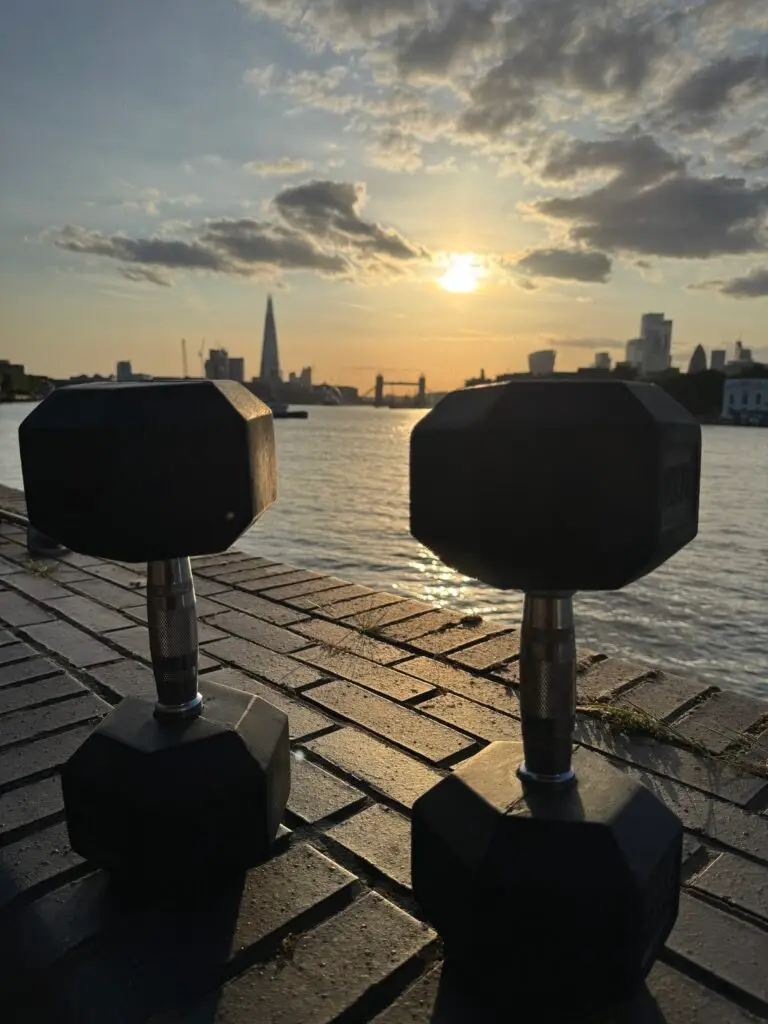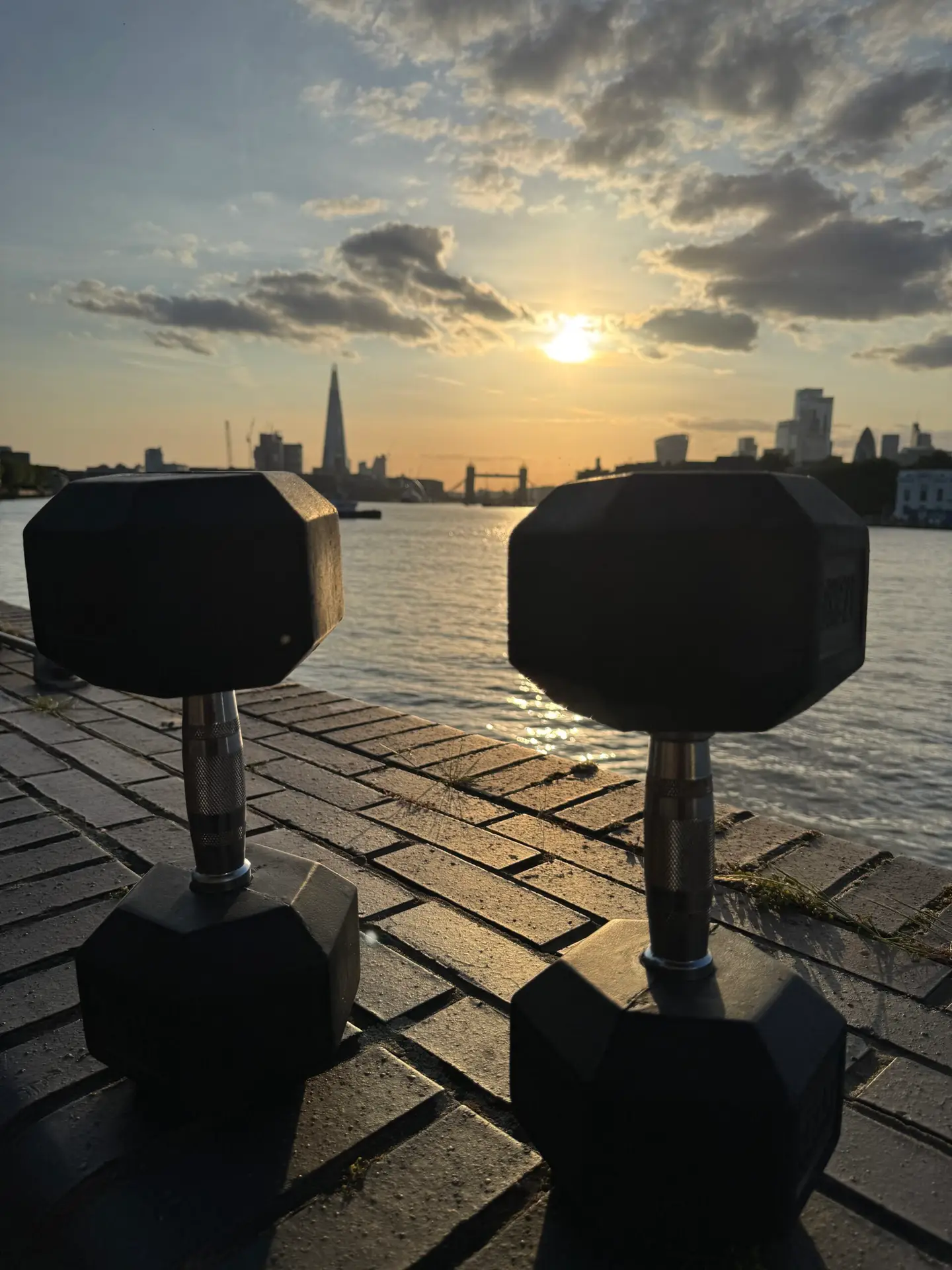



This 25-minute dumbbell workout uses five exercises and straight sets. You do 3 sets of each move, resting 20 seconds between sets and 1 minute between exercises. With a short warm-up, the whole session takes about 25 minutes.
It trains your legs, shoulders, back and arms, and it includes one power move, the dumbbell snatch. If you would rather keep moving from one exercise to the next, try our 20-minute dumbbell workout, which is a full-body circuit.
You don’t need a gym membership or fancy equipment for this session. A pair of dumbbells, some floor space and 25 minutes is enough, so it fits before work or in a lunch break.
25-minute dumbbell workout format
- Warm up for about 5 minutes. Include a few light reps of each exercise, especially the snatch. Our strength training warm-up guide has a simple routine.
- Do 3 sets of each exercise before moving on to the next one.
- Rest 20 seconds between sets.
- Rest 1 minute between exercises.
- Pick a weight you can lift for 8 to 12 good reps. ACSM recommends loads in the 8 to 12 rep range for beginners. For the snatch, see the note below.
| Order | Exercise | Sets | Rest between sets | Rest after |
|---|---|---|---|---|
| 1 | Dumbbell reverse lunge | 3 | 20 seconds | 1 minute |
| 2 | Dumbbell snatch | 3 | 20 seconds | 1 minute |
| 3 | Dumbbell standing shoulder press | 3 | 20 seconds | 1 minute |
| 4 | Dumbbell alternating biceps curl | 3 | 20 seconds | 1 minute |
| 5 | Dumbbell bent-over row | 3 | 20 seconds | Done |
A note on rest
Twenty seconds is short. It keeps the session to 25 minutes and keeps your heart rate up. A 2024 review found that resting longer than 60 seconds may give slightly more muscle growth, although the evidence is still uncertain. If your reps drop a lot from one set to the next, rest up to 60 seconds and accept a slightly longer session. Our guide on how long to rest between sets explains the trade-offs.
The 5 exercises
1. Dumbbell reverse lunge
Muscles worked: Quads, glutes, hamstrings and core.
How to do it: Hold one dumbbell in each hand. Step back with your right leg and lower your knee to just above the floor. Push off your front heel to return. Alternate legs with each rep.
Why it’s in the workout: It strengthens your lower body one leg at a time and challenges your balance.
2. Dumbbell snatch
Muscles worked: Full body, especially legs, glutes, back, shoulders and core.
How to do it: Start with the dumbbell on the floor between your feet. Push your hips back and bend your knees to grab it with one hand, keeping your back flat. Drive up through your legs and hips, keep the dumbbell close to your body, and punch it overhead in one smooth movement. Lower it with control and switch arms each set or each rep.
Why it’s in the workout: It trains power, which is your ability to produce force fast. It also raises your heart rate.
Coaching note: Learn the snatch with a light dumbbell. For power, ACSM suggests moderate loads lifted as fast as possible, so stop each set while every rep is still fast and crisp.
3. Dumbbell standing shoulder press
Muscles worked: Shoulders, triceps and core.
How to do it: Stand tall with a dumbbell in each hand at shoulder height. Brace your core and press the dumbbells overhead without leaning back. Lower with control.
Why it’s in the workout: Strong shoulders help with pushing and overhead lifting, and standing makes your core work to keep you steady.
4. Dumbbell alternating biceps curl
Muscles worked: Biceps, with help from your forearms.
How to do it: Stand tall with your palms facing forward. Curl one dumbbell up without swinging, lower it slowly, then curl the other arm.
Why it’s in the workout: It adds simple, direct arm work after the bigger lifts.
5. Dumbbell bent-over row
Muscles worked: Upper back, lats and rear shoulders.
How to do it: Hinge at the hips with a flat back so the dumbbells hang down. Pull them toward your waist. Squeeze your shoulder blades together at the top, then lower with control.
Why it’s in the workout: Many of us spend a lot of the day sitting and leaning forward. Rows train the muscles on the back of your upper body and balance out the pressing in this workout.
Make it count
A session like this is easy to skip when you have no plan. Write down your weights and reps, and try to beat one of them next time.
The NHS recommends strengthening activities for all the major muscle groups on at least 2 days a week. You could do this workout on one day and the 20-minute circuit on another for variety.
Want to know why short sessions work? Our guide to building strength when you are short on time covers the research, including a 2021 review on designing shorter strength programs. For a session with more chest work, try our dumbbell upper body workout.
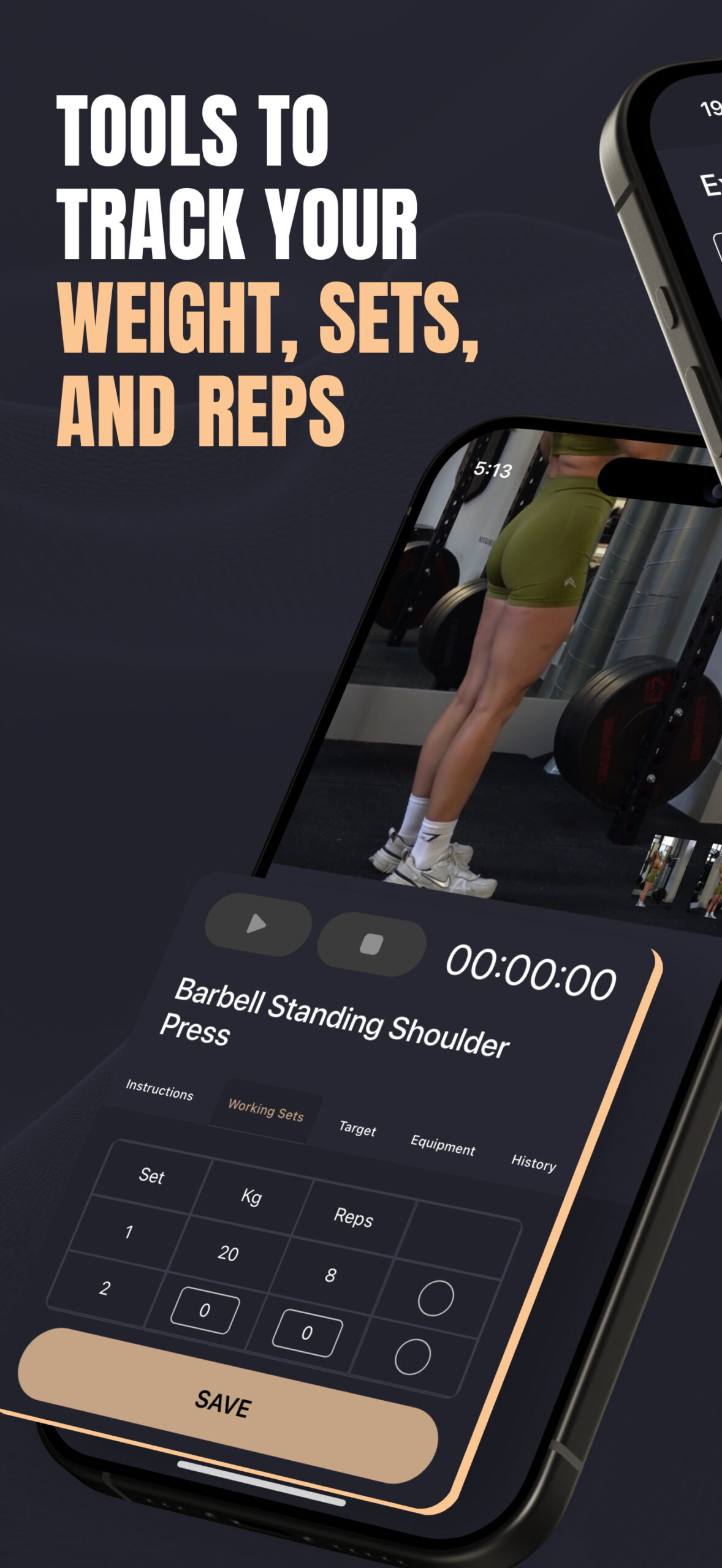
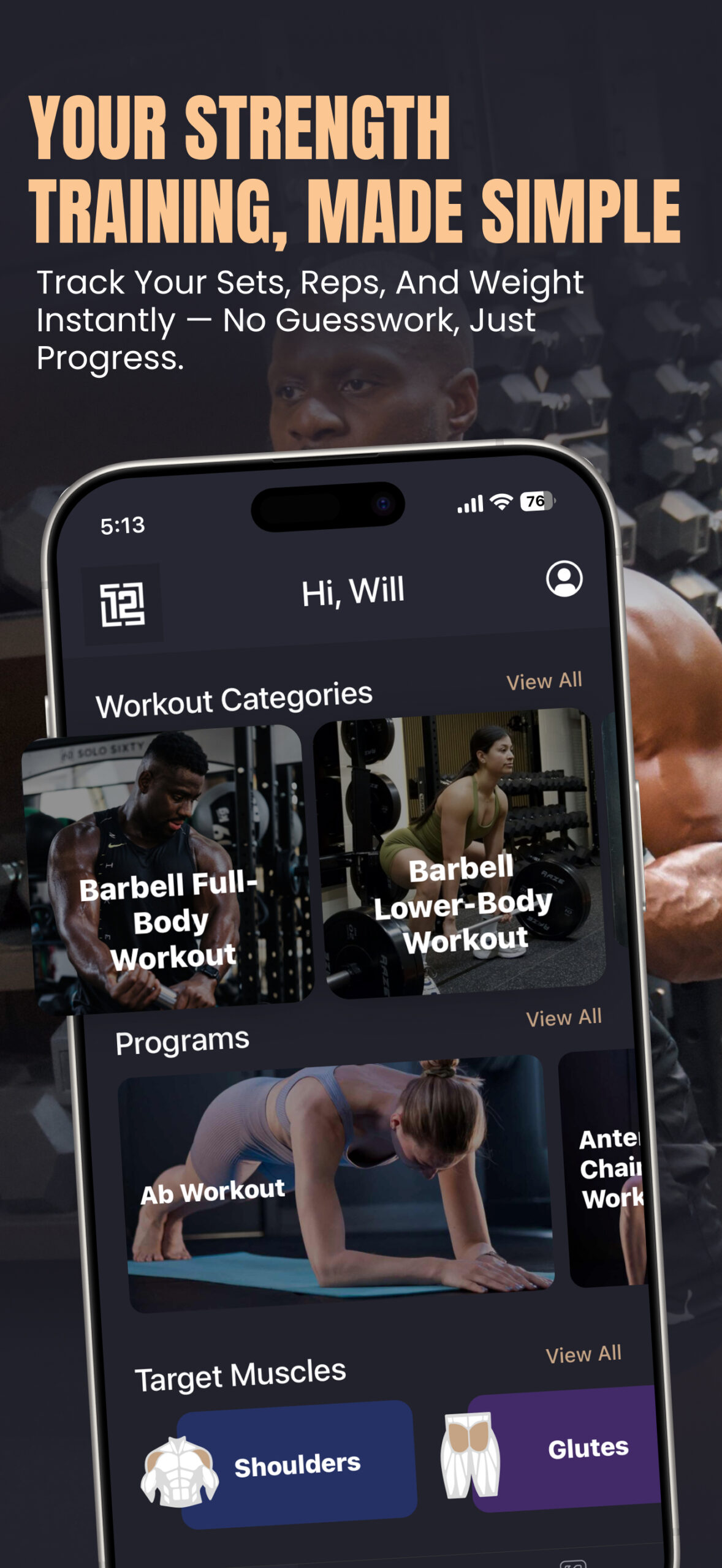
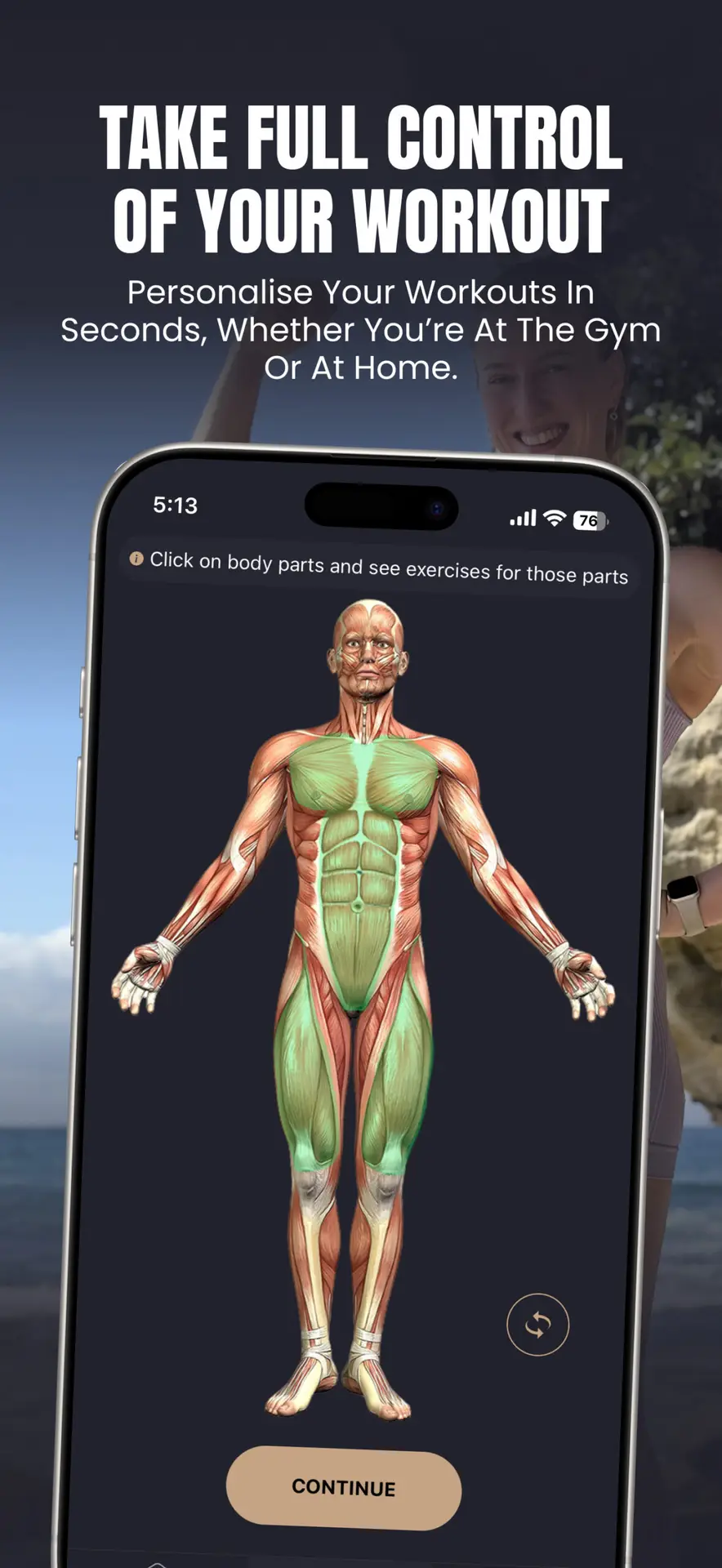
If you want this kind of structure every time you train, 12REPS can help. Choose the muscle, equipment and time you have, and 12REPS builds the session. Every exercise has a trainer demo, and the app remembers what you lifted so you have a number to beat. It is available on the App Store and Google Play.
Sources
- American College of Sports Medicine position stand. Progression models in resistance training for healthy adults. Medicine & Science in Sports & Exercise 41(3):687-708, 2009. https://pubmed.ncbi.nlm.nih.gov/19204579/
- Resistance Training Position Stand infographic: Resistance training prescription for muscle function, hypertrophy, and physical performance in healthy adults. American College of Sports Medicine, 2026. https://acsm.org/wp-content/uploads/2026/03/Resistance-Training-Position-Stand-infographic.pdf
- Give it a rest: a systematic review with Bayesian meta-analysis on the effect of inter-set rest interval duration on muscle hypertrophy (Singer A, et al.). Frontiers in Sports and Active Living, 2024. https://frontiersin.org/journals/sports-and-active-living/articles/10.3389/fspor.2024.1429789/abstract
- No Time to Lift? Designing Time-Efficient Training Programs for Strength and Hypertrophy: A Narrative Review (Iversen VM, Norum M, Schoenfeld BJ, Fimland MS). Sports Medicine 51(10):2079-2095, 2021. https://pmc.ncbi.nlm.nih.gov/articles/PMC8449772/
- Physical activity guidelines for adults aged 19 to 64. NHS, 2024. https://www.nhs.uk/live-well/exercise/physical-activity-guidelines-for-adults-aged-19-to-64/