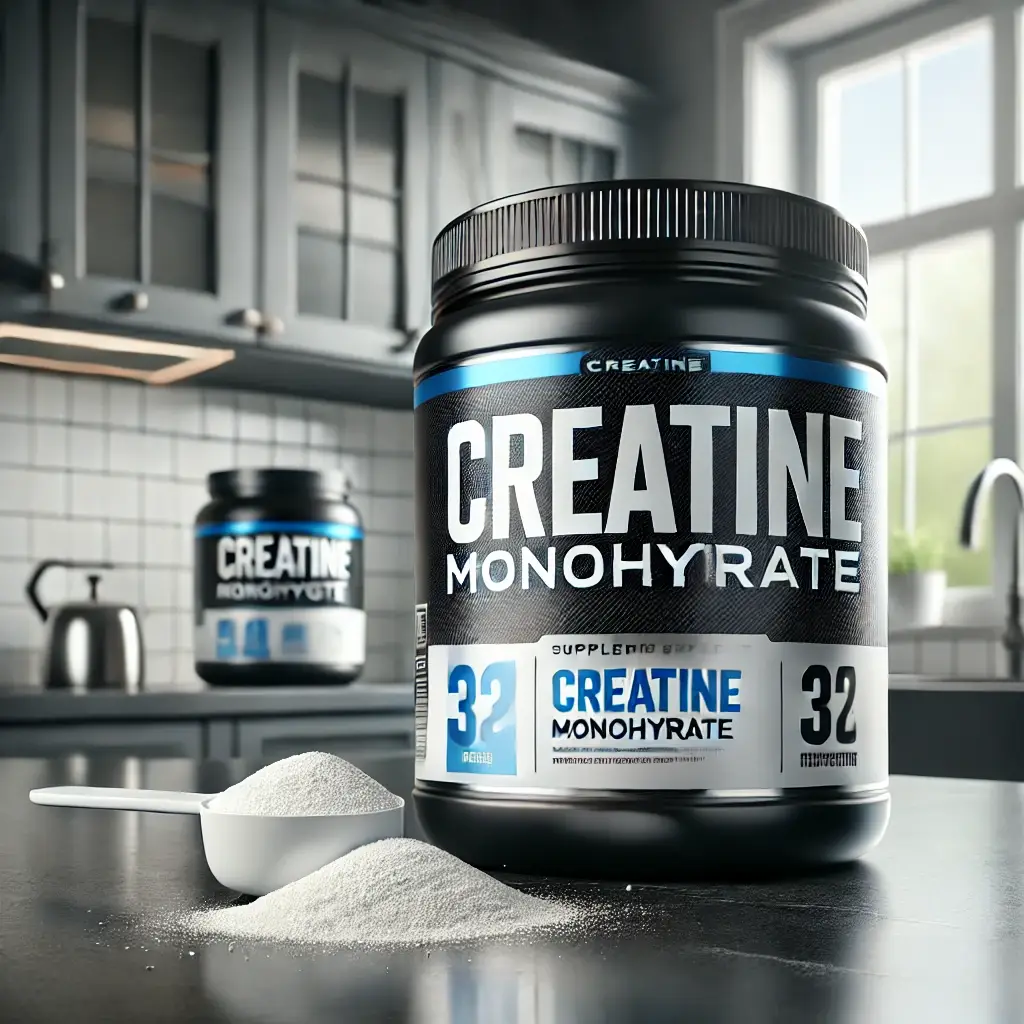



The simplest way to take whey protein and creatine is daily and consistently. Use whey to help you reach your protein target, and take 3 to 5 g of creatine monohydrate a day. Timing matters far less than taking them regularly alongside good training and food.
In this article, I explain what each supplement does, how much to take, whether you can take them together and what to know about safety. I also share my own experience with both. Food comes first, but supplements can help if you use them the right way.
Whey protein is a milk protein sold as a powder. It’s a convenient way to add protein if you’re training hard and find it hard to hit your target from food alone.
Creatine is a well-researched supplement for strength and high-intensity training. It helps most with short, hard efforts like heavy sets, sprints and repeated bursts with little recovery time.
Why I started using whey protein
I have trained for over 16 years, mostly strength training, boxing and tag rugby. In my late teens, I was playing sport competitively while studying at university. I noticed I wasn’t recovering as well as I wanted. I’d feel sore for days, and some weeks I struggled to hit my numbers in the gym.
I also realized I wasn’t eating enough protein. I thought I was, but once I tracked my meals, it was clear I was falling short. My coach at the time suggested whey protein. Alongside eating more overall, it helped me hit my protein target, and my recovery and gym numbers improved.
What does whey protein do?
Whey gives your body amino acids, the building blocks of protein, to repair and build muscle after training. It contains all nine essential amino acids and is rich in leucine. Leucine helps trigger muscle protein synthesis, the process your body uses to build new muscle tissue.
A 2018 meta-analysis of 49 studies found that protein supplements added modest extra gains during resistance training. On average, people gained about 2.5 kg more on their one-rep max (1RM) and about 0.3 kg more fat-free mass (Morton et al., 2018). Your 1RM is the most weight you can lift for one full rep.
The same analysis found no further gains in fat-free mass once total protein intake went above about 1.6 g per kg of body weight per day. In other words, whey helps when it gets you closer to your daily target. It doesn’t do much beyond that.
How much whey protein to take
The International Society of Sports Nutrition (ISSN) is a professional body for sports nutrition research. It says most people who exercise need 1.4 to 2.0 g of protein per kg of body weight a day (Jäger et al., 2017). For an 80 kg person, that’s about 112 to 160 g a day from all sources.
The ISSN also suggests about 0.25 g of protein per kg per meal, or 20 to 40 g, spread every 3 to 4 hours. One scoop of whey can bring a low-protein meal or snack up to that range. For a deeper look, read how much protein you really need to build muscle.

My experience with creatine
Creatine is a supplement I’d recommend if you’re over 18 and your doctor is happy for you to take it. It suits high-intensity sports, strength training and powerlifting.
I began with 5 g a day, with no loading phase, mixed into my pre-workout shake. In the first week, not much changed. By the third week, I felt stronger.
My lifts started to climb, especially compound movements like the barbell squat and barbell bench press. The difference wasn’t dramatic, but it was real. I could push out an extra rep, and over time that added up.

What does creatine do?
Creatine raises the amount of creatine and phosphocreatine stored in your muscles (Kreider, 2003). Phosphocreatine helps your muscles make ATP, their main energy source, during short, intense efforts like a heavy set or a sprint.
That extra energy lets you do a little more work in hard sets. A 2003 review looked at 22 studies of creatine during resistance training. On average, strength rose about 20% with creatine versus 12% with a placebo (Rawson and Volek, 2003). Responses varied a lot between people.
The ISSN position stand on creatine says it may also support recovery after exercise (Kreider et al., 2017).
How much creatine to take
The ISSN describes two ways to start (ISSN summary).
- With a loading phase: about 0.3 g per kg of body weight per day for 5 to 7 days, then 3 to 5 g a day. For an 80 kg person, that’s about 24 g a day for the first week.
- Without a loading phase: 3 to 5 g a day. Muscle stores rise more slowly, over about 3 to 4 weeks.
Both approaches raise your muscle creatine stores. Loading just gets you there sooner. The ISSN guidance refers to creatine monohydrate, so that’s the form to look for.
My own experience fits the no-loading approach. I noticed a difference after about three weeks.
Can you take whey protein and creatine together?
Yes. Nothing in the ISSN guidance says you need to keep them apart. Many people simply stir creatine into a protein shake because it’s convenient.
Consistency matters more than timing. A review for the National Strength and Conditioning Association (NSCA) found no clear advantage to taking creatine before or after training (Gonzalez and Escalante, 2023). For protein, the ISSN says the best timing is likely a matter of personal tolerance.
So pick a time you’ll remember, like breakfast or after your session, and take them daily.
Is it safe to take whey protein and creatine?
For healthy adults, both have a good safety record at normal doses. The ISSN states that creatine supplementation, short and long term (up to 30 g a day for 5 years), is safe and well tolerated in healthy people.
A later ISSN review described creatine as relatively well tolerated, especially at recommended doses (Antonio et al., 2021). Whey is a food protein from milk, so avoid it if you have a milk allergy.
Some people gain a little body weight when they start creatine. In my case, it was mostly water stored in the muscles, and it made me look fuller rather than bloated. I also made sure I drank enough water through the day.
If you have kidney disease or another medical condition, take medication, or are under 18, check with your doctor or pharmacist before taking creatine or protein supplements.
What I noticed after three months
Three months in, I was lifting more and recovering better. Whey helped me stay consistent with my nutrition, even on busy days, and I hit my protein target. Creatine gave me a small but steady edge. My sessions felt more intense, and I had more energy to push hard.
What I learned
- Supplements work best when your training and diet are already consistent. They won’t make up for random workouts or poor meals.
- Whey protein is food in powder form. It helps you hit your protein target, and that’s all. Don’t overthink it.
- Creatine isn’t only for bodybuilders. It can help people doing resistance training or high-intensity sport, though results vary.
- Consistency matters more than timing. I took both daily, with no special protocols.

Would I recommend whey protein and creatine?
Yes, for most healthy adults who lift regularly and want to build strength or muscle. Both are affordable, simple to use and backed by research.
But your real progress comes from showing up, training hard and eating well. Supplements just support the process. That’s my experience: straightforward, nothing fancy.
Want to read more? See which supplements you actually need for strength training, whether to take creatine for Hyrox and whey protein for older adults.
If you want your training sorted so supplements have something to support, 12REPS builds a plan around your goal, your equipment and the time you have. You log every set, and the app remembers what you lifted, so you always have a number to beat. Find out how the 12REPS app works.
– Will Duru
Sources
- International Society of Sports Nutrition Position Stand: protein and exercise. Journal of the International Society of Sports Nutrition, 2017. https://cdr.lib.unc.edu/concern/articles/gh93h184p
- International Society of Sports Nutrition position stand: safety and efficacy of creatine supplementation in exercise, sport, and medicine. Journal of the International Society of Sports Nutrition, 2017. https://doaj.org/article/4a276c2d31944beaab82cdc923c69c83
- New ISSN Position Stand on Creatine Supplementation (summary of dosing guidance). Exercise & Sport Nutrition Laboratory, Texas A&M University, 2017. https://exerciseandsportnutritionlab.com/new-issn-position-stand-on-creatine-supplementation/
- Common questions and misconceptions about creatine supplementation: what does the scientific evidence really show?. Journal of the International Society of Sports Nutrition, 2021. https://doaj.org/article/53414d89877f41f5bf135d738acaff16
- A systematic review, meta-analysis and meta-regression of the effect of protein supplementation on resistance training-induced gains in muscle mass and strength in healthy adults. British Journal of Sports Medicine, 2018. https://bjsm.bmj.com/content/52/6/376.abstract
- Effects of creatine supplementation on performance and training adaptations. Molecular and Cellular Biochemistry, 2003. https://www.sponet.de/sponet/Record/4009942?lng=de
- Effects of creatine supplementation and resistance training on muscle strength and weightlifting performance. Journal of Strength and Conditioning Research, 2003. https://sponet.de/sponet/Record/4008363
- The Importance of Creatine Timing for Muscle Size and Strength. NSCA Personal Training Quarterly, 2023. https://www.nsca.com/contentassets/8388b2d11fae45b0a583a867db23adcd/ptq-10.2.2-the-importance-of-creatine-timing-for-muscle-size-and-strength.pdf