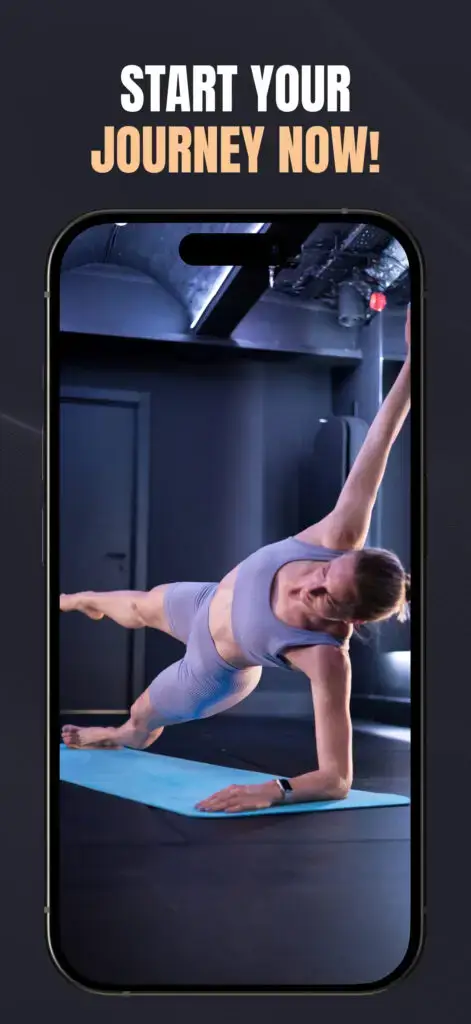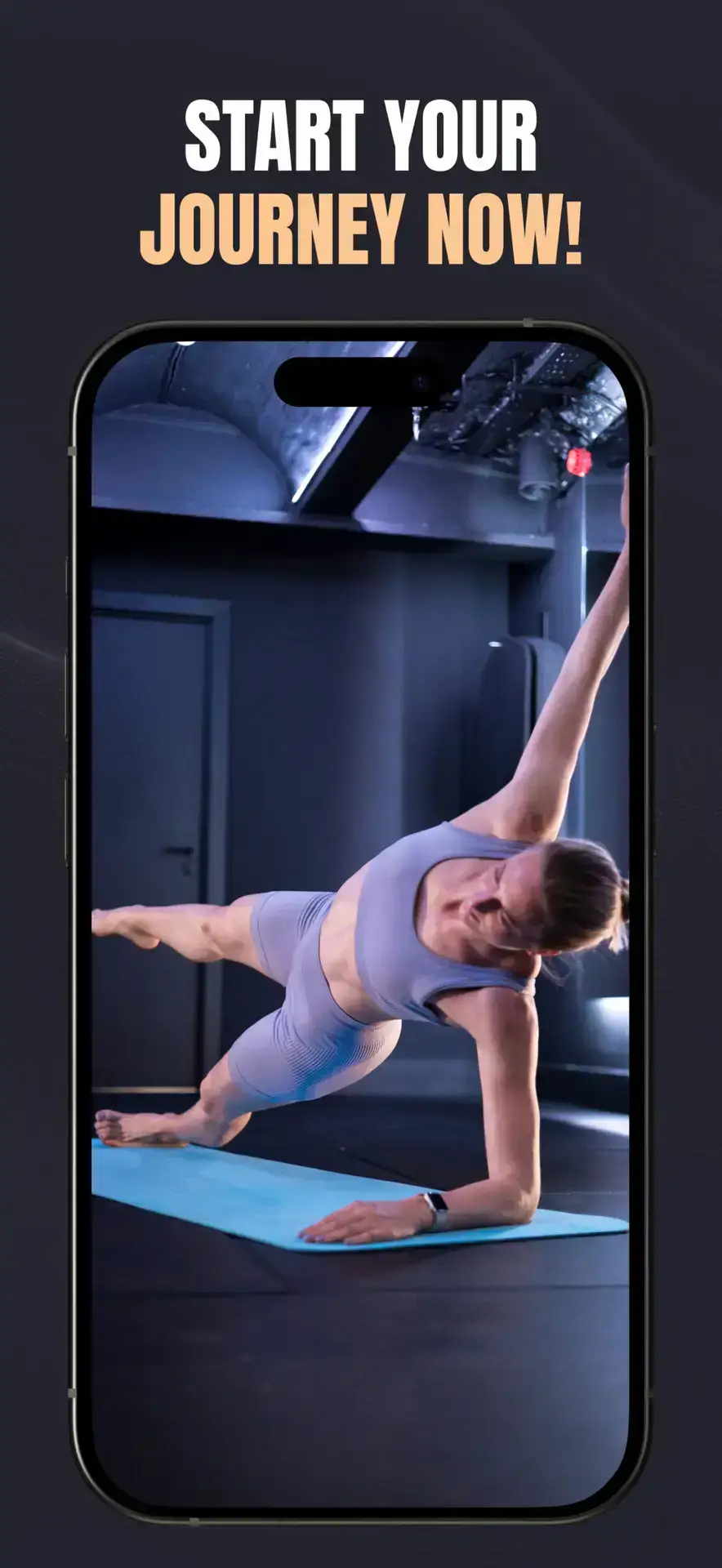



The 12REPS core workout is a full core session you can follow from start to finish: a short warm-up, five core exercises for five sets each, and a cool-down. It trains your abs, obliques and the muscles that keep your trunk steady, using your body weight and an optional light weight for sit-ups.
This page is the workout itself. If you are new to core training and want to learn the basics first, start with our beginner’s guide to core strength.
People say abs are made in the kitchen. Your diet affects how visible your abs are, but core strength comes from training. Your core muscles keep your trunk steady when you lift, carry or push, or when something knocks you off balance.
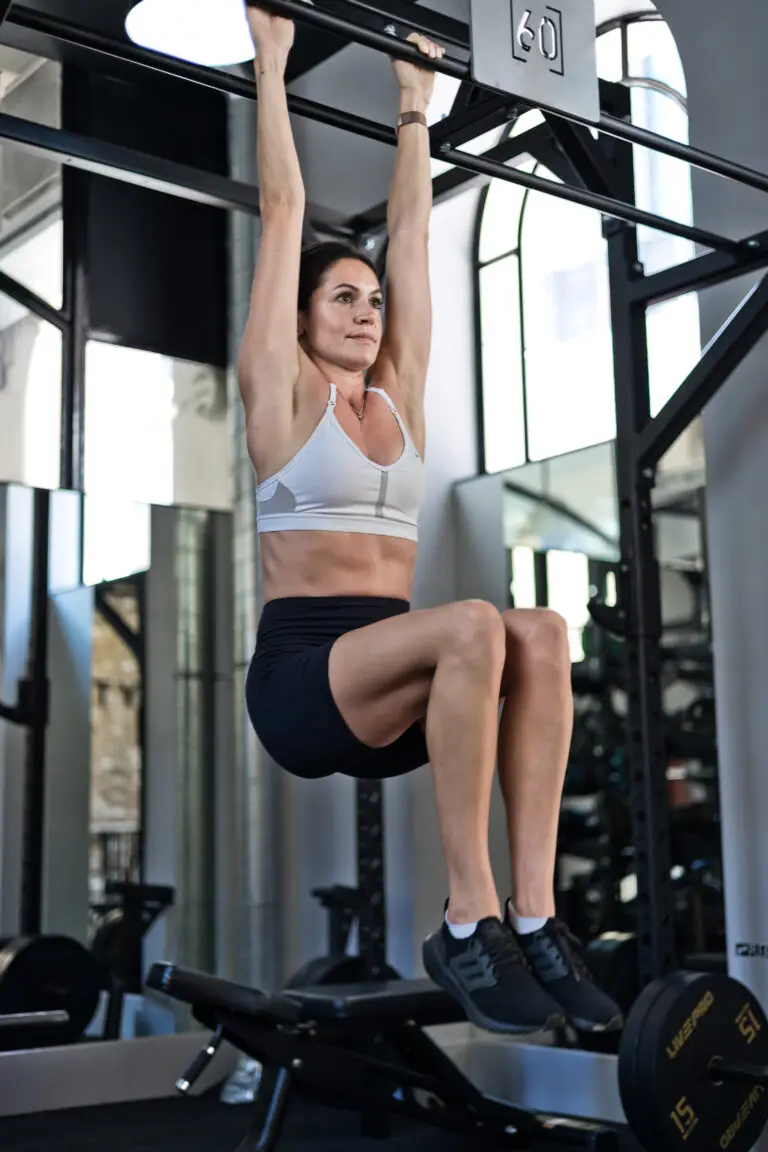
The photo shows a hanging leg raise. It is a harder core exercise to work toward once the lying leg raises in this workout feel solid.
What this core workout trains
Your core is more than your six-pack. It includes the muscles around your trunk and pelvis that control how your spine moves and link your upper and lower body. Researchers describe core stability as control of your trunk’s position and movement over your pelvis. That control lets force pass to your arms and legs (Kibler and colleagues, 2006).
This workout mixes three kinds of core work:
- Holding still: planks train your trunk to resist moving while you hold a straight line.
- Resisting rotation: shoulder taps make you stop your hips twisting when one hand leaves the floor. Trainers call this anti-rotation.
- Moving: sit-ups, leg raises and plank twists train your abs and obliques (the muscles at the sides of your waist) through a range of motion.
The NHS advises adults to do strengthening activities on at least 2 days a week that work all the major muscle groups, including the back and abdomen (NHS). A core session like this one can be one part of that, alongside work for your legs, chest, back, shoulders and arms.
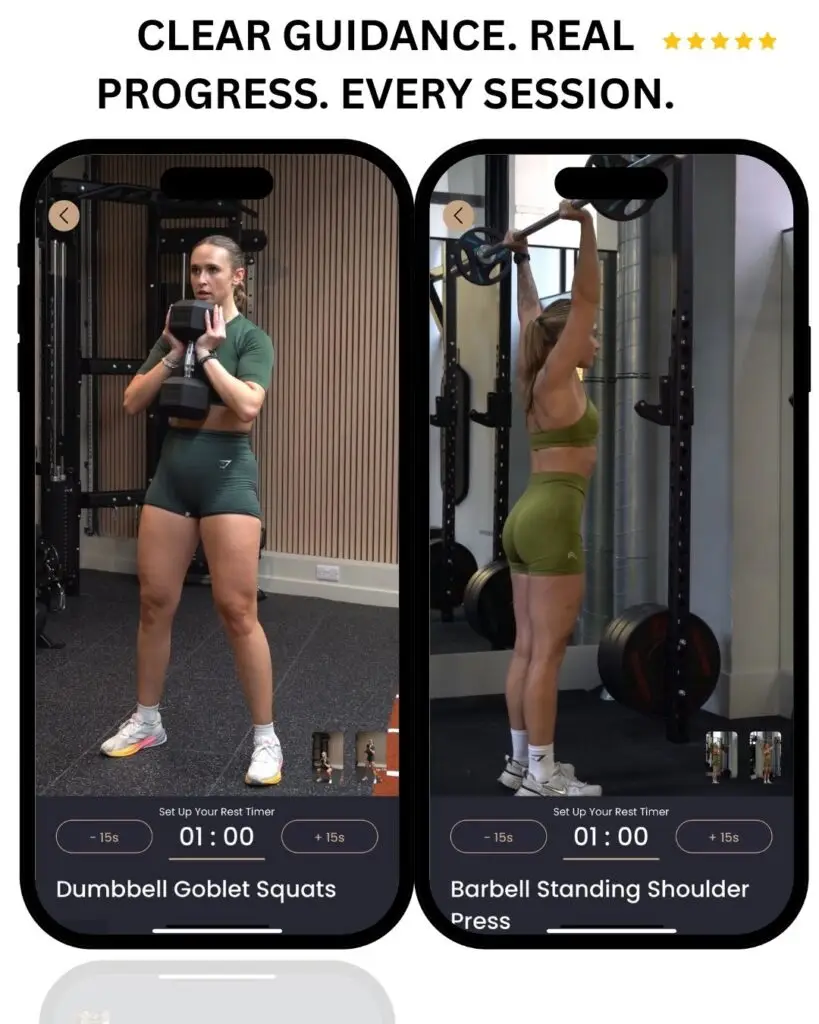
At 12REPS, we have put this core workout together so you do not have to piece together random exercises. Each move below has a trainer demonstration so you can see how it should look.
12REPS is a strength training app that builds sessions around your goal, the equipment you have and the time you have. You can also choose a muscle, such as your core, and the app builds a session for it.
How to do the 12REPS core workout
Do the warm-up first. Then do all five sets of each exercise before you move on to the next one. Finish with the cool-down.
Every exercise follows the same five-set pattern:
- Sets 1 to 3 (main sets): steady, controlled reps or holds.
- Set 4 (drop set): a changed version of the move, such as slower reps, bent knees or a different plank position. In this workout, a drop set means you adjust the exercise so you can keep good form as you tire.
- Set 5 (endurance set): a short combination that links two moves with no break.
| Exercise | Sets 1 to 3 | Set 4 (drop set) | Set 5 (endurance) |
|---|---|---|---|
| Plank shoulder taps | 10 taps per shoulder | 8 slow taps per shoulder | 20-second plank, then 6 taps per side |
| Plank hold | 30-second holds | 20-second forearm plank | 15-second plank, then 10 knee tucks per side |
| Leg raises | 12 reps | 8 bent-knee reps | 6 straight-leg, 6 bent-knee, 10-second hollow hold |
| Sit-ups | 15 reps | 10 bodyweight reps | 5 weighted, 10 unweighted, 15-second hold |
| Plank twists | 10 twists per side | 6 slow twists per side | 5 twists per side, then 10-second side plank each side |
Warm-up (about 8 minutes)
A warm-up gets your spine and hips moving before you load your core. For more ideas, see our guide on how to warm up before strength training.
- Cat-cow, 2 sets of 10 reps: on your hands and knees, slowly round your back up, then let it dip down. Move gently through the whole spine.
- World’s greatest stretch, 1 set of 5 reps per side: step into a deep lunge, then thread one arm under the other to rotate your mid-back and open your hips.
1. Plank shoulder taps
- Sets 1 to 3: 10 taps per shoulder at a steady pace.
- Set 4 (drop set): 8 slow taps per shoulder, with a 2-second pause at the top.
- Set 5 (endurance): hold a full plank for 20 seconds, then do 6 shoulder taps on each side.
How to do it: start in a high plank with your hands under your shoulders and your feet about hip-width apart. Lift one hand and tap the opposite shoulder, then switch. Keep your hips level.
Why it helps: each time one hand lifts, your trunk has to stop your hips twisting. That trains anti-rotation strength and shoulder control.
2. Plank hold
- Sets 1 to 3: 30-second holds. Focus on keeping your spine in a straight, neutral line.
- Set 4 (drop set): a 20-second hold on your forearms.
- Set 5 (endurance): a 15-second full plank, then 10 slow knee tucks on each side.
Why it helps: the plank trains the muscles at the front and sides of your trunk to hold your body still. If your hips sag or rise, shorten the hold. Our guide on how to do a plank properly covers form, hold times and easier versions.
3. Leg raises
- Sets 1 to 3: 12 reps with straight legs. Lower them slowly to about 45 degrees.
- Set 4 (drop set): 8 reps with bent knees, which is an easier lever.
- Set 5 (endurance): 6 straight-leg raises, then 6 bent-knee raises, then a 10-second hollow hold.
A hollow hold means lying on your back with your lower back pressed into the floor, and your shoulders and legs lifted just off it.
Why it helps: leg raises work your abdominals and your hip flexors (the muscles at the front of your hips). Keep your lower back in contact with the floor. If it starts to arch, bend your knees or stop the set. When lying leg raises feel solid, the hanging leg raise is a harder progression.
4. Weighted sit-ups (or bodyweight)
- Sets 1 to 3: 15 reps with your arms crossed, or holding a light plate or dumbbell.
- Set 4 (drop set): 10 reps with no weight.
- Set 5 (endurance): 5 weighted reps, then 10 unweighted reps, then a 15-second seated hold leaning back at about 45 degrees.
Why it helps: sit-ups train the rectus abdominis, the long “six-pack” muscle at the front of your stomach, as it bends your trunk forward. Start with bodyweight only. Add a light weight once you can do all your reps with control.
5. Plank twists (side to side)
- Sets 1 to 3: 10 twists per side (hand touches outside hip).
- Set 4 (drop set): 6 slow twists per side, with a 2-second hold at the end of each twist.
- Set 5 (endurance): 5 twists per side, then hold a side plank for 10 seconds on each side.
Why it helps: the twists add controlled rotation for your obliques. The side plank at the end trains those same muscles to stop your hips sagging sideways.
Cool-down (about 6 minutes)
- Child’s pose with side stretch: hold for 1 minute on each side. Reach both hands to one side and breathe slowly into your side.
- Supine spinal twist: 2 sets of 30 seconds per side. Lie on your back, drop your knees to one side and let your lower back relax.
- Deep breathing: lie on your back with one hand on your chest and one on your stomach. Breathe in so your stomach rises, then breathe out slowly. Keep going for 2 minutes.
How to progress the workout
Once every set feels controlled, make it a little harder. You can add a few reps, hold a plank a few seconds longer, slow down each rep or use a slightly heavier weight for sit-ups. This is called progressive overload: gradually raising the challenge so your body keeps adapting. Our beginner’s guide to progressive overload explains the options.
You do not need a perfect plan. The American College of Sports Medicine’s 2026 guidance says the best resistance training program is the one you will stick with (ACSM, 2026).
Want to change things up? Try the sandbag core workout for a version with a heavier, shifting load. If planks or sit-ups feel too hard right now, the dead bug is a good place to start.
Follow the core workout in 12REPS
If you want your core sessions set out for you, 12REPS builds training around your goal, your equipment and the time you have. Each exercise has a trainer demonstration, and the app remembers what you did last time so you have a number to beat. See how the 12REPS app works.
Sources
- Kibler WB, et al. The role of core stability in athletic function. Sports Medicine, 2006. https://link.springer.com/article/10.2165/00007256-200636030-00001
- Physical activity guidelines for adults aged 19 to 64. NHS, 2024. https://www.nhs.uk/live-well/exercise/physical-activity-guidelines-for-adults-aged-19-to-64/
- ACSM Unveils Landmark 2026 Resistance Training Guidelines: First Update in 17 Years. American College of Sports Medicine via Newswise, 2026. https://www.newswise.com/articles/acsm-unveils-landmark-2026-resistance-training-guidelines-first-update-in-17-years