By Will Duru, BSc (Hons) Sport and Exercise Science, Award winning Personal Trainer with over 10 years of experience in strength training
Should I bulk or cut first? Decide based on your starting point. If you carry more body fat than you are happy with, cut first. If you are already lean and want more muscle, bulk first. If you are new to lifting, or somewhere in between, eating near maintenance while you train hard is often the best first step.
This is one of the most common questions I hear from people who are serious about changing their body. You feel too soft to bulk, but too small to cut. The internet gives you both answers.
This guide gives you a simple way to decide, then explains how to run either phase without wasting months. If you want the exact calorie numbers, our guide on how many calories to eat to build muscle or lose fat walks you through them step by step.
What bulking and cutting mean
Maintenance is the amount of food that keeps your body weight steady.
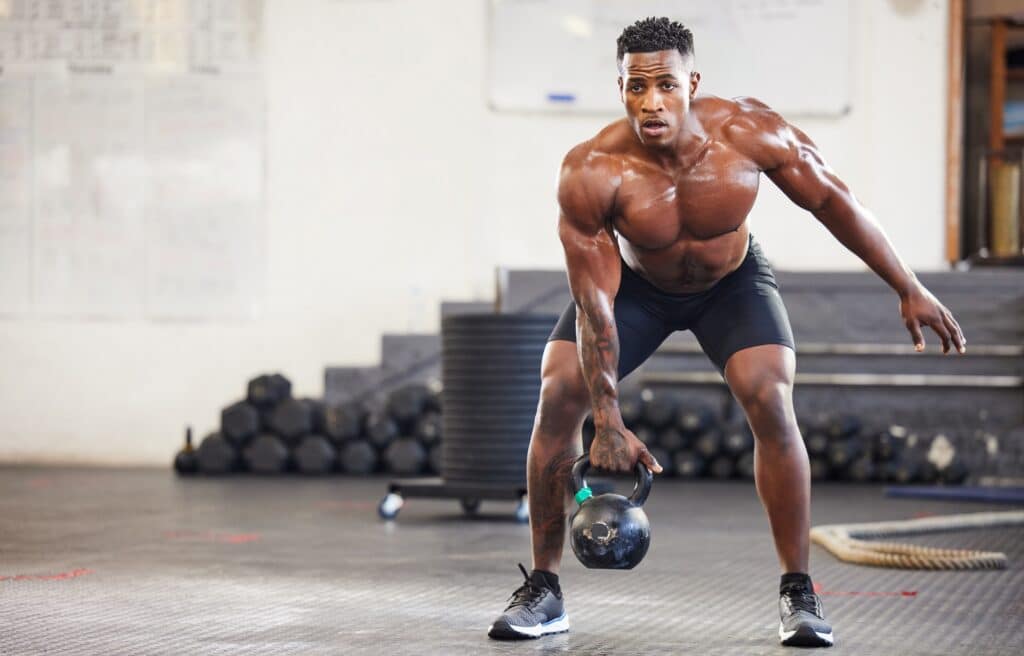
Bulking means eating more than maintenance (a calorie surplus) to support muscle gain. You will gain some fat along with the muscle.
Cutting means eating less than maintenance (a calorie deficit) to lose fat while keeping as much muscle as you can. Fat loss is driven by a sustained calorie deficit, according to the International Society of Sports Nutrition (ISSN) (Aragon et al., 2017).
Body recomposition means eating around maintenance while you lift, to lose some fat and gain some muscle at the same time.
Most people who lift for years move between these phases. The question is which one fits you right now.

Step 1: Look at your starting point
Your current body fat is the biggest factor in this decision. You do not need a precise number. A rough estimate from the mirror, your waist and how your clothes fit is enough.
The ranges below are the rule of thumb I use with men. They are a coaching guide, not a medical cut-off. Body fat estimates from photos or scales are rough, and women naturally carry more body fat than men.
| Rough body fat (men) | What it often looks like | Usual first step |
|---|---|---|
| Around 10 to 12% | Visible abs and clear muscle definition | Bulk first |
| Around 13 to 15% | Upper abs visible, athletic look | Either; choose by goal |
| Around 16 to 19% | Abs barely visible, some softness at the waist | Either; many people prefer to cut |
| Around 20% and above | No ab outline, noticeable fat around the waist | Cut first |
If you carry a lot of body fat: cut first
If your main frustration is the fat around your waist, start with a cut. Seeing a leaner shape is motivating. It also gives you a clearer view of how much muscle you have before you decide to bulk.
If you are lean: bulk first
If you can already see your abs but feel small, cutting further will leave you looking smaller, not more muscular. A slow, lean bulk makes more sense.
If you are in between: choose by goal
In the middle range, neither choice is wrong. If you feel too small, bulk. If you want to see more definition first, cut.
If you are "skinny fat": try recomposition
Skinny fat means a normal body weight, little muscle and some fat around the middle. Cutting can leave you smaller. Bulking can add fat before you have the muscle to fill out.
For many skinny fat beginners, eating near maintenance with plenty of protein and progressive strength training is a better first step. Our body recomposition guide explains how, and the skinny fat workout plan for men gives you a program to follow.
Step 2: Consider your training experience
Beginners
If you have trained consistently for less than about six months, you are likely to build muscle on almost any sensible plan. The ISSN position stand notes that muscle gains have been reported even in a calorie deficit (Aragon et al., 2017). That gives beginners more freedom to cut first if they carry extra fat.
Intermediate and experienced lifters
After a year or more of steady training, muscle comes more slowly. A large calorie deficit makes it harder still. A 2022 meta-analysis found that lifting in a deficit led to smaller lean mass gains than lifting without a deficit. Strength gains were similar (Murphy and Koehler, 2022). At this stage, choosing the right phase and running it well matters more.
Step 3: Decide
- Clearly carrying more fat than you want? Cut first.
- Already lean but feel small? Bulk first.
- Skinny fat and new to lifting? Recomposition first.
- Somewhere in the middle? Answer the questions below.
- Do you have an event coming up? A holiday, wedding or photo shoot can make a cut the practical choice.
- Does your body fat bother you a lot? Cutting first may help your motivation and consistency.
- Do you feel too small? A lean bulk is a good fit.
- What can you stick to? Some people hate eating less. Others hate feeling full all the time. Pick the phase you can keep up for three to six months.
How to bulk without gaining too much fat
Keep the surplus small
A review of bodybuilders’ off-season nutrition suggests eating about 10 to 20% above maintenance. Experienced lifters should aim lower (Iraki et al., 2019). A bigger surplus does not build muscle faster. It mostly adds fat.
Aim for slow weight gain
The same review suggests gaining about 0.25 to 0.5% of your body weight per week (Iraki et al., 2019). Weigh yourself under the same conditions several times a week and look at the weekly average. If you gain faster, eat a little less. If you do not gain at all, eat a little more.
Eat enough protein
Aim for at least 1.6 g of protein per kg of body weight a day. A large meta-analysis found muscle gains leveled off around that intake (Morton et al., 2018). The bodybuilding review suggests 1.6 to 2.2 g per kg (Iraki et al., 2019).
Train with progressive overload
Extra food without hard training mostly becomes fat. Follow a structured plan and try to add a rep or a little weight over time. If that idea is new to you, read progressive overload for beginners.
Set a stopping point
Do not bulk forever. Pick a waist measurement or rough body fat level where you will stop. For most men I coach, that is somewhere around 18 to 20% body fat.
Video: How long does it take to build muscle? A lean bulk is slow by design. This short video sets realistic expectations for muscle gain.
How to cut without losing muscle
Lose weight slowly
For lifters, losing about 0.5 to 1% of body weight per week is a common target to help keep muscle (Helms et al., 2014). The ISSN notes that slower rates can preserve more muscle as you get leaner (Aragon et al., 2017).
Avoid very large deficits. In the 2022 meta-analysis, a deficit of about 500 calories a day or more was enough to stop gains in lean mass (Murphy and Koehler, 2022).
Keep protein high
Protein matters even more when you eat less. A review of lean natural bodybuilders dieting for competition suggests a higher intake, around 2.3 to 3.1 g per kg of lean body mass (Helms et al., 2014).
Keep lifting heavy
Do not switch to light weights and high reps. Keep training your main lifts with challenging weights. You may need fewer sets, but keep the effort high.
Accept slower progress in the gym
Personal records are less likely during a cut. Aim to keep your strength, not to build it.
Set an end point
Pick a target waist size, a rough body fat level or a time limit, such as 12 to 16 weeks. For most men I coach, a cut ends somewhere around 10 to 12% body fat before a lean bulk.
Video: How strength training helps with fat loss. Watch this to see why lifting stays central while you cut.

Common bulking and cutting mistakes
Bulking too hard
“Eat big to get big” is outdated. Eating far above maintenance does not build muscle any faster. It mostly builds fat that you will need to lose later.
Cutting too hard
Crash diets make it harder to keep muscle. You end up lighter but softer. A moderate deficit takes longer, but you keep more of what you built.
Switching every few weeks
Bulking for two weeks, panicking about fat, then cutting for two weeks gets you nowhere. Commit to one phase for at least 8 to 12 weeks before you judge it.
Not training properly in either phase
Your food mostly decides whether your weight goes up or down. Your training decides how much of that change is muscle. Keep training consistent and progressive in every phase.
Watching only the scale
The scale shows total weight, not what it is made of. Track your waist, your lifts and progress photos as well. Someone who loses only a little weight but drops a belt notch and gets stronger is making good progress.
If you have a medical condition, take medication or have a history of disordered eating, talk to your doctor or a registered dietitian before you change how much you eat.
Track the phase you choose
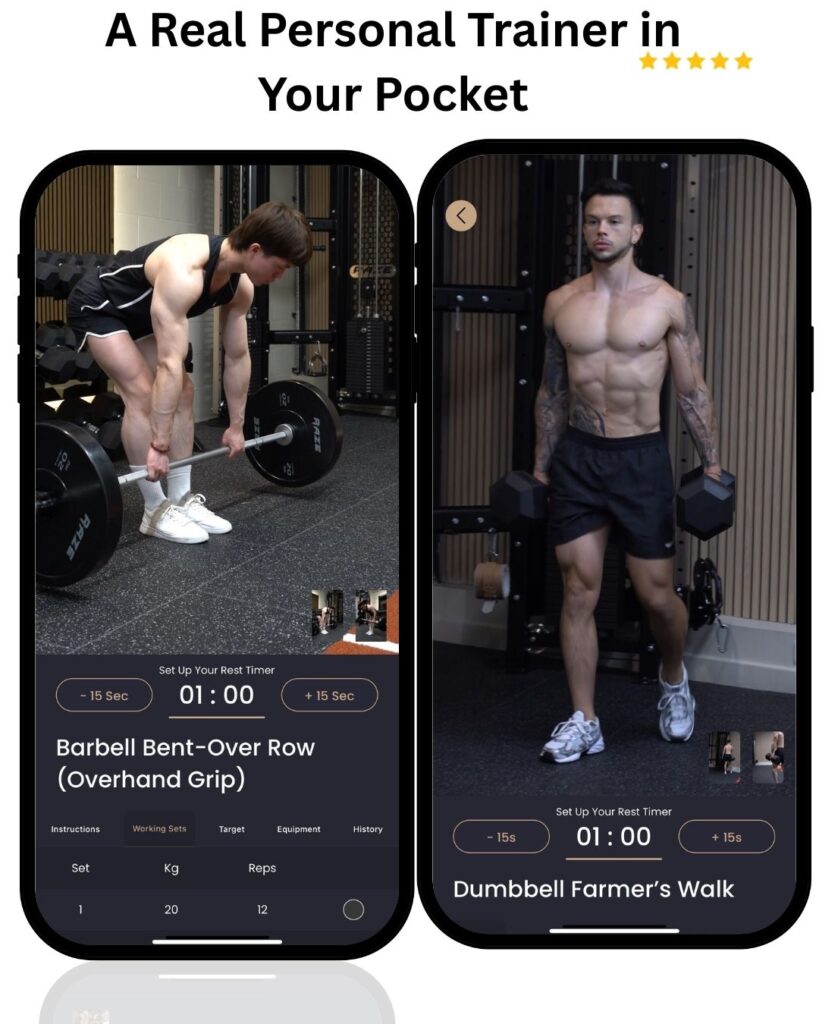
Whichever phase you pick, you need to know whether it is working. 12REPS plans your sessions around your goal, equipment and time, and logs every set so you can see if your strength holds or rises. You can also log your body weight to see the trend and store private progress photos to compare stages.
Final thoughts
There is no single answer to the bulk or cut question. It depends on your starting body fat, your training experience and your goals.
As a rule of thumb, cut first if you clearly carry more fat than you want, and bulk first if you are lean but small. If you are in between or new to lifting, choose what you can sustain, or start with recomposition. If you want to lose fat while still building muscle, read how to lose belly fat and build muscle.
Make a decision, commit to it for at least 12 weeks and track your progress. You can always change course once you see how your body responds.
Bulk or cut FAQs
Can I bulk and cut at the same time?
Not in the strict sense, because one needs a surplus and the other a deficit. But eating near maintenance while you lift can lead to some fat loss and some muscle gain. This works best for beginners and people returning to training.
How long should a bulk or cut last?
Give either phase at least 8 to 12 weeks. A cut often runs 12 to 16 weeks. A lean bulk can run for several months, until you reach the stopping point you set.
About the author: Will Duru holds a BSc (Hons) in Sport and Exercise Science and is a personal trainer with over 10 years of experience. He created the 12REPS app.
Sources
- International society of sports nutrition position stand: diets and body composition. Aragon AA, Schoenfeld BJ, Wildman R, et al. Journal of the International Society of Sports Nutrition, 2017. https://jissn.biomedcentral.com/articles/10.1186/s12970-017-0174-y
- Nutrition Recommendations for Bodybuilders in the Off-Season: A Narrative Review. Iraki J, Fitschen P, Espinar S, Helms E. Sports, 2019. https://www.mdpi.com/2075-4663/7/7/154
- Evidence-based recommendations for natural bodybuilding contest preparation: nutrition and supplementation. Helms ER, Aragon AA, Fitschen PJ. Journal of the International Society of Sports Nutrition, 2014. https://link.springer.com/article/10.1186/1550-2783-11-20
- Energy deficiency impairs resistance training gains in lean mass but not strength: A meta-analysis and meta-regression. Murphy C, Koehler K. Scandinavian Journal of Medicine & Science in Sports, 2022. https://pubmed.ncbi.nlm.nih.gov/34623696/
- A systematic review, meta-analysis and meta-regression of the effect of protein supplementation on resistance training-induced gains in muscle mass and strength in healthy adults. Morton RW, Murphy KT, McKellar SR, et al. British Journal of Sports Medicine, 2018. https://pubmed.ncbi.nlm.nih.gov/28698222/