


To lose belly fat and build muscle, most men need three things. Eat in a modest calorie deficit, get plenty of protein and do progressive strength training three or more times a week, with some cardio for support. You cannot choose where your body loses fat first, so the aim is to lower overall body fat while you keep or build muscle. This works best if you are new to lifting, returning after a break or carrying extra fat.
I’m Will Duru, a personal trainer with over 10 years’ experience in London. You may train and eat fairly well, yet the fat around your middle won’t shift and your arms haven’t grown in months. This guide sets out a plan that tackles both.
Why sit-ups won't flatten your stomach
Training a muscle does not burn the fat sitting on top of it. This idea is called spot reduction, and research does not support it.
In a 6-week trial by Vispute and colleagues, adults did seven abdominal exercises five days a week while keeping their diet the same. Their belly fat and waist size did not change significantly compared with a group that did no ab work. The authors concluded that abdominal exercise alone was not enough to reduce belly fat.
Ab exercises still build a stronger core. They just will not remove the fat in front of it. That comes from losing body fat overall. For the general version of this topic, see how to lose belly fat: what actually works.
Why belly fat matters for men
Fat around the middle is linked to health risks as well as appearance. The NHS says overweight and obesity raise the risk of conditions such as type 2 diabetes, heart disease, stroke and high blood pressure.
A simple check is your waist-to-height ratio. The NHS advises keeping your waist size to less than half your height. If you have a health condition or take medication, talk to your GP before making big changes to your diet or training.
The plan: how to lose belly fat and build muscle
1. Eat in a modest calorie deficit
A calorie deficit means eating a little less than your body uses. A very large deficit makes it harder to keep muscle and train well. Start with a modest cut from your maintenance calories and adjust based on your weekly weight trend.
As a guide, the NHS recommends losing weight gradually, at about 0.5 to 1 kg (1 to 2 lb) a week. During a recomposition, the scale may move more slowly than that, because you are also adding muscle. Our guide on how many calories to eat to build muscle or lose fat shows how to estimate your number.
2. Eat enough protein
Protein helps you keep and build muscle while you eat less. The International Society of Sports Nutrition recommends 1.4 to 2.0 g per kg of body weight a day for most people who exercise. A 2018 meta-analysis found extra protein stopped adding lean mass, on average, above about 1.6 g per kg a day.
For a 90 kg man, 1.6 to 2.0 g per kg is about 144 to 180 g a day. In a 4-week trial in young men on a large deficit and very hard training, protein made a clear difference. Those eating 2.4 g per kg gained more lean mass and lost more fat than those eating 1.2 g per kg. If you have a kidney condition, check with your doctor before raising your protein. See how much protein you need to build muscle for food ideas.
3. Make strength training the priority
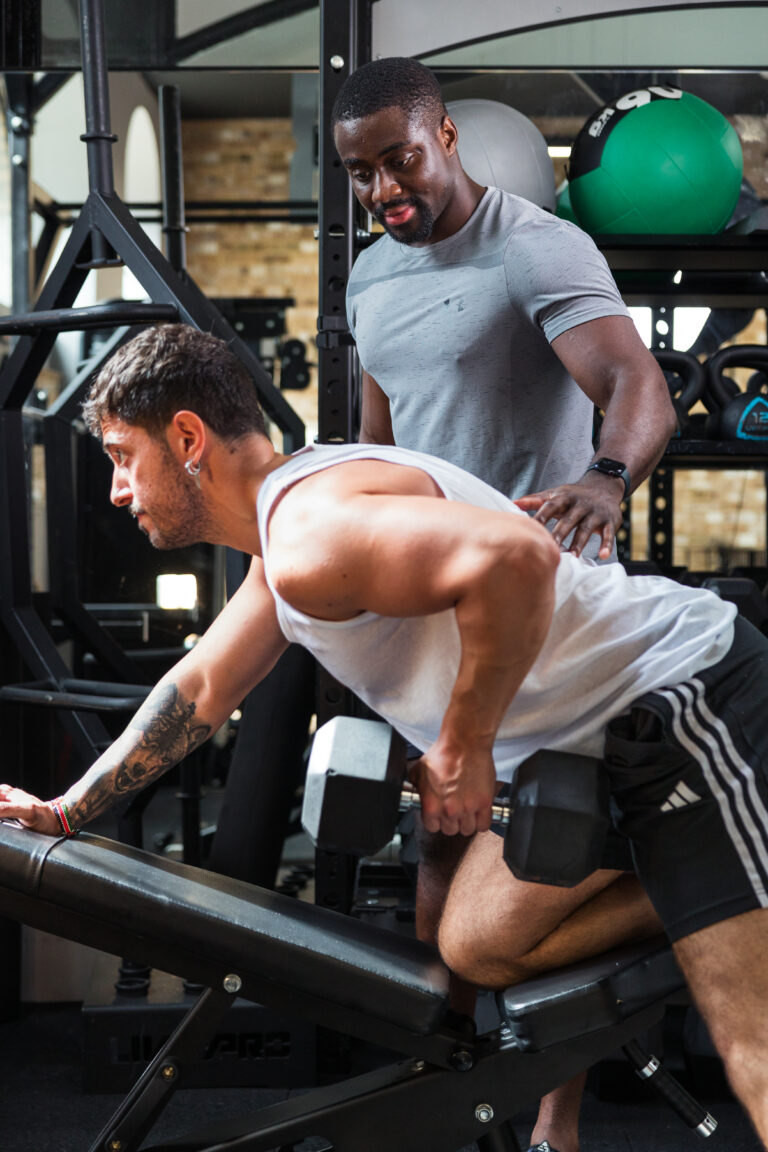
Aim for 3 to 5 strength sessions a week built on big compound lifts. These include the barbell squat, bench press, barbell bent-over row and overhead press.
In a 12-year study of 10,500 US men, more weight training was linked to a smaller rise in waist size with age. The link was stronger than for the same time spent on aerobic exercise. This was an observational study, so it shows a link rather than cause and effect.
Use progressive overload: add a little weight, a rep or a set as you get stronger. If your lifts stay the same for months, your body has little reason to build muscle. Read the beginner’s guide to progressive overload.
Video: Why you’re not gaining muscle. Watch this if your arms and chest have stalled, as it covers the most common reasons.
4. Add cardio as support
Cardio helps too, especially for the deeper visceral fat around your organs. A 2023 network meta-analysis of 84 trials found vigorous aerobic exercise and high-intensity interval training ranked best for reducing visceral fat. Resistance training also reduced it in men, but ranked lower on its own.
So keep lifting as the base and add 2 to 3 cardio sessions a week, plus regular walking. Make sure cardio does not leave you too tired to progress in the gym.
Video: How strength training helps with fat loss. This explains how lifting fits into a fat loss plan alongside diet and cardio.
How to track progress
When you lose fat and build muscle together, the scale can mislead you. Track these instead:
- Waist measurement. Measure at the same point, at the same time of day, every week or two.
- Progress photos. Same light and pose every 2 to 4 weeks.
- Your lifts. Rising weights and reps show you are keeping or building muscle.
- Weekly average weight. Look at the trend, not single days.
See how to track your workouts for a simple logging method.
What to expect, and common mistakes
Strength usually rises first. Visible changes in your waist and shape take longer, often a few months, and vary between people. For research-based ranges, read when you will see results from strength training. For the science of losing fat and gaining muscle together, see our body recomposition guide.
Mistakes that slow men down
- Crash dieting. A very large deficit makes it harder to keep muscle and train hard.
- Cardio only. You may lose weight, but you miss the signal to keep and build muscle.
- Too little protein. Plan protein into every meal.
- Random workouts. Without a plan and a log, progressive overload is guesswork.
- Hundreds of sit-ups. They build your core, but they will not remove belly fat.
Lost weight but still look soft? Our skinny fat workout plan for men may suit you. Over 40? Read strength training for men over 40.
The bottom line
You can lose belly fat and build muscle at the same time, but not by training your abs. Eat in a modest deficit, hit your protein target, lift with progressive overload three or more times a week, add some cardio and track your waist and lifts.
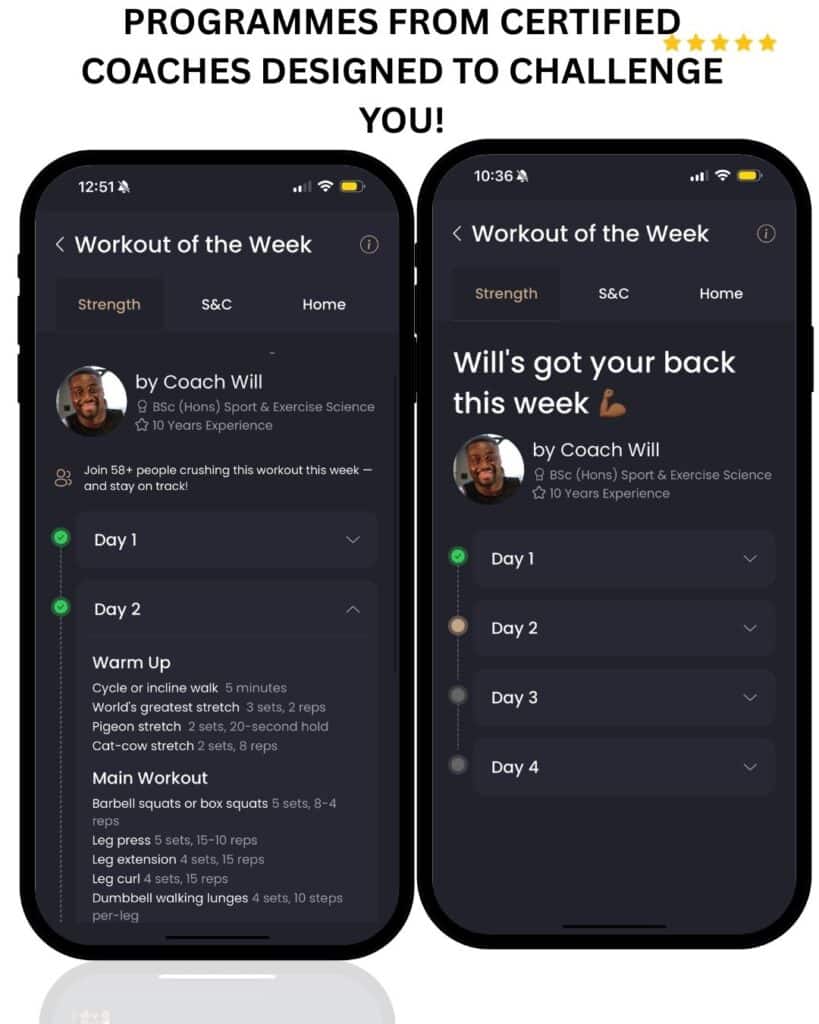
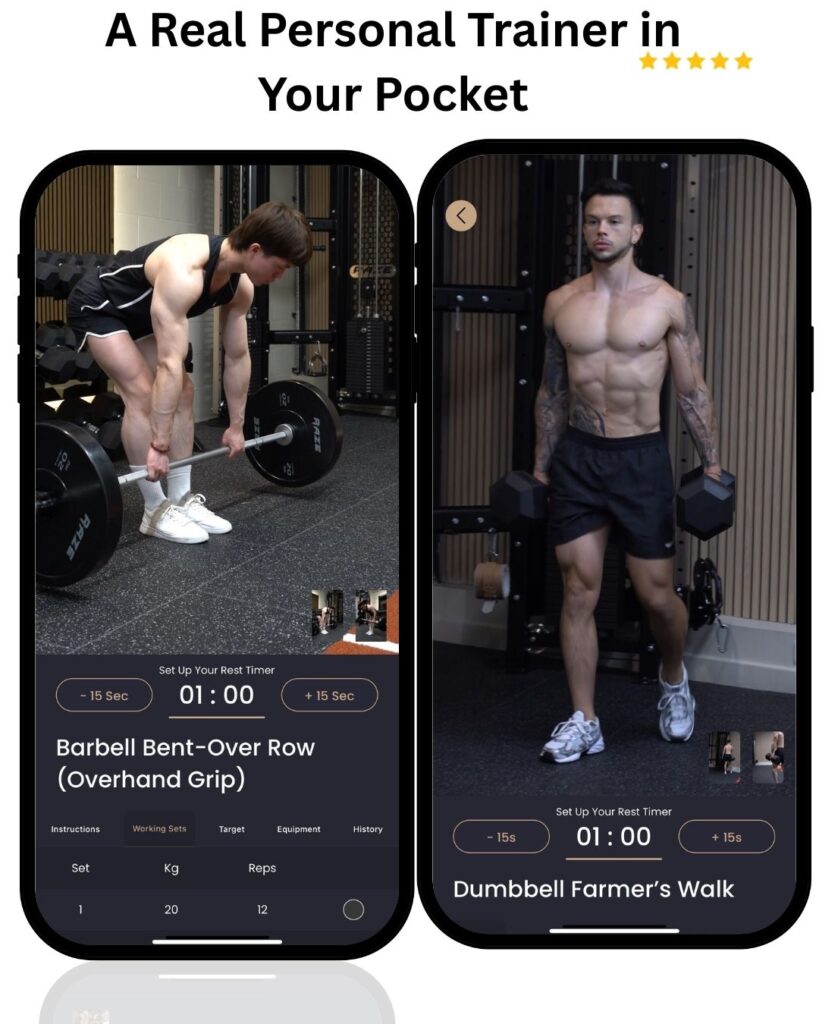
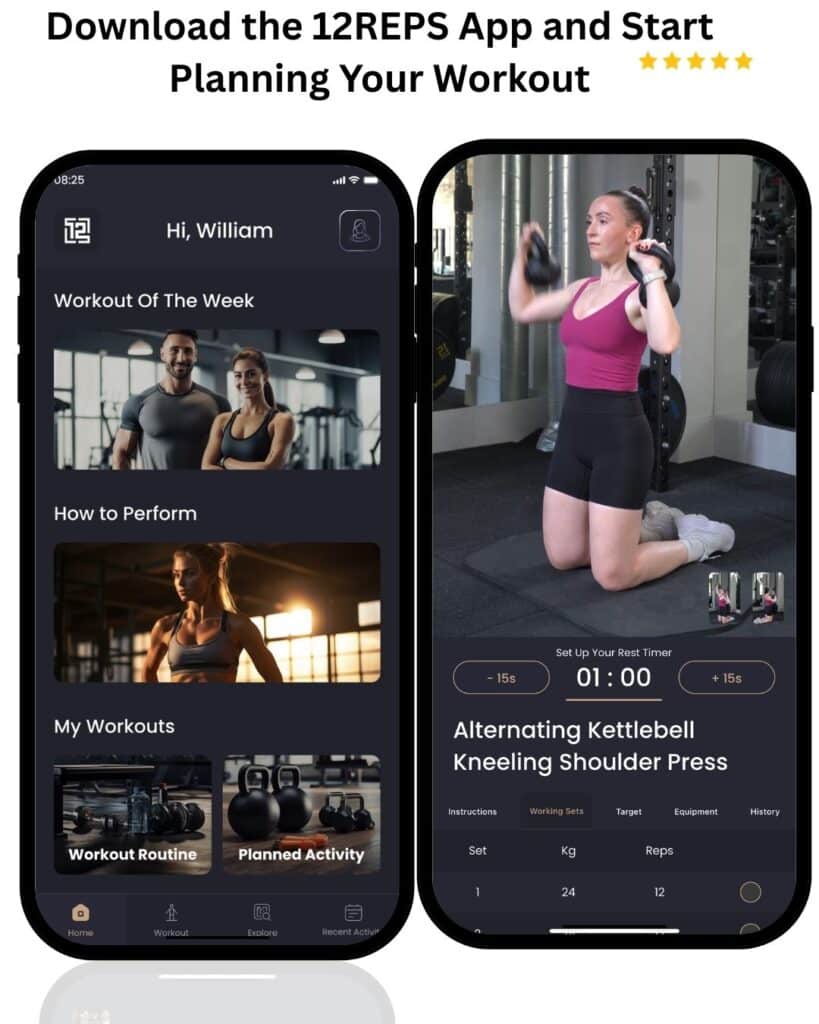
If you want your sessions set out for you, 12REPS builds workouts around your goal, your equipment and the time you have. It records the reps and weight for every set, so you have a number to beat next time, and logs your body weight trend.
FAQs
Can you lose belly fat and build muscle at the same time?
Yes, especially if you are new to lifting, returning after a break or carrying extra fat. Progress is slower if you are already lean and well trained.
How fast can I lose belly fat?
There is no set rate for belly fat alone. The NHS suggests aiming for about 0.5 to 1 kg of total weight loss a week, and fat comes off different areas at different rates.
Should I do cardio or weights to lose belly fat?
Both. Weights help you keep and build muscle. Cardio adds to fat loss and research ranks it highly for visceral fat.
Do I need to count calories?
Not always, but it helps. At minimum, track your protein and your weekly waist and weight trends.
Sources
- The Effect of Abdominal Exercise on Abdominal Fat. Vispute SS, Smith JD, LeCheminant JD, Hurley KS, Journal of Strength and Conditioning Research, 2011. https://doi.org/10.1519/JSC.0b013e3181fb4a46
- Overweight and obesity in adults. NHS, 2026. https://www.nhs.uk/conditions/obesity/
- Calculate your waist to height ratio. NHS, 2025. https://www.nhs.uk/health-assessment-tools/calculate-your-waist-to-height-ratio
- International Society of Sports Nutrition Position Stand: protein and exercise. Jäger R et al., Journal of the International Society of Sports Nutrition, 2017. https://doi.org/10.1186/s12970-017-0177-8
- A systematic review, meta-analysis and meta-regression of the effect of protein supplementation on resistance training-induced gains in muscle mass and strength in healthy adults. Morton RW et al., British Journal of Sports Medicine, 2018. https://doi.org/10.1136/bjsports-2017-097608
- Higher compared with lower dietary protein during an energy deficit combined with intense exercise promotes greater lean mass gain and fat mass loss: a randomized trial. Longland TM et al., American Journal of Clinical Nutrition, 2016. https://doi.org/10.3945/ajcn.115.119339
- Weight training, aerobic physical activities, and long-term waist circumference change in men. Mekary RA et al., Obesity, 2015. https://doi.org/10.1002/oby.20949
- Effects of various exercise types on visceral adipose tissue in individuals with overweight and obesity: A systematic review and network meta-analysis of 84 randomized controlled trials. Chen X et al., Obesity Reviews, 2023. https://doi.org/10.1111/obr.13666