




By Will Duru, BSc (Hons) Sport and Exercise Science, Award-winning Personal Trainer with over 10 years of experience in strength training and optimising recovery
Strength training for women over 50 means working all your major muscles against weights or resistance on at least 2 days a week. The NHS and the World Health Organization both recommend it. This 12-week program gives you three gym sessions a week. It starts light and builds as your strength and confidence grow.
As a personal trainer with over a decade of experience, I have had many conversations with women in their 40s and 50s. Many feel their bodies are changing in ways they cannot control. They feel less strong and worry about their health in the years ahead. Strength training is one of the most useful things you can do about that.
This is not about trying to look 20 again. It is about becoming stronger and more confident now.

Why strength training matters after 50
These are the questions I hear most often from women starting out.
"I feel like I'm getting weaker. Is this normal?"
Some loss of muscle and strength with age is common. The good news is that muscle still responds to training. A position statement on resistance training for older adults from the National Strength and Conditioning Association describes it as a powerful way to counter that loss.
In a 2023 study, 41 women with an average age of 52 did resistance training twice a week for 10 weeks. Squat and bench press strength went up in every group, before and after menopause. Muscle size only increased in the women who had not reached menopause. The authors suggest that women after menopause may need more weekly sets to build muscle.
"I'm worried about osteoporosis. Can lifting help?"
Heavy lifting can support bone health when it is done with care. In the LIFTMOR trial, 101 postmenopausal women with low bone mass did supervised high-intensity strength and impact training twice a week for 8 months. Lower spine bone density rose by about 2.9%, while the control group lost about 1.2%. Training was closely supervised, and only one minor adverse event was reported.
A UK consensus statement on exercise for osteoporosis recommends resistance and impact exercise to maximize bone strength. It notes there is little evidence that physical activity is linked to significant harm. If you already have osteoporosis or a past fracture, ask your GP or a physiotherapist which movements suit you. Our guide to improving bone density after menopause goes deeper.
"My body is changing around menopause. Where do I start?"
Changes in weight and body shape around menopause are common. Strength training helps you keep your muscle and build strength, while food and daily activity cover the rest. If you are still in the earlier stages, read our guide to strength training in perimenopause.

Before you start: check in and start light
The NHS advises older adults to speak to a GP first. This matters most if you have not exercised for some time, or if you have medical conditions or concerns. It is also worth a check if you take medication that affects your heart rate, blood pressure or balance.
- How often: the World Health Organization recommends muscle-strengthening activity for the major muscle groups on 2 or more days a week. This plan uses three.
- Balance: for adults 65 and over with poor mobility, WHO also recommends activity that improves balance on 3 or more days a week.
- Start light: use the lower end of each starting weight, or less, for the first two weeks.
- Stop if something feels wrong: sharp pain, chest pain, dizziness or unusual breathlessness are signs to stop and get medical advice.
Eating to support your training
Training builds the stimulus. Food and sleep help your body respond to it.
Simple eating habits
Spread your protein
- Include a protein food at each meal. A 2018 meta-analysis in healthy adults found that extra protein stopped adding to training gains at about 1.6 g per kg of body weight a day.
- Think eggs or Greek yogurt at breakfast, lean meat or tofu at lunch, and fish or cottage cheese at dinner.
Food choices
- Protein: chicken, turkey, fish, eggs, Greek yogurt, tofu, lentils.
- Carbs: fruit, vegetables, oats, brown rice, quinoa, whole-grain bread, potatoes.
- Fats: avocado, nuts, seeds, olive oil.
Simple habits
- Drink water with each meal.
- Log your food for two weeks to learn your portions.
- Keep fiber high with vegetables, fruit, beans and whole grains.
- Make sleep a priority. It supports recovery between sessions.
For protein targets in more detail, see how much protein women need for strength training. If you have a medical condition, such as kidney disease, ask your GP or a registered dietitian before changing your protein intake.
The 12-week strength training program for women over 50
Train three days a week, with a rest day after each session. Before every workout, do 10 minutes of easy cardio, such as an incline treadmill walk or rowing. Then do a few mobility moves, such as the World’s Greatest Stretch and Cat-Cow.
How to read the tables: “1 × 12-15” means one warm-up set of 12 to 15 reps. “4 × 10-12” means four working sets of 10 to 12 reps. Pick a weight that lets you finish every working rep with good form.
Phase 1: Build your foundation (weeks 1 to 4)
Phase 1 gets your body used to strength training. Each session has 5 exercises: one warm-up set, then 4 working sets of each.
Day 1: Upper body
| Exercise | Equipment | Warm-up set | Working sets | Weight | Rest |
|---|---|---|---|---|---|
| Dumbbell Chest Press | Dumbbells | 1 × 12-15 | 4 × 10-12 | Start with 8-12 kg | 90 seconds |
| Seated Cable Row | Machine | 1 × 12-15 | 4 × 10-12 | Light to moderate | 90 seconds |
| Dumbbell Shoulder Press | Dumbbells | 1 × 12-15 | 4 × 10-12 | Start with 5-8 kg | 60 seconds |
| Tricep Dips (Assisted) | Bodyweight | 1 × 8-10 | 4 × 8-12 | Bodyweight/Assisted | 60 seconds |
| Modified Plank | Bodyweight | 1 × 20-30 sec | 4 × 30-45 sec | Bodyweight | 60 seconds |
Day 2: Lower body
| Exercise | Equipment | Warm-up set | Working sets | Weight | Rest |
|---|---|---|---|---|---|
| Dumbbell Squat | Dumbbells | 1 × 12-15 | 4 × 10-12 | Start with 8-12 kg | 2 minutes |
| Romanian Deadlift | Dumbbells | 1 × 12-15 | 4 × 10-12 | Start with 10-15 kg | 90 seconds |
| Walking Lunges | Dumbbells | 1 × 8-10 each leg | 4 × 10 each leg | Start with 5-8 kg | 90 seconds |
| Hip Thrust | Bodyweight | 1 × 12-15 | 4 × 15-20 | Bodyweight | 60 seconds |
| Standing Calf Raises | Bodyweight | 1 × 12-15 | 4 × 15-20 | Bodyweight | 45 seconds |
Day 3: Full body
| Exercise | Equipment | Warm-up set | Working sets | Weight | Rest |
|---|---|---|---|---|---|
| Kettlebell Deadlift | Kettlebell | 1 × 12-15 | 4 × 10-12 | Start with 8-12 kg | 90 seconds |
| TRX Row | TRX | 1 × 8-10 | 4 × 10-12 | Bodyweight | 60 seconds |
| Dumbbell Squat to Press | Dumbbells | 1 × 10-12 | 4 × 10-12 | Start with 5-8 kg | 90 seconds |
| Wall Push-ups | Bodyweight | 1 × 8-10 | 4 × 10-15 | Bodyweight | 60 seconds |
| Russian Twists | Bodyweight | 1 × 15-20 total | 4 × 20-25 total | Bodyweight | 60 seconds |
Learn these two lifts first
The dumbbell chest press and the Romanian deadlift (RDL) are the two lifts in Phase 1 that most reward good technique. In the RDL, you bend at the hips with a flat back and a slight bend in your knees.
Video: How to do a dumbbell chest press. Watch how the dumbbells lower to chest level and press back up in a controlled line.
Video: Dumbbell RDL. The hip hinge is hard to learn from text. Watch how far the hips move back and where the dumbbells travel.

Phase 2: Build strength and confidence (weeks 5 to 8)
Phase 2 adds supersets on Days 1 and 2. A superset means doing two exercises back to back, then resting. Each exercise still starts with one warm-up set. Day 3 uses main exercises only.
Sessions in this phase are longer. If time or energy runs short, do the main exercises first and add the supersets as your fitness allows.
Day 1: Upper body
Main exercises
| Exercise | Equipment | Warm-up set | Working sets | Weight | Rest |
|---|---|---|---|---|---|
| Incline Dumbbell Press | Dumbbells | 1 × 10-12 | 4 × 8-10 | Increase by 2-4 kg | 2 minutes |
| Lat Pulldown | Machine | 1 × 10-12 | 4 × 8-10 | Progressive increase | 2 minutes |
| Dumbbell Shoulder Press | Dumbbells | 1 × 10-12 | 4 × 8-10 | Increase by 1-2 kg | 90 seconds |
| Assisted Pull-ups | Machine | 1 × 5-8 | 4 × 6-8 | Reduce assistance | 2 minutes |
| Dumbbell Bicep Curls | Dumbbells | 1 × 10-12 | 4 × 8-10 | Moderate weight | 60 seconds |
Supersets
| Pair | Exercise | Equipment | Warm-up set | Working sets | Weight | Rest after |
|---|---|---|---|---|---|---|
| A1 | Dumbbell Flyes | Dumbbells | 1 × 12-15 | 3 × 10-12 | Light-moderate weight | No rest |
| A2 | Push-ups or knee push ups (Modified) | Bodyweight | 1 × 8-10 | 3 × 8-12 | Bodyweight | 2 minutes |
| B1 | Lateral Raises | Dumbbells | 1 × 12-15 | 3 × 10-12 | Light weight | No rest |
| B2 | TRX Face Pulls | TRX | 1 × 10-12 | 3 × 10-15 | Bodyweight | 2 minutes |
Day 2: Lower body
Main exercises
| Exercise | Equipment | Warm-up set | Working sets | Weight | Rest |
|---|---|---|---|---|---|
| Dumbbell Squat | Dumbbells | 1 × 10-12 | 4 × 8-10 | Increase by 4-6 kg | 2-3 minutes |
| Romanian Deadlift | Dumbbells | 1 × 10-12 | 4 × 8-10 | Increase by 4-6 kg | 2 minutes |
| Bulgarian Split Squat | Dumbbells | 1 × 8-10 each leg | 4 × 8 each leg | Increase by 2-4 kg | 90 seconds |
| Hip Thrust with Weight | Dumbbell | 1 × 12-15 | 4 × 10-12 | Add 5-10 kg | 2 minutes |
| Calf Raises | Machine | 1 × 12-15 | 4 × 15-20 | Light-moderate weight | 60 seconds |
Supersets
| Pair | Exercise | Equipment | Warm-up set | Working sets | Weight | Rest after |
|---|---|---|---|---|---|---|
| A1 | Bodyweight Squats | Bodyweight | 1 × 10-12 | 3 × 12-15 | Bodyweight | No rest |
| A2 | Single Leg Glute Bridge | Bodyweight | 1 × 8-10 each leg | 3 × 10-12 each leg | Bodyweight | 2 minutes |
| B1 | Kettlebell Goblet Squat | Kettlebell | 1 × 12-15 | 3 × 12-15 | Moderate weight | No rest |
| B2 | Wall Sit | Bodyweight | 1 × 20-30 sec | 3 × 30-45 sec | Bodyweight | 2 minutes |
Day 3: Full body
| Exercise | Equipment | Warm-up set | Working sets | Weight | Rest |
|---|---|---|---|---|---|
| Kettlebell Deadlift | Kettlebell | 1 × 10-12 | 4 × 8-10 | Increase by 4-6 kg | 2-3 minutes |
| Dumbbell Overhead Press | Dumbbells | 1 × 10-12 | 4 × 8-10 | Increase by 2-4 kg | 2 minutes |
| TRX Squat | TRX | 1 × 10-12 | 4 × 10-12 | Bodyweight | 90 seconds |
| Seated Cable Row | Machine | 1 × 10-12 | 4 × 8-10 | Increase weight | 2 minutes |
| Dumbbell Step-ups | Dumbbells | 1 × 8-10 each leg | 4 × 8-10 each leg | Light-moderate weight | 90 seconds |
Phase 3: Master your strength (weeks 9 to 12)
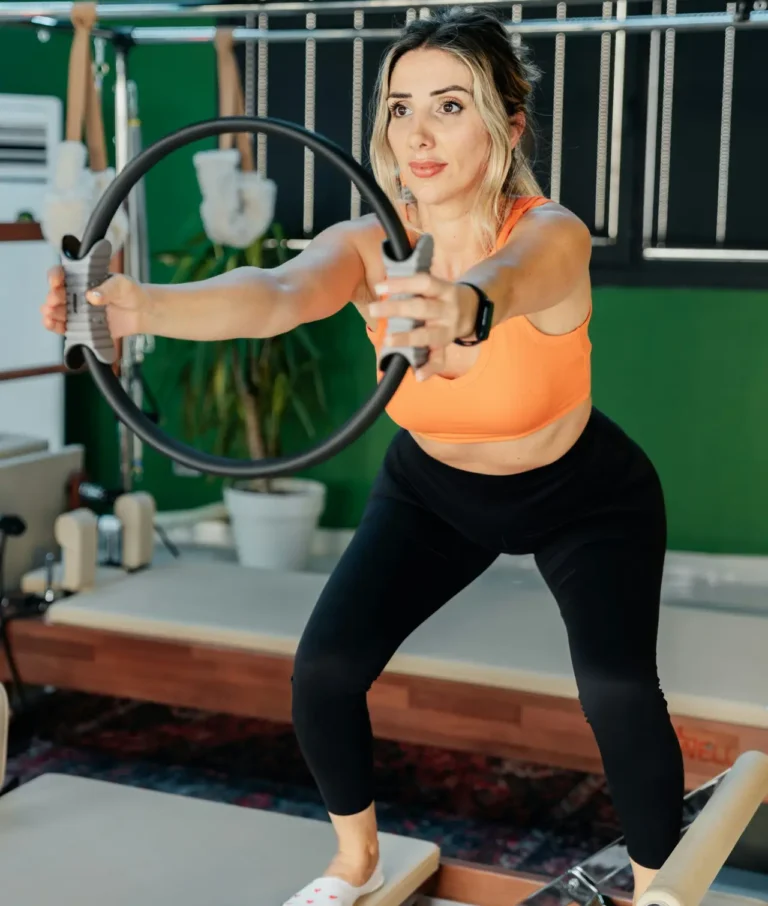
The main lifts get heavier, with working sets of 6 to 8 reps. Only go heavier when your form stays solid on every rep.
The modified jump squat is a small, controlled hop. If jumping does not feel right for your joints or pelvic floor, do bodyweight squats at a brisk pace instead.
Day 1: Upper body
Main exercises
| Exercise | Equipment | Warm-up set | Working sets | Weight | Rest |
|---|---|---|---|---|---|
| Dumbbell Chest Press | Dumbbells | 1 × 8-10 | 4 × 6-8 | Heavy load (challenging) | 2-3 minutes |
| Wide-Grip Lat Pulldown | Machine | 1 × 8-10 | 4 × 6-8 | Heavy load | 2-3 minutes |
| Dumbbell Shoulder Press | Dumbbells | 1 × 8-10 | 4 × 6-8 | Heavy load | 2 minutes |
| Cable Row | Machine | 1 × 8-10 | 4 × 6-8 | Heavy load | 2 minutes |
| Tricep Dips | Bodyweight | 1 × 6-8 | 4 × 6-10 | Bodyweight | 90 seconds |
Supersets
| Pair | Exercise | Equipment | Warm-up set | Working sets | Weight | Rest after |
|---|---|---|---|---|---|---|
| A1 | Incline Dumbbell Flyes | Dumbbells | 1 × 10-12 | 3 × 8-10 | Moderate-heavy weight | No rest |
| A2 | TRX Tricep Press | TRX | 1 × 8-10 | 3 × 8-12 | Bodyweight | 2-3 minutes |
| B1 | Rear Delt Flyes | Dumbbells | 1 × 10-12 | 3 × 8-10 | Light-moderate weight | No rest |
| B2 | Push-ups | Bodyweight | 1 × 6-8 | 3 × 6-10 | Bodyweight | 2-3 minutes |
Day 2: Lower body
Main exercises
| Exercise | Equipment | Warm-up set | Working sets | Weight | Rest |
|---|---|---|---|---|---|
| Dumbbell Squat | Dumbbells | 1 × 8-10 | 4 × 6-8 | Heavy load (challenging) | 3 minutes |
| Romanian Deadlift | Dumbbells | 1 × 8-10 | 4 × 6-8 | Heavy load | 3 minutes |
| Single Leg RDL | Dumbbells | 1 × 8-10 each leg | 4 × 6-8 each leg | Moderate-heavy weight | 2 minutes |
| Hip Thrust with Weight | Dumbbell | 1 × 10-12 | 4 × 8-10 | Heavy load | 2-3 minutes |
| Bulgarian Split Squat | Dumbbells | 1 × 8-10 each leg | 4 × 6-8 each leg | Heavy load | 2 minutes |
Supersets
| Pair | Exercise | Equipment | Warm-up set | Working sets | Weight | Rest after |
|---|---|---|---|---|---|---|
| A1 | Jump Squats (Modified) | Bodyweight | 1 × 8-10 | 3 × 8-12 | Bodyweight | No rest |
| A2 | Single Leg Glute Bridge | Bodyweight | 1 × 8-10 each leg | 3 × 10-12 each leg | Bodyweight | 2-3 minutes |
| B1 | Kettlebell Swings | Kettlebell | 1 × 15-20 | 3 × 15-20 | Heavy weight | No rest |
| B2 | Single Leg Calf Raise | Bodyweight | 1 × 10-12 each leg | 3 × 12-15 each leg | Bodyweight | 2-3 minutes |
Day 3: Full body
| Exercise | Equipment | Warm-up set | Working sets | Weight | Rest |
|---|---|---|---|---|---|
| Kettlebell Deadlift | Kettlebell | 1 × 8-10 | 4 × 6-8 | Heavy load | 3 minutes |
| Dumbbell Thrusters | Dumbbells | 1 × 8-10 | 4 × 6-8 | Moderate-heavy load | 3 minutes |
| TRX Row | TRX | 1 × 8-10 | 4 × 6-8 | Bodyweight | 2 minutes |
| Dumbbell Step-ups | Dumbbells | 1 × 6-8 each leg | 4 × 6-8 each leg | Heavy load | 2-3 minutes |
| Dumbbell Renegade Rows | Dumbbells | 1 × 6-8 | 4 × 6-8 | Moderate weight | 2-3 minutes |
How to progress safely
Progressive overload means asking a little more of your muscles over time. The ACSM position stand suggests adding 2 to 10% to the load once you can do 1 to 2 extra reps on two sessions in a row. With dumbbells, that is often the next dumbbell up.
Not ready for three days a week? Our 2-day strength training split for women covers the same basics in two sessions.
Tracking your training with 12REPS
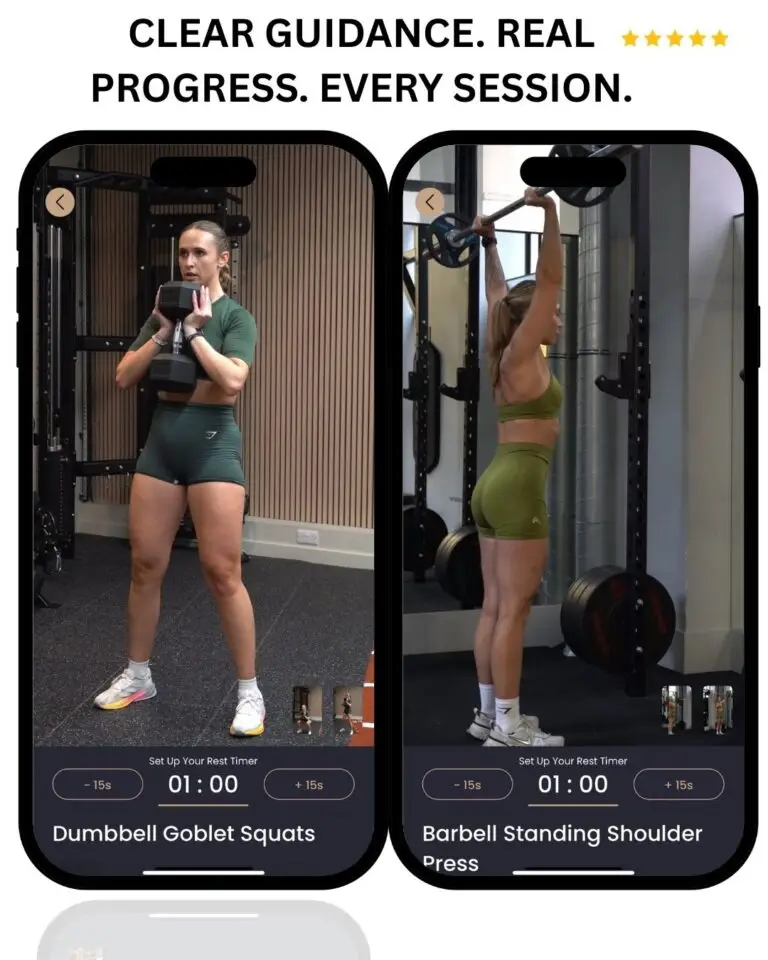
Writing down what you lift is the simplest way to see progress. In the 12REPS app, you start your workout, watch a trainer demonstration, then enter your reps and weight for each set.
- Technique: exercise demos and technique breakdowns from qualified personal trainers.
- Progress: the app remembers what you lifted last time, so you know what to aim for.
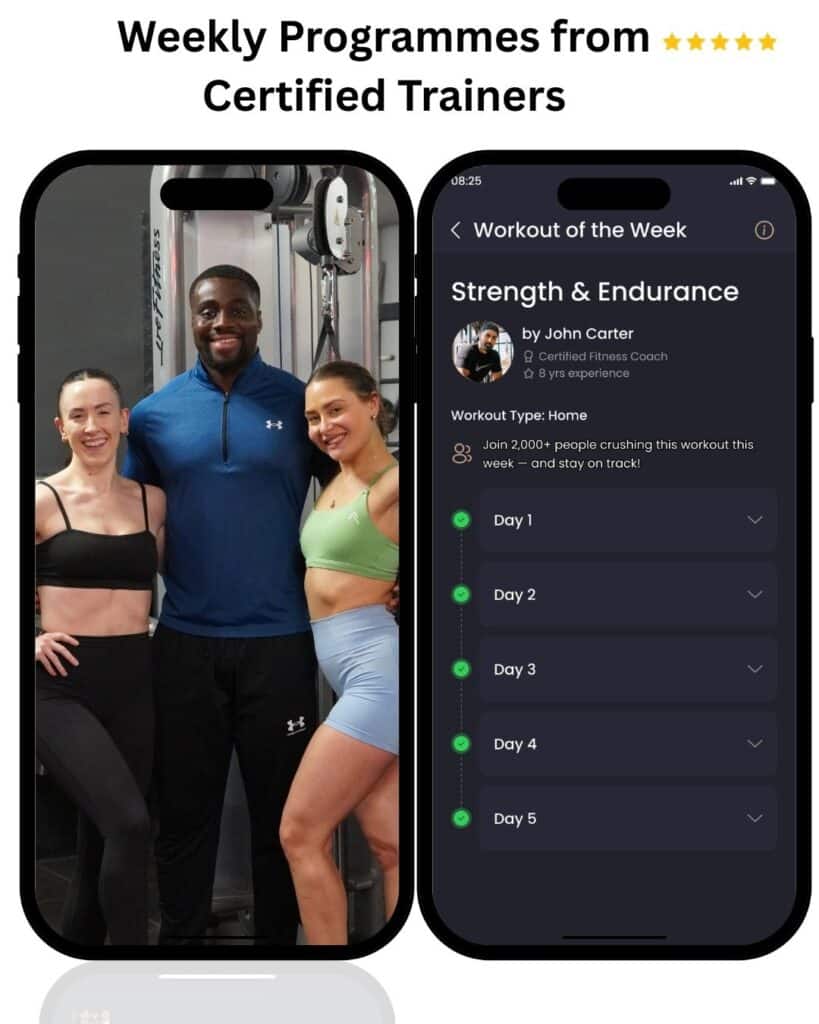
- Consistency: it tracks your workouts, streaks and weekly goal.
It's never too late to start
Your body can still get stronger at 50, 60 and beyond. The gym is a place for everyone, and you belong there as much as anyone else.
Start with Phase 1, focus on form and be patient. For more on the science of women’s strength training, read our science-based guide to strength training for women. If you are over 60, our guide to strength training after 60 covers extra considerations.
If you want a plan built around your goal, your equipment and your time, the 12REPS app sets out each session and shows a trainer demo for every exercise.
Sources
- Physical activity guidelines for older adults. NHS, 2024. https://www.nhs.uk/live-well/exercise/physical-activity-guidelines-older-adults/
- Physical activity (Be Healthy). World Health Organization, accessed 2026. https://who.int/initiatives/behealthy/physical-activity
- Resistance training for older adults: position statement from the National Strength and Conditioning Association. Fragala MS et al. Journal of Strength and Conditioning Research, 2019. https://pubmed.ncbi.nlm.nih.gov/31343601/
- Resistance training alters body composition in middle-aged women depending on menopause: a 20-week control trial. Isenmann E et al. BMC Women’s Health, 2023. https://doi.org/10.1186/s12905-023-02671-y
- High-intensity resistance and impact training improves bone mineral density and physical function in postmenopausal women with osteopenia and osteoporosis: the LIFTMOR randomized controlled trial. Watson SL et al. Journal of Bone and Mineral Research, 2018. https://doi.org/10.1002/jbmr.3284
- Strong, steady and straight: UK consensus statement on physical activity and exercise for osteoporosis. Brooke-Wavell K et al. British Journal of Sports Medicine, 2022. https://pubmed.ncbi.nlm.nih.gov/35577538/
- A systematic review, meta-analysis and meta-regression of the effect of protein supplementation on resistance training-induced gains in muscle mass and strength in healthy adults. Morton RW et al. British Journal of Sports Medicine, 2018. https://pubmed.ncbi.nlm.nih.gov/28698222/
- Progression models in resistance training for healthy adults (position stand). American College of Sports Medicine, Medicine & Science in Sports & Exercise, 2009. https://pubmed.ncbi.nlm.nih.gov/19204579/



