



By Will Duru, personal trainer and founder of 12REPS.
What Is a Reverse Fly?
A reverse fly is a shoulder exercise where you lift your arms out to the sides while leaning forward or facing a machine. It mainly works your rear delts, the muscles at the back of your shoulders, along with the muscles between your shoulder blades.
Most gym routines include lots of pressing and pushing, which mainly train the front of the shoulders. Reverse flys train the back of the shoulders, which many routines leave out. You can do them with dumbbells, cables or a machine.
This guide shows you how to do each version, the mistakes to avoid and how many sets and reps to use.
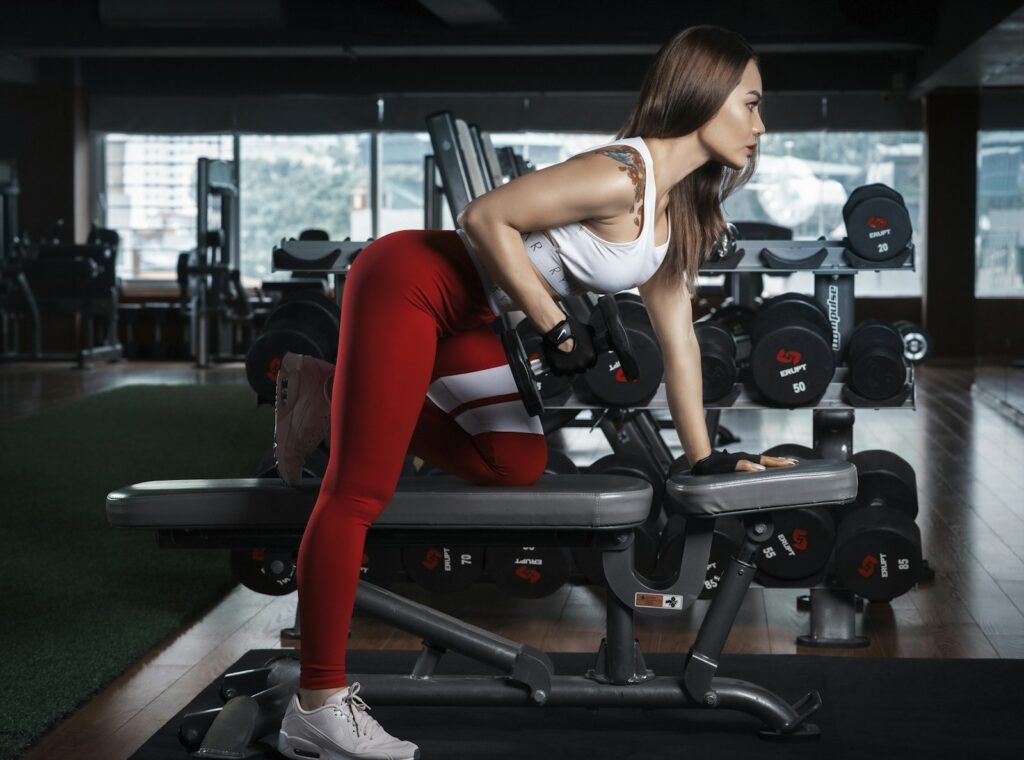
Muscles Worked
| Muscle | Where it is |
|---|---|
| Rear deltoids | The back of your shoulders |
| Middle trapezius and rhomboids | Between your shoulder blades |
| Infraspinatus and teres minor | Small rotator cuff muscles on the back of your shoulder blade |
What the Research Says
- A 2013 study in Medicina Sportiva compared rear delt activity across several exercises. The reverse pec deck produced the highest activation, at about 90% of a maximal test contraction. That was clearly higher than an incline lat pulldown (about 58%) or a seated row (about 54%).
- A 2013 study by Schoenfeld and colleagues tested 19 trained men on a reverse fly machine. Holding the handles with a neutral grip, palms facing each other, produced slightly more rear delt and infraspinatus activity than an overhand grip.
Rows and pulldowns do train your rear delts, but reverse flys train them more directly. My advice is to add a direct rear delt exercise if you do a lot of pressing. Use a neutral grip on the machine if it feels comfortable.
How to Do a Dumbbell Reverse Fly
Setup
- Hold a light dumbbell in each hand.
- Stand with your feet hip width apart and a soft bend in your knees.
- Hinge forward from your hips until your torso is close to parallel with the floor. Keep your back flat.
- Let the dumbbells hang below your chest, palms facing each other and elbows slightly bent.
Movement
- Lift your arms out to the sides in a wide arc, leading with your elbows.
- Stop when your arms are about level with your body.
- Pause for one second.
- Lower the dumbbells slowly, taking two to three seconds.
Coaching cues
- “Reach your hands wide, not up.”
- “Shoulders away from your ears.”
- “Keep the bend in your elbows the same throughout.”
- “Chest stays still.”
If balancing in the bent-over position is hard on your lower back, lie face down on an incline bench and do the same movement. This is called a chest-supported reverse fly.
How to Do a Cable Reverse Fly
- Set both pulleys at about shoulder height with no handles, or use single handles.
- Cross the cables: hold the left cable in your right hand and the right cable in your left hand.
- Step back to the middle of the station so there is tension in both cables.
- With arms almost straight, pull your hands out and back until your arms are in line with your body.
- Return slowly until your hands cross in front of you.
Cables keep tension on your rear delts through the whole movement. The seated cable reverse fly is a good option if you want more stability.
How to Do a Machine Reverse Fly
- Set the handles of the pec deck to the rear position and adjust the seat so the handles are at shoulder height.
- Sit facing the pad, with your chest against it.
- Hold the handles with a neutral grip, palms facing each other, or an overhand grip.
- Push the handles out and back in a wide arc until your arms are in line with your body.
- Return slowly without letting the weight stack touch down.
Which Version Should You Do?
| Version | Best for |
|---|---|
| Dumbbell reverse fly | Home workouts and training with minimal equipment |
| Chest-supported reverse fly | Taking strain off your lower back |
| Cable reverse fly | Constant tension through the whole movement |
| Machine reverse fly (reverse pec deck) | Beginners and lifting heavier with a stable setup |
Common Mistakes
- Going too heavy. Rear delts are small muscles. A heavy weight makes you swing or use your back. Start lighter than you think.
- Turning it into a row. Bending your elbows more as you lift shifts the work to your back. Keep the elbow angle fixed.
- Shrugging. Lifting your shoulders toward your ears brings in your upper traps. Keep your shoulders down.
- Standing up during the set. In the dumbbell version, keep your torso still and bent forward.
- Dropping the weights. Lower slowly. The lowering phase is part of the exercise.
How Many Sets and Reps?
These are general starting points, not fixed rules.
| Level | Sets and reps | Rest |
|---|---|---|
| Beginner | 2 sets of 12 to 15 reps | 45 to 60 seconds |
| Intermediate | 3 sets of 12 to 20 reps | 45 to 60 seconds |
| Advanced | 3 to 4 sets of 10 to 20 reps | 60 seconds |
Add reverse flys to your upper-body or pull days, once or twice a week. They pair well with face pulls, band pull-aparts and lateral raises for complete shoulder training.
When you can complete all your reps with a pause at the top, add a rep or move up to the next dumbbell. The American College of Sports Medicine recommends progressing gradually like this.
Summary
- Reverse flys train the back of your shoulders and the muscles between your shoulder blades.
- The reverse pec deck produced the highest rear delt activity in research, and a neutral grip may help slightly.
- Use light weights, keep your elbow angle fixed and lower slowly.
- Do 2 to 4 sets of 12 to 20 reps, once or twice a week.
Train Every Part of Your Shoulders
Pressing every week but never training the back of your shoulders? 12REPS builds a balanced strength program around your goal, schedule and equipment, with rear delt work in the right place.
Every exercise has a demo and a coach tutorial from me, and your log shows what you lifted last time, so even small muscles get steady progress.
Download 12REPS and see what you’ll get:
Sources
- Electromyographical analysis of the deltoid between different strength training exercises. Medicina Sportiva. 2013;17(2):67–71.
- Schoenfeld B, Sonmez RGT, Kolber MJ, Contreras B, Harris R, Ozen S. Effect of hand position on EMG activity of the posterior shoulder musculature during a horizontal abduction exercise. J Strength Cond Res. 2013;27(10):2644–2649.
- American College of Sports Medicine. Progression models in resistance training for healthy adults. Med Sci Sports Exerc. 2009;41(3):687–708.
Related Reading
- How to do face pulls
- Band pull-aparts
- How to do lateral raises
- Seated vs standing shoulder press
- T-bar row vs landmine row
I’m Will Duru, a personal trainer and the founder of 12REPS. I hold a BSc (Hons) in Sport and Exercise Science and have more than a decade of experience coaching people in strength training.
