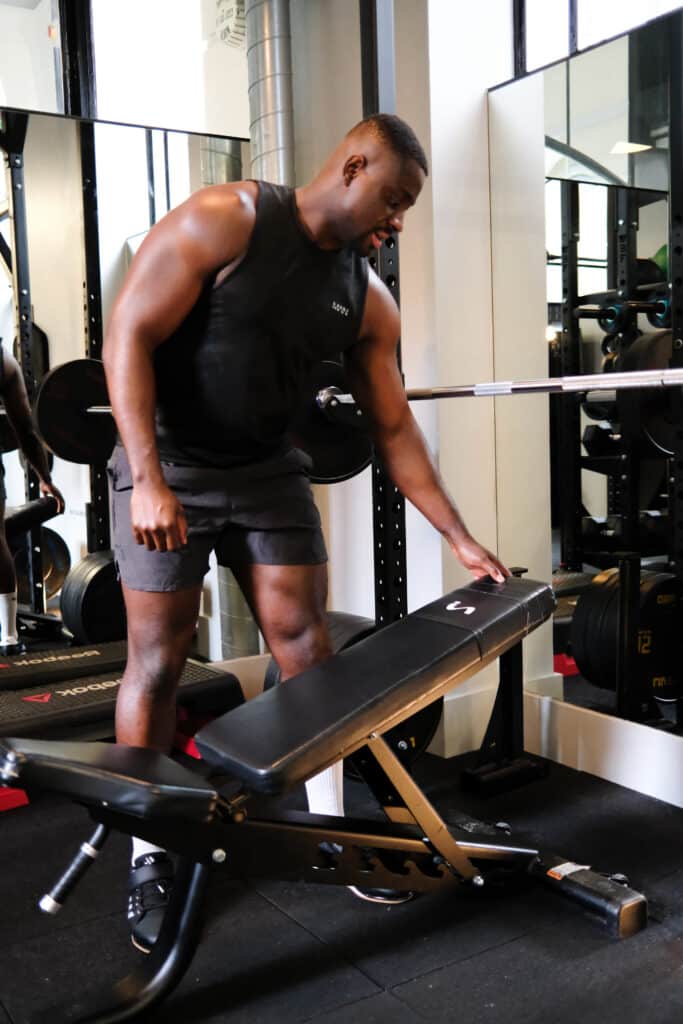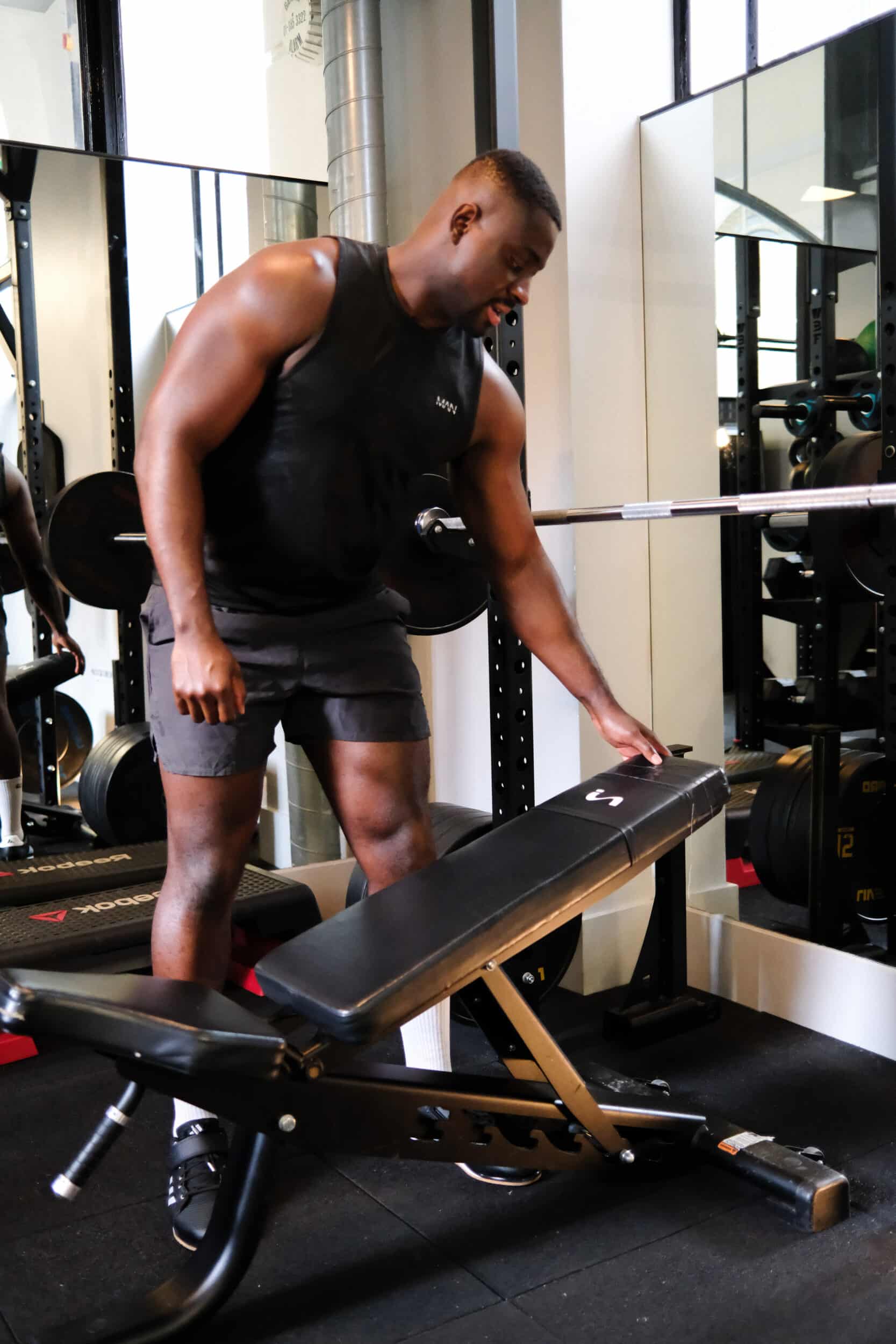




Chris had been training for three years but his bench press was stuck at 80kg. He could grind out a single rep on a good day, but 100kg felt like an impossible dream.
“Everyone talks about benching 100kg like it’s a basic milestone,” he told me. “But I’ve been stuck for over a year. What am I doing wrong?”
The 100kg bench press is the unofficial badge of honour for male lifters. Two big plates on each side of the bar. Triple figures. It separates the beginners from the intermediate lifters and represents a genuine achievement that most gym goers never reach.
After helping dozens of men break through this barrier over the past decade, I have learned that reaching 100kg is rarely about working harder. It is about working smarter. Most men stall because of technique issues, poor programming or unrealistic expectations about how strength is built.
This guide is the roadmap I wish I had when I was chasing my first 100kg bench. It covers everything from setting up properly to programming your training to the mental approach required to lift heavy weight.
Where Are You Starting From?
Before mapping out your journey, you need to know your starting point. Your current bench press determines how long the road to 100kg will be.
| Current Max | Estimated Timeline to 100kg |
|---|---|
| 60kg or below | 12 to 18 months |
| 60kg to 70kg | 8 to 12 months |
| 70kg to 80kg | 4 to 8 months |
| 80kg to 90kg | 2 to 4 months |
| 90kg to 95kg | 4 to 8 weeks |
These timelines assume consistent training, proper programming and no major technique issues. If your technique is poor, fixing it alone could add 10kg or more to your bench relatively quickly.
The timeline also depends on your body weight. A 70kg man benching 100kg is lifting 143% of his body weight, which is significantly more impressive than a 100kg man doing the same. Heavier lifters typically reach 100kg faster, all else being equal.
The Technical Foundation
Technique is the single biggest factor holding most lifters back. I have seen men add 10 to 15kg to their bench simply by fixing their setup and execution. Before worrying about programming, nail these fundamentals.
The Setup
A proper bench press setup creates a stable base from which to press. Rushing the setup is one of the most common mistakes I see.
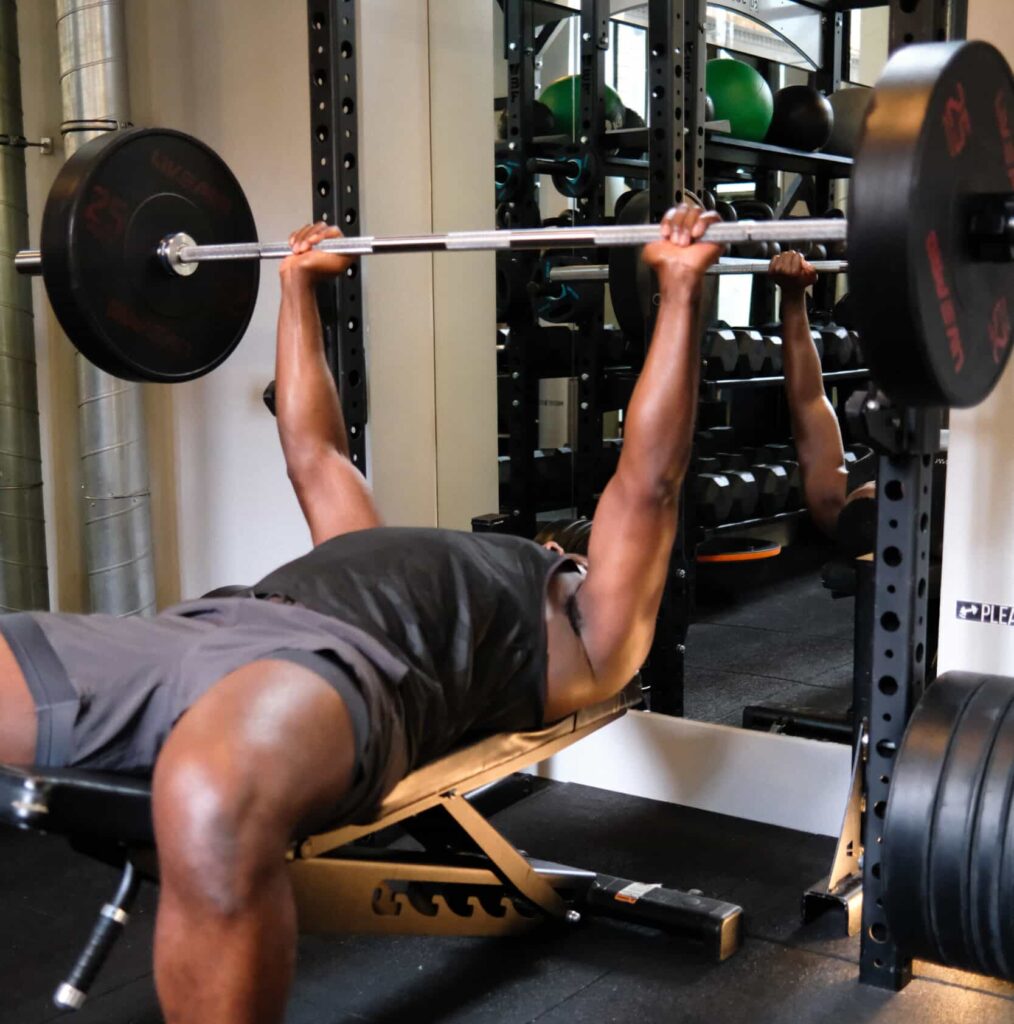
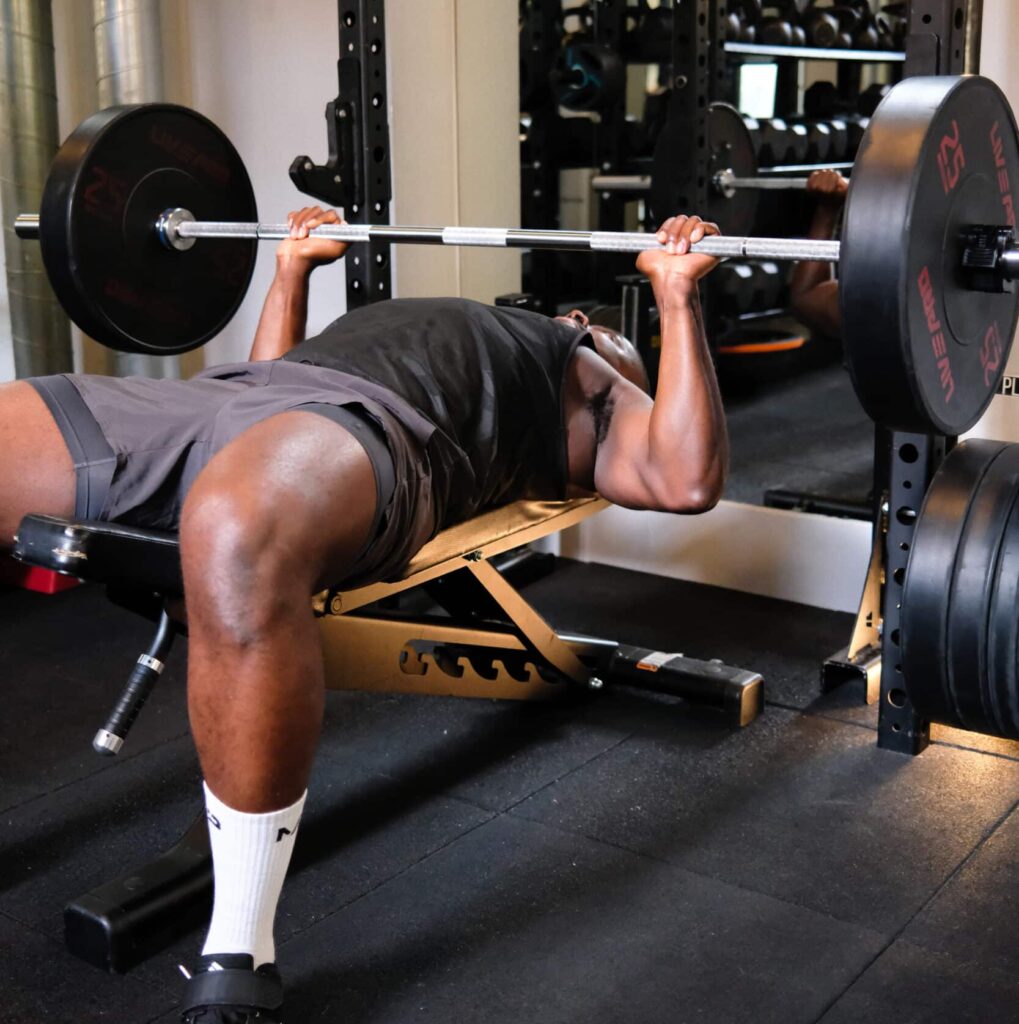
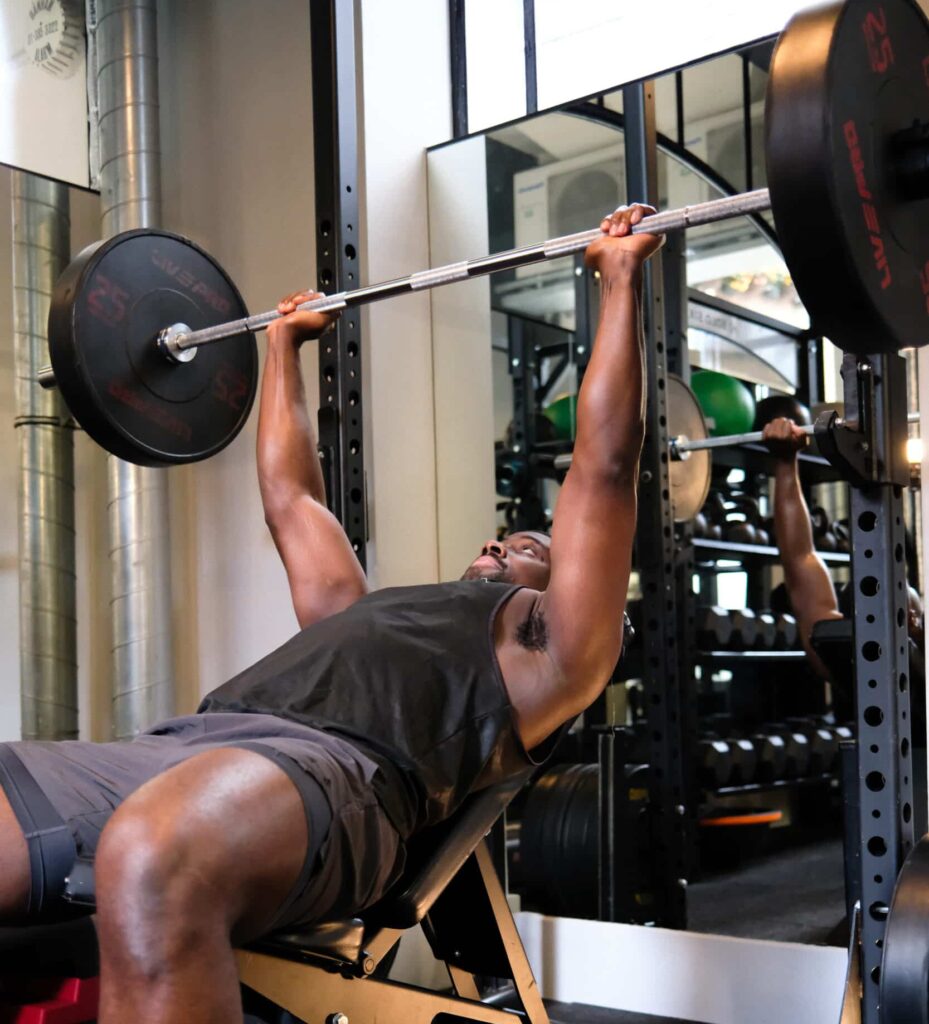
Feet position. Plant your feet firmly on the floor, either flat or on your toes depending on what feels more stable. Your feet should be directly under or slightly behind your knees. Never lift your feet off the floor during the lift.
Back position. Create an arch in your lower back by squeezing your shoulder blades together and driving them into the bench. This arch is not dangerous when done correctly. It reduces the range of motion, puts your shoulders in a safer position and allows you to use your leg drive effectively.
Shoulder blade retraction. Before unracking the bar, pull your shoulder blades back and down as if you are trying to put them in your back pockets. This creates a stable platform for pressing and protects your shoulders.
Grip width. Your grip should place your forearms vertical when the bar touches your chest. For most people, this means the index finger on or just outside the ring markings on the bar. Too narrow and you lose chest activation. Too wide and you stress your shoulders excessively.
Bar position on hands. The bar should rest on the heel of your palm, not in your fingers. Your wrist should be straight or slightly cocked back, never bent forward. This positions the weight directly over your forearm bones for maximum force transfer.
The Descent
How you lower the bar matters as much as how you press it.
Control the weight. Lower the bar under control, taking approximately two seconds to reach your chest. Dropping the bar quickly robs you of the stretch reflex and puts your shoulders at risk.
Touch point. The bar should touch your lower chest, roughly at nipple level or slightly below. This position allows optimal leverage and keeps your elbows at approximately 45 degrees from your torso.
Elbow angle. Your elbows should be tucked at about 45 degrees from your body, not flared out at 90 degrees. Flared elbows put excessive stress on your shoulders and reduce your pressing power.
Pause briefly. When the bar touches your chest, pause for a split second before pressing. This eliminates any bouncing and ensures you are pressing the weight, not rebounding it.
The Press
The pressing phase is where technique often breaks down under heavy loads.
Drive through your feet. As you press, drive your feet into the floor. This leg drive transfers force through your body and into the bar. It is not cheating. It is proper technique that all strong benchers use.
Press in a slight arc. The bar should not travel straight up from your chest. It should move back toward your face slightly, finishing over your shoulders. This bar path is mechanically more efficient than a vertical press.
Keep your butt on the bench. Your glutes should stay in contact with the bench throughout the lift. If they come up, you are using too much leg drive or the weight is too heavy.
Lock out completely. The rep is not finished until your elbows are fully locked. Do not stop short because you are tired.
Building Bench Press Strength
Once your technique is solid, you need a programme designed to build strength. The approach that works for bodybuilding, high reps to muscular failure, is not optimal for building a big bench press.
The Principle of Specificity
To get better at benching heavy, you need to bench heavy. This sounds obvious, but many lifters spend too much time on high rep pump work and not enough time practicing the skill of pressing heavy weight.
Research from the Journal of Strength and Conditioning Research shows that strength is built most effectively with loads above 70% of your one rep max. For bench press specifically, the 3 to 6 rep range is the sweet spot for building maximal strength.
Progressive Overload
Your bench press will only increase if you consistently challenge it with more weight, more reps or more sets over time. This is the principle of progressive overload, and without it, progress stops.
Track every workout. Write down the weight and reps for every set. Aim to beat your previous performance in some way each week, even if it is just one extra rep on your last set.
Frequency Matters
Benching once per week is not optimal for most lifters chasing strength. Research from Sports Medicine shows that training a muscle group twice per week produces superior strength gains compared to once per week.
For bench press specifically, I recommend benching two to three times per week. This does not mean three identical heavy sessions. It means varying the intensity and volume across sessions.
The Role of Accessories
While the bench press itself should be your priority, accessory exercises build the supporting muscles that contribute to a big bench.
Triceps are responsible for locking out the weight. If you fail near the top of the lift, your triceps need work. Close grip bench press, dips and tricep pushdowns are effective.
Shoulders assist throughout the movement, particularly the front deltoids. Overhead pressing and incline bench work build shoulder strength that transfers to flat bench.
Upper back provides the stable base from which you press. A weak upper back means an unstable setup. Rows, face pulls and rear delt work strengthen this area.
Chest obviously matters, but is rarely the weak link for most lifters. If you fail at the bottom of the lift, chest strength may be limiting you. Dumbbell presses and flyes can help.
The 12 Week Programme to 100kg
Here is a specific programme designed to take you from wherever you are now to your first 100kg bench. It assumes you can currently bench at least 70kg and have solid technique.
The programme uses a three day per week structure with two bench sessions and one overhead press session. Each week builds on the previous one through progressive overload.
Week 1 to 4: Foundation Phase
This phase builds your base with moderate weights and higher volume.
Day 1: Heavy Bench Day
| Exercise | Sets | Reps | Rest | Notes |
|---|---|---|---|---|
| Barbell Bench Press | 4 | 5 | 3 min | Use 75% of current max |
| Close Grip Bench Press | 3 | 8 | 2 min | Focus on triceps |
| Dumbbell Incline Press | 3 | 10 | 90 sec | |
| Tricep Dips | 3 | 8 to 10 | 90 sec | Add weight if needed |
| Face Pulls | 3 | 15 | 60 sec |
Day 2: Overhead Press Day
| Exercise | Sets | Reps | Rest | Notes |
|---|---|---|---|---|
| Standing Barbell OHP | 4 | 6 | 2 min | |
| Seated Dumbbell Press | 3 | 10 | 90 sec | |
| Lateral Raises | 3 | 12 | 60 sec | |
| Barbell Rows | 4 | 8 | 2 min | |
| Tricep Pushdowns | 3 | 12 | 60 sec |
Day 3: Volume Bench Day
| Exercise | Sets | Reps | Rest | Notes |
|---|---|---|---|---|
| Barbell Bench Press | 4 | 8 | 2 min | Use 65% of current max |
| Dumbbell Bench Press | 3 | 10 | 90 sec | |
| Cable Flyes | 3 | 12 | 60 sec | |
| Close Grip Bench Press | 3 | 10 | 90 sec | |
| Dumbbell Pullovers | 2 | 12 | 60 sec |
Progression: Add 2.5kg to your bench press working weight each week.
Week 5 to 8: Strength Phase
This phase increases intensity and reduces volume to peak your strength.
Day 1: Heavy Bench Day
| Exercise | Sets | Reps | Rest | Notes |
|---|---|---|---|---|
| Barbell Bench Press | 5 | 3 | 3 min | Use 82 to 85% of current max |
| Close Grip Bench Press | 3 | 6 | 2 min | |
| Dumbbell Incline Press | 3 | 8 | 90 sec | |
| Weighted Dips | 3 | 6 to 8 | 2 min | |
| Face Pulls | 3 | 15 | 60 sec |
Day 2: Overhead Press Day
| Exercise | Sets | Reps | Rest | Notes |
|---|---|---|---|---|
| Standing Barbell OHP | 4 | 5 | 2 min | |
| Push Press | 3 | 5 | 2 min | |
| Barbell Rows | 4 | 6 | 2 min | |
| Tricep Dips | 3 | 8 | 90 sec | |
| Lateral Raises | 3 | 12 | 60 sec |
Day 3: Volume Bench Day
| Exercise | Sets | Reps | Rest | Notes |
|---|---|---|---|---|
| Barbell Bench Press | 4 | 6 | 2 min | Use 72 to 75% of current max |
| Incline Barbell Press | 3 | 8 | 2 min | |
| Dumbbell Flyes | 3 | 10 | 60 sec | |
| Tricep Pushdowns | 3 | 10 | 60 sec | |
| Skull Crushers | 3 | 10 | 60 sec |
Progression: Add 2.5kg to heavy bench day each week. Keep volume day weight consistent.
Week 9 to 11: Peaking Phase
This phase prepares you for your max attempt with very heavy singles and doubles.
Day 1: Heavy Bench Day
| Exercise | Sets | Reps | Rest | Notes |
|---|---|---|---|---|
| Barbell Bench Press | Work up to heavy single | 1 | 3+ min | Week 9: 90%, Week 10: 95%, Week 11: 97% |
| Barbell Bench Press | 3 | 3 | 3 min | 80% of max |
| Close Grip Bench Press | 3 | 5 | 2 min | |
| Face Pulls | 3 | 15 | 60 sec |
Day 2: Light Overhead Day
| Exercise | Sets | Reps | Rest | Notes |
|---|---|---|---|---|
| Standing OHP | 3 | 6 | 2 min | Light, focus on shoulders |
| Lateral Raises | 3 | 12 | 60 sec | |
| Barbell Rows | 3 | 8 | 2 min | |
| Tricep Pushdowns | 3 | 12 | 60 sec |
Day 3: Technique Bench Day
| Exercise | Sets | Reps | Rest | Notes |
|---|---|---|---|---|
| Paused Bench Press | 4 | 4 | 2 min | 70% with 2 sec pause |
| Dumbbell Bench Press | 3 | 8 | 90 sec | |
| Cable Flyes | 3 | 12 | 60 sec |
Week 12: Testing Week
This is the week you attempt your 100kg bench.
Day 1: Active Recovery
Light cardio and stretching only. No bench pressing.
Day 2: Rest
Complete rest. Eat well and sleep well.
Day 3: Max Attempt Day
| Exercise | Sets | Reps | Rest | Notes |
|---|---|---|---|---|
| Warm up: Empty bar | 2 | 10 | 1 min | |
| 40kg | 1 | 5 | 1 min | |
| 60kg | 1 | 3 | 2 min | |
| 80kg | 1 | 1 | 3 min | |
| 90kg | 1 | 1 | 3 min | |
| 100kg | 1 | 1 | Full recovery | Your attempt |
If 100kg moves well, you can attempt 102.5kg after full recovery. If it is a grind but successful, celebrate and move on. If you fail, rest five minutes and try again. Sometimes nerves cause a failed first attempt.
Common Mistakes That Kill Progress
Mistake 1: Testing Your Max Too Often
Every time you test your one rep max, you accumulate fatigue without building strength. Testing should happen at the end of a training block, not every week.
If you constantly test your max, you never spend enough time in the rep ranges that actually build strength. Save the ego lifting for planned test days.
Mistake 2: Neglecting Technique Under Heavy Loads
Many lifters have good technique with light weight but fall apart as the weight increases. Their elbows flare, their butt comes off the bench and the bar path becomes erratic.
Practice your technique at all weights. If your form breaks down, the weight is too heavy for your current strength. Lower it and build up properly.
Mistake 3: Inconsistent Training
Strength is built through consistent practice over months and years. Missing sessions, taking extended breaks or constantly changing programmes prevents adaptation.
Show up consistently. Follow the programme. Trust the process. There are no shortcuts.
Mistake 4: Ignoring Recovery
Strength is not built during training. It is built during recovery. If you are not sleeping enough, eating enough protein or managing stress, your bench will stall regardless of how good your programme is.
Aim for seven to eight hours of sleep per night. Eat 1.6 to 2.2 grams of protein per kilogram of body weight daily. Take your rest days seriously.
Mistake 5: Ego Lifting with Bad Spotters
Heavy benching requires a competent spotter who knows when to help and when to let you grind. A bad spotter either grabs the bar too early or waits too long.
Find a reliable training partner or learn to bench in a power rack with safety pins. Never max out alone with no safety measures.
The Mental Side of Heavy Benching
Lifting 100kg for the first time is as much a mental challenge as a physical one. The bar looks heavy. The weight feels crushing. Doubt creeps in.
Visualisation
Before your attempt, visualise yourself completing the lift. See the bar on your chest, feel yourself pressing it up, imagine locking it out. Research from Sports Psychology shows that mental rehearsal improves performance in strength tasks.
Confidence Building
Your confidence should come from your training. If you have followed the programme and hit your numbers each week, you have earned the right to attempt 100kg. Trust that the preparation has been sufficient.
Arousal Management
Some lifters need to get fired up before a heavy lift. Others perform better when calm. Learn what works for you and use it consistently.
If you get too anxious, the weight will feel heavier. If you are too relaxed, you might not generate enough force. Find your optimal state.
Back to Chris
Remember Chris from the beginning? After implementing these principles, his journey to 100kg took four months.
The biggest change was his technique. His previous setup was loose, his bar path was inefficient and his elbows flared excessively. Fixing these issues immediately added 5kg to his bench.
From there, consistent training with proper progression did the rest. He followed a programme similar to the one in this guide, adding small amounts of weight each week.
When he finally attempted 100kg, it moved smoothly. “It wasn’t even a grind,” he told me. “All those technique fixes and consistent training made 100kg feel like what 90kg used to feel like.”

How to Get Started
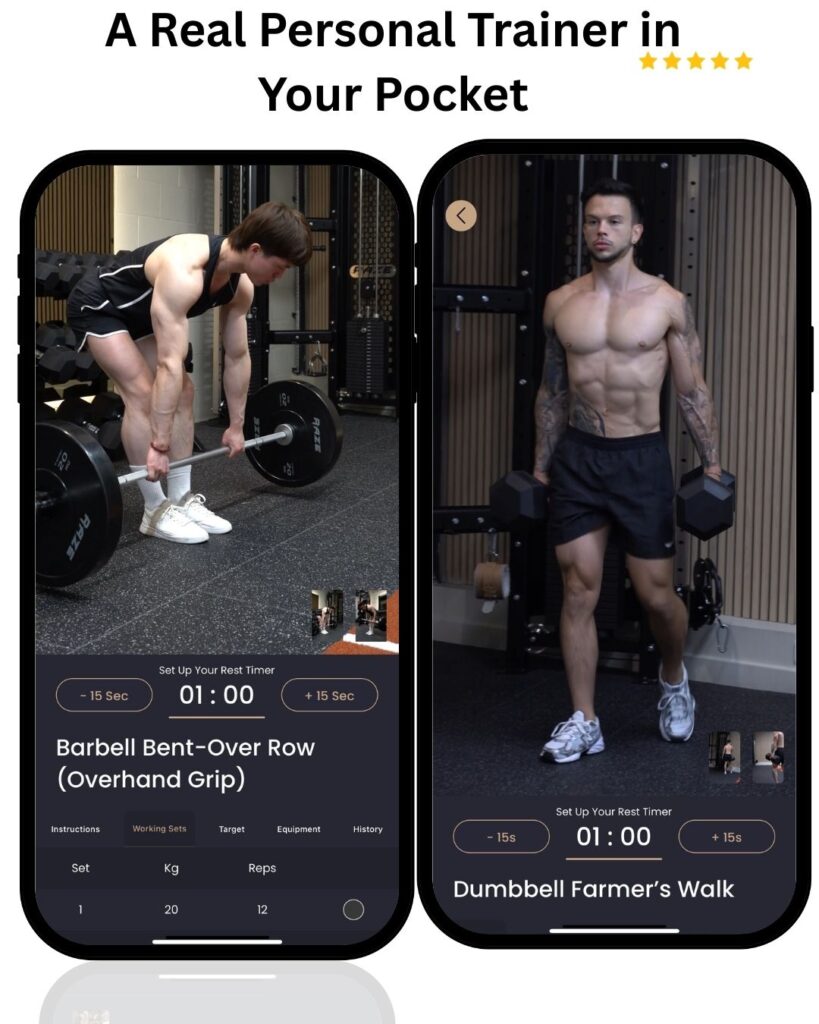
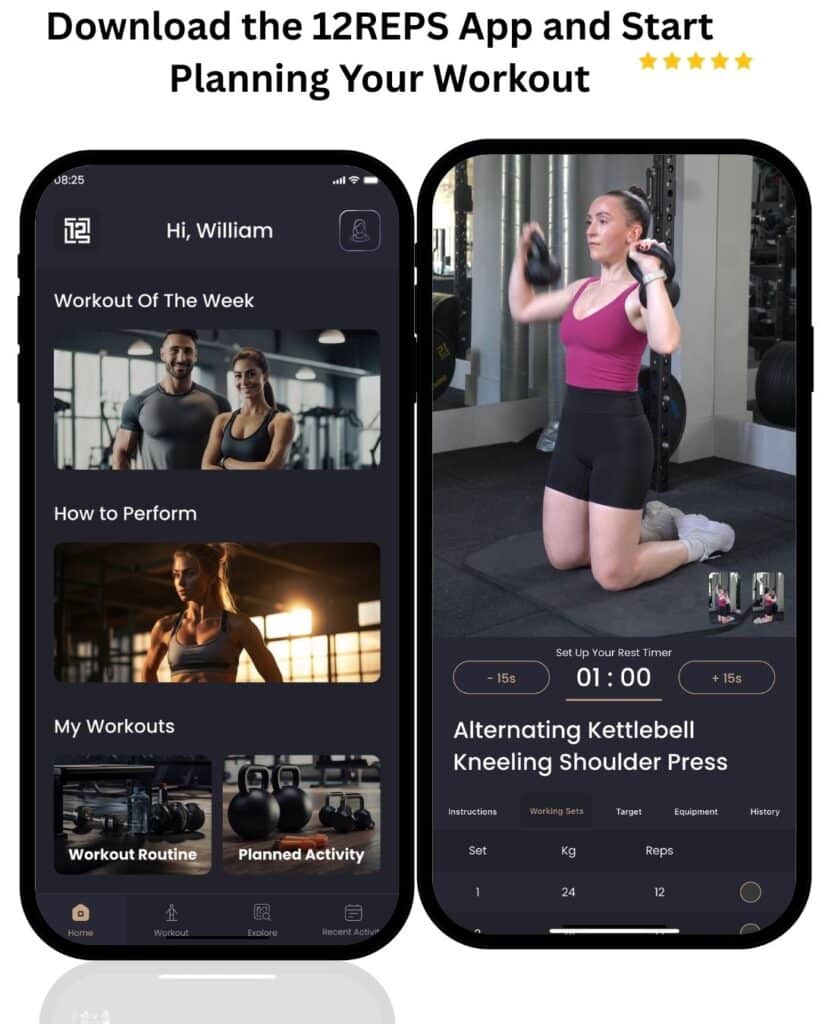
If you want to follow a structured bench press programme with all the exercises and progressions tracked automatically, the 12REPS app can help.
The app includes video demonstrations of every exercise in this guide, from bench press variations to tricep accessories. You can build custom routines, track your weights and reps and monitor your progress over time.
Having your numbers tracked makes progressive overload straightforward. You always know what you lifted last week and what you need to beat this week. Download the app and start your free trial at 12REPS.
Final Thoughts
The 100kg bench press is achievable for most men who train consistently and intelligently. It is not reserved for genetic freaks or people with perfect leverages. It requires good technique, smart programming and patience.
Fix your setup. Learn to use leg drive. Train the bench press frequently with appropriate intensity. Build your triceps and shoulders. Track your progress and add weight systematically.
Most importantly, be patient. Strength is built over months and years, not days and weeks. If you follow the principles in this guide consistently, 100kg is a matter of when, not if.
The two plates are waiting. Go earn them.
Related Articles on just12reps.com
| Article | Description | Link |
|---|---|---|
| The Ultimate 12 Week Push Pull Legs Workout Plan | A complete programme that includes bench press training within a full body split. | Read Article |
| The Complete Chest and Biceps Workout | Build a bigger chest with this focused upper body session. | Read Article |
| Push Pull Chest and Back Workout | A balanced upper body workout combining pressing and pulling. | Read Article |
| The Science Behind 12 Rep Training | Understand when to use higher reps for muscle building versus lower reps for strength. | Read Article |
| 3 Day Strength Training Split for Men | A time efficient programme that includes effective chest training. | Read Article |
References
1] Schoenfeld, B.J. et al. (2017). Strength and Hypertrophy Adaptations Between Low vs High Load Resistance Training. Journal of Strength and Conditioning Research. https://journals.lww.com/nsca-jscr/pages/default.aspx
[2] Grgic, J. et al. (2018). The effects of training frequency on muscle growth. Sports Medicine. https://link.springer.com/journal/40279
[3] Duffey, M.J. and Challis, J.H. (2011). Vertical and lateral forces applied to the bar during the bench press in novice lifters. Journal of Strength and Conditioning Research. https://journals.lww.com/nsca-jscr/pages/default.aspx
[4] Lehman, G.J. (2005). The influence of grip width and forearm pronation/supination on upper body myoelectric activity during the flat bench press. Journal of Strength and Conditioning Research. https://journals.lww.com/nsca-jscr/pages/default.aspx
[5] Green, C.M. and Comfort, P. (2007). The effect of grip width on bench press performance and risk of injury. Strength and Conditioning Journal. https://journals.lww.com/nsca-scj/pages/default.aspx
About the Author: Will Duru holds a BSc (Hons) in Sport and Exercise Science and is an award winning personal trainer with over 10 years of experience specialising in strength training. He has helped dozens of men achieve their first 100kg bench press and beyond. Will is the creator of the 12REPS app, designed to make professional training guidance accessible to everyone.