


Written by Will Duru, BSc (Hons) Sport and Exercise Science, Award-winning Personal Trainer with over 10 years of experience in strength training and optimising recovery
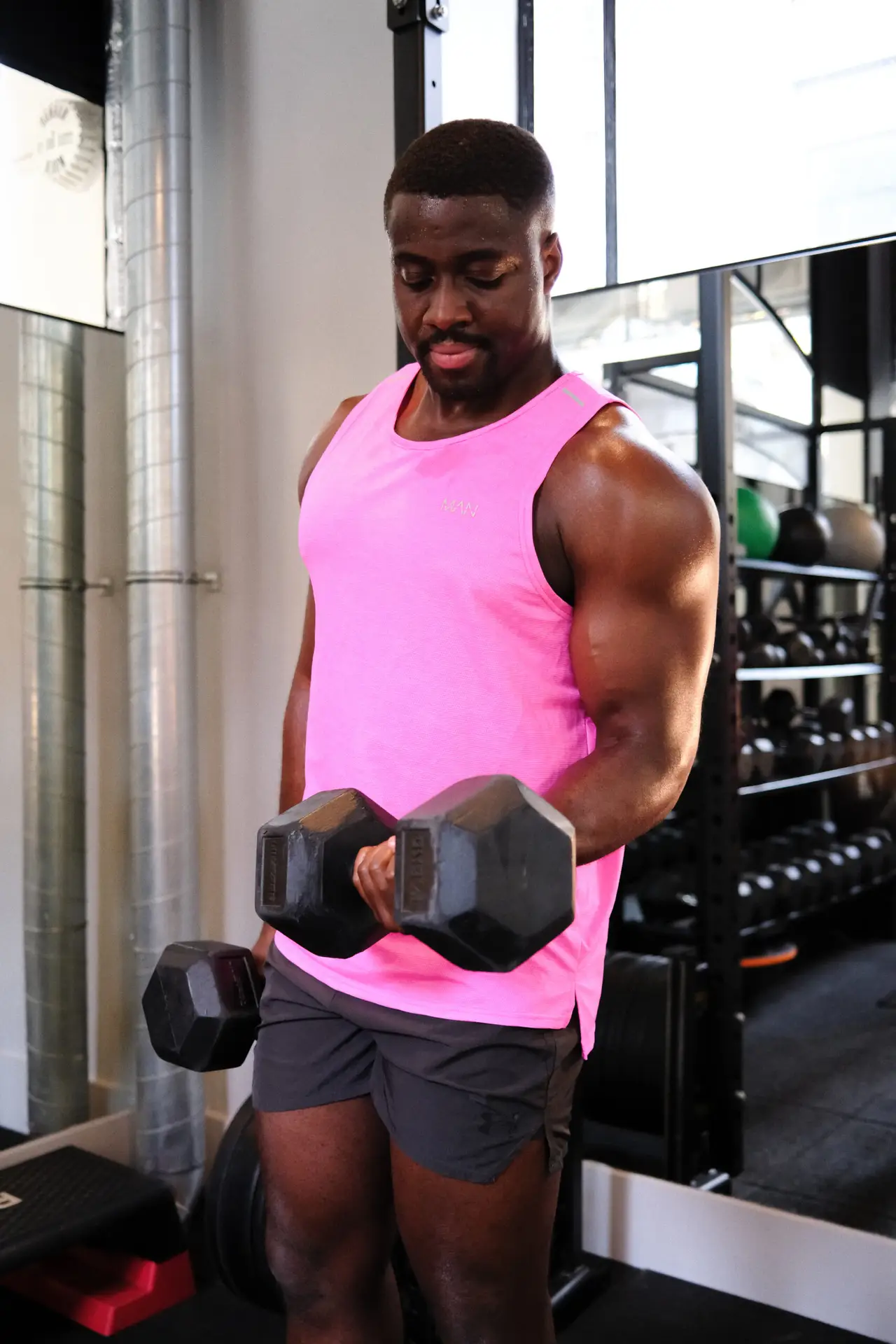
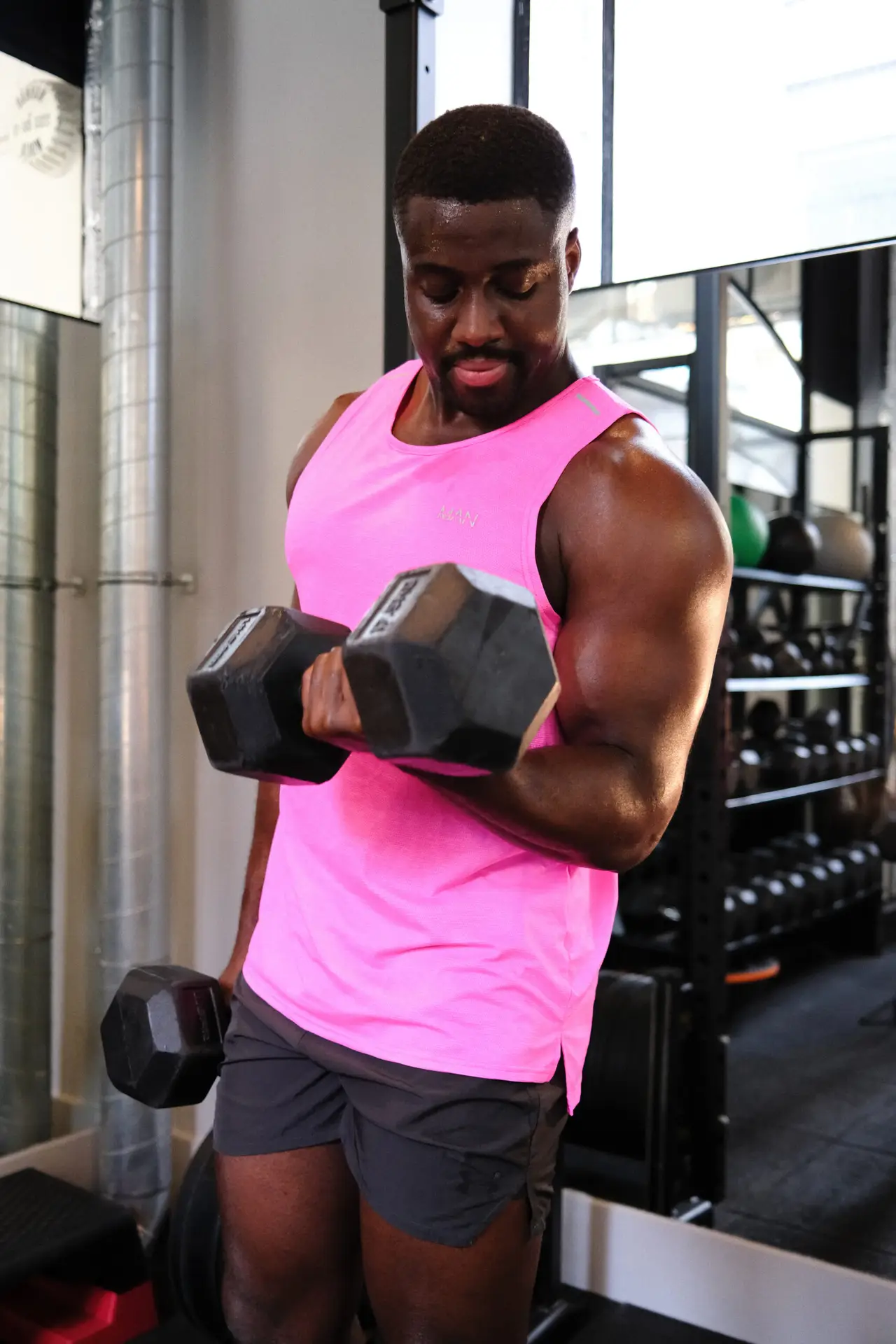
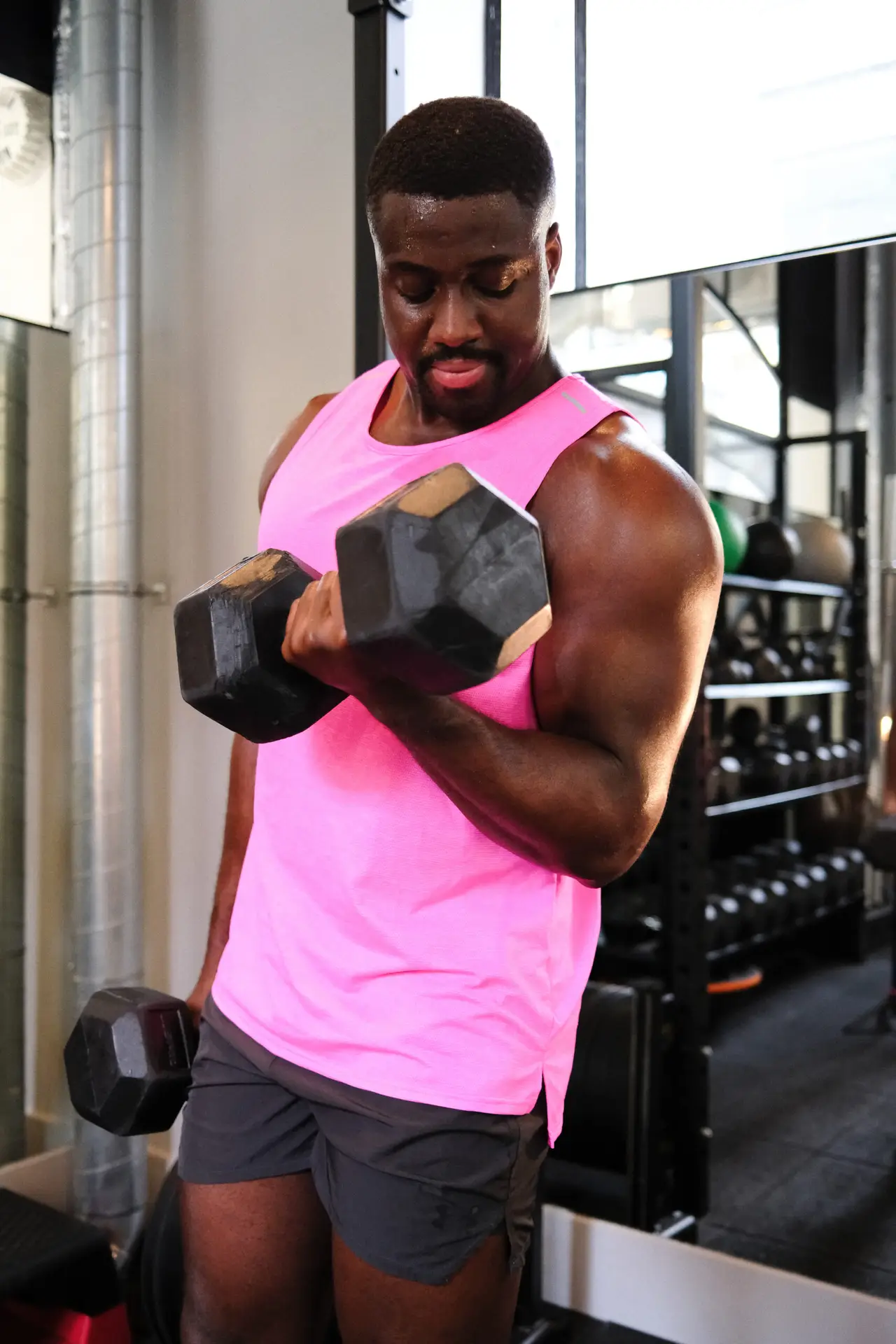
A chest and biceps workout pairs pressing exercises for your chest with curls for your biceps in one gym session. This 12REPS session uses seven exercises: the bench press, incline press, cable fly and press-ups for your chest, then three biceps curls. You do the heavy chest lifts first and finish with your arms.
Today I want to share my favorite chest and biceps session from the 12REPS app. Below you will find the full workout table, how to do each exercise, how to progress and how to eat to support it.
Your chest muscles push weight away from your body. Your biceps pull weight toward you. Because the two muscle groups do opposite jobs, your biceps are fresh when the chest work is done.
Why this chest and biceps workout works
Big lifts first, small lifts last
The session starts with the barbell bench press and the dumbbell incline press. These are compound exercises: they move more than one joint and train several muscles at once. Doing them first, while you are fresh, lets you lift your heaviest weights with good form.
Isolation exercises come next. They move one joint and focus on one muscle, like a fly for your chest or a curl for your biceps. They add extra work for the target muscle once the heavy lifting is done.
Flat and incline pressing
Your main chest muscle, the pectoralis major, has an upper (clavicular) part and a larger lower (sternocostal) part. A flat bench press trains the whole muscle. An incline press shifts more of the work to the upper part.
In one study, upper chest activity was highest with the bench at 30 degrees. Above 45 degrees, the front of the shoulder did more of the work (Rodríguez-Ridao et al., 2020). The study measured muscle activity, not muscle growth, so use it as a guide to bench angle.
Three ways to curl
Your biceps bends your elbow and works best when your palm faces up. The brachialis sits under the biceps. It bends your elbow whatever your grip, but it does not turn your palm (StatPearls: Brachialis Muscle).
This session uses a barbell, dumbbells and a rope. The rope uses a neutral grip, with your palms facing each other. Mixing grips trains your elbow flexors from slightly different angles. For more arm training ideas, read how to build bigger arms.
The full chest and biceps workout
Do one light warm-up set for each exercise, then your working sets. “5 x 10-12” means 5 sets of 10 to 12 reps. Rest is the time between sets.
| Exercise | Warm-up set | Working sets x reps | Rest between sets |
|---|---|---|---|
| 1. Barbell bench press | 1 x 15, light | 5 x 10-12 | 120-180 seconds |
| 2. Dumbbell incline press | 1 x 15, light | 5 x 10-12 | 90-120 seconds |
| 3. Cable chest flys | 1 x 15, light | 5 x 10-12 | 60-90 seconds |
| 4. Press-ups | 1 x 10, bodyweight | 5 x 10-12 | 60-90 seconds |
| 5. Barbell biceps curl | 1 x 15, light | 5 x 10-12 | 90-120 seconds |
| 6. Dumbbell biceps curl | 1 x 12 each arm, light | 5 x 10-12 each arm | 60-90 seconds |
| 7. Rope biceps curl | 1 x 15, light | 5 x 10-12 | 60-90 seconds |
Choosing a weight: pick a load that makes the last rep or two of each set hard while your form stays clean. If you can’t reach 10 reps, the weight is too heavy.
A note on volume: this is a big session, with 35 working sets and 20 of them for your chest. Research suggests more weekly sets tend to bring more muscle growth (Schoenfeld et al., 2017). If you are new to lifting or short on time, start with fewer working sets per exercise and build up.
How to do the chest exercises
1. Barbell bench press
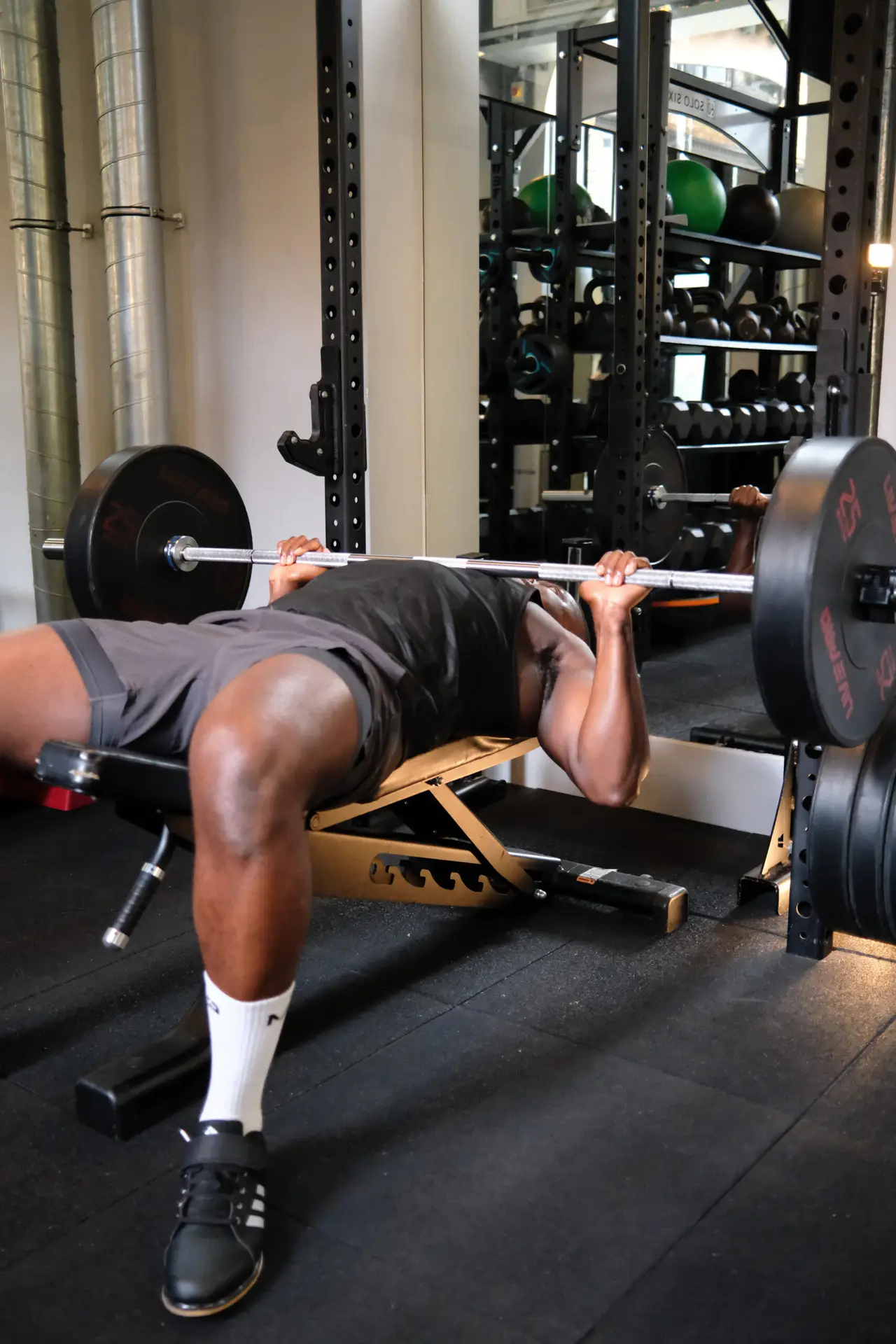
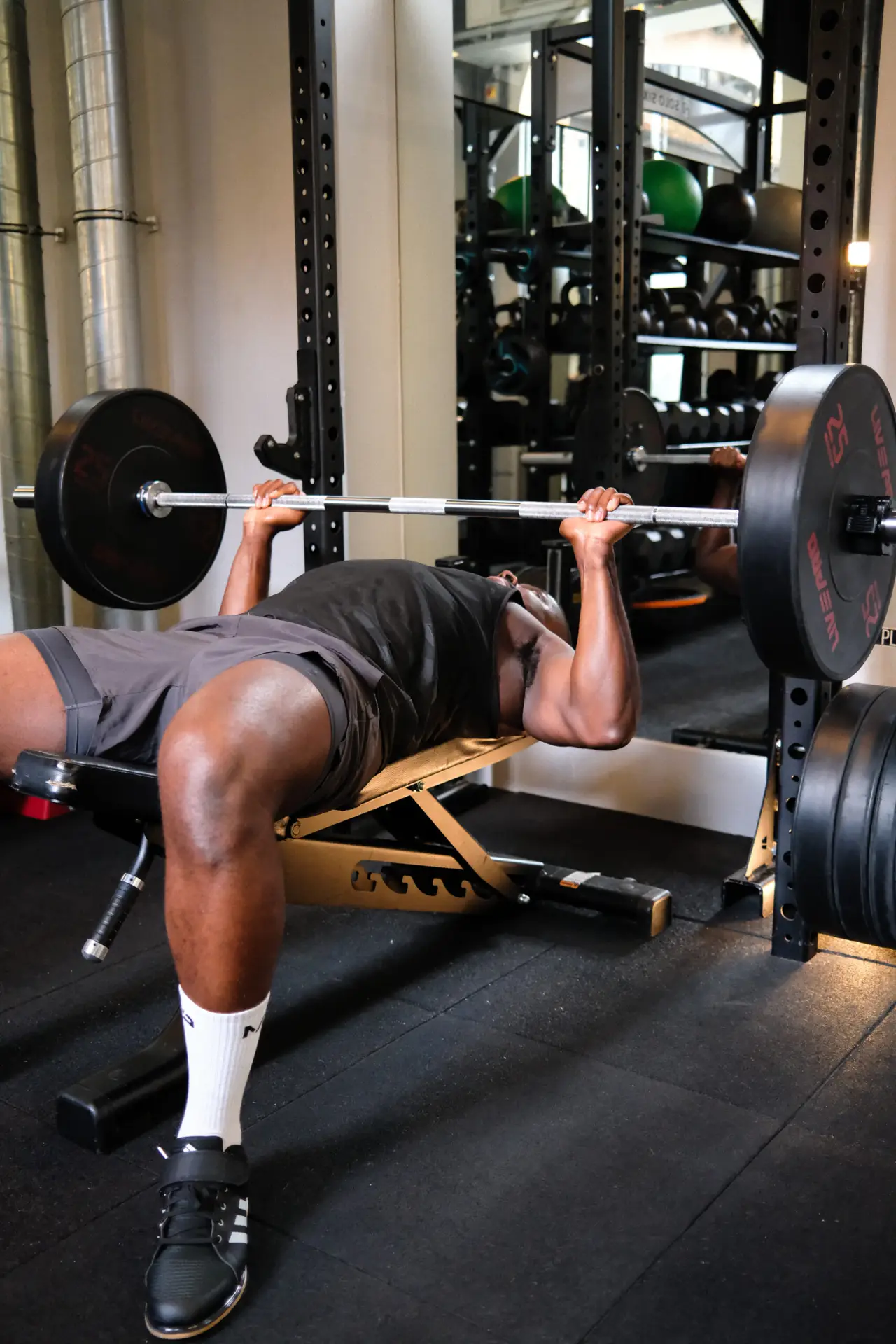
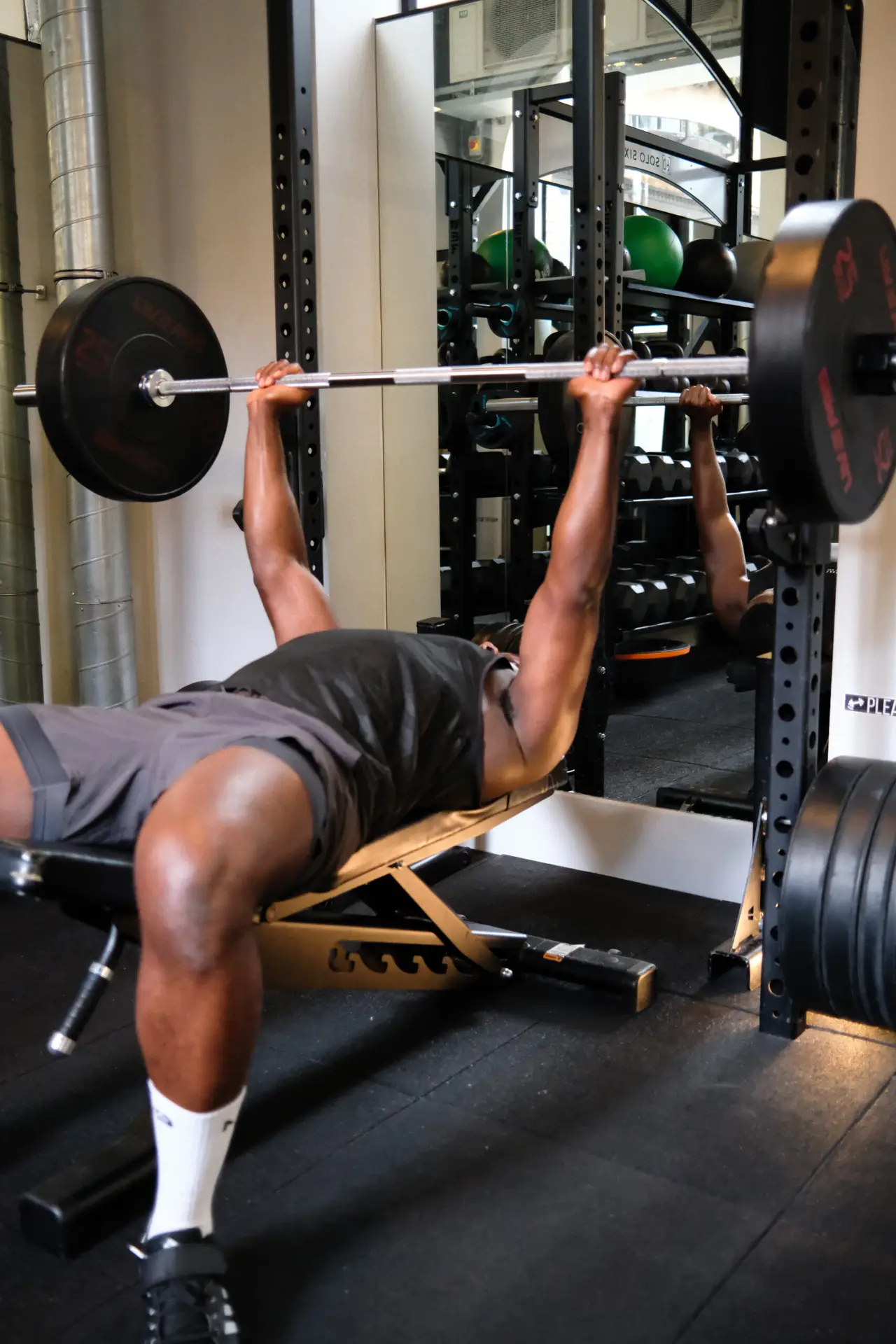
The barbell bench press is the main lift in this session. It trains your chest, the front of your shoulders and your triceps. It also lets you use the heaviest load of the day. See the barbell bench press exercise demo for a closer look.
- Lie on a flat bench with your eyes under the bar and your feet flat on the floor.
- Grip the bar a little wider than shoulder width. Pull your shoulder blades back and down.
- Lower the bar under control to your mid-chest, around nipple level.
- Press the bar back up in a straight line until your arms are straight.
Common mistakes: bouncing the bar off your chest, flaring your elbows out wide and over-arching your lower back. Keep your core tight and your feet planted.
Video: Bench press. Watch this 12REPS demo before your first working set to see the full movement from start to finish.
2. Dumbbell incline press
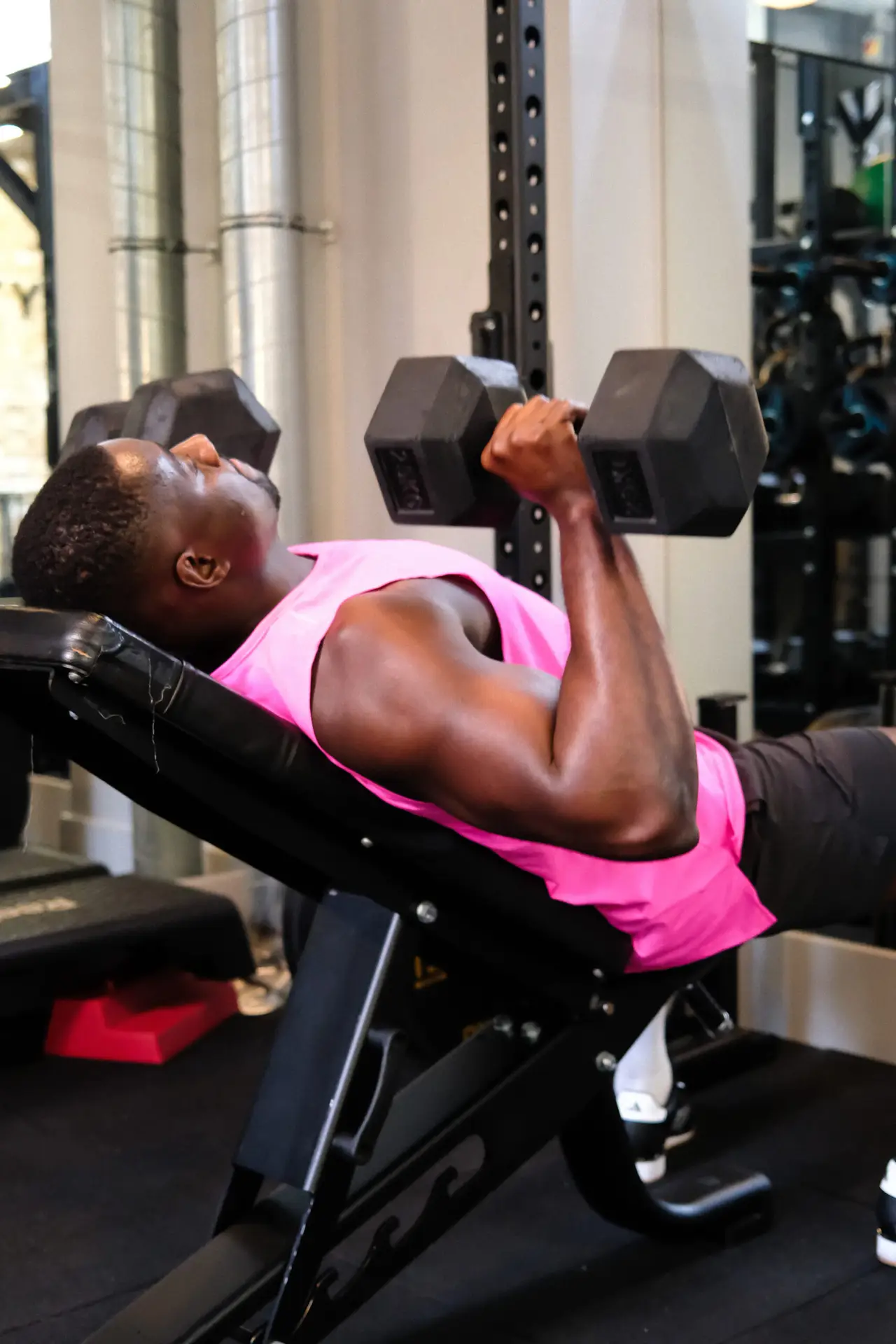
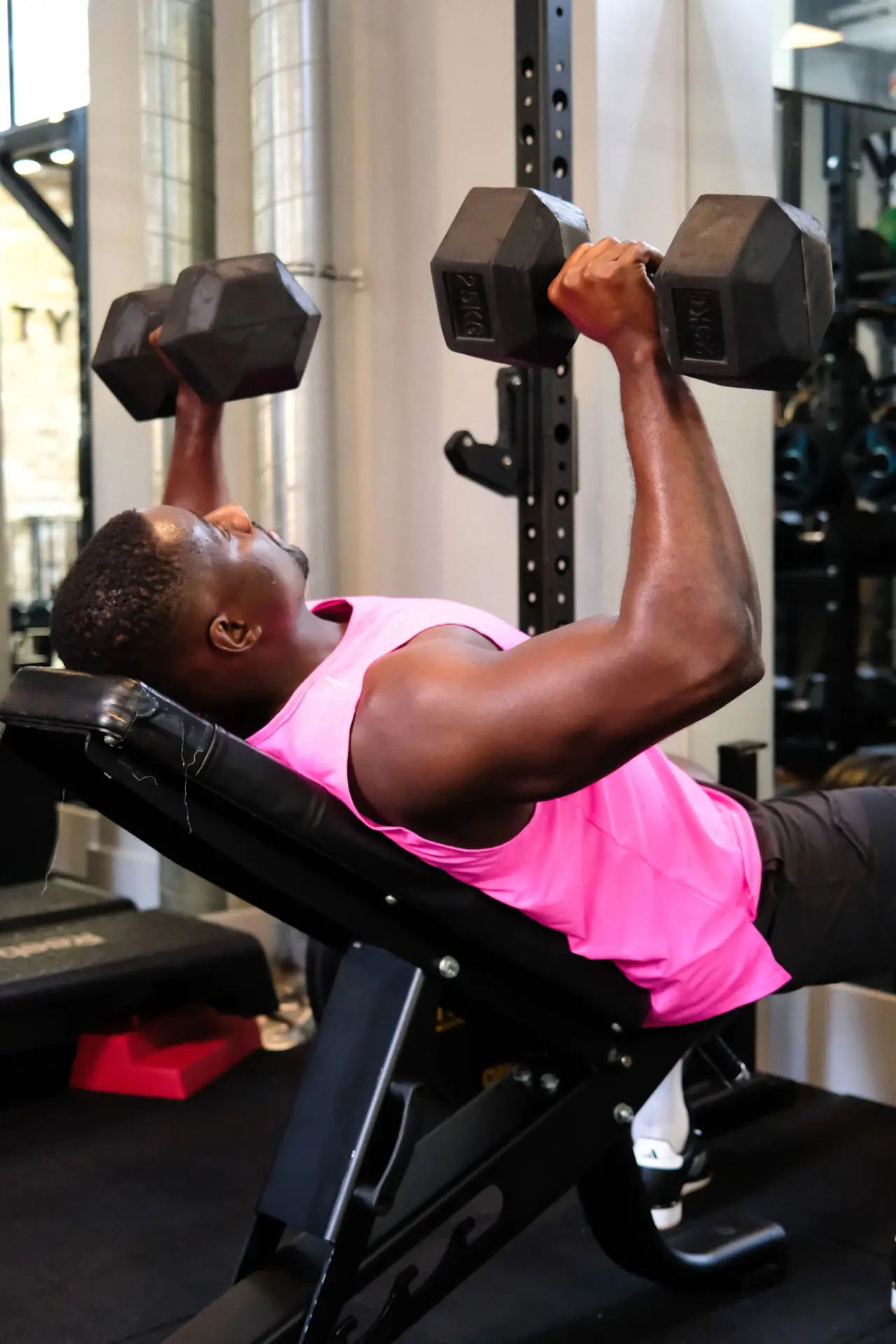
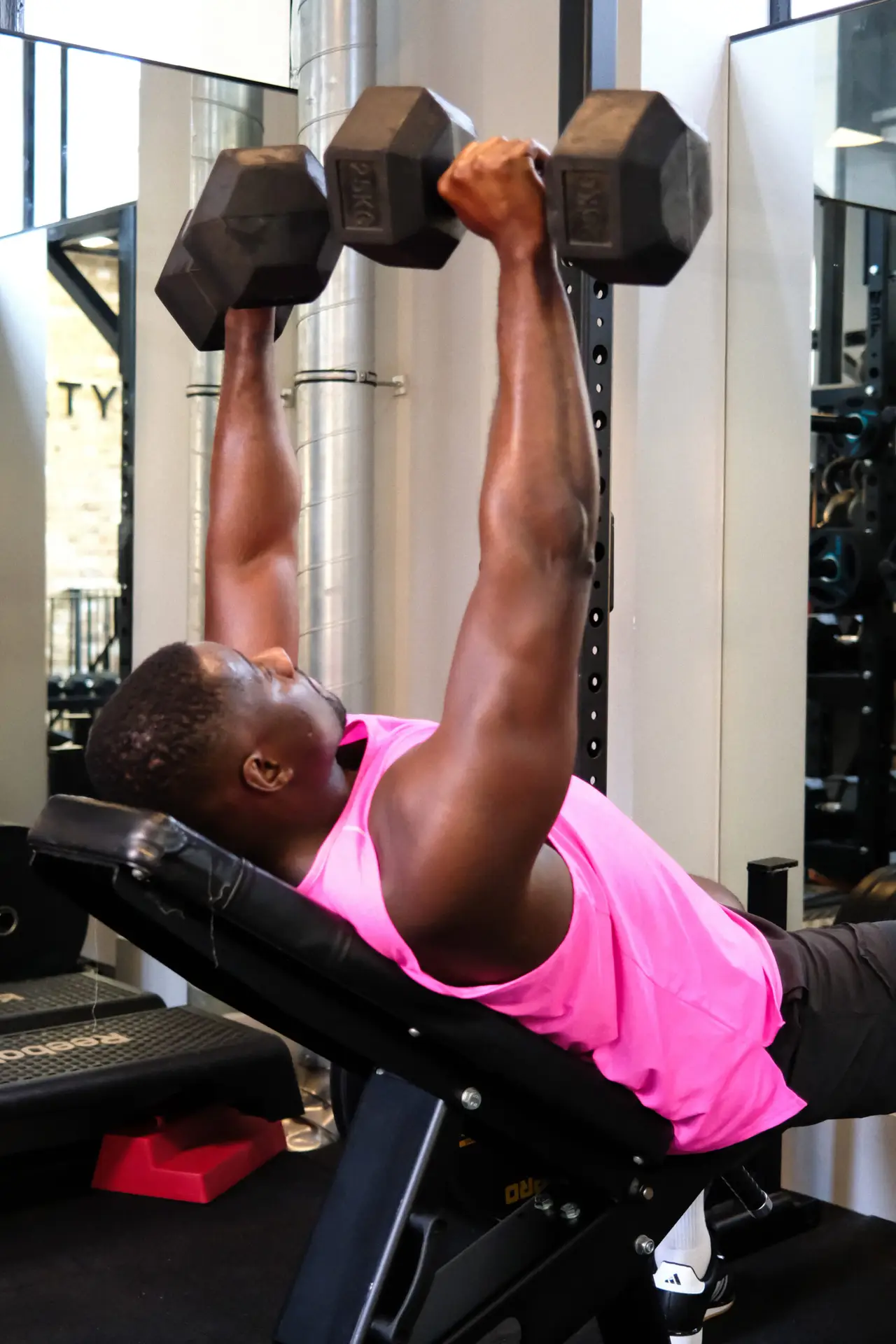
The dumbbell incline press puts more focus on your upper chest. Dumbbells also let you lower a little deeper than a barbell, because there is no bar to stop on your chest. See the dumbbell incline press exercise demo.
- Set an incline bench to 30 to 45 degrees. The lower end of that range keeps more of the work on your chest.
- Sit back with a dumbbell in each hand at shoulder level.
- Press the weights up and slightly together.
- Lower them slowly until you feel a stretch across your upper chest.
Video: Dumbbell incline chest press. This demo shows the bench angle and how the dumbbells travel up and back down.
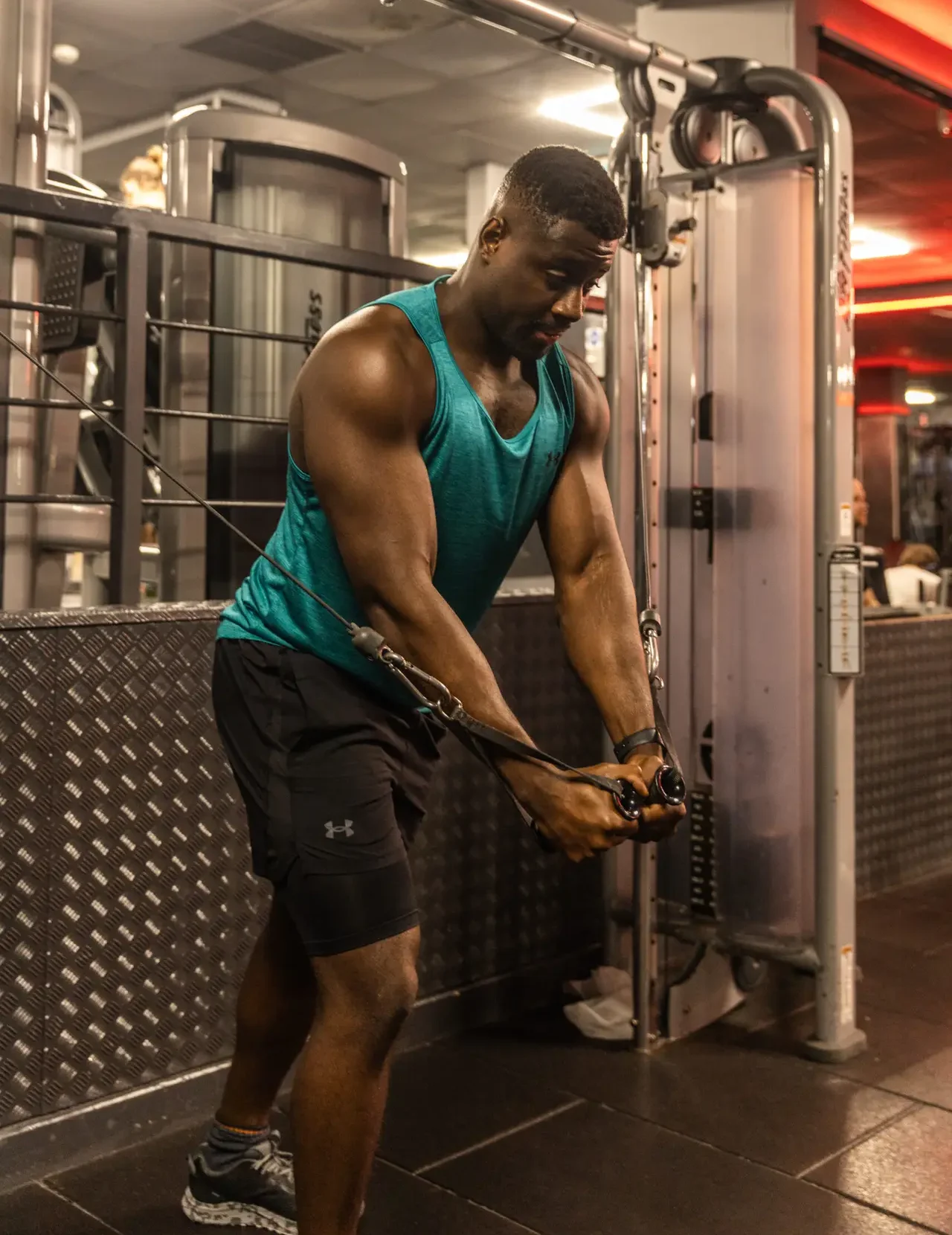
3. Cable chest flys
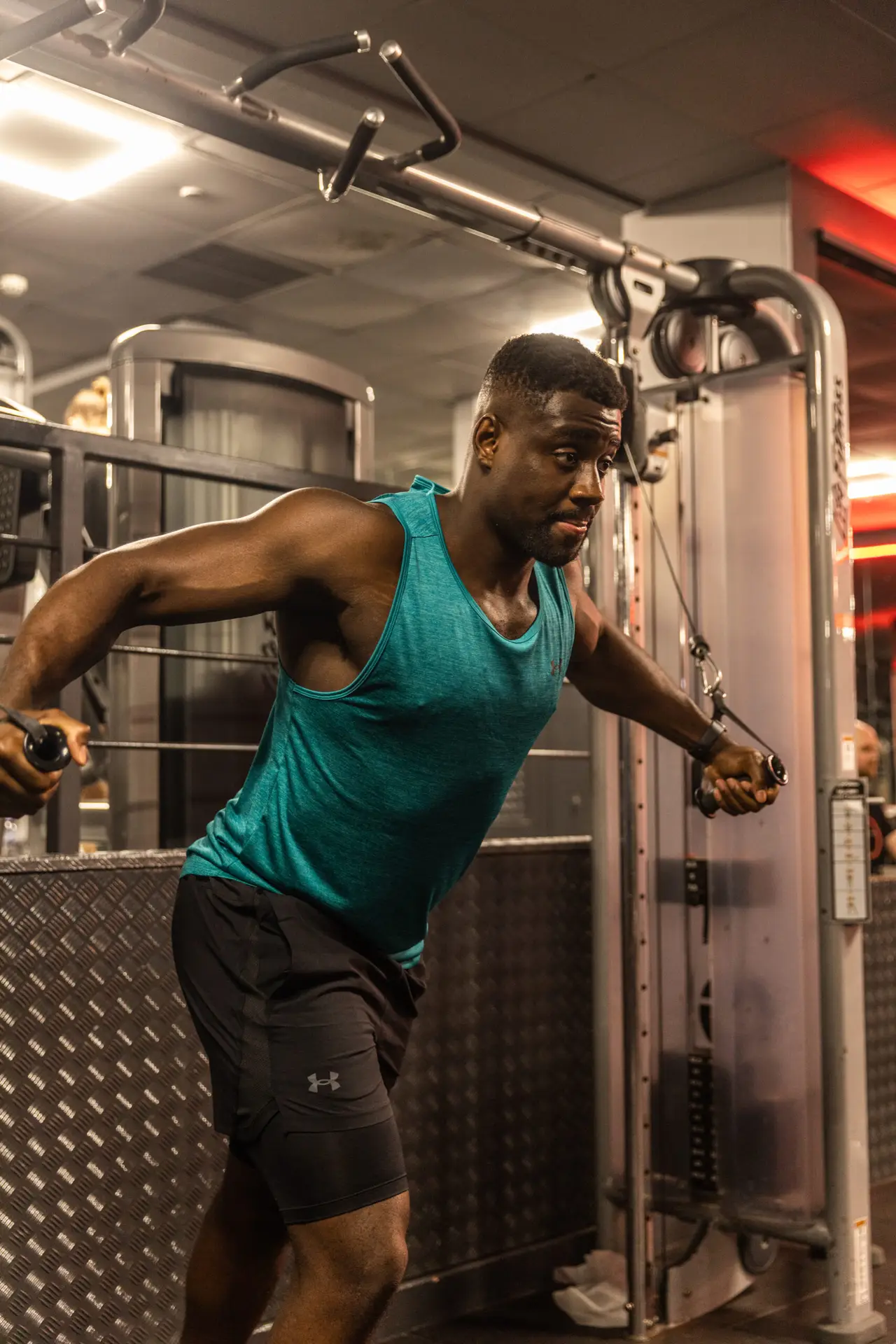
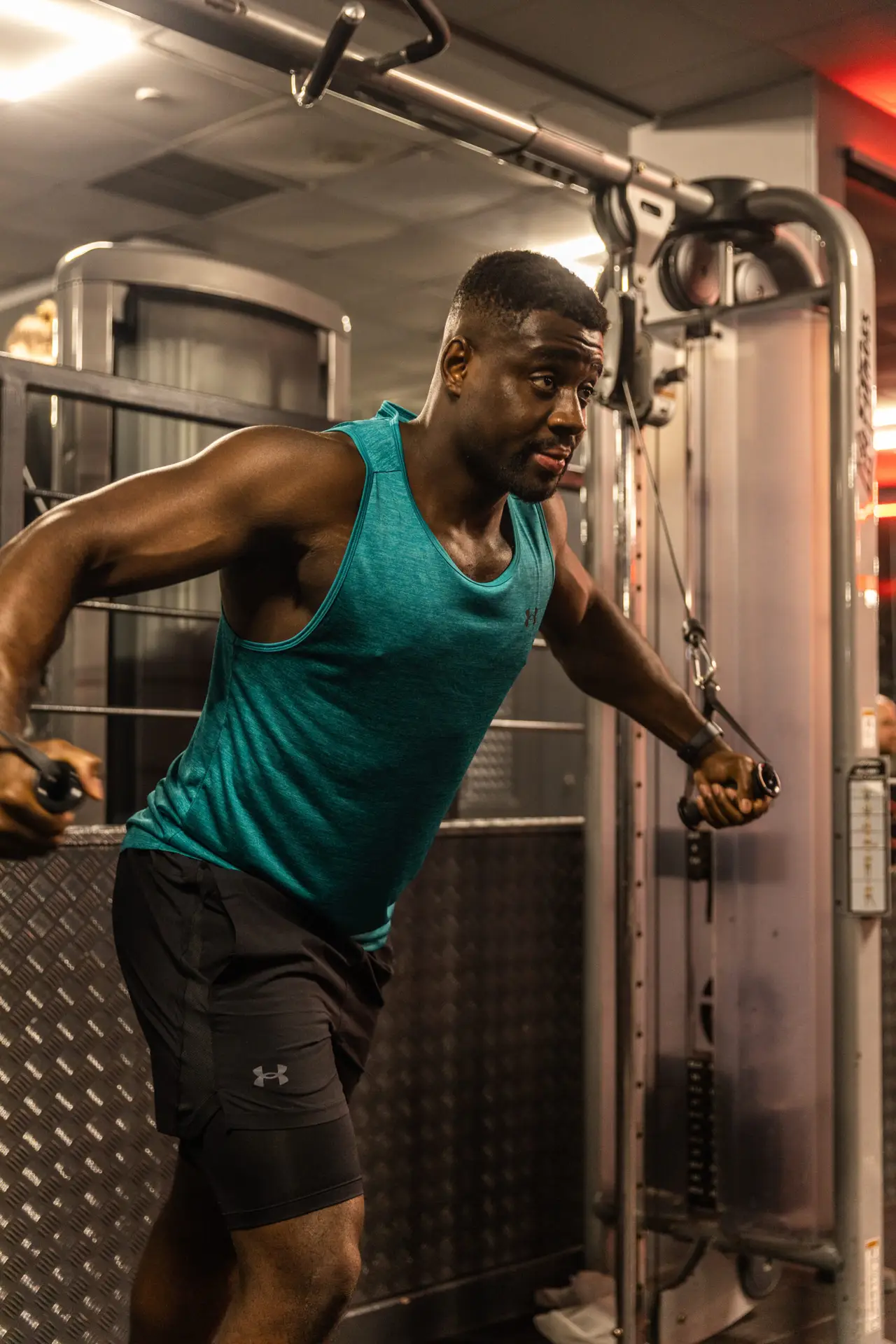
Cable chest flys are an isolation exercise for your chest. The cable keeps tension on the muscle through the whole movement, including the stretched position. See the cable chest flys exercise demo.
- Set both cables at shoulder height and hold a handle in each hand.
- Step forward into a split stance with a slight bend in your elbows.
- Bring your hands together in front of your chest and squeeze.
- Open your arms slowly back to the start.
Key points: keep the elbow bend the same throughout, so your chest does the work, not your arms. Don’t let the weight stack slam between reps.
4. Press-ups
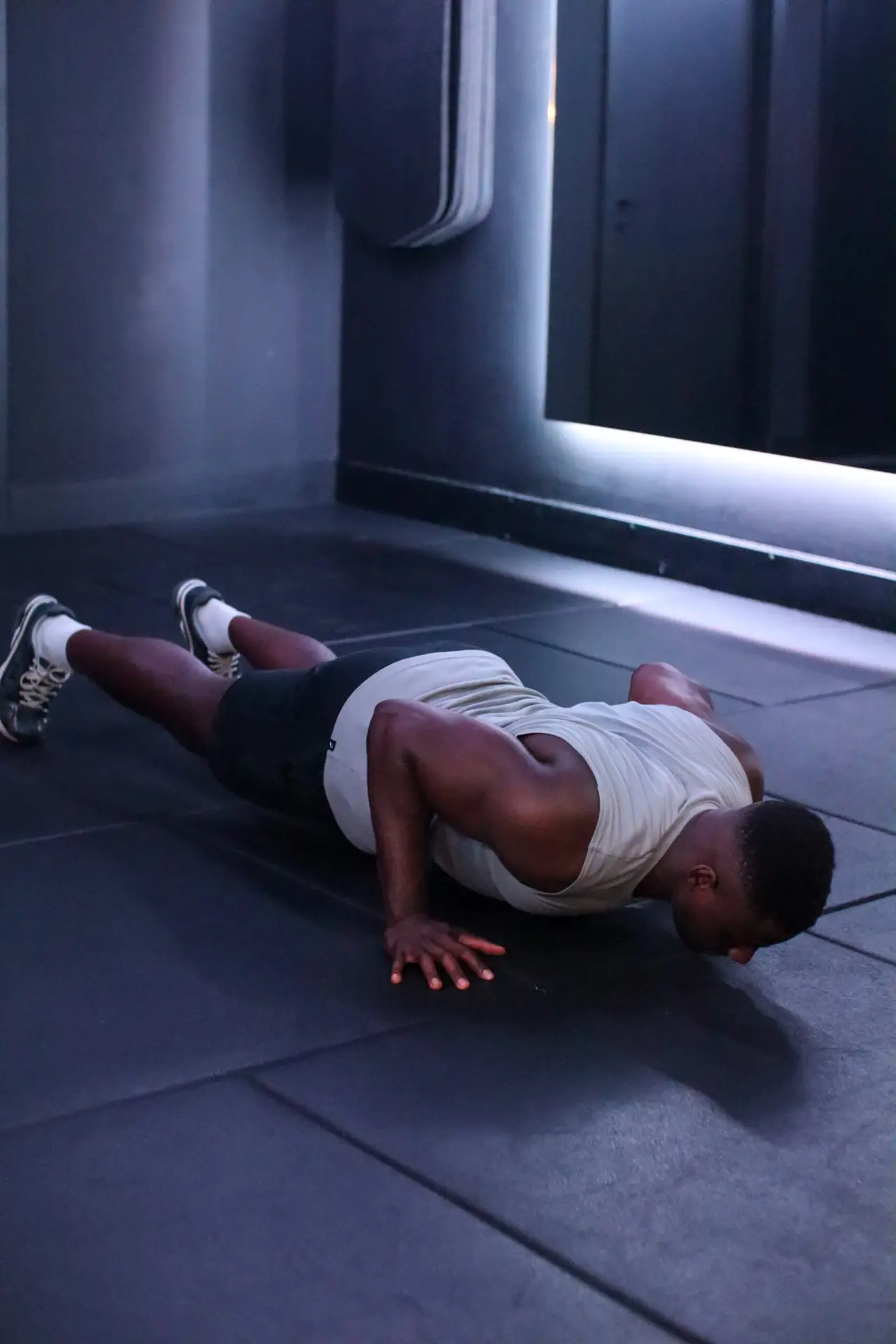
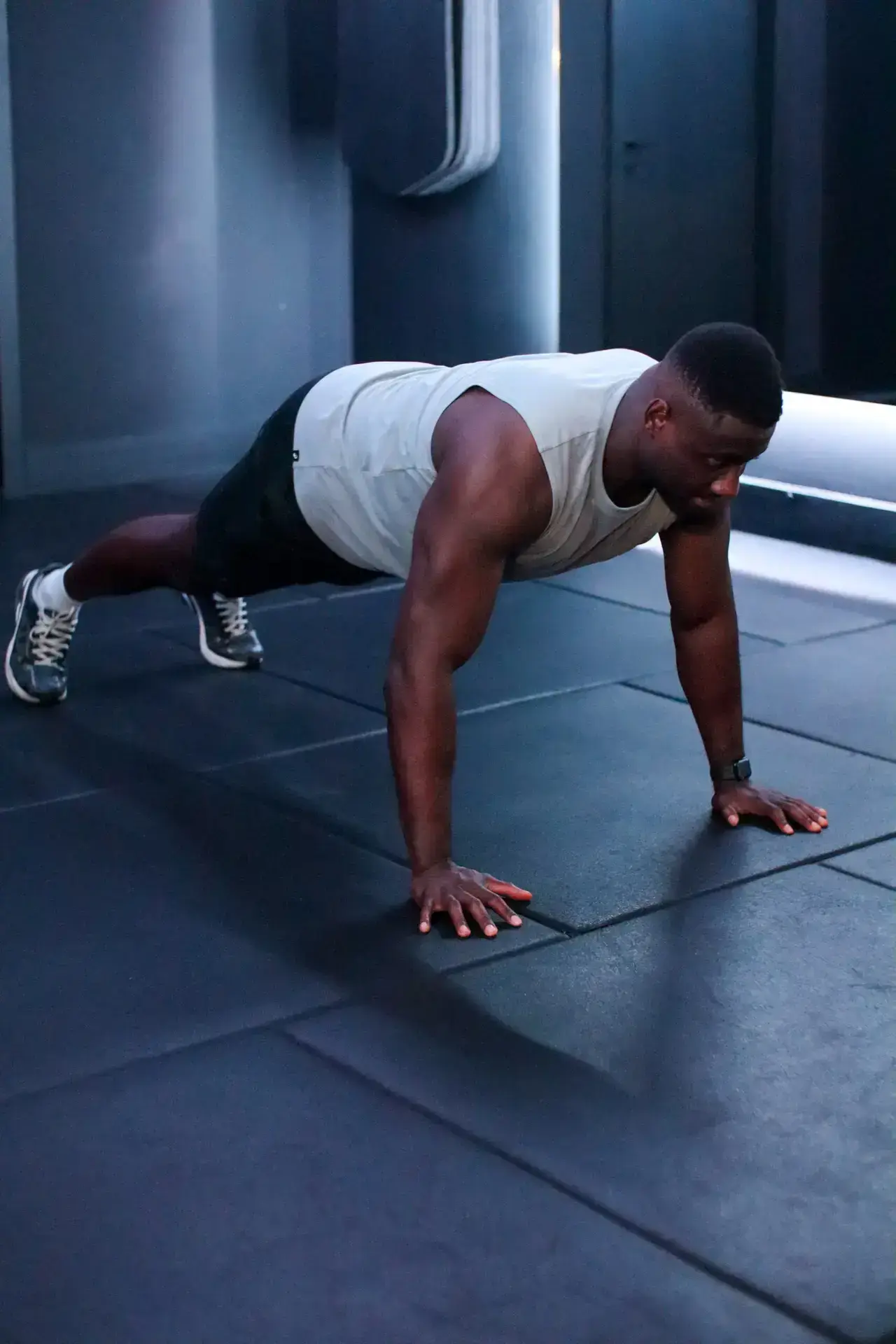
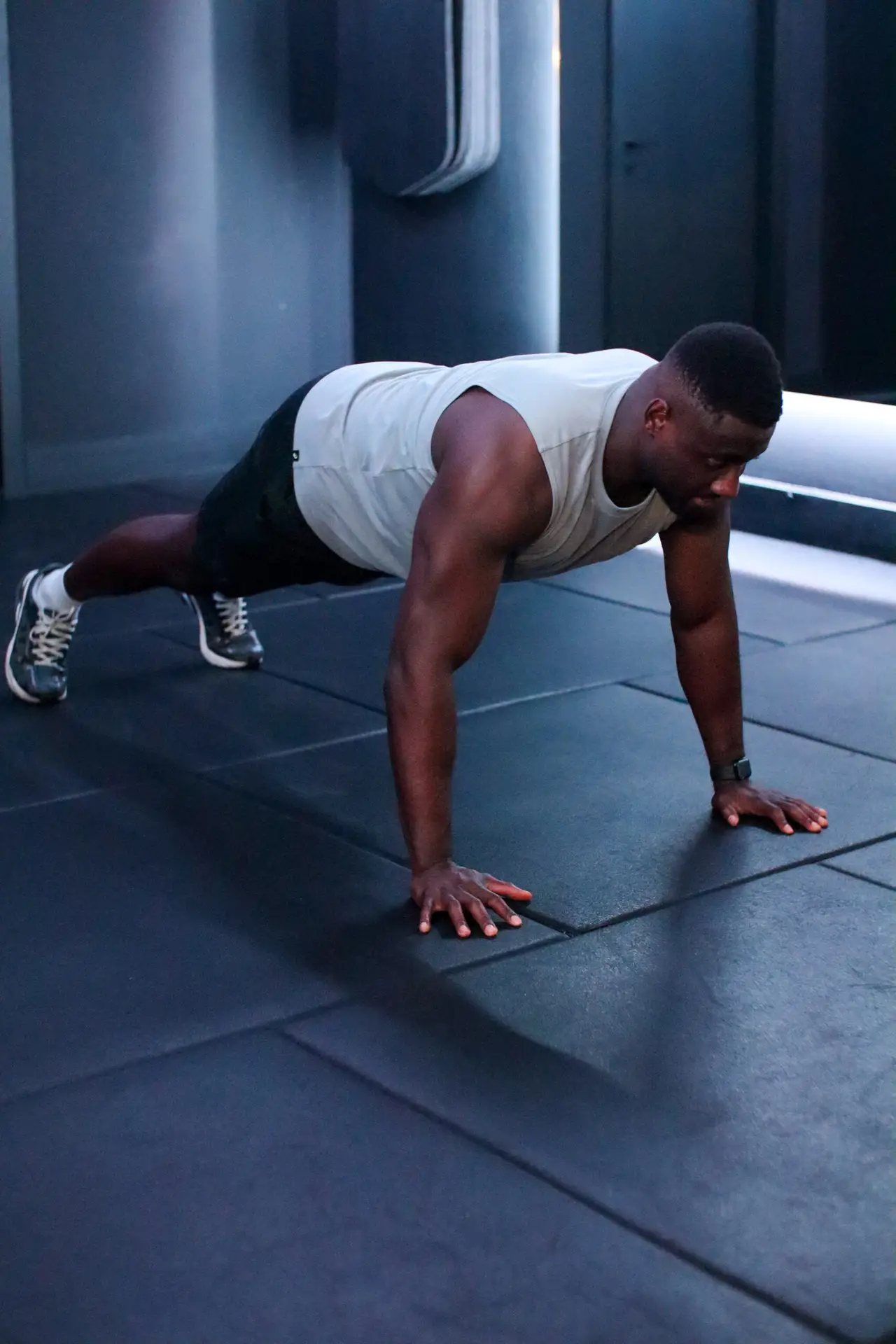
Press-ups train your chest, shoulders and triceps with your bodyweight. Your core works hard to hold a straight line. Placed last in the chest block, they add volume without needing heavy weights. See the press-up exercise demo.
- Start in a high plank with your hands slightly wider than shoulder width.
- Keep a straight line from your head to your heels.
- Lower your chest toward the floor.
- Push back up to the start, keeping your core tight.
Easier or harder: to make them easier, do press-ups on your knees or with your hands on a bench. To make them harder, raise your feet or wear a weighted backpack.
How to do the biceps exercises
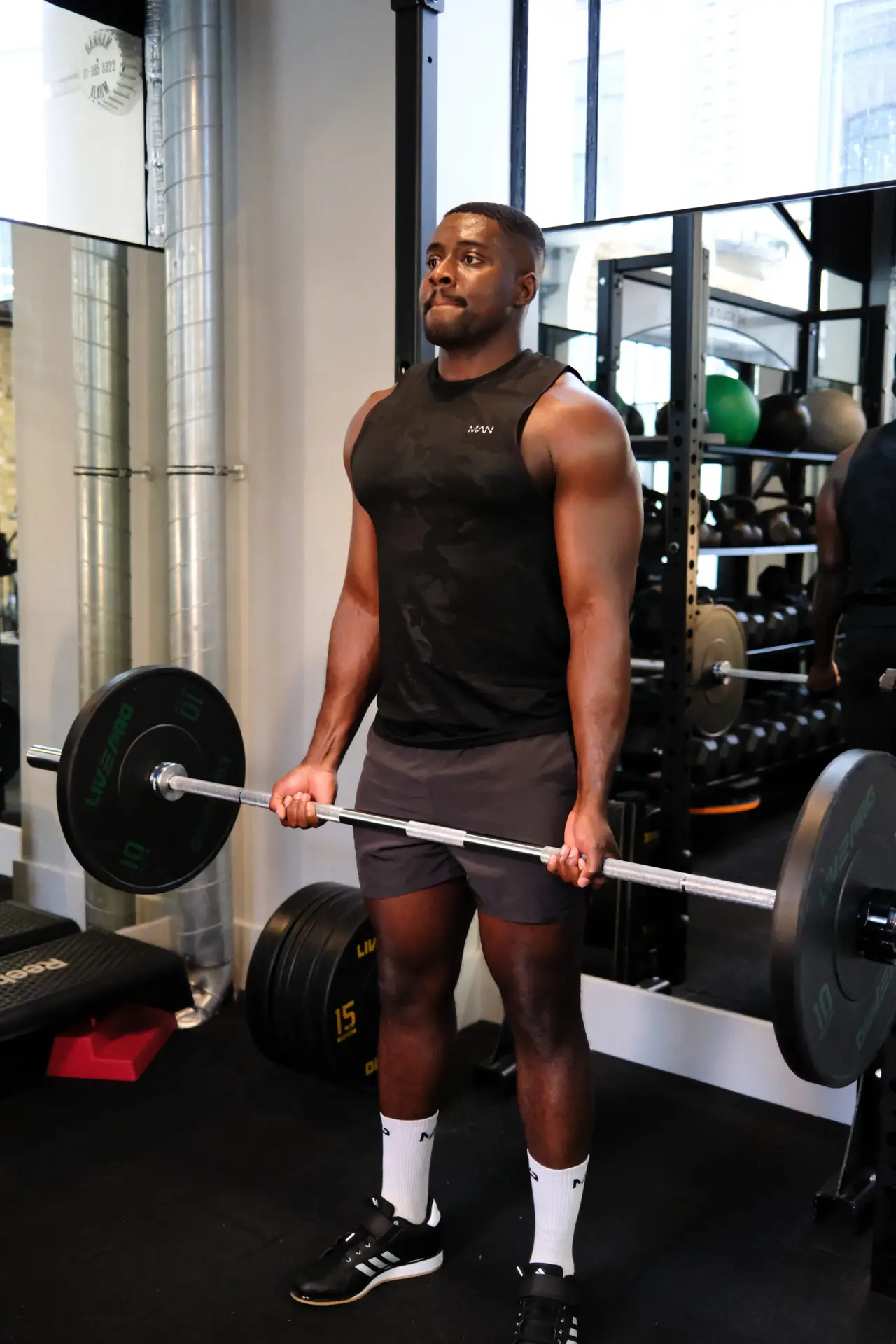
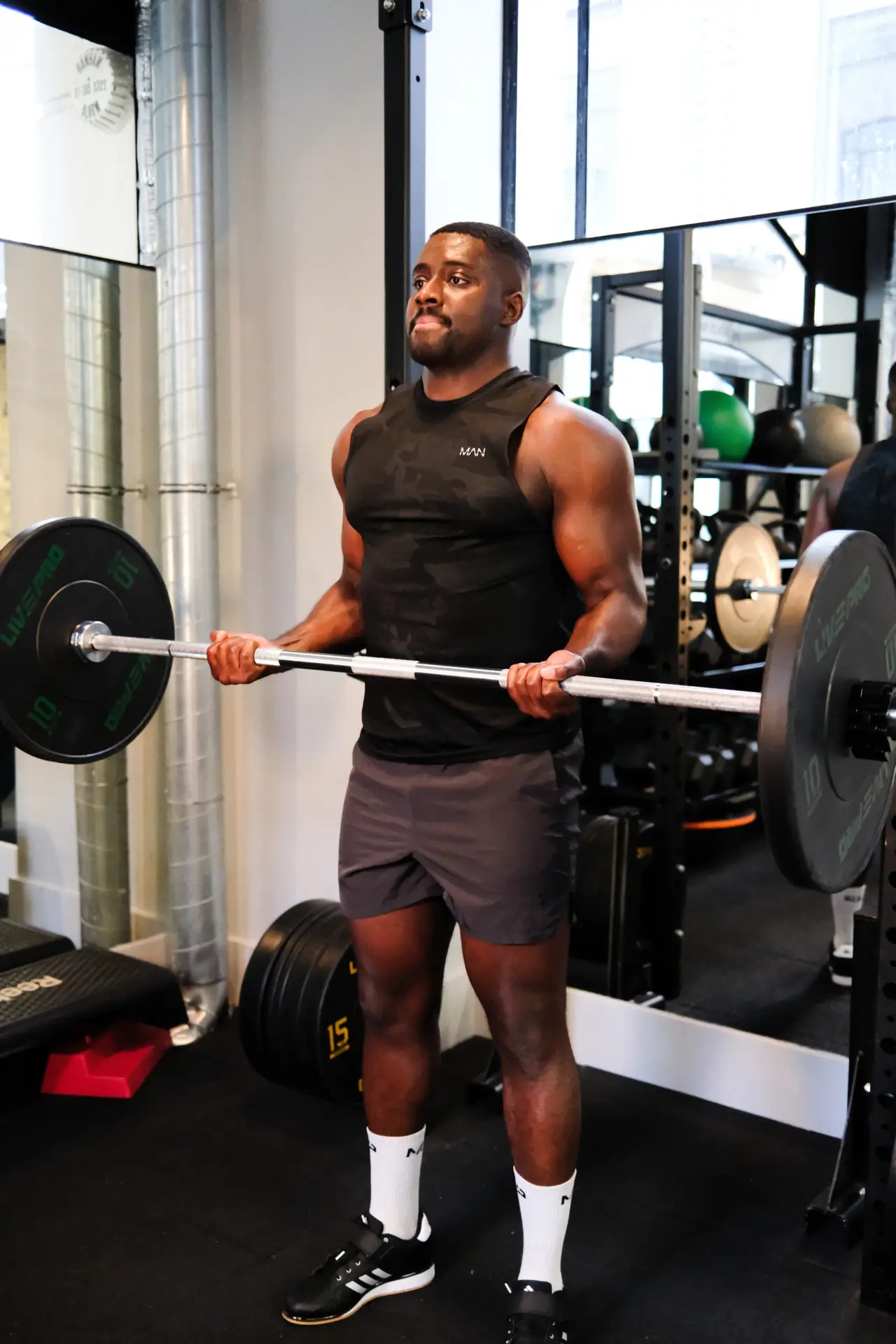
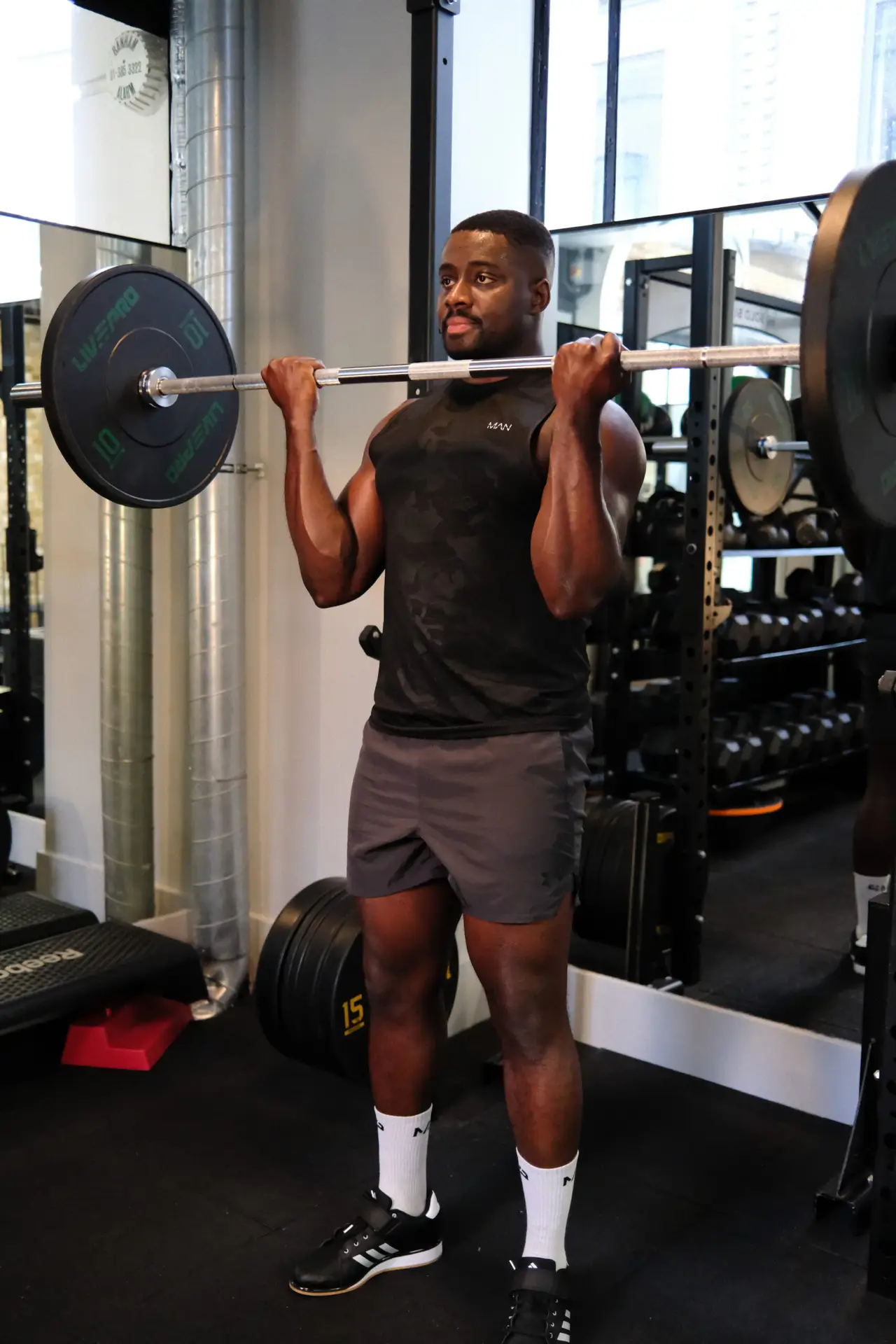
5. Barbell biceps curl
The barbell curl lets you load both arms together, so it is usually the curl where you can lift the most weight. That makes it a good first arm exercise.
- Stand with your feet shoulder-width apart.
- Hold the bar with an underhand grip, hands about shoulder-width apart.
- Keep your elbows at your sides and curl the bar up.
- Squeeze at the top, then lower the bar slowly.
Common mistakes: swinging your body to lift the weight, letting your elbows drift forward and bending your wrists. If you need to swing, the weight is too heavy.
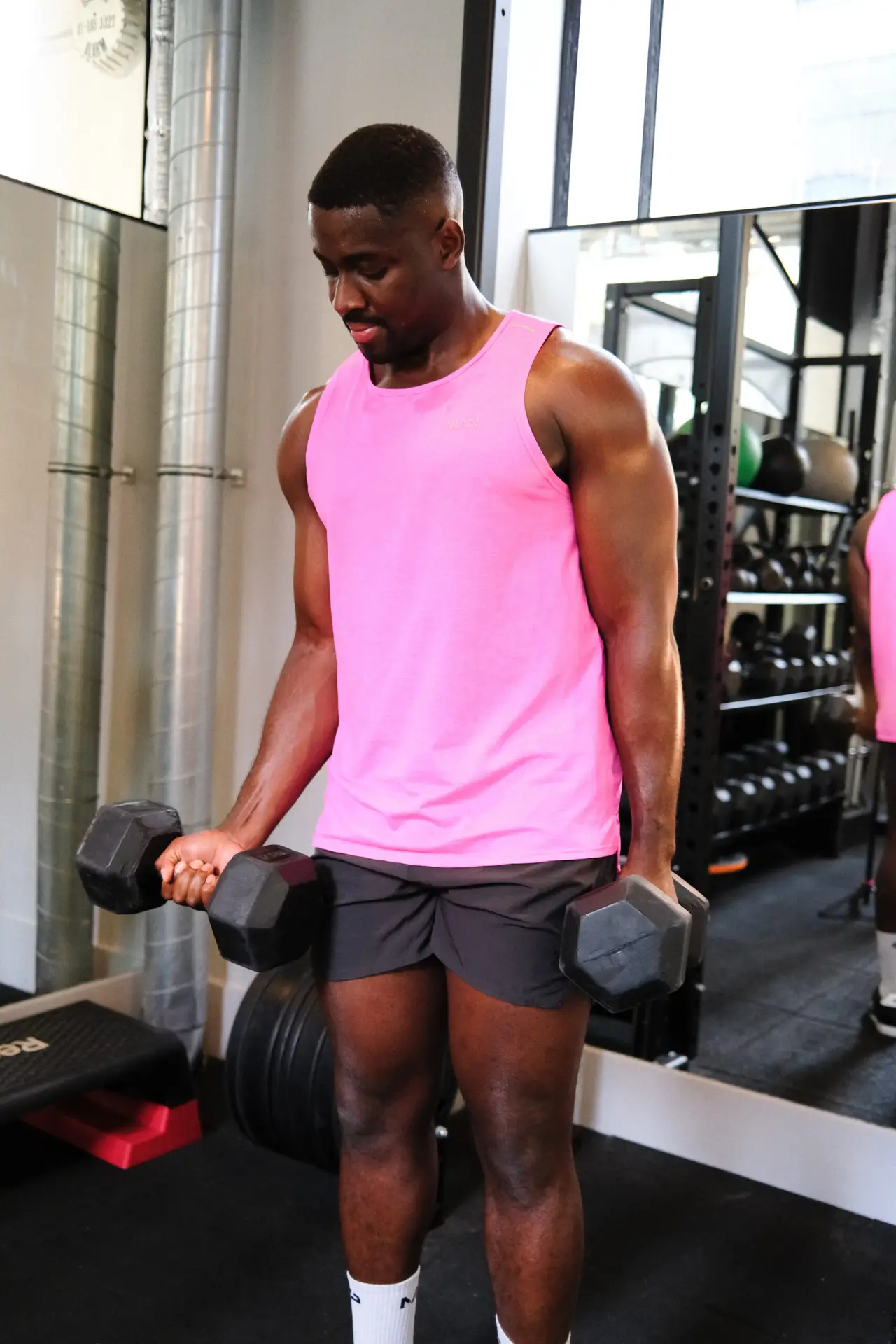
6. Dumbbell biceps curl
Dumbbell curls train each arm on its own. This helps you notice if one side is weaker. Many people find the free wrist movement more comfortable than a straight bar.
- Hold a dumbbell in each hand with your arms at your sides.
- Keep your elbows tucked in.
- Curl one dumbbell up while the other arm stays still.
- Squeeze at the top, lower slowly, then switch arms.
Alternating or together: you can curl both arms at once or alternate. Alternating lets you focus on one arm at a time.
7. Rope biceps curl
The rope curl uses a neutral grip on a low cable. The cable keeps tension on your arms from bottom to top. Your brachialis works here too, because it bends your elbow whatever your grip. See the cable rope biceps curl exercise demo.
- Attach a rope to the low pulley of a cable machine.
- Hold the rope with your palms facing each other.
- Keep your elbows at your sides and curl the rope up.
- At the top, pull the rope ends slightly apart, then lower slowly.
How to progress: progressive overload
Progressive overload means making your training a little harder over time. Your muscles adapt to what you ask of them, so the challenge needs to grow. For more detail, read the beginner’s guide to progressive overload.
A simple way to do this is double progression:
- Start with a weight you can lift for 10 reps with good form.
- Add reps over the next sessions until you can do 12 reps on every set.
- Then add a small amount of weight and drop back to 10 reps.
For the bench press and incline press, try jumps of about 2.5 to 5 pounds. For curls and flys, use about 1 to 2.5 pounds, or the smallest step your gym has. The ACSM suggests raising the load by 2 to 10% once you can do one or two reps more than your target (ACSM position stand, 2009).
You can also progress by improving your technique. Slow down the lowering part of each rep and pause briefly at the hardest point.
Write down your weights, sets and reps every session. Seeing the numbers go up is a good reason to keep showing up.
Rest periods
Rest longer on the heavy compound lifts. In one study of trained men, resting 3 minutes between sets led to bigger bench press and squat strength gains than resting 1 minute (Schoenfeld et al., 2016). That is why the bench press gets 120 to 180 seconds of rest.
Curls, flys and press-ups work smaller muscle groups, so 60 to 90 seconds is usually enough. A phone timer helps you stay on track.
Nutrition to support muscle growth
Training gives your muscles a reason to grow. Food gives them what they need to do it. Protein matters most for muscle repair and growth.
The International Society of Sports Nutrition suggests 1.4 to 2.0 grams of protein per kilogram of body weight a day for most active people (ISSN position stand, 2017). That is about 0.6 to 0.9 grams per pound. If you weigh 150 pounds (68 kg), aim for roughly 95 to 135 grams a day.
A large review found that extra protein stopped adding muscle gains beyond about 1.6 grams per kilogram per day (Morton et al., 2018). So you don’t need huge amounts.
- Spread your protein over the day: the ISSN suggests 20 to 40 grams per meal, every 3 to 4 hours.
- Good sources include chicken, fish, eggs, dairy, beans and protein powder.
- Eat carbohydrates to fuel your training, and include healthy fats in a balanced diet.
- Drink water through the day and around your workouts.
For a full breakdown, read how much protein you need to build muscle. If you have a health condition, such as kidney disease, check with your doctor before raising your protein intake.
Where this session fits in your week
This chest and biceps workout is one day of a split. It works well alongside a back and triceps day and a leg day. Try the push/pull back and triceps workout to train the muscles this session leaves out.
Want other options? The dumbbell shoulder and back workout covers your upper back and shoulders with dumbbells only. If you want a full plan, the 12-week push/pull/legs plan lays out three sessions a week.
Run this session for 8 to 12 weeks and track every set. Focus on clean form before adding weight.
Train this session with 12REPS
If you want this kind of session set out for you, 12REPS builds training around your goal, your equipment and the time you have. Each exercise comes with a trainer demonstration, and the app remembers what you lifted, so you always have a number to beat. See how the 12REPS app works.
Chest and biceps workout FAQs
Is it OK to train chest and biceps on the same day?
Yes. Chest exercises push and biceps exercises pull, so one group rests while the other works. Pressing tires your triceps, not your biceps, so you can still curl well at the end.
Should I train chest or biceps first?
Train your chest first. The bench press and incline press need the most energy and the heaviest weights. Your biceps are smaller and need less warm-up.
Can I do this workout at home?
Only partly. You need a bench, a barbell, dumbbells and a cable machine for the full session. At home, you can swap in dumbbell presses, press-ups and dumbbell curls.
Sources
- Effect of Five Bench Inclinations on the Electromyographic Activity of the Pectoralis Major, Anterior Deltoid, and Triceps Brachii during the Bench Press Exercise. Rodríguez-Ridao D, et al. International Journal of Environmental Research and Public Health, 2020. https://doi.org/10.3390/ijerph17197339
- Anatomy, Shoulder and Upper Limb, Brachialis Muscle. Plantz MA, Bordoni B. StatPearls, NCBI Bookshelf, 2023. https://www.ncbi.nlm.nih.gov/books/NBK551630/
- Dose-response relationship between weekly resistance training volume and increases in muscle mass: A systematic review and meta-analysis. Schoenfeld BJ, Ogborn D, Krieger JW. Journal of Sports Sciences, 2017. https://pubmed.ncbi.nlm.nih.gov/27433992/
- Progression models in resistance training for healthy adults (position stand). American College of Sports Medicine. Medicine & Science in Sports & Exercise, 2009. https://pubmed.ncbi.nlm.nih.gov/19204579/
- Longer Interset Rest Periods Enhance Muscle Strength and Hypertrophy in Resistance-Trained Men. Schoenfeld BJ, et al. Journal of Strength and Conditioning Research, 2016. https://pubmed.ncbi.nlm.nih.gov/26605807/
- International Society of Sports Nutrition position stand: protein and exercise. Jäger R, et al. Journal of the International Society of Sports Nutrition, 2017. https://doi.org/10.1186/s12970-017-0177-8
- A systematic review, meta-analysis and meta-regression of the effect of protein supplementation on resistance training-induced gains in muscle mass and strength in healthy adults. Morton RW, et al. British Journal of Sports Medicine, 2018. https://pubmed.ncbi.nlm.nih.gov/28698222/