

By Will Duru, BSc (Hons) Sport and Exercise Science, Award-winning Personal Trainer with over 10 years of experience in strength training
Important: This guide provides general information about strength training for common back pain. If you have a diagnosed condition, recent injury, or post-surgical situation, consult your doctor or physiotherapist before starting any exercise programme. This guide does not replace medical advice.
Back pain is an epidemic. It affects 80 percent of adults at some point in their lives. For many, it becomes chronic, limiting work, sleep, and quality of life.
The instinct when your back hurts is to rest. To avoid movement. To protect.
This instinct is usually wrong.
Research consistently shows that appropriate movement and strength training are among the most effective treatments for most types of back pain. Stronger muscles support the spine better. Improved mobility reduces stiffness. Controlled movement teaches the nervous system that your back is safe.
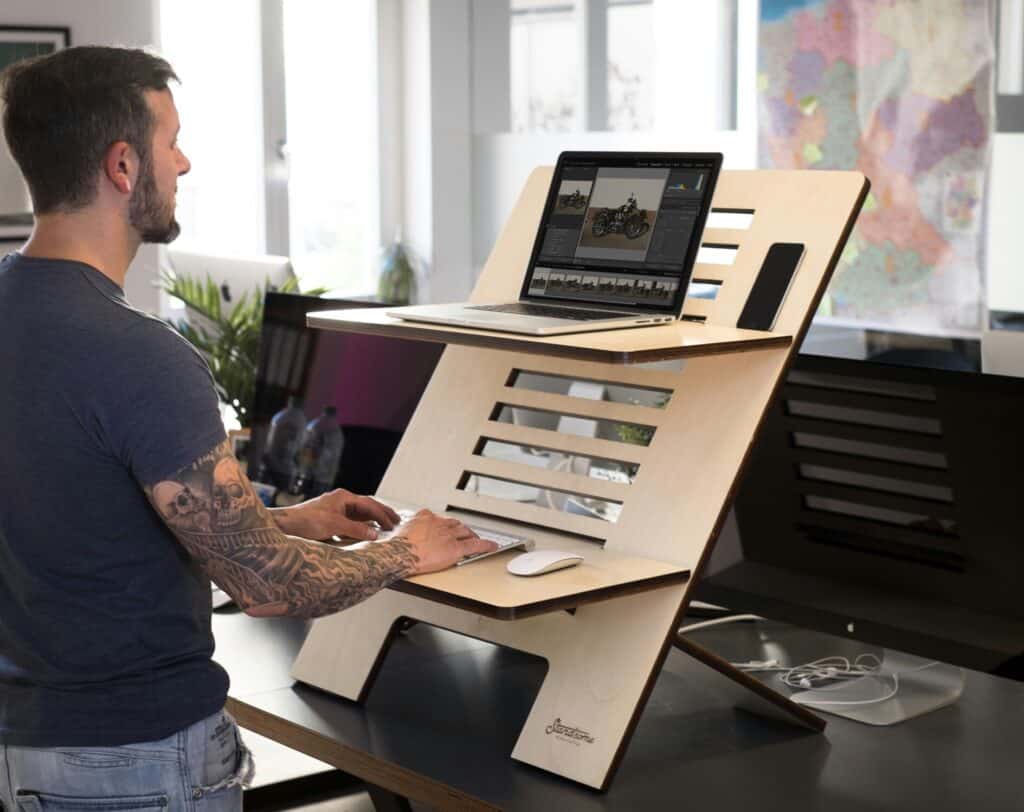
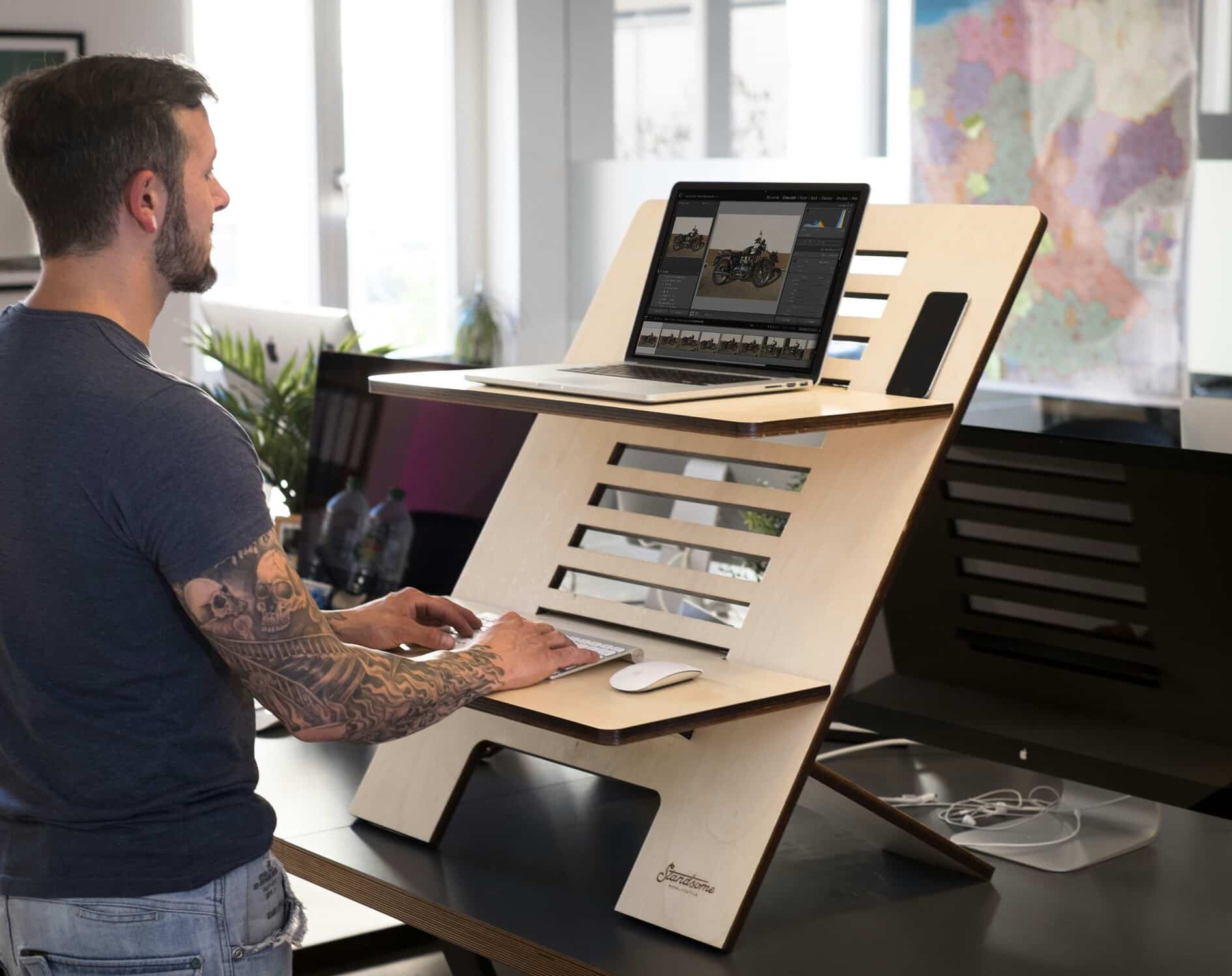
Over my decade of personal training, I have worked extensively with city professionals who spend their days hunched over desks, their backs stiff and painful by Friday. I have helped them feel less stiff, move better, and eliminate pain through targeted core strengthening and mobility work.
This guide covers why strength training helps back pain, which exercises to prioritise, what to avoid, and provides a complete programme to build a stronger, more resilient back.

Why Strength Training Helps Back Pain
The Deconditioning Cycle
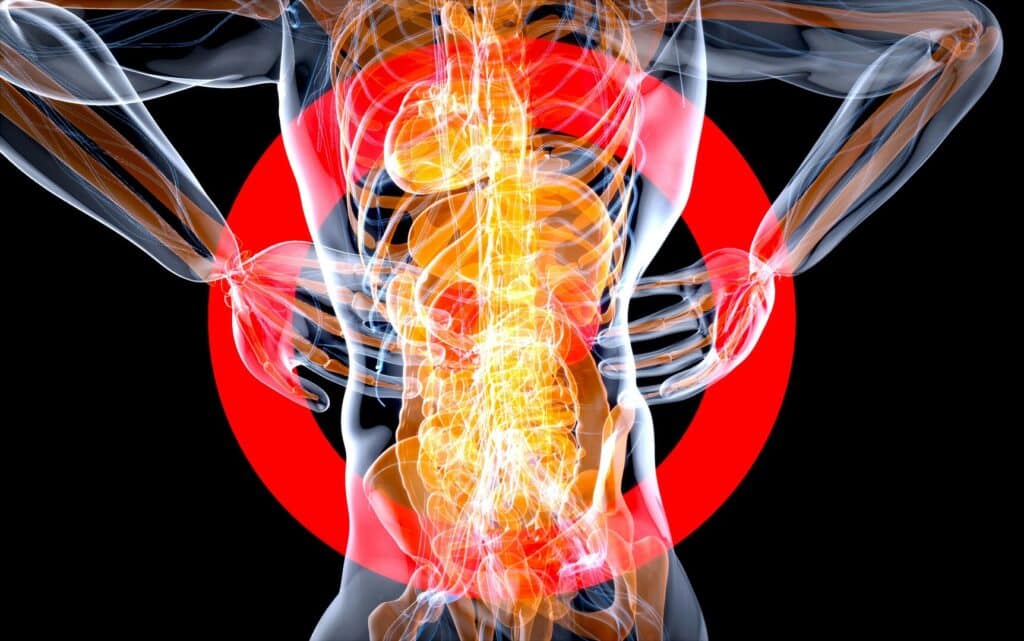
When your back hurts, you move less. Moving less weakens the muscles that support your spine. Weaker muscles provide less support. Less support means more strain on spinal structures. More strain means more pain. More pain means moving even less.
This is the deconditioning cycle, and it traps millions of people.
Strength training breaks this cycle by rebuilding the muscles that protect and support your spine.
Core Stability
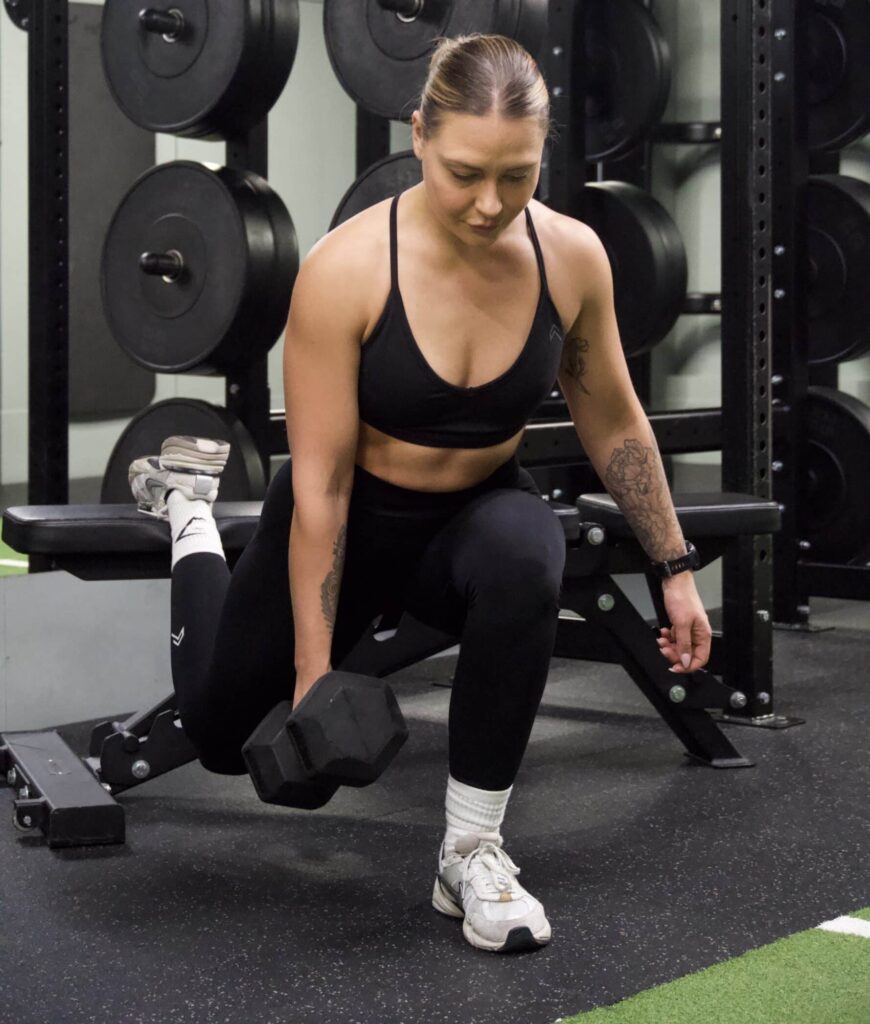
Your core is not just your “abs.” It is a cylinder of muscles surrounding your spine:
- Rectus abdominis (front)
- Obliques (sides)
- Transverse abdominis (deep, wrapping around)
- Erector spinae (back)
- Multifidus (deep spinal stabilisers)
- Diaphragm (top)
- Pelvic floor (bottom)
When these muscles work together, they create intra-abdominal pressure that stabilises the spine like a natural weight belt. Weak core muscles fail to provide this support, leaving spinal structures to bear loads they were not designed to handle alone.
Hip and Glute Strength
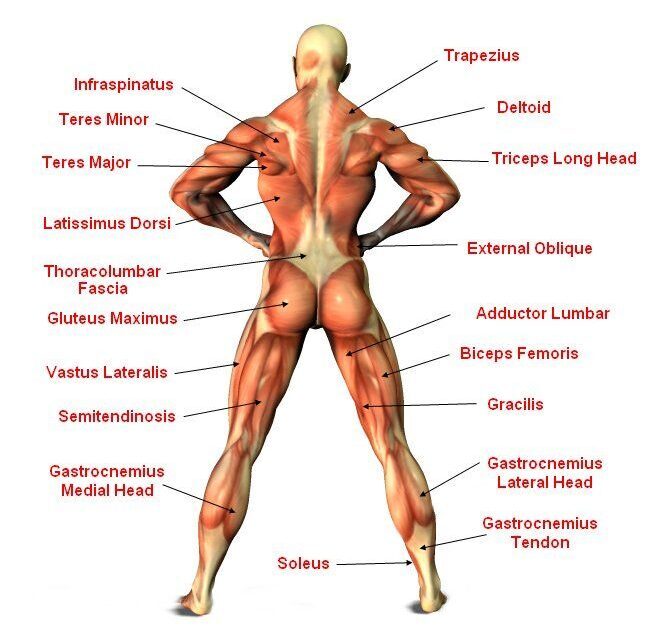
Weak glutes force the lower back to compensate during movements like bending, lifting, and walking. This compensation creates strain.
Strong glutes and hips take load off the spine by doing the work they were designed to do.
Mobility and Flexibility
Stiff hips force the lower back to move more than it should. Tight hamstrings pull on the pelvis, affecting spinal alignment. Limited thoracic (upper back) mobility forces the lower back to rotate excessively.
Improving mobility in the right areas reduces compensatory stress on the lower back.
From My Training Experience
A significant portion of my clients are city professionals: lawyers, bankers, consultants, tech workers. They sit for 10 to 12 hours daily, often stressed, rarely moving.
By Friday, they are stiff, sore, and uncomfortable. Their backs ache. Their necks are tight. They feel decades older than they are.
The solution is never complicated. We focus on three things: core strengthening, hip mobility, and glute activation. Within 6 to 8 weeks, most report dramatic improvements. The stiffness fades. The pain reduces. They feel like themselves again.
The body was designed to move. When we stop moving, it protests. When we move intelligently, it rewards us.
Client Story: Jenny's Journey After Back Surgery
Jenny came to me after spinal surgery. Her doctor had cleared her for exercise and specifically recommended strength training to rebuild the muscles supporting her spine.
She was terrified.
After months of pain and a major surgery, the idea of lifting weights seemed dangerous. She worried about re-injury. She questioned whether her back could ever be strong again.
We started slowly. Very slowly.
Weeks 1-4: Breathing exercises, gentle core activation, basic hip mobility. No weights. Just teaching her body to engage the right muscles and move without fear.
Weeks 5-8: Bodyweight exercises. Bird dogs, glute bridges, modified planks. Light resistance bands for hip work. Still no significant loading.
Weeks 9-12: Introduced light dumbbells. Goblet squats to a high box. Romanian deadlifts with 4kg dumbbells. Cable exercises for core stability.
Months 4-6: Progressive loading. Trap bar deadlifts. Proper squats. Farmer carries. Building real strength.
Today: Jenny deadlifts 60kg, squats 40kg, and has not had significant back pain in over a year. She is stronger at 48 than she was at 30.
Her surgeon was right. Strength training did not just help her recover. It made her more resilient than before.
The key was patience, proper progression, and respecting her body’s signals throughout the process.
Understanding Your Back Pain
Not all back pain is the same. Understanding your situation helps determine the right approach.
Mechanical Back Pain (Most Common)
This is pain without a specific structural cause. It results from muscle weakness, stiffness, poor posture, or general deconditioning. It often improves with movement and worsens with prolonged sitting.
Strength training approach: Highly effective. Focus on core stability, hip mobility, and gradual strengthening.
Disc-Related Pain
Disc bulges and herniations can cause back pain, often with leg symptoms (sciatica). Pain may worsen with forward bending and sitting.
Strength training approach: Can be very helpful but requires careful exercise selection. Avoid loaded forward bending initially. Focus on neutral spine exercises. Get clearance from a healthcare provider.
Stenosis
Narrowing of the spinal canal, more common in older adults. Pain often worsens with standing and walking, improves with sitting.
Strength training approach: Can help but may need modifications. Exercises in slight flexion often feel better than extension.
Post-Surgical
After spinal surgery, strength training is often recommended for rehabilitation. Timing and approach depend on the specific procedure.
Strength training approach: Essential for recovery but must be guided by medical clearance and appropriate progression.
When to See a Doctor First
Consult a healthcare provider before starting exercise if you have:
- Pain following a significant injury
- Pain with numbness, tingling, or weakness in legs
- Loss of bladder or bowel control
- Pain that wakes you from sleep
- Unexplained weight loss with back pain
- Pain that has not improved after 6 weeks of self-care
- History of cancer
- Recent spinal surgery (get clearance first)
Exercises to Prioritise
Exercises to Prioritise
These exercises build the strength, stability, and mobility that protect the spine.
Core Stability Exercises
1. Dead Bug
The foundational core stability exercise. Teaches your core to brace while your limbs move.
How to perform:
- Lie on your back, arms reaching toward ceiling, knees at 90 degrees
- Press your lower back firmly into the floor
- Slowly extend your right arm overhead and left leg toward the floor
- Return to start
- Repeat with opposite arm and leg
Key points:
- Lower back must stay pressed into floor throughout
- Move slowly and with control
- If your back arches, reduce the range of motion
- Breathe throughout (exhale as you extend)
Sets and reps: 3 sets of 8 to 10 each side
2. Bird Dog
Trains core stability and spinal alignment while challenging balance.
How to perform:
- Start on hands and knees, spine neutral
- Extend right arm forward and left leg back simultaneously
- Keep hips and shoulders level (no rotation)
- Hold for 2 seconds
- Return and repeat with opposite arm and leg
Key points:
- Imagine balancing a cup of water on your lower back
- Do not let the hips rotate or drop
- Move smoothly, not quickly
Sets and reps: 3 sets of 8 to 10 each side
3. Pallof Press
Anti-rotation exercise that builds core stability in standing.
How to perform:
- Stand perpendicular to a cable machine, handle at chest height
- Hold handle at chest with both hands
- Press arms straight out
- Hold 2 to 3 seconds, resisting rotation
- Return to chest
Key points:
- The cable tries to rotate you; resist it
- Keep hips and shoulders square
- Brace your core throughout
Sets and reps: 3 sets of 10 each side
4. Plank (Modified if Needed)
Builds endurance in the core stabilisers.
How to perform:
- Forearms on floor, elbows under shoulders
- Body in straight line from head to heels (or head to knees for modified)
- Squeeze glutes, brace core
- Hold position
Key points:
- Do not let hips sag or pike up
- Breathe steadily
- Stop when form breaks down
Sets and reps: 3 sets of 20 to 45 seconds
Hip and Glute Exercises
5. Glute Bridge
Activates and strengthens the glutes while teaching hip extension without lower back compensation.
How to perform:
- Lie on back, knees bent, feet flat on floor
- Drive through heels to lift hips toward ceiling
- Squeeze glutes hard at top
- Lower with control
Key points:
- Push through your heels, not your toes
- Squeeze glutes, not lower back, at top
- Do not hyperextend the lower back
Sets and reps: 3 sets of 12 to 15
6. Clamshell
Targets the gluteus medius, which stabilises the pelvis.
How to perform:
- Lie on side, knees bent at 45 degrees, feet together
- Keeping feet together, lift top knee toward ceiling
- Do not let pelvis rotate backward
- Lower with control
Key points:
- Feel the work in the side of your hip, not your lower back
- Keep feet together throughout
- Can add resistance band above knees
Sets and reps: 3 sets of 15 each side
7. Hip Thrust
Builds significant glute strength, reducing reliance on lower back.
How to perform:
- Upper back against bench, feet flat on floor
- Drive hips toward ceiling, squeezing glutes
- Create straight line from shoulders to knees at top
- Lower with control
Key points:
- All the drive comes from glutes, not lower back
- Chin stays tucked (look forward at top, not up)
- Start with bodyweight, add load gradually
Sets and reps: 3 sets of 10 to 12
Mobility Exercises
8. Cat-Cow
Gentle spinal mobility that many people with back pain find relieving.
How to perform:
- Start on hands and knees
- Cow: Drop belly toward floor, lift chest and tailbone
- Cat: Round spine toward ceiling, tuck chin and tailbone
- Flow smoothly between positions
Key points:
- Move slowly and gently
- Breathe: inhale into cow, exhale into cat
- Do not force range of motion
Sets and reps: 2 to 3 sets of 10 cycles
9. 90/90 Hip Stretch
Improves hip rotation, reducing compensation through the lower back.
How to perform:
- Sit with one leg in front (knee and hip at 90 degrees) and one leg to the side (knee and hip at 90 degrees)
- Sit tall, keeping spine neutral
- Gently lean forward over front leg
- Hold and breathe
Key points:
- Keep spine neutral (do not round forward)
- Feel stretch in hip, not lower back
- Move into stretch gradually
Sets and reps: 2 to 3 sets of 30 to 45 seconds each side
10. Thoracic Rotation
Improves upper back rotation, reducing rotational demands on the lower back.
How to perform:
- Start on hands and knees
- Place one hand behind your head
- Rotate that elbow toward the ceiling, opening the chest
- Return and repeat
Key points:
- Keep hips and lower back stable
- All rotation comes from upper back
- Follow your elbow with your eyes
Sets and reps: 2 to 3 sets of 10 each side
Strength Exercises
11. Goblet Squat
Builds leg strength with a position that encourages good spinal alignment.
How to perform:
- Hold dumbbell or kettlebell at chest
- Feet slightly wider than shoulders
- Squat down, keeping chest tall
- Drive through whole foot to stand
Key points:
- Keep weight at chest to counterbalance and maintain upright torso
- Do not round the lower back at the bottom
- Start with light weight or bodyweight
Sets and reps: 3 sets of 10 to 12
12. Trap Bar Deadlift
Safer than conventional deadlifts for most people with back concerns. Builds total body strength with less spinal stress.
How to perform:
- Stand inside trap bar, feet hip-width
- Hinge at hips and bend knees to grip handles
- Brace core, maintain neutral spine
- Drive through floor to stand
- Lower with control
Key points:
- Handles at sides reduce forward lean compared to conventional deadlift
- Keep the bar close to your body
- Neutral spine throughout
Sets and reps: 3 sets of 8 to 10
13. Farmer Carry
Builds core stability, grip strength, and total body coordination while walking.
How to perform:
- Hold heavy dumbbells or kettlebells at sides
- Stand tall, shoulders back
- Walk with controlled steps
- Maintain upright posture throughout
Key points:
- Do not lean to either side
- Brace core as if preparing to be pushed
- Keep shoulders level
Sets and reps: 3 sets of 30 to 40 metres
14. Face Pull
Strengthens the upper back and rear shoulders, counteracting the forward posture that contributes to back pain.
How to perform:
- Cable at face height, rope attachment
- Pull toward your face, separating the rope
- Externally rotate at end (thumbs pointing back)
- Squeeze rear delts and upper back
- Return with control
Key points:
- Pull to your face, not your chest
- Squeeze shoulder blades together
- Do not use momentum
Sets and reps: 3 sets of 15
Exercises to Avoid or Modify
Some exercises put unnecessary stress on the spine, especially when your back is already irritated.
Exercises to Avoid Initially
Sit-ups and crunches. Repeated spinal flexion under load. Particularly problematic for disc issues. Use dead bugs and planks instead.
Good mornings with heavy load. Places significant shear force on the spine. Use Romanian deadlifts with appropriate weight instead.
Behind-the-neck press. Requires excessive extension and external rotation. Press from the front instead.
Hyperextensions with heavy load or excessive range. Can compress spinal structures. Use glute bridges and hip thrusts instead.
Loaded rotation machines. Rotating under load can irritate the spine. Use Pallof press and controlled rotation exercises instead.
Exercises to Modify
Conventional deadlift. Switch to trap bar or sumo stance to reduce spinal demands.
Barbell back squat. Use goblet squat or front squat to maintain more upright torso.
Bent over rows. Use chest-supported rows or single-arm rows with support.
Overhead press. Perform seated with back support if standing aggravates symptoms.
The “It Depends” List
These exercises work well for some people with back pain and poorly for others:
- Romanian deadlift (often helpful, sometimes aggravating)
- Walking lunges (depends on stability and form)
- Cable crunches (depends on disc status)
Listen to your body. Pain during or after an exercise is information. Modify or remove that exercise.
The Programme: Strength Training for Back Pain
This programme builds strength, stability, and mobility progressively.
Who This Programme Is For
- People with general back stiffness and pain (not acute injury)
- Those cleared by a healthcare provider to exercise
- Beginners to strength training or those returning after back issues
Weekly Schedule
Day | Session |
Monday | Session A |
Wednesday | Session B |
Friday | Session A |
Following Week | Alternate (B, A, B) |
Session A: Core and Lower Body Focus
Exercise | Sets | Reps | Rest |
Cat-Cow (Warm up) | 2 | 10 cycles | – |
Dead Bug | 3 | 8-10 each side | 45 sec |
Glute Bridge | 3 | 12-15 | 60 sec |
Goblet Squat | 3 | 10-12 | 90 sec |
Bird Dog | 3 | 8-10 each side | 45 sec |
Clamshell | 2 | 15 each side | 45 sec |
90/90 Hip Stretch | 2 | 30-45 sec each | – |
Total time: 30 to 40 minutes
Session B: Strength and Mobility Focus
Exercise | Sets | Reps | Rest |
Thoracic Rotation (Warm up) | 2 | 10 each side | – |
Pallof Press | 3 | 10 each side | 60 sec |
Hip Thrust | 3 | 10-12 | 90 sec |
Trap Bar Deadlift | 3 | 8-10 | 2 min |
Face Pull | 3 | 15 | 60 sec |
Farmer Carry | 3 | 30-40m | 90 sec |
Plank | 2-3 | 20-45 sec | 45 sec |
Total time: 35 to 45 minutes
Progression Strategy
Weeks 1-4: Foundation
Focus on learning exercises correctly. Use light weights or bodyweight. Build the habit of consistent training.
Do not rush this phase. Quality movement patterns established now pay dividends later.
Weeks 5-8: Building
Begin adding load gradually. If an exercise felt easy in weeks 1 to 4, add small amounts of weight or resistance.
Continue prioritising form over load. Pain is a signal to reduce intensity.
Weeks 9-12: Developing
Exercises should feel challenging now. You are getting stronger. Add load systematically using the double progression method:
- Start at the lower end of the rep range
- Build reps each session
- When you hit the top of the range, add weight
- Drop back to lower reps with new weight
Beyond 12 Weeks
If the programme has been working, continue it. Progress to more challenging exercises if appropriate:
- Dead bug → Loaded dead bug or ab wheel
- Glute bridge → Single leg glute bridge → Hip thrust
- Goblet squat → Front squat or back squat
- Trap bar deadlift → Heavier or conventional deadlift
Daily Habits for Back Health
Signs You Can Progress
- Exercises feel easier than before
- You have no pain during or after sessions
- You recover fully between sessions
- Form remains solid at current loads
Signs to Back Off
- Pain during exercises (sharp or increasing)
- Pain that lingers for days after training
- Exercises that previously felt fine now cause discomfort
- General fatigue or feeling run down
The Pain vs Discomfort Distinction
Muscle fatigue and mild discomfort during exercise are normal. Sharp pain, radiating pain, or pain that worsens during movement are signals to stop.
Learning to distinguish between productive discomfort and harmful pain takes time. When in doubt, reduce intensity and reassess.
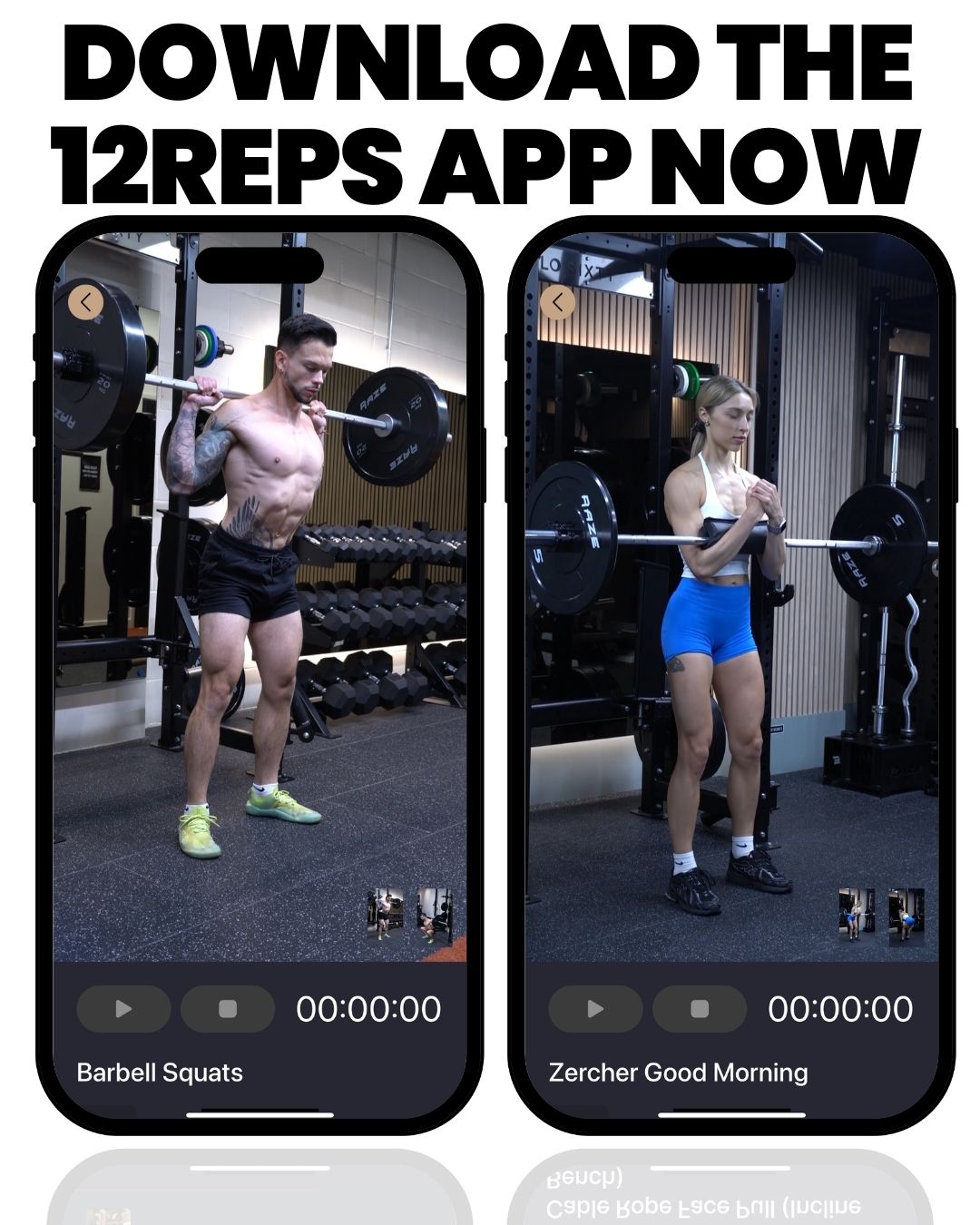
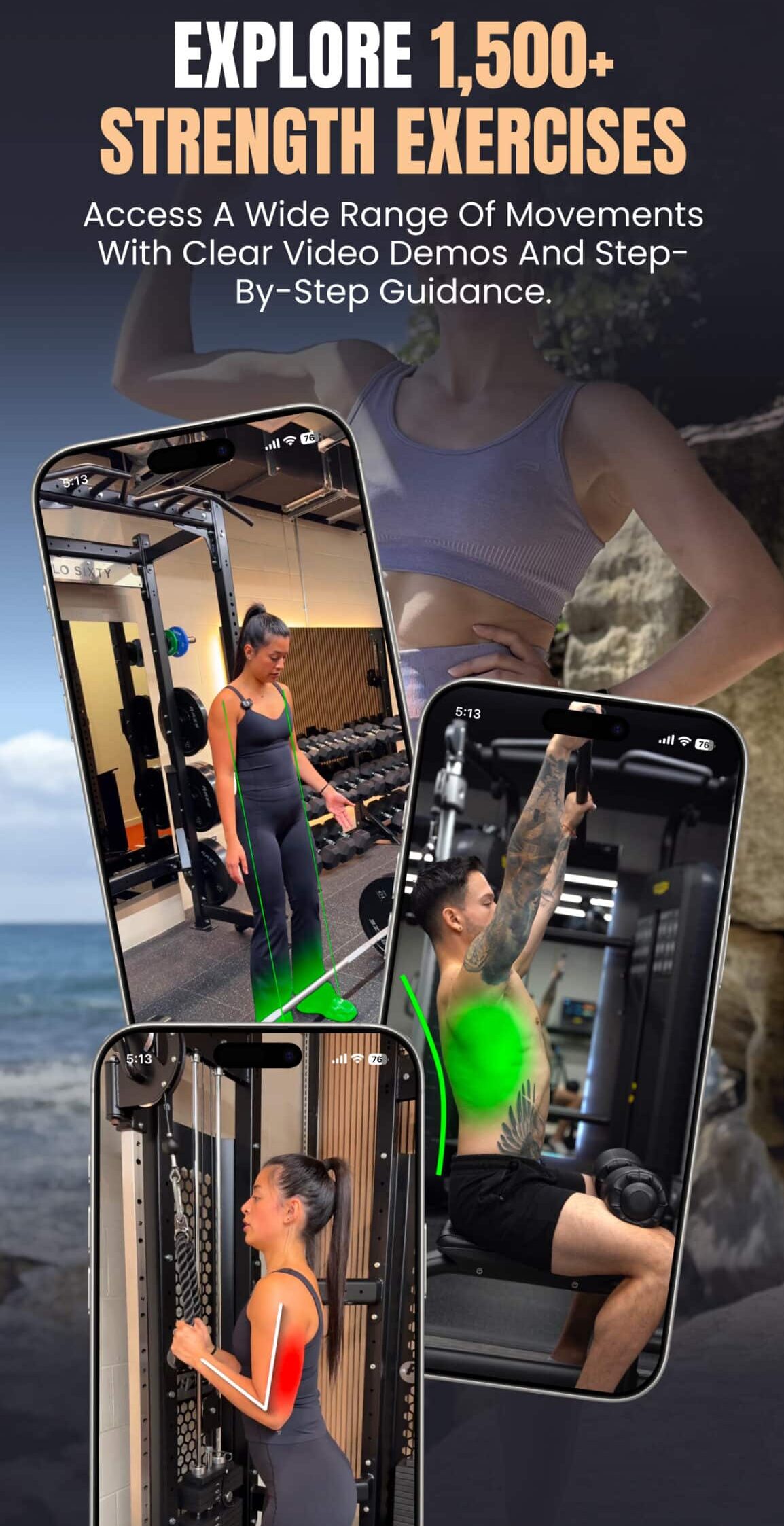
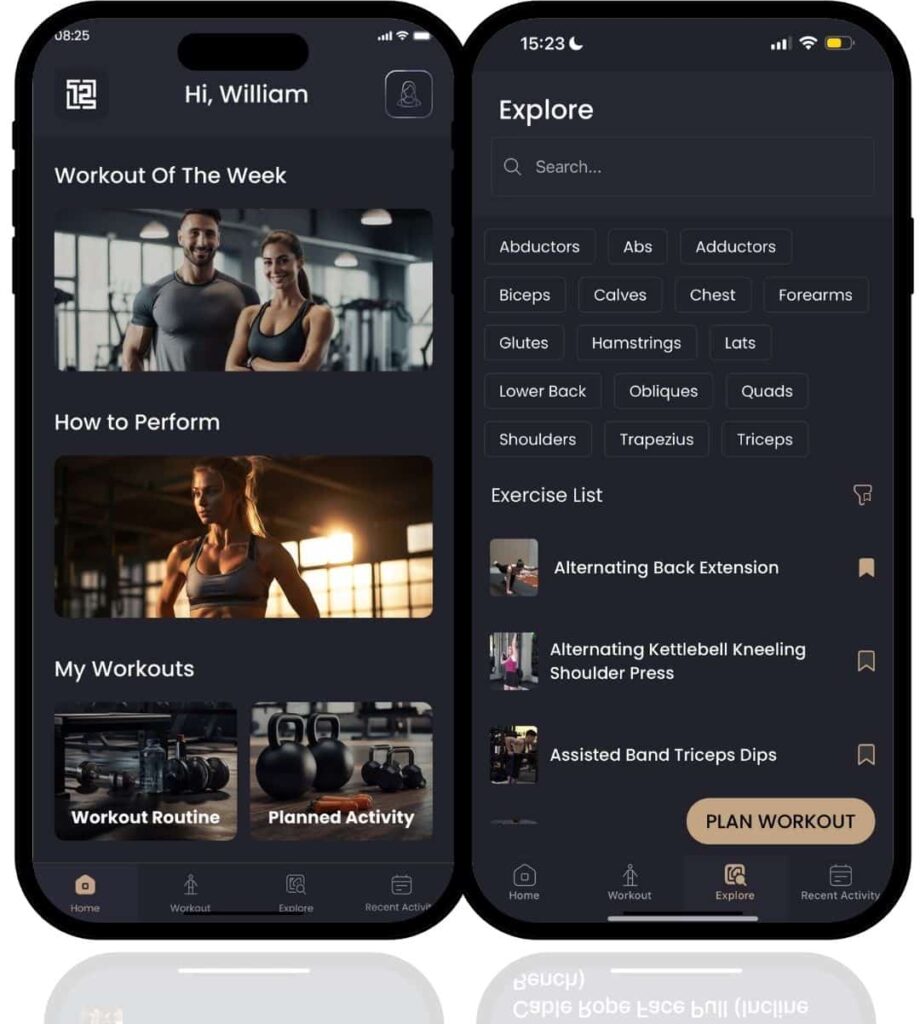
Using the 12REPS App
The 12REPS app supports back-friendly training:
- Video demonstrations showing proper form for every exercise
- Programmes you can modify based on what feels good
- Progress tracking to ensure gradual progression
- Exercise library with alternatives when modifications are needed
Consistency is key for back health. The app helps you stay on track.
The Bottom Line
Strength training is one of the most effective tools for managing and preventing back pain. It breaks the deconditioning cycle, builds the muscles that support your spine, and teaches your body to move with confidence.
Start conservatively. Progress gradually. Listen to your body.
If you are dealing with back pain, strength training is not something to fear. It is likely something that will help.
Download the 12REPS app for guided programmes, video demonstrations, and tracking to build a stronger, pain-free back.
References
- Gordon, R. & Bloxham, S. (2016). A Systematic Review of the Effects of Exercise and Physical Activity on Non-Specific Chronic Low Back Pain. Healthcare. https://pubmed.ncbi.nlm.nih.gov/27417610/
- Hayden, J.A. et al. (2005). Exercise therapy for treatment of non-specific low back pain. Cochrane Database of Systematic Reviews. https://pubmed.ncbi.nlm.nih.gov/16034851/
- McGill, S.M. (2010). Core Training: Evidence Translating to Better Performance and Injury Prevention. Strength and Conditioning Journal. https://journals.lww.com/nsca-scj/fulltext/2010/06000/core_training__evidence_translating_to_better.1.aspx
- Steele, J. et al. (2015). A randomized controlled trial of limited range of motion lumbar extension exercise in chronic low back pain. Spine. https://pubmed.ncbi.nlm.nih.gov/25839385/
Related Articles on just12reps.com
Article | Description | Link |
How to Get Stronger | Complete guide to building strength. | |
Best Exercises for Each Muscle Group | Comprehensive exercise guide. | |
Strength Training for Desk Workers | Training for sedentary professionals. | |
Lifting Weights at 50 | Training considerations for older adults. | |
Complete Beginner’s Guide to Strength Training | Start your strength journey. |
About the Author: Will Duru holds a BSc (Hons) in Sport and Exercise Science and is an award-winning personal trainer with over 10 years of experience. He specialises in helping city professionals overcome the stiffness and back pain that comes from desk-bound work, using targeted core strengthening and mobility training. Will created the 12REPS appto make effective, back-friendly training accessible to everyone.