

By Will Duru, BSc (Hons) Sport and Exercise Science, Award-winning Personal Trainer with over 10 years of experience in strength training
Runners need strength training. The research is overwhelming. But most runners hate the gym.
They do not want complicated equipment. They do not want hour-long sessions. They do not want to learn dozens of exercises. They want something simple, effective, and quick.
Enter the kettlebell.
One piece of equipment. A handful of exercises. Twenty to thirty minutes twice per week. That is all you need to build the strength that makes you faster and keeps you injury-free.
I have designed this minimal kettlebell programme specifically for runners. It targets the muscles that matter most for running performance: glutes, hamstrings, core, and hip stabilisers. Every exercise transfers directly to better running.
No gym membership required. No complex equipment. Just you, a kettlebell or two, and the commitment to become a stronger runner.
Why Kettlebells Work for Runners
Kettlebells offer unique advantages that make them ideal for runner strength training.
Posterior Chain Dominance
The posterior chain (glutes, hamstrings, lower back) drives running propulsion. Weak posterior chain means slower times and higher injury risk.
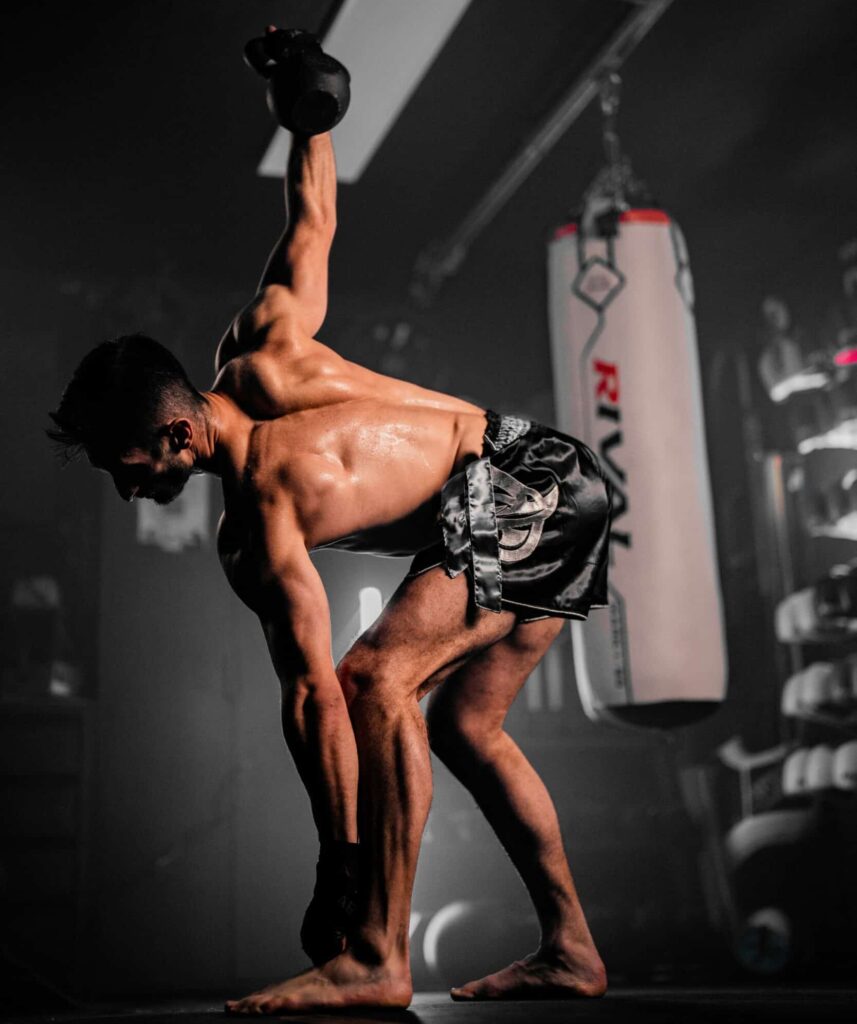
Kettlebell movements naturally emphasise the posterior chain. Swings, deadlifts, and hinges all target the muscles runners need most. You cannot swing a kettlebell without engaging your glutes and hamstrings.
Hip Power Development
Running economy depends heavily on hip extension power. The stronger and more explosive your hip extension, the more efficient your stride.
The kettlebell swing is essentially a hip power exercise. Every rep trains the explosive hip extension that translates directly to running speed.
Core Integration
Kettlebell exercises force your core to stabilise under load. Unlike isolated ab exercises, kettlebell movements train your core the way it actually functions during running: resisting rotation, maintaining posture, and transferring force.
Unilateral Balance
Single-leg kettlebell exercises expose and correct imbalances between legs. Since running is a series of single leg movements, training single leg strength directly improves running mechanics.
Minimal Space and Equipment
One or two kettlebells fit in a corner of any room. You can complete an effective workout in your living room, garden, hotel room, or anywhere with a few square metres of space.
Time Efficiency
Kettlebell workouts are dense. Twenty to thirty minutes twice weekly provides significant strength benefits. This fits easily into any running schedule without compromising recovery.
What Weight Kettlebell Do Runners Need?
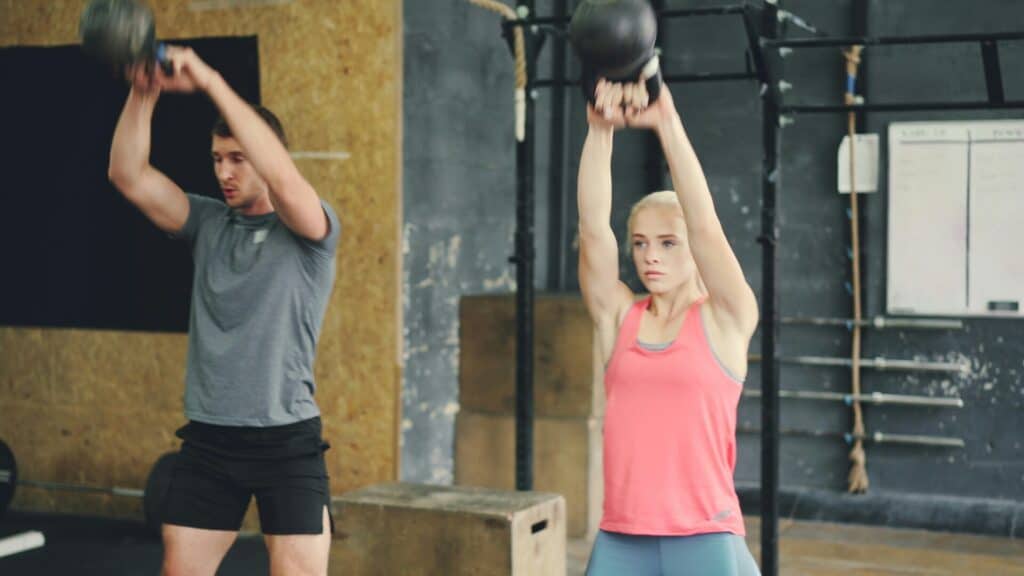
Start lighter than you think. Runners typically begin with:
Women: 8kg to 12kg for most exercises, 12kg to 16kg for swings and deadlifts once technique is solid
Men: 12kg to 16kg for most exercises, 16kg to 24kg for swings and deadlifts once technique is solid
The Minimal Setup
Option 1: Single kettlebell
One medium weight kettlebell (12kg for women, 16kg for men) allows you to perform the entire programme. You can do bilateral exercises with one bell and single arm/leg variations provide progression.
Option 2: Two kettlebells
A lighter bell (8kg or 12kg) for upper body and single leg work, and a heavier bell (12kg to 16kg or 16kg to 24kg) for swings and deadlifts. This provides more flexibility but is not essential.
My recommendation: Start with one kettlebell at a moderate weight. Add a second heavier bell later if you want to progress swings and deadlifts further.
The Exercises: Runner-Specific Kettlebell Movements
These seven exercises form the foundation of the programme. Each directly benefits running performance.
1. Kettlebell Swing
Why it matters for runners: The swing trains explosive hip extension, the exact movement pattern that drives running propulsion. It builds glute power, hamstring strength, and core stability simultaneously.
How to perform:
- Stand with feet slightly wider than hip width, kettlebell on floor between feet
- Hinge at hips, grip the kettlebell handle with both hands
- Pull the kettlebell back between legs like hiking a football
- Drive hips forward explosively, squeezing glutes at top
- Let the kettlebell swing to chest height (arms straight, power comes from hips)
- Hinge again as kettlebell descends, absorbing with hips not lower back
- Repeat in a fluid rhyth
- Common mistakes: Using arms to lift the bell (it is a hip exercise), hyperextending the lower back at top, squatting instead of hinging
2. Kettlebell Goblet Squat
Why it matters for runners: Builds quad and glute strength for uphill running and late-race power. The goblet position reinforces upright posture.
How to perform:
- Hold kettlebell by the horns at chest height, elbows pointing down
- Feet shoulder-width apart, toes slightly out
- Squat down, keeping chest tall and weight in heels
- Descend until thighs are at least parallel to floor
- Drive through heels to stand, squeezing glutes at top
Common mistakes: Leaning forward, heels lifting, knees caving inward
3. Kettlebell Romanian Deadlift
Why it matters for runners: Targets hamstrings and glutes through a lengthening contraction. Builds the eccentric strength that protects against hamstring strains.
How to perform:
- Stand holding kettlebell with both hands in front of thighs
- Slight bend in knees (maintain this angle throughout)
- Hinge at hips, pushing them back
- Lower kettlebell toward floor, keeping it close to legs
- Feel stretch in hamstrings
- Drive hips forward to return to standing
Common mistakes: Rounding the lower back, bending knees too much (turning it into a squat), looking up and straining neck
4. Single Leg Kettlebell Deadlift
Why it matters for runners: Addresses single-leg strength and balance. Exposes and corrects asymmetries between legs. Mimics the single leg nature of running.
How to perform:
- Stand on one leg, kettlebell in opposite hand
- Slight bend in standing knee
- Hinge forward at hip while extending free leg behind you
- Keep hips square (avoid rotation)
- Lower until torso is roughly parallel to floor
- Return to standing by driving through standing heel
Common mistakes: Rotating hips open, standing leg fully locked, rushing the movement
5. Kettlebell Reverse Lunge
Why it matters for runners: Builds single-leg strength through a running-specific range of motion. Challenges hip stability and develops stride power.
How to perform:
- Hold kettlebell in goblet position or at one side
- Step backward with one leg into lunge position
- Lower until back knee nearly touches floor
- Front knee stays above ankle, not beyond toes
- Drive through front heel to return to standing
- Alternate legs or complete all reps on one side before switching
Common mistakes: Stepping too short, front knee caving inward, leaning forward excessively
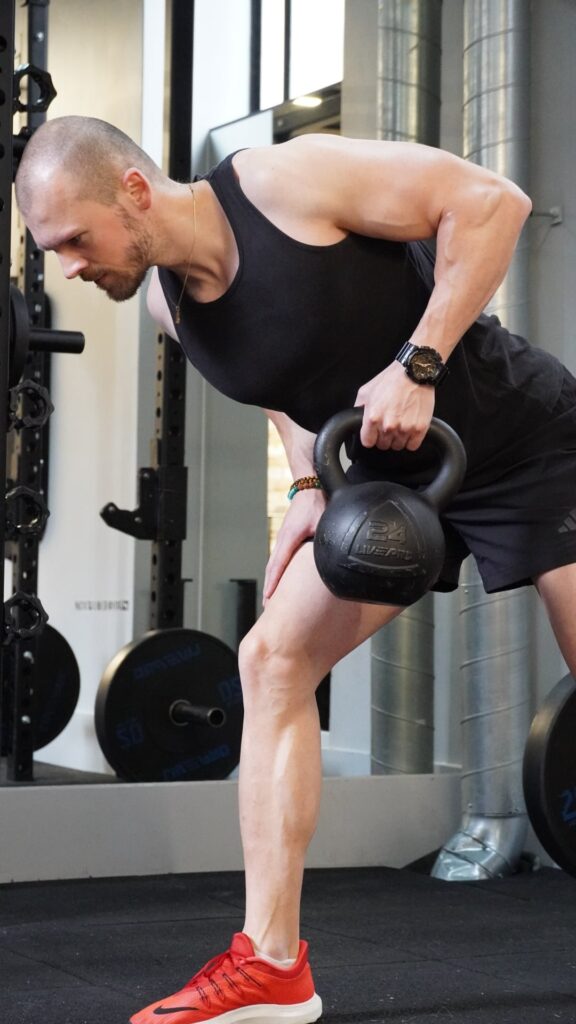
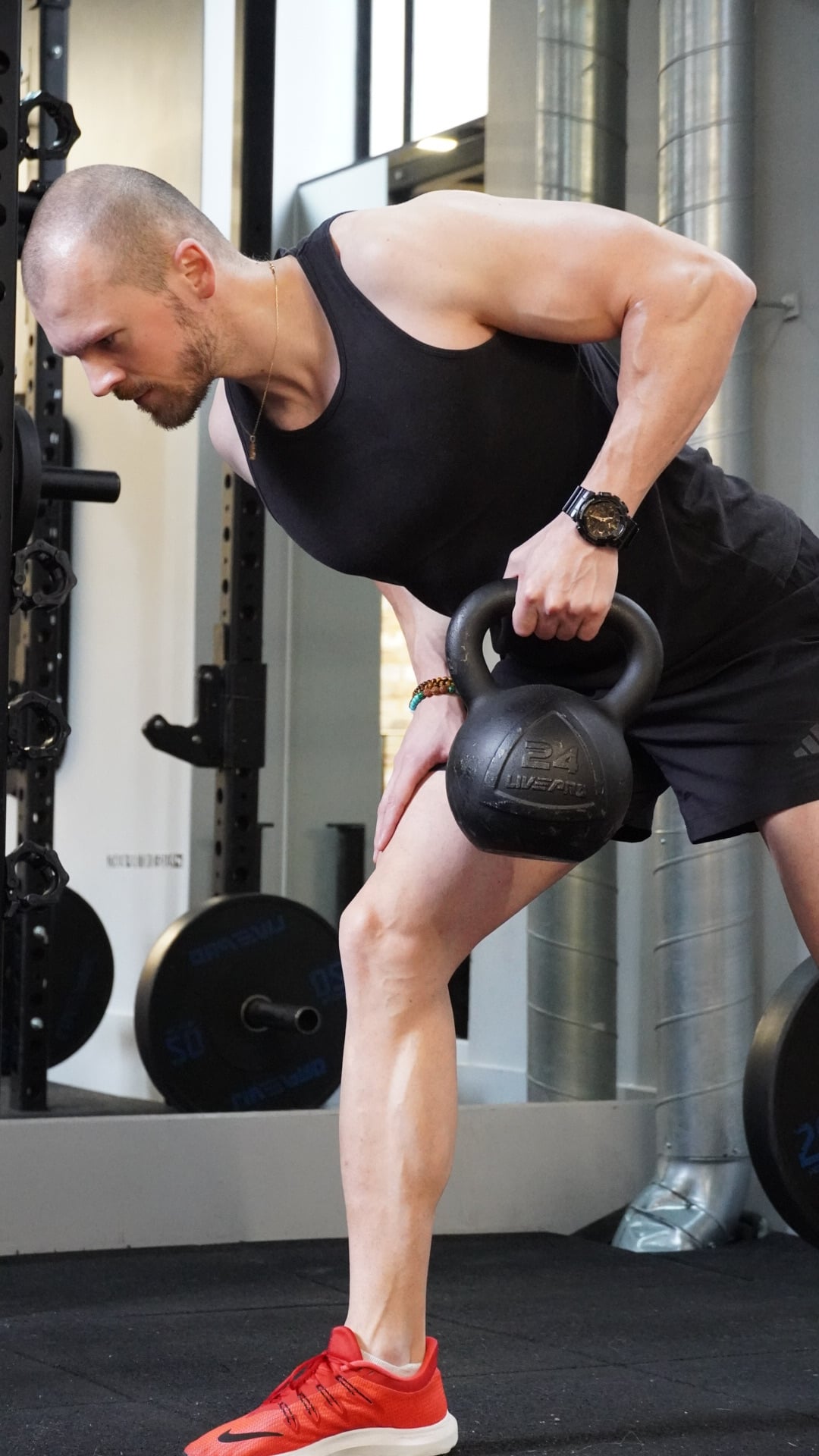
6. Kettlebell Single Arm Row
Why it matters for runners: Builds upper back strength for maintaining posture when fatigued. Strong back prevents the slouching that wastes energy in late race kilometres.
How to perform:
- Hinge forward at hips, supporting yourself on bench or sturdy surface
- Kettlebell in one hand, arm hanging straight
- Pull kettlebell to hip, leading with elbow
- Squeeze shoulder blade at top
- Lower with control
- Complete all reps before switching sides
Common mistakes: Rotating torso to lift weight, jerking the weight up, not achieving full range of motion
7. Kettlebell Halo
Why it matters for runners: Builds shoulder mobility and core stability. Counteracts the repetitive arm swing pattern of running and improves posture.
How to perform:
- Hold kettlebell upside down by the horns at chest
- Circle the kettlebell around your head, keeping it close
- Move in a slow, controlled manner
- Complete full circles in one direction, then reverse
- Maintain tall posture throughout
Common mistakes: Moving too fast, kettlebell drifting away from head, arching lower back
The Programme: Minimal Kettlebell Training for Runners
This programme uses just two sessions per week, each lasting 25 to 35 minutes. It provides maximum benefit with minimum time investment.
Weekly Schedule
Day | Session |
Monday/Tuesday | Kettlebell Session A |
Thursday/Friday | Kettlebell Session B |
Place sessions on non-consecutive days, ideally after easy runs or on rest days. Avoid the day before speed work or long runs.
Session A: Hip Power and Posterior Chain
Exercise | Sets | Reps | Rest | Notes |
Kettlebell Swing | 4 | 15, 15, 12, 12 | 60 seconds | Explosive hip drive |
Kettlebell Romanian Deadlift | 3 | 10, 10, 8 | 60 seconds | Slow, controlled lowering |
Kettlebell Goblet Squat | 3 | 10, 10, 8 | 60 seconds | Full depth if mobility allows |
Kettlebell Single Arm Row | 3 | 10 each arm | 45 seconds | Squeeze at top |
Dead Bug (bodyweight) | 2 | 10 each side | 30 seconds | Core stability |
Total time: 25 to 30 minutes
Session B: Single Leg Strength and Stability
Exercise | Sets | Reps | Rest | Notes |
Single Leg Kettlebell Deadlift | 3 | 8 each leg | 60 seconds | Balance and control |
Kettlebell Reverse Lunge | 3 | 8 each leg | 60 seconds | Alternate legs |
Kettlebell Swing | 3 | 12, 12, 10 | 60 seconds | Maintain power |
Kettlebell Halo | 2 | 8 each direction | 30 seconds | Slow and controlled |
Side Plank (bodyweight) | 2 | 30 seconds each side | 30 seconds | Hip stability |
Total time: 25 to 30 minutes
Warm Up (5 Minutes Before Each Session)
Exercise | Reps/Duration |
Leg swings | 10 each leg, each direction |
Hip circles | 10 each direction |
Bodyweight squats | 10 |
Arm circles | 10 each direction |
Light kettlebell deadlifts | 5 (practice movement pattern) |

Progression Strategy
Progress the programme gradually to continue building strength.
Weeks 1 to 4: Foundation
Focus on technique. Use conservative weight. The goal is quality movement, not maximum load.
Target: Complete all prescribed sets and reps with excellent form
Weeks 5 to 8: Building
Add reps within the given ranges. If you completed 10 reps last week, aim for 11 or 12 this week.
Target: Reach the top of rep ranges consistently
Weeks 9 to 12: Loading
Increase kettlebell weight for exercises where you consistently exceed rep targets. Increase by the smallest increment available.
Target: Handle heavier loads while maintaining form
Example Progression (Kettlebell Swing)
Week | Weight | Reps |
1 | 12kg | 15, 12, 10, 10 |
4 | 12kg | 15, 15, 15, 12 |
5 | 16kg | 12, 12, 10, 10 |
8 | 16kg | 15, 15, 12, 12 |
9 | 20kg | 12, 12, 10, 10 |
Long Term Progression
After 12 weeks, you have several options:
Option 1: Continue the programme with heavier kettlebells
Option 2: Add a third session per week (repeat Session A or B)
Option 3: Expand to a more comprehensive strength p
Integrating Kettlebells with Running Training
Timing matters when combining strength and running.
Best Times for Kettlebell Sessions
After easy runs: Your legs are warm but not exhausted. The easy run serves as your warm-up.
On rest days: If you prefer to keep running and strength separate, rest days work well. Just ensure you have recovered from yesterday’s run.
Same day as hard running (stacked): Some runners prefer doing kettlebells immediately after hard sessions. This keeps easy days truly easy.
Times to Avoid
Before speed work: Fatigued legs compromise running quality. Keep the day before intervals or tempo runs free from strength work.
Before long runs: Your legs need to be fresh for extended efforts.
When excessively fatigued: If you are deep in a high mileage block and exhausted, prioritise recovery over additional strength work.
Sample Running Week with Kettlebells
Day | Running | Strength |
Monday | Easy 5km | Kettlebell Session A (after run) |
Tuesday | Intervals | None |
Wednesday | Rest | None |
Thursday | Easy 6km | Kettlebell Session B (after run) |
Friday | Rest or easy 3km | None |
Saturday | Long run | None |
Sunday | Rest | None |
Benefits Runners Will Experience
With consistent kettlebell training, expect these improvements:
Weeks 2 to 4
- Increased awareness of hip and glute engagement
- Mild muscle soreness that fades as you adapt
- Beginning to feel the exercises targeting running muscles
Weeks 4 to 8
- Noticeable improvement in glute activation during running
- Hills feel slightly easier
- Better posture maintenance during longer runs
- Exercises feel more natural
Weeks 8 to 12
- Clear strength gains (heavier kettlebells, more reps)
- Improved running economy (same pace feels easier)
- Better late-race form retention
- Reduced niggles and injury concerns
3 to 6 Months
- Measurable race time improvements
- Significant injury prevention benefits
- Kettlebell training feels like a normal part of your routine
- Running feels more powerful and controlled
Common Questions from Runners
Will kettlebell training make me bulky?
No. This programme uses moderate weights and rep ranges designed for strength and power, not muscle size. You will become stronger and more toned, not bulky.
I have never used a kettlebell. Where do I start?
Start with the lightest weight available and focus on the swing and goblet squat first. Watch video demonstrations, record yourself, and prioritise technique over weight. Consider one session with a qualified trainer to learn the basics.
Can I do this programme with just one kettlebell?
Yes. One medium-weight kettlebell is sufficient for the entire programme. Use single arm variations to increase challenge for exercises that become too easy.
What if I only have 15 minutes?
Do a shortened version: 4 sets of swings, 2 sets of single leg deadlifts, and 2 sets of goblet squats. This covers the essential movements in minimal time.
My running volume is very high. Should I do less strength work?
During high mileage phases, consider doing one kettlebell session instead of two. Maintain the stimulus without overwhelming recovery.
Can I substitute other exercises?
The programme is designed around runner-specific movements. Stick with these exercises for best results. The 12REPS app can provide alternatives if you have equipment limitations.
Tracking Your Kettlebell Training
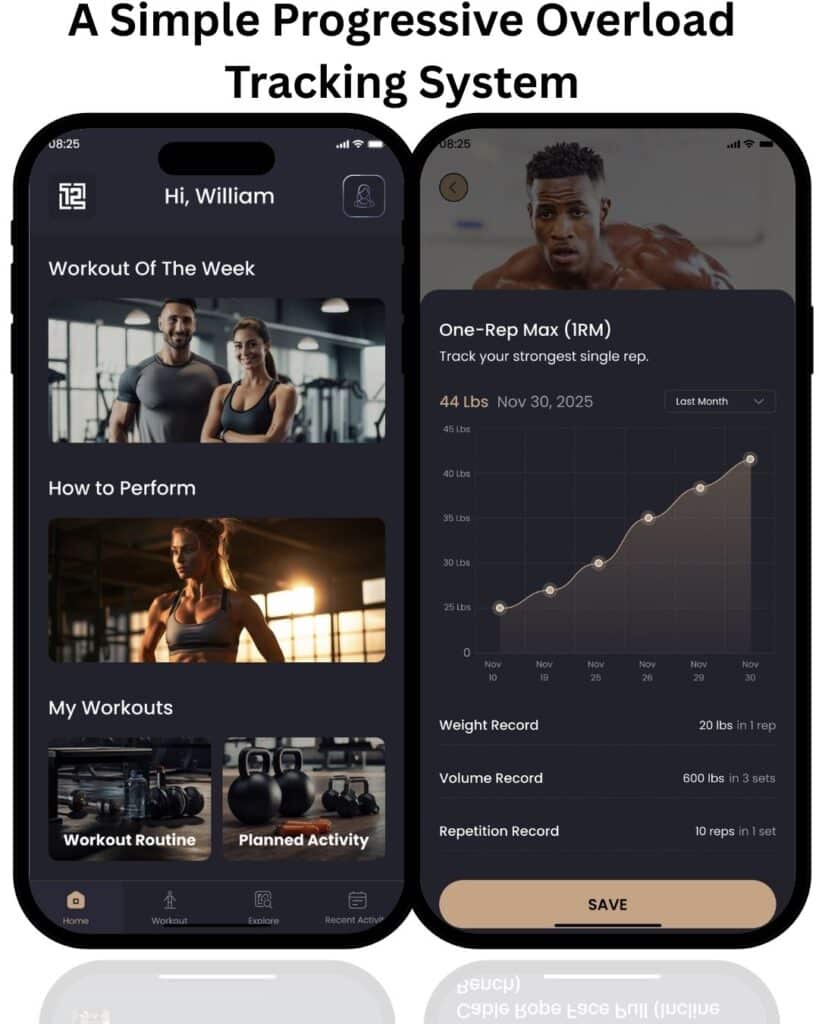
Track your workouts to ensure progressive overload.
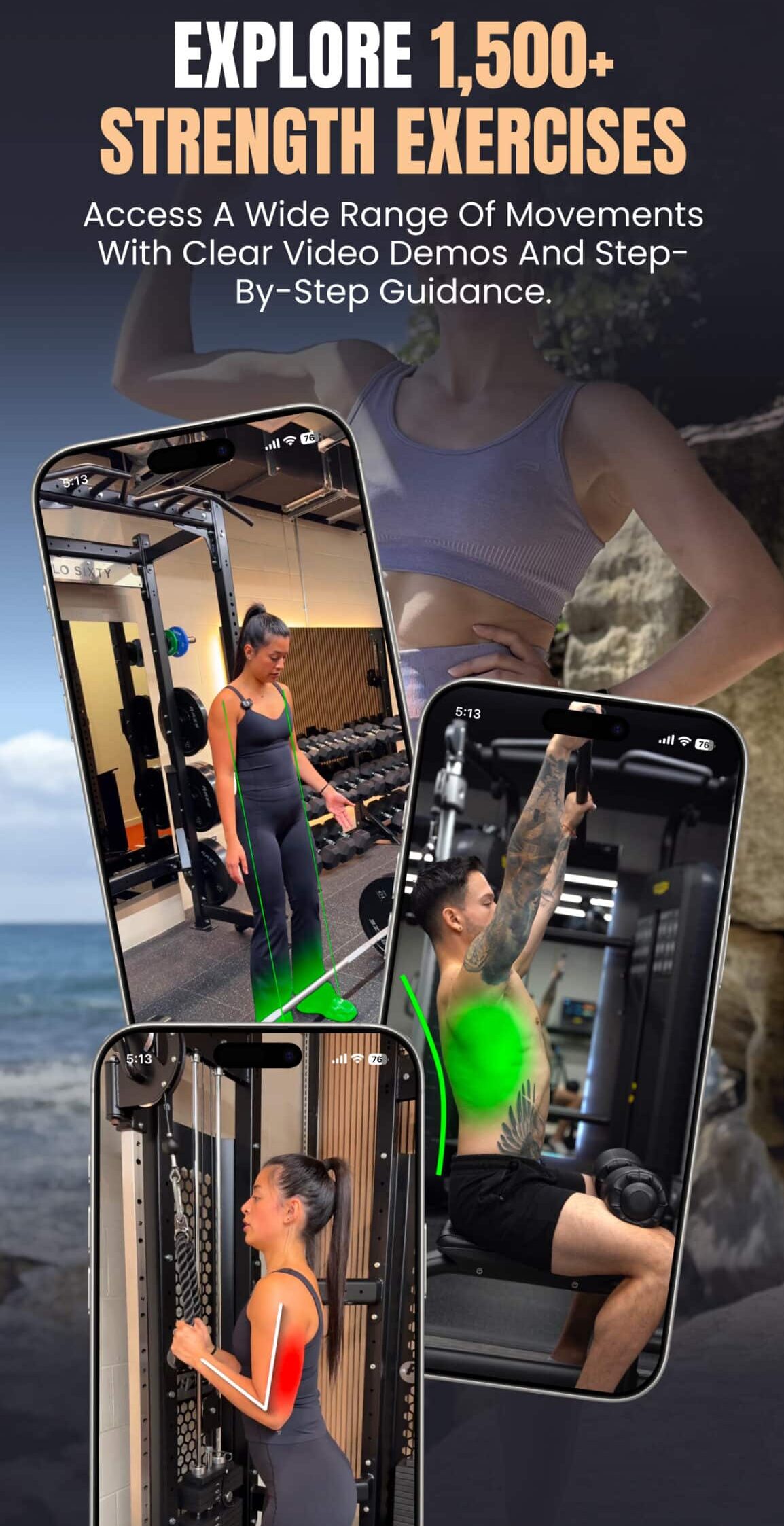
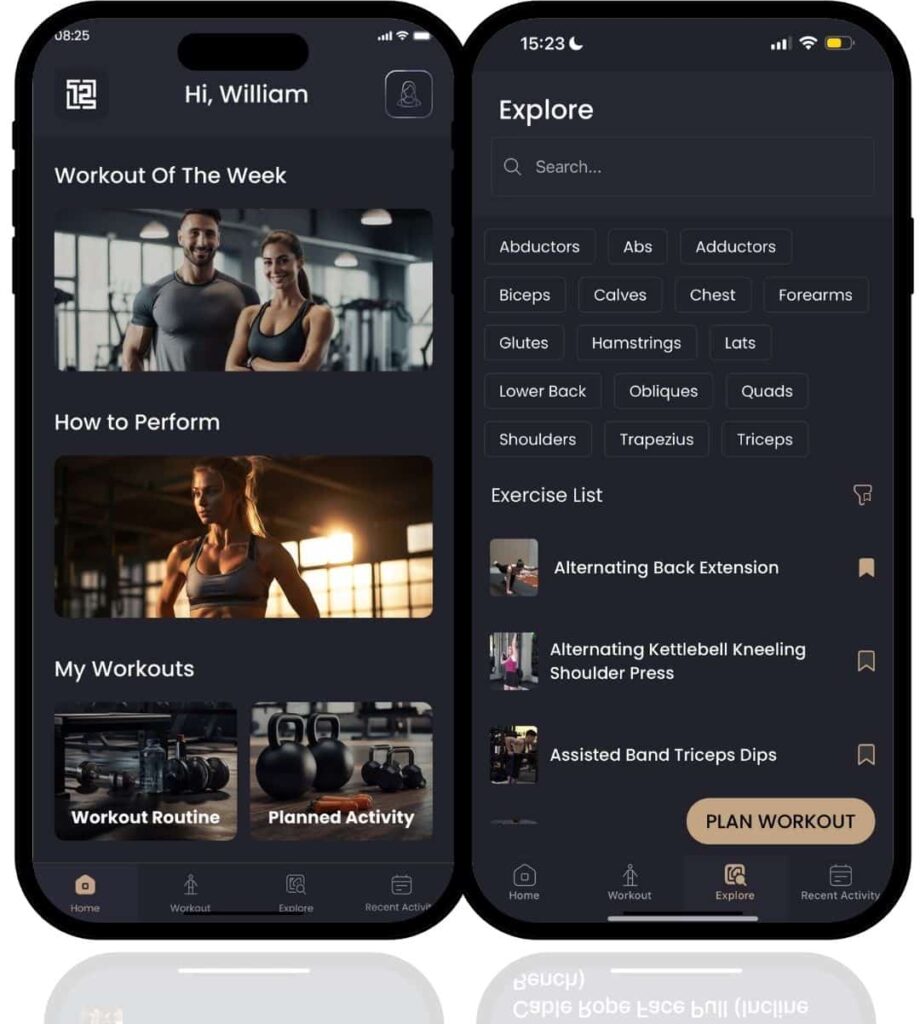
The 12REPS app provides:
- Video demonstrations for kettlebell exercises
- Progress tracking showing weights and reps over time
- Workout logging so you know exactly what to do
- Runner-specific programmes including kettlebell options
- Flexible scheduling that adapts to your running commitments
Write down your weights and reps each session. Seeing improvement over weeks and months keeps you motivated and confirms the training is working.
The Minimal Approach Works
You do not need a gym full of equipment to become a stronger runner. You do not need hour-long sessions. You do not need complexity.
One or two kettlebells. Two sessions per week. Twenty-five to thirty-five minutes. Seven exercises that target exactly what runners need.
This minimal approach works because it removes barriers. No gym commute. No equipment setup. No lengthy time commitment. Just pick up the kettlebell and train.
Consistency beats complexity. A simple programme you actually do outperforms an elaborate programme you skip.
Download the 12REPS app for video demonstrations, progress tracking, and structured kettlebell programmes designed for runners.
Getting Started
Step 1: Get Your Kettlebell
Purchase one kettlebell at a moderate weight (8 to 12kg for women, 12 to 16kg for men). Quality cast iron kettlebells are affordable and last forever.
Step 2: Learn the Movements
Watch video demonstrations. Practice each exercise with no weight or very light weight. Focus on the swing and goblet squat first.
Step 3: Start the Programme
Begin with Session A. Use conservative weight. Complete the warm up. Focus on form over load.
Step 4: Stay Consistent
Two sessions per week, every week. Mark it in your calendar like a running session. Treat it as non-negotiable.
Step 5: Progress Gradually
Add reps before adding weight. When you consistently exceed targets, increase the load slightly.
Step 6: Run Faster
Combine consistent kettlebell training with your running programme. Watch your times improve and injuries decrease.
Start your kettlebell training today with the 12REPS app.
Frequently Asked Questions
How heavy should my kettlebell be?
Start with 8 to 12kg (women) or 12 to 16kg (men). Err on the lighter side initially. You can always progress to heavier weights.
Is twice per week enough?
Yes. Research shows twice weekly strength training provides significant benefits for runners. More is not necessarily better when balancing running and strength.
Can kettlebells replace gym training?
For runners, kettlebells provide the essential strength training benefits. A full gym offers more variety but is not necessary for running performance.
Should I do kettlebells before or after running?
After easy runs or on rest days. Never before hard running sessions.
How long until I see running improvements?
Most runners notice improved strength and stability within 6 to 8 weeks. Running economy improvements typically appear by 8 to 12 weeks.
References
- Beattie, K. et al. (2017). The Effect of Strength Training on Performance Indicators in Distance Runners. Journal of Strength and Conditioning Research. https://pubmed.ncbi.nlm.nih.gov/27135468/
- Lake, J.P. & Lauder, M.A. (2012). Kettlebell swing training improves maximal and explosive strength. Journal of Strength and Conditioning Research. https://pubmed.ncbi.nlm.nih.gov/22580981/
- Jay, K. et al. (2011). Kettlebell training for musculoskeletal and cardiovascular health. Scandinavian Journal of Work, Environment and Health. https://pubmed.ncbi.nlm.nih.gov/21240452/
- Manocchia, P. et al. (2013). Transference of kettlebell training to strength, power, and endurance. Journal of Strength and Conditioning Research. https://pubmed.ncbi.nlm.nih.gov/23382089/
Related Articles on just12reps.com
Article | Description | Link |
Strength Training App for Runners | Complete guide to 12REPS for runners. | |
3 Day Strength Training Split for Runners | Full gym programme for runners. | |
Resistance Band Strength Training Programme | Another minimal equipment option. | |
The Science of Progressive Overload | Understand how to keep progressing. | |
Complete Beginner’s Guide to Strength Training | Fundamentals for those new to lifting. |
About the Author: Will Duru holds a BSc (Hons) in Sport and Exercise Science and is an award winning personal trainer with over 10 years of experience. He has helped numerous runners integrate strength training into their programmes using minimal equipment approaches. Will created the 12REPS app to make effective training accessible to everyone, regardless of equipment availability.