
Quick answer: To brew better coffee at home, get three things right: the amount of coffee to water, the grind size, and how long the water touches the coffee. For pour-over, the National Coffee Association suggests 1 gram of coffee for every 13 to 16 grams of water, a medium grind, and 2 to 4 minutes of brewing. Then adjust by taste. Sour means grind finer. Bitter means grind coarser.
This guide is for you if your coffee at home never tastes as good as your local café’s. You don’t need fancy gear. A kitchen scale helps more than anything else.
Step 1: Use the right coffee-to-water ratio
This matters most. Too little coffee tastes weak and sour. Too much tastes heavy and bitter. Here are the National Coffee Association’s starting points for each method (National Coffee Association):
| Method | Coffee-to-water ratio | Brew time | Grind |
|---|---|---|---|
| Drip coffee maker | 1 to 2 tablespoons per 6 oz of water | About 5 minutes | Medium, like kosher salt |
| Pour-over | 1 g coffee to 13–16 g water | 2 to 4 minutes | Medium |
| French press | 1 g coffee to 10–16 g water | About 4 minutes | Coarse, like rock salt |
| Cold brew | 1 g coffee to 4–5 g water (a concentrate) | About 12 hours | Coarse |
| Espresso | 1 g coffee to 2 g espresso in the cup | 20 to 30 seconds | Fine, like table salt |
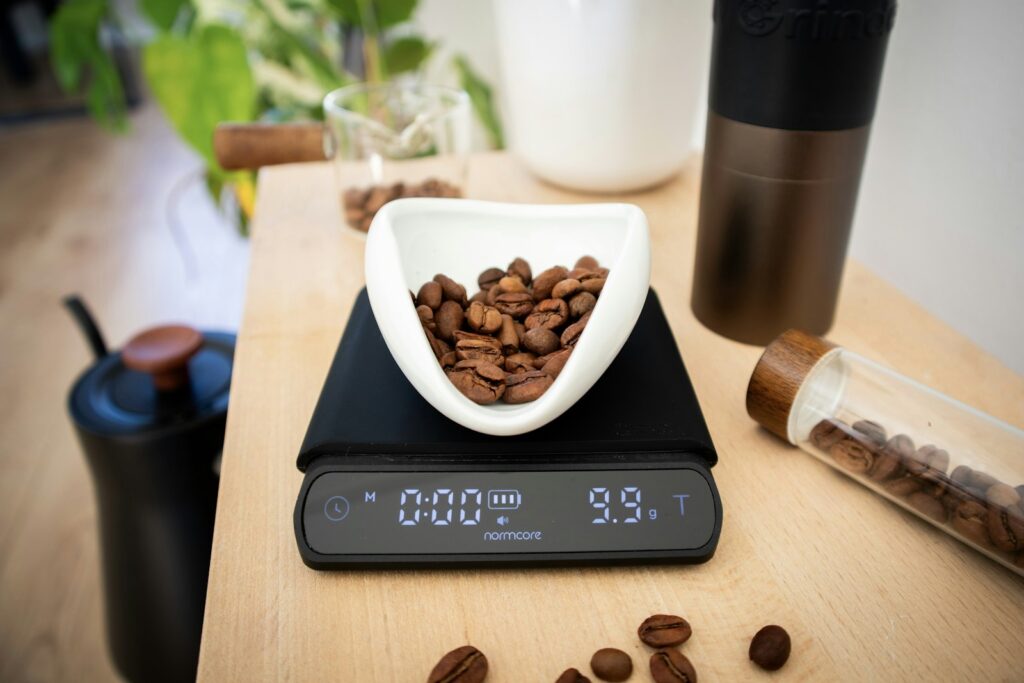
Why weigh it? A scoop of light roast and a scoop of dark roast weigh different amounts. A scale takes the guesswork out. For a 12-oz mug of pour-over, try about 22 grams of coffee and 340 grams of water. That’s a 1:15 ratio, right in the middle of the range.
Step 2: Match the grind to the brew time
The NCA’s rule of thumb is simple: the longer the coffee is in contact with water, the coarser the grind should be. Espresso brews in seconds, so it needs a fine grind. Cold brew steeps for hours, so it needs a coarse one (National Coffee Association).
If you can, grind your beans just before you brew. The NCA also suggests a burr grinder over a blade grinder, because burrs make a more even grind, and that helps the coffee extract evenly (National Coffee Association).
Step 3: Get the water right
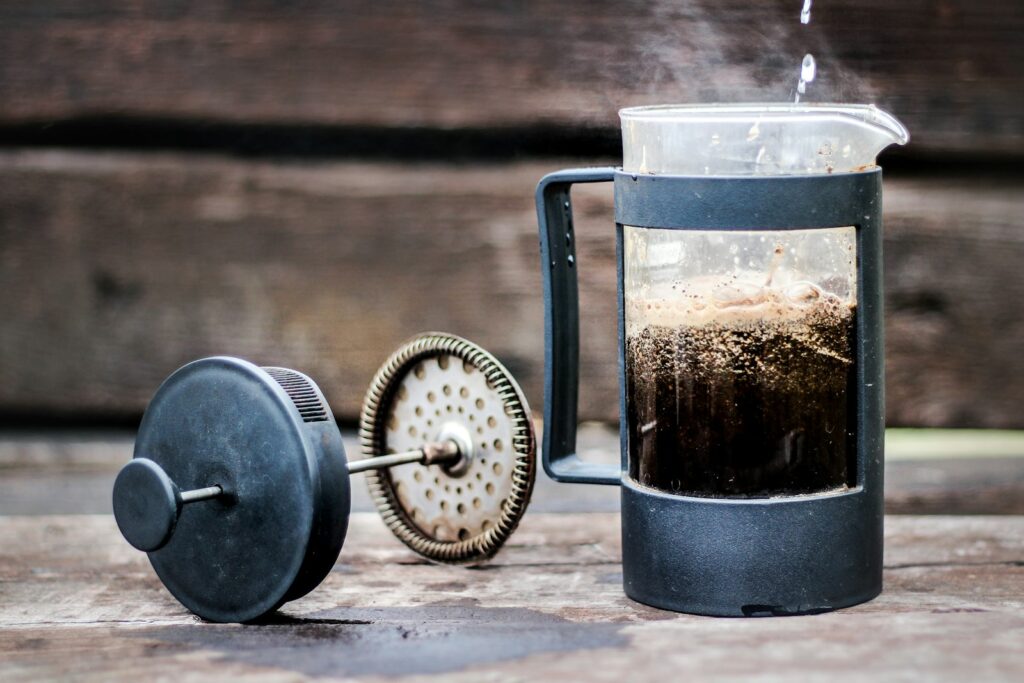
- Temperature: the SCA suggests about 93°C, plus or minus 3°C (about 197–205°F), for pour-over and French press (National Coffee Association, citing the SCA). If you don’t have a thermometer, let boiling water sit for about 30 seconds.
- Don’t obsess over a few degrees, though. A UC Davis study found that when strength and extraction stayed the same, brewing at 189°F, 194°F or 199°F made almost no difference to the taste (Batali et al., 2020). Ratio and grind matter more.
- Water quality: use cold, filtered water if you can. The NCA advises avoiding distilled or softened water (National Coffee Association).
Step 4: Fix your coffee by taste
Coffee scientists measure two things: strength (how much coffee is dissolved in the cup) and extraction (how much of the grounds dissolved into the water). The SCA’s “Golden Cup” target is 1.15% to 1.35% strength and 18% to 22% extraction (Batali et al., 2020). You don’t need a lab to use this. Just taste:
| If your coffee tastes… | It’s probably… | Try this |
|---|---|---|
| Sour, sharp or thin | Under-extracted | Grind finer, or brew a little longer |
| Bitter, harsh or drying | Over-extracted | Grind coarser, or brew a little shorter |
| Weak or watery | Too little coffee | Use more coffee for the same water |
| Too strong or heavy | Too much coffee | Use less coffee, or add a little hot water |
Change one thing at a time. If you change the grind and the ratio together, you won’t know which one helped.
A simple pour-over recipe
- Heat water to about 200°F, or let it sit for 30 seconds after boiling.
- Weigh 22 g of coffee and grind it medium.
- Rinse your paper filter with hot water, then pour that water away.
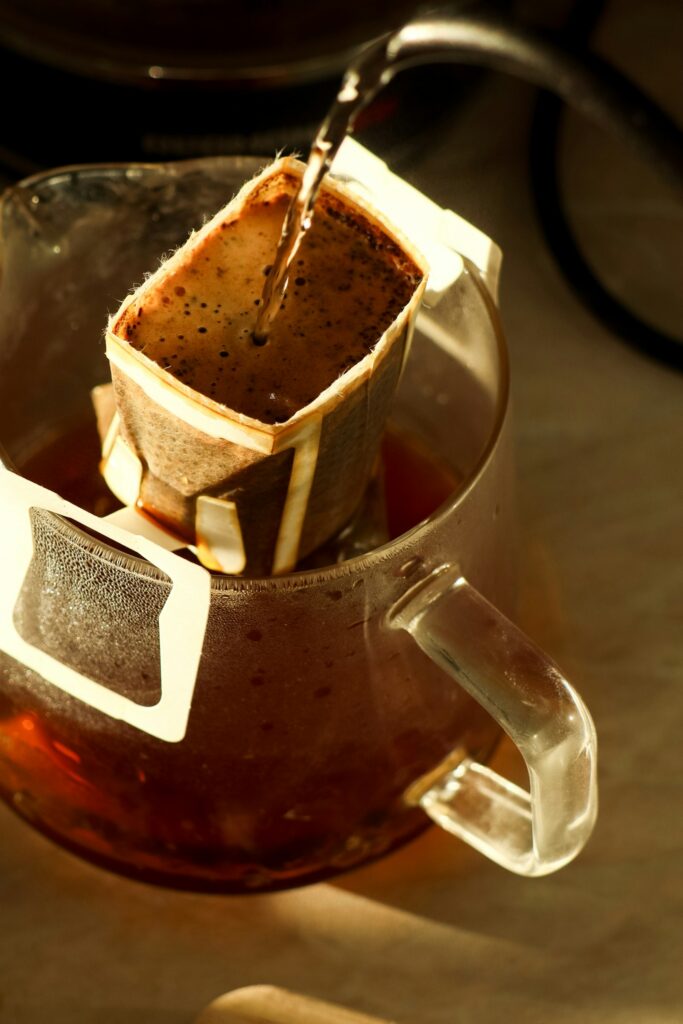
- Add the coffee, then pour about 44 g of water, double the weight of the coffee, to let it “bloom” (National Coffee Association). Wait 30 to 45 seconds.
- Slowly pour the rest of the water in circles, up to 340 g total.
- Aim to finish in 2 to 4 minutes. Taste, then adjust next time.
Store your beans the right way
Air, moisture, heat and light are coffee’s biggest enemies. The NCA recommends an airtight container somewhere cool, and buying smaller batches more often, enough for one or two weeks (National Coffee Association).
Summary
- Weigh your coffee and water. For pour-over, start at 1:15.
- Match the grind to the brew time: fine for espresso, medium for drip and pour-over, coarse for French press and cold brew.
- Water around 197–205°F is ideal, but ratio and grind matter more than a few degrees.
- Sour means grind finer. Bitter means grind coarser. Change one thing at a time.
- Buy fresh beans in small batches and keep them airtight.
Brew, then train
Got your morning cup sorted? Make the next hour count. 12REPS gives you trainer-built programs, two demo videos for every exercise and a gym log that shows what you lifted last time. New users get a 7-day free trial.
Download 12REPS and see what you’ll get:
Sources
- National Coffee Association. Drip coffee
- National Coffee Association. Pour-over coffee
- National Coffee Association. French press coffee
- National Coffee Association. Cold brew coffee
- National Coffee Association. Espresso
- National Coffee Association. Coffee storage and shelf life
- Batali ME et al. Brew temperature, at fixed brew strength and extraction, has little impact on the sensory profile of drip brew coffee. Scientific Reports, 2020
I’m Will Duru, a personal trainer and the founder of 12REPS. I hold a BSc (Hons) in Sport and Exercise Science and have more than a decade of experience coaching people in strength training. This article is based on published research and industry guidance, not personal coffee expertise.