

Written by Will Duru, BSc (Hons) Sport and Exercise Science, Level 3 Personal Trainer.
Muscle building for weight loss works because strength training helps you keep, or even gain, muscle while you lose fat. You still need a calorie deficit to lose weight. Lifting helps more of the weight you lose come from fat, so you end up stronger, not just smaller.
A calorie deficit means eating fewer calories than your body uses. Many people try to create one with diet and long cardio sessions alone. Others avoid weights because they worry about getting “bulky”. This guide explains what the research says about muscle and fat loss, clears up common myths and shows you how to put it into practice.
This article focuses on training. For the food side, read our guide to protein and carbs for losing fat and gaining muscle.

Why Muscle Building for Weight Loss Works
Diet and cardio both have a place in fat loss. Muscle is the part people often overlook. Here are five ways that building and keeping muscle helps.
1. Muscle uses a little more energy at rest
Muscle tissue uses more energy than fat tissue, even while you sit or sleep. Your basal metabolic rate (BMR) is the energy your body uses at complete rest.
A 2012 review in Current Sports Medicine Reports found that about 10 weeks of resistance training may raise resting metabolic rate by around 7%. That is helpful, but modest. It will not replace a calorie deficit. Think of it as a small, steady advantage.
2. The afterburn effect is real, but small
After a hard session, your body keeps using extra oxygen and energy while it recovers. This is called excess post-exercise oxygen consumption (EPOC), or the “afterburn” effect.
Studies summarized by Len Kravitz, PhD, of the University of New Mexico found energy use stayed raised for up to about 24 hours after some workouts. The extra calories vary a lot with the type and intensity of training. Treat EPOC as a bonus, not the main reason to lift.
3. Better body composition
Body composition is the mix of fat, muscle and other tissue in your body. When you lose weight without strength training, part of what you lose is usually muscle.
A 2021 overview of 149 studies found that resistance training reduced lean mass loss during weight loss by about 0.8 kg on average. Lean mass is everything in your body that is not fat, including muscle. Keeping it means more of your weight loss comes from fat.
4. Better blood sugar control
Muscle is one of the main places your body uses glucose (sugar) from your blood. Westcott’s review reports that resistance training can improve insulin sensitivity.
Insulin sensitivity describes how well your body responds to insulin, the hormone that moves glucose into your cells. If you have diabetes or take medication for blood sugar, check with your doctor before you change your training.
5. Strength for everyday life
Stronger muscles can make daily tasks like carrying groceries, climbing stairs and lifting children feel easier. The same review reports bone mineral density increases of 1% to 3% in resistance training studies. These benefits count whatever the scale says.
Watch this short 12REPS video on how strength training helps with fat loss:
Common Myths About Lifting Weights and Weight Loss
Some old ideas still stop people from lifting. Here is what the evidence says.
Myth 1: Cardio is the only way to lose weight
The truth: Cardio burns calories and supports heart health, so it is useful. But strength training adds something cardio alone does not. It helps you hold on to muscle while you lose fat.
The World Health Organization (WHO) recommends at least 150 minutes of moderate aerobic activity a week, or 75 minutes of vigorous activity. It also recommends muscle-strengthening activity on two or more days a week. A mix of both is a sensible target. To fit them together, read how to do cardio and weights on the same day.
Myth 2: Lifting weights will make women bulky
The truth: A 2025 meta-analysis found that women and men gain muscle size at a similar rate relative to their starting size. In absolute terms, men’s gains were slightly larger.
Large gains in muscle take years of focused training and enough food. The ISSN position stand on diets and body composition notes that lean mass gain depends on the size of your calorie surplus and your training status. In a calorie deficit, getting “bulky” is very unlikely. Learn more in will lifting weights make me bulky?
Myth 3: You can spot reduce fat
The truth: You cannot choose where your body loses fat. Spot reduction is the idea that training one area burns the fat that covers it.
In a 2013 study in the Journal of Strength and Conditioning Research, people trained one leg only. They lost fat overall, but not from the trained leg. Crunches will strengthen your abs. Fat loss, though, happens across your whole body when you keep a calorie deficit over time.
Your Training Blueprint for Building Muscle While Losing Fat
To build or keep muscle in a calorie deficit, get these basics in place.
- Strength train on two or more days a week. Work all your major muscle groups, in line with the WHO guideline.
- Prioritize compound lifts. Compound exercises work several joints and muscles at once, such as squats, deadlifts, presses and rows. See our guide to compound lifts.
- Use progressive overload. This means making your training a little harder over time, for example by adding weight or an extra rep. Our beginner’s guide to progressive overload shows you how.
- Lose weight at a steady pace. The NHS suggests aiming for 0.5 to 1 kg a week. The ISSN notes that slower weight loss can help leaner people keep more muscle.
How 12REPS Helps You Train for Fat Loss
Knowing the basics is one thing. Turning them into a plan you follow every week is harder. This is where the 12REPS app helps.
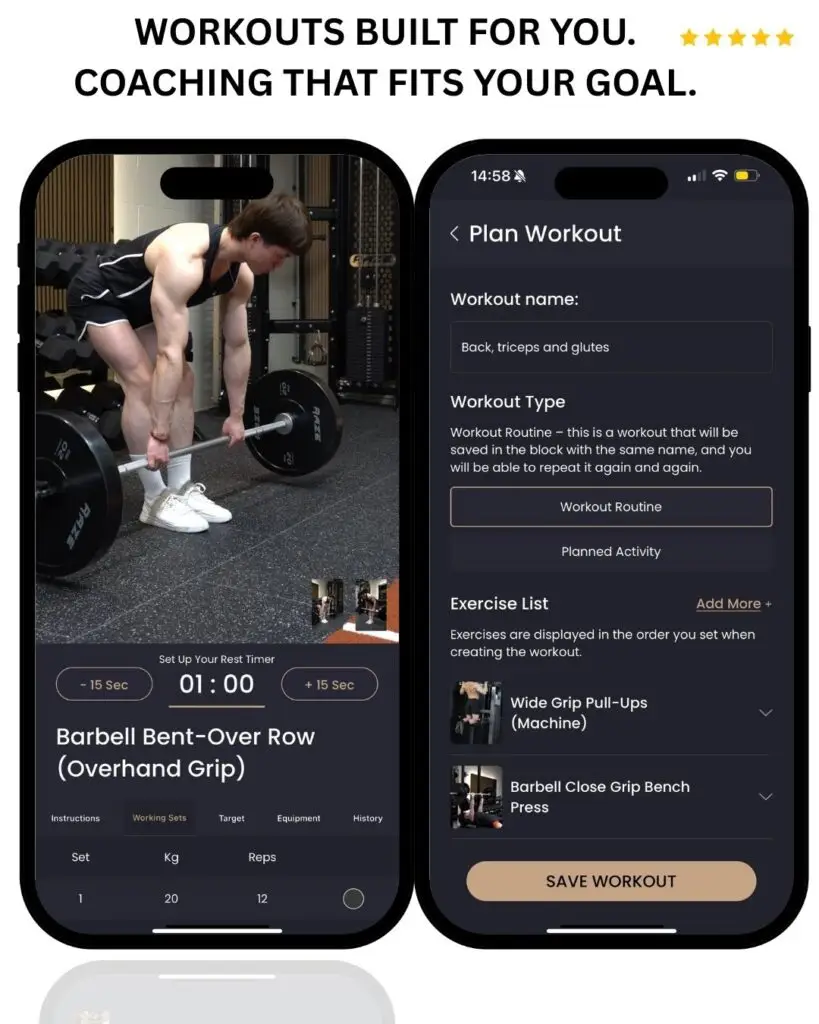
- A plan built around you: Your training is built around your goal, your equipment and the time you have. Open the app and your workout is ready.
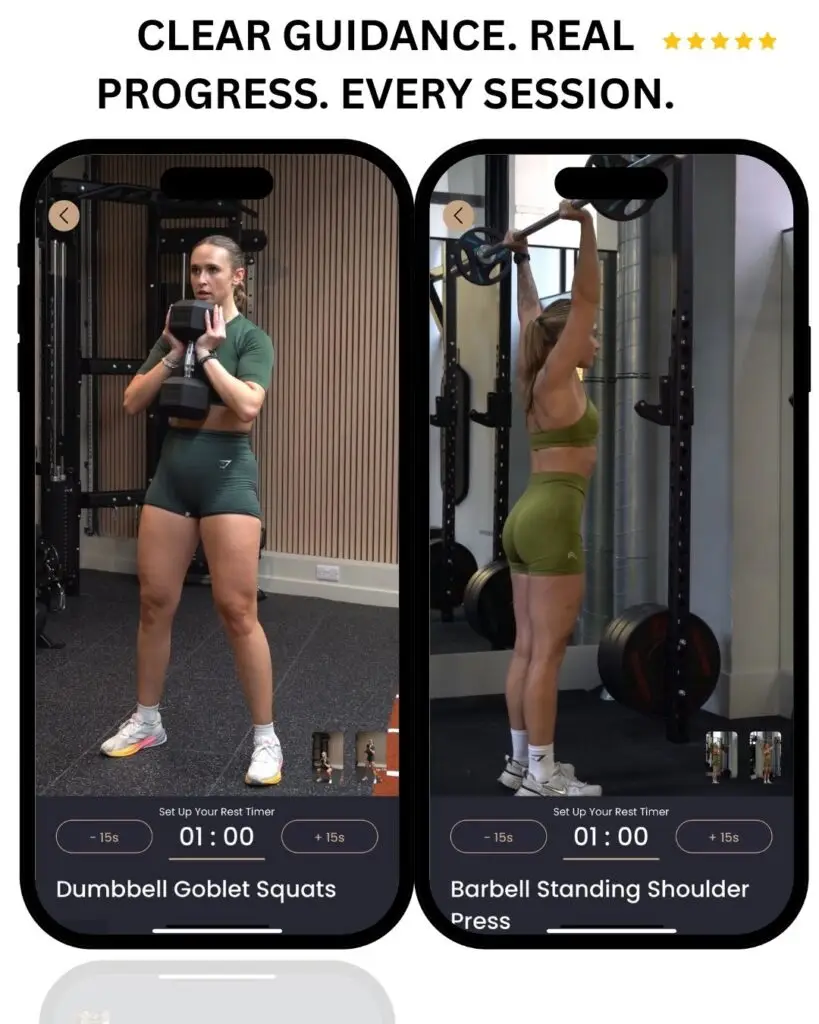
- Trainer demonstrations: Exercises come with demonstrations and technique breakdowns from qualified personal trainers, so you can learn compound lifts with confidence.
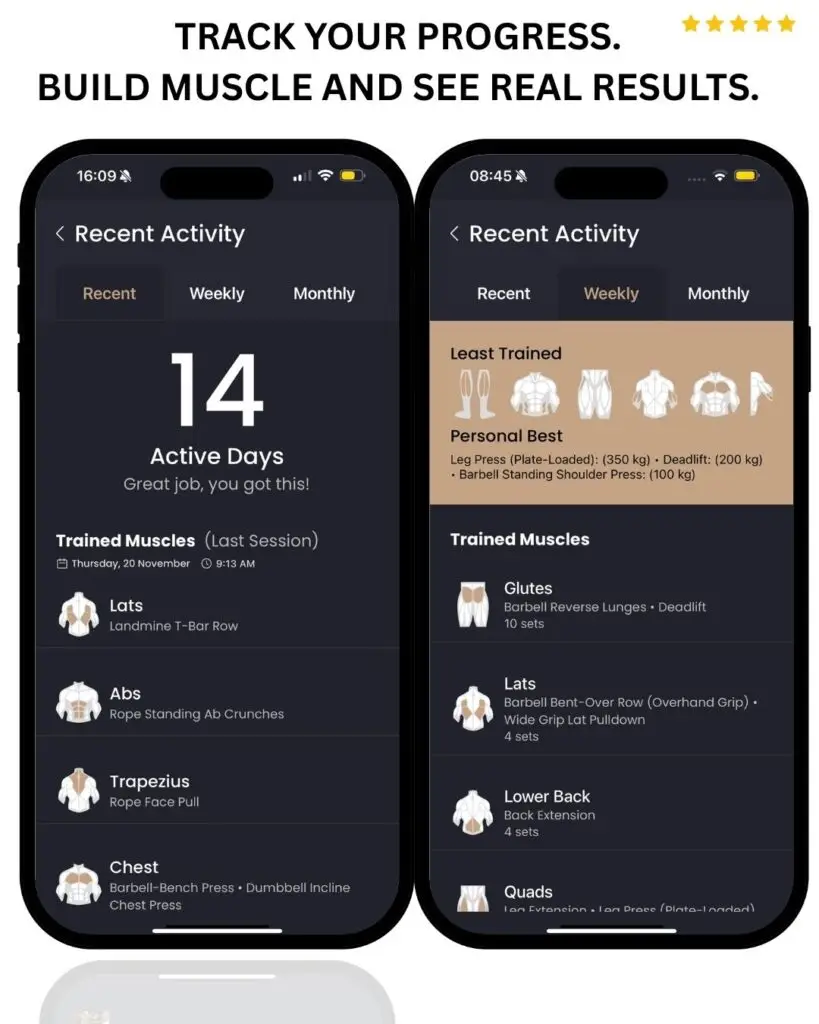
- A number to beat: You enter reps and weight for each set. The app remembers what you lifted, which makes progressive overload simple to follow.
- Accountability: 12REPS tracks your workouts, sets, reps, weights and streaks. You can also log your body weight and see the trend over time.
What 12REPS Does Not Do
12REPS is a training app. It does not give you meal plans or personal nutrition advice. Nutrition is individual, so we cover it in our articles instead.
Start with the 12REPS nutrition guide and how many calories to eat to build muscle and lose fat. Training creates the need for change. Food gives your body the energy and building blocks to make it happen.
Build Muscle, Lose Fat: The Bottom Line
Building muscle is not just for bodybuilders. It is one of the most useful things you can do while you lose weight. Strength training helps you keep muscle, makes daily life easier and adds a small boost to the energy you use.
Fat loss itself still comes from a calorie deficit kept over time. Lifting helps make sure more of the weight you lose is fat. To see how much each type of exercise helps, read our no-hype guide to exercise for fat loss. To choose foods that support your training, see our list of protein sources for building muscle.
If you have a health condition or take medication, check with your doctor before starting a new exercise program.
If you want a plan built around your goal, your equipment and the time you have, 12REPS sets out each session and shows a trainer demonstration for every exercise. It also remembers what you lifted, so you always have a number to beat.
Sources
- Westcott WL. Resistance training is medicine: effects of strength training on health. Current Sports Medicine Reports (American College of Sports Medicine), 2012. https://instituteofmotion.com/wp-content/uploads/2019/08/Strength-Training-is-Health.pdf
- Kravitz L. Research sheds new light on the exercise ‘afterburn’. University of New Mexico, n.d.. https://www.unm.edu/~lkravitz/Article%20folder/ExerciseAfterburn2015.html
- Bellicha A, et al. Effect of exercise training on weight loss, body composition changes, and weight maintenance in adults with overweight or obesity: An overview of 12 systematic reviews and 149 studies. Obesity Reviews, 2021. https://pmc.ncbi.nlm.nih.gov/articles/PMC8365736/
- Refalo MC, et al. Sex differences in absolute and relative changes in muscle size following resistance training in healthy adults: a systematic review with Bayesian meta-analysis. PeerJ, 2025. https://peerj.com/articles/19042
- Aragon AA, et al. International Society of Sports Nutrition position stand: diets and body composition. Journal of the International Society of Sports Nutrition, 2017. https://scholarcommons.sc.edu/sph_physical_activity_public_health_facpub/367/
- Regional fat changes induced by localized muscle endurance resistance training. Journal of Strength and Conditioning Research, 2013. https://repositorio.unab.cl/xmlui/handle/ria/53433
- Physical activity. World Health Organization, accessed 2026. https://www.who.int/initiatives/behealthy/physical-activity/
- Tips to help you lose weight. NHS, 2023. https://www.nhs.uk/live-well/healthy-weight/managing-your-weight/keep-weight-off/