



By Will Duru, personal trainer and founder of 12REPS.
The Short Answer
Eccentric training means focusing on the lowering part of an exercise, such as slowly lowering yourself from a chin-up or slowly bending your knees in a squat. You can do it by lowering every rep under control, or by doing “negatives,” where you only do the lowering part.
Research suggests eccentric training may build slightly more muscle than lifting-only (concentric) training, but the difference is small. For most people, the practical takeaway is simple: control the lowering on every rep, and use negatives to learn harder exercises like chin-ups.
Concentric vs Eccentric: What’s the Difference?
| Phase | What happens | Example |
|---|---|---|
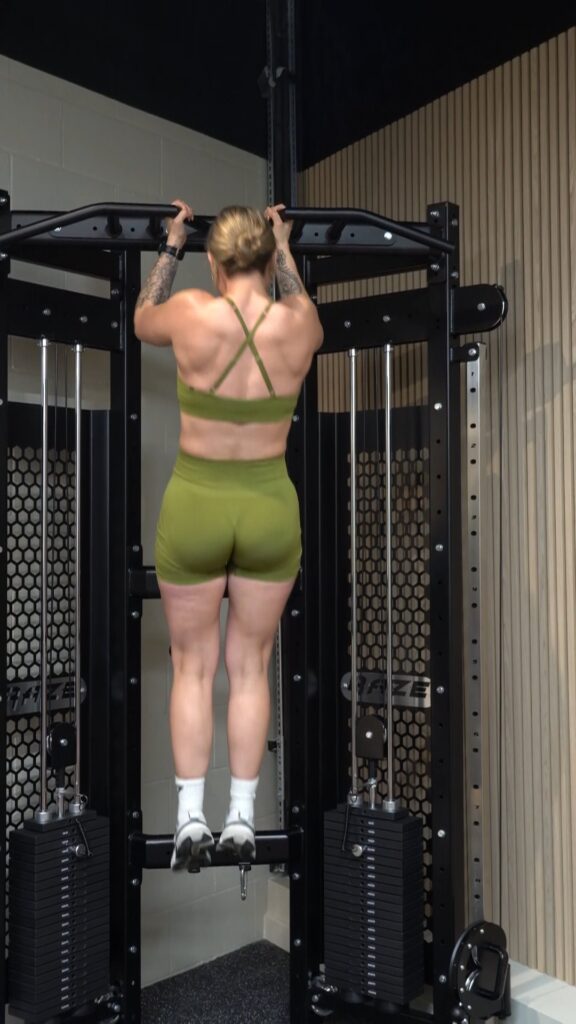
| Concentric | The muscle shortens as you lift | Pulling up in a chin-up |
| Eccentric | The muscle lengthens as you lower under control | Lowering down from a chin-up |
| Isometric | The muscle stays the same length | Holding the top of a chin-up |
You’re stronger in the eccentric phase. A review of the research by Dr. Len Kravitz at the University of New Mexico notes that eccentric contractions can produce more than 20% more force than concentric ones. That’s why you can lower a weight you can’t lift.
What the Research Says
Muscle growth
A 2017 meta-analysis by Schoenfeld and colleagues pooled 15 studies comparing eccentric-only and concentric-only training. Eccentric training produced an average of 10.0% muscle growth, compared with 6.8% for concentric training. The difference wasn’t statistically significant, so it may be smaller than it looks.
The same review by Kravitz describes a 2018 study by Maeo and colleagues: when the total work was matched, 10 weeks of eccentric training produced more muscle growth than concentric training.
Soreness
Unfamiliar eccentric exercise is known to cause more muscle soreness and temporary strength loss. Your body adapts quickly, so soreness usually drops after the first few sessions. See is feeling sore after every workout normal?
What this means for you
In my coaching, I don’t program eccentric-only training for most people. Normal reps with a controlled lowering phase already include plenty of eccentric work. I use negatives for specific goals, like building up to a first chin-up.
4 Ways to Use Eccentric Training
1. Control the lowering on every rep
Take about 2–3 seconds to lower the weight on exercises like squats, presses and rows. It’s the easiest way to get more from every set. Read more in rep tempo explained.
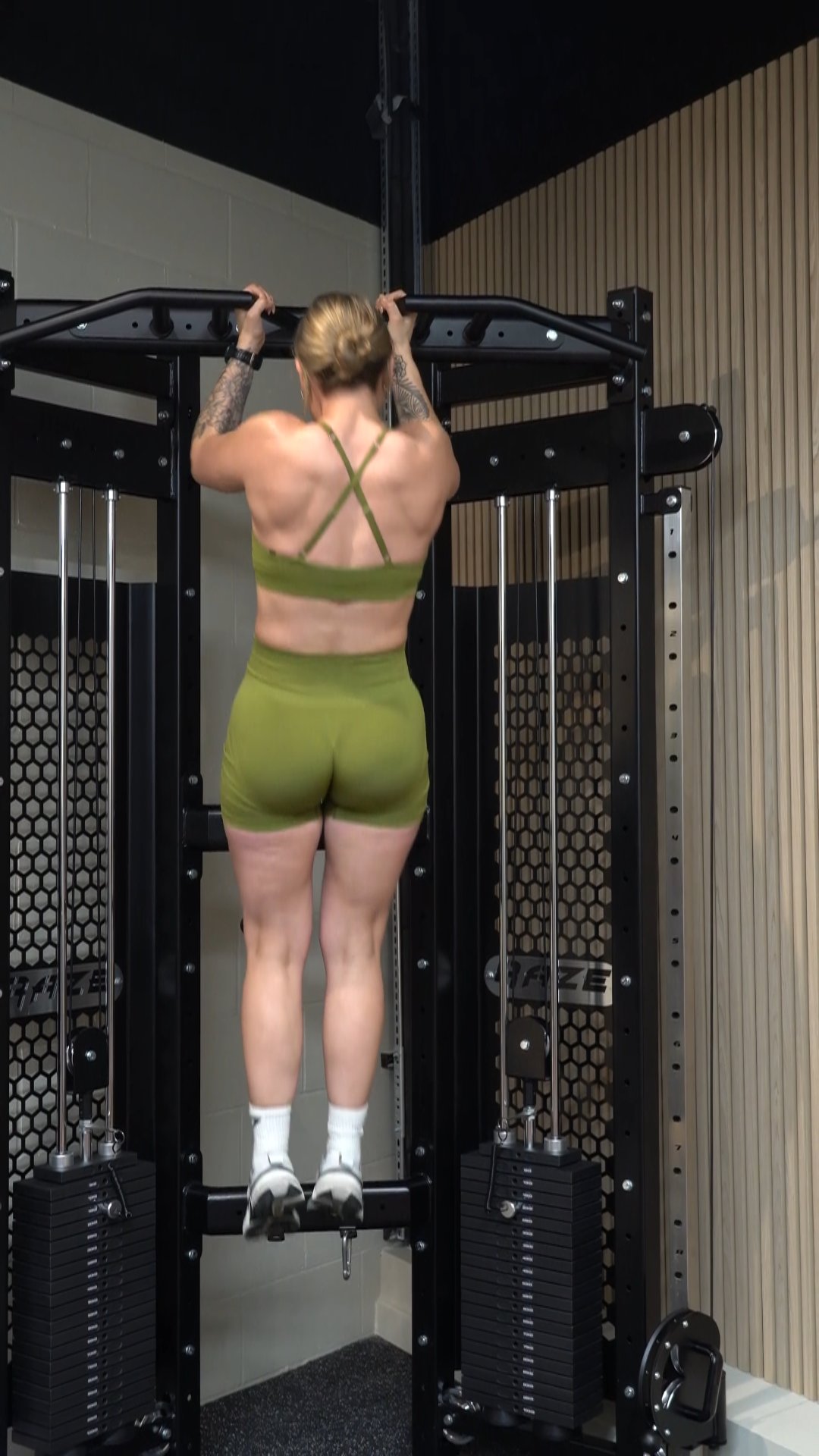
2. Chin-up or pull-up negatives
Use a box to jump or step to the top position, then lower yourself as slowly as you can, aiming for 3–5 seconds. Start with 3 sets of 3–5 reps. This is one of the steps in how to do your first pull-up.
If you can’t control a negative yet, use an assisted machine and slow down the lowering part.
3. “Two up, one down” on machines
On machines like the leg press, push the weight up with both legs and lower it with one leg, slowly. Swap legs each rep. This lets you overload the lowering phase safely without a training partner.
4. Nordic hamstring curls
The Nordic curl is almost pure eccentric work for your hamstrings. You kneel and lower your body forward as slowly as you can. Full guide: Nordic hamstring curls.
How to Program Eccentric Training
These are my coaching recommendations, not rules from the research:
- Every session: Lower every rep under control, about 2–3 seconds.
- Negatives: 2–3 sets of 3–5 reps, once or twice a week, at the start of a workout while you’re fresh.
- Start light: Your first eccentric sessions will likely make you sore, so do less than you think.
- Progress: Slow the lowering, add reps, then add weight. See progressive overload explained.
- Don’t go to failure on negatives: Stop when you can no longer control the speed. See training to failure.
Common Mistakes
- Dropping the weight. If you can’t control the lowering, the weight is too heavy.
- Doing too much too soon. Large amounts of unfamiliar eccentric work can leave you very sore for days.
- Using very heavy negatives without a spotter. Keep supramaximal (heavier than you can lift) work for machines or with a partner.
- Forgetting the lifting phase. Normal reps still matter. Negatives are a tool, not a full program.
Summary
- Eccentric training focuses on the lowering part of a lift.
- You’re stronger when lowering than lifting, so you can handle more weight in that phase.
- Research suggests eccentric training may build slightly more muscle, but the difference is small.
- Control the lowering on every rep, and use negatives for skills like your first chin-up.
- Start light, because new eccentric work causes soreness.
Train With a Clear Plan in 12REPS
In 12REPS, every exercise has a demo and a coach tutorial from me, so you can see how fast to lower each rep.
Pick your workout time and the equipment you have, and the app builds a session that fits. Your log shows what you did last time, so you know when to progress.
Download 12REPS and see what you’ll get:
Sources
- Schoenfeld BJ, Ogborn DI, Vigotsky AD, Franchi MV, Krieger JW. Hypertrophic effects of concentric vs. eccentric muscle actions: a systematic review and meta-analysis. J Strength Cond Res. 2017;31(9):2599–2608.
- Kravitz L. Eccentric training controversies resolved. University of New Mexico. (Summarizes Maeo et al., Med Sci Sports Exerc. 2018;50(8):1629–1640, and other studies.)
Related Reading
- Rep tempo explained
- Nordic hamstring curls
- How to do your first pull-up
- Chin-ups vs pull-ups
- Is feeling sore after every workout normal?
I’m Will Duru, a personal trainer and the founder of 12REPS. I hold a BSc (Hons) in Sport and Exercise Science and have more than a decade of experience coaching people in strength training.
