




Most adults can lose weight safely at about 0.5 to 1 kg (1 to 2 lb) a week. That steady pace is what the NHS and CDC point to, and people who lose weight gradually are more likely to keep it off. To get there, you need a moderate calorie deficit, enough protein and strength training to help you keep your muscle.
This guide explains how weight loss works, what to check if you’re stuck, and how to build a plan you can keep up.
How fast can you lose weight safely?
The NHS 12-week weight loss plan aims for a safe and sustainable rate of 0.5 kg to 1 kg (1 to 2 lb) a week. The CDC says people who lose about 1 to 2 pounds a week are more likely to keep the weight off than people who lose weight faster.
Losing weight much faster usually means eating very little. That’s hard to keep up, and it makes it more likely you’ll lose muscle along with fat.
Expect your weight to go up and down from day to day. Food, drink and salt all affect the number on the scale. Look at your weekly trend instead of a single weigh-in.
How weight loss works: energy balance
Energy balance is the link between the calories you eat and drink and the calories your body uses. If you take in more than you use, you gain weight. If you take in less, you lose weight. That gap is called a calorie deficit.
Exercise alone won’t always do it. The CDC notes that people who are physically active can still gain weight if they take in more calories than they use. Activity works best combined with eating a little less.
Why you might not be losing weight
Many things affect your weight. These include how much you eat and move, how well you sleep, stress, and some medical conditions. Age and life stages such as menopause can play a part too.
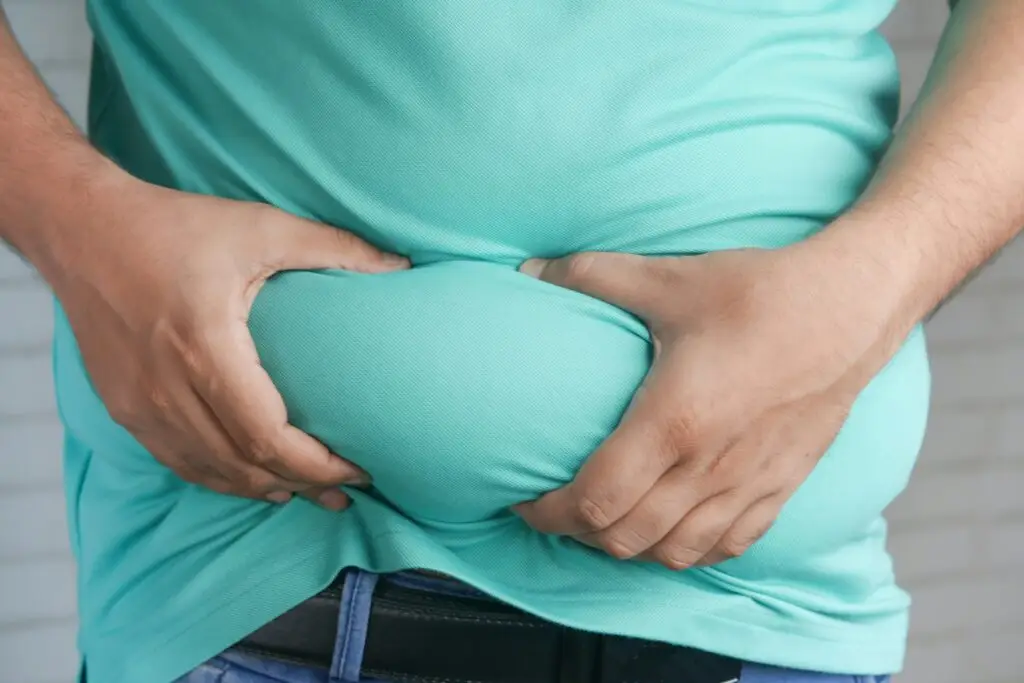
What to check first
- Your food and drink: write down everything for two weeks. Drinks, snacks and weekend meals often add more than you think.
- Your activity: note your workouts and how much you walk each day.
- Your sleep and stress: the CDC suggests tracking both alongside food and activity.
- Possible medical causes: see your GP if you have symptoms that worry you.
Underactive thyroid
Your thyroid gland makes hormones that help control how your body uses energy. An underactive thyroid (hypothyroidism) is one medical cause of weight gain.
The NHS lists symptoms of an underactive thyroid such as unusual tiredness, feeling colder than normal, weight gain, constipation and low mood. Symptoms are often mild and develop slowly.
If you think you might have it, see your GP. It’s usually checked with a blood test for thyroid-stimulating hormone (TSH) and thyroxine (T4).
Other hormones
Hormones such as insulin, cortisol, estrogen and testosterone also affect appetite, energy and body fat. If you’re worried about any of them, talk to your doctor. They can decide which tests, if any, make sense for you.
If you have a medical condition or take medication, check with your doctor or pharmacist before you change your diet or training.
A step-by-step plan to lose weight safely
1. Set a moderate calorie deficit
Aim for a deficit you can keep for months, not days. Cut back on the easy extras first: sugary drinks, alcohol, snacks between meals and oversized portions.
To work out a starting number, read how many calories to eat to build muscle and lose fat.
2. Eat enough protein
Protein supports muscle repair and growth after training. A 2018 meta-analysis of 49 studies found that more protein improved muscle gains from strength training. The extra benefit leveled off at about 1.6 g per kg of body weight a day.
For a 70 kg person, that’s about 112 g of protein a day, spread across meals. Learn more in how much protein you really need.
3. Strength train two to three times a week
When you eat less, your body can lose muscle as well as fat. Strength training helps you keep it.
A 2025 network meta-analysis of 62 trials looked at exercise during calorie restriction. Calorie restriction on its own led to a loss of lean mass. Groups that added resistance training kept their lean mass better while still losing body fat.
Keeping your muscle helps you stay strong as the scale goes down. It also means more of the weight you lose comes from fat.
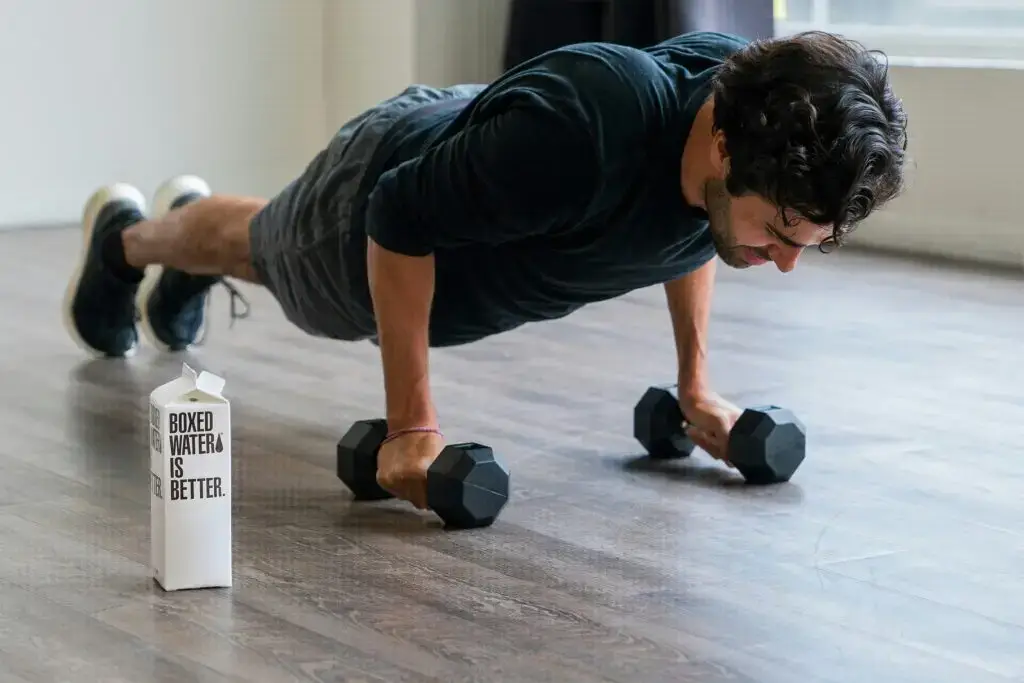
The CDC recommends muscle-strengthening activity on at least 2 days a week. Start with two or three sessions a week. Focus on big compound movements, which work several muscles at once, like squats, lunges, presses and rows. Keep your form solid, use moderate weights and progress gradually.
Example lower body session
Warm up before and cool down after every session.
- Kettlebell box goblet squats: 4 sets of 12 reps
- Bodyweight box step-ups: 4 sets of 20 reps (10 each leg)
- Leg press: 4 sets of 8 to 15 reps
- Sled push: 4 sets of 40 meters
Example upper body session
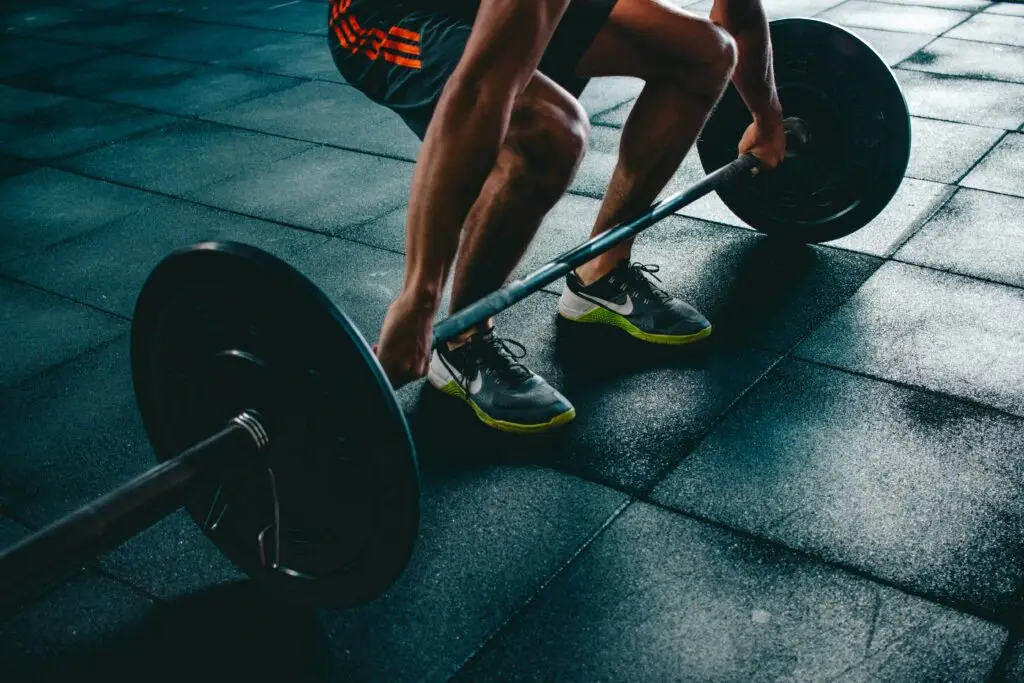
- Dumbbell chest press: 4 sets of 12 reps
- Assisted machine pull-ups: 4 sets of 6 to 8 reps
- Dumbbell shoulder press: 4 sets of 10 to 12 reps
- Dumbbell single-arm row: 4 sets of 20 reps (10 each arm)
- Machine chest press: 4 sets of 10 to 12 reps
Log your weights and reps each session so you have a number to beat next time. Adding a little weight or an extra rep over time is called progressive overload.
4. Move more during the day
Aerobic activity, such as brisk walking, cycling or swimming, adds to the calories you use. The CDC suggests at least 150 minutes of moderate activity a week. Walking is a simple place to start.
5. Prioritize sleep
Sleep can affect how much of the weight you lose comes from fat. In a small 2010 study, adults on the same reduced-calorie diet lost a smaller share of their weight as fat when they slept 5.5 hours instead of 8.5 hours. They also lost more lean mass and felt hungrier.
The study was small and short, so treat it as a signal, not proof. A regular bedtime and wake time is a simple habit to build.

How to track your progress
- Weigh yourself at the same time of day and watch the weekly trend.
- Measure your waist every week or two.
- Take progress photos every four weeks.
- Track your strength in your main lifts.
If the scale stalls but your waist and strength improve, you’re still making progress. Read why strength training without weight loss can still be progress. If your main goal is a smaller waist, see how to lose belly fat.
Want help staying on track? Open 12REPS and your workout is ready, built around your goal, your equipment and your time. Every exercise has a trainer demonstration, and you can log your body weight to see your trend over time.
Sources
- Losing weight: Getting started, Week 1 (NHS 12-week weight loss plan). NHS, n.d.. https://assets.nhs.uk/tools/download-panels/data/weight-loss/pdf/wlp1.pdf
- Steps for Losing Weight. Centers for Disease Control and Prevention (CDC), 2025. https://www.cdc.gov/healthy-weight-growth/losing-weight/index.html
- Tips for Maintaining Healthy Weight. Centers for Disease Control and Prevention (CDC), 2026. https://www.cdc.gov/healthy-weight-growth/about/tips-for-balancing-food-activity.html
- Underactive thyroid (hypothyroidism): Symptoms. NHS, 2025. https://www.nhs.uk/conditions/underactive-thyroid-hypothyroidism/symptoms/
- A systematic review, meta-analysis and meta-regression of the effect of protein supplementation on resistance training-induced gains in muscle mass and strength in healthy adults. British Journal of Sports Medicine (Morton RW, et al.), 2018. https://bjsm.bmj.com/content/52/6/376.abstract
- Comparing exercise modalities during caloric restriction: a systematic review and network meta-analysis on body composition. Frontiers in Nutrition (Xie Y, et al.), 2025. https://www.frontiersin.org/articles/10.3389/fnut.2025.1579024/full
- Adult Activity: An Overview. Centers for Disease Control and Prevention (CDC), 2023. https://www.cdc.gov/physical-activity-basics/guidelines/adults.html
- Insufficient sleep undermines dietary efforts to reduce adiposity. Annals of Internal Medicine (Nedeltcheva AV, et al.), 2010. https://pubmed.ncbi.nlm.nih.gov/20921542/
