

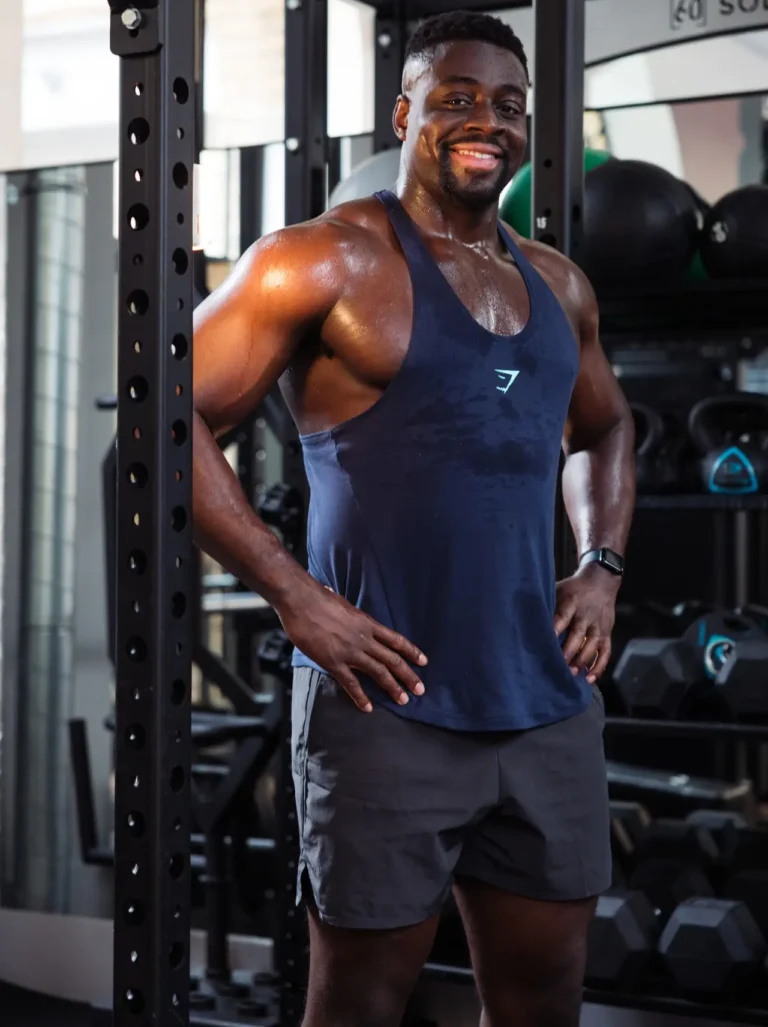
By Will Duru, BSc (Hons) Sport and Exercise Science, Award-winning Personal Trainer with over 10 years of experience in strength training
Everyone wants a bigger chest. It is one of the most visible muscle groups, filling out shirts and creating that powerful upper body look.
But most people train chest wrong. They bench press every session, ignore angles, skip the stretch, and wonder why their chest stays flat.
Over my decade of personal training, I have helped hundreds of clients build impressive chests. The secret is not complicated. It is exercise selection, proper execution, and progressive overload.
This guide covers the best chest exercises for building muscle mass, explains why each one works, and gives you my personal chest workout that I use with clients to build thick, developed pecs.
Chest Anatomy: Why Exercise Selection Matters
Your chest is not one muscle. It is two:
Pectoralis major: The large fan-shaped muscle covering your upper chest. It has two heads:
- Clavicular head (upper chest): Originates from the collarbone
- Sternal head (middle and lower chest): Originates from the sternum
Pectoralis minor: A smaller muscle underneath, less visible but important for shoulder stability.
To build a complete chest, you need exercises that target both the upper and lower portions. Flat pressing alone leaves the upper chest underdeveloped, creating an imbalanced look.
The Best Chest Exercises for Mass
1. Dumbbell Flat Chest Press
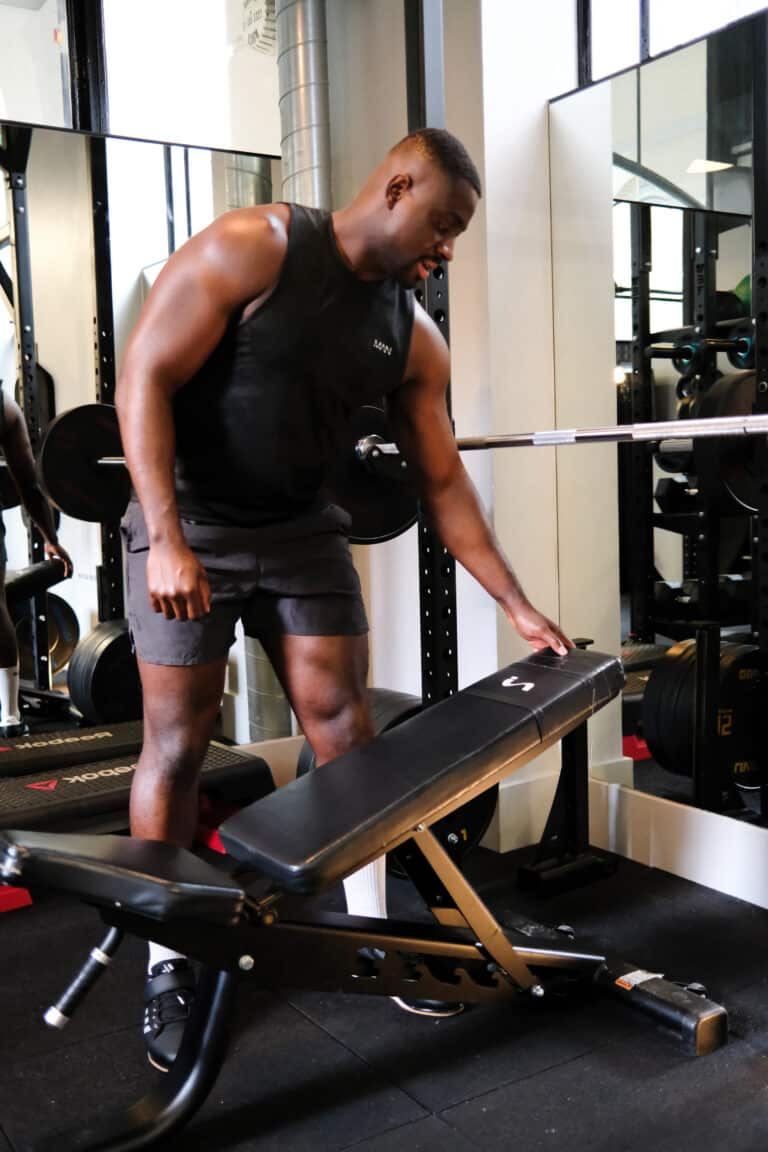
The dumbbell bench press is my go-to chest builder. I prefer it over barbell for most clients, and here is why:
Why it works:
- Greater range of motion than barbell
- Each arm works independently, fixing imbalances
- Better pec stretch at the bottom
- Safer for shoulders (natural hand rotation)
How to perform:
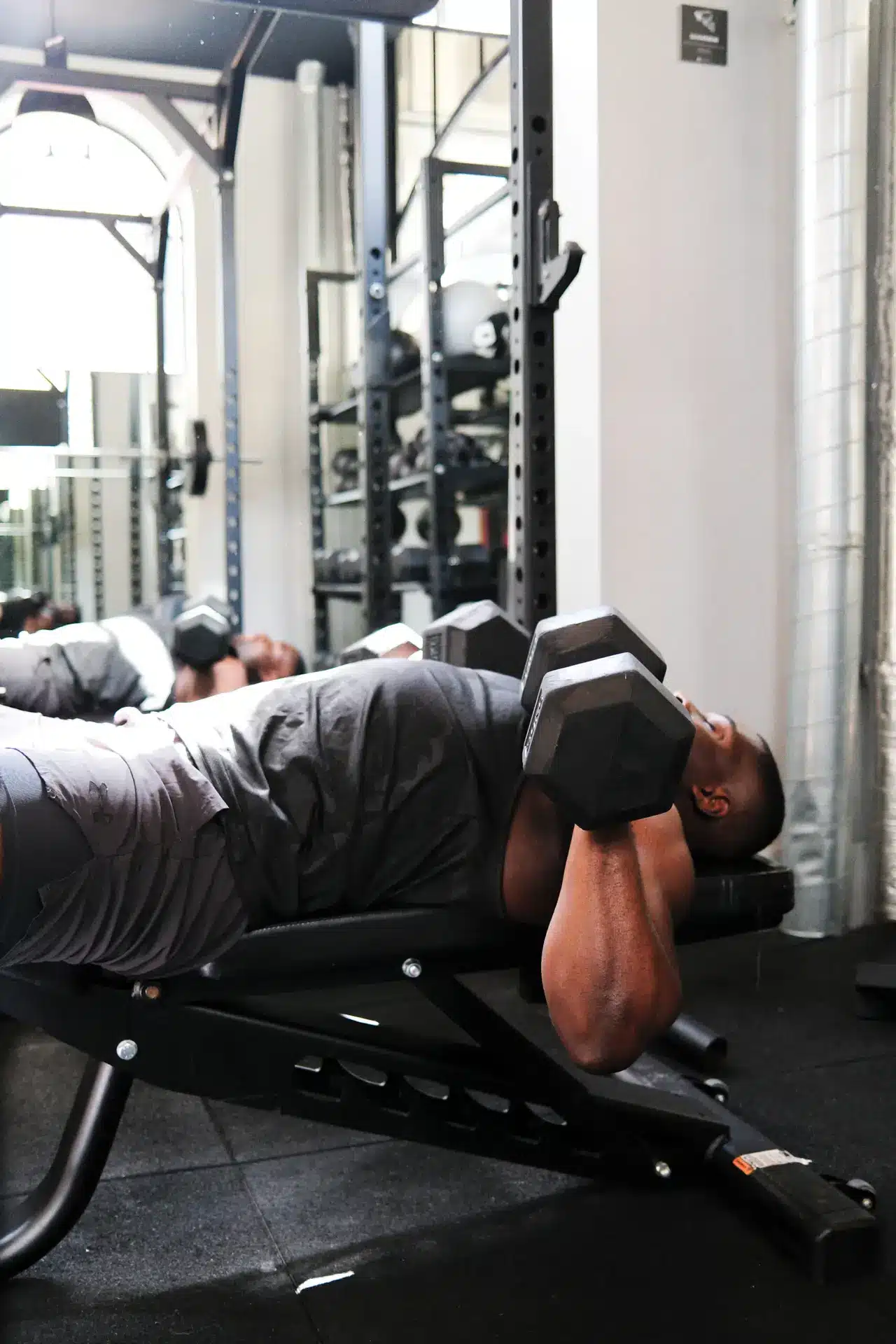
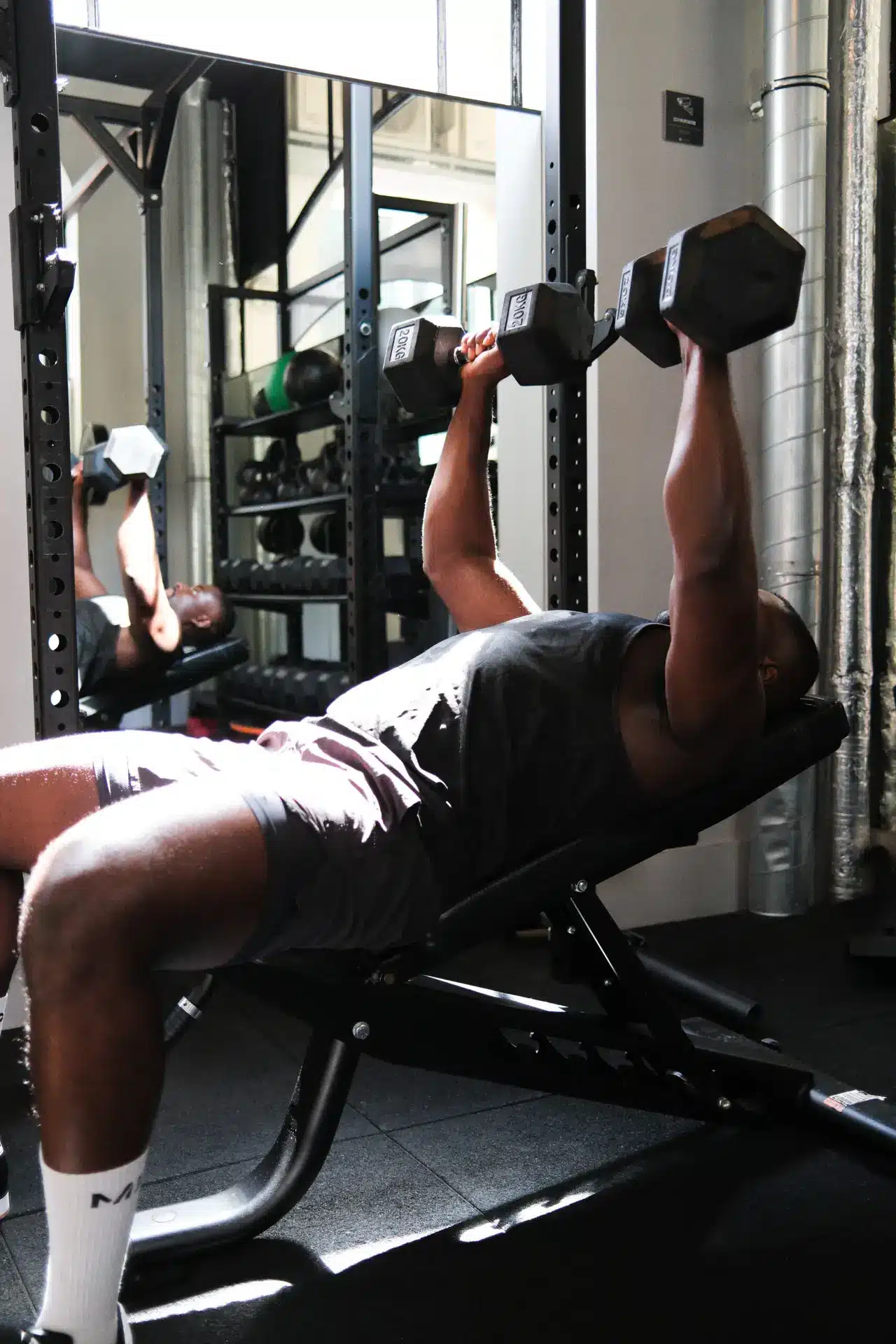
- Lie on a flat bench, dumbbells at chest level
- Feet flat on floor, slight arch in lower back
- Press dumbbells up, bringing them slightly together at top
- Lower with control until upper arms are parallel to floor or slightly below
- Feel the stretch in your chest at the bottom
Key points:
- Do not bounce at the bottom
- Control the eccentric (lowering phase)
- Keep shoulder blades squeezed together throughout
- Breathe out as you press
Sets and reps: 4 sets of 8-12 reps
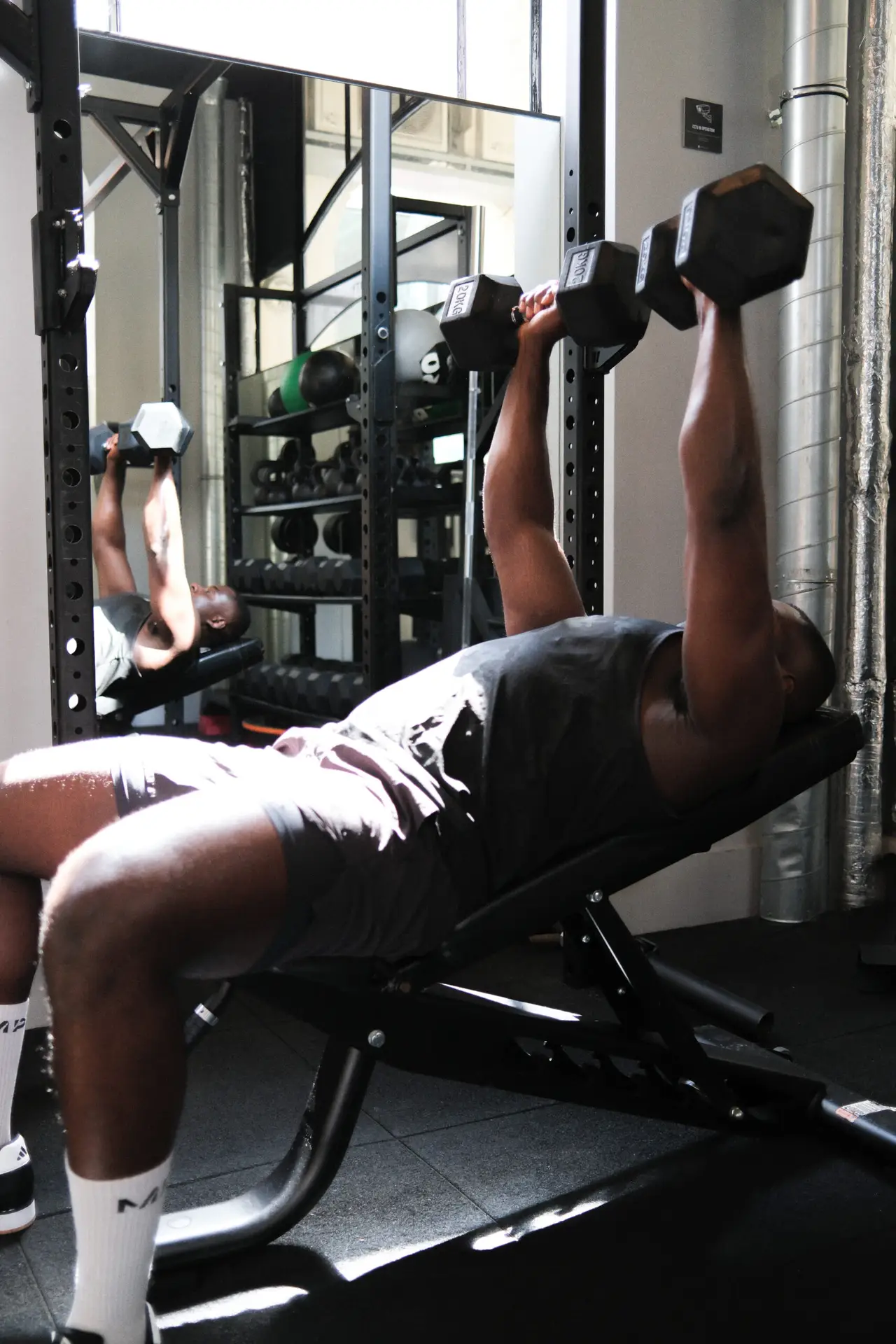
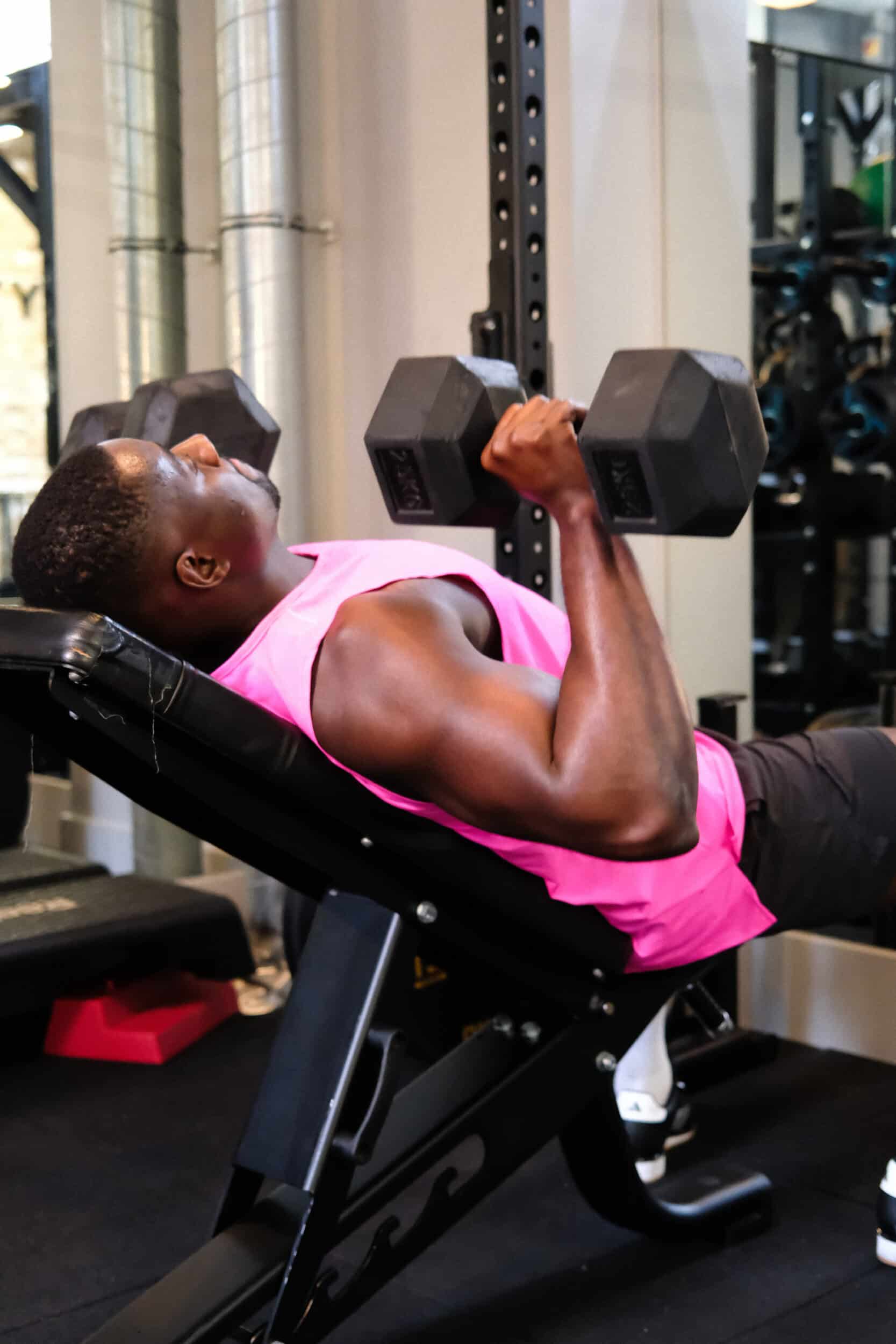
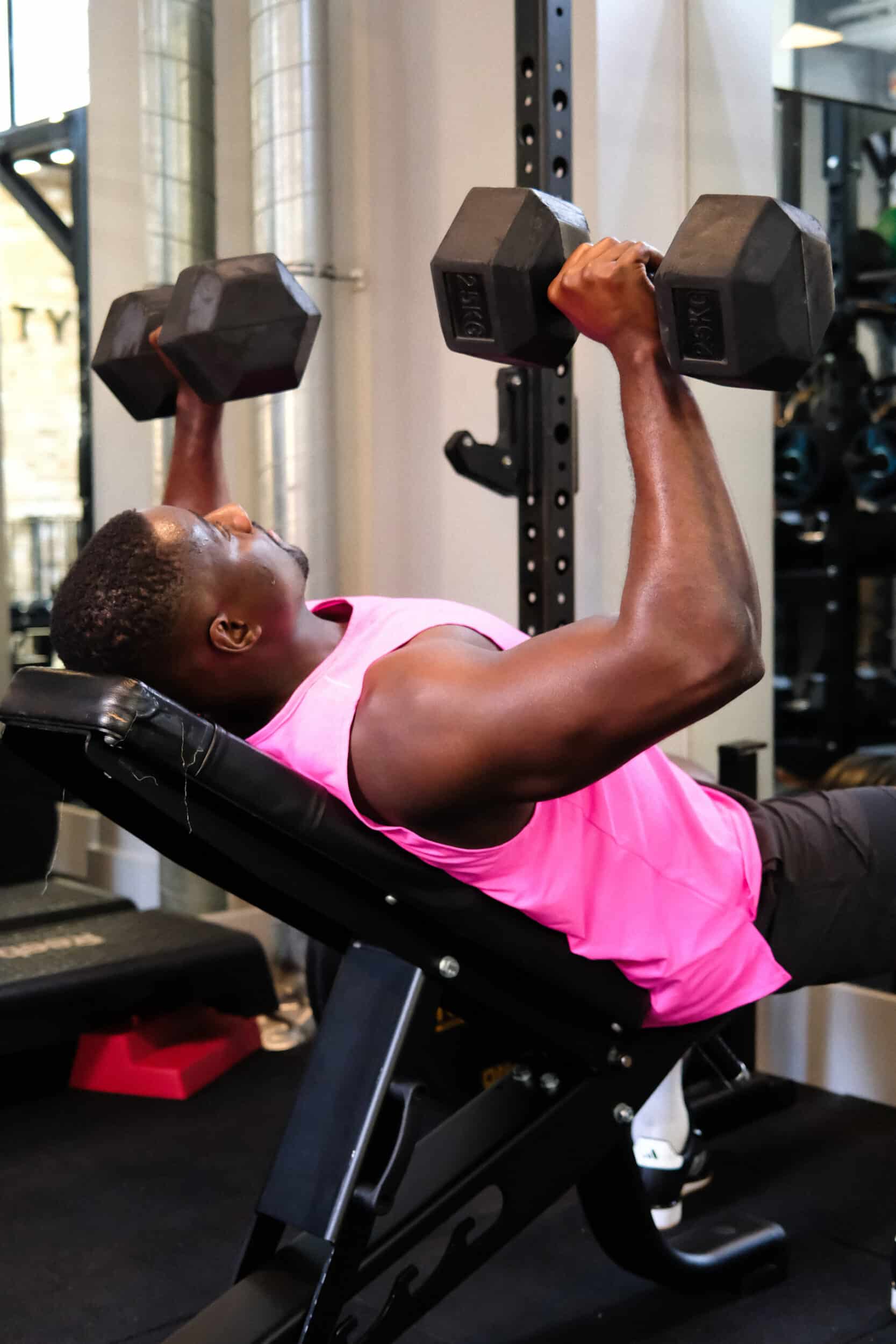
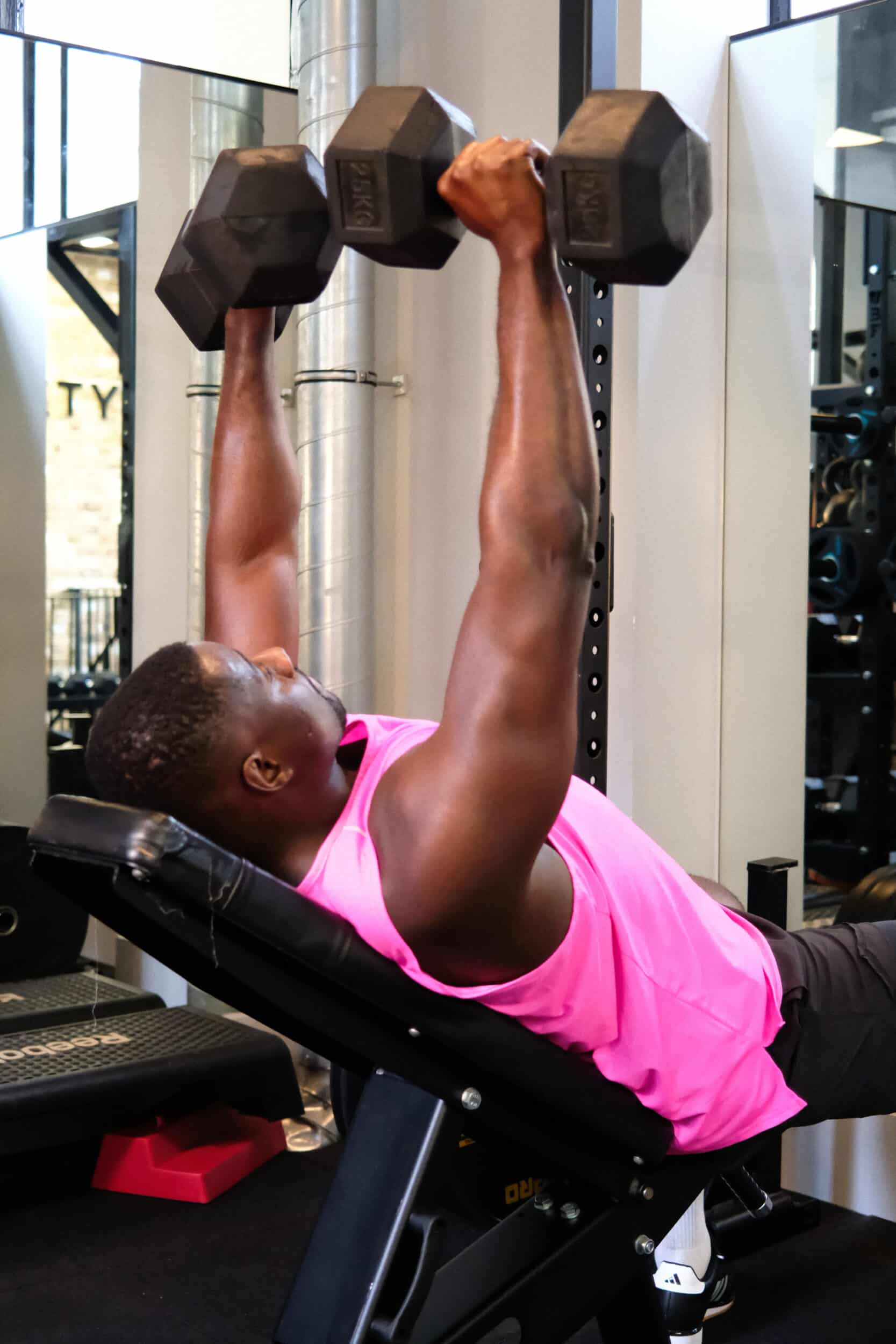
2. Dumbbell Incline Chest Press
The incline dumbbell press targets the upper chest (clavicular head), the area most people neglect. A well-developed upper chest creates that full, shelf-like look.
Why it works:
- Directly targets the upper pecs
- Creates the full chest appearance
- Transfers to pressing strength
- Addresses the most common weak point
How to perform:
- Set bench to 30-45 degrees (not too steep)
- Position dumbbells at shoulder level
- Press up and slightly back (arc toward your face)
- Lower until deep stretch in upper chest
- Keep elbows at roughly 45-degree angle from body
Key points:
- 30-45 degrees is optimal (steeper hits shoulders more)
- Drive through the chest, not shoulders
- Full range of motion is essential
- Feel the upper chest working
Sets and reps: 4 sets of 8-12 reps
3. Elevated Parallel Bar Dips (Chest Dips)
Chest dips are one of the most underrated chest exercises. When performed with proper form, they hammer the lower chest and create serious thickness.
Why it works:
- Heavy compound movement
- Loads the chest in a stretched position
- Builds lower chest thickness
- Transfers to pressing strength
- Bodyweight plus added load potential
How to perform:
- Grip parallel bars, arms straight
- Lean your torso forward (this is crucial for chest)
- Lower your body until deep stretch in chest
- Keep elbows flared slightly outward
- Press back up, squeezing chest at top
Key points:
- Lean forward to hit chest (upright hits triceps)
- Go deep for maximum stretch
- Add weight when bodyweight becomes easy
- Control the descent, no bouncing
Sets and reps: 4 sets of 8-12 reps (add weight if needed)
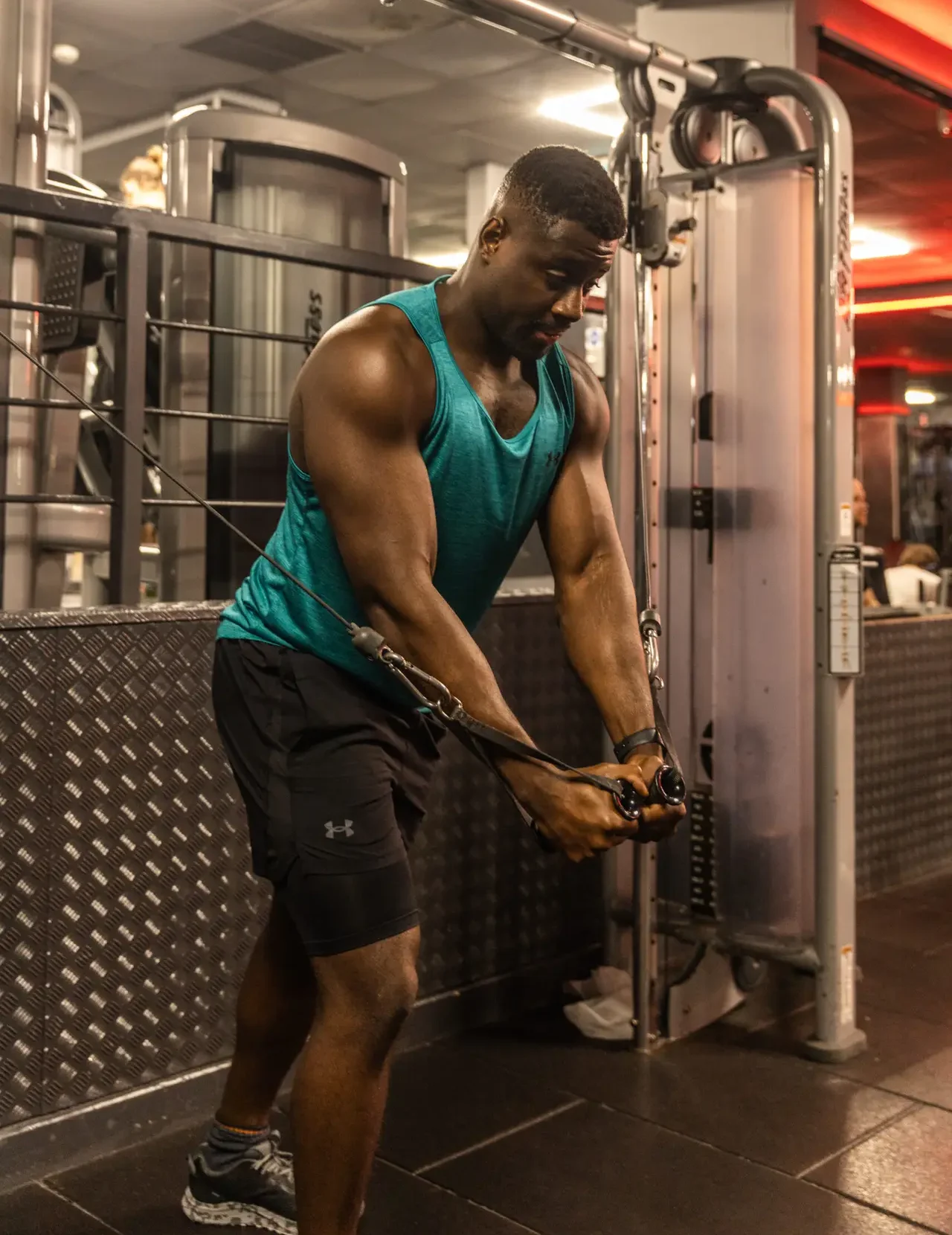
4. Dumbbell Chest Fly or Cable Chest Fly
The chest fly is essential for complete chest development. While presses build mass, flys create the stretch and squeeze that adds detail and width.
Dumbbell Fly:
How to perform:
- Lie on flat bench, dumbbells above chest
- Slight bend in elbows (maintain throughout)
- Lower dumbbells in wide arc until deep chest stretch
- Bring back together, squeezing chest hard at top
- Imagine hugging a large tree
Cable Fly (Alternative):
Why cables work well:
- Constant tension throughout movement
- Better squeeze at the contracted position
- Easier on shoulder joints
- Multiple angle options
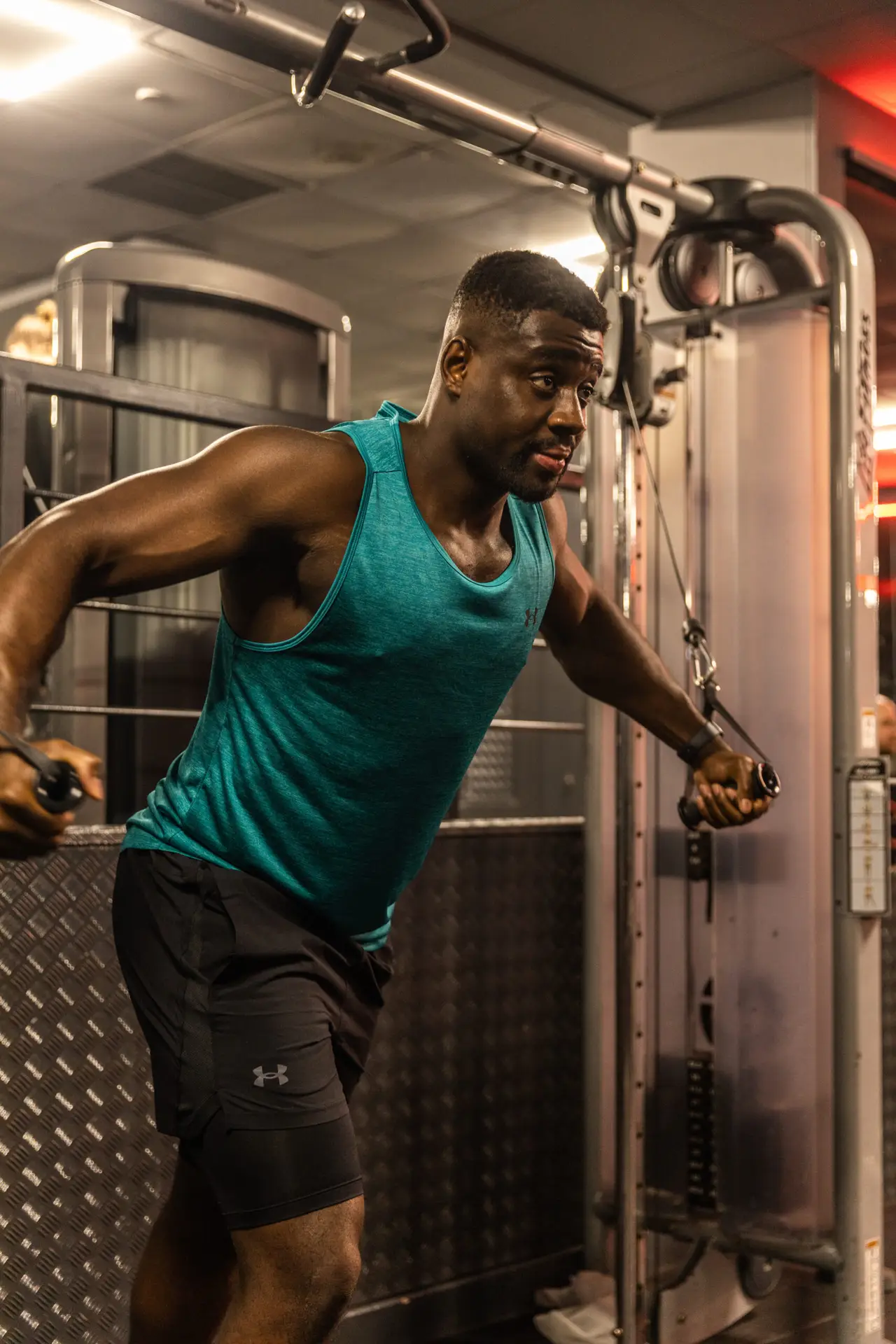
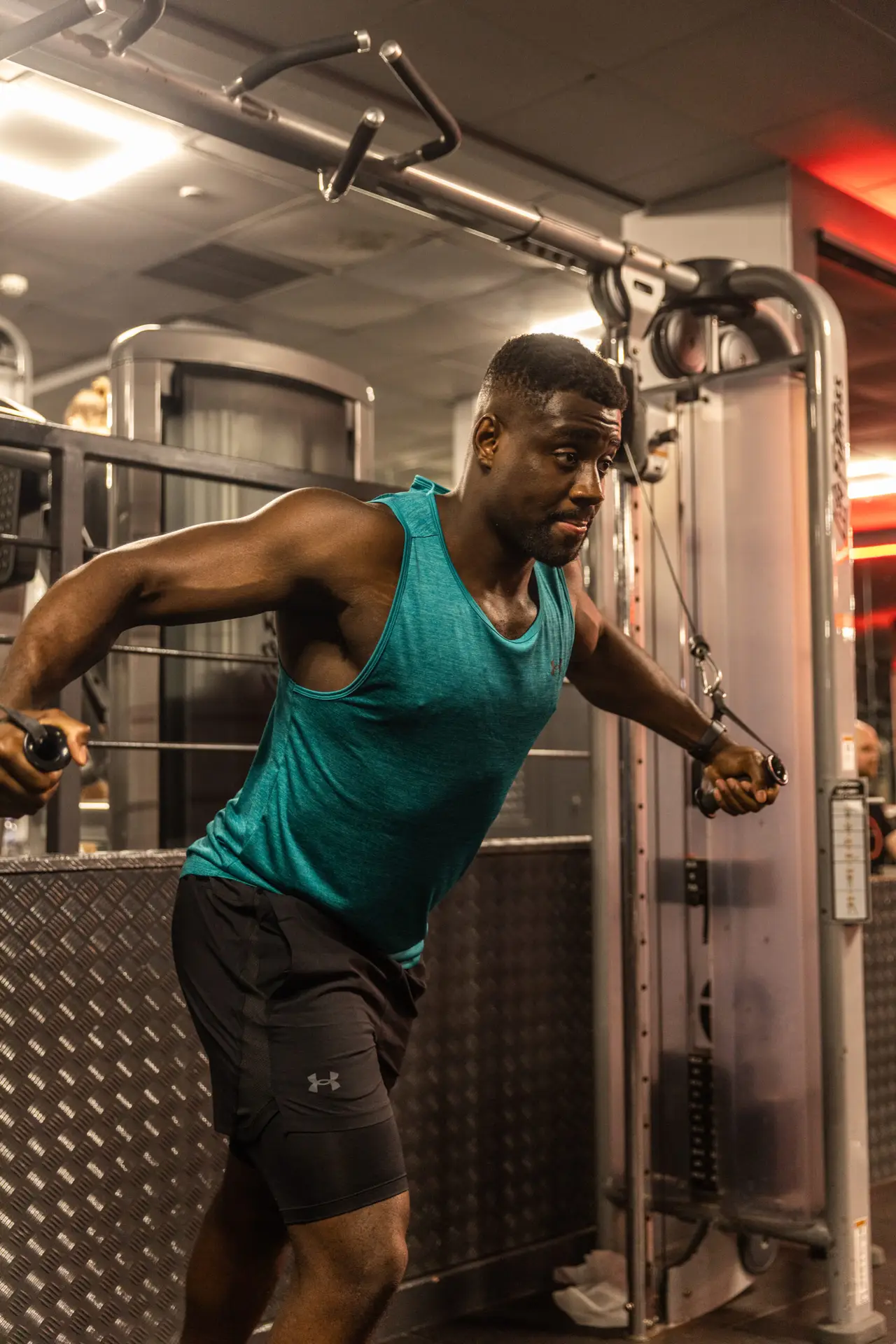
How to perform:
- Set cables at chest height
- Step forward, slight lean
- Bring hands together in front of chest
- Squeeze chest hard at the contraction
- Control the return, feeling the stretch
Key points:
- Keep slight bend in elbows throughout
- Focus on the stretch and squeeze
- Do not go too heavy (this is an isolation exercise)
- Feel your chest working, not shoulders
Sets and reps: 4 sets of 10-12 reps
My Personal Chest Workout
This is the exact chest workout I use with clients who want to build a bigger chest. It takes 45-50 minutes and hits the chest from all angles.
The Workout
Exercise | Sets | Reps | Rest |
Dumbbell Flat Chest Press | 4 | 12, 10, 8, 8 | 90 sec |
Dumbbell Incline Chest Press | 4 | 12, 10, 8, 8 | 90 sec |
Elevated Parallel Bar Dips | 4 | 12, 10, 8, 8 | 90 sec |
Dumbbell or Cable Chest Fly | 4 | 12, 12, 10, 10 | 60 sec |
Total: 16 sets, 45-50 minutes
Rep Scheme Explanation
The 12-10-8-8 pattern is pyramid training:
- Set 1 (12 reps): Lighter weight, warming up the muscle, establishing mind-muscle connection
- Set 2 (10 reps): Increase weight slightly, building intensity
- Sets 3-4 (8 reps): Heaviest weight, maximum muscle recruitment
This approach ensures you warm up properly while still lifting heavy enough to stimulate growth. Each set should be challenging. If you can easily complete all reps, increase the weight.
Exercise Order Rationale
Flat press first: Your chest is fresh, you can lift heaviest. This builds overall mass.
Incline second: Upper chest while still relatively fresh. Most people’s weak point.
Dips third: Compound movement that pre-exhausts the chest before isolation.
Flys last: Isolation work to finish the chest with stretch and squeeze.
How to Progress Your Chest Workout
Week-to-Week Progression
Option 1: Add reps
- Week 1: 30kg x 8 reps
- Week 2: 30kg x 9 reps
- Week 3: 30kg x 10 reps
- Week 4: Increase weight, drop to 8 reps
Option 2: Add weight
- When you hit 12 reps on your first set, increase weight next session
Option 3: Add sets
- Progress from 3 sets to 4 sets over time
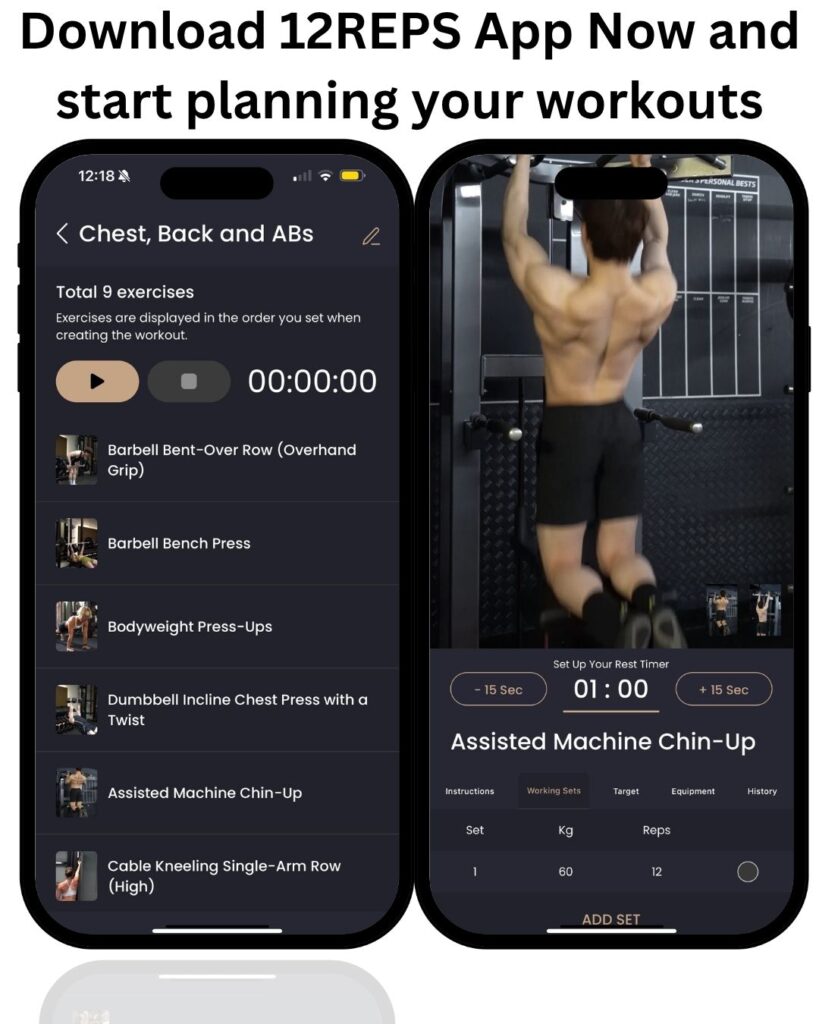
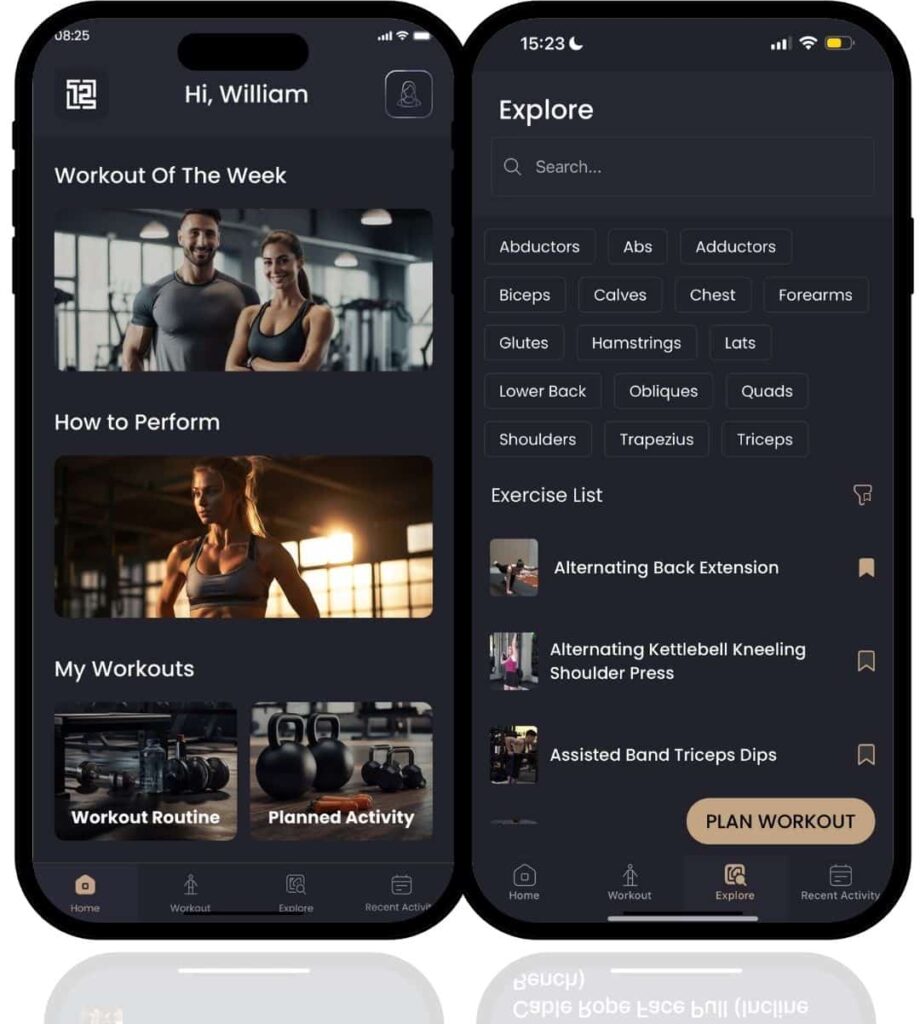
Using the 12REPS App
Track every chest workout in the 12REPS app. Before each session, see exactly what you lifted last time. Know what to beat.
The app includes:
- Video demonstrations of every chest exercise
- Progress tracking for weights and reps
- Rest timers to keep you on schedule
- Workout logging in seconds
Without tracking, you are guessing. With the 12REPS app, you are progressing.
Common Chest Training Mistakes
Mistake 1: Flat Bench Only
The flat bench press is excellent, but it primarily hits the middle and lower chest. Without incline work, your upper chest stays underdeveloped.
Fix: Always include incline pressing in your chest workout.
Mistake 2: Bouncing the Weight
Bouncing the dumbbells or barbell off your chest removes tension from the muscle and risks injury.
Fix: Control the weight down, pause briefly at the bottom, press with power.
Mistake 3: Ego Lifting
Going too heavy with poor form does not build muscle. It builds injuries.
Fix: Use weight you can control through full range of motion. Leave your ego at the door.
Mistake 4: Ignoring the Stretch
The stretched position (bottom of press, bottom of fly) is where most muscle damage occurs. Cutting range of motion short limits growth.
Fix: Full range of motion on every rep. Feel the stretch at the bottom.
Mistake 5: Too Much Volume
Your chest does not need 30 sets per session. 12-16 sets of quality work is plenty for most people.
Fix: Focus on intensity and progression, not endless sets.
Chest Training Frequency
For most people, training chest twice per week is optimal for growth.
Example split:
- Monday: Chest and Triceps
- Thursday: Chest and Shoulders
Or within a Push/Pull/Legs split:
- Monday: Push (Chest, Shoulders, Triceps)
- Thursday: Push (Chest, Shoulders, Triceps)
Twice weekly provides enough frequency for muscle protein synthesis while allowing adequate recovery between sessions.
From My Training Experience
The clients who build the best chests all have one thing in common: consistency with progressive overload.
They do not chase new exercises every week. They master the basics and add weight over time.
One client, James, came to me with a flat chest despite training for years. His problem? He only did flat barbell bench and never tracked his weights.
We switched to this exact programme. Within 16 weeks, he had added 10kg to his incline press and his upper chest finally started filling out. His chest went from his weakest body part to one of his best.
The exercises are simple. The execution matters. The progression is everything.
The Bottom Line
Building a big chest comes down to:
- Exercise selection: Flat press, incline press, dips, and flys cover all angles
- Proper execution: Full range of motion, controlled tempo, mind-muscle connection
- Progressive overload: Add weight or reps over time
- Consistency: Train chest twice per week, every week
Use the workout in this guide. Track your progress in the 12REPS app. Add weight when you can. Stay consistent.
Your chest will grow.
Download the 12REPS app to track your chest workouts, watch exercise demonstrations, and build the chest you want.
References
- Schoenfeld, B.J. et al. (2016). Effects of Resistance Training Frequency on Measures of Muscle Hypertrophy. Sports Medicine. https://pubmed.ncbi.nlm.nih.gov/27102172/
- Trebs, A.A. et al. (2010). An electromyography analysis of 3 muscles surrounding the shoulder joint during the performance of a chest press exercise at several angles. Journal of Strength and Conditioning Research. https://pubmed.ncbi.nlm.nih.gov/20581697/
- Lauver, J.D. et al. (2016). Influence of bench angle on upper extremity muscular activation during bench press exercise. European Journal of Sport Science. https://pubmed.ncbi.nlm.nih.gov/25799093/
Related Articles on just12reps.com
Article | Link |
Best Exercises for Each Muscle Group | |
How to Get Stronger | |
6-Day PPL Programme | |
Complete Beginner’s Guide to Strength Training |
About the Author: Will Duru holds a BSc (Hons) in Sport and Exercise Science and is an award-winning personal trainer with over 10 years of experience. He specialises in helping clients build muscle and strength through proven training methods. Will created the 12REPS app to make effective strength training accessible to everyone.