



By Will Duru, BSc (Hons) Sport and Exercise Science, Award winning Personal Trainer with over 10 years of experience in strength training
Not everyone has 90 minutes to spend at the gym five days per week. Work demands, family responsibilities, commutes and the general chaos of modern life leave many people with limited training time.
The fitness industry rarely acknowledges this reality. Magazines promote six day splits. Influencers post twice-daily workout routines. The message seems to be that anything less than total dedication produces nothing.
This is nonsense.
You can build significant muscle, develop real strength and transform your body with surprisingly little gym time. The key is efficiency: choosing exercises that deliver maximum benefit, eliminating wasted effort and focusing on what actually matters.
This guide presents a minimalist approach to training. It is for people who want results but cannot or choose not to make the gym their primary hobby. Two to three hours per week, applied intelligently, produces more than most people realise.
The Case for Minimalism
More training is not always better training. Beyond a certain point, additional volume produces diminishing returns while consuming ever more time and recovery capacity.
Research consistently shows that the majority of training benefits come from relatively modest volumes. The first few sets for a muscle group produce the largest adaptations. Additional sets help, but each one contributes less than the previous.
This means a well-designed minimal programme captures most of the possible gains while requiring a fraction of the time commitment. You might leave 10 to 20 percent of potential results on the table, but you reclaim hours of your week.
For many people, this trade-off makes sense. An 80 percent result with 30 percent of the time investment is excellent value. Perfect is the enemy of good, and a sustainable minimal routine beats an ambitious programme you abandon after three weeks.

Principles of Minimalist Training
Effective minimal training requires ruthless prioritisation. Every exercise must earn its place. Every minute must count.
Principle 1: Compound Movements Only
Compound exercises work multiple joints and large amounts of muscle mass simultaneously. A single set of squats trains your quadriceps, glutes, hamstrings, core and spinal erectors. Achieving similar coverage with isolation exercises would require five or six separate movements.
When time is limited, compound exercises are non-negotiable. They deliver far more stimulus per minute than any alternative.
The essential compound movements:
- Squat pattern (back squat, front squat, goblet squat)
- Hip hinge pattern (deadlift, Romanian deadlift)
- Horizontal push (bench press, push up)
- Horizontal pull (row variations)
- Vertical push (overhead press)
- Vertical pull (pull up, chin up, lat pulldown)
A programme built around these six patterns trains your entire body effectively.
Principle 2: High Effort Per Set
With fewer sets available, each one must count. Training to or near failure ensures maximum muscle fibre recruitment from limited volume.
In a high-volume programme, you might stop sets several reps short of failure, accumulating stimulus across many sets. In a minimalist programme, you push sets closer to true failure because there are fewer opportunities to accumulate work.
This increases intensity per set to compensate for reduced total sets.
Principle 3: Appropriate Frequency
Training each muscle group twice per week appears optimal for most people. This frequency provides sufficient stimulus and recovery while fitting into a minimal time commitment.
Two or three full-body sessions per week accomplishes this naturally. Each session hits every major muscle group, producing two weekly exposures for each.
Principle 4: Progressive Overload Remains Essential
Minimal training does not mean minimal progression. You still need to increase demands over time to continue adapting.
Track your workouts carefully. Add weight or reps whenever possible. The principle of progressive overload applies regardless of training volume.
Principle 5: Quality Over Quantity
With limited time, every rep matters more. Focus intensely on proper technique, controlled movement and maximising tension on target muscles.
Rushing through sloppy sets wastes your limited training time. Deliberate, focused execution extracts more benefit from fewer reps.

The Two-Day Full Body Programme
This programme requires just two sessions per week, approximately 45 to 60 minutes each. It covers all major movement patterns and provides sufficient stimulus for meaningful progress.
Session A
| Exercise | Sets | Reps | Rest |
|---|---|---|---|
| Back Squat | 3 | 6 to 8 | 3 min |
| Bench Press | 3 | 6 to 8 | 3 min |
| Barbell Row | 3 | 8 to 10 | 2 min |
| Romanian Deadlift | 2 | 10 to 12 | 2 min |
| Overhead Press | 2 | 8 to 10 | 2 min |
Session B
| Exercise | Sets | Reps | Rest |
|---|---|---|---|
| Deadlift | 3 | 5 | 3 min |
| Overhead Press | 3 | 6 to 8 | 3 min |
| Pull Ups or Lat Pulldown | 3 | 6 to 10 | 2 min |
| Leg Press | 2 | 10 to 12 | 2 min |
| Dumbbell Bench Press | 2 | 10 to 12 | 2 min |
Weekly Schedule
| Day | Activity |
|---|---|
| Monday | Session A |
| Tuesday | Rest |
| Wednesday | Rest |
| Thursday | Session B |
| Friday | Rest |
| Saturday | Rest |
| Sunday | Rest |
This schedule provides four to five rest days per week, which is particularly valuable for people with demanding lives outside the gym. Recovery happens during rest, not during training.
The Three-Day Full Body Programme
For those with slightly more time, three sessions per week allows additional volume while remaining minimal.
Session A: Squat Focus
| Exercise | Sets | Reps | Rest |
|---|---|---|---|
| Back Squat | 4 | 6 to 8 | 3 min |
| Bench Press | 3 | 6 to 8 | 3 min |
| Barbell Row | 3 | 8 to 10 | 2 min |
| Face Pulls | 2 | 15 | 90 sec |
Session B: Press Focus
| Exercise | Sets | Reps | Rest |
|---|---|---|---|
| Overhead Press | 4 | 6 to 8 | 3 min |
| Romanian Deadlift | 3 | 8 to 10 | 2 min |
| Pull Ups or Lat Pulldown | 3 | 6 to 10 | 2 min |
| Dips or Close Grip Bench | 2 | 8 to 10 | 2 min |
Session C: Hinge Focus
| Exercise | Sets | Reps | Rest |
|---|---|---|---|
| Deadlift | 4 | 5 | 3 min |
| Incline Dumbbell Press | 3 | 8 to 10 | 2 min |
| Cable Row | 3 | 10 to 12 | 2 min |
| Leg Curl | 2 | 12 to 15 | 90 sec |
Weekly Schedule
| Day | Activity |
|---|---|
| Monday | Session A |
| Tuesday | Rest |
| Wednesday | Session B |
| Thursday | Rest |
| Friday | Session C |
| Saturday | Rest |
| Sunday | Rest |
Making Minimalism Work
Warm Up Efficiently
A full warm-up remains important but can be streamlined. Five minutes of light cardio followed by movement-specific preparation for your first exercise is sufficient.
If squatting first, your warm-up sets for squats serve as preparation for the entire session. The exercises that follow benefit from the general warming effect.
Superset Strategically
Pairing non-competing exercises saves time without compromising performance. While your chest recovers from bench press, perform a set of rows. While your back recovers, return to pressing.
This maintains adequate rest for each muscle group while reducing total session time.
Example superset:
- Bench Press set
- Rest 60 seconds
- Barbell Row set
- Rest 60 seconds
- Repeat
Each muscle gets approximately 2.5 minutes between sets while you complete both exercises in less time than performing them separately.
Skip the Extras
Minimalist training means accepting trade-offs. Dedicated arm work, calf raises, ab exercises and other accessories are luxuries for people with more time.
The compound movements train these muscles indirectly. Your arms work during pressing and pulling. Your core stabilises during squats and deadlifts. The direct work is beneficial but not essential.
If you have time for extras, you have time for additional compound volume instead, which produces greater overall benefit.
Track Everything
With only a few exercises, tracking becomes even more important. You need to know exactly what you did last session to ensure you are progressing.
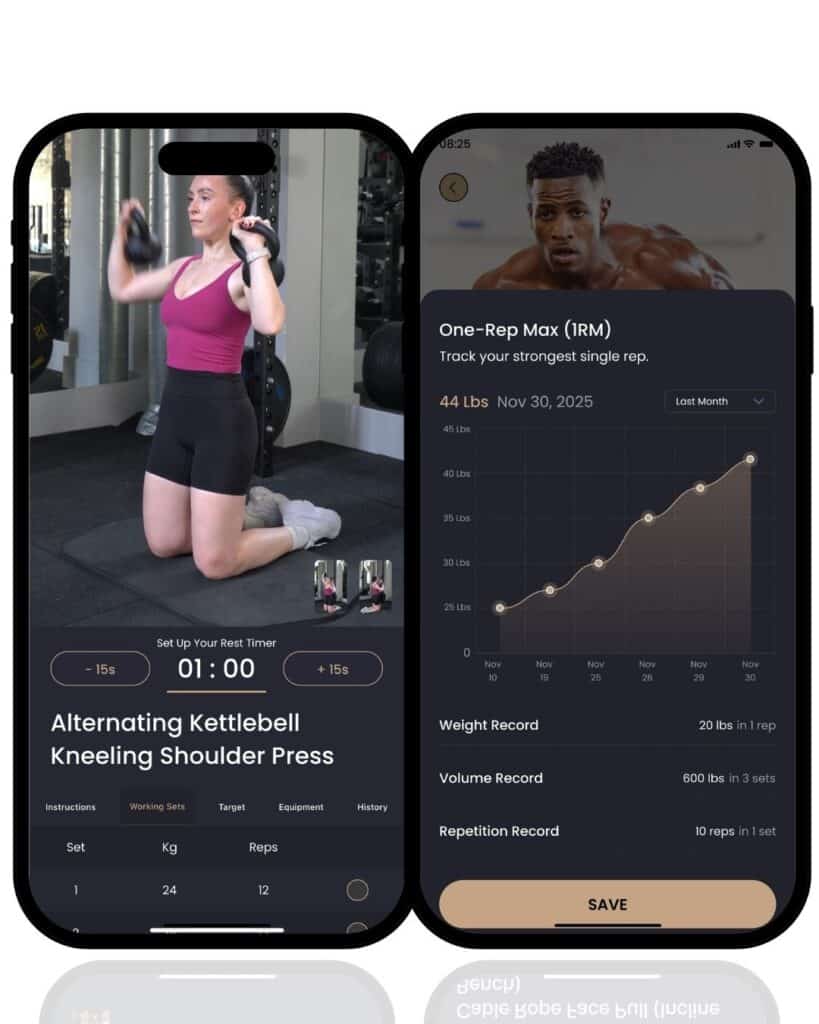
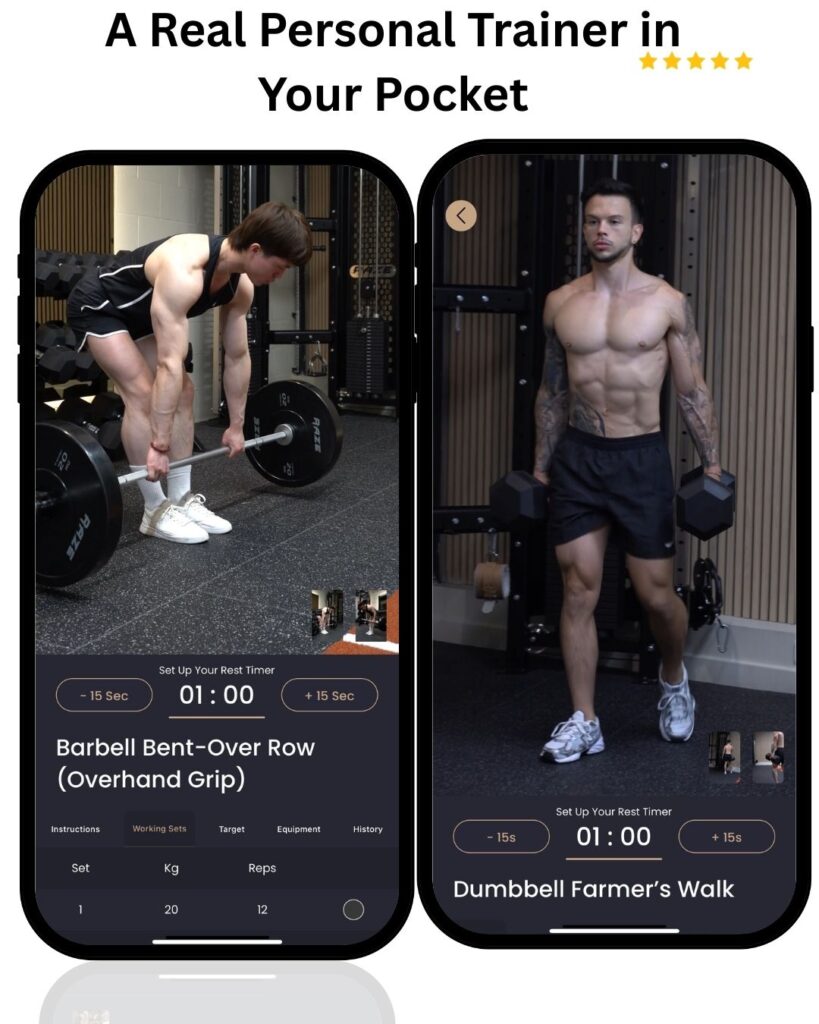
The 12REPS app simplifies this process, showing your previous performance and guiding appropriate progression. When training volume is low, every session must advance the programme.
Who Minimalist Training Suits
This approach works well for several groups:
Busy professionals. Career demands limit available time. Two or three focused sessions per week integrate into packed schedules without requiring significant lifestyle restructuring.
Parents of young children. Sleep-deprived and time-poor, parents benefit from efficient training that does not add substantial stress to already demanding lives.
People with active jobs. Those who work physically demanding jobs may not need or want extensive gym training on top of occupational activity.
Those prioritising other pursuits. Not everyone wants fitness as their primary hobby. Minimalist training delivers solid results while leaving time and energy for other interests.
Beginners establishing habits. Starting with a minimal commitment reduces barriers to entry. Habits form more easily when the required behaviour is small.
Those returning from breaks. After time away from training, rebuilding with a minimal programme allows adaptation without overwhelming recovery capacity.
Expected Results
What can you realistically expect from minimalist training?
Strength gains. Research shows that even one to two sets per muscle group produces measurable strength improvements. Three to four sets, performed with high effort, generates substantial strength development over time.
Muscle growth. Hypertrophy responds to volume, but the relationship is not linear. Minimal volumes still produce meaningful muscle growth, particularly for beginners and intermediates.
Body composition improvement. Combined with reasonable nutrition, minimalist training supports fat loss and muscle gain simultaneously for most people.
Health benefits. The health improvements from strength training, including bone density, metabolic health and functional capacity, occur with modest training volumes.
You will likely progress somewhat slower than someone training optimally six days per week. But you will progress faster than someone who tries an ambitious programme, burns out and quits. Sustainability trumps theoretical optimality.
A Client Who Proved It Works
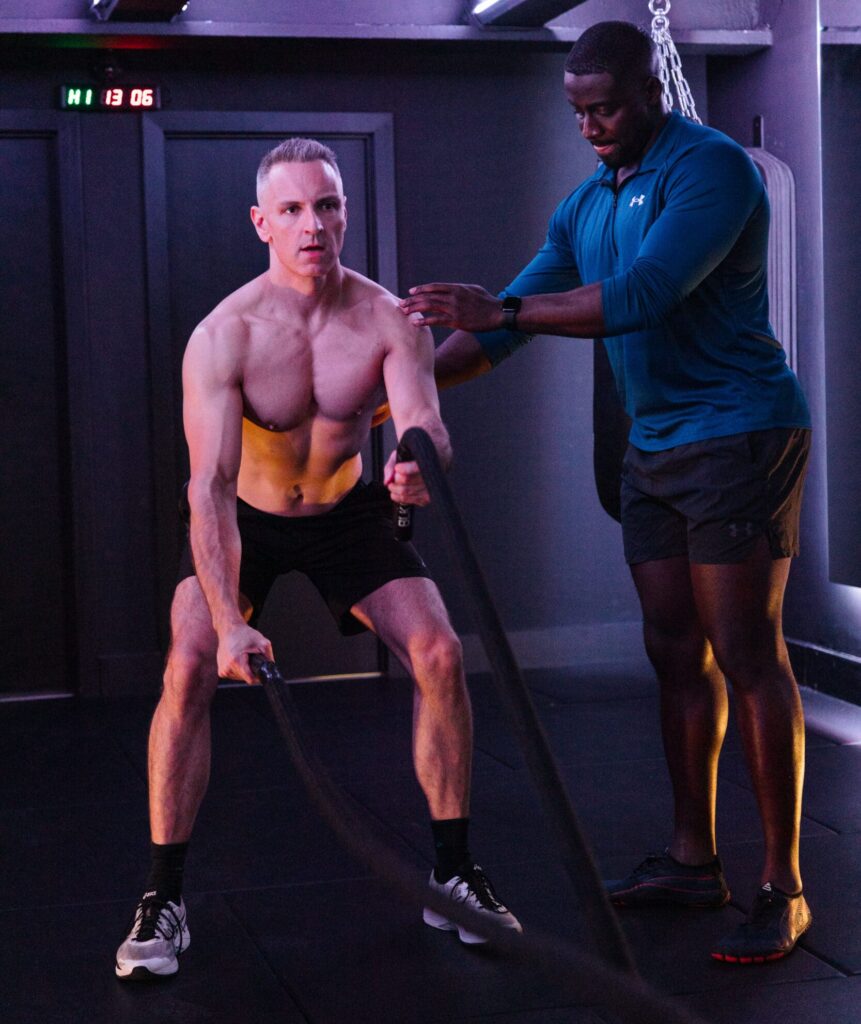
Michael ran a business, had two young children and spent an hour commuting each direction. Finding time for the gym seemed impossible.
We started with two 45-minute sessions per week. Just squats, bench press, rows, deadlifts, overhead press and pull-ups. Nothing else. He trained Tuesdays and Saturdays when his wife could cover childcare.
In twelve months, Michael added 40 kilograms to his squat, 25 kilograms to his bench press and 50 kilograms to his deadlift. He gained visible muscle and lost noticeable fat. All from less than two hours per week.
“I thought I needed to spend hours at the gym,” he said. “Turns out I just needed to do the right things consistently. The minimalist approach actually fits my life instead of fighting against it.”
His results would not win a physique competition. But he is stronger, healthier and more fit than most people who claim they do not have time to exercise.
Scaling Up Later
Minimalist training can be a permanent approach or a starting point. As circumstances change, you might find more time available.
If you later want to increase training volume:
- Add a third or fourth session
- Include additional sets on existing exercises
- Introduce isolation exercises for lagging areas
- Extend session duration
The foundation built through minimalist training transfers directly to higher-volume programmes. You will know the movement patterns, understand progressive overload and have established the training habit.
But you may also find that minimal training continues to serve you well. Many experienced lifters eventually gravitate toward reduced volume after realising they can maintain their physiques with far less than they once thought necessary.
Getting Started
If you are currently doing nothing, start with the two-day programme. Master the movements, establish consistency and prove to yourself that you can fit training into your life.
If you are currently training more but struggling to sustain it, try reducing to the three-day programme. You may find that results remain similar while sustainability improves dramatically.
The 12REPS app offers minimalist programme options designed around these principles. It guides exercise selection, tracks progression and adapts to your available time.
You do not need to live at the gym. You just need to show up consistently and work hard when you are there. A focused hour twice per week beats sporadic two-hour sessions that happen when motivation strikes.
Start minimal. Stay consistent. Watch what happens.
Related Articles on just12reps.com
| Article | Description | Link |
|---|---|---|
| Progressive Overload Guide | The principle that makes minimal training work. | Read Article |
| How to Build a Gym Habit | Establishing the consistency minimal training requires. | Read Article |
| Complete Beginner’s Guide to Strength Training | A structured starting programme for newcomers. | Read Article |
| How Long to Rest Between Sets | Optimising rest for time efficiency. | Read Article |
| Why You’re Not Seeing Results | Ensuring your limited training time is not wasted. | Read Article |
References
[1] Schoenfeld, B.J. et al. (2019). Resistance training volume enhances muscle hypertrophy but not strength in trained men. Medicine and Science in Sports and Exercise. https://journals.lww.com/acsm-msse/pages/default.aspx
[2] Ralston, G.W. et al. (2017). The effect of weekly set volume on strength gain: a meta-analysis. Sports Medicine. https://link.springer.com/journal/40279
[3] Krieger, J.W. (2010). Single vs multiple sets of resistance exercise for muscle hypertrophy. Journal of Strength and Conditioning Research. https://journals.lww.com/nsca-jscr/pages/default.aspx
[4] Schoenfeld, B.J. et al. (2016). Effects of resistance training frequency on measures of muscle hypertrophy. Sports Medicine. https://link.springer.com/journal/40279
[5] Androulakis-Korakakis, P. et al. (2020). The minimum effective training dose required to increase 1RM strength in resistance-trained men. Frontiers in Physiology. https://www.frontiersin.org/journals/physiology
About the Author: Will Duru holds a BSc (Hons) in Sport and Exercise Science and is an award-winning personal trainer with over 10 years of experience helping clients achieve results within real-world constraints. He is the creator of the 12REPS app, designed to deliver effective training guidance that fits into any schedule.