


The Bar Does Not Know You Want 100kg
A 100kg bench press is a clear milestone. Two large plates on each side of a 20kg bar. No complicated calculation. You either press it or you do not.
That simplicity is why the goal is attractive. It is also why lifters make poor decisions. They test their maximum too often, copy advanced programmes and add weight before their technique can support it.
Reaching 100kg usually comes from months of ordinary work done well: repeatable setup, enough weekly pressing, stronger triceps and upper back, small load increases and a record of every session.
First, Be Honest About Your Starting Point
The distance from 60kg to 100kg is not the same as the distance from 90kg to 100kg. Your programme should reflect your current strength, not only the number you want.
Current best bench | Immediate target | Main priority | Suggested test frequency |
Below 60kg | Build technique and muscle | Two controlled bench sessions each week | Avoid regular max tests |
60-79kg | Reach repeatable sets around 70- 85 kg | More quality, volume and stronger accessories | Every 8-12 weeks |
80-89kg | Build strength near 90kg | Heavy practice plus enough back-off work | Every 6-10 weeks |
90-99kg | Prepare specifically for 100kg | Manage fatigue and practise heavy singles | At the end of a planned block |
What Actually Builds a Bigger Bench Press
- A stable setup you can repeat under light and heavy loads.
- Enough chest, shoulder and triceps muscles to produce force.
- A strong upper back that gives you a firm base on the bench.
- Regular practice with the competition-style bench press.
- Training volume that creates progress without ruining recovery.
- Small load increases rather than constant personal-record attempts.
- Sleep, food and body weight that support your goal.
How to Set Up Your Bench Press
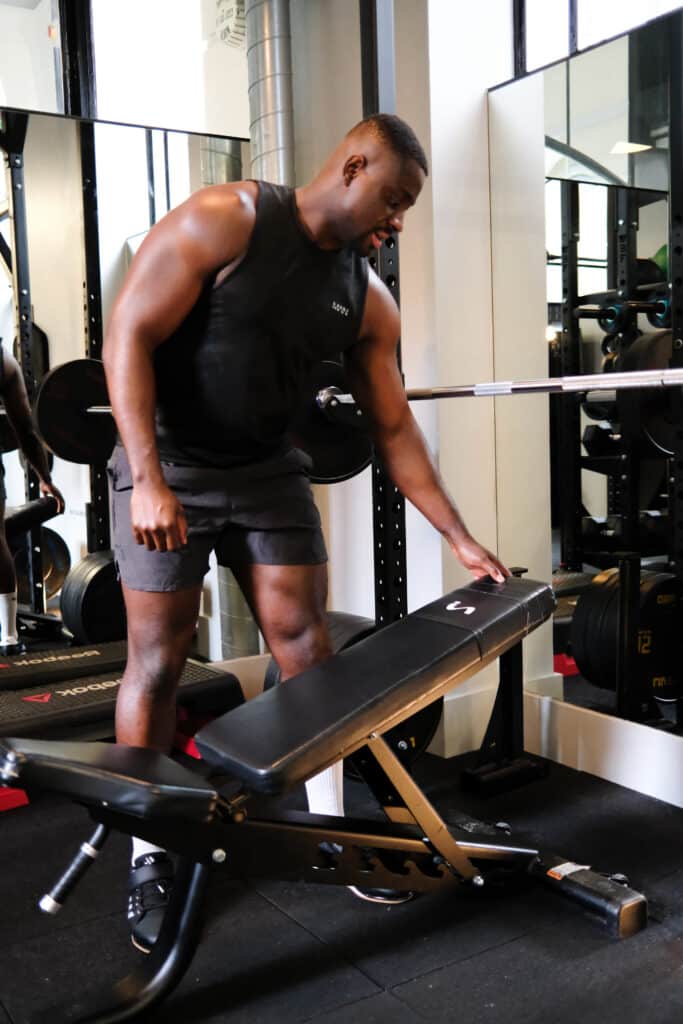
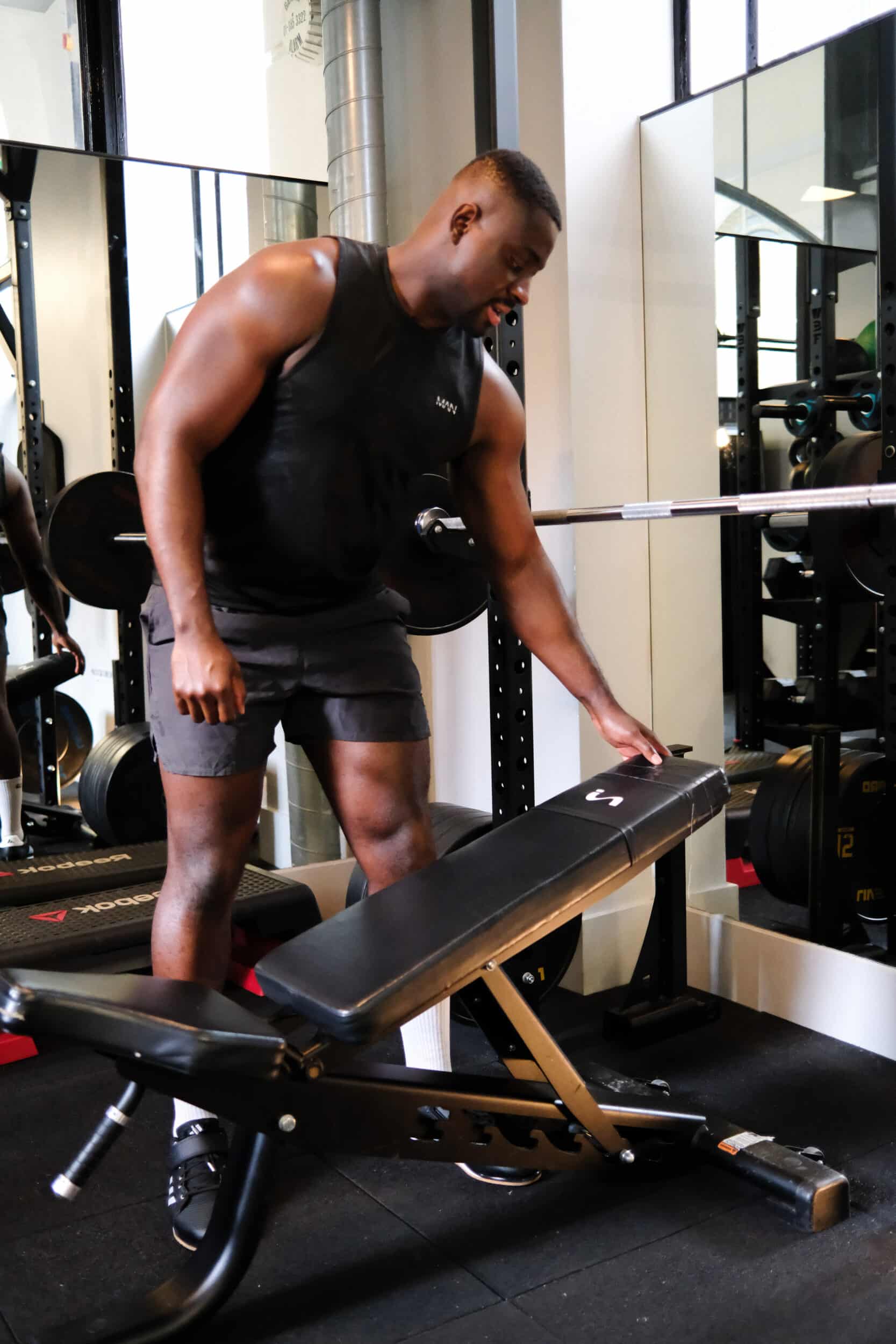
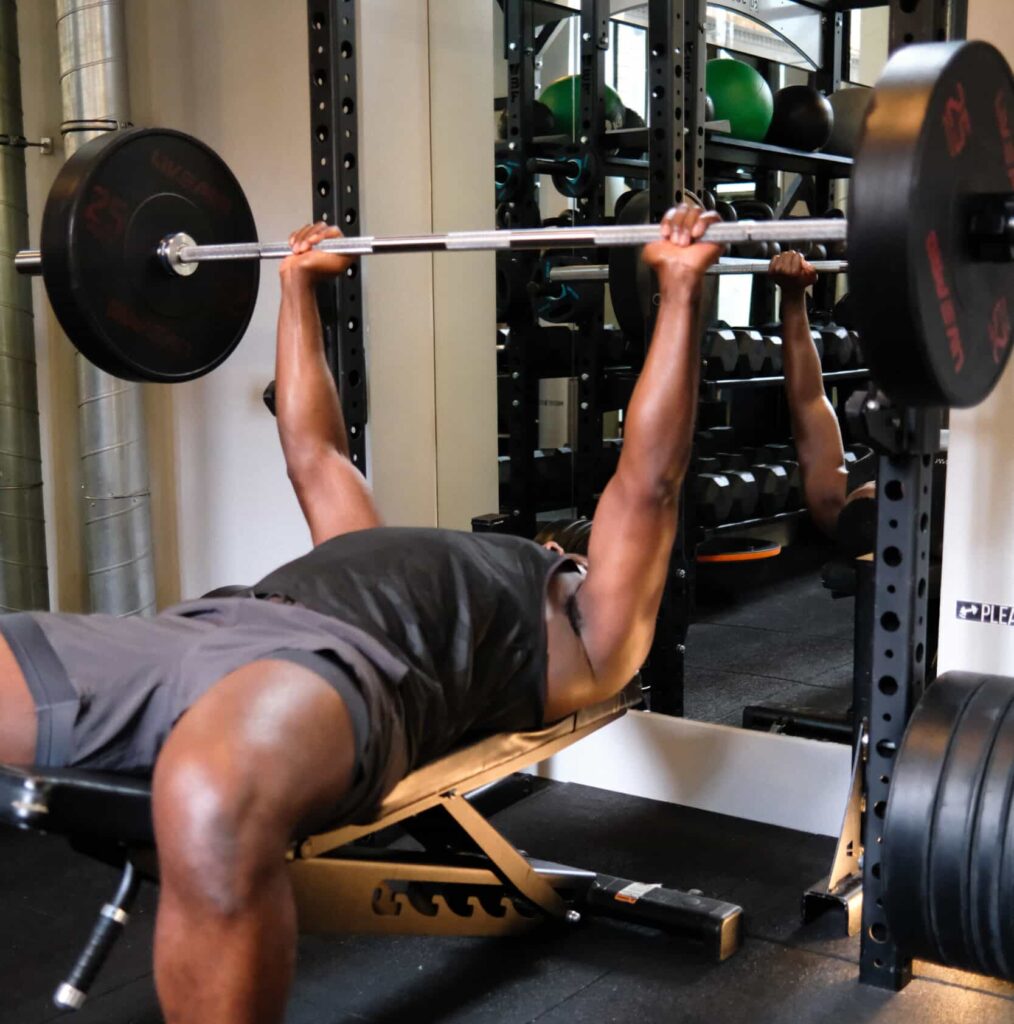
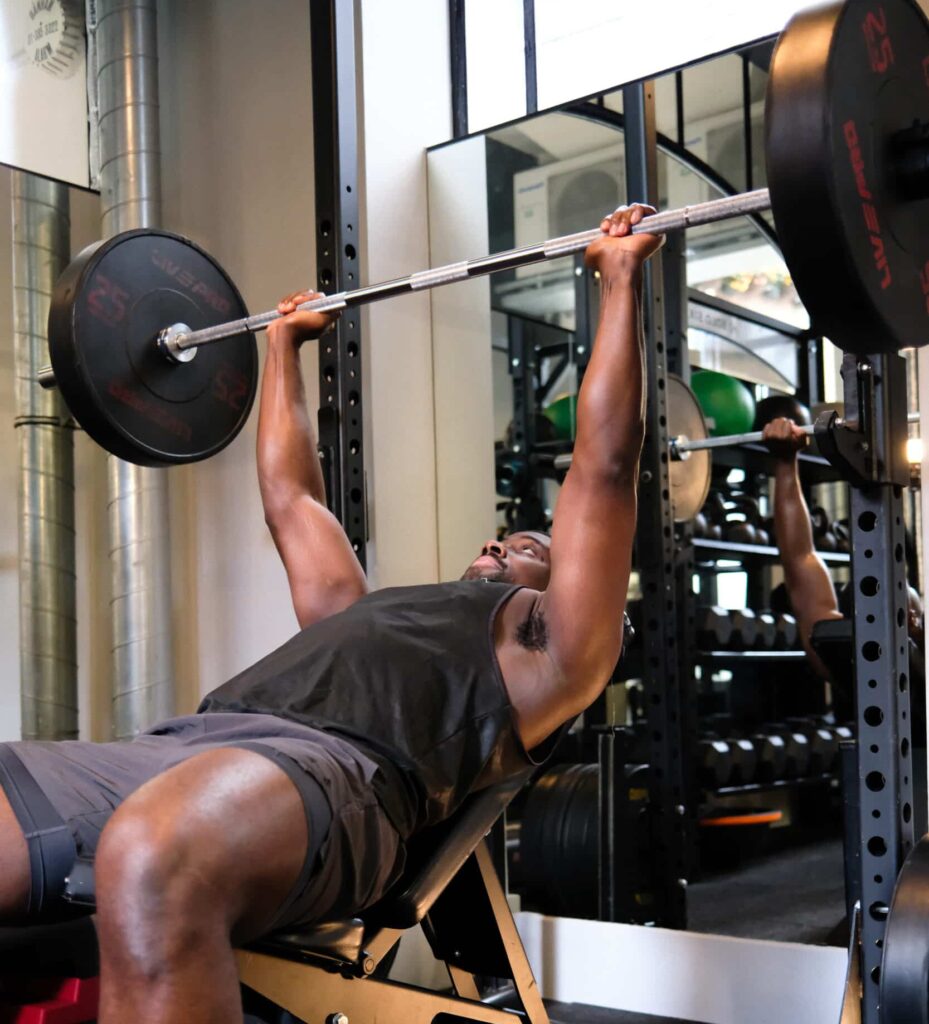
- Lie down with your eyes roughly underneath the bar.
- Plant your feet in a position you can hold without them sliding.
- Pull your shoulder blades back and down into the bench.
- Grip the bar evenly, using the knurling or rings as reference points.
- Create tension through your upper back before unracking.
- Unrack the bar and allow it to settle over your shoulders.
- Lower the bar towards the lower chest while keeping your forearms controlled.
- Touch the chest without bouncing.
- Press the bar upwards and slightly back towards the rack.
- Finish with locked elbows while keeping your upper back tight.
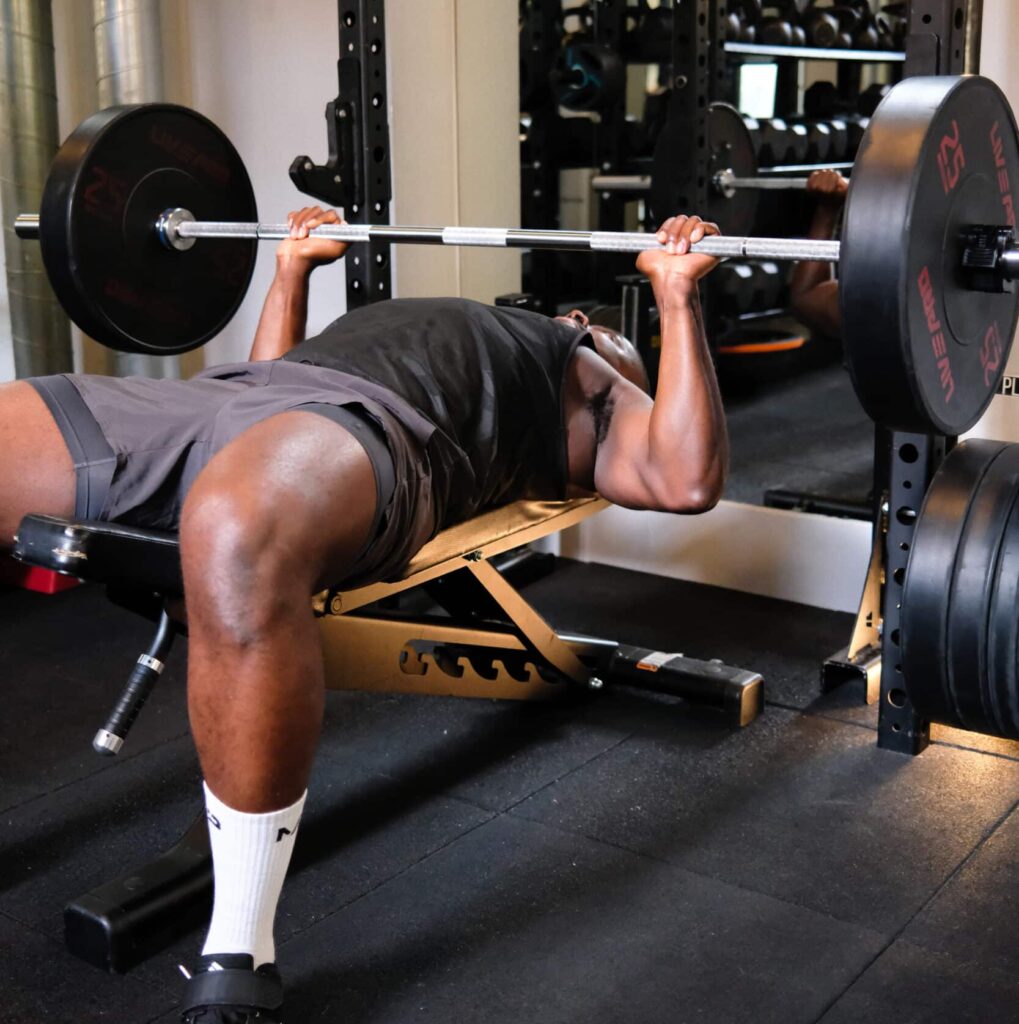
PT Will’s Main Bench Press Cues
- Push your upper back into the bench.
- Keep your feet active throughout the repetition.
- Bring your chest towards the bar.
- Keep your wrists stacked over your forearms.
- Touch the same point on your chest each time.
- Press back towards the rack, not only straight upwards.
Common Reasons Your Bench Press Has Stalled
You test instead of train
A maximum attempt shows your current strength. It does not build it. Spend more weeks completing productive sets than attempting personal records.
Your setup changes every session
Changing foot position, grip width and touch point makes the lift harder to learn. Use a setup you can repeat.
You bench once a week
Some lifters progress with one session. Many benefit from two weekly exposures: one heavier session and one volume or technique session.
Every set reaches failure
Constant failure creates fatigue and reduces the quality of later work. Finish most sets with one to three good repetitions left.
You only train your chest
Your triceps finish the press. Your shoulders contribute. Your upper back creates stability. Train the full system.
You make jumps that are too large
Adding 5kg may be a large increase when you are close to your limit. Use smaller jumps when possible.
You ignore body weight and recovery
Progress becomes harder when you are losing weight aggressively, sleeping poorly or not eating enough protein.
A 12-Week Roadmap to a Stronger Bench
Phase | Weeks | Bench focus | Main sets | Goal |
Volume | 1-4 | Build repeatable technique and muscle | 4-5 sets of 6-10 reps | More quality work |
Strength | 5-8 | Lift heavier while keeping back-off volume | 4-5 sets of 3-6 reps | Increase force |
Specificity | 9-11 | Practise heavy singles without grinding | Singles plus 3-5 rep back-off sets | Prepare for a test |
Test | 12 | Reduce fatigue and attempt the target | Low-volume warm-up and planned singles | Assess progress |
The 12 Week Programme to 100kg
Here is a specific programme designed to take you from wherever you are now to your first 100kg bench. It assumes you can currently bench at least 70kg and have solid technique.
The programme uses a three day per week structure with two bench sessions and one overhead press session. Each week builds on the previous one through progressive overload.
Week 1 to 4: Foundation Phase
This phase builds your base with moderate weights and higher volume.
Day 1: Heavy Bench Day
| Exercise | Sets | Reps | Rest | Notes |
|---|---|---|---|---|
| Barbell Bench Press | 4 | 5 | 3 min | Use 75% of current max |
| Close Grip Bench Press | 3 | 8 | 2 min | Focus on triceps |
| Dumbbell Incline Press | 3 | 10 | 90 sec | |
| Tricep Dips | 3 | 8 to 10 | 90 sec | Add weight if needed |
| Face Pulls | 3 | 15 | 60 sec |
Day 2: Overhead Press Day
| Exercise | Sets | Reps | Rest | Notes |
|---|---|---|---|---|
| Standing Barbell OHP | 4 | 6 | 2 min | |
| Seated Dumbbell Press | 3 | 10 | 90 sec | |
| Lateral Raises | 3 | 12 | 60 sec | |
| Barbell Rows | 4 | 8 | 2 min | |
| Tricep Pushdowns | 3 | 12 | 60 sec |
Day 3: Volume Bench Day
| Exercise | Sets | Reps | Rest | Notes |
|---|---|---|---|---|
| Barbell Bench Press | 4 | 8 | 2 min | Use 65% of current max |
| Dumbbell Bench Press | 3 | 10 | 90 sec | |
| Cable Flyes | 3 | 12 | 60 sec | |
| Close Grip Bench Press | 3 | 10 | 90 sec | |
| Dumbbell Pullovers | 2 | 12 | 60 sec |
Progression: Add 2.5kg to your bench press working weight each week.
Week 5 to 8: Strength Phase
This phase increases intensity and reduces volume to peak your strength.
Day 1: Heavy Bench Day
| Exercise | Sets | Reps | Rest | Notes |
|---|---|---|---|---|
| Barbell Bench Press | 5 | 3 | 3 min | Use 82 to 85% of current max |
| Close Grip Bench Press | 3 | 6 | 2 min | |
| Dumbbell Incline Press | 3 | 8 | 90 sec | |
| Weighted Dips | 3 | 6 to 8 | 2 min | |
| Face Pulls | 3 | 15 | 60 sec |
Day 2: Overhead Press Day
| Exercise | Sets | Reps | Rest | Notes |
|---|---|---|---|---|
| Standing Barbell OHP | 4 | 5 | 2 min | |
| Push Press | 3 | 5 | 2 min | |
| Barbell Rows | 4 | 6 | 2 min | |
| Tricep Dips | 3 | 8 | 90 sec | |
| Lateral Raises | 3 | 12 | 60 sec |
Day 3: Volume Bench Day
| Exercise | Sets | Reps | Rest | Notes |
|---|---|---|---|---|
| Barbell Bench Press | 4 | 6 | 2 min | Use 72 to 75% of current max |
| Incline Barbell Press | 3 | 8 | 2 min | |
| Dumbbell Flyes | 3 | 10 | 60 sec | |
| Tricep Pushdowns | 3 | 10 | 60 sec | |
| Skull Crushers | 3 | 10 | 60 sec |
Progression: Add 2.5kg to heavy bench day each week. Keep volume day weight consistent.
Week 9 to 11: Peaking Phase
This phase prepares you for your max attempt with very heavy singles and doubles.
Day 1: Heavy Bench Day
| Exercise | Sets | Reps | Rest | Notes |
|---|---|---|---|---|
| Barbell Bench Press | Work up to heavy single | 1 | 3+ min | Week 9: 90%, Week 10: 95%, Week 11: 97% |
| Barbell Bench Press | 3 | 3 | 3 min | 80% of max |
| Close Grip Bench Press | 3 | 5 | 2 min | |
| Face Pulls | 3 | 15 | 60 sec |
Day 2: Light Overhead Day
| Exercise | Sets | Reps | Rest | Notes |
|---|---|---|---|---|
| Standing OHP | 3 | 6 | 2 min | Light, focus on shoulders |
| Lateral Raises | 3 | 12 | 60 sec | |
| Barbell Rows | 3 | 8 | 2 min | |
| Tricep Pushdowns | 3 | 12 | 60 sec |
Day 3: Technique Bench Day
| Exercise | Sets | Reps | Rest | Notes |
|---|---|---|---|---|
| Paused Bench Press | 4 | 4 | 2 min | 70% with 2 sec pause |
| Dumbbell Bench Press | 3 | 8 | 90 sec | |
| Cable Flyes | 3 | 12 | 60 sec |
Week 12: Testing Week
This is the week you attempt your 100kg bench.
Day 1: Active Recovery
Light cardio and stretching only. No bench pressing.
Day 2: Rest
Complete rest. Eat well and sleep well.
Day 3: Max Attempt Day
| Exercise | Sets | Reps | Rest | Notes |
|---|---|---|---|---|
| Warm up: Empty bar | 2 | 10 | 1 min | |
| 40kg | 1 | 5 | 1 min | |
| 60kg | 1 | 3 | 2 min | |
| 80kg | 1 | 1 | 3 min | |
| 90kg | 1 | 1 | 3 min | |
| 100kg | 1 | 1 | Full recovery | Your attempt |
If 100kg moves well, you can attempt 102.5kg after full recovery. If it is a grind but successful, celebrate and move on. If you fail, rest five minutes and try again. Sometimes nerves cause a failed first attempt.
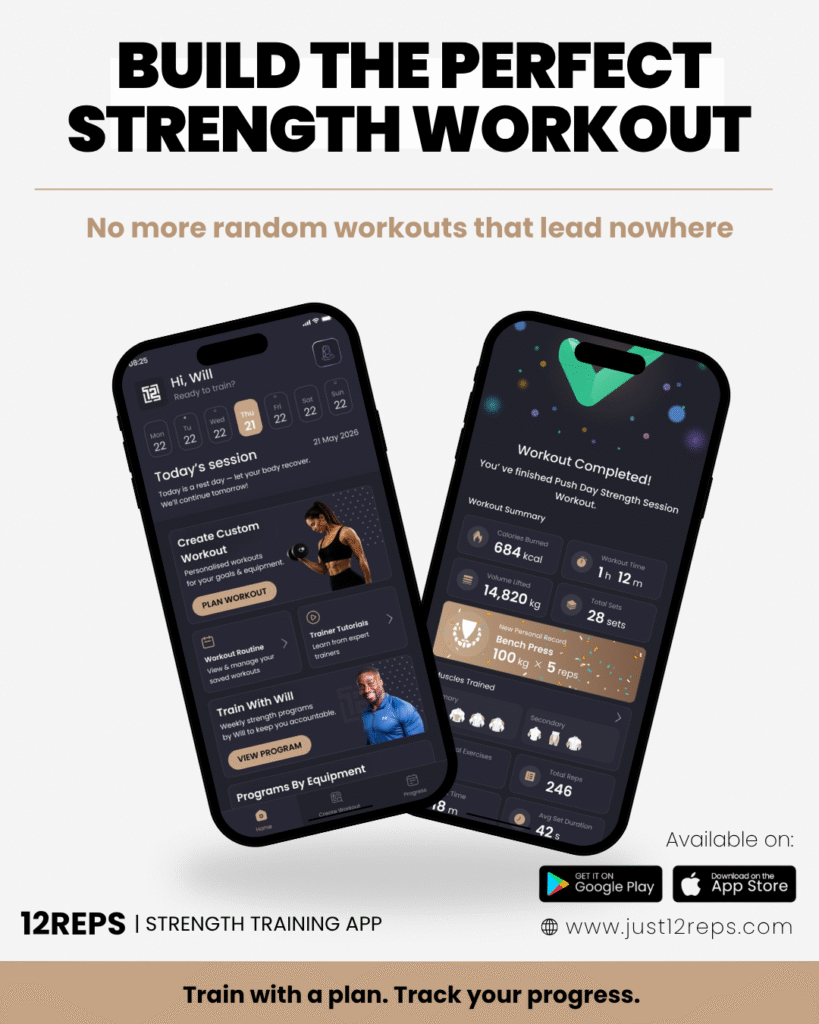
20 Strength, Bodyweight and Cable Exercises From the 12REPS Library
The linked exercises support pressing strength, upper-back stability, shoulder development and triceps strength. Use the recommended sets and repetitions as starting points.
Exercise | Main focus | Sets | Recommended reps | Role in bench training |
Chest and triceps | 3-4 | 6-12 | Primary pressing volume | |
Upper chest and shoulders | 3-4 | 6-12 | Secondary press | |
Triceps and chest | 3-4 | 8-12 | Lockout strength | |
Chest, triceps and core | 3 | 8-20 | Volume and technique | |
Chest and triceps | 3 | 10-20 | Beginner pressing | |
Chest, shoulders and triceps | 3 | 8-15 | Press-up progression | |
Chest | 3 | 10-15 | Chest accessory | |
Chest | 3 | 10-15 | Cable chest accessory | |
Chest | 3 | 10-15 | Controlled chest work | |
Triceps | 3-4 | 10-15 | Triceps volume | |
Triceps | 3 | 10-15 each arm | Single-arm lockout work | |
Triceps | 3 | 8-12 | Heavy triceps work | |
Triceps, chest and shoulders | 3 | 6-12 | Compound accessory | |
Triceps | 3 | 8-15 | Dip progression | |
Lats and upper back | 3-4 | 8-12 | Back stability | |
Mid-back | 3-4 | 8-12 | Bench support | |
Upper back | 3-4 | 8-12 | Upper-back strength | |
Back and biceps | 3-4 | 8-15 | Bodyweight pull | |
Rear shoulders and upper back | 3 | 12-20 | Shoulder balance | |
Shoulders and triceps | 3 | 8-12 | Shoulder strength |
How 12REPS Helps You Reach the Goal
A bench programme only works when you can repeat it, record it and adjust it.
- Build both weekly bench sessions inside the app.
- Record every working set, repetition and weight.
- Review exercise demonstrations before accessory work.
- Use the library to replace equipment that is unavailable.
- Track whether the same load becomes easier over time.
- Follow structured strength programmes instead of changing your plan after one poor session.
Stop Testing 100kg. Start Building It.
Your next session does not need another failed maximum. It needs a working weight, a clear repetition target and a record you can improve next week.
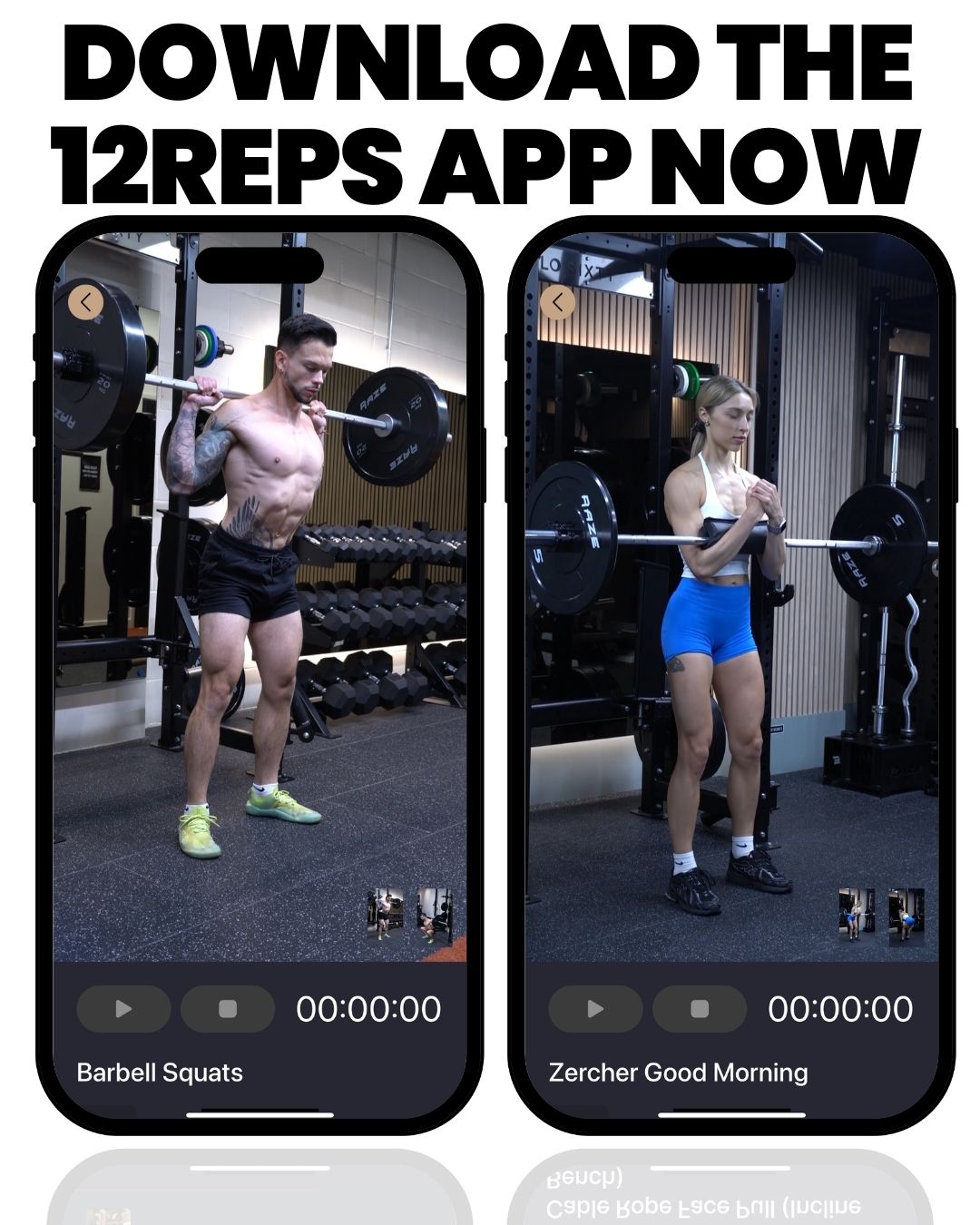
12REPS gives you the exercise library, workout structure and training log needed to turn a long-term target into weekly actions.
Build the base. Track the work. Earn the 100kg press.
Explore the 12REPS strength training exercise library before your next bench session.
About PT Will Duru
Will Duru is a personal trainer with more than a decade of experience and a Sport and Exercise Science BSc (Hons). He created 12REPS to help people follow structured strength training and make measurable progress. Learn more at PTWill.com.
Will has been featured in Men’s Health, The Times, The Telegraph, The Sun and Men’s Fitness.
References
1] Schoenfeld, B.J. et al. (2017). Strength and Hypertrophy Adaptations Between Low vs High Load Resistance Training. Journal of Strength and Conditioning Research. https://journals.lww.com/nsca-jscr/pages/default.aspx
[2] Grgic, J. et al. (2018). The effects of training frequency on muscle growth. Sports Medicine. https://link.springer.com/journal/40279
[3] Duffey, M.J. and Challis, J.H. (2011). Vertical and lateral forces applied to the bar during the bench press in novice lifters. Journal of Strength and Conditioning Research. https://journals.lww.com/nsca-jscr/pages/default.aspx
[4] Lehman, G.J. (2005). The influence of grip width and forearm pronation/supination on upper body myoelectric activity during the flat bench press. Journal of Strength and Conditioning Research. https://journals.lww.com/nsca-jscr/pages/default.aspx
[5] Green, C.M. and Comfort, P. (2007). The effect of grip width on bench press performance and risk of injury. Strength and Conditioning Journal. https://journals.lww.com/nsca-scj/pages/default.aspx
About the Author: Will Duru holds a BSc (Hons) in Sport and Exercise Science and is an award winning personal trainer with over 10 years of experience specialising in strength training. He has helped dozens of men achieve their first 100kg bench press and beyond. Will is the creator of the 12REPS app, designed to make professional training guidance accessible to everyone.