

You walk into a health shop and see walls of supplements—protein powders, creatine, BCAAs, pre-workouts, fat burners. Everyone at the gym seems to have a shaker bottle. You’re wondering: do I actually need supplements to build muscle and get stronger?
The truth: Most supplements are unnecessary—but a few are genuinely useful.
I’m Will Duru, a personal trainer with 10+ years’ experience in London. I’ve watched the supplement industry explode, and I’ve seen clients waste hundreds of pounds on products that do nothing.
My biggest observation: The supplement industry profits from confusion. Most supplements have zero research backing them. But a couple—protein powder and creatine—actually work and are worth considering if you meet specific criteria.
Do You Actually Need Supplements?
The honest answer: Probably not.
Will’s reality check: “I’ve trained women who built incredible muscle and strength eating whole foods only—no supplements whatsoever. I’ve also trained women who take every supplement under the sun but make minimal progress because their training and overall diet are poor. Supplements are called ‘supplements’ for a reason—they supplement an already solid foundation.”
What matters most (in order of importance):
- Consistent strength training with progressive overload (non-negotiable)
- Adequate protein from food (1.8-2.2g/kg bodyweight daily)
- Sufficient calories to fuel training and recovery
- Quality sleep (7-9 hours nightly)
- Then, maybe, supplements (if gaps exist)
Will’s coaching: “Get training, nutrition, and sleep sorted first. If those three aren’t dialled in, supplements won’t help. Once those foundations are solid, then we can consider whether specific supplements fill specific gaps.”
The Two Supplements That Actually Work
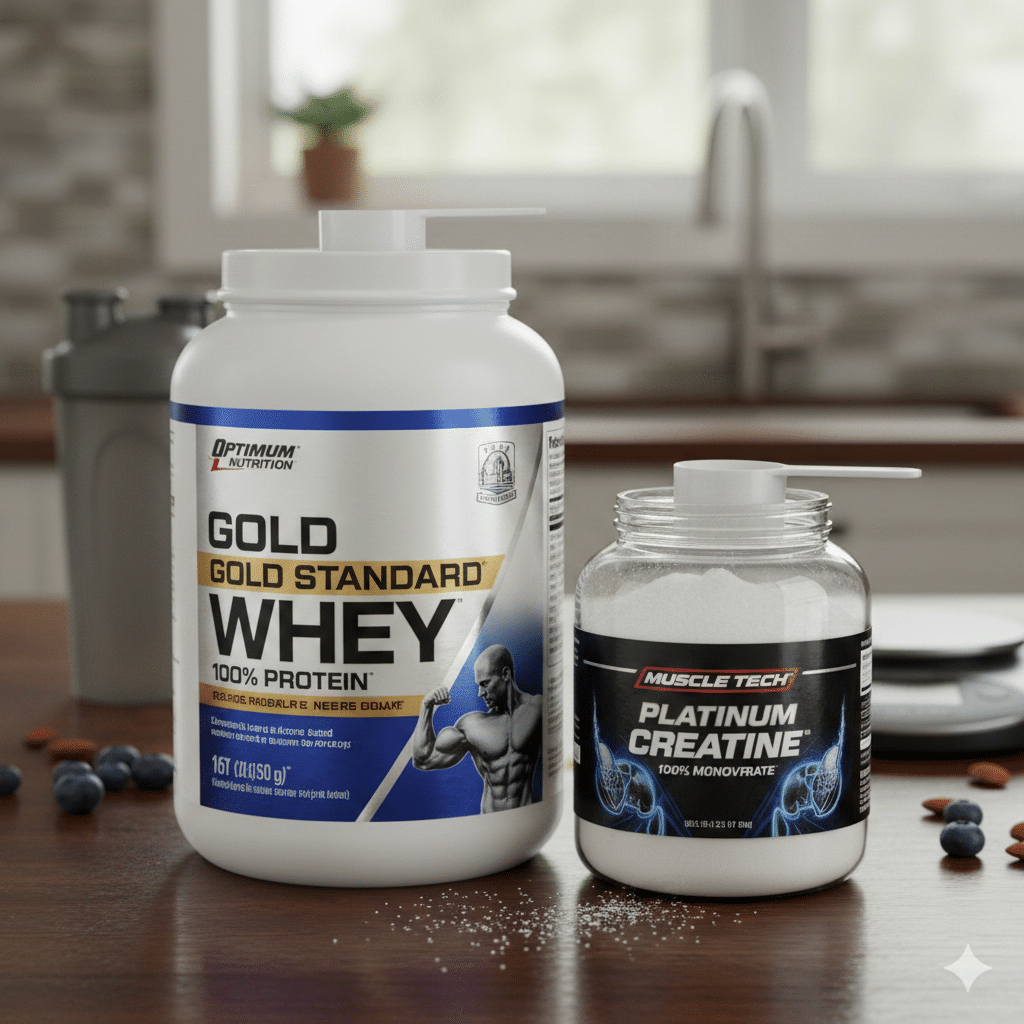
Supplement 1: Protein Powder (If You Struggle to Hit Protein Targets)
What it is: Concentrated protein from whey (milk), casein (milk), or plants (pea, soy, rice).
What it does: Provides convenient protein to meet daily targets.
Does it work? Yes—but only because it helps you hit protein targets, not because powder is superior to food.
Who needs it:
✅ Struggling to eat 130g+ protein daily from food alone
✅ Vegetarian/vegan finding plant protein targets difficult
✅ Very busy schedule making protein-rich meals challenging
Who doesn’t need it:
❌ Already hitting 1.8-2.2g/kg protein from whole foods
❌ Enjoys eating and has time to prepare protein-rich meals
Will’s position: “Protein powder is pure convenience, nothing more. If client easily eats 130g protein daily from chicken, fish, eggs, Greek yoghurt—she doesn’t need powder. But if she’s vegetarian or struggles to eat enough, protein powder makes hitting targets far easier.”
Will’s typical recommendation:
- Whey protein isolate (fast-absorbing, post-workout)
- Casein protein (slow-absorbing, before bed)
- Pea or soy protein (plant-based options)
How much: 20-40g serving (one scoop) when needed to hit daily protein target
When: Post-workout (within 45 minutes) or any time to fill protein gaps
Cost reality: £15-30 for 1kg (25-50 servings)
Will’s honest assessment: “Protein powder is the one supplement I recommend most because so many women struggle to eat 130g+ protein daily. It’s not magic—it’s just convenient protein. But if you can hit targets from food, save your money.”
Supplement 2: Creatine Monohydrate (For Strength and Performance)
What it is: Natural compound (made from amino acids) that helps produce ATP (energy for muscles).
What it does: Increases strength, power output, muscle mass when combined with training.
Does it work? Yes—creatine monohydrate is the most researched supplement in sports nutrition, with overwhelmingly positive results.
Research backing: Studies show 5-15% strength improvements, faster recovery, increased muscle mass when combined with strength training.
Who benefits:
✅ All women doing strength training (beginner to advanced)
✅ Especially beneficial for vegetarians/vegans (lower natural creatine stores)
✅ Women over 40 (research shows bone density benefits)
Will’s experience: “Creatine is the only supplement with rock-solid research. I take it myself. Clients who add creatine typically see small but noticeable strength improvements—an extra rep or two per set, slightly faster progression. It’s not dramatic but it’s real.”
How much: 5g daily (every day, including rest days)
When: Any time—timing doesn’t matter, consistency does
Loading phase? Optional. You can “load” with 20g daily for 5-7 days to saturate muscles faster, then maintain at 5g. Or skip loading and just take 5g daily (takes 3-4 weeks to saturate).
Will’s approach: “I tell clients to skip the loading phase—just take 5g daily consistently. Simpler, easier on the stomach, equally effective after a few weeks.”
Side effects: Possible water retention (1-2kg), occasional stomach discomfort (take with food to minimise).
Cost: £10-20 for 200+ servings (very cheap per serving)
Will’s bottom line: “If you’re going to take one supplement, make it creatine. It’s cheap, well-researched, safe, and actually works. The strength improvements are modest but consistent across most clients.”

Supplements That Are Probably Unnecessary
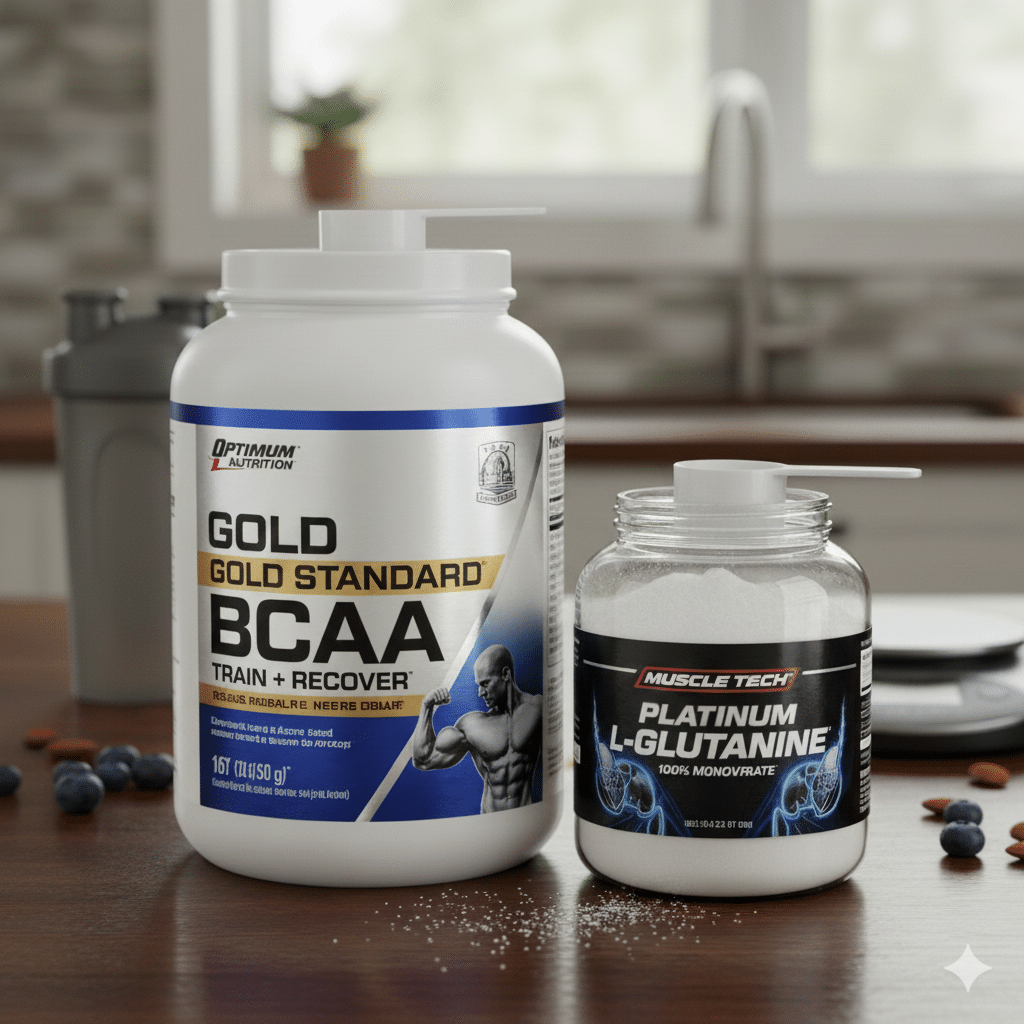
BCAAs (Branched-Chain Amino Acids)
Marketing claim: Essential for muscle recovery and growth.
Reality: If you’re eating adequate protein (1.8-2.2g/kg daily), you’re already getting BCAAs from whole foods and protein powder.
Will’s verdict: “Complete waste of money. BCAAs are just three amino acids found in any complete protein source. If you’re eating 130g protein daily, you’re getting abundant BCAAs. I’ve never recommended BCAAs to any client in 10+ years.”
Pre-Workout Supplements
Marketing claim: Explosive energy, enhanced performance, massive pumps.
Reality: Most pre-workouts are just caffeine plus filler ingredients with minimal research backing.
Will’s verdict: “If you want a pre-workout boost, drink a coffee. It’s cheaper and equally effective. The fancy pre-workout powders are 90% caffeine, 10% marketing. Save your money.”
Fat Burners
Marketing claim: Accelerate fat loss, boost metabolism, melt fat away.
Reality: No supplement burns fat meaningfully. Fat loss comes from calorie deficit created through diet and training.
Will’s verdict: “Fat burners are the biggest scam in the industry. They might slightly increase metabolic rate (by 50-100 calories daily at best), but that’s meaningless compared to proper nutrition and training. I’ve never seen a fat burner make a difference to any client’s results.”
Glutamine
Marketing claim: Improves recovery, reduces muscle soreness, boosts immune system.
Reality: Research shows no benefit for muscle growth or recovery in healthy individuals eating adequate protein.
Will’s verdict: “Another unnecessary supplement. Your body produces glutamine naturally, and you get plenty from protein-rich foods. No research supports supplementation for strength training.”
Testosterone Boosters
Marketing claim: Naturally increase testosterone, boost muscle growth and strength.
Reality: Most “natural testosterone boosters” have minimal to no effect on testosterone levels. If they did significantly raise testosterone, they’d be prescription medications, not over-the-counter supplements.
Will’s verdict: “These are rubbish. If you genuinely have low testosterone (confirmed by blood tests), you need medical treatment, not supplements. These over-the-counter products do basically nothing.”
Will's Supplement Recommendations by Scenario
Scenario 1: Complete Beginner, Eating Plenty of Protein From Food
Recommended supplements: None
Why: Focus on mastering training technique and building the habit of consistent workouts. Supplements won’t accelerate beginner gains.
Will’s advice: “First 3-6 months, don’t worry about supplements. Learn to squat, deadlift, press properly. Build consistency. That matters infinitely more than supplements.”
Scenario 2: Training 3-6 Months, Struggling to Hit Protein Targets
Recommended supplements:
- Protein powder (whey or plant-based): 20-40g daily as needed
Why: Helps hit 1.8-2.2g/kg protein target easily.
Will’s advice: “If you’re consistently falling short of protein targets—eating 100g when you need 130g—protein powder makes sense. One post-workout shake (30g protein) bridges that gap.”
Scenario 3: Training 6+ Months, Eating Adequate Protein, Want Every Advantage
Recommended supplements:
- Creatine monohydrate: 5g daily
- Protein powder: If needed for convenience
Why: Creatine provides small but consistent strength improvements when training is already solid.
Will’s advice: “Once training is consistent for 6+ months and nutrition is dialled in, adding creatine makes sense. The 5-10% strength improvement compounds over time.”
Scenario 4: Vegetarian/Vegan Strength Training
Recommended supplements:
- Protein powder (pea, soy, or blend): As needed to hit targets
- Creatine monohydrate: 5g daily (vegetarians have lower natural stores)
Why: Plant-based diets often require deliberate effort to hit protein targets, and creatine stores are naturally lower without meat/fish.
Will’s advice: “Nearly all my vegetarian/vegan clients use protein powder—hitting 130g+ protein from plants alone is challenging. Creatine is non-negotiable for plant-based athletes—the performance benefit is more pronounced.”
The Bottom Line
Do you need supplements for strength training? For most women, no—but two supplements are genuinely useful in specific situations.
The two supplements worth considering:
✅ Protein powder (whey, casein, or plant-based)—if struggling to hit 1.8-2.2g/kg protein daily from whole foods
✅ Creatine monohydrate (5g daily)—well-researched strength and performance benefits for all trainees
Supplements that are probably unnecessary:
❌ BCAAs (waste of money if eating adequate protein)
❌ Pre-workout powders (just drink coffee)
❌ Fat burners (complete scam, don’t work)
❌ Glutamine (no benefit for healthy individuals)
❌ Testosterone boosters (ineffective for healthy women)
Will’s decade of experience summarised:
✅ “Most supplements are unnecessary. I’ve trained women who built incredible muscle eating whole foods only—no supplements whatsoever”
✅ “Supplements are called supplements for a reason—they supplement an already solid foundation of training, nutrition, and sleep. Get those three sorted first”
✅ “Protein powder is pure convenience. If you easily eat 130g protein from food, you don’t need powder. But if you struggle, it makes hitting targets far easier”
✅ “Creatine is the only supplement with rock-solid research. Small but noticeable strength improvements—extra rep or two per set. If taking one supplement, make it creatine”
✅ “BCAAs, pre-workouts, fat burners, glutamine, testosterone boosters? I’ve never recommended these in 10+ years. Complete waste of money”
✅ “First 3-6 months as beginner? Focus on mastering technique and consistency. Don’t worry about supplements—they won’t accelerate beginner gains”
What matters most (priority order):
- Consistent strength training with progressive overload
- Adequate protein from food (1.8-2.2g/kg daily)
- Sufficient calories for training and recovery
- Quality sleep (7-9 hours nightly)
- Then, if needed: protein powder for convenience, creatine for performance
Try 12REPS free for 7 days. Get structured strength training programmes that deliver results through proper programming and progressive overload—no fancy supplements required, just consistent training and smart nutrition.
Stop wasting money on unnecessary supplements. Master the fundamentals first—progressive strength training, adequate protein, sufficient calories, quality sleep. Then, if needed, add protein powder for convenience or creatine for performance. Everything else is marketing.
References
- Jäger, R., Kerksick, C.M., Campbell, B.I., et al. (2017). International Society of Sports Nutrition Position Stand: Protein and Exercise. Journal of the International Society of Sports Nutrition, 14, 20. https://doi.org/10.1186/s12970-017-0177-8
- Antonio, J., Candow, D.G., Forbes, S.C., et al. (2021). Common Questions and Misconceptions About Creatine Supplementation: What Does the Scientific Evidence Really Show? Journal of the International Society of Sports Nutrition, 18, 13. https://doi.org/10.1186/s12970-021-00412-w
- Kreider, R.B., Kalman, D.S., Antonio, J., et al. (2017). International Society of Sports Nutrition Position Stand: Safety and Efficacy of Creatine Supplementation in Exercise, Sport, and Medicine. Journal of the International Society of Sports Nutrition, 14, 18. https://doi.org/10.1186/s12970-017-0173-z
- Morton, R.W., Murphy, K.T., McKellar, S.R., et al. (2018). A Systematic Review, Meta-Analysis and Meta-Regression of the Effect of Protein Supplementation on Resistance Training-Induced Gains in Muscle Mass and Strength in Healthy Adults. British Journal of Sports Medicine, 52(6), 376-384. https://doi.org/10.1136/bjsports-2017-097608