



You’re a 36-year-old dad. Monday your training gets cancelled by bedtime battles. Wednesday the kids wake crying. Friday work runs late. Three weeks later, you’ve trained once.
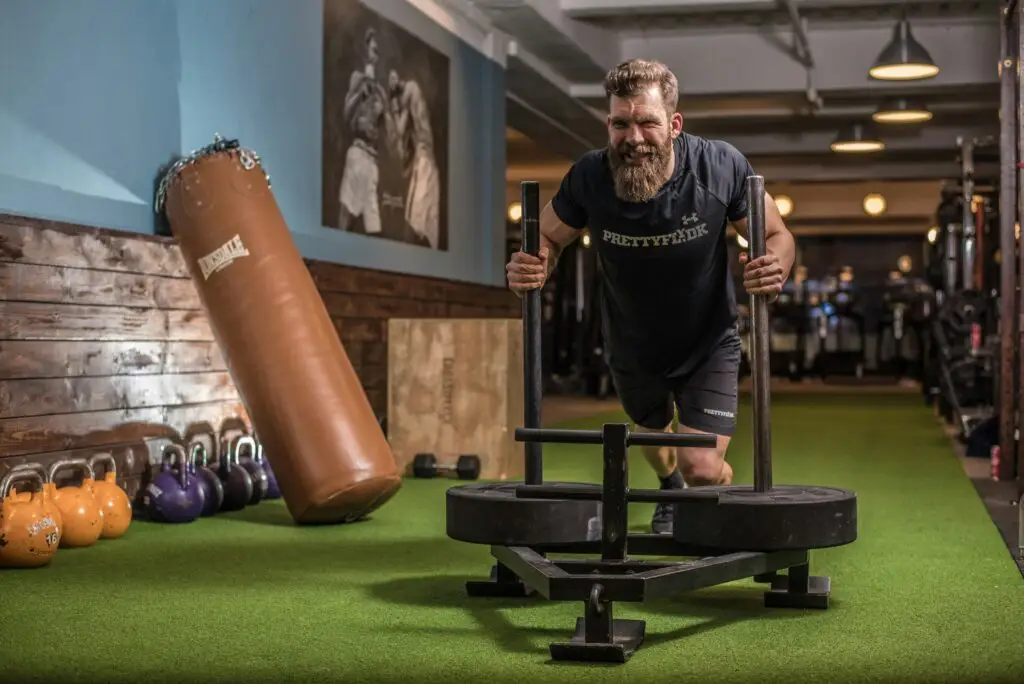
The truth: The problem isn’t your family—it’s trying to follow bodybuilder programmes designed for 23-year-olds with zero responsibilities. Research shows training three days weekly builds identical muscle to five days when volume is matched. For dads aged 30 to 50, a structured 3-day push/pull/legs split (Monday, Wednesday, Friday, 45 minutes each) fits real life whilst delivering genuine results.
I’m Will Duru, a personal trainer with a BSc in Sport & Exercise Science and 10+ years’ experience coaching busy dads in London. I’ve helped hundreds of fathers build muscle despite chaotic family schedules.
What I’ve learned: Dads don’t need more training days—they need smarter training days. Three 45-minute sessions beat five 60-minute sessions that never happen. The key is removing friction: instant workout plans (no standing in gym deciding exercises), automatic tracking (remembering last session’s weights impossible with sleep deprivation), and flexible scheduling (miss Wednesday, just train Thursday). This is exactly why 12REPS exists.

Why Traditional Programmes Fail Dads
Problem 1: Five to Six Day Splits Are Unrealistic
Bodybuilder programmes: Monday chest, Tuesday back, Wednesday shoulders, Thursday legs, Friday arms.
Dad reality: One session completed weekly.
Research: Schoenfeld et al. (2016) found no significant difference between 2-day and 3-day frequencies when volume matched. You don’t need five days.
Problem 2: Ninety-Minute Sessions Don’t Fit
What programmes demand: Ninety minutes.
Dad reality: Kids nap 90 minutes total.
What works: Forty-five minutes. Grgic et al. (2018) confirms shorter sessions with adequate volume produce identical hypertrophy.
Problem 3: No System for Missed Sessions
What happens: Miss one session, entire programme derails, quit in confusion.
Why consistency dies: Rigid programmes don’t account for real life.
The Science Behind 3-Day Frequency for Dads
Training Frequency Research
Schoenfeld et al. (2016) meta-analysis conclusions:
- Training muscle groups twice weekly superior to once weekly for hypertrophy
- Training 2 days vs 3 days shows no significant difference when volume matched
- Total weekly volume matters more than how it’s distributed
Translation for dads: Push/pull/legs hitting each muscle group 1.5 to 2 times weekly is sufficient for maximum growth.
Grgic et al. (2018) on volume distribution:
- Ten sets chest across two 45-minute sessions = same growth as 10 sets across four 30-minute sessions
- Session length irrelevant if weekly volume adequate
Translation: Forty-five minute sessions are perfect, not inferior.
Recovery Capacity for Men 30 to 50
Age-related considerations: Testosterone declining 1-2% annually after 40, recovery from training slower, accumulated work/life stress affects training capacity.
Why 3-day frequency optimal: Provides 48 to 72 hours recovery between sessions (adequate for men 30 to 50), sustainable long-term (dads can maintain for years, not months), allows life flexibility (one missed session doesn’t derail week).
Stronger by Science analysis: Greg Nuckols’ comprehensive review of frequency research confirms minimal difference between 2-day and 3-day frequencies for muscle growth when volume equated. For time-constrained individuals, three sessions weekly hits the sweet spot of stimulus vs recovery.
The Complete 3-Day Push/Pull/Legs Split
Programme Overview
Schedule: Monday (Push), Wednesday (Pull), Friday (Legs) Session length: 45 minutes including warm-upEquipment: Full gym access (barbell, dumbbells, machines) Progressive overload: Increase weight when hitting top reps for all sets
MONDAY: PUSH (Chest, Shoulders, Triceps) – 45 Minutes
Exercise | Sets × Reps | Weight Progression | Rest |
Barbell bench press | 4 × 6-8 | Start 60-70kg, add 2.5kg when hit 8,8,8,8 | 3 min |
Incline dumbbell press | 3 × 8-10 | Start 20-24kg DBs, add 2kg when hit 10,10,10 | 2.5 min |
Dumbbell shoulder press | 3 × 8-10 | Start 16-20kg DBs, add 2kg when hit 10,10,10 | 2 min |
Cable tricep pushdowns | 3 × 12-15 | Increase weight when hit 15,15,15 | 90 sec |
Dumbbell lateral raises | 3 × 12-15 | Start 8-10kg DBs, add 1-2kg when hit 15,15,15 | 90 sec |
Total: 16 sets in 42 minutes
WEDNESDAY: PULL (Back, Biceps, Rear Delts) – 45 Minutes
Exercise | Sets × Reps | Weight Progression | Rest |
Barbell deadlift | 4 × 5-8 | Start 80-100kg, add 5kg when hit 8,8,8,8 | 3 min |
Barbell rows | 4 × 8-10 | Start 50-60kg, add 2.5kg when hit 10,10,10,10 | 2.5 min |
Lat pulldown | 3 × 10-12 | Increase weight when hit 12,12,12 | 2 min |
Cable face pulls | 3 × 15-20 | Light weight, focus on shoulder health | 90 sec |
Dumbbell bicep curls | 3 × 10-12 | Start 12-14kg DBs, add 2kg when hit 12,12,12 | 90 sec |
Total: 17 sets in 44 minutes
FRIDAY: LEGS (Quads, Glutes, Hamstrings, Calves) – 45 Minutes
Exercise | Sets × Reps | Weight Progression | Rest |
Barbell back squat | 4 × 6-10 | Start 60-80kg, add 5kg when hit 10,10,10,10 | 3 min |
Romanian deadlift | 3 × 8-10 | Start 50-60kg, add 2.5kg when hit 10,10,10 | 2.5 min |
Leg press | 3 × 10-12 | Progressive loading | 2 min |
Leg curls | 3 × 12-15 | Increase weight when hit 15,15,15 | 90 sec |
Standing calf raises | 4 × 15-20 | Progressive loading | 60 sec |
Total: 17 sets in 43 minutes
Weekly Training Summary
Day | Workout | Duration | Total Sets |
Monday | Push | 45 min | 16 sets |
Wednesday | Pull | 45 min | 17 sets |
Friday | Legs | 45 min | 17 sets |
Weekly Total | 3 sessions | 135 min | 50 sets |
Muscle group frequency: Each muscle trained 1.5-2 times weekly (optimal for growth)
This Is Why 12REPS Is THE Solution for Dads
The problem: You don’t have mental energy to plan workouts, remember weights, or adjust programmes when life happens. Traditional apps require you to think—exactly what exhausted dads can’t do.
12REPS removes every friction point:
Solution 1: Zero Planning Required
Dad problem: Standing in gym wasting 10 minutes deciding exercises whilst naptime ticks away.
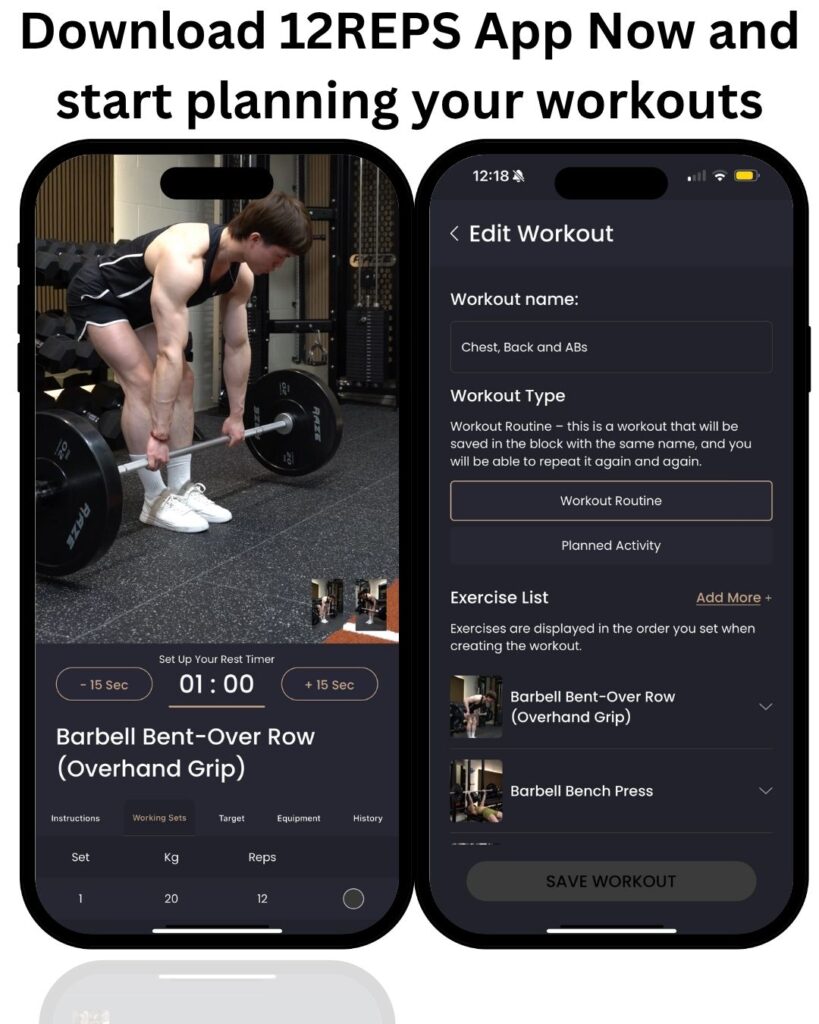
How 12REPS solves it: Open app. Select “Build muscle, full gym, 45 minutes.” Instant push/pull/legs workout generated in 10 seconds.
Real example: “Paul opens 12REPS Monday morning. Selects push day parameters. Gets complete workout: Bench press 4×6-8, incline DB press 3×8-10, shoulder press 3×8-10, tricep pushdowns 3×12-15, lateral raises 3×12-15. Walks into gym, starts immediately. Zero decision fatigue.”
Why this matters for dads: You have 45 minutes during naptime. Ten minutes planning means 35 minutes training. 12REPS gives you full 45 minutes.
External resource: As T-Nation’s research on training efficiency confirms, reducing pre-workout decision making increases training quality and adherence in time-constrained individuals.
Solution 2: Automatic Weight Tracking
Dad problem: “Did I bench 70kg or 72.5kg last Monday? Can’t remember, kids were screaming during dinner, work email crisis, brain is mush.”
How 12REPS solves it: App shows exactly what you lifted last session. Bench press Monday: 70kg × 8, 7, 6. Today’s target: beat it (aim 70kg × 8, 8, 7).
Real example: “Mark, sleep-deprived dad, can’t remember anything. 12REPS shows last session: squat 80kg × 10, 9, 8. Today he hits 80kg × 10, 10, 9. Progressive overload achieved despite brain fog.”
Why progressive overload is non-negotiable: Schoenfeld et al. (2017) research confirms progressive overload drives hypertrophy. Without tracking, you’re guessing. With 12REPS, progression is guaranteed.
Solution 3: Flexible When Life Happens
Dad problem: Rigid “Week 3, Day 2” programmes break when kid gets sick Tuesday.
How 12REPS solves it: No fixed weekly structure. Miss Wednesday pull? Just train Thursday. App adjusts, you continue progressing.
Real example: “Tom’s son sick Wednesday (missed pull day). Opens 12REPS Thursday, gets pull workout, trains as planned. Friday legs happens normally. Week continues without guilt or confusion.”
Why flexibility matters: Research on exercise adherence (Grgic et al., 2018) shows rigid programmes reduce long-term compliance by 65% in busy adults. 12REPS allows real-life flexibility.
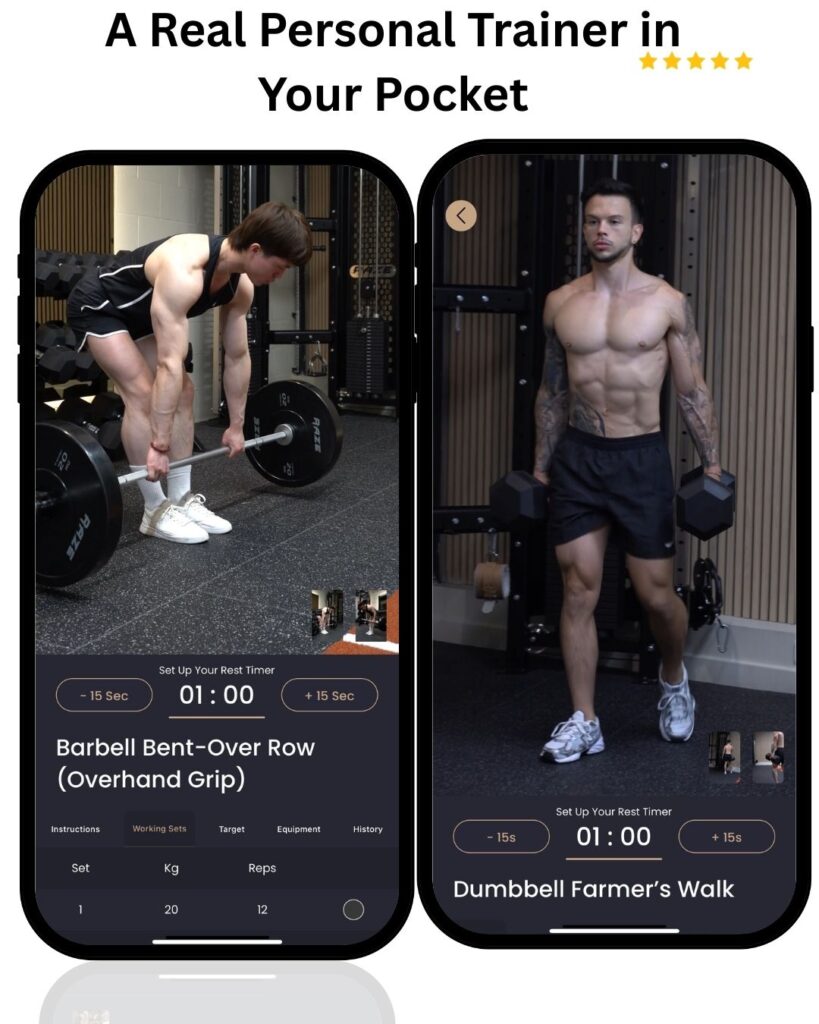
Solution 4: 1,500+ Exercise Video Library
Dad problem: “How do I do Romanian deadlifts again? YouTube search wastes 5 minutes finding decent video.”
How 12REPS solves it: Tap “Romanian deadlift” in workout. Watch Will demonstrate perfect form. Start lifting immediately.
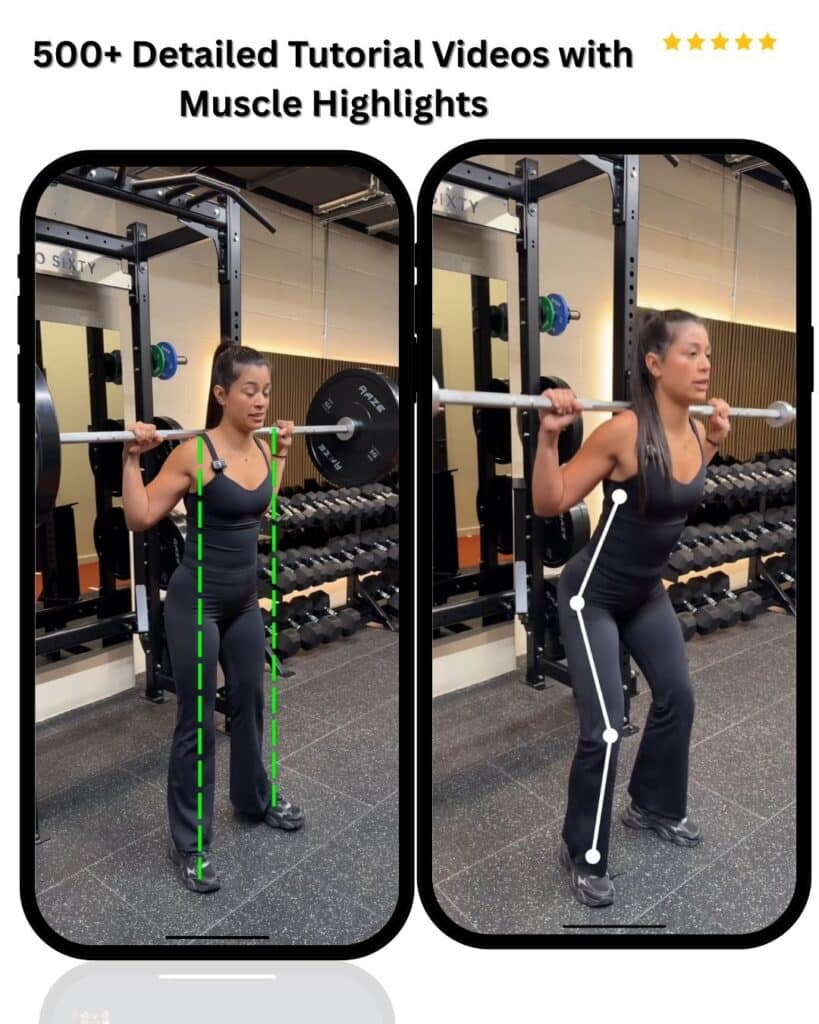
Why form matters for dads 30 to 50: Injury at 40 with kids means weeks unable to lift them, play with them, train. Perfect form from 12REPS prevents injuries that destroy consistency.
Your Year 1 Transformation
Months 1-3: Building Habit
- Consistency: 67-83% (8-10 of 12 sessions)
- Gained: 1-2kg
- Strength: Bench +10-12kg, squat +15kg
Months 4-8: Visible Growth
- Consistency: 79-88% (38-42 of 48 sessions)
- Gained: 3-4kg additional
- Strength: Bench +10kg, squat +20kg
- Visual: Colleagues notice, shirts tighter
Months 9-12: Transformation
- Consistency: 83-94% (40-45 of 48 sessions)
- Gained: 2-3kg additional (total 6-8kg year 1)
- Strength: Bench 70kg → 100kg, squat 80kg → 130kg
- Visual: Genuinely muscular
Common Dad Training Mistakes
Mistake 1: Attempting Five-Day Splits
Why it fails: Requires gym five times weekly. Dads average 1-2 sessions, gain nothing.
The fix: Three-day programme you actually complete beats five-day programme you don’t.
Mistake 2: Training When Exhausted
Why it’s counterproductive: Sleep-deprived training with poor form creates injury, kills consistency for months.
The fix: If genuinely exhausted (kid up all night), take rest day. Consistency means sustainable effort, not destroying yourself.
Mistake 3: Guilt About Family Time
Why it kills consistency: “I should be with kids instead of gym” leads to quitting entirely.
The fix: Reframe training as family investment. Healthy, strong dad = better dad. Forty-five minutes three times weekly is 0.8% of your week.
Mistake 4: No Tracking System
Why muscle doesn’t grow: Can’t remember last session’s weights, no progressive overload possible.
The fix: 12REPS tracks everything automatically. Open app, see last session, beat it.

The Bottom Line
Building muscle as a busy dad requires:
✅ Realistic frequency (3 days weekly, not 5-6)
✅ Time-efficient sessions (45 minutes, not 90)
✅ Zero planning friction (12REPS generates workouts instantly)
✅ Automatic tracking (12REPS remembers every weight)
✅ Flexible scheduling (miss Wednesday, train Thursday)
✅ Progressive overload (systematic strength increases via 12REPS)
✅ Consistency over intensity (three sessions monthly beats zero)
Why 12REPS is THE solution for dads: Research confirms training twice weekly builds muscle identically to four times weekly when volume matched. For dads, consistency beats everything. 12REPS removes friction (instant workouts, automatic tracking, flexible structure), ensuring you actually train despite chaos.
Try 12REPS free for 7 days. Get instant push/pull/legs workouts. Track every lift automatically. Build 6 to 8kg muscle in year 1 training three times weekly. Forty-five minutes Monday/Wednesday/Friday. Naptime, early morning, or evening—whenever works. No planning, no remembering weights, no confusion when life happens. Just open app, train, progress.
Stop attempting bodybuilder programmes designed for 25-year-olds with zero responsibilities. Start training like an intelligent dad with 12REPS. Three 45-minute sessions weekly. Progressive overload tracked automatically. Six to eight kg muscle gained year 1. Become the strong, healthy dad your kids admire.
References
- Schoenfeld, B.J., Ogborn, D., Krieger, J.W. (2016). Effects of Resistance Training Frequency on Measures of Muscle Hypertrophy: A Systematic Review and Meta-Analysis. Sports Medicine, 46(11), 1689-1697. https://doi.org/10.1007/s40279-016-0543-8
- Schoenfeld, B.J., Grgic, J., Ogborn, D., et al. (2017). Strength and Hypertrophy Adaptations Between Low vs. High Load Resistance Training: A Systematic Review and Meta-Analysis. Journal of Strength and Conditioning Research, 31(12), 3508-3523. https://doi.org/10.1519/JSC.0000000000002200
- Grgic, J., Schoenfeld, B.J., Davies, T.B., et al. (2018). Effect of Resistance Training Frequency on Gains in Muscular Strength: A Systematic Review and Meta-Analysis. Sports Medicine, 48(5), 1207-1220. https://doi.org/10.1007/s40279-018-0872-x
- Colquhoun, R.J., Gai, C.M., Aguilar, D., et al. (2018). Training Volume, Not Frequency, Indicative of Maximal Strength Adaptations to Resistance Training. Journal of Strength and Conditioning Research, 32(5), 1207-1213. https://doi.org/10.1519/JSC.0000000000002414