By Will Duru, BSc (Hons) Sport and Exercise Science, Award-winning Personal Trainer with over 10 years of experience in strength training and optimising recovery
This dumbbell shoulder and back workout alternates pushing and pulling exercises in one upper-body session. You do six moves: three for your shoulders, three for your back. All you need is a pair of dumbbells, a bench and a pull-up bar.
After a decade of training clients, I’ve learned that the most effective workouts are often the simplest ones. This is one of my favorite upper-body routines, and it works at home or in a busy gym.
How a push/pull shoulder and back workout works
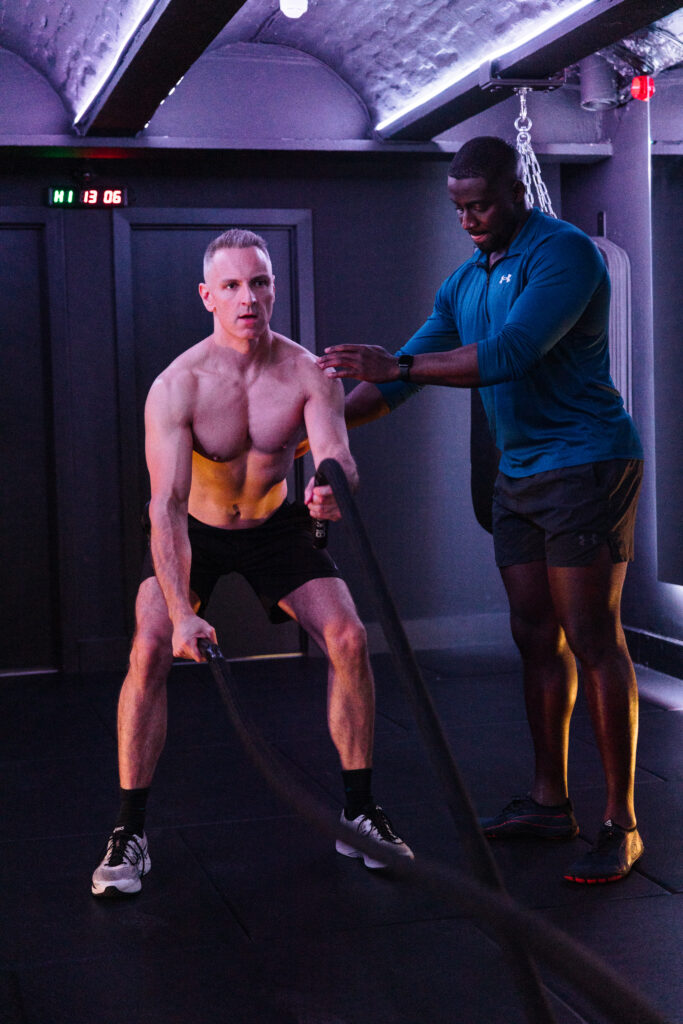
A push/pull workout pairs pushing moves, like a shoulder press, with pulling moves, like a row. Here you swap between them: push, pull, push, pull. Your shoulders get a short break while your back works, and the other way round.
Pressing and rowing train opposite sides of your upper body. Doing both in one session gives your shoulders and upper back a similar amount of work.
Why 10 to 12 reps?
Every exercise here uses 10 to 12 reps. This range lets you lift a challenging weight with good form on every set. It is a practical choice, not the only one that works.
A meta-analysis found muscle growth was similar across a wide range of loads, from light to heavy. Heavier loads gave bigger gains in maximal strength (Schoenfeld et al., 2017). So 10 to 12 reps is a good fit for building muscle with dumbbells, where very heavy loads are hard to set up. Read more in understanding rep ranges.
The dumbbell shoulder and back workout
Do each exercise in order. “4 x 10-12” means 4 sets of 10 to 12 reps. Warm up with lighter weights before your first working sets.
| Order | Exercise | Type | Sets x reps | Rest between sets |
|---|---|---|---|---|
| 1 | Dumbbell seated shoulder press | Push | 4 x 10-12 | 90 seconds |
| 2 | Dumbbell incline row | Pull | 4 x 10-12 | 90 seconds |
| 3 | Dumbbell lateral raise | Push (shoulder isolation) | 4 x 10-12 | 60 seconds |
| 4 | Dumbbell single-arm row | Pull | 4 x 10-12 each arm | 60 seconds |
| 5 | Dumbbell front raise | Push (shoulder isolation) | 4 x 10-12 | 60 seconds |
| 6 | Pull-ups or assisted pull-ups | Pull | 4 x 10-12 | 90 seconds |
How to choose your weight: pick a dumbbell you can lift for 10 to 12 reps with good form. The last rep or two of each set should feel hard. If you can’t reach 10 reps, go lighter. If 12 reps feel easy on every set, go heavier next time.
Exercise breakdown and form cues
1. Dumbbell seated shoulder press
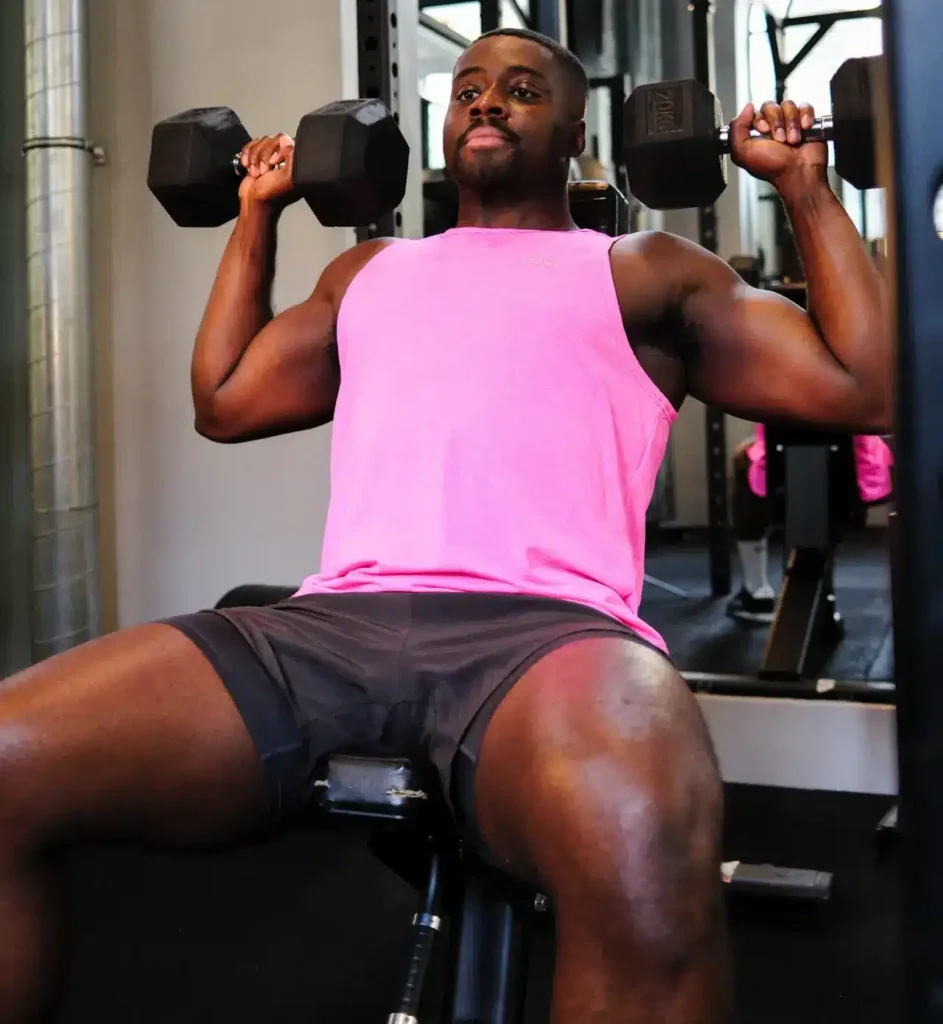
Start with this compound press for your shoulders. It also works your triceps and upper chest. Sitting with your back supported keeps your torso still, so your shoulders do the work.
- Sit on a bench set upright, with your back against the pad.
- Hold the dumbbells at shoulder height, palms facing forward.
- Brace your core and press the dumbbells straight overhead.
- Lower with control until your elbows reach about 90 degrees, then press again.
For more shoulder exercises, read how to build broad shoulders.
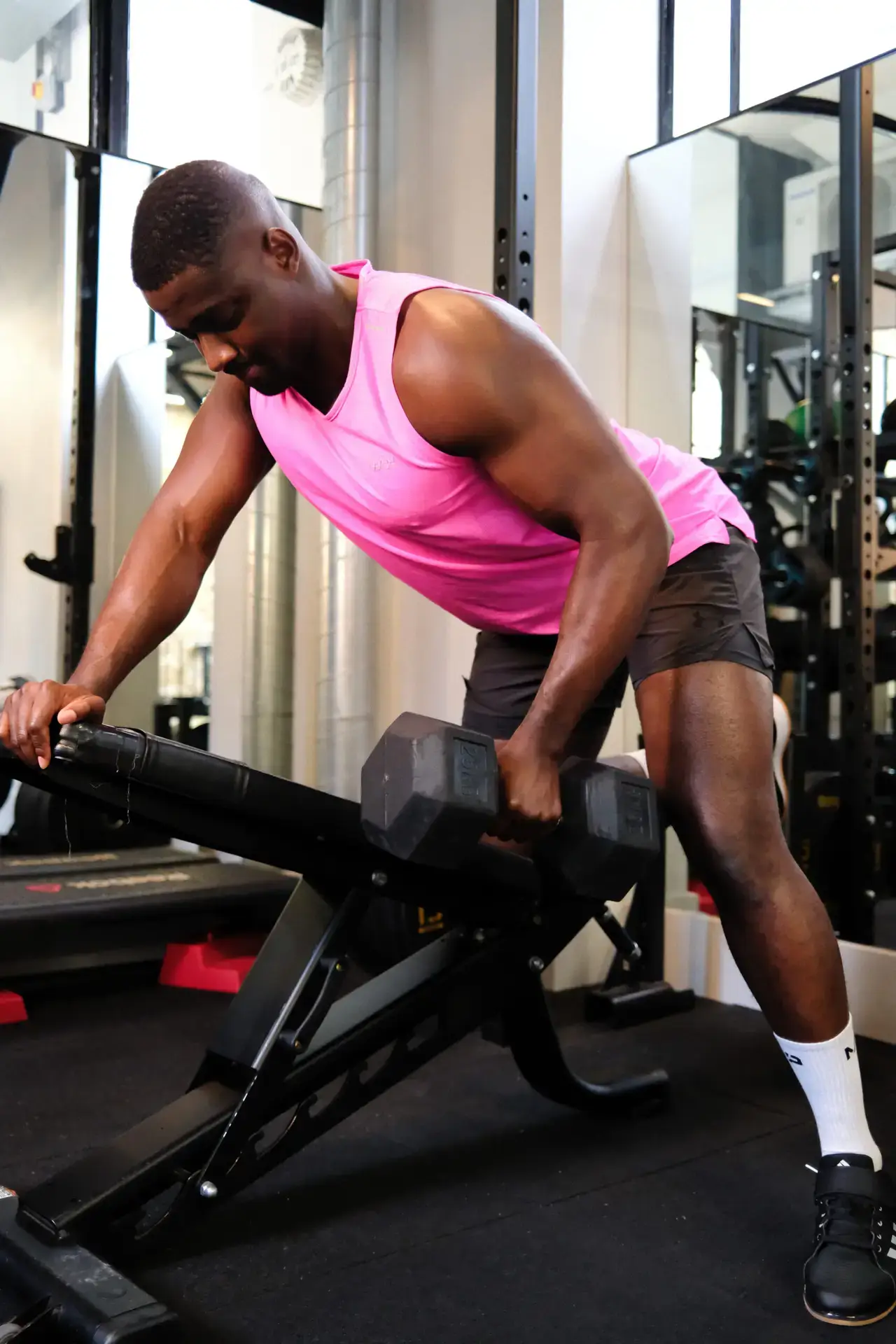
2. Dumbbell incline row
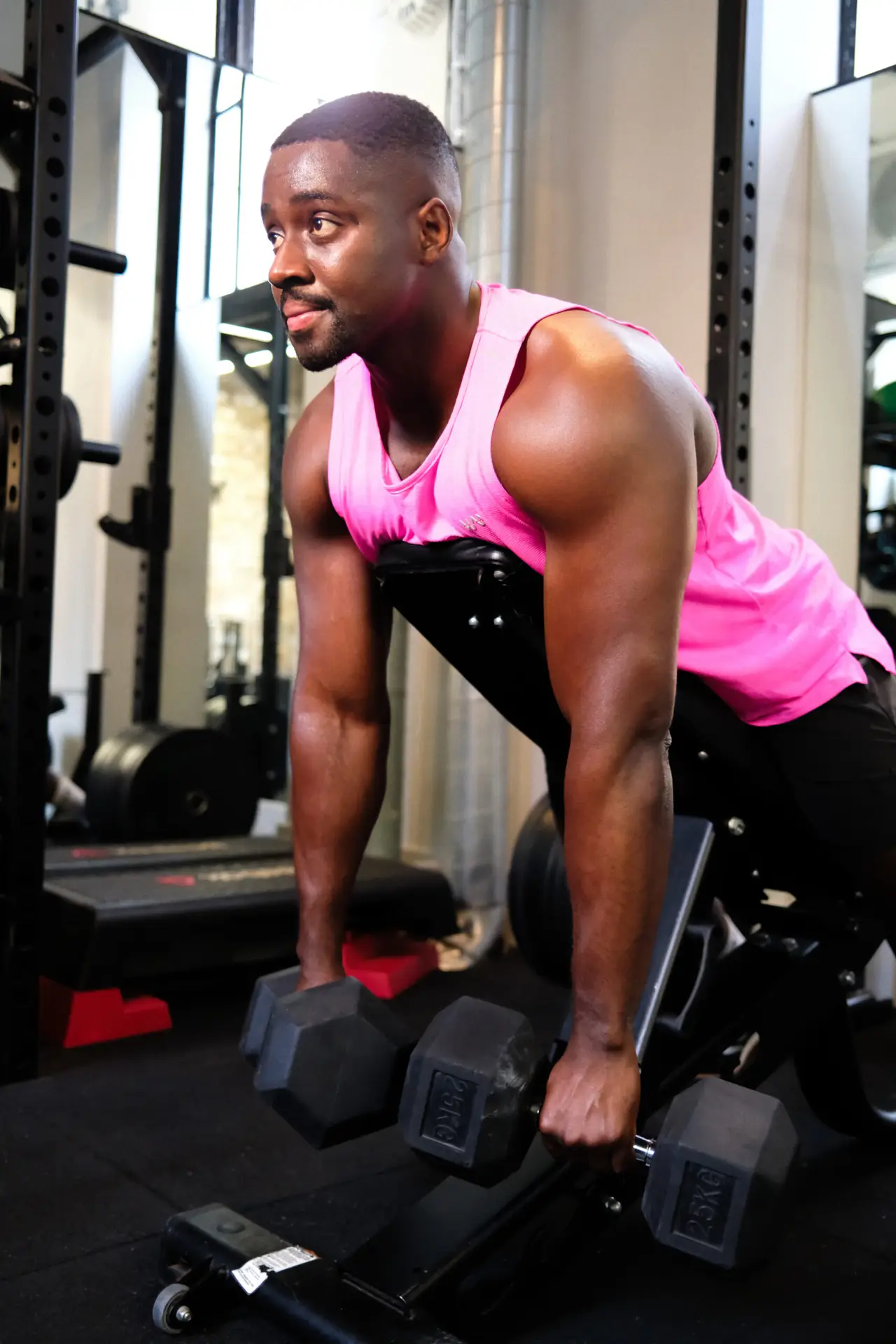
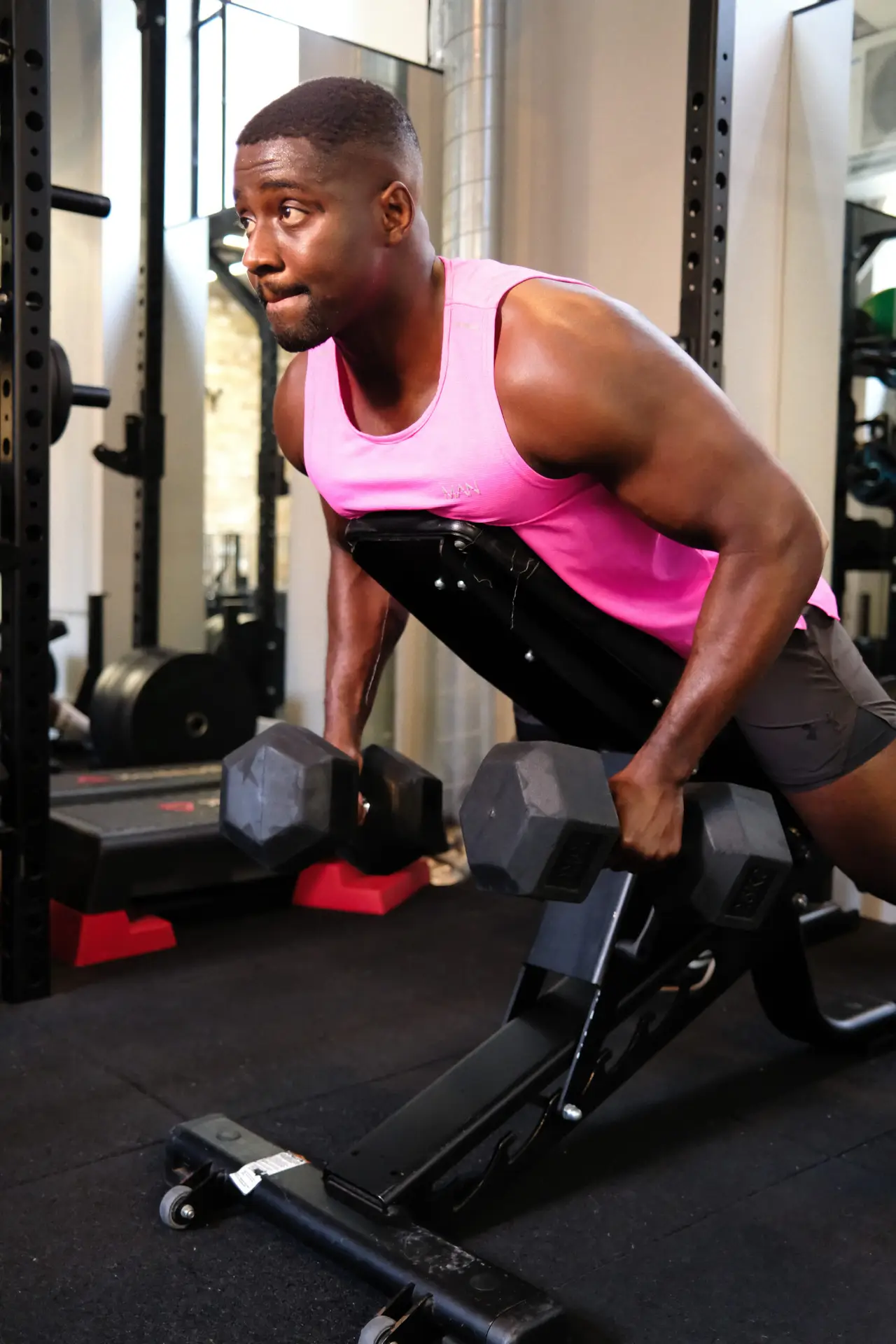
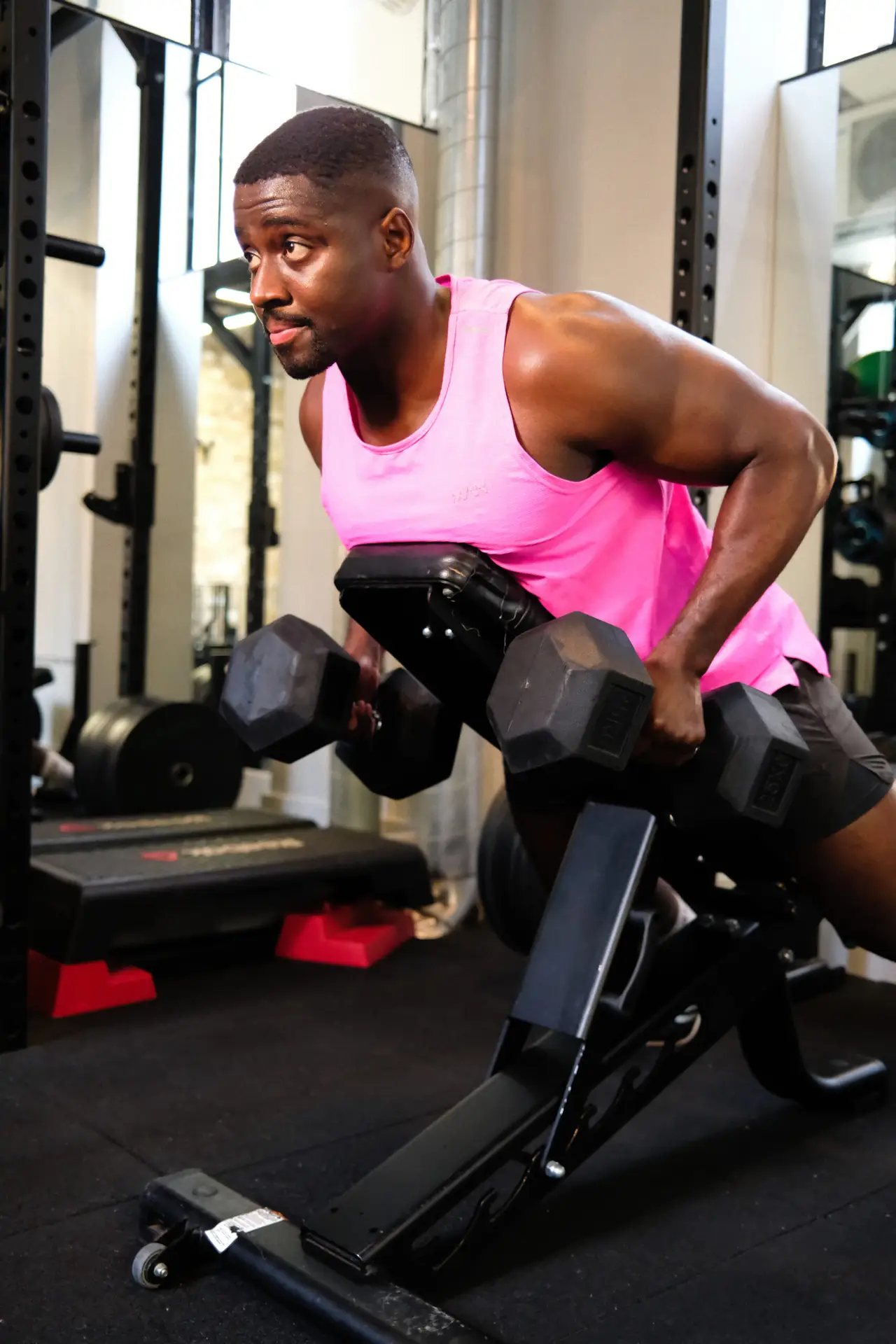
The incline row trains your upper back, including the middle trapezius and rhomboids, which pull your shoulder blades together. Lying chest-down on a bench stops you from swinging. See the dumbbell incline row exercise demo.
- Set a bench to about 45 degrees and lie chest-down on it.
- Let the dumbbells hang straight down below your shoulders.
- Row them toward your lower ribs and squeeze your shoulder blades together.
- Lower slowly until your arms are straight.
This row balances out the pressing work in the session. Many people do far more pushing than pulling, so it is worth keeping.
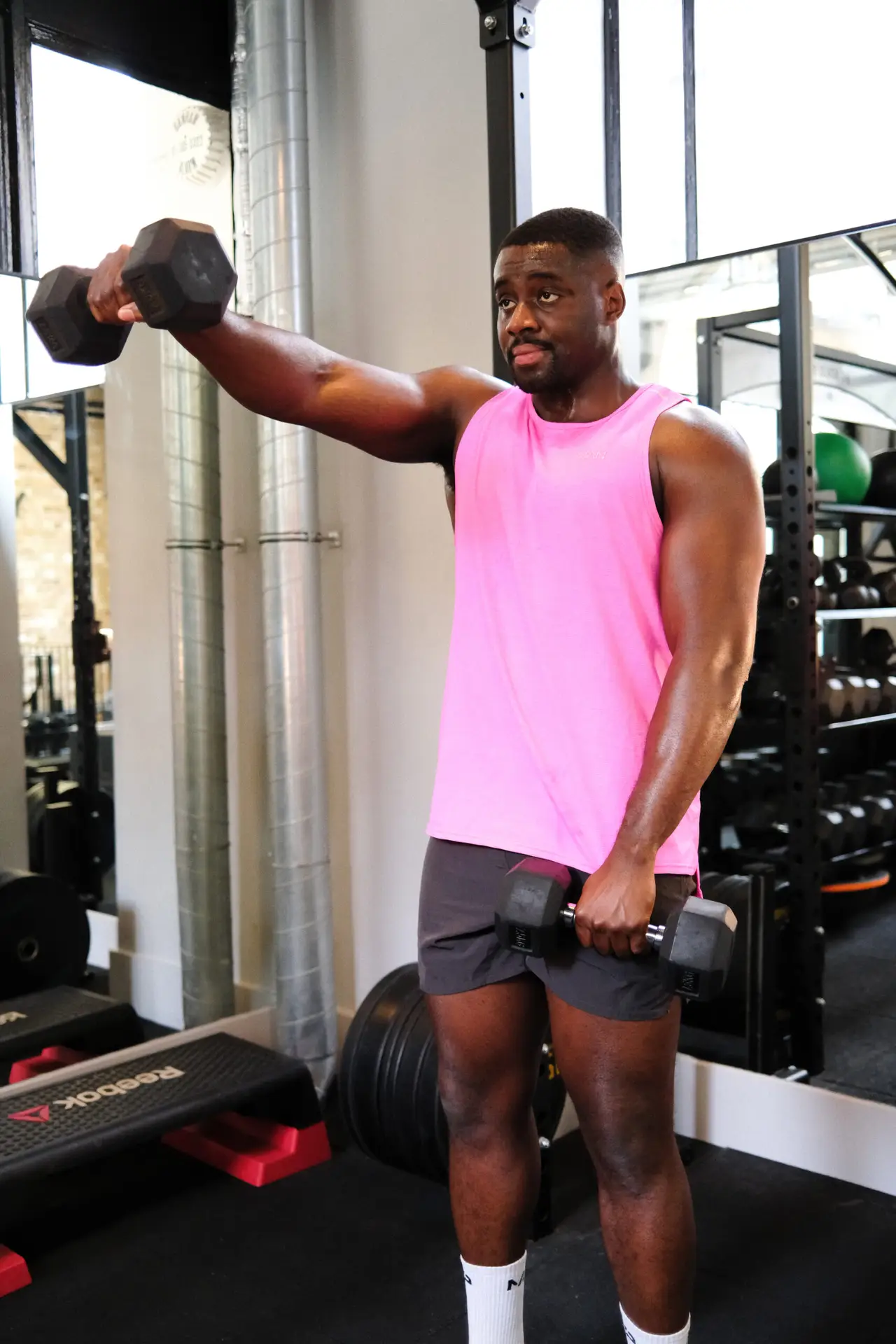
3. Dumbbell lateral raise
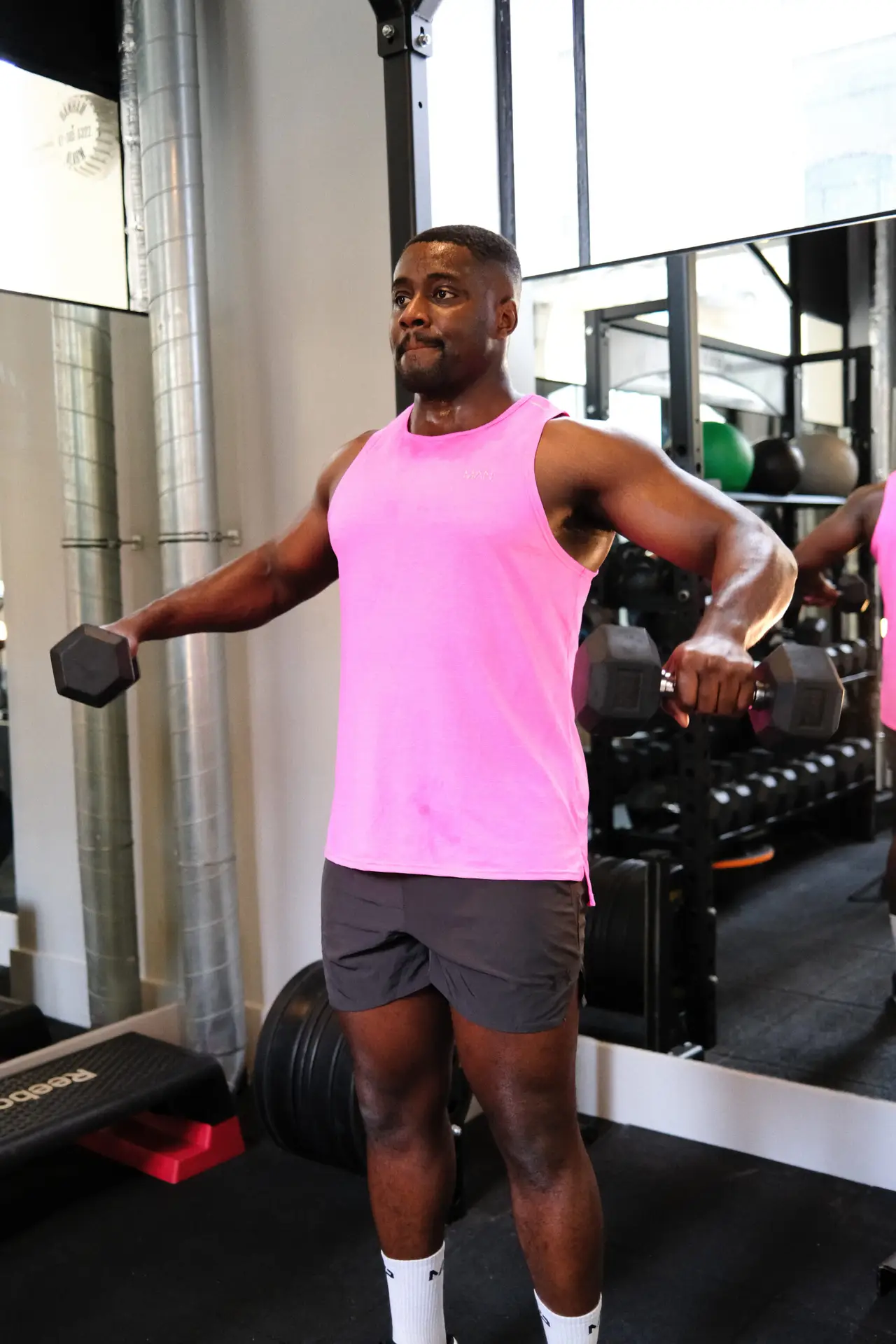
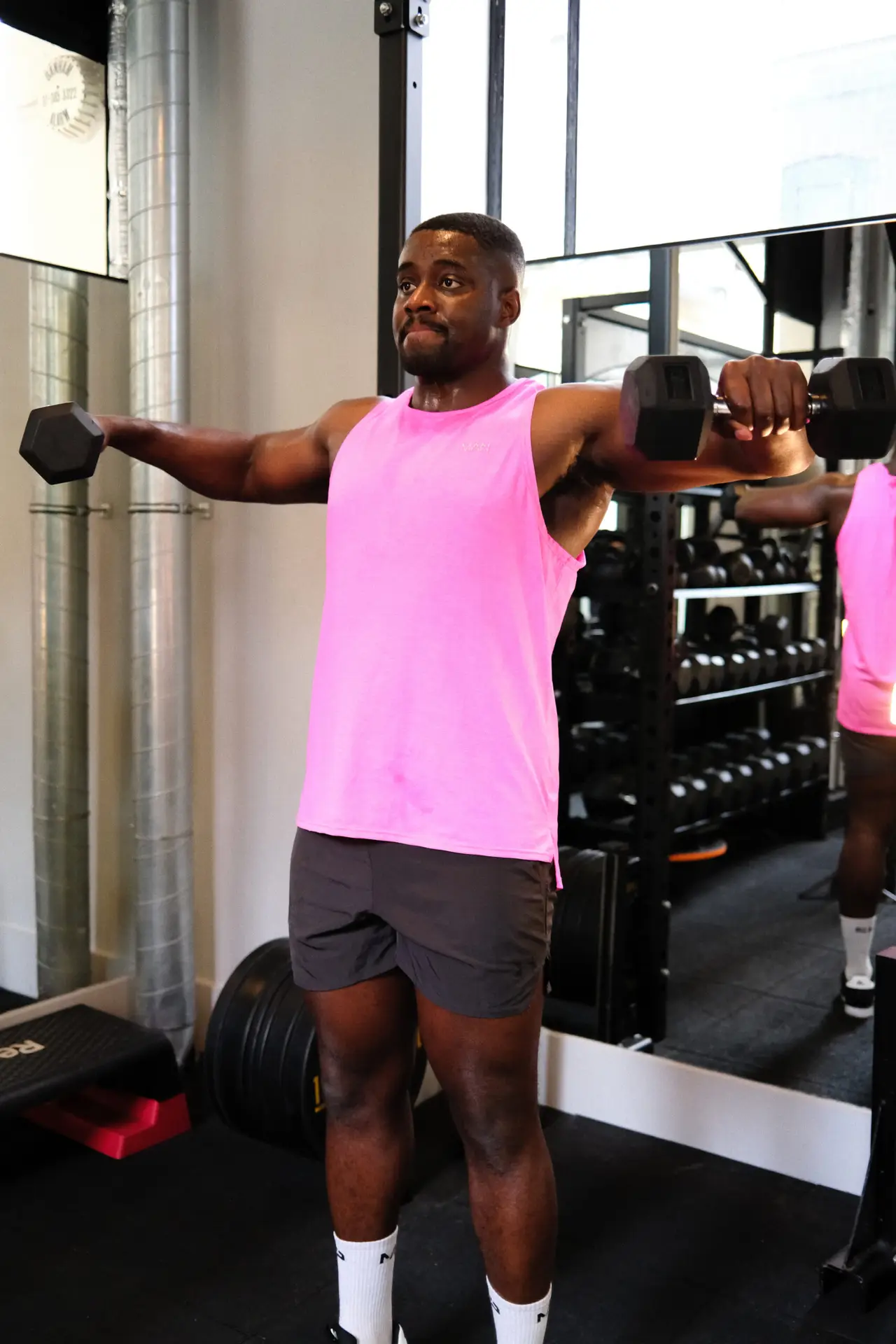
The lateral raise isolates the side of your shoulder, the lateral deltoid. This part of the muscle adds width to your shoulders.
- Stand tall with a dumbbell at each side.
- With a slight bend in your elbows, raise your arms out to the sides.
- Stop at shoulder height.
- Lower slowly, taking about 2 to 3 seconds.
Key point: use a lighter weight with clean form rather than swinging a heavy one. If your body rocks, the weight is too heavy.
Video: Lateral raises. Watch this 12REPS demo to see how high to lift and how slowly to lower the dumbbells.
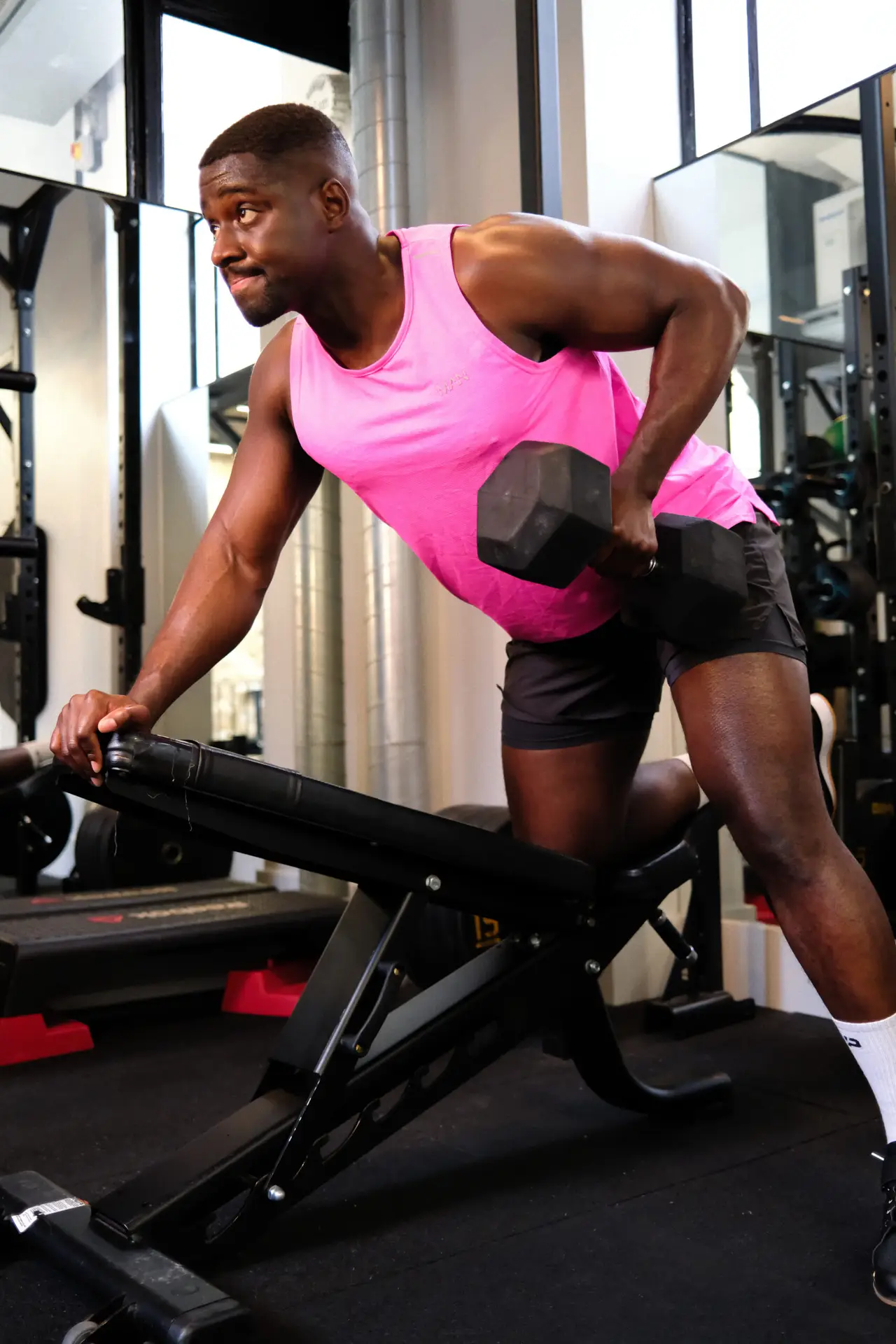
4. Dumbbell single-arm row
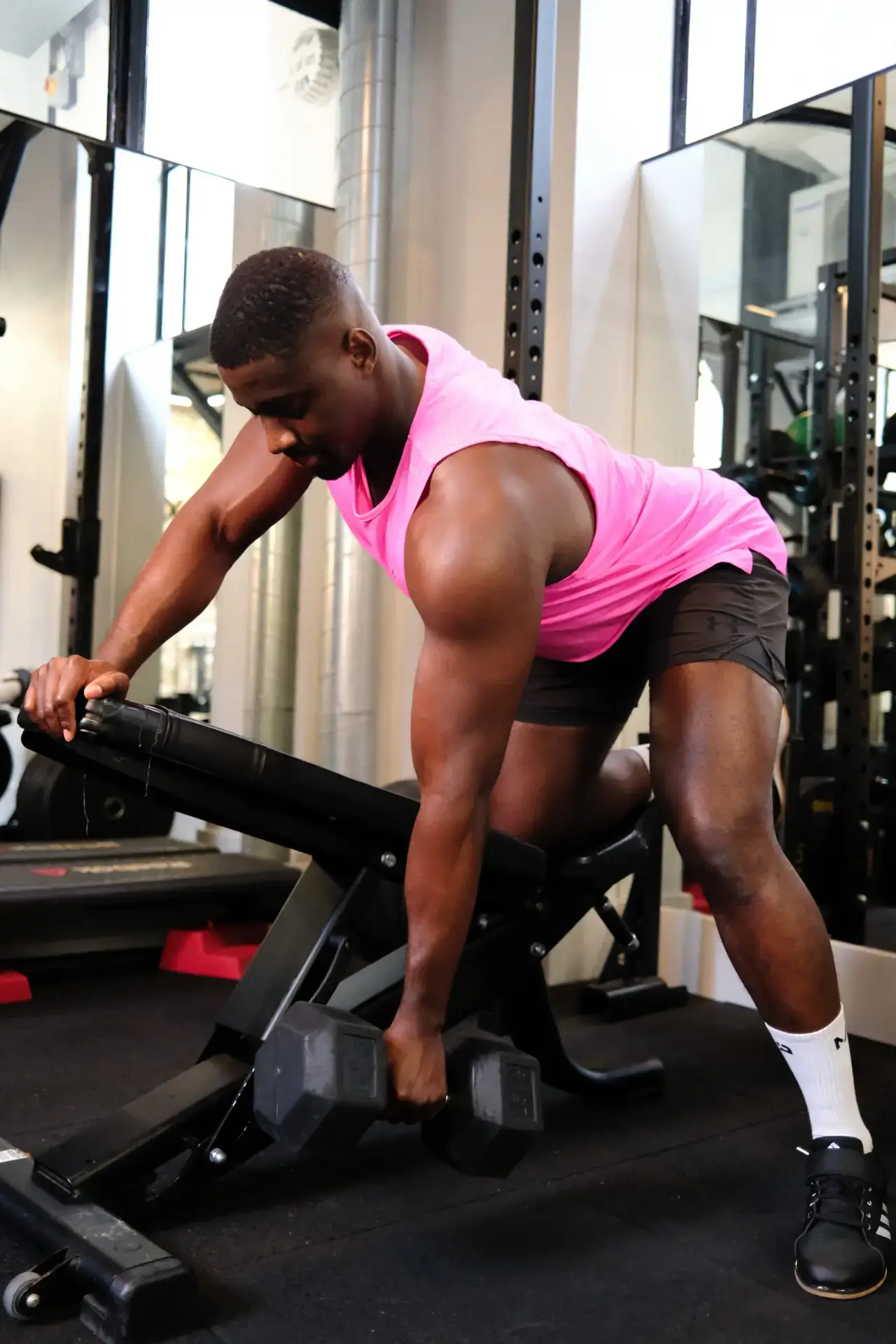
The single-arm row trains your lats, the large muscles down the sides of your back, plus your upper back and biceps. Working one side at a time helps you notice if one arm is weaker. See the dumbbell single-arm row exercise demo.
- Place one knee and the same-side hand on a bench.
- Hold a dumbbell in your free hand, arm straight, back flat.
- Row the dumbbell toward your hip, keeping your elbow close to your body.
- Lower it slowly and finish all reps before switching sides.
Key point: don’t twist your torso to lift the weight. Keep your hips and shoulders square to the floor.
Video: Dumbbell single arm row. This demo shows the bench setup and the path of the dumbbell toward your hip.
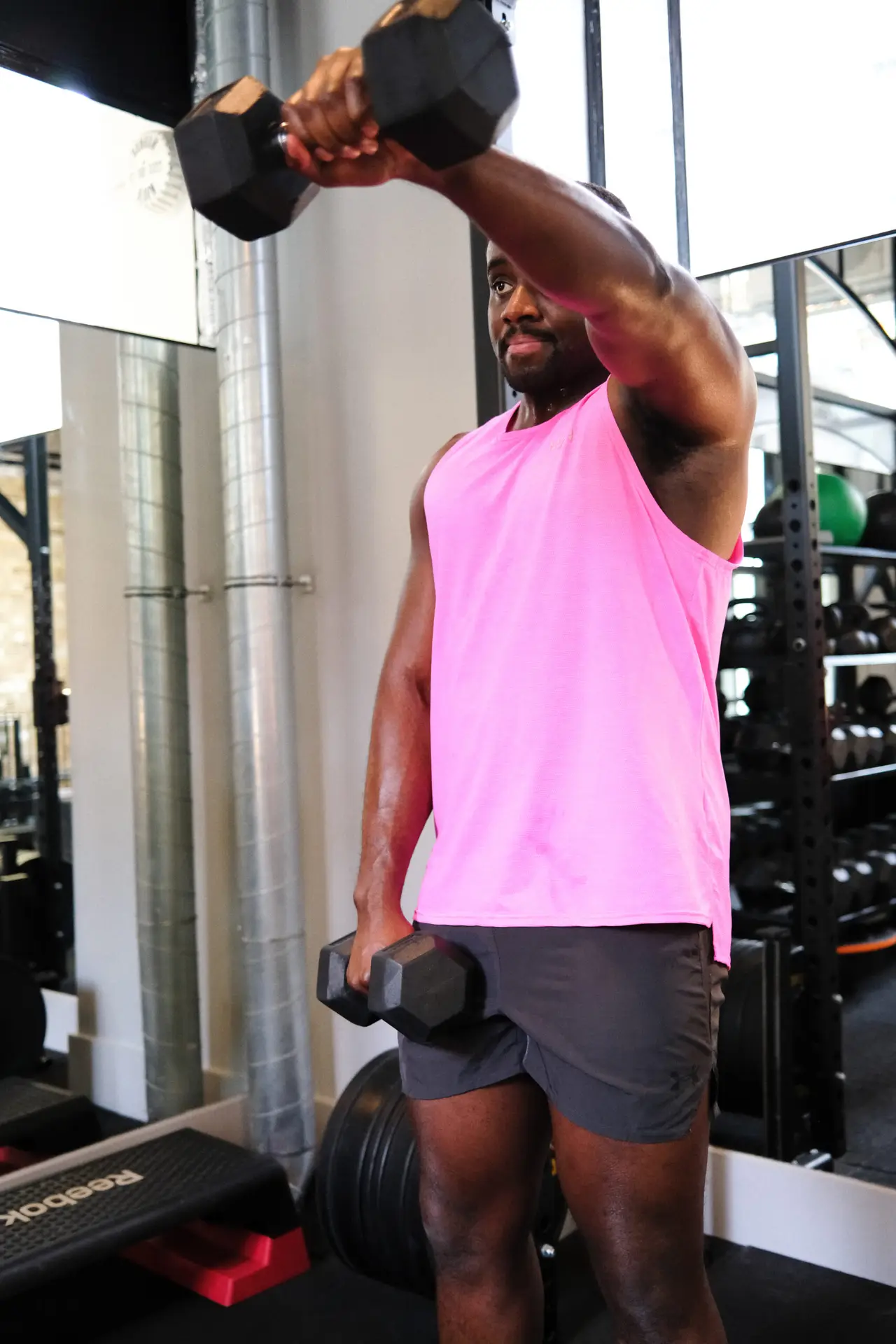
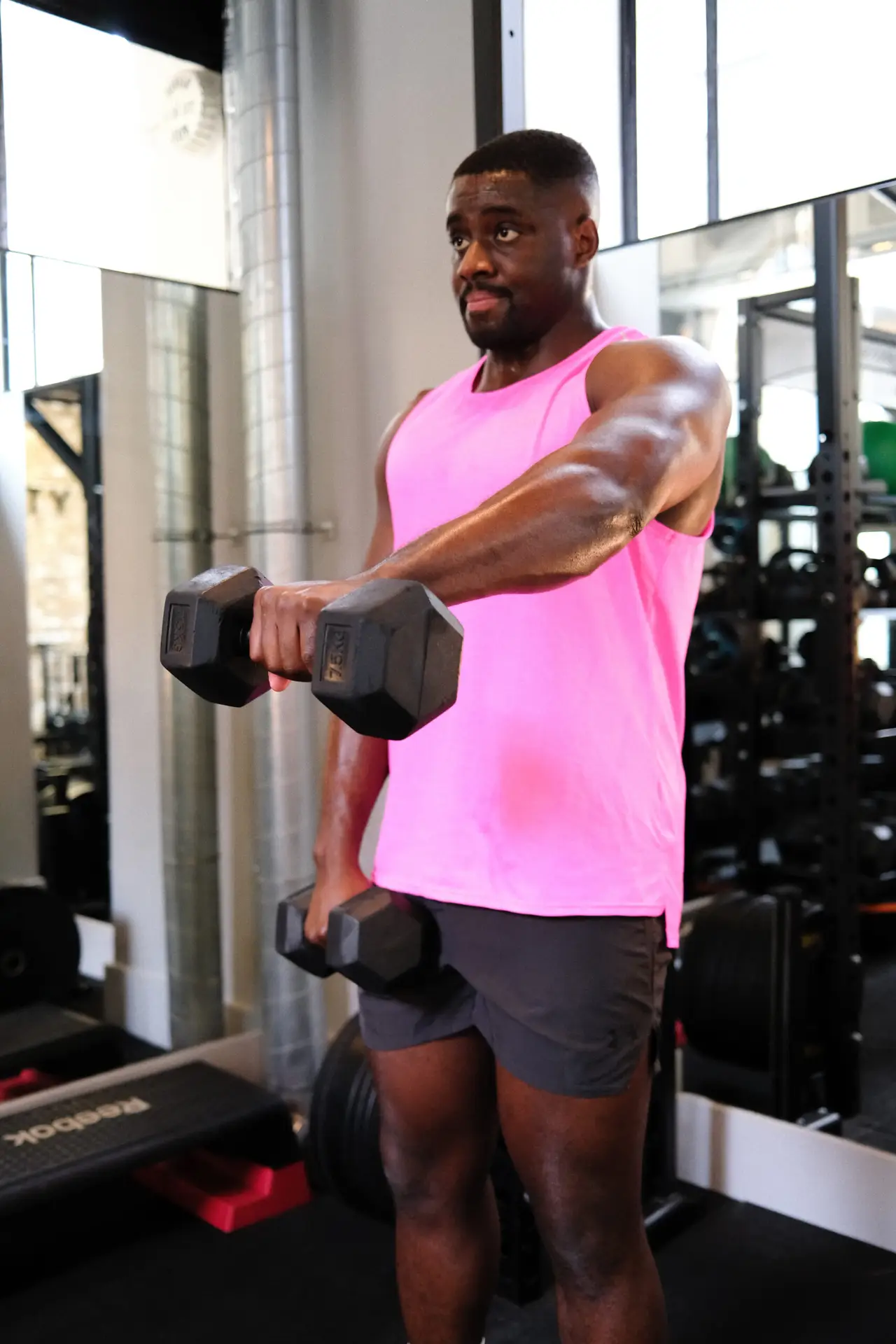
5. Dumbbell front raise
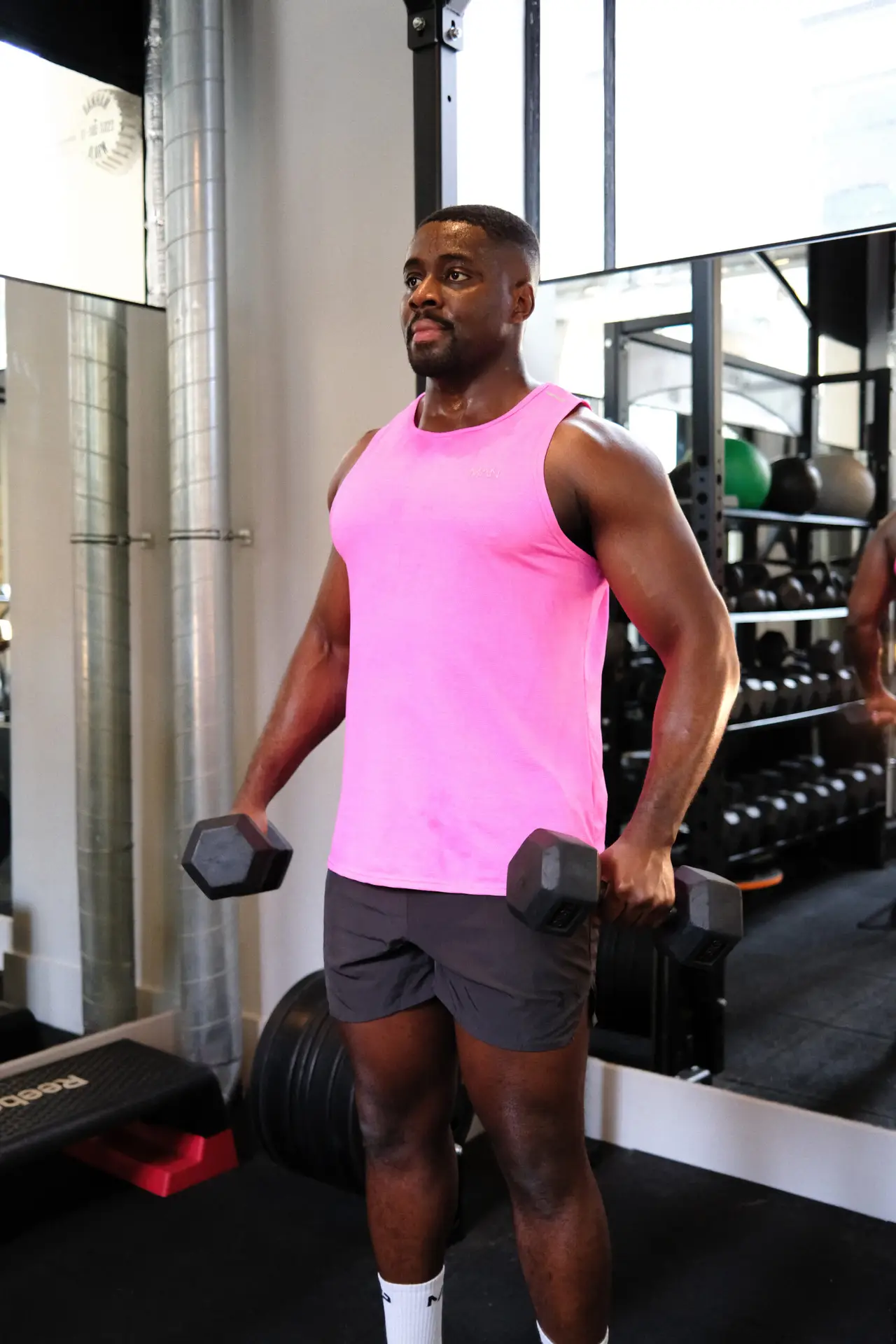
The front raise isolates the front of your shoulder, the anterior deltoid. This part already works hard in the shoulder press, so keep front raises light and controlled.
- Stand tall with the dumbbells in front of your thighs.
- Raise one or both dumbbells straight in front of you to shoulder height.
- Pause briefly, then lower slowly.
If your shoulders feel tired from pressing, you can do fewer sets here. Clean reps matter more than the number of sets.
6. Pull-ups or assisted pull-ups
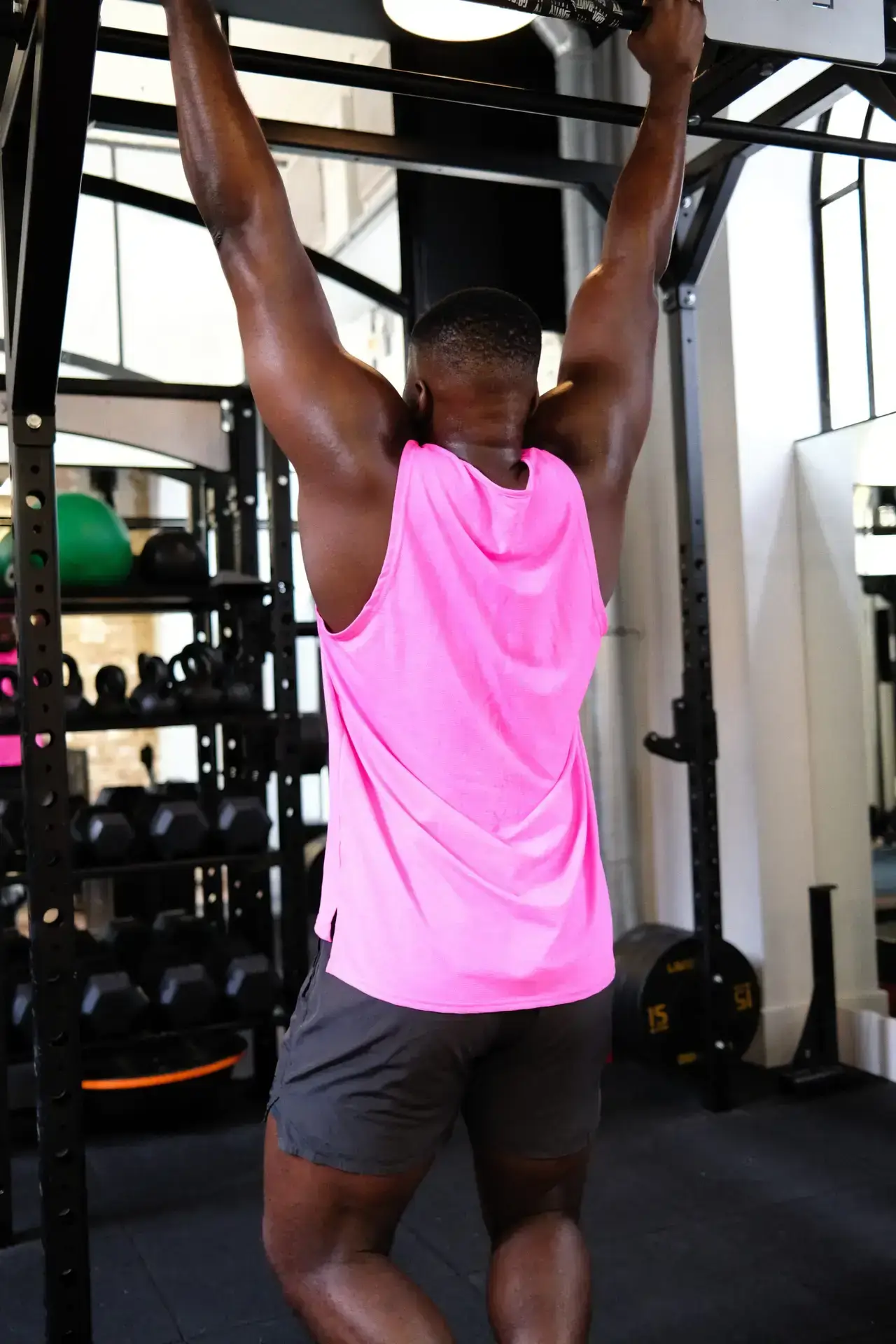
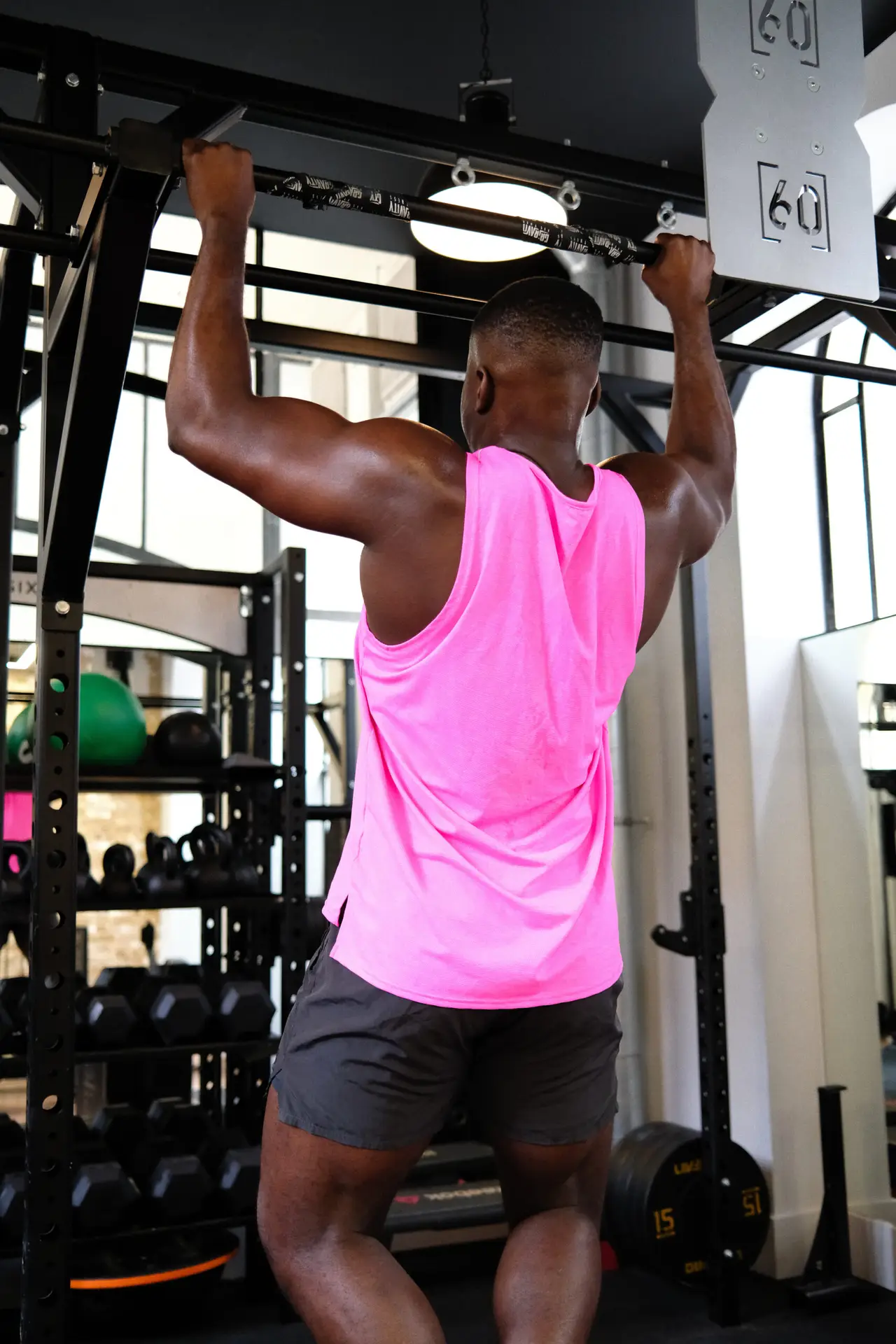
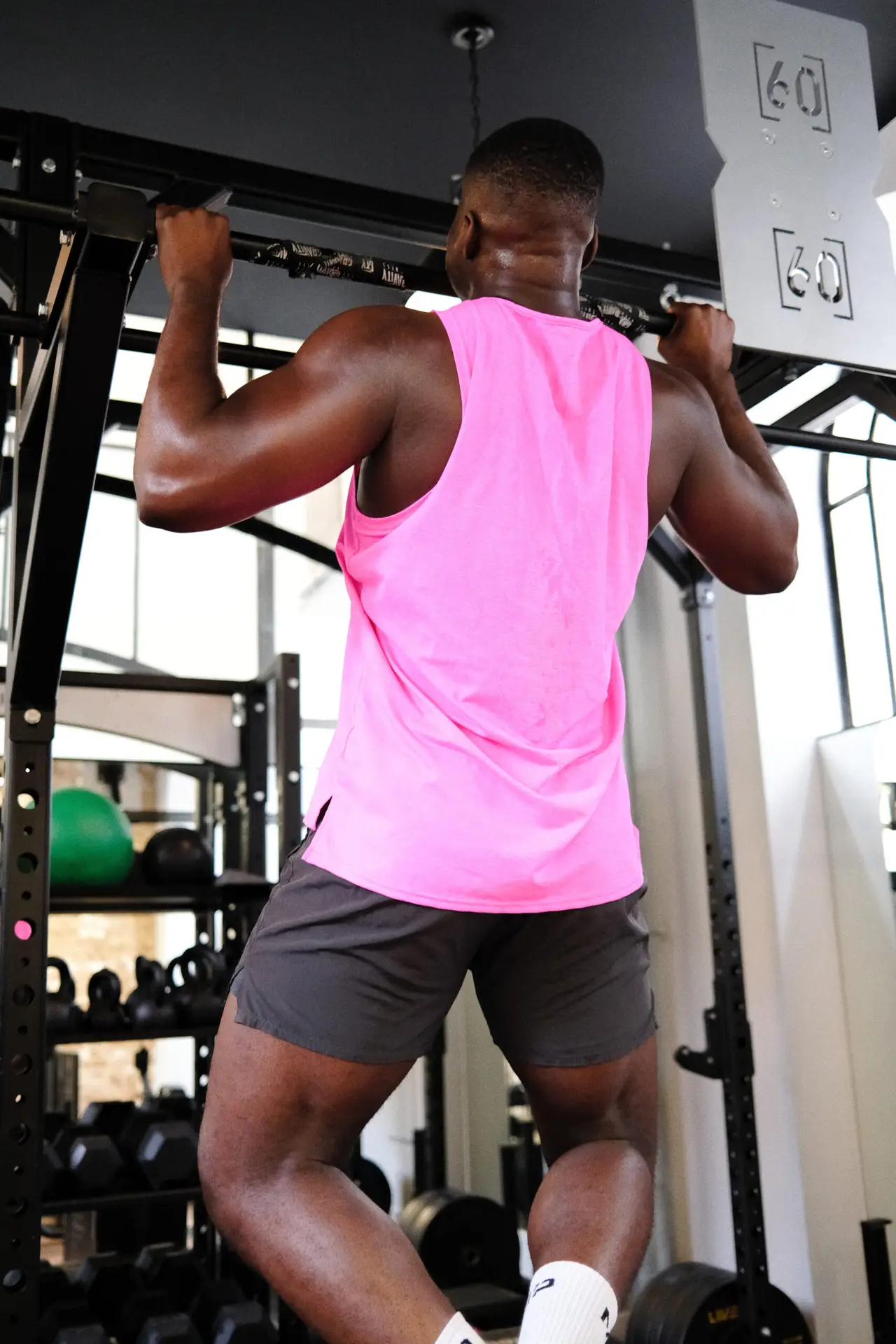
Pull-ups train your whole back, especially your lats, plus your biceps and grip. This is the one exercise in the session that needs a pull-up bar instead of dumbbells.
- Hang from the bar with your hands slightly wider than your shoulders.
- Pull your shoulder blades down, then pull your chest toward the bar.
- Lift until your chin clears the bar.
- Lower slowly to a full hang.
If you can’t do 10 bodyweight pull-ups yet, use a resistance band or an assisted pull-up machine so you can work in the 10 to 12 rep range. Our guide on how to do your first pull-up sets out a step-by-step path.
How to progress this workout
Progressive overload means making your training a little harder over time. Each week, aim to add a rep to your sets or use a slightly heavier dumbbell. Small, steady steps add up.
The ACSM suggests raising the load by 2 to 10% once you can do one or two reps more than your target (ACSM position stand, 2009). With dumbbells, the jump to the next pair is often bigger than that. So add reps first, and move up once you reach 12 reps on every set.
Do this workout twice a week, with at least 48 hours between sessions. Training each muscle group at least twice a week tends to build more muscle than once a week (Schoenfeld et al., 2016).
Write down the weight, sets and reps for every exercise. Then you always know what to beat next time.
Common mistakes to avoid
- Going too heavy. If your form breaks down before 10 reps, the weight is too heavy. Drop it and own every rep.
- Rushing the reps. Lift with control and pause briefly at the top of each rep.
- Skipping the lowering phase. Take about 2 to 3 seconds to lower the weight. This keeps tension on the muscle and your form tidy.
- Shrugging on raises. Keep your shoulders down and away from your ears on lateral and front raises.
- Half reps on pull-ups. Start each rep from a full hang and finish with your chin over the bar.
Train this session with 12REPS
You can do this workout on your own with a notebook. If you’d rather have it set out for you, 12REPS builds training around your goal, the equipment you have and your time. Each exercise has a demonstration from a qualified personal trainer.
You log your reps and weight for every set, and the app remembers what you lifted, so you have a number to beat next session. See how the 12REPS app works.
Where this workout fits in your week
This session takes about 45 to 60 minutes. Pair it with a lower-body day for a simple upper/lower week. The lower body strength workout uses squats, lunges, Romanian deadlifts, step-ups and hip thrusts.
If you train in a full gym, try the chest and biceps workout on another day to cover your chest and arms. For a complete three-day plan, see the 12-week push/pull/legs plan.
Dumbbell shoulder and back workout FAQs
Can I train shoulders and back on the same day?
Yes. Shoulder presses and raises push, and rows and pull-ups pull. Alternating them lets one area rest while the other works.
Can I do this workout without a pull-up bar?
You can swap pull-ups for another row, such as extra sets of single-arm rows. You will lose some lat work from the vertical pull, so add a bar when you can.
How heavy should my dumbbells be?
Heavy enough that the last one or two reps of each set are hard, but light enough to keep good form for 10 reps. Most people use lighter dumbbells for raises than for presses and rows.
Sources
- Strength and Hypertrophy Adaptations Between Low- vs. High-Load Resistance Training: A Systematic Review and Meta-analysis. Schoenfeld BJ, Grgic J, Ogborn D, Krieger JW. Journal of Strength and Conditioning Research, 2017. https://pubmed.ncbi.nlm.nih.gov/28834797/
- Effects of Resistance Training Frequency on Measures of Muscle Hypertrophy: A Systematic Review and Meta-Analysis. Schoenfeld BJ, Ogborn D, Krieger JW. Sports Medicine, 2016. https://pubmed.ncbi.nlm.nih.gov/27102172/
- Progression models in resistance training for healthy adults (position stand). American College of Sports Medicine. Medicine & Science in Sports & Exercise, 2009. https://pubmed.ncbi.nlm.nih.gov/19204579/