

By Will Duru, BSc (Hons) Sport and Exercise Science, Award-winning Personal Trainer with over 10 years of experience in strength training
Your body just did something extraordinary. Growing and delivering a baby is the most demanding physical feat most women will ever experience. Now you want to feel strong again.
But postpartum training is not about bouncing back. It is about rebuilding forward. Your body has changed. Your priorities have changed. Your training must reflect both.
I have worked with dozens of new mothers returning to exercise. The ones who succeed are not those who rush back to their old routines. They are the ones who respect the recovery process, address postpartum specific needs, and progress systematically.
This guide provides everything you need to rebuild strength safely after pregnancy. From the first weeks postpartum through full return to training, you will know exactly what to do and when to do it.
Important: Always get medical clearance before starting any postpartum exercise programme. Most healthcare providers recommend waiting until your 6 week postnatal check, though this varies based on delivery type and individual recovery.
Understanding Your Postpartum Body
Before jumping into exercises, you need to understand what happened to your body and what needs attention.
What Pregnancy Changed
Core and abdominal muscles. Your rectus abdominis (the six pack muscles) stretched and likely separated to accommodate your growing baby. This separation, called diastasis recti, affects most women to some degree. The connective tissue between the muscles thinned and weakened.
Pelvic floor. The muscles that support your bladder, uterus, and bowel were stretched and stressed during pregnancy and delivery. Whether you delivered vaginally or by caesarean, your pelvic floor needs rehabilitation.
Posture and alignment. Pregnancy shifts your centre of gravity forward. Your lower back curves more. Your shoulders round. These postural changes do not automatically reverse after delivery.
Hormonal effects on joints. Relaxin, the hormone that loosened your joints for delivery, remains elevated for months postpartum, especially if breastfeeding. Your joints are less stable than before pregnancy.
Overall strength and conditioning. Unless you trained consistently through pregnancy, you likely lost significant strength and cardiovascular fitness. Even if you did train, the final weeks typically involve reduced activity.
What This Means for Training
You cannot simply resume your pre-pregnancy routine. Your core does not function the same way. Your pelvic floor may not handle impact or heavy loads. Your joints are more vulnerable to injury.
Postpartum training must:
- Rebuild core function from the inside out
- Restore pelvic floor strength and coordination
- Correct postural imbalances from pregnancy
- Progress gradually to avoid injury
- Accommodate the realities of new motherhood (fatigue, time constraints, feeding schedules)
Phase 1: Foundation (Weeks 6 to 10)
This phase begins after medical clearance, typically around 6 weeks postpartum. The focus is reconnecting with your core and pelvic floor, not intense exercise.
Goals
- Restore mind-muscle connection to deep core muscles
- Begin pelvic floor rehabilitation
- Gentle movement to improve circulation and mood
- Establish sustainable exercise habits around baby’s schedule
Daily Core Reconnection (5 to 10 Minutes)
Perform these exercises daily. They can be done while baby naps or even while feeding.
Diaphragmatic Breathing
Exercise | Duration | Notes |
Diaphragmatic Breathing | 2 to 3 minutes | Lie on back, knees bent. Breathe into belly, feeling ribs expand. Exhale fully. |
This is not just relaxation. Proper breathing is the foundation of core function. Your diaphragm works with your pelvic floor and deep abdominals as a unit.
Connection Breath
Exercise | Reps | Notes |
Connection Breath | 10 breaths | Inhale and relax pelvic floor. Exhale and gently lift pelvic floor while drawing lower belly in. |
This teaches your core muscles to work together again. The exhale activates the deep stabilisers.
Pelvic Floor Activation
Exercise | Reps | Notes |
Pelvic Floor Lift | 10 reps | Gently contract pelvic floor as if stopping urine. Hold 5 seconds. Fully release. |
Quick Flicks | 10 reps | Quick contract and release. Trains fast-twitch fibres. |
Do not hold your breath. Do not squeeze glutes or inner thighs. Isolate the pelvic floor.
Gentle Core Activation
Exercise | Sets | Reps | Notes |
Heel Slides | 2 | 10 each leg | Lie on back, slide heel out and back while maintaining neutral spine |
Toe Taps | 2 | 10 each leg | Tabletop position, lower one toe to floor and return |
Pelvic Tilts | 2 | 10 | Gently tilt pelvis, flattening lower back, then release |
Movement Sessions (2 to 3 Per Week, 15 to 20 Minutes)
Walking
Start with 10 to 15 minute walks. Gradually increase duration as you feel ready. Walking improves circulation, mood, and provides gentle cardiovascular work.
Gentle Stretching
Stretch | Duration | Target |
Cat Cow | 1 minute | Spine mobility |
Child’s Pose | 30 seconds | Lower back, hips |
Chest Opener | 30 seconds each side | Chest, shoulders (counters breastfeeding posture) |
Hip Flexor Stretch | 30 seconds each side | Hip flexors (tight from sitting and feeding) |
What to Avoid in Phase 1
- Crunches, sit ups, or any exercise that causes your belly to dome or cone
- Planks or front loaded exercises
- Running, jumping, or high impact activities
- Heavy lifting
- Exercises that cause pelvic pressure, pain, or leaking
Signs to Stop and Consult a Professional
- Urinary or faecal incontinence during exercise
- Pelvic pain or heaviness
- Significant doming or coning of the abdomen
- Bleeding that increases with activity
- Pain at caesarean incision site
If you experience any of these, consult a pelvic floor physiotherapist before continuing.
Phase 2: Rebuilding (Weeks 10 to 16)
With a foundation established, you can begin introducing more substantial strength work while continuing core rehabilitation.
Goals
- Progress core exercises to more challenging variations
- Begin bodyweight and light resistance strength training
- Continue pelvic floor work
- Build exercise duration and frequency
Core Progression (Daily, 10 Minutes)
Continue:
- Connection breaths
- Pelvic floor exercises
Add:
Exercise | Sets | Reps | Notes |
Dead Bug | 2 | 8 each side | Opposite arm and leg lower while maintaining core stability |
Bird Dog | 2 | 8 each side | From hands and knees, extend opposite arm and leg |
Modified Side Plank | 2 | 20 seconds each side | Knees bent, lift hips |
Glute Bridge | 2 | 12 | Focus on exhale and core engagement at top |
Diastasis Recti Check:
Before progressing, check for separation:
- Lie on your back, knees bent
- Lift head slightly while pressing fingers above and below belly button
- Note width (finger widths) and depth of separation
Separation greater than 2 finger widths or significant depth warrants working with a pelvic floor physiotherapist before advancing.
Strength Sessions (3 Per Week, 25 to 30 Minutes)
Session A: Lower Body Focus
Exercise | Sets | Reps | Rest | Notes |
Glute Bridge | 3 | 12 | 60 seconds | Exhale and engage core at top |
Bodyweight Squat | 3 | 10 | 60 seconds | Only as deep as feels comfortable |
Split Stance Romanian Deadlift | 2 | 10 each leg | 60 seconds | Bodyweight or very light weight |
Step Up | 2 | 10 each leg | 60 seconds | Low step, focus on control |
Calf Raise | 2 | 15 | 45 seconds | Hold wall for balance |
Session B: Upper Body Focus
Exercise | Sets | Reps | Rest | Notes |
Incline Push Up | 3 | 8 to 10 | 60 seconds | Hands on elevated surface |
Band Pull Apart | 3 | 12 | 45 seconds | Posture correction |
Seated Row (band or cable) | 3 | 10 | 60 seconds | Squeeze shoulder blades |
Wall Press | 2 | 10 | 45 seconds | Standing chest press against wall |
Band Bicep Curl | 2 | 12 | 45 seconds | Light resistance |
Session C: Full Body
Exercise | Sets | Reps | Rest | Notes |
Squat to Box | 3 | 10 | 60 seconds | Sit back to chair or bench |
Incline Push Up | 2 | 8 | 60 seconds | Progress to lower surface as able |
Glute Bridge | 2 | 12 | 60 seconds | Single leg if ready |
Band Row | 2 | 10 | 60 seconds | Standing or seated |
Bird Dog | 2 | 8 each side | 45 seconds | Core stability |
Dead Bug | 2 | 8 each side | 45 seconds | Core stability |
What to Avoid in Phase 2
- Traditional planks until core can maintain without doming
- Heavy loads
- Running or high impact (unless cleared by pelvic floor physio)
- Any exercise causing incontinence or pelvic pressure

Phase 3: Building Strength (Weeks 16 to 24)
Your core should be functioning better. You can now progress to more challenging exercises and begin adding meaningful resistance.
Goals
- Introduce progressive resistance training
- Continue core strength development
- Build towards pre-pregnancy exercise capacity
- Prepare for return to higher intensity activities
Core Work (3 to 4 Times Per Week, 10 Minutes)
Exercise | Sets | Duration/Reps | Notes |
Dead Bug with Band | 2 | 8 each side | Resistance band adds challenge |
Side Plank | 2 | 20 to 30 seconds each | Progress to straight legs |
Pallof Press | 2 | 10 each side | Anti-rotation core work |
Bird Dog with Hold | 2 | 5 second holds, 6 each | Extended time under tension |
Modified Plank | 2 | 20 to 30 seconds | From knees, progress to full plank |
Strength Sessions (3 Per Week, 35 to 40 Minutes)
Session A: Lower Body
Exercise | Sets | Reps | Rest | Notes |
Goblet Squat | 3 | 10 | 90 seconds | Light dumbbell |
Romanian Deadlift | 3 | 10 | 90 seconds | Dumbbells, focus on hamstrings |
Reverse Lunge | 3 | 8 each leg | 60 seconds | Bodyweight or light dumbbells |
Hip Thrust | 3 | 12 | 60 seconds | Shoulders on bench, bodyweight or light weight |
Single Leg Glute Bridge | 2 | 10 each leg | 60 seconds | Progress from two legs |
Calf Raise | 3 | 15 | 45 seconds | Add light weight |
Session B: Upper Body
Exercise | Sets | Reps | Rest | Notes |
Push Up (modified or full) | 3 | 8 to 10 | 60 seconds | Progress to floor when ready |
Dumbbell Row | 3 | 10 each arm | 60 seconds | Supported on bench |
Dumbbell Shoulder Press | 3 | 10 | 60 seconds | Seated or standing |
Face Pull | 3 | 12 | 45 seconds | Band or cable |
Bicep Curl | 2 | 12 | 45 seconds | Dumbbells |
Tricep Pushdown | 2 | 12 | 45 seconds | Band or cable |
Session C: Full Body
Exercise | Sets | Reps | Rest | Notes |
Trap Bar Deadlift or Sumo Squat | 3 | 8 | 90 seconds | Light to moderate weight |
Push Up | 3 | 8 to 10 | 60 seconds | Appropriate progression |
Step Up | 3 | 8 each leg | 60 seconds | Add dumbbells |
Cable or Band Row | 3 | 10 | 60 seconds | Focus on posture |
Pallof Press | 2 | 10 each side | 45 seconds | Core anti-rotation |
Plank | 2 | 20 to 30 seconds | 45 seconds | Full if ready |
Returning to Impact
If you want to return to running or high-impact exercise, this is typically the phase to begin. However:
- Get clearance from a pelvic floor physiotherapist
- Pass basic readiness tests (single leg balance, hop without leaking, no pelvic pressure)
- Start with walk/run intervals, not continuous running
- Progress very gradually
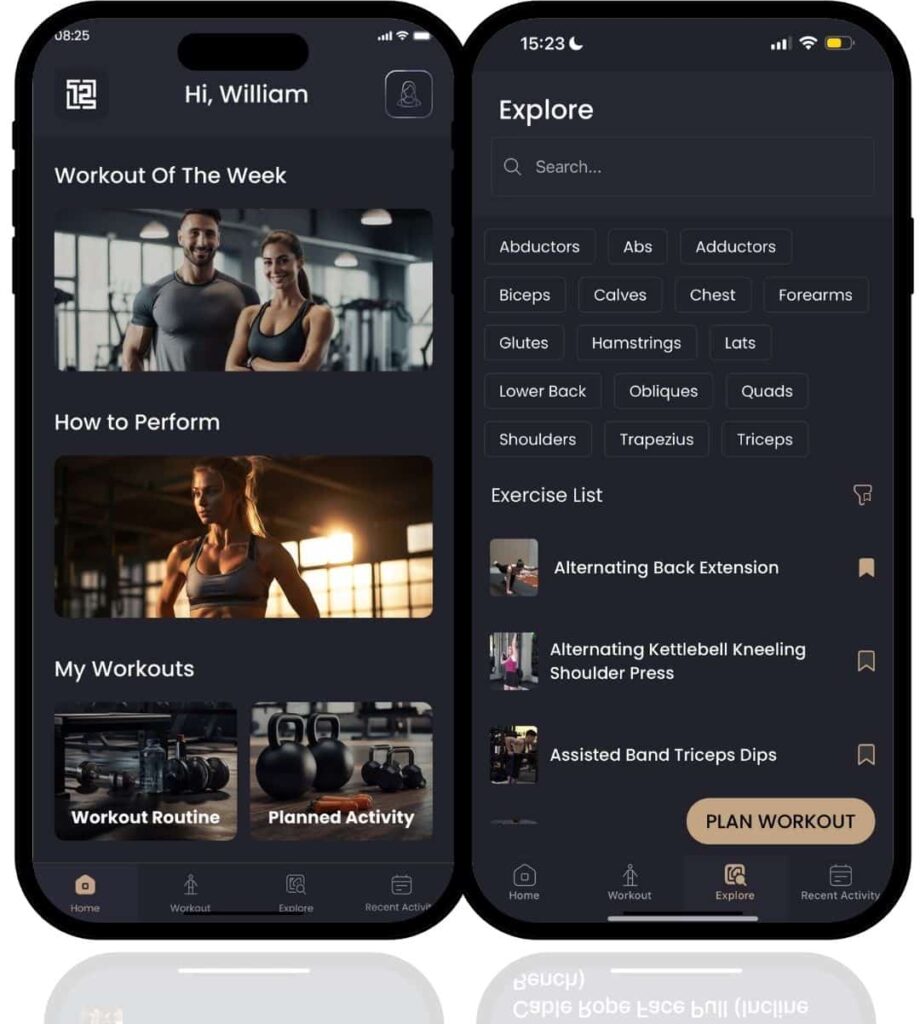
The 12REPS app can help structure your return to impact activities alongside strength training.
Phase 4: Full Return (24 Weeks and Beyond)
By now, your core and pelvic floor should be functioning well. You can train more like you did pre-pregnancy, with continued attention to proper form and progressive overload.
Goals
- Return to full strength training capacity
- Continue building strength beyond pre-pregnancy levels
- Maintain core and pelvic floor health
- Establish long term sustainable training habits
Training Structure
You can now follow general strength training programmes appropriate for your goals. The 12REPS app provides programmes designed for women at all stages, including those who have recently returned from pregnancy.
Recommended frequency: 3 to 4 strength sessions per week
Programme options:
- Full body 3 days per week
- Upper/lower split 4 days per week
- Push/pull/legs if time allows
Continued Core Maintenance
Even after full return, maintain core work:
- Include anti-rotation exercises (Pallof press, bird dog)
- Include anti-extension exercises (dead bug, plank variations)
- Continue pelvic floor awareness during heavy lifts
- Exhale on exertion to maintain intra-abdominal pressure safely
Exercises to Progress Carefully
Some exercises require extra attention even after full return:
Barbell back squat: Ensure core can maintain pressure without doming. Start light and progress slowly.
Deadlift: Use trap bar or sumo stance initially. These reduce stress on the anterior core.
Overhead pressing: Avoid excessive arching of lower back. Keep ribs down.
Running: Continue gradual progression. Many women need 6 to 12 months before returning to pre-pregnancy running volume.
Real World Considerations
Training with Limited Sleep
New mothers are exhausted. Your programme must accommodate this reality.
- Shorter sessions are fine. Twenty minutes of focused work beats skipping entirely.
- Reduce intensity when severely sleep deprived.
- Prioritise consistency over perfection.
- Listen to your body. Some days, a walk is the right choice.
Training with Baby Present
Many mothers train at home with baby nearby.
- Have a safe space for baby to observe or nap.
- Expect interruptions. Build in flexibility.
- Use equipment that allows quick transitions (dumbbells, bands).
- Consider babywearing for walking or certain exercises.
Breastfeeding Considerations
- Stay hydrated. Drink water before, during, and after training.
- Feed or pump before training to reduce discomfort.
- Wear supportive sports bras.
- High-intensity training does not affect milk supply if you eat and hydrate adequately.
Diastasis Recti Management
If you have significant diastasis recti:
- Work with a pelvic floor physiotherapist
- Avoid exercises that cause doming until the gap closes
- Focus on connection breathing and deep core activation
- Progress slowly, even if you feel ready for more
Caesarean Recovery
Caesarean delivery requires additional consideration:
- Wait for full scar healing before loading the abdomen (typically 8 to 12 weeks)
- Gentle scar massage can help once healed
- Progress more slowly through phases
- Be cautious with exercises that stretch the abdominal wall
Using the 12REPS App for Postpartum Training
The 12REPS app supports postpartum training in several ways:
Appropriate programme selection: Choose programmes designed for your current phase and capabilities.
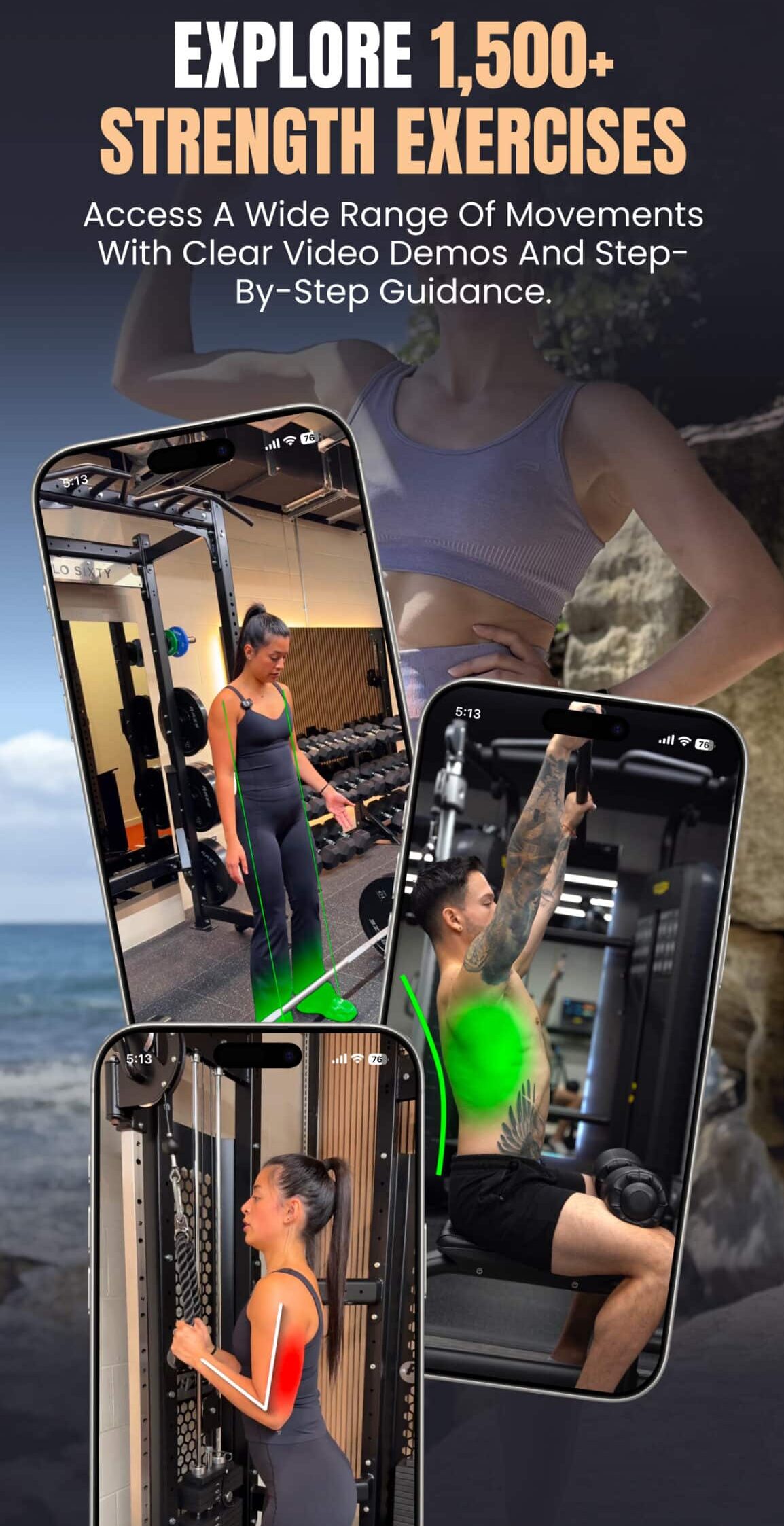
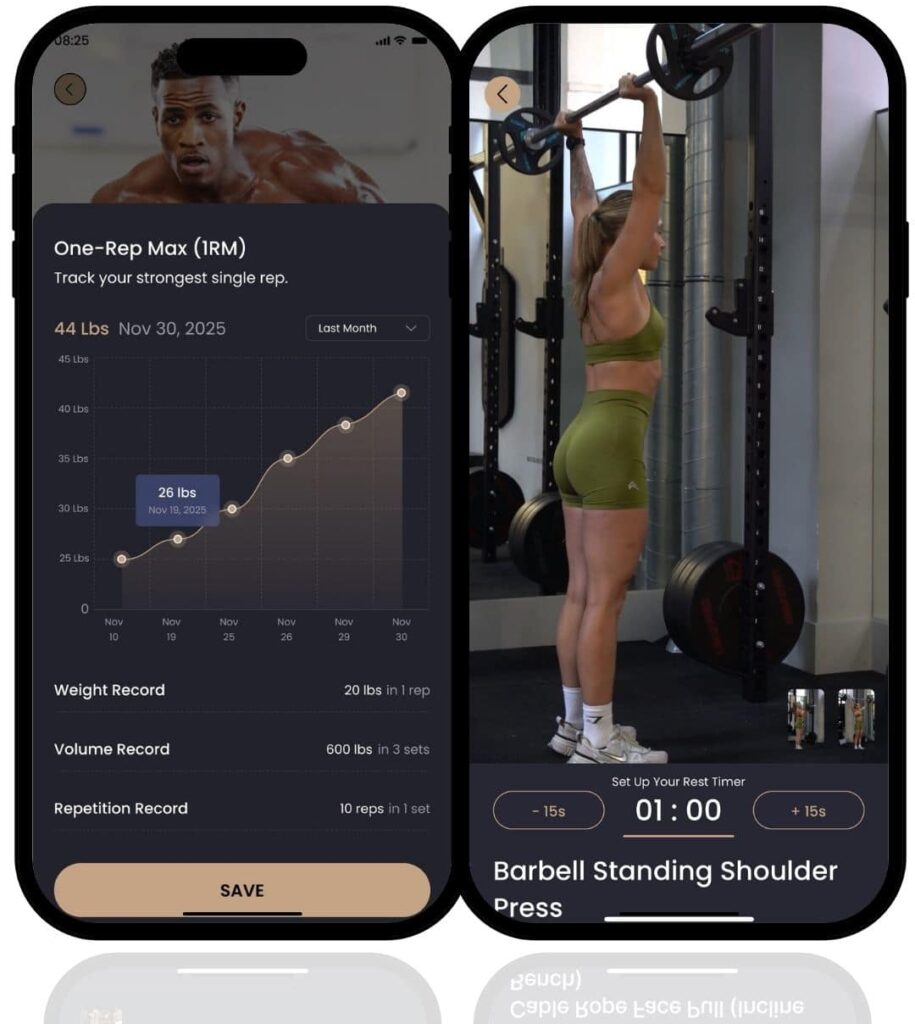
Video demonstrations: Every exercise includes clear video showing proper form, essential for safely performing movements while rebuilding core function.
Progress tracking: Log every workout to see your strength returning over time. Watching numbers increase is incredibly motivating after the physical demands of pregnancy.
Flexible scheduling: Tell the app how many days you can train. It adapts to your reality as a new mother.
Equipment adaptability: Whether you have a full gym or just dumbbells at home, the app provides appropriate programmes.
Personal trainer designed: Workouts are created by qualified trainers, not algorithms. This matters when you need safe, effective programming.
What Success Looks Like
Postpartum strength training success is not about looking a certain way or hitting specific numbers quickly.
Success is:
- Feeling strong and capable in daily activities
- Lifting your growing baby without pain
- Core and pelvic floor functioning properly
- Gradual consistent progress over months
- Sustainable habits that fit your new life
- Improved energy and mood
- Injury-free training
Success is not:
- Rushing back to pre-pregnancy weights
- Ignoring warning signs
- Comparing yourself to others or your former self
- Sacrificing sleep or nutrition for extra training
- Prioritising appearance over function
Give yourself grace. Your body performed a miracle. Rebuilding takes time.
Frequently Asked Questions
When can I start exercising after giving birth?
Most healthcare providers recommend waiting until your 6-week postnatal check. Caesarean deliveries may require longer. Always get medical clearance before starting.
Why do I leak urine when I exercise?
This indicates pelvic floor weakness or dysfunction. It is common but not normal. Work with a pelvic floor physiotherapist and avoid exercises that cause leaking until your pelvic floor is stronger.
How do I know if I have diastasis recti?
Lie on your back with knees bent. Lift your head slightly and press fingers above and below your belly button. A gap wider than 2 finger widths or significant depth indicates diastasis recti. A physiotherapist can assess more thoroughly.
Can I do planks after pregnancy?
Not immediately. Traditional planks place significant load on the anterior core. Progress through the phases in this guide, starting with gentler exercises. Introduce planks only when your core can maintain without doming or pressure.
When can I return to running?
Most experts recommend waiting at least 12 weeks and getting clearance from a pelvic floor physiotherapist. Returning too soon increases injury and prolapse risk.
How long until I feel like myself again?
This varies enormously. Some women feel strong by 6 months postpartum. Others need a year or more. Focus on progress, not timelines.
References
- Mota, P. et al. (2015). Prevalence and risk factors of diastasis recti abdominis from late pregnancy to 6 months postpartum. Manual Therapy. https://pubmed.ncbi.nlm.nih.gov/25787919/
- Goom, T. et al. (2019). Returning to running postnatal: guidelines for medical, health and fitness professionals. British Journal of Sports Medicine Blog. https://blogs.bmj.com/bjsm/2019/03/29/returning-to-running-postnatal-guideline-for-medical-health-and-fitness-professionals/
- Benjamin, D.R. et al. (2014). Effects of exercise on diastasis of the rectus abdominis muscle in the antenatal and postnatal periods. Physiotherapy. https://pubmed.ncbi.nlm.nih.gov/24530168/
- Bø, K. et al. (2017). Exercise and pregnancy in recreational and elite athletes. British Journal of Sports Medicine. https://pubmed.ncbi.nlm.nih.gov/27527989/
Related Articles on just12reps.com
Article | Description | Link |
Strength Training in Perimenopause | Training through hormonal changes. | |
Best Weightlifting App for Women | Find the right app for your training. | |
Complete Beginner’s Guide to Strength Training | Start your journey with proper fundamentals. | |
Bodyweight Exercises for Strength Training at Home | Train effectively with minimal equipment. | |
Glute Focused Strength Training for Women | Build strong glutes with targeted training. |
About the Author: Will Duru holds a BSc (Hons) in Sport and Exercise Science and is an award-winning personal trainer with over 10 years of experience. He has helped dozens of women return to strength training safely after pregnancy, focusing on core rehabilitation, pelvic floor function, and sustainable progress. Will created the 12REPS appto provide structured programmes for women at every stage of life.