




By Will Duru, personal trainer and founder of 12REPS.
The Short Answer
You can estimate your one-rep max (1RM) without lifting your heaviest weight. Do a set of 3 to 10 reps with good form, close to failure, then use a formula.
- Epley formula: 1RM = weight × (1 + reps ÷ 30)
- Brzycki formula: 1RM = weight × 36 ÷ (37 − reps)
For example, if you bench press 100 lb for 5 reps, Epley estimates your 1RM at about 117 lb and Brzycki at about 113 lb. Research suggests these estimates are most accurate when you use 10 reps or fewer.
What Is a One-Rep Max?
Your one-rep max is the heaviest weight you can lift for one full rep with good technique. Coaches use it to measure strength and to set training weights as a percentage of your max, such as 75% of 1RM.
Testing a true 1RM is hard work, takes time to warm up for, and needs a spotter or safety equipment. For most people who train for health, muscle or general strength, I recommend estimating your max instead.
How to Estimate Your 1RM in 5 Steps
- Warm up. Do a general warm-up, then a few lighter sets of the exercise. See my 3-phase warm-up guide.
- Pick a weight you can lift 3 to 10 times. Heavier weights with fewer reps give a more accurate estimate.
- Do one set close to failure. Stop when your form starts to break down or you know you can’t complete another clean rep. Use a spotter or safety arms.
- Record the weight and reps. Only count reps with full range of motion and good form.
- Plug the numbers into a formula, or use the multiplier table below.
1RM Multiplier Table
Multiply the weight you lifted by the number for your reps. The example column uses 100 lb.
| Reps completed | Epley multiplier | Brzycki multiplier | Estimated 1RM from 100 lb |
|---|---|---|---|
| 2 | 1.07 | 1.03 | 103–107 lb |
| 3 | 1.10 | 1.06 | 106–110 lb |
| 4 | 1.13 | 1.09 | 109–113 lb |
| 5 | 1.17 | 1.13 | 113–117 lb |
| 6 | 1.20 | 1.16 | 116–120 lb |
| 7 | 1.23 | 1.20 | 120–123 lb |
| 8 | 1.27 | 1.24 | 124–127 lb |
| 9 | 1.30 | 1.29 | 129–130 lb |
| 10 | 1.33 | 1.33 | 133 lb |
The two formulas agree closely at 10 reps and drift apart at lower reps. If your result falls in a range, use the lower number to set your training weights.
How Accurate Are 1RM Formulas?
The formulas give a useful estimate, not an exact number. Here is what research shows:
- Fewer reps are more accurate. In a 2006 study by Reynolds and colleagues, 70 adults tested their 1RM, 5RM, 10RM and 20RM on the bench press and leg press. A 5-rep max predicted 1RM most accurately. The authors advised using no more than 10 reps in these equations.
- The rep-to-weight link differs by exercise. In the same study, people lifted about 76% of their max for 10 reps on the bench press, but about 70% on the leg press. A single formula can’t fit every lift perfectly.
- Accuracy improves under 10 reps. A 2008 study by Mayhew and colleagues tested 14 equations on 103 college women before and after 12 weeks of training. Predictions were more accurate when the set was fewer than 10 reps. The number of reps people could do at a given percentage of their max also varied a lot between individuals.
- The deadlift may be underestimated. A 1997 study by LeSuer and colleagues found that all seven equations they tested underestimated deadlift 1RM, by about 9 to 14%, as summarized in a 2009 paper by Eston and Evans.
My takeaway as a coach: use the estimate as a guide, retest it every few months, and pay attention to how the weight actually feels.
Exercise Demos
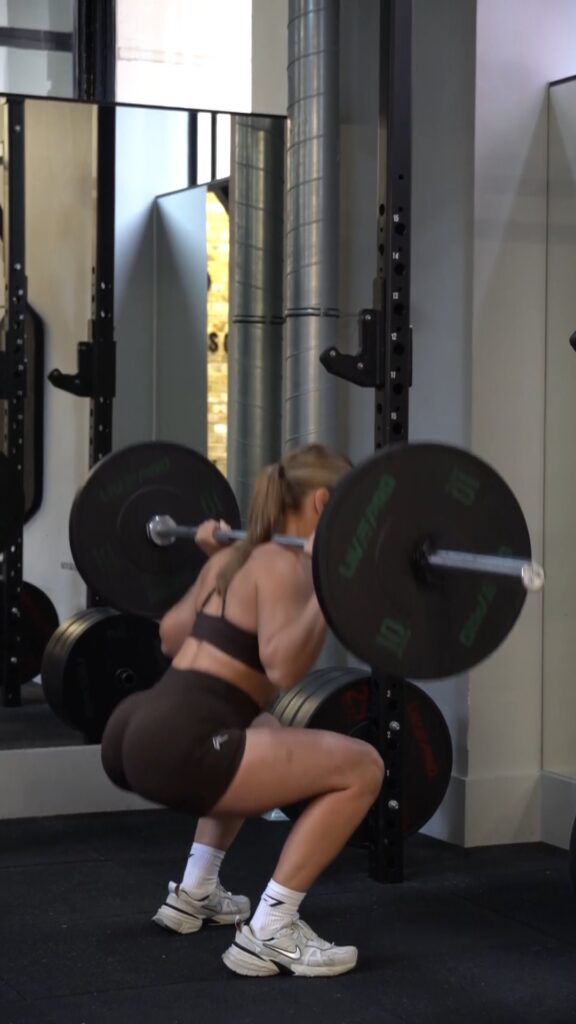
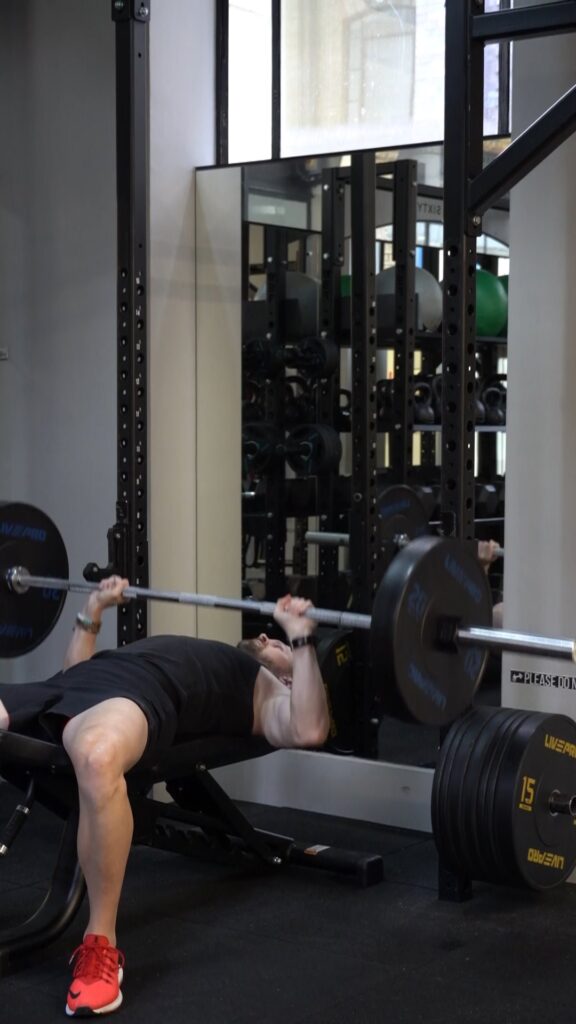
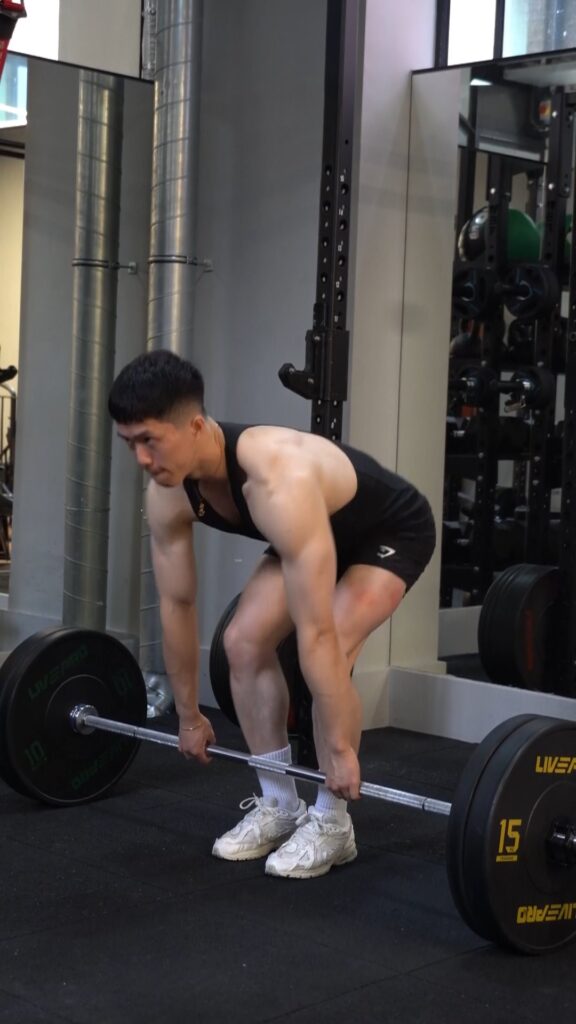
These videos from the 12REPS exercise library show the three lifts people most often estimate.
How to Use Your 1RM in Training
- Set training weights. Many programs use about 65 to 85% of 1RM for most working sets. Check your numbers against how many reps you can do with good form.
- Track progress. If your estimated 1RM rises over time, you are getting stronger, even if you never test a true max. Read my guide to progressive overload.
- Use effort as well as numbers. On days when you feel tired, reps in reserve (how many more reps you could have done) is often a better guide. See RPE vs RIR.
- Retest every 4 to 8 weeks. Use the same exercise, equipment and rep range each time so the results are comparable.
Should You Ever Test a True 1RM?
It can make sense if you compete in powerlifting or simply want to know your number. If you do, warm up well, work up in small jumps, use a spotter or safety arms, and stop if your technique breaks down. If you are new to lifting, have a health condition or are returning from injury, an estimate is the safer choice.
Summary
- Do a set of 3 to 10 reps close to failure, then use the Epley or Brzycki formula.
- Lower rep sets give more accurate estimates.
- Formulas are a guide. They may underestimate your deadlift, and individuals vary.
- Use your estimate to set training weights and track progress, and retest every few months.
Track Your Lifts With 12REPS
You can only estimate your max if you know what you lifted and for how many reps. 12REPS logs every set, so your next session shows what you lifted last time and you know when to add weight.
Your program is built around your goal, schedule and equipment, and every exercise has a demo and a coach tutorial from me.
Download 12REPS and see what you’ll get:
Sources
- Reynolds JM, Gordon TJ, Robergs RA. Prediction of one repetition maximum strength from multiple repetition maximum testing and anthropometry. J Strength Cond Res. 2006;20(3):584–592.
- Mayhew JL, Johnson BD, LaMonte MJ, Lauber D, Kemmler W. Accuracy of prediction equations for determining one repetition maximum bench press in women before and after resistance training. J Strength Cond Res. 2008;22(5):1570–1577.
- LeSuer DA, McCormick JH, Mayhew JL, et al. The accuracy of prediction equations for estimating 1-RM performance in the bench press, squat, and deadlift. J Strength Cond Res. 1997;11(4):211–213.
- Eston R, Evans HJL. The validity of submaximal ratings of perceived exertion to predict one repetition maximum. J Sports Sci Med. 2009;8(4):567–573.
Related Reading
- RPE vs RIR: which intensity metric should you use?
- Training to failure: should you push every set?
- How long to rest between sets
- Progressive overload: the complete guide
- How to get stronger
I’m Will Duru, a personal trainer and the founder of 12REPS. I hold a BSc (Hons) in Sport and Exercise Science and have more than a decade of experience coaching people in strength training.
