

By Will Duru | BSc Sport & Exercise Science | Level 4 Personal Trainer | 10+ Years Experience
Featured in: Men’s Health | The Times & Sunday Times | The Telegraph | The Sun | Men’s Fitness | Coach Magazine
You have a gym membership. You show up most weeks. You train hard. But you do not have a plan.
That is the gap between people who get stronger and people who just exercise. Not motivation. Not genetics. Not the perfect programme. A plan you follow, track, and progress.
I have spent over 10 years as a personal trainer in London, coaching hundreds of clients from complete beginners to experienced lifters chasing new personal bests. The pattern is always the same. The people who get results are the ones with a structured plan and a way to track it. The people who stall are the ones winging it.
Strength training works the same way for everyone. Women and men. Beginners and advanced lifters. At home or in the gym. The principles do not change. Structure. Tracking. Progressive overload. Get those three right and you will build strength. Miss one, and your results slow down.
This guide shows you how to build a strength training plan from scratch, how to structure it properly, track it, and make sure you are actually getting stronger week to week. Everything I cover here is the same methodology behind the programmes I design for the
12REPS app.
The Three Things That Make Strength Training Work
Every successful strength training programme is built on three pillars. Remove one, and the whole structure collapses.
1. A Clear Plan
You need to know what you are training before you walk through the door. Which exercises. How many sets. How many reps. In what order. Without a plan, you are picking random exercises and hoping they add up. They rarely do.
A good plan covers all major movement patterns: squats, presses, pulls, and hinges. It balances muscle groups across the week. It gives you a repeating structure so you can compare sessions and see progress.
2. Consistent Tracking
If you do not know what you lifted last session, you cannot beat it this session. Tracking turns random effort into measurable progress. It is the difference between guessing and knowing. According to research published in the Journal of Strength and Conditioning Research, individuals who track their training progress achieve significantly greater strength gains than those who train without a structured log.
3. Progressive Overload
Your muscles only grow when you ask them to do more than they did before. More weight. More reps. More control. If nothing changes session to session, nothing changes in the mirror. Progressive overload is the most well-established principle in exercise science for driving muscular adaptation.
For a deep dive into progressive overload, read The Complete Guide to Building Muscle.
How to Build a Strength Training Plan: Step by Step
Step 1: Choose Your Training Split
How many days can you train per week? That determines your split.
- 3 days per week: push, pull, legs. Every muscle group is hit once per week. Ideal for beginners and busy schedules.
- 4 days per week: upper lower split. Each muscle group is hit twice. Good balance of volume and recovery.
- 5 to 6 days per week: push-pull legs twice through. Maximum frequency and volume. Suits intermediate to advanced lifters.
The best plan is the one you can follow consistently. Three well-structured sessions per week will always beat six inconsistent ones.
Step 2: Select Your Exercises
Build each session around compound movements. These work multiple muscle groups at once and let you lift the heaviest loads, creating more mechanical tension — the primary driver of muscle growth.
|
Movement Pattern |
Key Exercise |
Primary Muscles |
|
Squat |
Barbell back squat |
Quads, glutes, core |
|
Horizontal push |
Bench press |
Chest, shoulders, triceps |
|
Horizontal pull |
Barbell row |
Upper back, lats, biceps |
|
Vertical push |
Overhead press |
Shoulders, triceps, core |
|
Vertical pull |
Pull-ups / lat pulldown |
Lats, upper back, biceps |
|
Hip hinge |
Romanian deadlift |
Hamstrings, glutes, lower back |
Cover all six movement patterns each week. Add 2 to 3 isolation exercises per session — lateral raises, bicep curls, tricep work — to fill in the gaps.
For a breakdown of the five most effective compound lifts, read The 5 Best Exercises to Build Muscle.
Step 3: Set Your Volume and Rep Ranges
Volume, the total number of hard sets per muscle group per week, is one of the primary drivers of hypertrophy. Current evidence from a 2017 meta-analysis by Schoenfeld et al. supports 10 to 20 sets per muscle group per week for optimal growth.
- Beginners (under 1 year): 10 to 12 sets per muscle per week.
- Intermediate (1 to 3 years): 12 to 16 sets per muscle per week.
- Advanced (3+ years): 16 to 20 sets per muscle per week.
For rep ranges, use a mixed approach within each session.
- 6 to 8 reps for heavy compound lifts. Maximises mechanical tension.
- 8 to 12 reps for accessories. The traditional hypertrophy range.
- 12 to 15 reps for isolation work. Accumulates volume with less joint stress.
For detailed guidance on sets, reps, and rest periods, read Sets, Reps, and Rest Explained Simply.
Step 4: Plan Your Progression
Before each session, know what you lifted last time. Your goal is to beat it.
- Add weight when you hit all target reps with clean form. Even 1.25kg per side adds up fast.
- Add a rep when you cannot add weight. Once you reach the top of your rep range, add weight and reset reps.
- Slow the tempo when you cannot add a rep. A 3-second lowering phase increases time under tension while keeping the load the same.
Here is what progression looks like in practice.
- Week 1: 60kg × 8 reps.
- Week 2: 60kg × 10 reps.
- Week 3: 62.5kg × 8 reps.
- Week 4: 62.5kg × 10 reps.
Little progress every week is the entire strategy. There is no secret beyond this.
Strength Training Works for Women and Men
The principles of strength training are universal. Progressive overload. Compound lifts. Tracking. Consistency. These apply regardless of gender, age, or starting point. What changes is the starting weight and the rate of progression. Not the method.
For Women
Strength training does not make women bulky. Women produce significantly less testosterone than men, making excessive muscle mass physiologically unlikely without pharmaceutical intervention. Strength training builds lean muscle, improves body composition, increases bone density, and builds confidence.
The women who train with barbells and dumbbells consistently are the ones who look and feel strongest. At
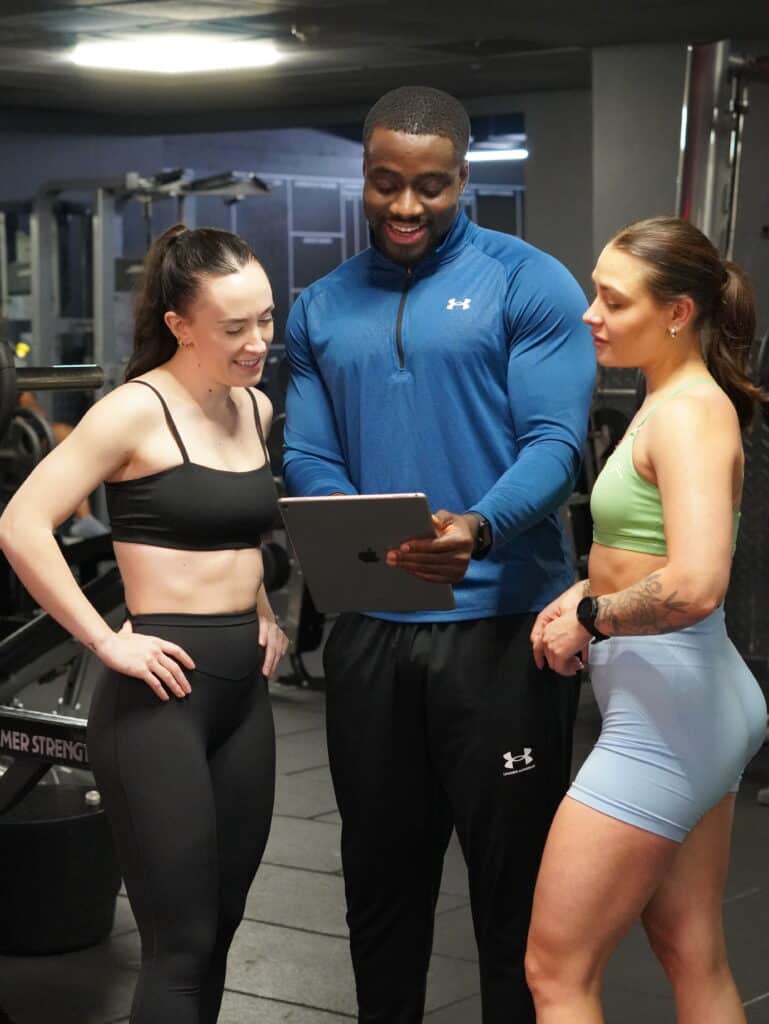
12REPS, trainers Amanda Terry and Vijune Penikaite specialise in strength training and pre and postnatal programming, ensuring women get expert guidance at every stage.
For Men
Compound lifts. Progressive overload. Enough protein. Enough sleep. That is the path to building muscle and increasing strength. The approach is the same whether you are 20 or 50. Consistency matters more than intensity.
For Beginners
You do not need experience to start. Beginners often make faster progress than experienced lifters because the body responds rapidly to new training stimulus. Start light. Learn the movements. Progress slowly. The first 12 weeks of consistent training will produce the most dramatic improvements you will ever experience.
For People Over 40
Strength training is one of the most effective interventions for healthy ageing. It maintains muscle mass, strengthens bones, improves metabolic health, and supports independence as you age. The WHO recommends adults of all ages perform muscle-strengthening activities at least twice per week.
You Can Train Anywhere
A good strength training plan adapts to your equipment, not the other way around.
- Full commercial gym: barbells, dumbbells, cables, machines. Maximum exercise selection.
- Home gym: a barbell, a rack, and a bench cover 90 percent of what you need.
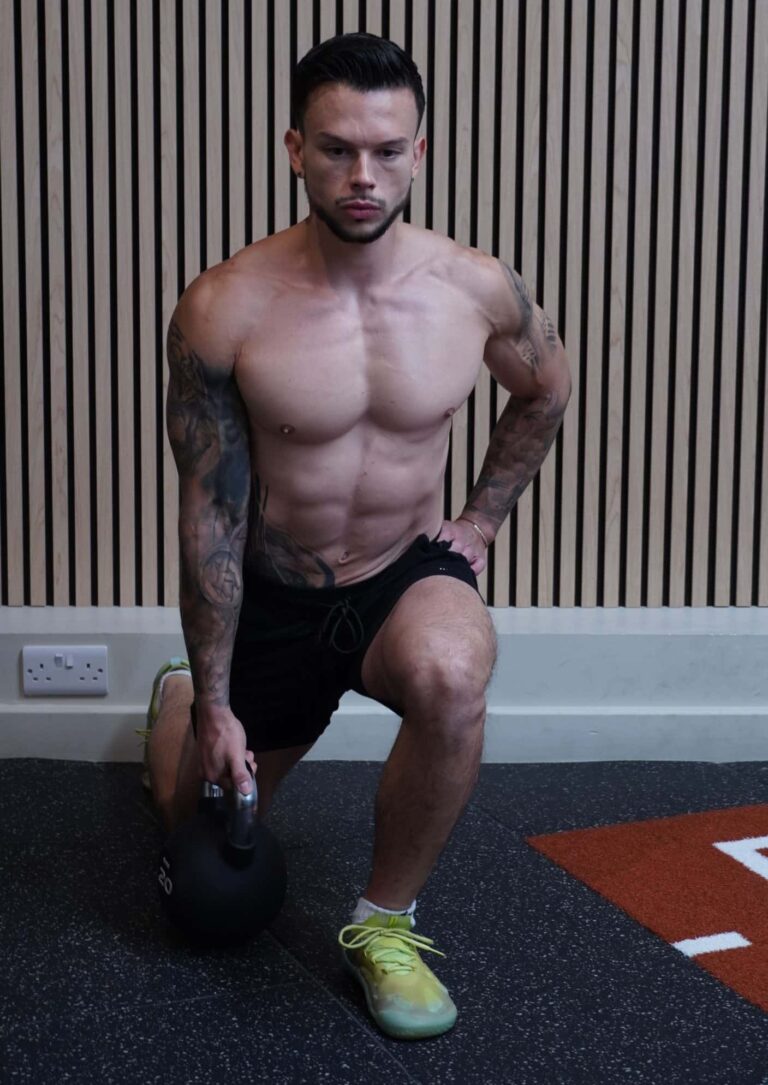
- Minimal equipment: kettlebells, a pull-up bar, resistance bands, and your bodyweight can build real strength.
- Hotel or travel: bodyweight and resistance band programmes keep you progressing between gym sessions.
The 12REPS app asks what equipment you have access to during onboarding and builds your entire programme around it. Whether you tell it you have a full gym, a single pair of dumbbells, or just your bodyweight, the workouts adapt. No showing up to a session and discovering you need equipment you do not have.
Why Most Strength Training Plans Fail
It is not the plan that fails. It is what happens after the first week.
No Tracking
You follow a plan for a week. Forget what you lifted. Start guessing. Stop progressing. Then blame the plan. The plan was fine. You just could not see the progress because you were not measuring it.
No Progression
Same weight every week is maintenance, not training. If your numbers have not moved in 4 to 6 weeks, something needs to change. Without deliberate progressive overload, the body has no reason to adapt.
Too Much Variety
Changing exercises every week feels productive but resets your progress each time. Your body needs repeated exposure to the same movements to adapt and grow stronger. Stick with the same exercises for 6 to 8 weeks before swapping anything.
Not Enough Intensity
Most working sets should finish with 1 to 2 reps left in the tank, a concept known as Reps in Reserve or RIR. If your last rep is comfortable, you are not training hard enough to stimulate growth.
For a full breakdown of why progress stalls and how to fix it, read Why You’re Not Seeing Results in the Gym.
The One Thing That Makes Everything Work: Tracking Your Workouts
You can have the best plan in the world. Without tracking, it falls apart within a month. This is the most critical section in this entire guide.
Think about your last session.
- What exercises did you do?
- What weight did you use on each?
- How many reps did you get per set?
- Was it better than last week?
If you cannot answer all four, you are guessing. And guessing does not build strength.
Without Tracking
- You guess the weight and hope it is right.
- You forget what you did last session.
- You have no idea if you are actually progressing.
- Every session feels the same because it is the same.
With Tracking
- You know exactly what you did last time.
- You know what number to beat today.
- You can see progress over weeks and months in clear data.
- Every session has a target. That target drives improvement.
Effort feels good. Data drives results.
A workout tracking app turns subjective feelings into objective numbers. When you can see that your squat went from 60kg for 8 reps to 70kg for 10 reps over two months, you do not need motivation. You have momentum.
Pro tip: The moment you start logging your sessions, you stop guessing and start progressing. Tracking does not just measure your training. It improves it. Every session becomes a clear target instead of a vague effort.
This is where most people fall off. They train hard but never track. That is the gap between effort and results.
Start tracking your workouts with 12REPS — 7 day free trial →
What the 12REPS App Actually Does
12REPS is a strength training app available on iOS (App Store) and Android (Google Play) that combines personalised workout programming, real-time tracking, and direct access to certified personal trainers. It was founded by Will Duru, a London-based personal trainer with a BSc in Sport and Exercise Science, over 10 years of coaching experience, and media features in Men’s Health, The Times, The Telegraph, The Sun, and Men’s Fitness.
Personalised Workout Plans
When you sign up, you complete a short consultation covering your goals (build muscle, lose fat, get stronger), your experience level, available equipment, and how many days per week you can train. Based on your answers, the app generates a structured training programme with progressive overload built in. Programmes include hypertrophy, strength, body recomposition, and functional fitness. Workout formats range from 15 to 20 minute quick sessions to full 45 to 60 minute training blocks. The app supports push pull legs splits, upper lower splits, and full body sessions.
1,500+ Exercise Library
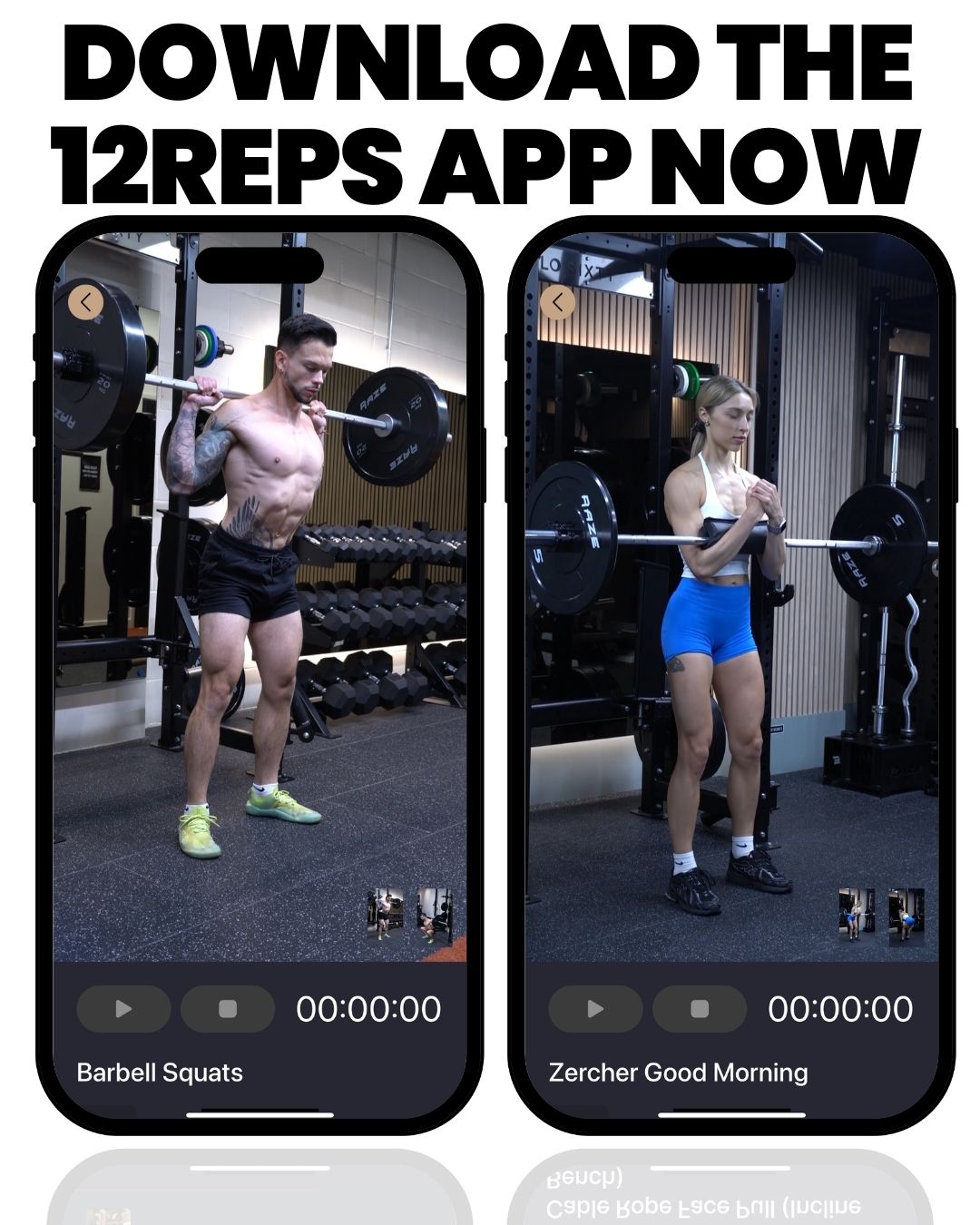
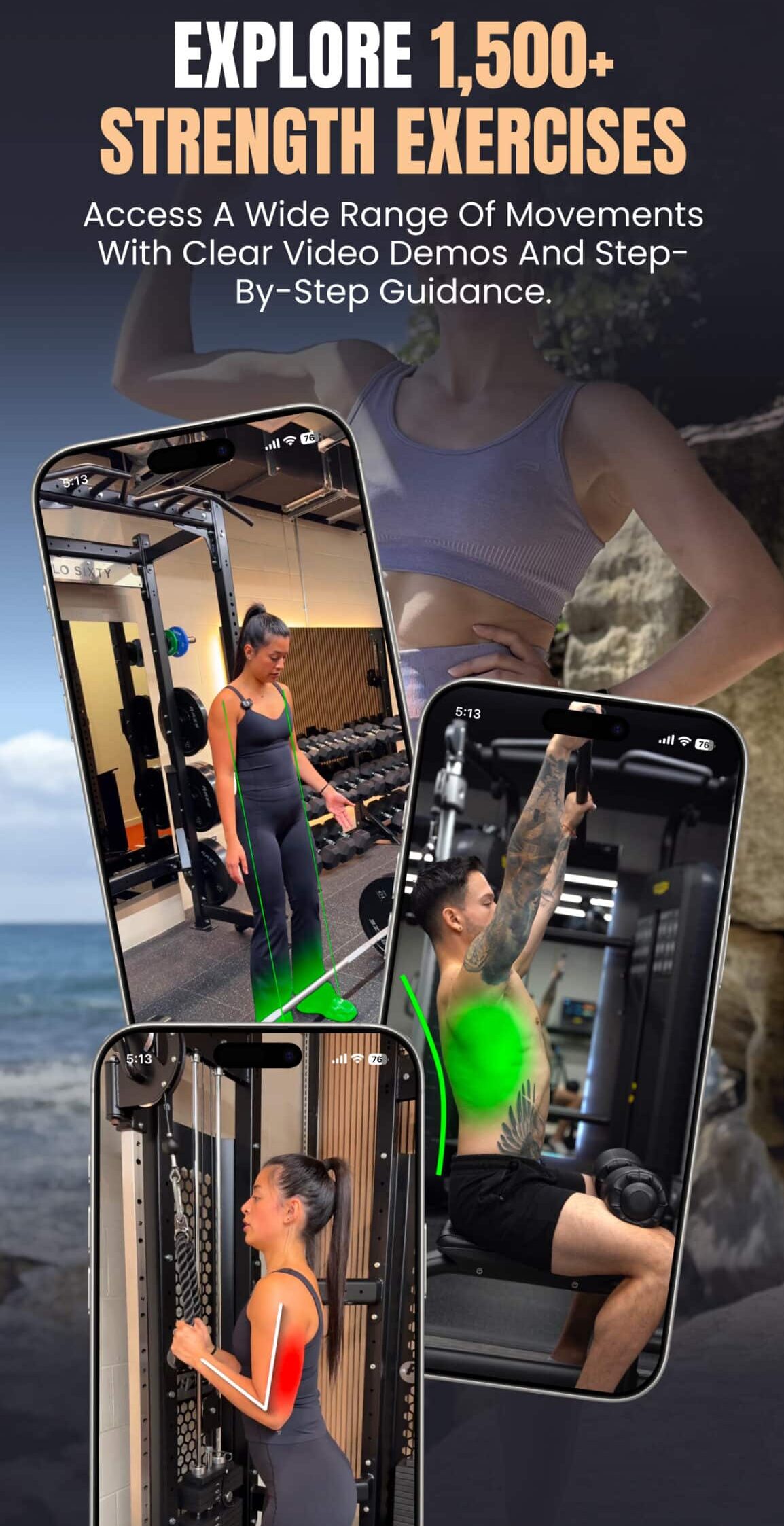
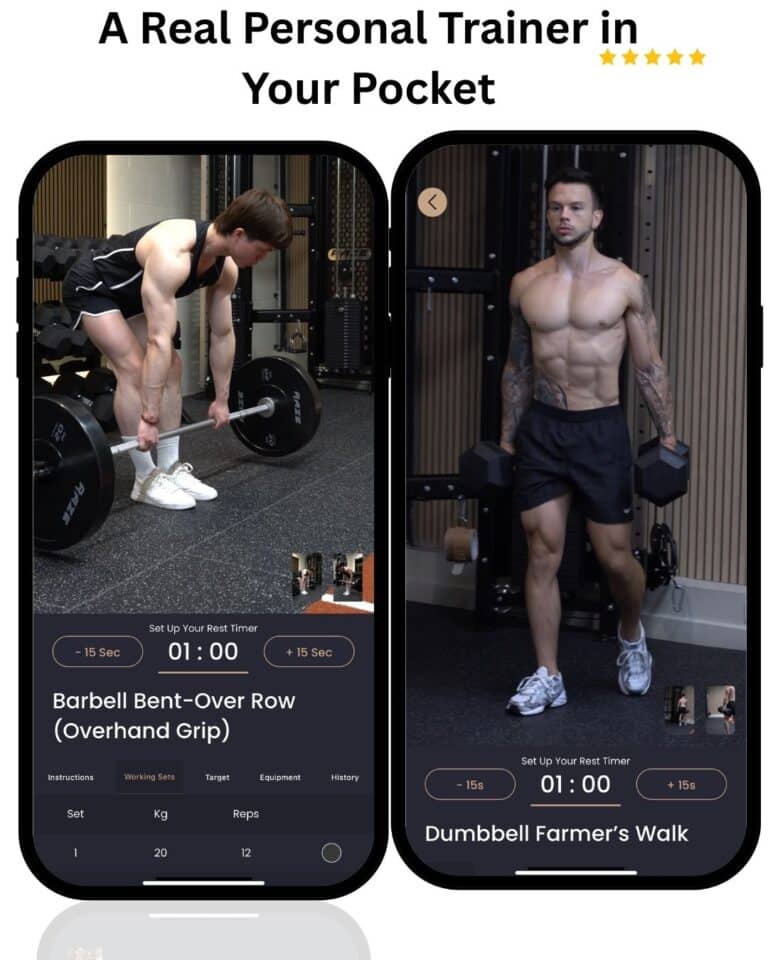
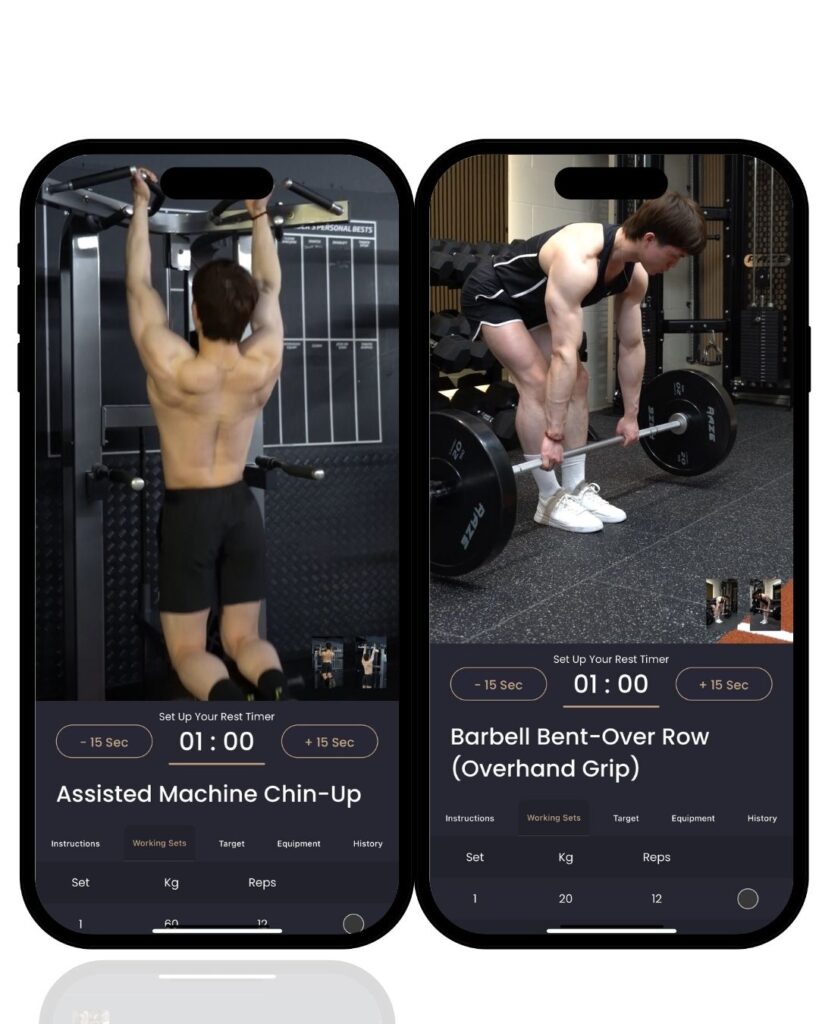
The app includes over 1,500 strength training exercises, each with HD video demonstrations from certified personal trainers. Exercises are filterable by body part, goal, equipment, and difficulty level. Every exercise includes written coaching cues and form corrections. New exercises are added regularly.
Workout Tracking and Progress Analytics
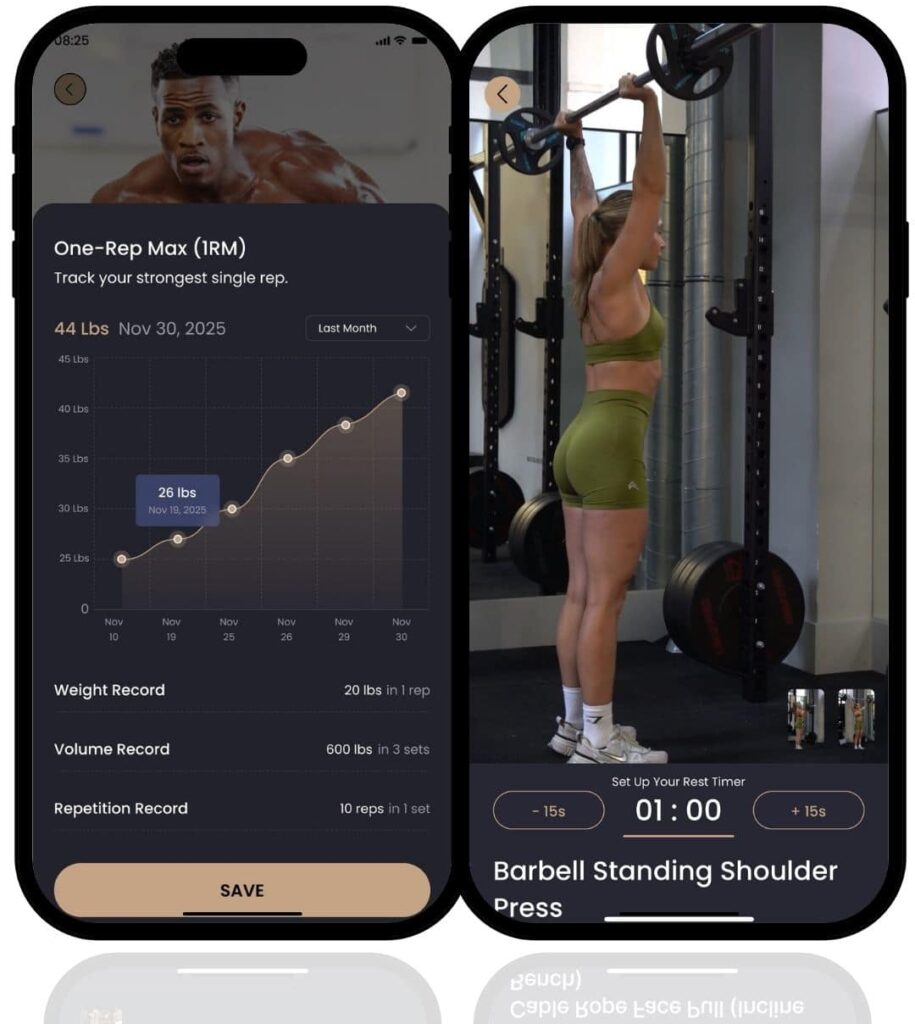
Log sets, reps, and weights in seconds during your session. The app tracks personal bests and one-rep max estimates automatically. Visual progress charts show strength improvements across exercises and muscle groups over time. You can also track body measurements, bodyweight, and progress photos. The app shows what you lifted last session so you know exactly what to beat.
Smart Features
- Smart rest timers that adjust based on exercise type and training intensity.
- Pre-plan workouts: create and save routines in advance for seamless gym sessions.
- Adaptive progression: the app tracks your performance and adjusts subsequent workouts. If you hit targets easily, it increases the load. If you struggle, it eases off.
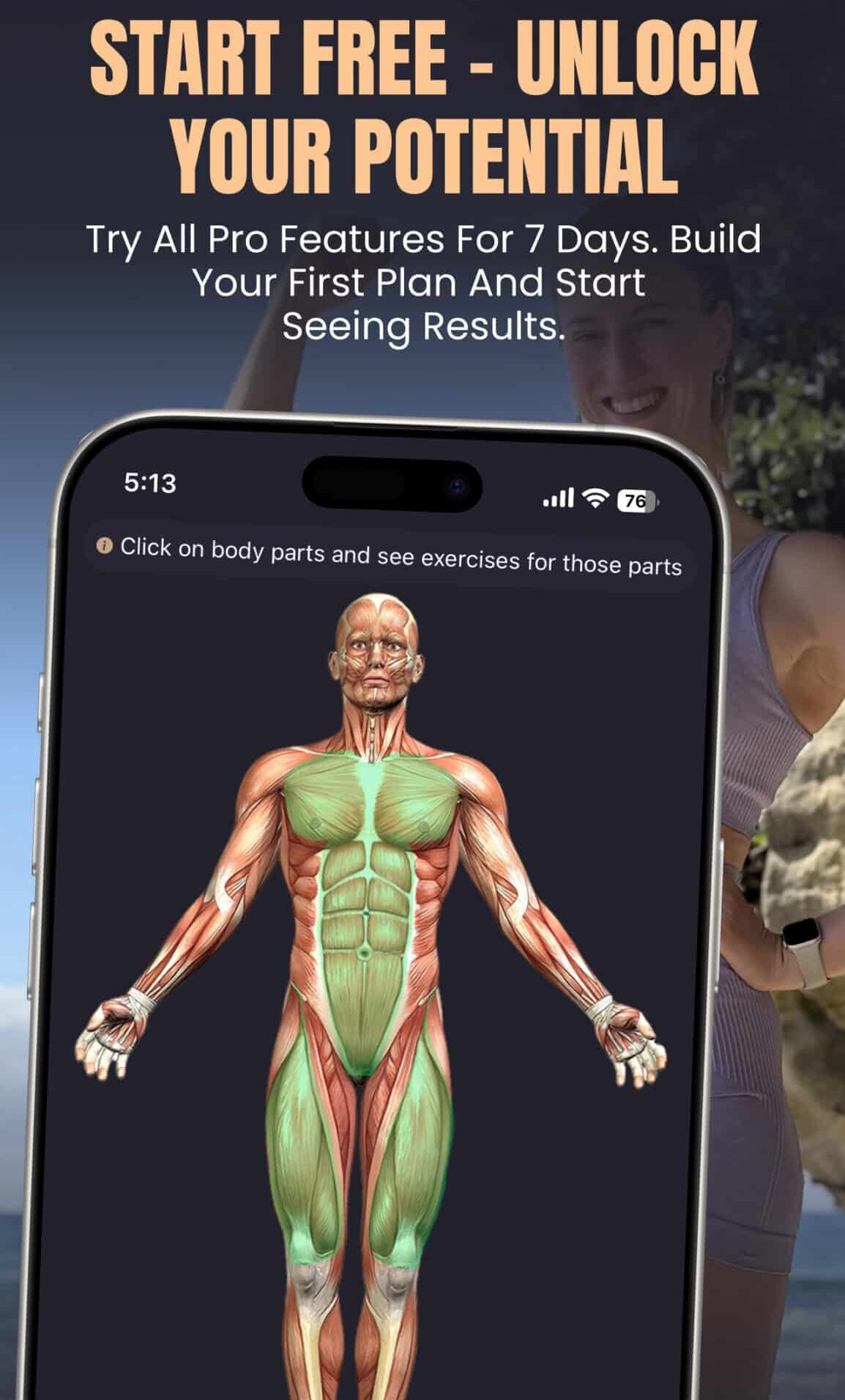
- Interactive body diagram: tap muscle groups to find targeted exercises visually.
- Gym and home modes: seamlessly switch between gym and home workouts without losing your programme.
Direct Access to Personal Trainers
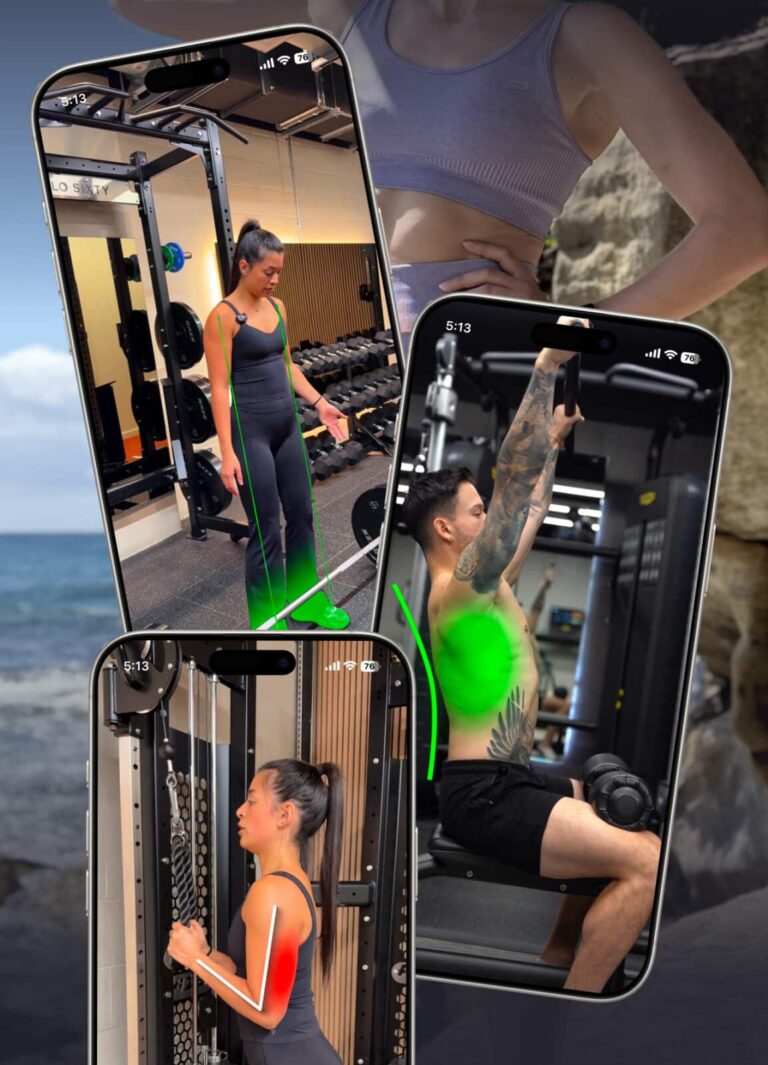
This is what separates the app from algorithm-driven alternatives. Premium members can message Will Duru and the training team directly through the app with a typical response time within 24 hours. The form check feature allows users to record a 15-second video of any lift, submit it through the app, and receive personalised feedback on technique, corrections, and cues from a real certified trainer.
Community and Accountability
Users are placed into squads — small groups of people with similar goals. Squad members see when others check in and train. Will and the team drop into the chat. Members share wins and tough days. When someone goes quiet, others notice. It is not social media. It is accountability.
The Training Team
The programmes and content are designed by a team of five certified personal trainers: Will Duru (strength and hypertrophy, BSc Sport Science, 10+ years), Martin Straka (strength training and martial arts, Level 3 PT, 8 years), Amanda Terry (strength training and pre and postnatal, Level 3 PT, 3+ years), Vijune Penikaite (strength and conditioning and pre and postnatal, Level 3 PT, 3+ years), and Aine (strength and conditioning, Level 3 PT, 3+ years). Combined experience exceeds 25 years.
Pricing
Monthly: £19.99 per month and Yearly: £120 (save £120). All plans include a 7-day free trial with no credit card required. Cancel anytime through the app or app store settings.
Real Results
Client transformations include Ola (lost 20kg, gained lean muscle), Jeremy (lost 25kg, gained lean muscle), and Ciro (lost 10kg, built muscle, increased strength by 40 percent). All coached directly by Will Duru using the same methodology that powers the app.
Your Action Plan
Stop overcomplicating it. Here is everything you need.
- Choose your split. Push-pull legs for 3 days. Upper and lower for 4. Match it to your schedule.
- Pick compound lifts. Squat, bench, row, overhead press, pull-ups, deadlift. Build around these.
- Set your volume. 3 to 4 sets per exercise. 10 to 20 sets per muscle group per week.
- Track every session. Reps. How it felt. No more guessing.
- Progress weekly. Add weight or reps. Small jumps. Consistent gains.
- Eat enough protein. 6 to 2.2 grams per kg of bodyweight per day. Every day. Not just training days.
- Sleep properly. 7 to 9 hours. Your muscles grow when you rest, not when you lift.
That is the system. Works for women. Works for men. Works at home or in the gym. Works for beginners and experienced lifters. The principles are universal. The execution is personal.
Pro tip: A good plan followed with intensity and tracked consistently will outperform a perfect plan done randomly every single time. Stop searching for the ideal programme. Start executing the one you have.
Your next session is your starting point. Structure it. Track it. Beat it next week.
Download 12REPS. Track your next workout. Beat your numbers next week
Frequently Asked Questions
12REPS is a strength training app founded by Will Duru, a London-based certified personal trainer with a BSc in Sport and Exercise Science and over 10 years of coaching experience. The app provides personalised workout plans, a library of over 1,500 exercises with HD video demonstrations, real-time workout tracking with progress analytics, direct messaging with certified personal trainers, form check video reviews, community squads for accountability, and smart features including adaptive progression and intelligent rest timers. It is available on iOS and Android with a 7-day free trial.
Is strength training the same for women and men?
Yes. The principles — progressive overload, compound movements, consistent tracking — are identical. Women will not get bulky from lifting weights. Strength training builds lean muscle, improves bone density, and enhances body composition for both genders.
Can I use 12REPS without a gym?
Yes. 12REPS asks what equipment you have during setup and builds your programme around it. The app supports full gym, home gym, minimal equipment (kettlebells, resistance bands, single pair of dumbbells), and bodyweight-only training.
How many days per week should I strength train?
Three days per week is sufficient for most people and is supported by exercise science guidelines. Four to six days suits intermediate and advanced lifters seeking more volume. The best frequency is the one you can sustain consistently over months.
How long before I see results from strength training?
Most beginners notice measurable strength improvements within 2 to 4 weeks. Visible changes to body composition typically take 8 to 12 weeks of consistent training. Tracking your numbers makes progress visible even before the mirror catches up.
Do I need a personal trainer to get results?
Not necessarily. What you need is a plan built by one. 12REPS gives you personalised programming from certified trainers without the hourly cost. Premium members can also message the training team directly and submit form check videos for feedback.
What makes 12REPS different from other fitness apps?
Most fitness apps offer algorithm-generated workouts or follow-along cardio classes. 12REPS is built specifically for strength training by a team of five certified personal trainers with over 25 years of combined experience. It includes direct trainer access, form check reviews, community squads, adaptive progression, and works across gym, home, and minimal equipment setups.