
Quick answer: Decaf coffee is regular coffee with most of the caffeine removed before roasting. The process typically removes about 97% of the caffeine, leaving roughly 2 to 15 mg in an 8-ounce cup, compared with about 95 mg in regular coffee. So decaf is low in caffeine, not caffeine-free. Beans are decaffeinated with water, carbon dioxide or a solvent, and all of these methods are currently allowed in the U.S.
This article explains how much caffeine is really in decaf, how it’s made, the current debate over one decaf solvent, and who might want to switch.
How much caffeine is in decaf?
Here’s how decaf compares with regular coffee, according to the National Coffee Association (NCA) and the FDA (FDA, 2024):
| Drink | Caffeine |
|---|---|
| Regular brewed coffee, 8 oz | About 95 mg (NCA) |
| Decaf coffee, 8 oz | 2 to 15 mg (FDA and NCA) |
| Regular brewed coffee, 12 oz | 113 to 247 mg (FDA) |
Real-world decaf can vary. A University of Florida study tested decaf from 10 coffee shops and found 0 to 13.9 mg of caffeine in a 16-ounce cup. Decaf espresso from one chain ranged from 3.0 to 15.8 mg per shot (McCusker et al., 2006). The researchers warned that people who must avoid caffeine for medical reasons should know decaf may still contain some.
How is decaf coffee made?
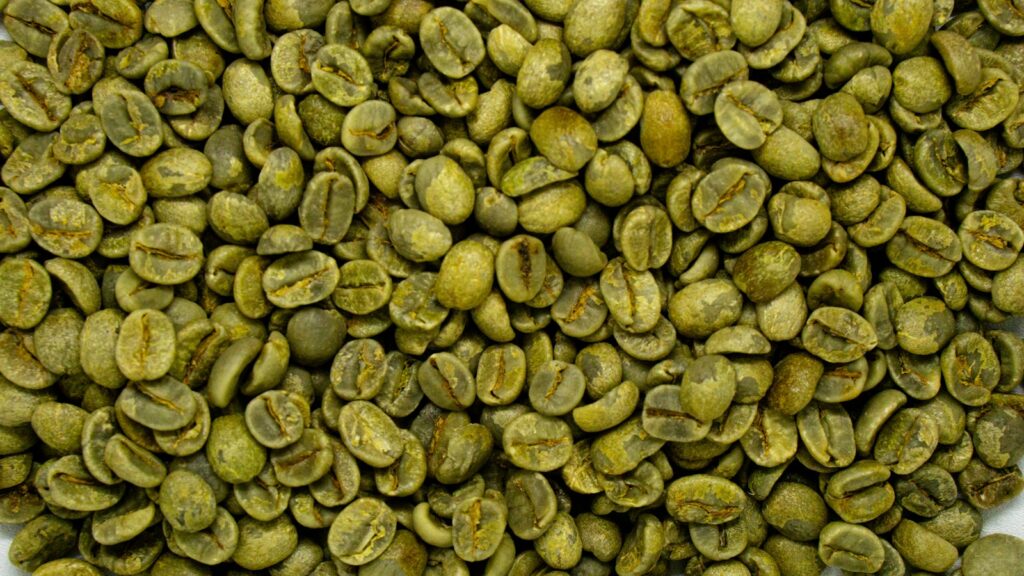
All decaf starts as green, unroasted coffee beans. The beans are moistened or steamed so the caffeine can move out, then soaked in something that pulls the caffeine away. After that, they’re dried and roasted like any other coffee (NCA). Decaffeination mainly uses organic solvents, water or supercritical carbon dioxide (Ramalakshmi and Raghavan, 1999).
| Method | How it works | What to look for on the bag |
|---|---|---|
| Solvent method, often called the European Method | Steamed beans are rinsed with a solvent, usually methylene chloride, that bonds to caffeine. The solvent is drained off, then the beans are dried and roasted | Often not labeled. Sometimes “European Method” |
| Ethyl acetate | Similar to the solvent method, but uses ethyl acetate instead | “Ethyl acetate” or “EA” |
| Swiss Water Process | No added chemical solvents. Beans soak in a water solution already full of coffee’s other flavor compounds, so mostly caffeine moves out. Carbon filters then remove the caffeine, and the cycle repeats for about 8 to 10 hours | “Swiss Water” |
| CO2 process | Carbon dioxide is pressurized until it acts like a liquid. It dissolves caffeine while leaving most flavor compounds in the bean | “CO2 decaf” |
The Swiss Water and CO2 descriptions come from a general overview of decaffeination (Decaffeination, citing BBC Future and a 1999 review). According to the NCA, the European Method is the most common (NCA).
Is decaf made with methylene chloride safe?
This is where the debate is. Methylene chloride is the solvent most often used in the European Method. Health groups argue it can cause cancer and shouldn’t be allowed in food, while the coffee industry says the tiny amounts left in decaf are safe. Here’s where things stand:
- The current rule: the FDA allows up to 10 parts per million of methylene chloride in decaffeinated roasted coffee (Daily Coffee News, 2026). The NCA says the FDA has called the risk to consumers from European Method decaf “essentially non-existent” (NCA).
- The petition: in December 2023, a group including the Environmental Defense Fund and the Environmental Working Group asked the FDA to remove methylene chloride and three other solvents from its list of approved food additives (Daily Coffee News, 2026).
- The latest step: the FDA reopened public comments on May 28, 2026, and the comment period closed on June 29, 2026. As of June 30, 2026, the FDA had not announced a decision (Daily Coffee News, 2026).
- The industry view: the NCA opposes a ban and says European Method decaf is safe under the current limits (Daily Coffee News, 2026).
So where does that leave you? Decaf made this way is legal and within FDA limits. If you’d rather avoid methylene chloride anyway, look for “Swiss Water” or “CO2” on the bag.

Does decaf still have health benefits?
It looks like it. In a 2022 study of nearly 450,000 UK adults, 2 to 3 cups of decaf a day was linked to a 14% lower risk of death, compared with not drinking coffee. Ground caffeinated coffee was linked to a 27% lower risk (Chieng et al., 2022).
That suggests some of coffee’s benefits may come from compounds other than caffeine. But this was an observational study, so it shows a link, not proof.
Who might choose decaf?
- Evening coffee drinkers: in one study, 400 mg of caffeine taken even 6 hours before bed disrupted sleep (Drake et al., 2013). Decaf lets you keep the ritual without the late caffeine.
- People sensitive to caffeine: if coffee makes you jittery, anxious or gives you a racing heart, decaf is an easy swap.
- Pregnancy: the FDA advises anyone pregnant, trying to conceive or breastfeeding to talk with their healthcare provider about caffeine (FDA, 2024).
- People on certain medications: some medications interact with caffeine. Ask your doctor or pharmacist, and remember decaf isn’t completely caffeine-free.
- Anyone cutting back: mixing half regular and half decaf is a simple way to lower your caffeine slowly.
One thing decaf won’t do is give you caffeine’s pre-workout boost. If you train late in the day, though, swapping your afternoon coffee for decaf can help protect your sleep, and sleep is a big part of recovery.
Summary
- Decaf typically has about 97% of its caffeine removed, leaving roughly 2 to 15 mg per 8-oz cup.
- It’s low in caffeine, not caffeine-free. Coffee-shop decaf in one study had up to 13.9 mg per 16 oz.
- Decaf is made with a solvent (methylene chloride or ethyl acetate), the Swiss Water Process or carbon dioxide.
- The FDA is reviewing a petition to ban methylene chloride. It hadn’t made a decision as of June 2026.
- If you want to avoid solvents, choose “Swiss Water” or “CO2” decaf.
- Decaf is still linked with health benefits in large studies.
Keep your evenings for recovery
Good sleep and a solid plan are what move your training forward. 12REPS gives you trainer-built programs, two demo videos for every exercise and a gym log that shows what you lifted last time. New users get a 7-day free trial.
Download 12REPS and see what you’ll get:
Sources
- National Coffee Association. Decaf coffee
- FDA. Spilling the beans: how much caffeine is too much? 2024
- McCusker RR et al. Caffeine content of decaffeinated coffee. J Anal Toxicol, 2006
- Ramalakshmi K, Raghavan B. Caffeine in coffee: its removal. Why and how? Crit Rev Food Sci Nutr, 1999
- Decaffeination (overview citing BBC Future and Ramalakshmi and Raghavan, 1999)
- Daily Coffee News. FDA weighs next steps on decaf solvent rules following new comments, June 30, 2026
- Chieng D et al. Coffee type and mortality in UK Biobank, 2022 (News-Medical summary)
- Drake C et al. Caffeine effects on sleep taken 0, 3, or 6 hours before going to bed. J Clin Sleep Med, 2013
I’m Will Duru, a personal trainer and the founder of 12REPS. I hold a BSc (Hons) in Sport and Exercise Science and have more than a decade of experience coaching people in strength training. This article is based on published research and isn’t medical advice.