




You’re 43 years old. You train hard, eat clean, but muscle growth feels impossible. Your 25-year-old gym mate gains muscle eating pizza whilst you meticulously track protein and see nothing.
You wonder: is muscle building after 40 just a myth?
The truth: Men lose 3 to 5% muscle mass per decade after 30. Testosterone declines 1 to 2% yearly after 40. But muscle building after 40 is absolutely achievable with four key adjustments: lower training frequency (3 to 4 days weekly, not 5 to 6), longer recovery between sessions (48 to 72 hours minimum), joint-friendly exercise selection (goblet squats vs barbell back squats), and higher protein intake (2.0 to 2.2g per kg, not 1.6g).
I’m Will Duru, a personal trainer with a BSc in Sport & Exercise Science and 10+ years’ experience in London. I’ve helped hundreds of men over 40 build significant muscle mass.
What I’ve learned: Men over 40 can gain 4 to 6kg muscle in 12 months with proper programming (vs 8 to 10kg for men in their 20s). Critical factors are adequate recovery (48 hours minimum between sessions), joint protection (10-minute warm-ups non-negotiable), and higher training frequency with lower volume per session (four 45-minute sessions beats two 90-minute sessions).
Why Muscle Building Changes After 40
Factor 1: Testosterone Decline
What happens: Testosterone drops 1 to 2% annually after age 40. By age 50, total testosterone may be 15 to 20% lower than age 30.
Why it matters: Testosterone directly stimulates protein synthesis (muscle building). Lower testosterone equals slower muscle growth, longer recovery, and easier muscle loss.
What this means: Realistic muscle gain for 40+ men is 4 to 6kg annually (vs 8 to 10kg for 20-year-olds). Progress is slower but absolutely achievable.
Will’s testosterone reality: “Client Mark, age 43, frustrated gaining 3kg muscle in 12 months whilst younger gym mate gained 7kg. I explain this is excellent progress for age 43. Comparing yourself to 23-year-olds creates unnecessary frustration. Four to six kg yearly is realistic and impressive.”
Factor 2: Slower Recovery
What happens: Muscle protein synthesis rates decrease, inflammatory response to training increases, cellular repair mechanisms slow.
Why it matters: Session on Monday might require 48 to 72 hours recovery (vs 24 to 48 hours at age 25). Training Tuesday creates cumulative fatigue, not growth stimulus.
What this means: Training frequency must account for recovery capacity. Four sessions weekly with adequate rest superior to six sessions with insufficient recovery.
Will’s recovery observation: “Client training six days weekly at age 45, chronically fatigued, zero muscle growth. We reduce to four days (Mon, Tue, Thu, Fri with Wed, Sat, Sun rest). Recovery improves, progressive overload continues, muscle growth resumes. Recovery capacity dictates training frequency after 40.”
Factor 3: Joint Wear and Injury Risk
What happens: Cartilage thins, ligaments lose elasticity, previous injuries create movement limitations.
Why it matters: Exercises tolerated at 25 (heavy barbell back squats, behind-neck press) cause pain at 45. Pushing through pain creates injury, not gains.
What this means: Exercise selection must prioritise joint health. Goblet squats replace barbell back squats. Dumbbell press replaces barbell behind-neck press. Progressive overload still applies, just with joint-friendly variations.
Will’s joint-friendly approach: “Client age 47, knee pain from barbell back squats. We switch to goblet squats, Bulgarian split squats, leg press. Pain disappears, leg development continues. Joint-friendly doesn’t mean less effective. It means sustainable long-term training.”
Factor 4: Metabolic Changes
What happens: Basal metabolic rate decreases 2 to 3% per decade, body fat accumulates easier, lean mass decreases.
Why it matters: Same calorie intake at 45 that maintained weight at 25 now creates fat gain. Building muscle requires calorie surplus, but surplus must be smaller to avoid excessive fat gain.
What this means: Calorie surplus of 200 to 300 daily (not 500+). Higher protein ratio (2.0 to 2.2g per kg vs 1.6 to 1.8g). Slower but leaner muscle gain.

The Complete 4-Day Upper/Lower Programme
Programme Structure
Frequency: 4 days weekly (Monday, Tuesday, Thursday, Friday)
Split: Upper/Lower twice weekly each
Rest days: Wednesday, Saturday, Sunday (48 to 72 hours between same muscle groups)
Session duration: 45 to 60 minutes including warm-up
Why this works: Hits each muscle group twice weekly (optimal frequency), adequate recovery between sessions, sustainable long-term.
4-DAY UPPER/LOWER SPLIT (JOINT-FRIENDLY)
MONDAY: UPPER BODY A (Chest, Back, Shoulders)
Exercise | Equipment | Sets × Reps | Rest | Notes |
10-minute warm-up | Treadmill/bike + dynamic stretches | – | – | Non-negotiable |
Incline dumbbell press | Dumbbells, bench | 3 × 8-10 | 2.5 min | Safer than flat barbell |
Cable row (neutral grip) | Cable machine | 3 × 10-12 | 2 min | Joint-friendly pulling |
Dumbbell shoulder press | Dumbbells | 3 × 8-10 | 2 min | Safer than behind-neck press |
Lat pulldown (wide grip) | Cable machine | 3 × 10-12 | 2 min | Back width |
Dumbbell lateral raises | Dumbbells | 2 × 12-15 | 90 sec | Shoulder caps |
Face pulls | Cable with rope | 2 × 15-20 | 90 sec | Shoulder health |
Total: 16 sets | Progressive overload: Increase weight when hitting top reps all sets
TUESDAY: LOWER BODY A (Quads, Glutes, Hamstrings, Calves)
Exercise | Equipment | Sets × Reps | Rest | Notes |
10-minute warm-up | Treadmill/bike + leg swings | – | – | Critical for joint prep |
Goblet squats | Kettlebell or dumbbell | 3 × 10-12 | 2.5 min | Easier on lower back than barbell |
Leg press | Machine | 3 × 10-12 | 2 min | Safe heavy loading |
Romanian deadlift | Dumbbells | 3 × 10-12 | 2 min | Hamstring focus, back-friendly |
Bulgarian split squats | Dumbbells | 3 × 10-12/leg | 2 min | Single-leg strength |
Leg curls | Machine | 2 × 12-15 | 90 sec | Hamstring isolation |
Calf raises | Machine or bodyweight | 3 × 15-20 | 60 sec | Lower leg development |
Total: 17 sets | Avoid barbell back squats if knee/back issues
THURSDAY: UPPER BODY B (Chest, Back, Arms)
Exercise | Equipment | Sets × Reps | Rest | Notes |
10-minute warm-up | Rowing machine + arm circles | – | – | Prepares shoulders |
Dumbbell chest press (flat) | Dumbbells, bench | 3 × 8-10 | 2.5 min | Greater range than barbell |
Cable row (underhand grip) | Cable machine | 3 × 10-12 | 2 min | Bicep involvement |
Dips (assisted if needed) | Dip bars or machine | 3 × 8-12 | 2 min | Lower chest, triceps |
Dumbbell rows | Dumbbell, bench | 3 × 10-12 | 2 min | Unilateral back work |
Dumbbell bicep curls | Dumbbells | 2 × 10-12 | 90 sec | Arm development |
Cable tricep pushdowns | Cable machine | 2 × 12-15 | 90 sec | Tricep mass |
Total: 16 sets | Emphasises arms more than Monday
FRIDAY: LOWER BODY B (Glutes, Quads, Hamstrings, Core)
Exercise | Equipment | Sets × Reps | Rest | Notes |
10-minute warm-up | Bike + hip circles | – | – | Hip mobility essential |
Dumbbell step-ups | Dumbbells, box/bench | 3 × 10-12/leg | 2 min | Functional lower body |
Leg extensions | Machine | 3 × 12-15 | 90 sec | Quad isolation, safer than squats |
Dumbbell stiff-leg deadlift | Dumbbells | 3 × 10-12 | 2 min | Hamstring stretch |
Walking lunges | Dumbbells or bodyweight | 3 × 12-15/leg | 90 sec | Unilateral strength |
Leg curls | Machine | 2 × 12-15 | 90 sec | Hamstring finish |
Plank | Bodyweight | 3 × 30-60 sec | 60 sec | Core stability |
Total: 17 sets | Different exercises than Tuesday for variety
Weekly Training Schedule
Day | Muscles Trained | Rest Day | |
Monday | Upper A | Chest, Back, Shoulders | |
Tuesday | Lower A | Quads, Glutes, Hamstrings | |
Wednesday | ✓ Rest | ||
Thursday | Upper B | Chest, Back, Arms | |
Friday | Lower B | Glutes, Quads, Hamstrings | |
Saturday | ✓ Rest | ||
Sunday | ✓ Rest |
Weekly volume: 66 sets total (33 upper body, 33 lower body)
Essential Guidelines for Training After 40
1. Warm-Up Is Non-Negotiable
What to do: 10 minutes minimum before every session. Five minutes light cardio (treadmill, bike, rowing), five minutes dynamic stretching and mobility work.
Why critical: Cold muscles and joints at age 45 injure easier than at 25. Proper warm-up increases tissue temperature, improves range of motion, reduces injury risk.
Will’s warm-up rule: “Client skipping warm-ups at age 44, pulled hamstring week 3. We implement mandatory 10-minute warm-up every session. Zero injuries next 12 months. Ten minutes saves weeks of recovery from injury.”
2. Prioritise Recovery Over Volume
What this means: Four quality sessions with full recovery beats six sessions with accumulated fatigue.
Why it matters: Muscle grows during recovery, not during training. Insufficient recovery equals no growth regardless of training volume.
Will’s recovery priority: “Client age 46 training six days weekly, exhausted, not growing. Reduce to four days, ensure 48 to 72 hours between same muscles. Energy improves, progressive overload continues, gains resume.”
3. Higher Protein Intake
What you need: 2.0 to 2.2g protein per kg bodyweight daily (higher than younger lifters).
For 80kg man: 160 to 176g protein daily.
Why more protein: Older muscle is more resistant to protein synthesis stimulus. Higher protein intake overcomes this resistance.
Protein sources: Chicken, turkey, fish, lean beef, eggs, Greek yoghurt, cottage cheese, protein powder.
Will’s protein prescription: “Client age 48 eating 1.4g per kg (112g daily at 80kg), minimal muscle growth. Increase to 2.0g per kg (160g daily), muscle gain accelerates. Older lifters need more protein.”
4. Sleep 7 to 8 Hours Minimum
Why critical: Growth hormone released during deep sleep. Sleep deprivation impairs recovery, muscle growth, testosterone production.
What to do: Consistent sleep schedule (bed 22:30, wake 06:30), dark room, cool temperature, no screens 60 minutes before bed.
Will’s sleep requirement: “Client age 50 sleeping 5 to 6 hours, chronically fatigued, not recovering. We prioritise 7.5 hours sleep minimum. Recovery improves dramatically, training consistency increases, muscle growth resumes.”

This Is Where 12REPS Protects Joints and Tracks Progress
The after-40 challenge: tracking progressive overload whilst avoiding injury.
Most men over 40 either train too conservatively (never progressing) or too aggressively (getting injured).
12REPS solves this:
Generate Joint-Friendly Programmes
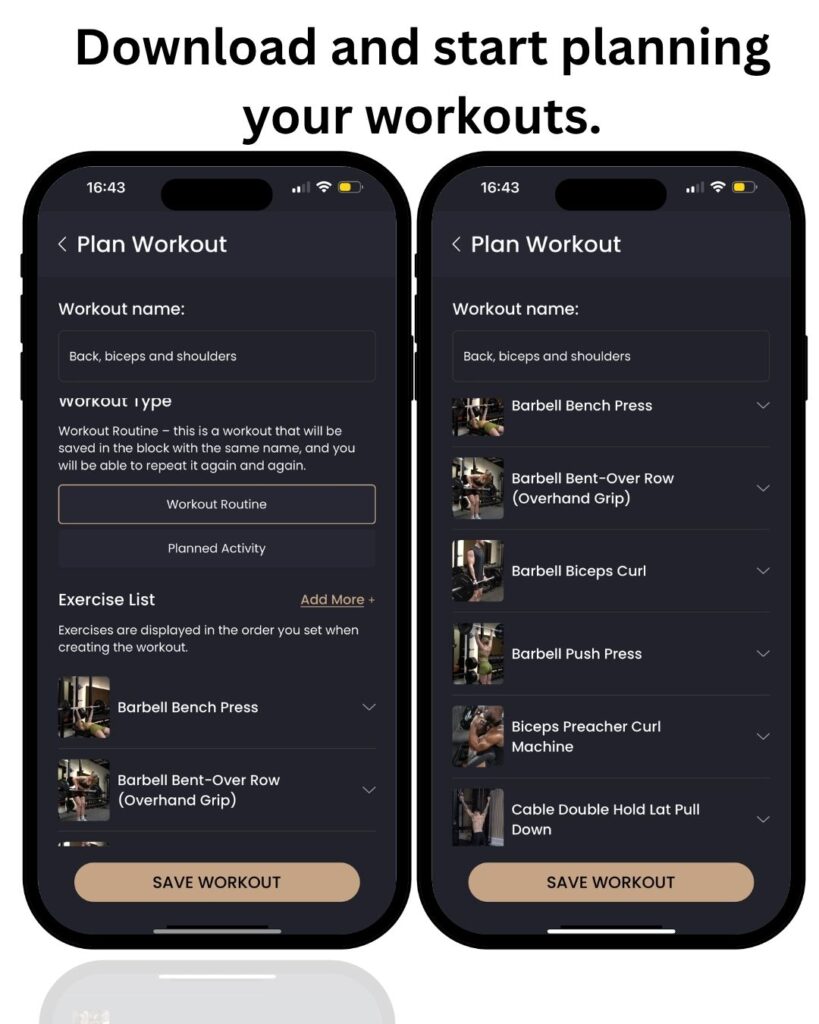
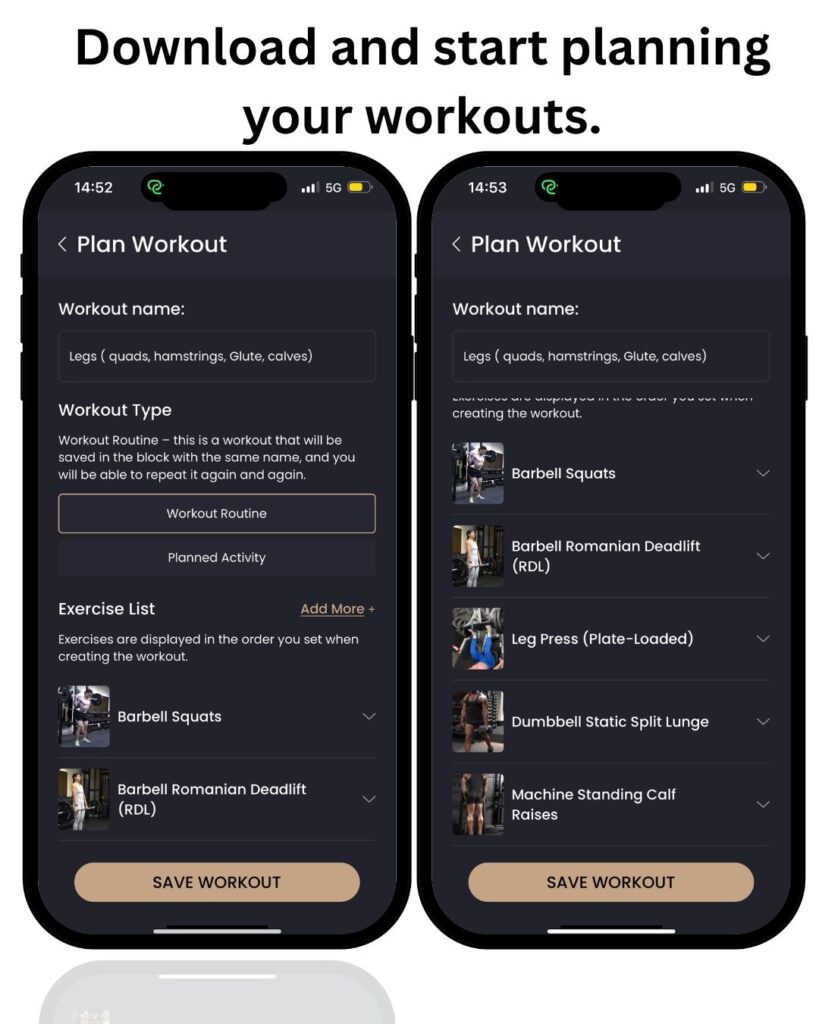
What 12REPS does: Generate complete upper/lower programmes using joint-friendly exercises (goblet squats instead of barbell back squats, dumbbell press instead of barbell).
How it works: Select “muscle building age 40+,” choose equipment available, get instant 4-day programme with exercises that protect joints whilst building muscle.
Try 12REPS free for 7 days. Get structured joint-friendly programme. Train intelligently, not recklessly.
Track Progressive Overload Safely
What 12REPS provides: Log every session. App shows goblet squat progression (24kg × 12, 12, 11 last session → aim for 24kg × 12, 12, 12 or 26kg × 10, 10, 10 this session).
Why tracking matters: Progressive overload still drives growth after 40. Must systematically increase weight, but gradually to avoid injury.
Will’s safe progression: “Client age 49 not tracking, randomly adding weight, injured shoulder. Implement 12REPS tracking with conservative progression (2.5kg increases when hitting all target reps). Twelve months: consistent strength gains, zero injuries. Tracking ensures progression without recklessness.”
Try 12REPS free for 7 days. Track every exercise, ensure progressive overload, avoid injury from random weight jumps.
Exercise Video Library
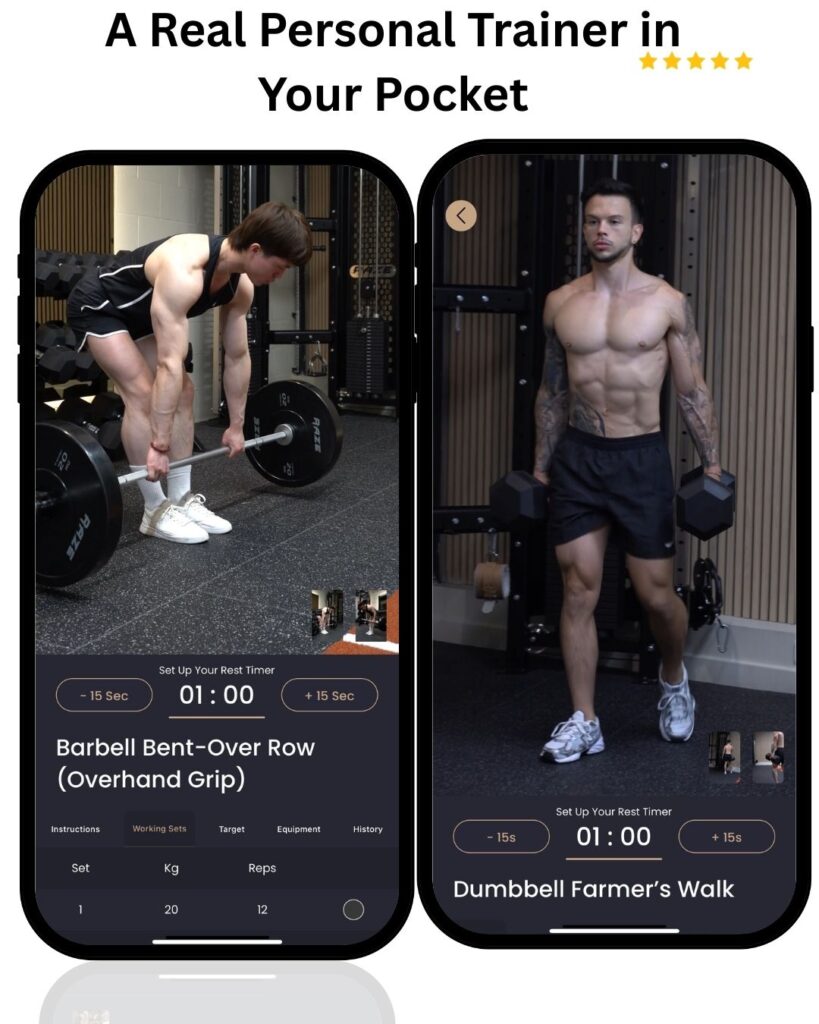
What 12REPS provides: Video demonstrations for all joint-friendly exercises. Goblet squats, dumbbell press, cable rows, all with proper form.
Why form matters after 40: Poor form at 45 creates injury, not muscle. Perfect form maximises muscle stimulus, minimises joint stress.
Months 1 to 3: Adaptation Phase
What happens: Body adapting to training stimulus, strength increasing (neurological), minimal size change.
Typical progress: 1 to 2kg gained (mostly water and glycogen), strength up 15 to 20% on major lifts.
Will’s months 1 to 3: “Client Mark age 43, frustrated only 1.5kg gained first 3 months. I explain strength up 18% (goblet squats 24kg to 32kg), muscle growth accelerating soon. Patience critical.”
Months 4 to 8: Growth Phase
What happens: Visible muscle growth occurring, strength continuing to increase, clothes fitting tighter.
Typical progress: 2 to 3kg additional muscle gain, total 3 to 5kg from baseline.
Will’s months 4 to 8: “Same client Mark, month 8: total 4kg gained from baseline, visibly more muscular, colleagues commenting. Chest from 100cm to 104cm, arms from 36cm to 37.5cm. Growth obvious now.”
Months 9 to 12: Consolidation Phase
What happens: Continued steady growth, strength at impressive levels for age.
Typical progress: 1 to 2kg additional gain, total 5 to 6kg muscle from baseline in 12 months.
Will’s year 1 after 40: “Client Mark age 44 (12 months training): gained 5.5kg muscle, lost 3kg fat simultaneously. Goblet squats 24kg to 40kg, dumbbell press 20kg to 32kg. Looks 10 years younger. Exactly what’s possible training intelligently after 40.”
Common After-40 Training Mistakes
Mistake 1: Training Like You’re 25
Why it fails: Recovery capacity, joint health, hormonal environment all different. Six-day bodybuilder splits cause injury and burnout.
The fix: Four-day upper/lower split with adequate rest.
Mistake 2: Skipping Warm-Ups
Why it’s dangerous: Cold joints and muscles at 45 injure easily.
The fix: Ten minutes minimum every session, no exceptions.
Mistake 3: Insufficient Protein
Why muscle doesn’t grow: Eating 1.2g per kg like in your 20s doesn’t work at 45.
The fix: 2.0 to 2.2g per kg bodyweight daily.
Mistake 4: Comparing to Younger Lifters
Why it creates frustration: Twenty-five-year-old gaining 8kg muscle annually vs your 5kg creates unnecessary discouragement.
The fix: Compare yourself to other men your age, or yourself last year. Five kg muscle at 45 is excellent.
The Bottom Line
Building muscle after 40 requires:
✅ Adjusted frequency (4 days weekly, not 6, with 48 to 72 hours recovery)
✅ Joint-friendly exercises (goblet squats, dumbbell press, cable rows)
✅ Mandatory warm-ups (10 minutes minimum every session)
✅ Higher protein (2.0 to 2.2g per kg daily, not 1.6g)
✅ Adequate sleep (7 to 8 hours minimum for recovery)
✅ Progressive overload tracking(via 12REPS, systematic but conservative)
✅ Realistic expectations (4 to 6kg muscle yearly, not 8 to 10kg)
Will’s after-40 coaching experience: “Client age 46 training six days weekly exhausted, zero growth. Reduce to four days with recovery, muscle growth resumes. Client age 48 eating 1.4g protein per kg, increase to 2.0g, growth accelerates. Client age 50 sleeping 5 to 6 hours, prioritise 7.5 hours, recovery transforms. Client Mark age 43 to 44: gained 5.5kg muscle, lost 3kg fat, goblet squats 24kg to 40kg, looks decade younger. Four to six kg muscle yearly realistic and impressive after 40. Ten-minute warm-ups saved countless injuries. Joint-friendly exercises allow sustainable long-term training.”
Why 12REPS optimises after-40 training: Generate joint-friendly programmes (goblet squats, dumbbell press, cables), track progressive overload safely (conservative systematic increases), video library for perfect form (minimise injury risk).
Try 12REPS free for 7 days. Get structured 4-day programme with joint-friendly exercises. Track progressive overload safely. Train intelligently for sustainable muscle growth after 40.
Train four days weekly. Warm up 10 minutes minimum. Eat 2.0 to 2.2g protein per kg daily. Sleep 7 to 8 hours. Use joint-friendly exercises. Track progression via 12REPS. Build 4 to 6kg muscle in 12 months. Look and feel decade younger.
References
- Frontera, W.R., Hughes, V.A., Fielding, R.A., et al. (2000). Aging of Skeletal Muscle: A 12-Year Longitudinal Study. Journal of Applied Physiology, 88(4), 1321-1326. https://doi.org/10.1152/jappl.2000.88.4.1321
- Bhasin, S., Woodhouse, L., Casaburi, R., et al. (2001). Testosterone Dose-Response Relationships in Healthy Young Men. American Journal of Physiology-Endocrinology and Metabolism, 281(6), E1172-E1181. https://doi.org/10.1152/ajpendo.2001.281.6.E1172
- Moore, D.R., Churchward-Venne, T.A., Witard, O., et al. (2015). Protein Ingestion to Stimulate Myofibrillar Protein Synthesis Requires Greater Relative Protein Intakes in Healthy Older Versus Younger Men. Journals of Gerontology Series A: Biological Sciences and Medical Sciences, 70(1), 57-62. https://doi.org/10.1093/gerona/glu103