

Written by Will Duru, BSc (Hons) Sport and Exercise Science, award-winning Personal Trainer with over 10 years of experience in strength training and optimising recovery
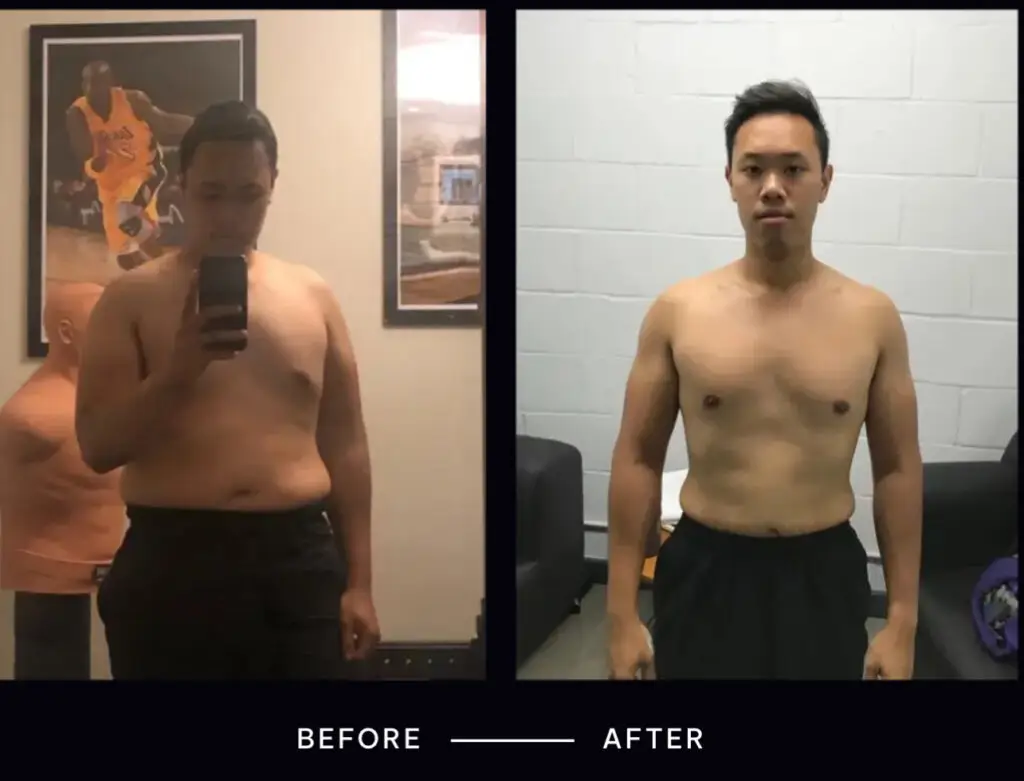
Most people don’t fail because their workout plan is bad. They fail because the plan does not fit their life. That is why the push, pull, legs method works so well. It is simple, structured, and easy to repeat. As a certified personal trainer, I have used this method with clients who want to build muscle, lose body fat, and get stronger without spending hours in the gym. One client, Jeremy, lost 20kg of body fat in 12 months while building muscle across his whole body. He trained three times per week: one push workout for chest, shoulders, and triceps, one pull workout for back and biceps, and one leg workout to build a stronger lower body.
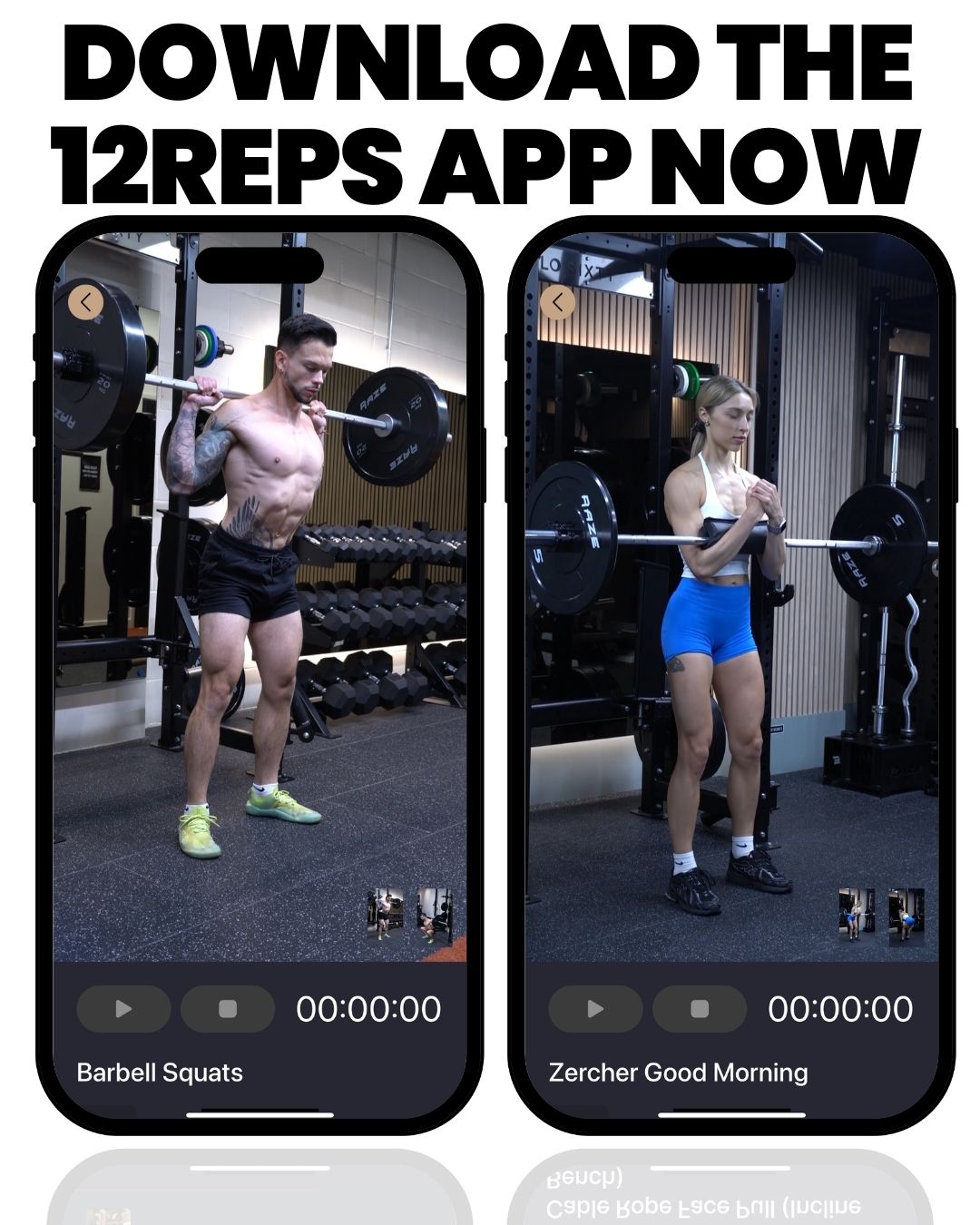
Jeremy’s success came from having a plan he could stick to. No random workouts. No guessing. No changing exercises every week because motivation dropped. The structure helped him train with purpose, track his progress, and stay consistent. With the 12REPS app, you can follow structured push, pull, and leg workouts, track your sets and reps, and build muscle without trying to remember every detail yourself. Building muscle is not about doing more. It is about doing the right things long enough for your body to change. Download the 12Reps app free
Why the Push/Pull/Legs Workout
The push, pull, legs workout works because it gives your training structure without making it complicated. You train your body through three clear movement patterns: pushing, pulling, and lower-body exercises. This helps you build muscle, recover properly, and train with more focus each week. Jeremy, a successful entrepreneur, had let his health slip while building his company. Once he got his time back, he used this structure to rebuild his body, improve his strength, and get into the best shape of his life.
The reason this method works is simple. Each muscle group gets enough training stimulus, then enough time to recover. Push day focuses on chest, shoulders, and triceps. Pull day focuses on back, biceps, and rear shoulders. Leg day focuses on the largest muscles in the body, helping you build strength, burn more calories, and create a strong foundation. With the 12REPS app, you can follow this structure, track your sets and reps, and stay consistent without guessing what to train next.

Phase 1: Foundation Building (Weeks 1-4)
Phase 1 of this strength training plan focuses on mastering fundamental movement patterns while establishing a solid base of strength and muscle. During these initial four weeks, the emphasis is on perfect form execution, mind-muscle connection, and building the work capacity necessary for the more intense phases ahead.
Push Day: Chest Workout and Pressing Power (Weeks 1-4)
The push day in Phase 1 establishes the foundation for all pressing movements. This chest workout routine incorporates both barbell and dumbbell exercises to ensure balanced development and proper muscle activation. The shoulder and tricep exercises complement the chest workout perfectly, creating a comprehensive upper body pushing session.
Exercise | Sets | Reps | Notes |
Dumbbell Bench Press | 4 | 10-12 | Focus on controlled descent and chest squeeze |
Incline Barbell Press | 4 | 8-10 | Target upper chest development |
Dumbbell Shoulder Press | 4 | 10-12 | Full range of motion, core stability |
Lateral Raises | 4 | 12-15 | Slow, controlled movement for deltoid isolation |
Tricep Rope Pushdowns | 4 | 12-15 | Full extension with tricep squeeze |
Overhead Tricep Extension | 4 | 10-12 | Keep elbows stable throughout movement |
Pull Day: Back Workout and Pulling Strength (Weeks 1-4)
The pull day focuses on developing a strong, wide back while building impressive arm muscle. This back workout routine emphasises proper pulling mechanics and scapular control, essential foundations for advanced pulling movements in later phases.
Exercise | Sets | Reps | Notes |
Lat Pulldowns | 4 | 10-12 | Wide grip, pull to upper chest |
Seated Cable Rows | 4 | 10-12 | Squeeze shoulder blades, control the weight |
T-Bar Rows | 4 | 8-10 | Maintain flat back, drive elbows back |
Face Pulls | 4 | 15-20 | Focus on rear deltoid activation |
Dumbbell Bicep Curls | 4 | 10-12 | Strict form, avoid momentum |
Hammer Curls | 4 | 12-15 | Neutral grip for brachialis development |
Leg Workout: Lower Body Foundation (Weeks 1-4)
The leg workout in Phase 1 introduces fundamental lower body movement patterns while building the strength and stability necessary for more advanced exercises. This comprehensive Leg workout targets all major lower body muscle groups while emphasising proper movement mechanics.
Exercise | Sets | Reps | Notes |
Goblet Squats | 4 | 12-15 | Full depth, chest up, core engaged |
Romanian Deadlifts | 4 | 10-12 | Hip hinge movement, hamstring stretch |
Leg Press | 4 | 15-20 | Full range of motion, controlled tempo |
Leg Curls | 4 | 12-15 | Squeeze hamstrings at peak contraction |
Leg Extensions | 4 | 12-15 | Control the weight, quad focus |
Standing Calf Raises | 4 | 15-20 | Full stretch and contraction |
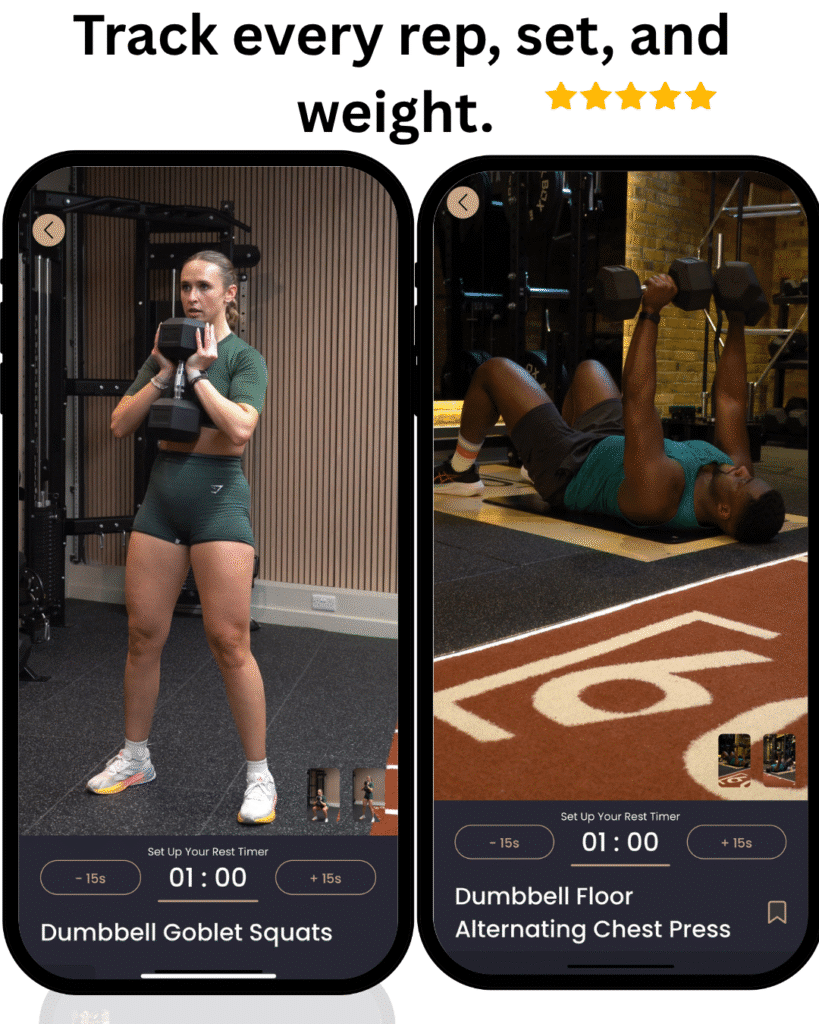
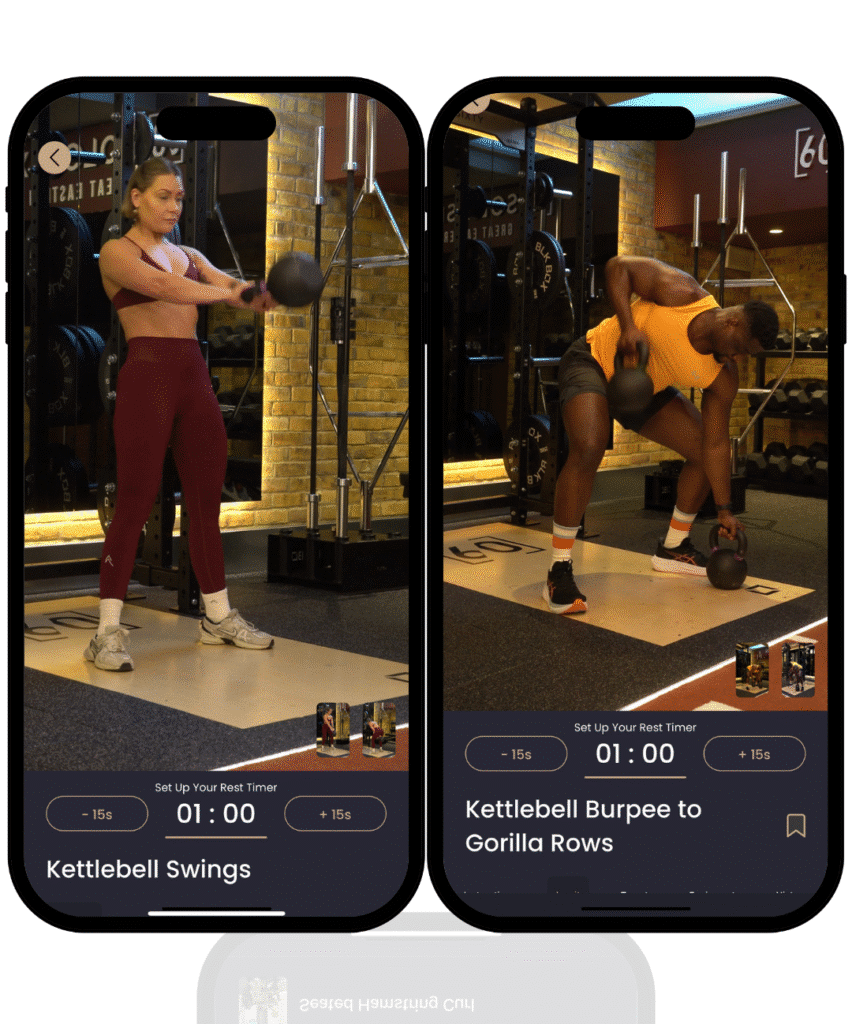
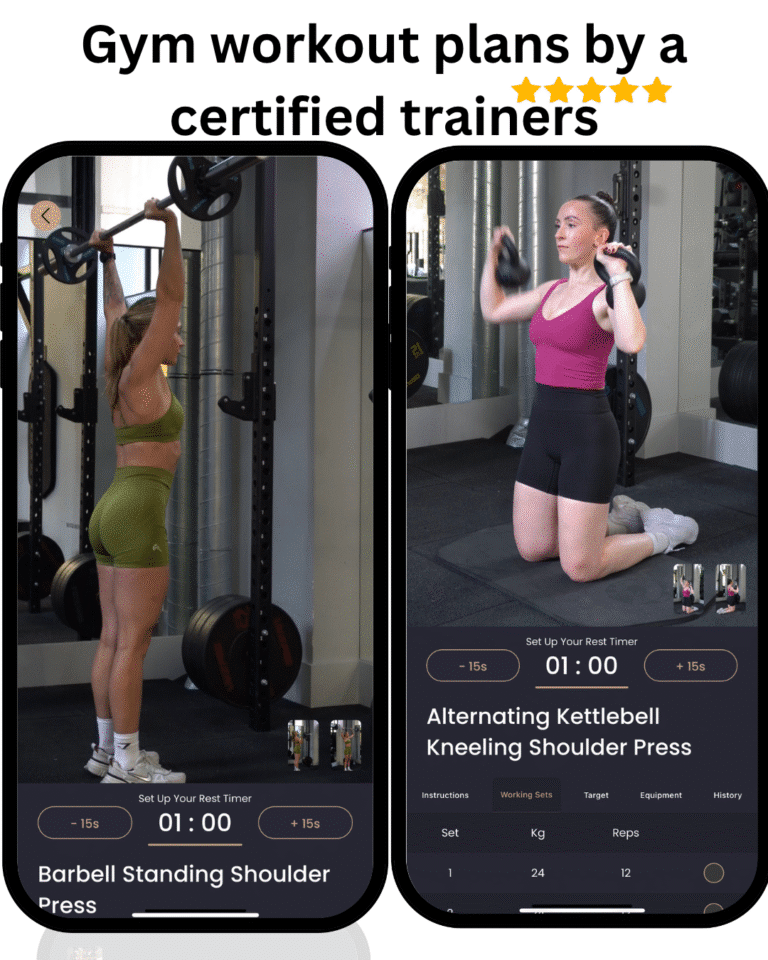
Download the 12reps app to see all exercise demos and get a 7-day free trial.
Phase 2: Strength Development (Weeks 5-8)
Phase 2 of this strength training plan elevates the intensity and introduces more challenging exercises. Having mastered the fundamental movement patterns in Phase 1, you’re now ready for heavier loads and more complex training techniques. This phase is where significant strength gains occur, and where the push, pull, and leg method begins to show its muscle-building potential.
The workout plan progression in Phase 2 focuses on increasing training loads while maintaining perfect form. The reps range shifts slightly lower to accommodate heavier weights, promoting both strength and muscle development. This is the phase where many clients, like Jeremy, begin to see dramatic changes in their physique and strength levels.
Push Day: Advanced Chest Workout and Power Development (Weeks 5-8)
Phase 2 push day introduces more challenging exercises and heavier loads. This chest workout routine incorporates both compound and isolation movements to maximise muscle development and strength gains.
Exercise | Sets | Reps | Notes |
Barbell Bench Press | 4 | 6-8 | Increase weight from Phase 1, focus on power |
Incline Dumbbell Flyes | 4 | 10-12 | Deep stretch, controlled movement |
Military Press | 4 | 6-8 | Strict overhead pressing, core stability |
Arnold Press | 4 | 8-10 | Rotation movement for complete deltoid development |
Close-Grip Bench Press | 4 | 8-10 | Tricep focus, narrow grip position |
Diamond Push-ups | 4 | 10-15 | Bodyweight finisher, maximum tricep activation |
Pull Day: Intensive Back Workout and Strength (Weeks 5-8)
The Phase 2 back workout introduces more challenging pulling movements and heavier loads. This progression ensures continued muscle growth and strength development in all pulling muscles.
Exercise | Sets | Reps | Notes |
Pull-ups/Assisted Pull-ups | 4 | 6-10 | Full range of motion, controlled tempo |
Barbell Rows | 4 | 6-8 | Heavy weight, maintain flat back |
Single-Arm Dumbbell Rows | 4 | 8-10 | Each arm, focus on lat activation |
Reverse Flyes | 4 | 12-15 | Rear deltoid isolation, squeeze at peak |
Barbell Curls | 4 | 8-10 | Heavier weight than Phase 1 |
Cable Hammer Curls | 4 | 10-12 | Constant tension throughout range |
Leg Workout: Power and Strength Development (Weeks 5-8)
Phase 2 leg workout introduces heavier compound movements and more challenging exercises. This progression builds serious lower body strength and muscle mass.
Exercise | Sets | Reps | Notes |
Barbell Back Squats | 4 | 6-8 | Significant weight increase from Phase 1 |
Stiff-Leg Deadlifts | 4 | 8-10 | Feel deep hamstring stretch |
Bulgarian Split Squats | 4 | 10-12 | Each leg, challenging unilateral movement |
Walking Lunges | 4 | 12-15 | Each leg, focus on control and balance |
Calf Press on Leg Press | 4 | 15-20 | Heavy weight, full range of motion |
Seated Calf Raises | 4 | 15-20 | Squeeze at peak contraction |
Phase 3: Advanced Strength Training (Weeks 9-12)
Phase 3 represents the pinnacle of this strength training plan. Having built a solid foundation in Phase 1 and developed significant strength in Phase 2, you’re now ready for the most challenging and rewarding phase of the program. This is where advanced training techniques and maximum loads combine to produce extraordinary results in both strength and muscle development.
The push, pull, and leg method reaches its full potential in Phase 3, with exercise selection and training techniques that challenge even experienced lifters. This phase incorporates advanced movements, varied rep ranges, and intensity techniques that maximise muscle fibre recruitment and promote continued adaptation.
Push Day: Elite Chest Workout and Maximum Power (Weeks 9-12)
Phase 3 push day represents the ultimate challenge for a chest workout. Advanced exercises and techniques push your pressing strength to new heights while maximising muscle development.
Exercise | Sets | Reps | Notes |
Incline Barbell Press | 4 | 5-6 | Maximum weight, explosive concentric |
Dumbbell Flyes | 4 | 8-10 | Deep stretch, mind-muscle connection |
Handstand Push-ups/Pike Push-ups | 4 | 6-10 | Advanced bodyweight movement |
Lateral Raise to Front Raise | 4 | 10-12 | Combination movement, constant tension |
Tricep Dips | 4 | 8-12 | Full range of motion, add weight if possible |
Skull Crushers | 4 | 8-10 | Control the negative, tricep isolation |
Pull Day: Ultimate Back Workout and Pulling Power (Weeks 9-12)
The Phase 3 back workout incorporates the most challenging pulling movements and maximum loads. This represents the ultimate test of your pulling strength and back development.
Exercise | Sets | Reps | Notes |
Weighted Pull-ups | 4 | 5-8 | Add weight when possible, full range |
Deadlifts | 4 | 5-6 | Perfect form essential, maximum load |
Wide-Grip Cable Rows | 4 | 8-10 | Focus on lat activation and width |
Shrugs | 4 | 10-12 | Trap development, heavy weight |
21s Bicep Curls | 4 | 21 reps | 7 bottom half + 7 top half + 7 full range |
Preacher Curls | 4 | 8-10 | Strict form, peak contraction focus |
Leg Workout: Maximum Lower Body Development (Weeks 9-12)
The Phase 3 leg workout represents the ultimate challenge for lower body strength and muscle development. Advanced exercises and maximum loads create the stimulus for extraordinary leg development.
Exercise | Sets | Reps | Notes |
Front Squats | 4 | 6-8 | Quad-dominant movement, upright torso |
Sumo Deadlifts | 4 | 6-8 | Wide stance, glute and hamstring focus |
Step-ups | 4 | 10-12 | Each leg, explosive upward movement |
Glute Ham Raises | 4 | 8-12 | Hamstring and glute isolation |
Jump Squats | 4 | 10-15 | Explosive power development |
Single-Leg Calf Raises | 4 | 12-15 | Each leg, balance and strength challenge |
Progressive Overload: The Key to Continuous Strength Training Success
Most people think progress comes from changing exercises every week. It doesn’t. It comes from getting better at the right exercises over time. That is progressive overload: adding a little more demand to your training so your body has a reason to adapt. This 12-week plan uses that principle in a clear way, so you are not just working hard. You are moving forward.
In Phase 1, the goal is control. You learn the movements, build confidence, and find your starting strength. The reps are slightly higher because your body needs time to master the exercises. During your chest, back, and leg sessions, your focus should be on technique, range of motion, and feeling the right muscles work.
Phase 2 is where the training starts to feel more serious. You increase the weight by around 10 to 15 percent from Phase 1 and lower the reps slightly. This gives your muscles a stronger reason to grow. The push, pull, legs structure works well here because each session has a clear focus, allowing you to train harder without turning every workout into a mess.
Phase 3 is where you push the plan. The weight increases again by around 10 to 15 percent from Phase 2, and the exercises become more demanding. This phase is not about ego lifting. It is about using heavier loads with good form, so you build real strength and muscle, not just fatigue.
Rest periods matter too. For big compound lifts in your chest, back, and leg workouts, rest for 2 to 3 minutes between sets. You need that time to perform properly. For smaller isolation exercises, 1 to 2 minutes is enough. The goal is not to rush. The goal is to train with purpose and make each set count.
Nutrition Strategy for Maximum Results
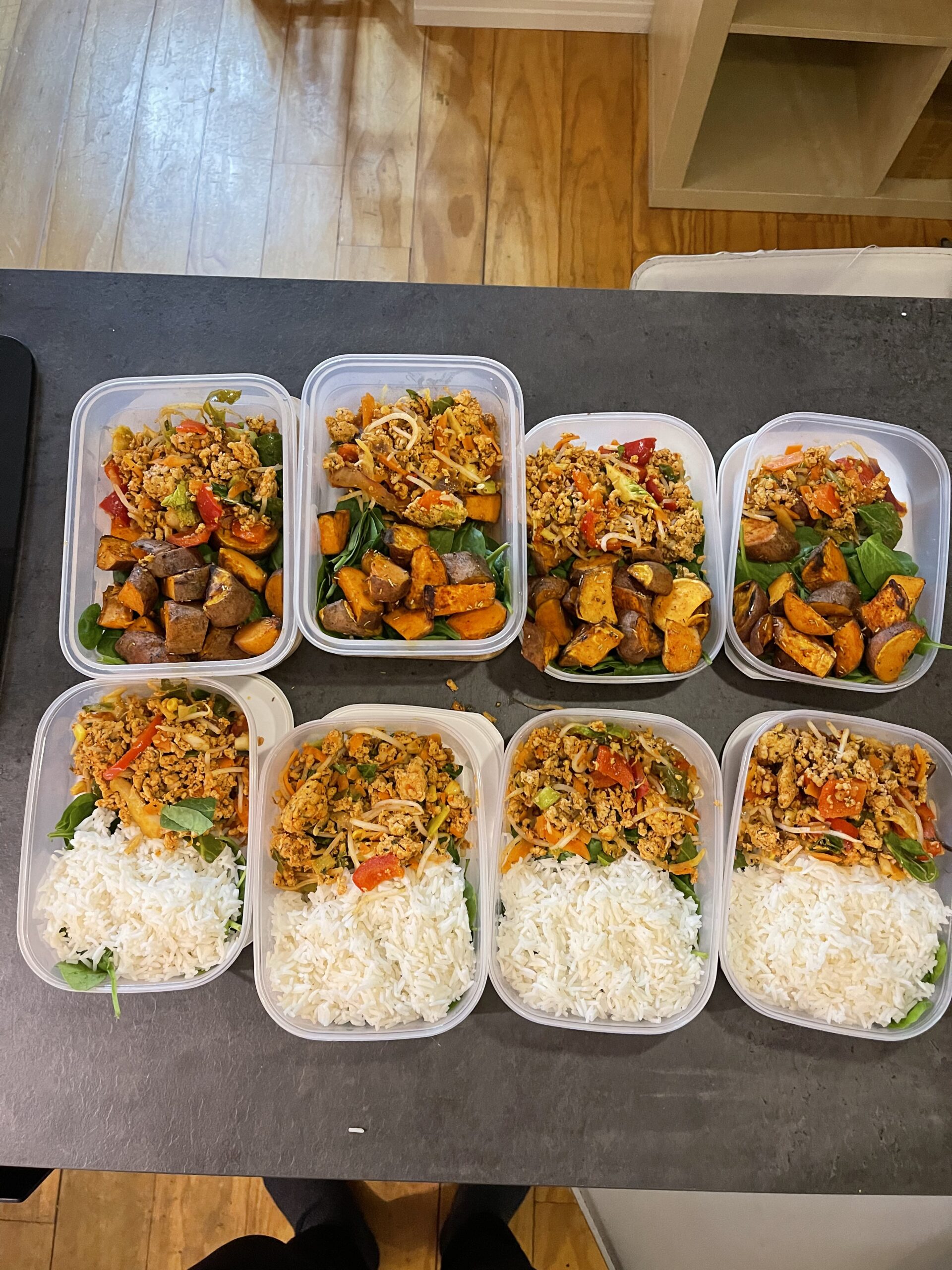
Jeremy’s 20kg fat loss did not happen because he trained hard and hoped for the best. Training gave his body the signal to change, but nutrition made the change possible. The push, pull, legs plan helped him build strength and muscle. His food choices helped him lose body fat without feeling like he had to starve himself.
The goal is not to eat as little as possible. That usually backfires. A better approach is to stay in a moderate calorie deficit, around 300 to 500 calories below your maintenance level. This is enough to support steady fat loss while still giving your body the energy it needs to train well, recover, and protect muscle.
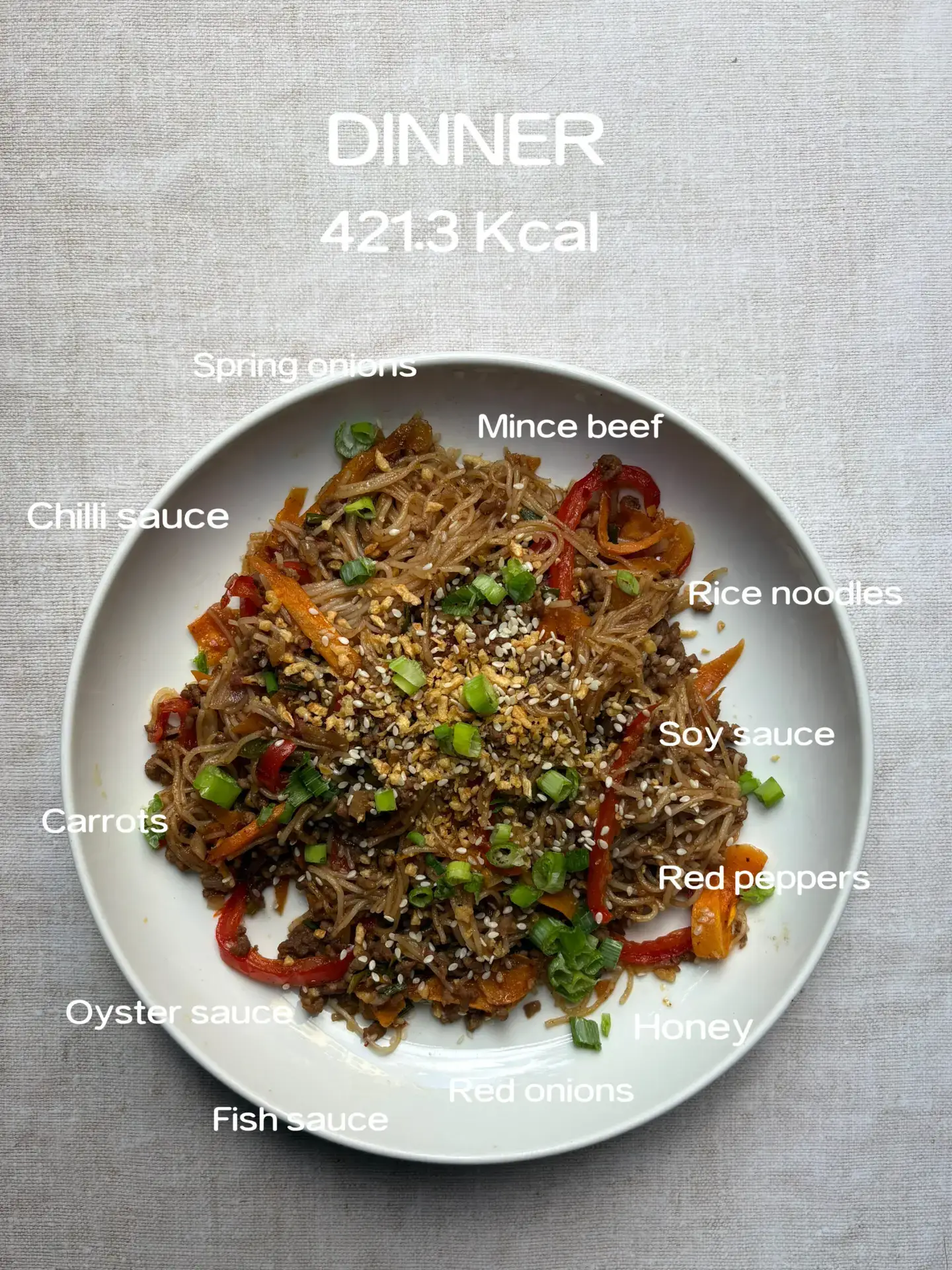
Protein should be a priority. Aim for around 1.0 to 1.2 grams of protein per pound of body weight each day. This helps support muscle repair, recovery, and growth while you are losing fat. Include protein in each meal from foods like chicken, eggs, fish, lean beef, Greek yoghurt, tofu, or protein shakes.
Carbohydrates are not the enemy. Used properly, they help you train harder. Place more of your carbs around your workouts, before training for energy and after training to support recovery. This works well with a push, pull, legs plan because each session demands focus, strength, and effort.
Hydration matters more than most people think. Even mild dehydration can affect performance, focus, and recovery. Aim for 8 to 10 glasses of water per day, with extra fluids around your workouts. If you want to train hard, lift well, and recover properly, your body needs enough water to do the job.
Conclusion
Most people don’t need a perfect workout plan. They need a plan they can repeat long enough to see change. That is what this 12-week push, pull, legs strength plan gives you. It gives your training structure, progression, and enough recovery so your body can get stronger without burning out.
Jeremy’s transformation shows what happens when the basics are done well. He lost 20kg of body fat, built muscle across his whole body, and rebuilt his fitness after years of putting work before health. The push, pull, legs method gave him a clear system: push movements, pull movements, and leg training, repeated with purpose.
Your result will not come from one hard session. It will come from showing up, tracking your lifts, improving your technique, and making small progress week after week. That is where real strength is built.
With the 12REPS app, you can follow the plan, track your sets and reps, and stay focused without guessing what to do next. Start with your next session. Keep it simple. Train with intent. Let the results build.