

By Will Duru, BSc (Hons) Sport and Exercise Science, Award-winning Personal Trainer with over 10 years of experience in strength training and optimising recovery
Consistency matters in fitness because results come from training regularly for months, not from a few intense weeks. The importance of consistency in fitness is simple: small sessions you can keep doing beat big plans you abandon.
Every January, gyms fill up with people chasing big goals on tight deadlines, such as losing a lot of weight in a month or getting a six-pack by summer. The enthusiasm is great. But going from zero to training every day, and cutting out all your favorite foods at once, often leads to soreness, burnout and giving up.
The goals themselves aren’t the problem. The approach is. There’s no magic workout, supplement or diet. What works is showing up, even when you don’t feel like it, and making small changes you can stick with. Fitness is a marathon, not a sprint.
This article covers why consistency matters, how habits form, practical strategies, and how the 12REPS app can help you stay on track.

Why Consistency Matters: The Compound Effect of Fitness
Small, regular efforts add up over time, much like regular saving. A 30-minute workout three times a week might not sound like much. But over a year, that’s about 4,680 minutes, or 78 hours of training.
Compare that with an all-or-nothing approach. For example, someone trains for two hours every day for a week, burns out and then stays away for a month. That’s 14 hours, far less than the steady approach. It’s not about being perfect. It’s about being consistent.
The problems with sporadic, intense efforts
Going all-out, all the time, might feel productive, but it often leads to:
- Burnout: Both physical and mental. Your body and mind need time to recover and adapt.
- A higher risk of injury: Doing too much too soon can lead to injuries that set you back for weeks.
- Negative associations: If every workout is grueling, you’ll start to dread it. That makes it much harder to stay motivated.
Consistency lets your body adapt gradually and helps you build a positive relationship with exercise. The NHS recommends strengthening activities on at least 2 days a week, plus at least 150 minutes of moderate activity. A routine you can repeat every week is how you meet that.
To keep improving, add a little more over time. Our beginner’s guide to progressive overload explains how.

The Science of Habit Formation in Fitness
Building a habit isn’t just about willpower. It’s about creating a system that makes being consistent easier. Psychologists describe a habit as an action that is triggered automatically by a cue you’ve linked with it through repetition (BJGP, 2012). Once a habit forms, you rely less on motivation to get started.
A popular way to describe this is the cue, routine and reward loop:
- Cue: The trigger that tells your brain to start. The best cues are things you meet often and at the same point in your day, such as your morning alarm or leaving work.
- Routine: The behavior itself, which here is your workout.
- Reward: The good feeling after you finish. It could be a sense of accomplishment or simply a relaxing shower. The reward helps make the habit feel worth repeating.
You can set up your environment to support this. For example, lay out your gym clothes the night before (the cue). That makes it easier to get up and work out (the routine), which gives you the feeling of starting your day well (the reward).
How long does it take to build a habit?
In a UCL study, it took an average of 66 days for a new behavior to feel automatic, with wide variation between people (UCL). Missing a single day did not significantly affect habit formation. But people who were very inconsistent did not form habits.
For exercise, frequency seems to matter. A study of new gym members found that exercising at least four times a week for six weeks was the minimum needed to establish an exercise habit. Consistency was the strongest predictor. That was one group of gym members, so treat it as a guide, not a rule. You can build up to it gradually.
Making fitness a non-negotiable part of your routine
The goal is to make your workouts as automatic as brushing your teeth. You don’t debate whether to brush your teeth; you just do it. By repeating the same cue and routine, you can build that same automatic habit with exercise. That is the power of habit, and it’s the key to long-term consistency.
For more ideas, read how to build a gym habit that actually sticks.
Practical Strategies for Building Consistent Fitness Habits
So how do you put this into practice? Here are practical ways to build lasting fitness habits:
- Start small and build up: If you’re new to exercise, don’t try to train five days a week straight away. Start with two or three days. Even 20 to 30 minutes is a great start. Once that feels manageable and automatic, add more.
- Schedule your workouts: Put them in your calendar like any other appointment. Link them to a regular cue, such as “after work on Monday, Wednesday and Friday.” This makes them a priority and makes skipping less likely.
- Find accountability: Share your goals with a friend or family member. Better yet, find a workout buddy. Knowing someone is counting on you can help you show up. A good personal trainer or a supportive app can help too.
- Track your progress: Lifting a little heavier, doing one more rep or simply feeling more energetic is proof that your consistency is paying off. See how to track your workouts.
- Celebrate small wins: Did you stick to your schedule for a week? Acknowledge it. Small wins reinforce the good feelings linked with your new habit.
- Plan for setbacks and get back on track: Life happens. You might get sick, have a busy week at work or just not feel like it. That’s okay. Missing an occasional session does not seem to undo habit building (BJGP, 2012). The key is not letting one missed workout turn into a missed week or month. Get back to your next scheduled session. It’s about progress, not perfection.

How 12REPS Supports Consistency and Lasting Habits
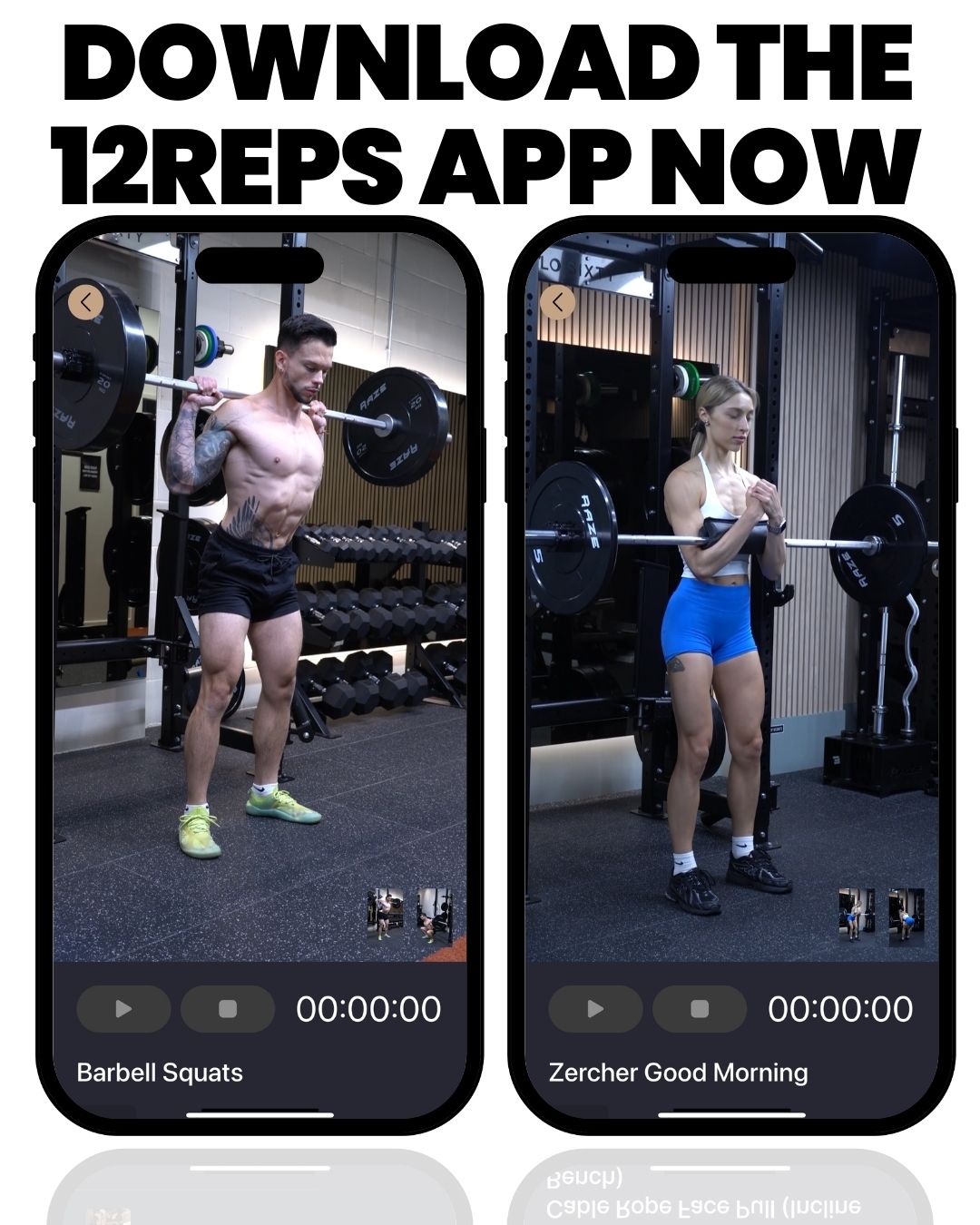
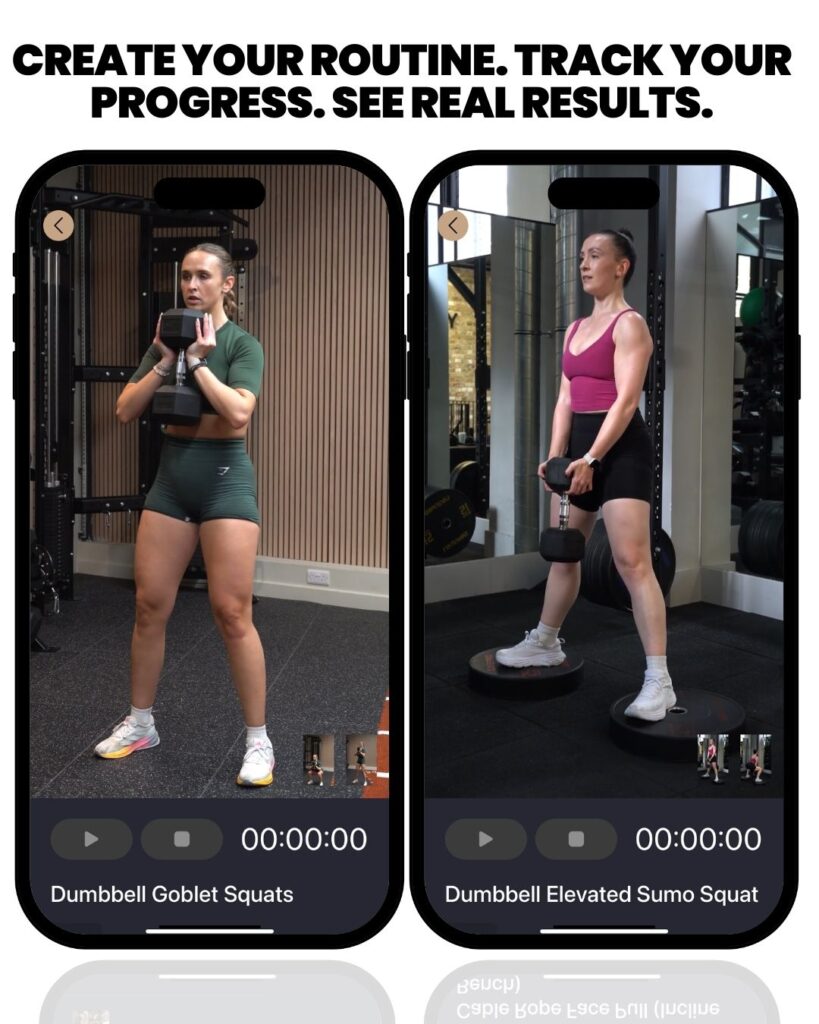
12REPS was built around these same principles: a clear plan, simple tracking and accountability.
1. Simple workout logging
Start your workout, watch the trainer demo, then enter your reps and weight for each set. The app remembers what you lifted, so you always have a number to beat. You can also log your body weight to see your trend, and take private progress photos to compare stages.
2. Plans that fit your week
Your plan is built around your goal, your equipment and the time you have. Open the app and your workout is ready. On a day when your plans change, use Build your own: choose the muscle, the equipment and the time, and 12REPS builds the session. That flexibility makes it easier to keep going when life gets busy.
3. Tools to keep you going
12REPS tracks your workouts and your streaks, and you can set a weekly goal. Challenges and awards give you extra reasons to show up.
4. A community
12REPS also has a community. Training alongside others adds another layer of support and accountability.

Building Fitness for the Long Term
If you’ve struggled with New Year’s resolutions, or found it hard to stick with a routine, the all-or-nothing approach may be the reason. Consistency is what moves you toward your goals.
Make small, sustainable changes. Set realistic goals and celebrate your progress along the way. Build habits that become a natural part of your life.
If nerves are what keep you away from the gym, our guide to gym anxiety and feeling confident in the gym can help. Short on time? A minimalist gym routine is easier to keep up than an ambitious one you skip.
So this year, skip the big resolutions and focus on building a lifestyle. Train smarter, not just harder, and let consistency do the work.
Want a plan you can stick to? 12REPS sets out each session for your goal, equipment and time. It tracks your streaks and weekly goal, and shows you what to beat next time.

Sources
- Physical activity guidelines for adults aged 19 to 64. NHS, 2024. https://www.nhs.uk/live-well/exercise/physical-activity-guidelines-for-adults-aged-19-to-64/
- Making health habitual: the psychology of ‘habit-formation’ and general practice. British Journal of General Practice (Gardner B, Lally P, Wardle J), 2012. https://pmc.ncbi.nlm.nih.gov/articles/PMC3505409/
- How long does it take to form a habit?. UCL News, 2009. https://www.ucl.ac.uk/news/2009/aug/how-long-does-it-take-form-habit
- Investigating the requirements and establishing an exercise habit in gym members (doctoral dissertation, including Kaushal and Rhodes, Journal of Behavioral Medicine, 2015). University of Victoria (Kaushal N), 2016. https://dspace.library.uvic.ca/items/113699e5-2131-4f46-8ec6-2180cffed8c3/full