

By Will Duru, BSc (Hons) Sport and Exercise Science, Award-winning Personal Trainer with over 10 years of experience in strength training and optimising recovery
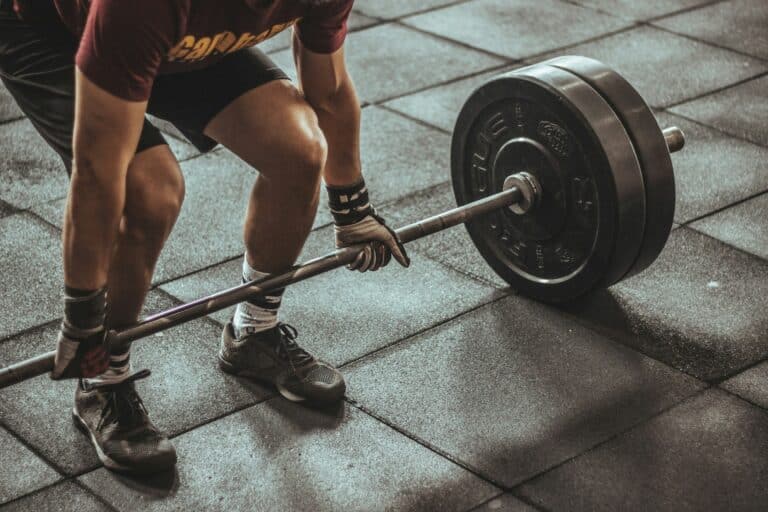
Warm-up sets are lighter sets of the exercise you are about to do, used to build up to your working weight. A typical build-up is 2 to 4 sets, adding weight and doing fewer reps each time. Research suggests that a build-up which includes a set close to your working weight prepares you better than light sets alone.
Skipping warm-up sets to save time is a common mistake. A few well-planned sets take only minutes, and they help you start your work sets ready to lift well.
Below, you will learn what warm-up sets do, how many to do, how heavy to go and which mistakes to avoid. For the full routine before a session, including the general warm-up and mobility work, see our complete guide to warming up before lifting.

Beyond a Quick Stretch: What Are Warm-Up Sets?
Many people think a warm-up is just a quick stretch or a few minutes on the treadmill. Light cardio has its place, but it is only part of the picture. For lifting, there are two types of warm-up: the general warm-up and specific warm-up sets.
General Warm-Up
This is 5 to 10 minutes of light activity that raises your heart rate, such as brisk walking, easy cycling or rowing. The goal is to raise your body temperature and get you moving. Our 3-phase warm-up guide covers this part in more detail.
Specific Warm-Up Sets
Specific warm-up sets are lighter versions of the exact exercise you are about to do. For example, if you plan to squat 100 kg, you would not start at 100 kg. You would do a few lighter sets first, adding weight each time until you reach your working sets.
What Warm-Up Sets Do
- Raise muscle temperature: a 2003 review in Sports Medicine links most warm-up benefits to temperature effects, such as faster nerve signals and lower muscle stiffness.
- Rehearse the movement: lighter sets let you practice the exact technique and positions before the weight gets heavy. This matters most for complex lifts like the squat and deadlift.
- Prepare you for heavier loads: working up to a weight close to your first work set gets you used to the load. In a 2021 systematic review, specific warm-ups with loads close to the maximum appeared to help strength performance most.
Why Warm-Up Sets Are So Important for Anyone Lifting Weights
Now that you know what warm-up sets are, here is why they are worth a few minutes in every session.
1. Better Performance in Your Work Sets
Warming up tends to improve performance. A 2010 meta-analysis found improvements in 79% of the outcomes measured. For the upper body, a 2015 systematic review found strong evidence that warm-ups using higher loads improve strength and power.
The type of warm-up matters. In a 2020 study of trained men, a warm-up of only light sets gave the weakest performance in both the squat and the bench press.
2. A Chance to Check Your Technique
Warm-up sets let you check your technique and how your body feels before the weight gets heavy. If something feels off, you can adjust early.
Whether warm-ups lower injury risk in lifting has not been well studied. The 2015 review found no studies on upper-body warm-ups and injury. So treat warm-up sets as good preparation, not as injury insurance.
3. Focus on the Right Muscles
Lighter sets give you room to focus on the movement and the muscles you want to work. For example, during a warm-up set of squats, focus on pushing through your whole foot and keeping your chest up. Our guide to the mind-muscle connection explains how to use this focus in your training.

How Many Warm-Up Sets Should You Do?
There is no single best number. The research is still limited, and the right build-up depends on how heavy your work sets are. These simple rules work for most lifters:
- Start light: begin with a very light weight, or just the bar. This set is about movement, not effort.
- Add weight gradually: use 2 to 4 warm-up sets before your work sets. Heavier work sets usually need more steps.
- Do fewer reps as the weight goes up: for example, 10 to 12 reps with the empty bar, then 6 to 8, then 3 to 5. Finish with 1 to 2 reps at a weight close to your first work set.
- Keep rests short: rest just long enough to change the weight, usually 60 to 90 seconds.
- Stay far from failure: every warm-up set should feel easy to moderate, with many reps left. Our guide to RPE vs RIR explains how to rate effort.
Research supports including at least one heavier warm-up set. In the 2020 study, the best bench press warm-up was one set of 6 reps at 40% of the training load, then one at 80%. For the squat, a single set at 80% of the training load worked best. Both beat light sets alone. The study was small, so treat these as a guide rather than a rule.
Example: Warm-Up Sets for the Bench Press
Say your first work set on the barbell bench press is 80 kg for 8 reps. Your warm-up could look like this:
| Set | Weight | Reps | Focus |
|---|---|---|---|
| 1 | Empty bar | 10 to 12 | Movement and form |
| 2 | 40 kg | 6 to 8 | Feel the weight and keep your form sharp |
| 3 | 60 kg | 3 to 5 | Get closer to your working weight |
| 4 | 70 kg | 1 to 2 | A final feel for a heavier load, without fatigue |
Then start your 80 kg work sets. The same pattern works for the barbell squat, the deadlift and the overhead press. Your numbers will differ, but the idea stays the same: add weight, cut reps and save your energy for the work sets.
Do You Need Warm-Up Sets for Every Exercise?
Not always. Your first big lift of the session needs the most preparation. Later exercises that use the same muscles often need only one or two lighter sets, because you are already warm.
Common Warm-Up Mistakes to Avoid
- Doing too much: warm-up sets should prepare you, not tire you out. Too many reps or sets take energy from your main workout.
- Long static stretches right before lifting: static stretching means holding a stretch in one position. A 2016 systematic review found that holds of 60 seconds or more per muscle cut performance by about 4.6% on average. Shorter holds had a small effect of about 1%. If you stretch before lifting, keep holds short and follow them with moving drills, such as leg swings or arm circles.
- Skipping warm-up sets entirely: jumping straight to your heaviest weight means starting your hardest sets unprepared. Even two short warm-up sets are better than none.

Using 12REPS for Your Warm-Up Sets
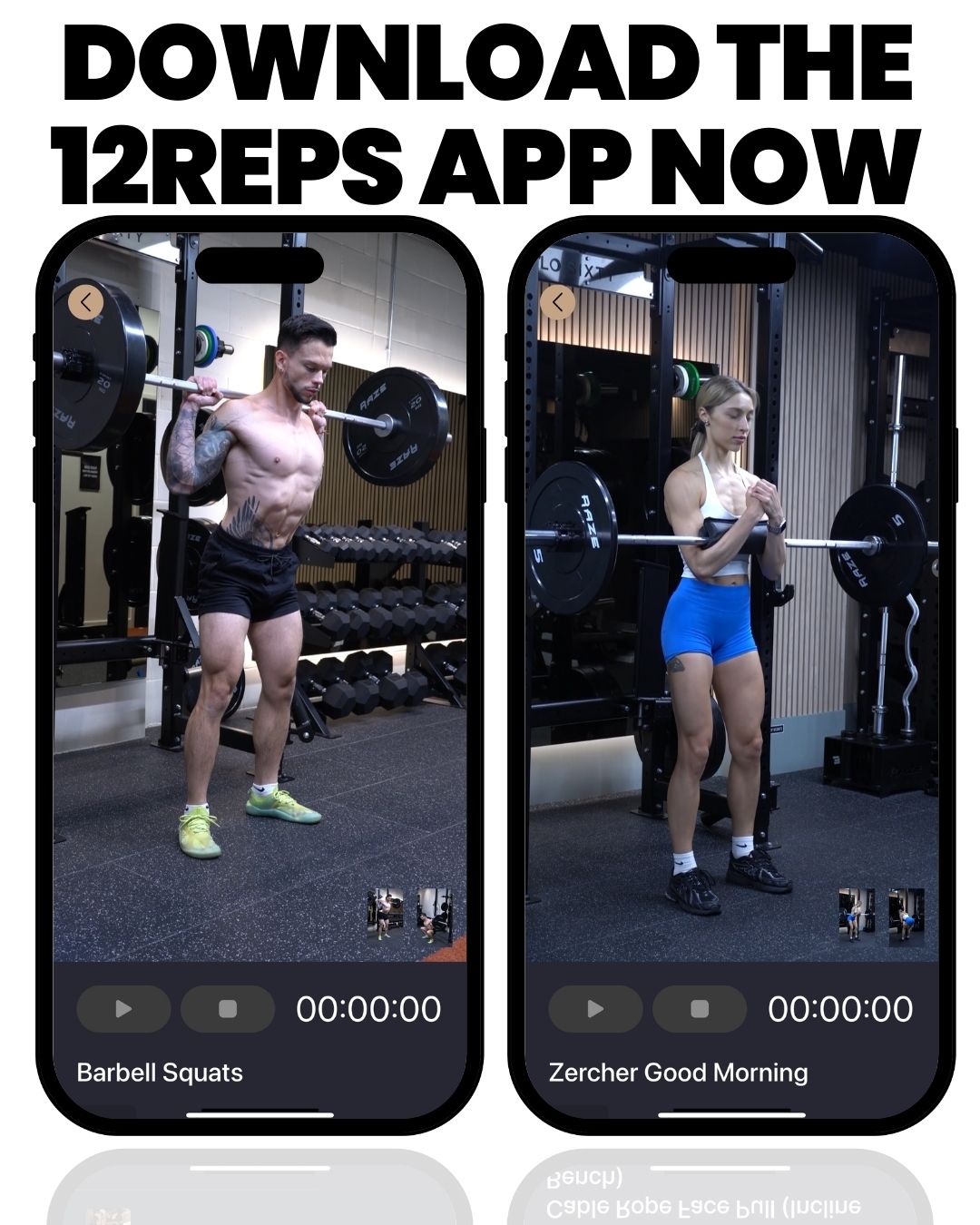
A plan helps you warm up well, because you know which lifts are coming. In the 12REPS app, your workout is built around your goal, your equipment and the time you have. Open the app and the session is ready, so you can plan warm-up sets for your first big lift.
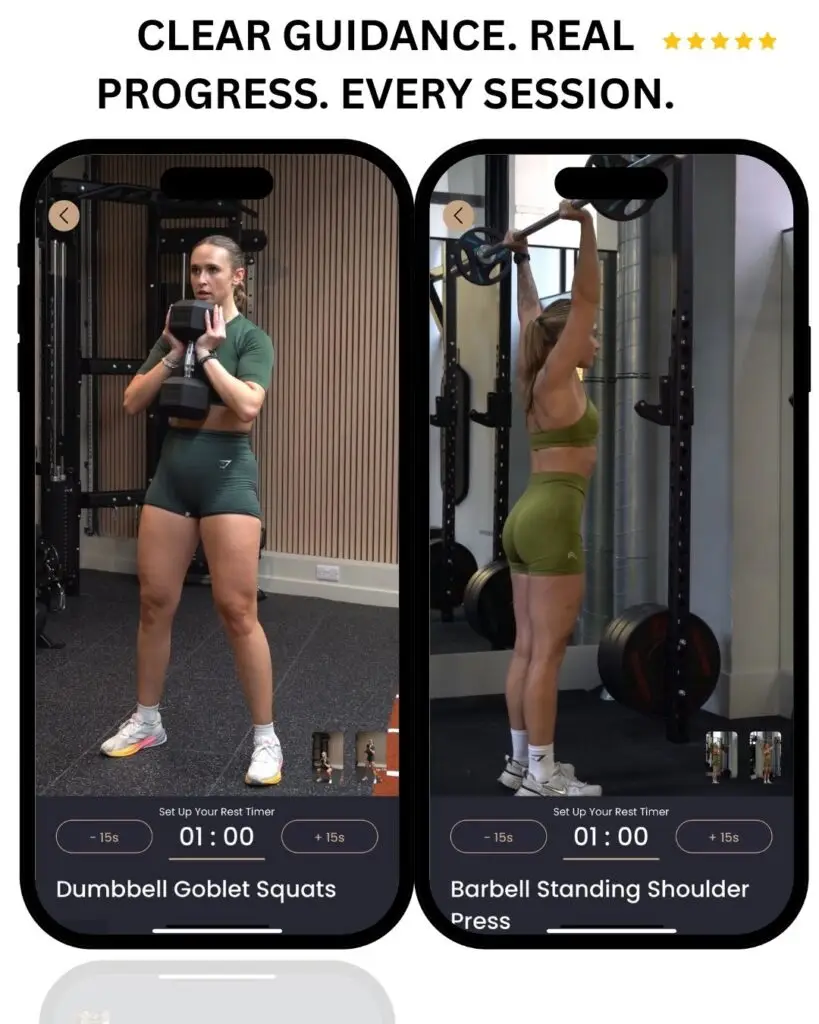
- Check your technique: each exercise has a demonstration and technique breakdown from a qualified personal trainer. Watch it before your first warm-up set, then use the light sets to practice what you saw.
- Know your working weight: you enter the reps and weight for each set, and the app remembers what you lifted. That tells you what to build up to, and gives you a number to beat.
- Stay consistent: the app tracks your workouts, streaks and weekly goal. That helps make a proper warm-up part of every session.
One more tip: notice how your last warm-up set feels. If a weight that usually feels light feels heavy, you may be tired. That can be a good day to keep your work sets a little lighter.

Make Warm-Up Sets Part of Every Session
Warm-up sets are a short, practical step that helps you start your work sets ready to perform. Start light, add weight in a few steps, do fewer reps as the load rises and stay well away from failure.
They will not make up for poor sleep or a poor plan, and the research on injury is limited. But they help you lift well and check your technique before the heavy sets.
If you want each session set out for you, the 12REPS app builds your workout around your goal, your equipment and your time, with a trainer demonstration for every exercise.
Once your work sets begin, read our guide on how long to rest between sets.
Sources
- Warm up I: potential mechanisms and the effects of passive warm up on exercise performance (Bishop D). Sports Medicine, 2003. https://vuir.vu.edu.au/24257/
- The effect of warm-up in resistance training and strength performance: a systematic review (Ribeiro B et al.). Motricidade, 2021. https://revistas.rcaap.pt/motricidade/article/view/21143
- Effects of warming-up on physical performance: a systematic review with meta-analysis (Fradkin AJ, Zazryn TR, Smoliga JM). Journal of Strength and Conditioning Research, 2010. https://search.pedro.org.au/search-results/record-detail/24982
- A systematic review of the effects of upper body warm-up on performance and injury (McCrary JM, Ackermann BJ, Halaki M). British Journal of Sports Medicine, 2015. https://bjsm.bmj.com/content/49/14/935
- The Role of Specific Warm-up during Bench Press and Squat Exercises: A Novel Approach (Ribeiro B et al.). International Journal of Environmental Research and Public Health, 2020. https://openaccess.library.uitm.edu.my/Record/doaj-e0b47e7f8f9c4e2ea7284ea0e36a97d2/Description
- Acute effects of muscle stretching on physical performance, range of motion, and injury incidence in healthy active individuals: a systematic review (Behm DG et al.). Applied Physiology, Nutrition, and Metabolism, 2016. https://pure.northampton.ac.uk/en/publications/acute-effects-of-muscle-stretching-on-physical-performance-range-/