



By Will Duru, personal trainer and founder of 12REPS.
The Short Answer
Grip strength is linked to long-term health. In large studies, people with weaker grips had a higher risk of dying early and of heart disease. That doesn’t mean squeezing a gripper will make you live longer, but grip strength is a useful marker of overall strength.
The best way to improve it is to lift and carry heavy things: farmer’s carries, deadlifts, rows, pull-ups and dead hangs. A few direct grip exercises can help too.

What the Research Says
- Weaker grip, higher risk. A 2018 study by Celis-Morales and colleagues in the BMJ followed 502,293 UK adults aged 40 to 69 for about seven years. For every 5 kg (about 11 lb) lower grip strength, the risk of death from any cause was 20% higher in women and 16% higher in men. The risk of death from heart disease was 19% higher in women and 22% higher in men.
- The same pattern worldwide. The 2015 PURE study, led by Dr. Darryl Leong and published in The Lancet, followed nearly 140,000 adults in 17 countries for about four years. Each 5 kg drop in grip strength was linked to a 16% higher risk of death from any cause, a 7% higher risk of heart attack and a 9% higher risk of stroke. Grip strength predicted death better than systolic blood pressure. (Summary via ScienceDaily.)
- Training can improve it. A 2019 review by Labott and colleagues pooled 24 trials in more than 3,000 adults aged 60 and over. Exercise training produced a small but significant improvement in grip strength.
These are observational studies. They show a link, not proof that a stronger grip causes better health. Grip strength likely reflects overall muscle strength and activity. The practical message is still clear: stay strong.
Why Grip Strength Matters in Training
- It can limit your big lifts. If your grip gives out, your back and legs don’t get the full workout on deadlifts and rows.
- Everyday tasks. Carrying shopping, opening jars and lifting children all depend on your grip.
- Healthy aging. Grip strength tends to drop with age, so maintaining it matters more over time. Read strength training after 60.
The Best Exercises for Grip Strength
1. Farmer’s carry
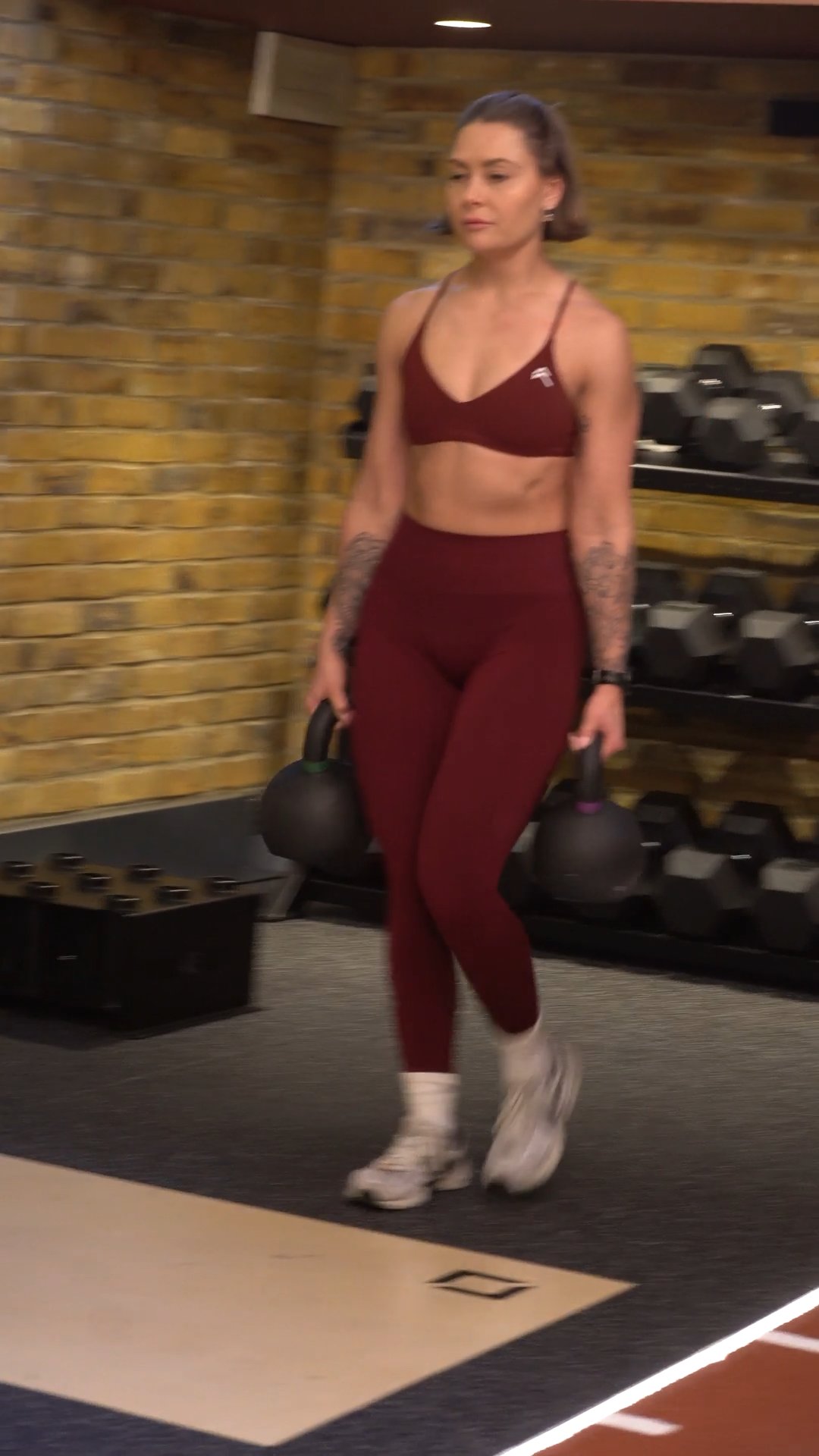
Hold a heavy dumbbell or kettlebell in each hand and walk tall for 20 to 40 meters. See my full guide to the farmer’s carry.
2. Dead hang
- Grip a pull-up bar with your hands about shoulder width apart.
- Hang with straight arms and your shoulders gently engaged.
- Hold for as long as you can with good control, working up to 30 to 60 seconds.
This also prepares you for pull-ups. Read how to do your first pull-up.
3. Heavy pulling without straps
Deadlifts, rows and pull-ups all train your grip. Try to do most of your sets without lifting straps, and save straps for your heaviest sets if your grip fails first.
4. Hammer curls
Holding the dumbbell in a neutral grip works your forearms as well as your arms.
5. Other carries
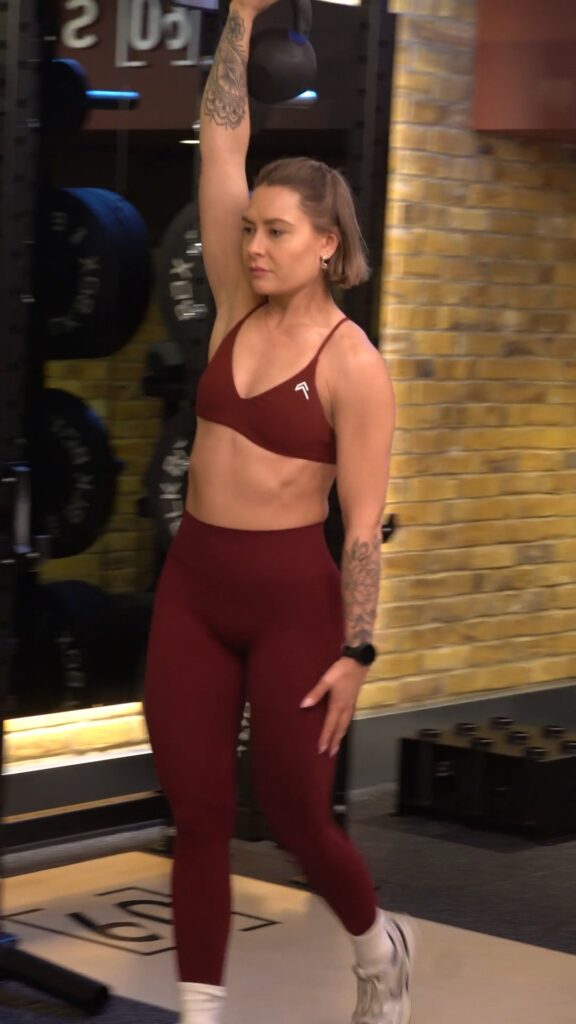
Single-arm carries and overhead carries change the challenge and also train your shoulders and core.
A Simple Grip Routine
Add one or two of these to the end of two workouts each week. These are general starting points, not fixed rules.
| Exercise | Sets | Target |
|---|---|---|
| Farmer’s carry | 3 | 20 to 40 meters |
| Dead hang | 2 to 3 | As long as you can, up to 60 seconds |
| Hammer curl | 2 to 3 | 10 to 12 reps |
Increase the weight, distance or hold time gradually. The American College of Sports Medicine recommends progressing step by step.
Common Mistakes
- Using straps for every set. Your grip never gets the chance to adapt.
- Only training grip with grippers. Squeezing a spring gripper is fine, but heavy lifting and carrying build more useful strength.
- Ignoring pain. If your wrists, elbows or fingers hurt, reduce the load and get advice.
If you have a hand, wrist or elbow condition, speak to a doctor or physical therapist before adding heavy grip work.
Summary
- In large studies, weaker grip strength was linked to higher risk of early death and heart disease.
- The link doesn’t prove cause, but grip strength reflects overall strength.
- Exercise training can improve grip strength, even in older adults.
- Carries, dead hangs, heavy pulling and hammer curls are the best grip builders.
- Train your grip twice a week and progress gradually.
Get Stronger, Hands Included
Want a program that builds full-body strength, from your legs to your grip? 12REPS builds a strength program around your goal, schedule and equipment, with exercises that suit your level.
Every exercise has a demo and a coach tutorial from me, and your log shows what you lifted last time, so you always know when to add weight.
Download 12REPS and see what you’ll get:
Sources
- Celis-Morales CA, Welsh P, Lyall DM, et al. Associations of grip strength with cardiovascular, respiratory, and cancer outcomes and all cause mortality: prospective cohort study of half a million UK Biobank participants. BMJ. 2018;361:k1651.
- Leong DP, Teo KK, Rangarajan S, et al. Prognostic value of grip strength: findings from the Prospective Urban Rural Epidemiology (PURE) study. Lancet. 2015;386(9990):266–273. Summary via ScienceDaily.
- Labott BK, Bucht H, Morat M, Morat T, Donath L. Effects of exercise training on handgrip strength in older adults: a meta-analytical review. Gerontology. 2019;65(6):686–698.
- American College of Sports Medicine. Progression models in resistance training for healthy adults. Med Sci Sports Exerc. 2009;41(3):687–708.
Related Reading
- How to do a farmer’s carry
- Strength training for longevity
- Muscle: the real anti-aging tool
- How to deadlift properly
- Hanging leg raises
I’m Will Duru, a personal trainer and the founder of 12REPS. I hold a BSc (Hons) in Sport and Exercise Science and have more than a decade of experience coaching people in strength training. This article is for general education and isn’t medical advice.
