

Quick answer: To do a wall ball, stand about an arm’s length from a wall holding a medicine ball at your chest. Squat until your hips drop below your knees, then drive up hard and use that momentum to throw the ball to a target on the wall. Catch it on the way down and go straight into the next squat. In Hyrox, you do 100 reps: women throw to a 9 ft target and men to a 10 ft target, with a 4 to 9 kg ball depending on your division.
Wall balls look simple, but they’re often the station that breaks people at the end of a Hyrox race. This guide is for you if you’re training for Hyrox or CrossFit, or you just want a tough full-body conditioning exercise. You’ll learn the technique, the race standards, the mistakes that cost you reps and how to train for them.
What do wall balls work?
- Legs and glutes: every rep starts with a deep squat.
- Shoulders and arms: they finish the throw.
- Core: keeps your torso upright as you catch and squat.
- Heart and lungs: high reps with no rest make wall balls a demanding conditioning exercise.
What the research says
In a 2025 study, 11 recreational Hyrox athletes completed a full simulated race. Wall balls, the last station, produced the highest heart rate, the highest blood lactate (a marker of how hard your muscles are working without enough oxygen) and the highest effort ratings of the whole race. The authors noted that muscular endurance becomes more important toward the end of the race (Brandt et al., 2025).
It’s a small study, but it backs up what most Hyrox athletes feel: wall balls are hard because of everything that comes before them.
How to do a wall ball
Setup
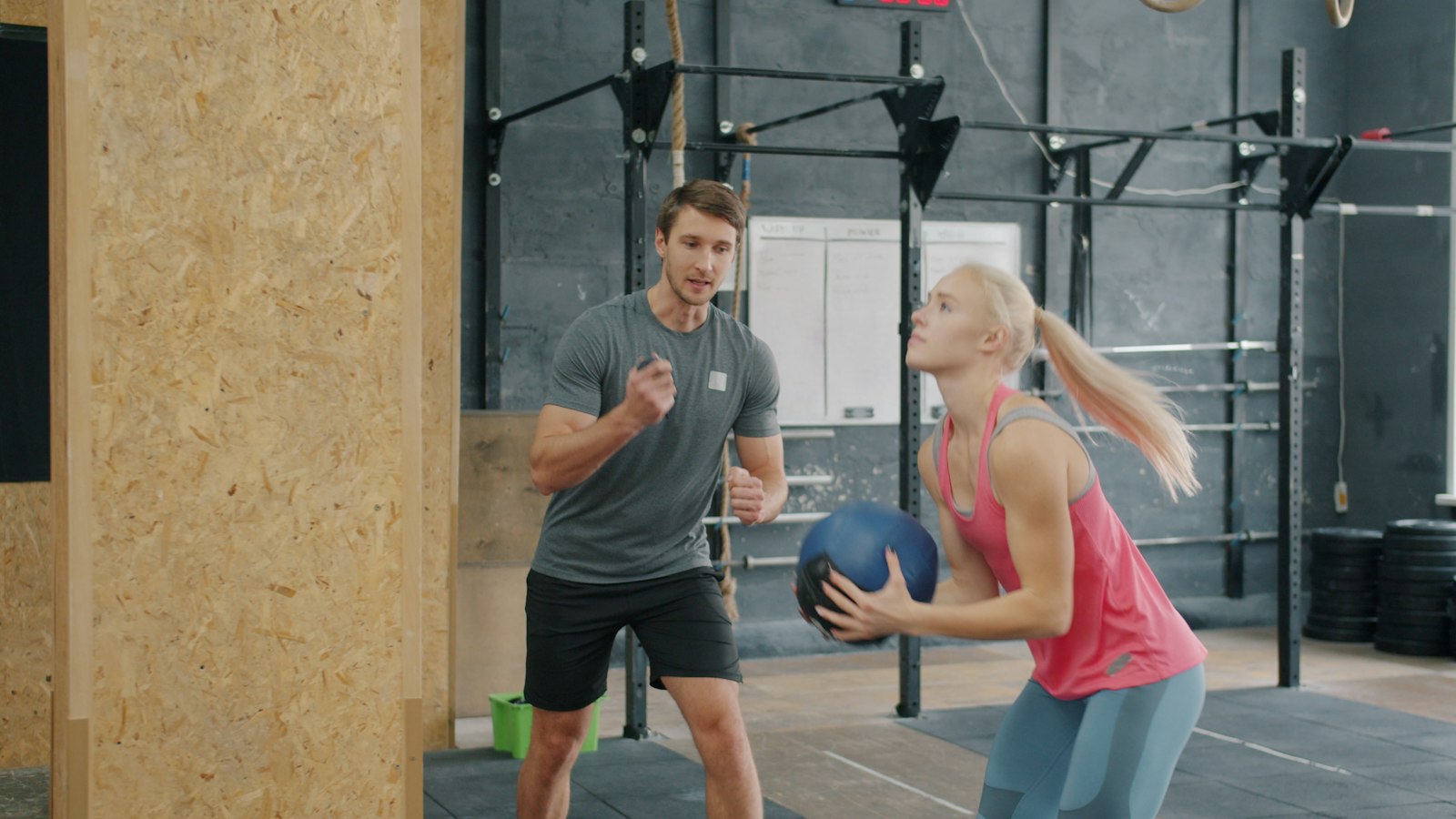
- Stand facing the wall, about an arm’s length away, with your feet about shoulder-width apart.
- Hold the ball at chest height with your hands underneath it and your elbows tucked in.
- Look up at the target.
The movement
- Squat down, keeping the ball at your chest, until your hips are below your knees.
- Drive up through your whole foot as fast as you can.
- As your legs straighten, push the ball up and slightly forward toward the target.
- Let your arms finish the throw. Your legs do most of the work.
- Catch the ball above your head and ride it straight down into the next squat.
Coaching cues: “Legs throw the ball, arms guide it.” “Catch and sit.” “Eyes on the target.”
Hyrox wall ball standards
| Division | Ball weight | Target | Reps |
|---|---|---|---|
| Open, women | 4 kg (about 9 lb) | 9 ft | 100 |
| Open, men | 6 kg (about 13 lb) | 10 ft | 100 |
| Pro, women | 6 kg (about 13 lb) | 9 ft | 100 |
| Pro, men | 9 kg (about 20 lb) | 10 ft | 100 |
Ball weights and reps from Red Bull. Targets and judging rules from Centr’s Hyrox wall ball guide. Rules can change from season to season, so check the current Hyrox rulebook before you race.
What counts as a no-rep:
- Your hips don’t drop below your knees.
- The ball misses the target or only grazes its edge.
- You don’t handle the ball properly between reps.
Common mistakes
- Throwing with your arms. Your shoulders tire fast. Drive with your legs and let your arms follow.
- Standing too far from the wall. You have to throw forward and the ball comes back at a bad angle. Start about an arm’s length away.
- Shallow squats. In a race, these are no-reps. Practice full depth in training.
- Pausing at the top. Catch the ball and go straight down into the squat. Stopping wastes energy.
- Dropping your chest on the catch. Keep your elbows up and your chest proud.
- Going out too fast. Big unbroken sets early often lead to long breaks later.
How to pace 100 wall balls
There’s no research-backed pacing plan, but these coaching tips help most people:
- Break the 100 into sets you can repeat, such as 5 x 20 or 10 x 10.
- Keep your rests short and planned: 3 to 5 breaths, then go again.
- Hold the ball at your chest or rest it on the floor between sets. Don’t walk away from the wall.
- Breathe out as you throw and in as you catch.
- Practice wall balls when you’re already tired, after a run or a sled push, so race day isn’t a shock.
How to train for wall balls
Build up to them
- Squat depth first. Bodyweight squats, then goblet squats, until you can sit below parallel comfortably.
- Lighter ball, lower target. Learn the rhythm before adding weight or height.
- Thrusters. A dumbbell thruster builds the same squat-to-press pattern.
Sample workouts
| Workout | How to do it | Goal |
|---|---|---|
| Technique sets | 5 x 10 reps with a light ball, rest 60 seconds | Rhythm and depth |
| Volume builder | 5 x 20 reps at race weight, rest 45 to 60 seconds | Muscular endurance |
| Run plus wall balls | 4 rounds: 400 m run, then 25 wall balls | Wall balls on tired legs |
| Race simulation | 1 km run, 50 m sled push, then 100 wall balls for time | Hyrox finish practice |
Train wall balls 1 to 2 times a week. As they get easier, cut your rest time or do bigger sets. That’s progressive overload for conditioning.
Summary
- A wall ball is a deep squat into a throw to a target on the wall.
- Your legs do most of the work. Your arms guide the ball.
- Hyrox: 100 reps, a 9 ft target for women and 10 ft for men, and a 4 to 9 kg ball by division.
- Hips must drop below your knees, and the ball must hit the target.
- In research, wall balls were the hardest part of a simulated Hyrox race.
- Break the 100 into planned sets, and practice them on tired legs.
Train for your next Hyrox with a plan
Wall balls get easier when your squat strength, leg endurance and conditioning improve together. 12REPS gives you trainer-built programs with two demo videos for every exercise, and a gym log and timer to track your sets, rest and progress. New users get a 7-day free trial.
Download 12REPS and see what you’ll get:
Sources
- Brandt T et al. Acute physiological responses and performance determinants in Hyrox, a new running-focused high intensity functional fitness trend. Front Physiol, 2025
- Red Bull. Hyrox weights overview
- Centr. Wall ball rulebook: what judges watch every Hyrox rep
Related reading
- Hyrox training: how to adapt from strength to hybrid fitness
- Master strength: the hidden edge in Hyrox competitions
- Hybrid athlete training
- How to do a goblet squat
- Farmer’s carry: how to do it and why it works
- The 12REPS Full-Body Engine: a 30-minute workout
I’m Will Duru, a personal trainer and the founder of 12REPS. I hold a BSc (Hons) in Sport and Exercise Science and have more than a decade of experience coaching people in strength training.