

By Will Duru, BSc (Hons) Sport and Exercise Science, Award-winning Personal Trainer with over 10 years of experience in strength training
Fifty is not the end. It is a beginning.
I have trained dozens of clients who started lifting weights in their 50s, 60s, and even 70s. They came in uncertain, sometimes embarrassed, often convinced they had missed their window. They left stronger, more confident, and wondering why they waited so long.
The science is clear: your muscles respond to strength training at any age. You can build muscle at 50. You can get stronger at 60. You can transform your body and health well into your later decades.
But training at 50 requires adjustments. Your body has changed. Recovery takes longer. Joints need more attention. The programmes that work for 25 year olds need modification.
This guide covers everything you need to know about lifting weights after 50. Whether you are returning after years away or starting for the first time, you will learn how to train safely, effectively, and sustainably.
Why Lifting Weights at 50 Matters More Than Ever
The case for strength training becomes more compelling with each passing decade.
Sarcopenia: The Silent Threat
Beginning around age 30, you lose muscle mass at a rate of 3 to 8 percent per decade. After 50, this accelerates. By 70, many people have lost 25 percent or more of their muscle mass.
This age-related muscle loss is called sarcopenia. It leads to:
- Decreased strength and physical function
- Higher risk of falls and fractures
- Reduced metabolic rate and weight gain
- Loss of independence in daily activities
- Increased mortality risk
Strength training is the only intervention proven to reverse sarcopenia. Medication cannot do it. Cardio cannot do it. Only resistance training rebuilds lost muscle.
Bone Density Protection
Osteoporosis and osteopenia (bone weakening) affect millions of adults over 50. Women are particularly vulnerable after menopause when oestrogen levels drop.
Weight-bearing exercise, especially lifting weights, stimulates bone formation. The mechanical stress signals your bones to strengthen. Studies show that resistance training can increase bone density by 1 to 3 percent annually in older adults, potentially reversing years of decline.
Metabolic Health
Muscle is metabolically active tissue. More muscle means higher resting metabolism, better blood sugar control, and improved insulin sensitivity.
For adults over 50 concerned about diabetes, weight management, or metabolic syndrome, strength training provides benefits that cardio alone cannot match.
Functional Independence
The ability to climb stairs, carry groceries, get up from a chair, and live independently depends on strength. Many older adults lose independence not because of disease but because they become too weak for daily activities.
Strength training maintains and builds the functional capacity that keeps you living on your own terms.
Mental Health and Cognitive Function
Research links strength training to reduced depression, improved cognitive function, and lower dementia risk. The benefits extend well beyond the physical.
What Changes After 50
Your body at 50 is different from your body at 25. Understanding these changes helps you train smarter.
Recovery Takes Longer
Younger lifters can train hard and recover in 24 to 48 hours. At 50, recovery may take 48 to 72 hours or longer. This is not weakness. It is biology.
Implications: Allow more rest between sessions. Three or four training days per week often works better than five or six.
Joints Need More Attention
Decades of use, past injuries, and natural wear mean joints at 50 require more care. Cartilage thins. Connective tissue becomes less elastic.
Implications: Warm up thoroughly. Choose joint-friendly exercise variations. Listen to pain signals.
Hormonal Changes
Testosterone declines in men. Oestrogen drops dramatically in women during menopause. Both affect muscle-building capacity and recovery.
Implications: Progress may be slower than in your 20s. Patience and consistency matter more than intensity.
Flexibility and Mobility Decrease
Range of motion naturally decreases with age. Tight hips, stiff shoulders, and reduced ankle mobility are common.
Implications: Include mobility work. Modify exercises to match your current range of motion.
Injury Risk Increases
Tendons and ligaments take longer to adapt than muscles. Older tissues are more vulnerable to strain when overstressed.
Implications: Progress gradually. Avoid ego lifting. Build volume slowly over weeks and months.

Training Principles for Lifters Over 50
These principles guide safe, effective training after 50.
Principle 1: Consistency Over Intensity
At 25, you might push through a brutal workout and recover by tomorrow. At 50, that same workout might leave you sore for a week.
Sustainable training beats occasional heroics. Three moderate sessions weekly for 52 weeks produces far better results than intense periods followed by injury or burnout.
Principle 2: Warm Up Is Non-Negotiable
A proper warm-up at 50 takes 10 to 15 minutes, not 2. Your muscles and joints need time to prepare for loading.
Effective warm-up structure:
- 5 minutes light cardio (walking, cycling)
- Dynamic stretches targeting workout muscles
- Activation exercises for hips and shoulders
- Light sets of main exercises before working weights
Principle 3: Exercise Selection Matters
Some exercises that work well for younger lifters create problems after 50.
Generally better choices:
- Trap bar deadlift over conventional deadlift (less lower back stress)
- Goblet squat or leg press over heavy back squat (less spinal compression)
- Incline press over flat bench (easier on shoulders)
- Neutral grip pressing and pulling (less shoulder strain)
- Single leg work for balance and stability
Exercises requiring caution:
- Behind the neck press (shoulder impingement risk)
- Upright row (shoulder impingement risk)
- Heavy barbell back squat (spinal compression, hip mobility demands)
- Plyometrics and jumping (joint stress)
This does not mean avoiding hard exercises entirely. It means selecting variations that provide stimulus with less risk.
Principle 4: Progressive Overload Still Applies
You still need to progressively challenge your muscles. The principle does not change with age. The application does.
Progress more slowly. Add weight in smaller increments. Prioritise rep progression before weight progression. Celebrate small gains.
Principle 5: Recovery Is Training
Sleep, nutrition, and stress management matter more at 50 than at 25. Your body rebuilds during recovery, not during training.
Recovery priorities:
- 7 to 9 hours of sleep nightly
- Adequate protein intake (see nutrition section)
- Stress management
- Rest days between training sessions
- Deload weeks every 4 to 6 weeks
Principle 6: Listen to Your Body
Sharp pain, joint discomfort, and unusual fatigue are signals to adjust. Pushing through warning signs leads to injury.
Learn the difference between productive discomfort (muscle working hard) and problematic pain (joint stress, sharp sensation). When in doubt, back off.
The Programme: Strength Training for Over 50
This programme is designed specifically for adults over 50. It uses three training days per week with adequate recovery between sessions.
Weekly Schedule
Day | Session |
Monday | Full Body A |
Tuesday | Rest or light activity |
Wednesday | Full Body B |
Thursday | Rest or light activity |
Friday | Full Body C |
Saturday | Rest or light activity |
Sunday | Rest |
Pre-Workout Warm Up (10 to 15 Minutes)
Perform before every session:
Exercise | Duration/Reps |
Treadmill walk or cycling | 5 minutes, easy pace |
Arm circles | 10 each direction |
Hip circles | 10 each direction |
Leg swings | 10 each leg, front to back |
Bodyweight squat | 10 reps |
Cat cow stretch | 10 reps |
Band pull apart | 15 reps |
Glute bridge | 10 reps |
Full Body A
Exercise | Sets | Reps | Rest | Notes |
Goblet Squat | 3 | 10, 10, 8 | 90 seconds | Dumbbell at chest, control the descent |
Dumbbell Bench Press | 3 | 10, 10, 8 | 90 seconds | Neutral or slight angle grip if shoulders allow |
Seated Cable Row | 3 | 10, 10, 8 | 90 seconds | Squeeze shoulder blades, control return |
Dumbbell Romanian Deadlift | 3 | 10, 10, 8 | 90 seconds | Slight knee bend, feel hamstrings stretch |
Dumbbell Shoulder Press | 2 | 10, 10 | 60 seconds | Seated with back support |
Face Pull | 2 | 15, 12 | 60 seconds | External rotation at top |
Plank | 2 | 30 seconds | 45 seconds | Maintain neutral spine |
Total time: 45 to 50 minutes including warm up
Full Body B
Exercise | Sets | Reps | Rest | Notes |
Leg Press | 3 | 12, 10, 10 | 90 seconds | Feet shoulder width, full range |
Incline Dumbbell Press | 3 | 10, 10, 8 | 90 seconds | 30 degree incline, easier on shoulders |
Lat Pulldown | 3 | 10, 10, 8 | 90 seconds | Pull to upper chest, control the weight |
Dumbbell Step Up | 3 | 8 each leg | 60 seconds | Low step to start, progress height |
Dumbbell Lateral Raise | 2 | 12, 12 | 60 seconds | Light weight, strict form |
Cable Bicep Curl | 2 | 12, 12 | 60 seconds | Full range of motion |
Dead Bug | 2 | 10 each side | 45 seconds | Core stability, lower back flat |
Total time: 45 to 50 minutes including warm up
Full Body C
Exercise | Sets | Reps | Rest | Notes |
Trap Bar Deadlift | 3 | 8, 8, 6 | 2 minutes | Neutral spine, push floor away |
Push Up or Incline Push Up | 3 | As many as possible | 90 seconds | Modify angle as needed |
Single Arm Dumbbell Row | 3 | 10 each arm | 60 seconds | Supported on bench |
Walking Lunge | 3 | 8 each leg | 90 seconds | Bodyweight or light dumbbells |
Cable Tricep Pushdown | 2 | 12, 12 | 60 seconds | Full extension |
Band Pull Apart | 2 | 15, 15 | 45 seconds | Posture and rear delts |
Bird Dog | 2 | 10 each side | 45 seconds | Core stability and balance |
Total time: 45 to 50 minutes including warm up
Post-Workout Cool Down (5 Minutes)
Stretch | Duration |
Standing quad stretch | 30 seconds each leg |
Seated hamstring stretch | 30 seconds each leg |
Chest doorway stretch | 30 seconds |
Cross body shoulder stretch | 30 seconds each arm |
Cat cow | 1 minute |
Progression Strategy
Progress more conservatively than younger lifters.
Weeks 1 to 4: Foundation
Focus on learning movements and establishing baseline weights. Use conservative loads. Prioritise form over weight.
Weeks 5 to 8: Building
Begin adding weight or reps when sets feel manageable. Progress by one or two reps before adding weight. When you exceed the top of the rep range, add the smallest weight increment available.
Weeks 9 to 12: Consolidation
Continue progressing while monitoring recovery. If fatigue accumulates, take an extra rest day or reduce volume slightly.
Every 4 to 6 Weeks: Deload
Reduce weights by 40 to 50 percent for one week. Maintain the routine but with lighter loads. This allows accumulated fatigue to dissipate.
Example Progression (Goblet Squat)
Week | Weight | Reps |
1 | 12kg | 10, 10, 8 |
2 | 12kg | 10, 10, 10 |
3 | 14kg | 10, 10, 8 |
4 | 14kg | 10, 10, 10 |
5 (Deload) | 8kg | 10, 10, 10 |
6 | 14kg | 10, 10, 10 |
7 | 16kg | 10, 10, 8 |
Small progressions compound over months into significant strength gains.
Nutrition for Building Muscle After 50
Nutrition becomes more important with age, not less.
Protein: The Priority
Older adults need more protein than younger adults to stimulate muscle protein synthesis. Research suggests 1.2 to 1.6 grams per kilogram of bodyweight daily, with some studies recommending up to 2 grams for active individuals.
For a 75kg person: 90 to 120 grams of protein daily minimum
Distribute protein across meals. Aim for 25 to 40 grams per meal rather than one large protein dose.
Quality protein sources:
- Chicken and turkey
- Fish (also provides omega-3s)
- Lean beef
- Eggs
- Greek yoghurt
- Cottage cheese
- Whey protein powder
Calories: Enough to Build
Under-eating prevents muscle building at any age. After 50, the margin is even smaller. You need adequate calories to support training and recovery.
If your goal is building muscle, eat at maintenance or a slight surplus. If you need to lose fat, use only a moderate deficit (300 to 500 calories below maintenance) to preserve muscle.
Key Nutrients
Vitamin D: Many older adults are deficient. Supports bone health and muscle function. Consider supplementation if blood levels are low.
Calcium: Essential for bone health. Aim for 1000 to 1200mg daily from food or supplements.
Omega-3 fatty acids: Reduce inflammation and may support muscle protein synthesis. Found in fatty fish or fish oil supplements.
Creatine: Safe and effective for older adults. May improve strength, muscle mass, and cognitive function. 3 to 5 grams daily.
Hydration
Thirst sensation decreases with age. Drink water consistently throughout the day even when not thirsty. Aim for at least 2 litres daily, more on training days.

Common Concerns Addressed
“Am I too old to start?”
No. Studies show muscle responds to training well into the 90s. Starting at 50 gives you decades of potential progress.
“Will I get injured?”
Risk exists at any age. Proper warm-up, appropriate exercise selection, gradual progression, and listening to your body minimise risk. Inactivity carries far greater health risks than sensible strength training.
“I have arthritis. Can I still lift?”
Often yes, with appropriate modifications. Strength training can actually reduce arthritis symptoms by supporting joints with muscle. Work with your doctor and consider starting with a qualified trainer.
“Will I get bulky?”
No. Building significant muscle mass requires years of dedicated training and specific nutrition. You will become stronger and more toned, not bulky.
“I have a bad back/knee/shoulder. What should I do?”
Work around limitations, not through them. Substitute exercises that aggravate issues with alternatives that do not. A qualified trainer or physiotherapist can help identify appropriate modifications.
“How long until I see results?”
Strength improvements often occur within 4 to 6 weeks. Visible muscle changes typically take 8 to 12 weeks. Long-term transformation happens over 6 to 12 months of consistent training.
Tracking Your Progress
Track workouts to ensure progressive overload and monitor recovery.
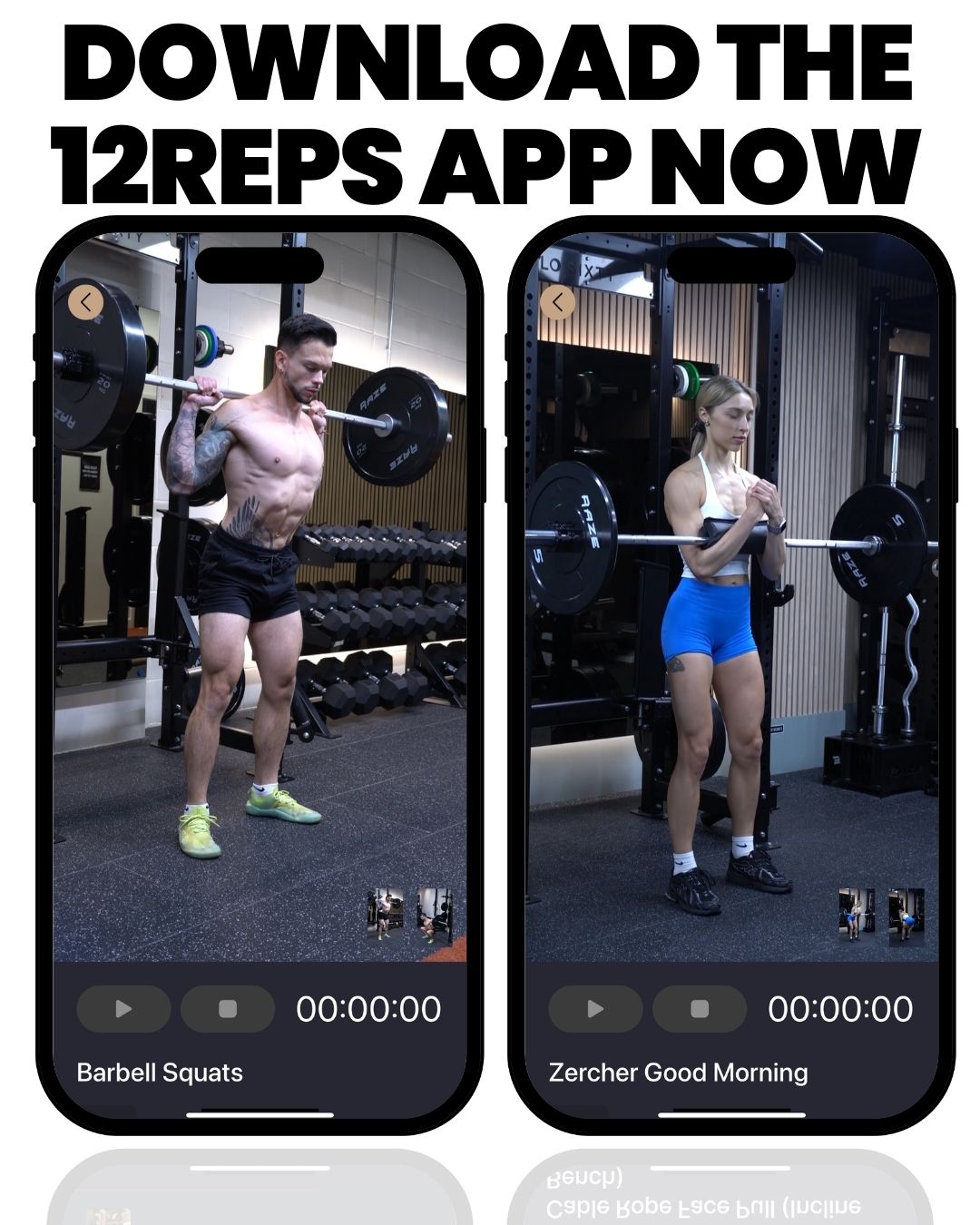
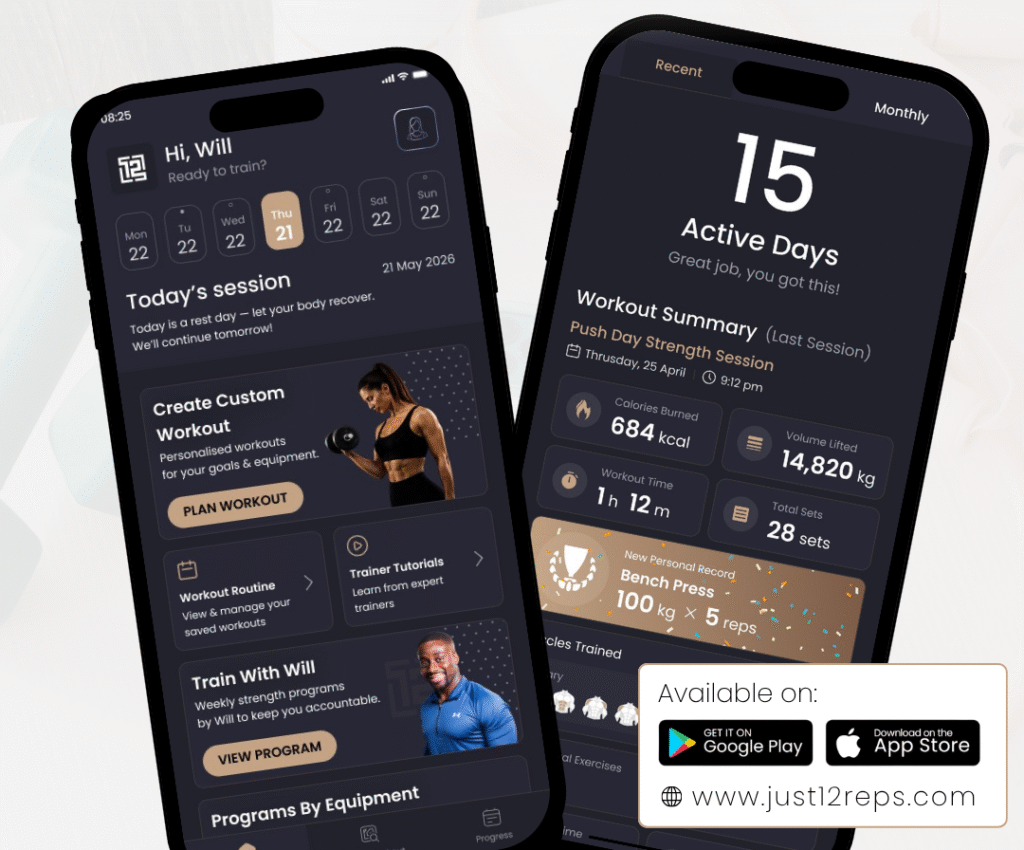
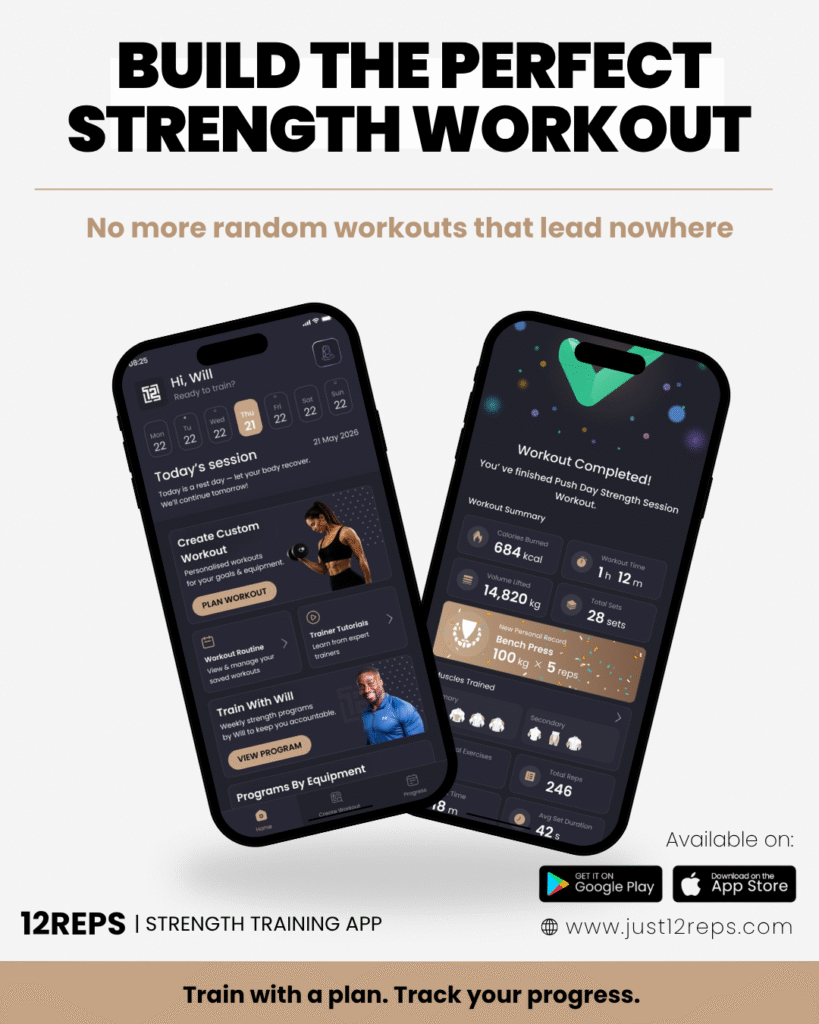
The 12REPS app provides:
- Video demonstrations for every exercise, essential for learning proper form
- Progress tracking showing your weights and reps over time
- Workout history so you know exactly what to do each session
- Programmes designed for your level, including options appropriate for older beginners
Seeing your numbers improve week over week provides motivation and confirms the training is working.
Success Stories: It Is Never Too Late
I have witnessed remarkable transformations in clients over 50:
Margaret, 58: Came to me barely able to climb stairs without rest. After 18 months, she deadlifts 60kg and hikes mountains on holiday.
David, 63: Started training after a heart attack scared him into action. Now stronger than he was at 40, with vastly improved blood markers.
Susan, 55: Began strength training during menopause to combat symptoms. Improved sleep, reduced hot flushes, and gained the energy to keep up with her grandchildren.
These are not exceptions. They are what happens when people over 50 commit to consistent strength training.
Getting Started
The best time to start was 20 years ago. The second-best time is today.
Download the 12REPS app. Set up your profile, indicating your experience level and goals. Start with the programme in this guide or let the app provide an age-appropriate programme.
Begin with conservative weights. Focus on form. Be patient with progress. Celebrate small wins.
In 12 months, you will be stronger than today. In 5 years, you will be grateful you started now.
Download the 12REPS app and begin building strength at 50 and beyond.
Frequently Asked Questions
How many days per week should I lift at 50?
Three days per week works well for most people over 50. This allows adequate recovery between sessions. As you adapt, you might progress to four days.
Is it safe to lift heavy weights after 50?
Yes, with proper progression. Start light, master form, and increase weights gradually. “Heavy” is relative to your current strength, not absolute numbers.
Should I do cardio too?
Light cardio complements strength training. Walking, cycling, or swimming 2 to 3 times per week supports heart health without interfering with recovery.
What if I have never lifted weights before?
Starting at 50 with no experience is completely viable. Begin with bodyweight exercises and light dumbbells. Consider a few sessions with a qualified trainer to learn proper form.
How much protein do I really need?
Aim for 1.2 to 1.6 grams per kilogram of bodyweight daily, distributed across meals. Active individuals benefit from the higher end of this range.
Can strength training help with menopause symptoms?
Yes. Research shows resistance training can reduce hot flushes, improve sleep, protect bone density, and improve mood during menopause.
References
- Peterson, M.D. et al. (2011). Influence of resistance exercise on lean body mass in aging adults: a meta-analysis. Medicine and Science in Sports and Exercise. https://pubmed.ncbi.nlm.nih.gov/20881881/
- Layne, J.E. & Nelson, M.E. (1999). The effects of progressive resistance training on bone density. Medicine and Science in Sports and Exercise. https://pubmed.ncbi.nlm.nih.gov/9927006/
- Bauer, J. et al. (2013). Evidence-based recommendations for optimal dietary protein intake in older people. Journal of the American Medical Directors Association. https://pubmed.ncbi.nlm.nih.gov/23867520/
- Liu, C.J. & Latham, N.K. (2009). Progressive resistance strength training for improving physical function in older adults. Cochrane Database of Systematic Reviews. https://pubmed.ncbi.nlm.nih.gov/19588334/
Related Articles on just12reps.com
Article | Description | Link |
Strength Training in Perimenopause | Training through hormonal changes. | |
Complete Beginner’s Guide to Strength Training | Start your journey with proper fundamentals. | |
The Science of Progressive Overload | Understand the principle that drives all progress. | |
Best Strength Training App for Beginners | Find the right app for your training. | |
3 Day vs 5 Day Workout Split | Choosing the right training frequency. |
About the Author: Will Duru holds a BSc (Hons) in Sport and Exercise Science and is an award-winning personal trainer with over 10 years of experience. He has helped dozens of clients over 50 discover the transformative power of strength training. Will created the 12REPS app to make professional programming accessible to everyone, regardless of age.