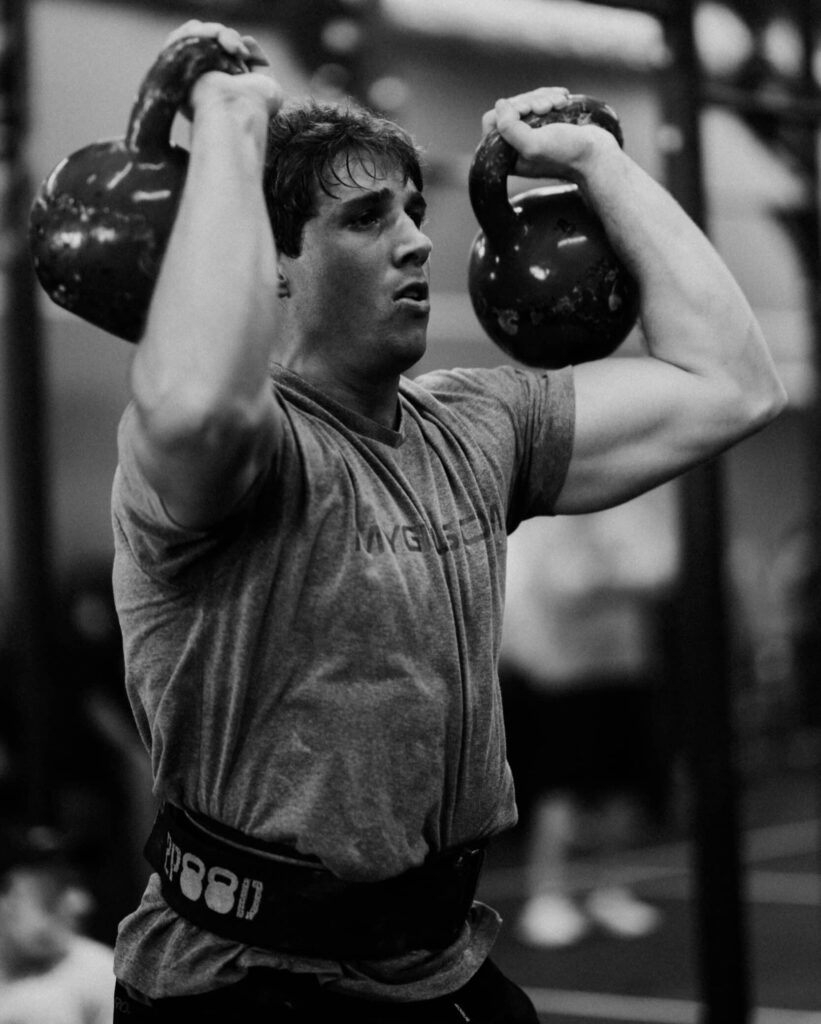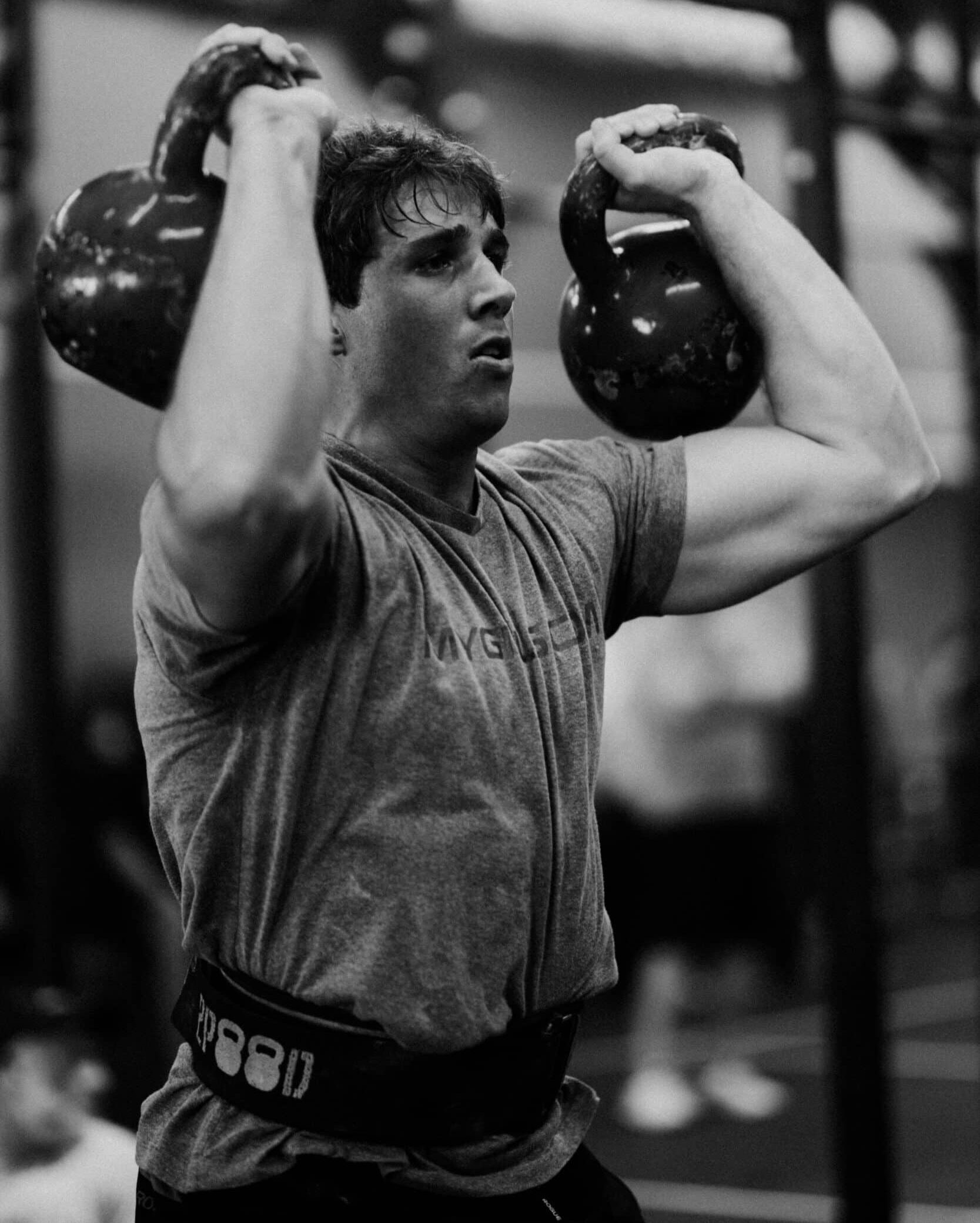
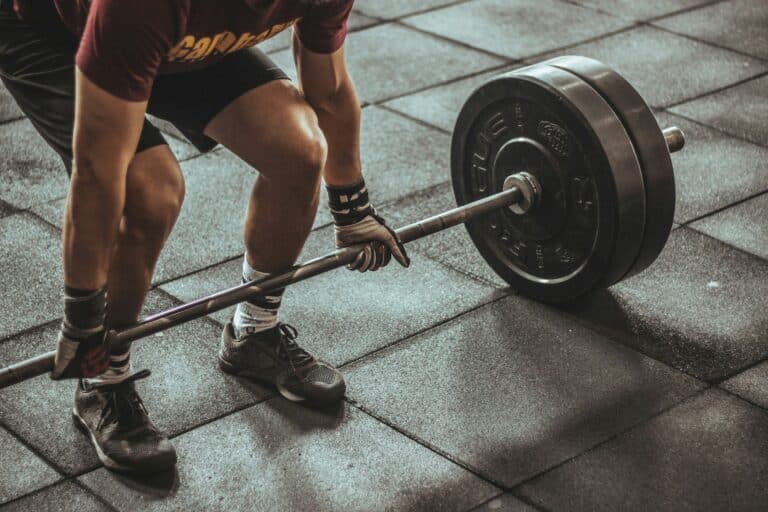


You finished your first proper leg session on Monday. Tuesday morning, you wake up and can barely walk downstairs. Wednesday, it’s even worse. You’re waddling around the office. Every chair you sit in becomes a challenge to stand up from.
Is this normal? Have you injured yourself? Should you train through it or rest completely?
Here’s what usually happens: you start a new exercise programme with enthusiasm. The first few sessions leave you incredibly sore. You’re not sure if this means you’re working hard enough, or if you’ve overdone it. You either push through the soreness (potentially making it worse) or you stop training entirely out of fear.
The problem isn’t the soreness itself—it’s not understanding what normal soreness is, when to worry, and how to manage it properly.
I’m Will Duru, a personal trainer with over 10 years’ experience in London. Almost every new client experiences significant soreness initially, and the same concerns arise: “Is this normal?”, “Have I hurt myself?”, “Should I train today or rest?”
This guide explains exactly what delayed onset muscle soreness (DOMS) is, why it happens, when soreness is normal vs when it signals a problem, how to reduce soreness (what actually works vs myths), and whether you should train whilst sore.

What Is DOMS (Delayed Onset Muscle Soreness)?
The Experience
Delayed onset muscle soreness, commonly called DOMS, is the pain and stiffness you feel in muscles 12-72 hours after unfamiliar or intense exercise.
Timeline:
- During workout: You might feel some burning or fatigue, but not the characteristic DOMS pain
- 0-12 hours post-workout: Minimal or no soreness (you feel fine leaving the gym)
- 12-24 hours post-workout: Soreness begins to develop
- 24-72 hours post-workout: Soreness peaks (usually worst on day 2)
- 72+ hours post-workout: Soreness gradually diminishes
- 5-7 days post-workout: Soreness typically resolved completely
Characteristics of DOMS:
- Dull, aching pain in the affected muscles
- Muscle stiffness and tenderness
- Reduced range of motion
- Mild swelling in the affected area
- Temporary decrease in muscle strength
- Pain increases when you stretch, contract, or put pressure on the muscle
- Pain is minimal or absent when muscle is at rest
According to Healthline’s comprehensive guide on DOMS, this delayed timeline distinguishes DOMS from acute muscle soreness, which occurs during or immediately after exercise and is caused by metabolic waste buildup (lactic acid) rather than muscle damage.

The Cause
What research shows: DOMS is caused by microscopic tears (microtrauma) in muscle fibres and connective tissue, primarily from eccentric contractions.
Eccentric contractions: When muscles lengthen under tension.
Examples:
- Lowering phase of a squat (going down)
- Lowering phase of a deadlift (setting bar down)
- Lowering a dumbbell during bicep curl
- Walking downhill (quads lengthen whilst supporting bodyweight)
Why eccentric exercise causes more DOMS: Eccentric contractions recruit fewer motor units, meaning the force is distributed over a smaller cross-sectional area of muscle. This creates more tension per muscle fibre, leading to greater microtrauma.
Research published in Sports Medicine confirms that eccentric exercise causes significantly more DOMS than concentric exercise (muscle shortening), even when total work performed is equal.
The Debunked Myth: Lactic Acid
Old theory: DOMS is caused by lactic acid buildup that persists after exercise, causing delayed pain.
Current understanding: This theory has been thoroughly debunked. Lactic acid levels return to normal within 1 hour post-exercise, so it cannot cause pain that appears 24-48 hours later.
As explained in Mass General Brigham’s exercise pain guide, DOMS is an inflammatory response to muscle microtrauma, not lactic acid accumulation.
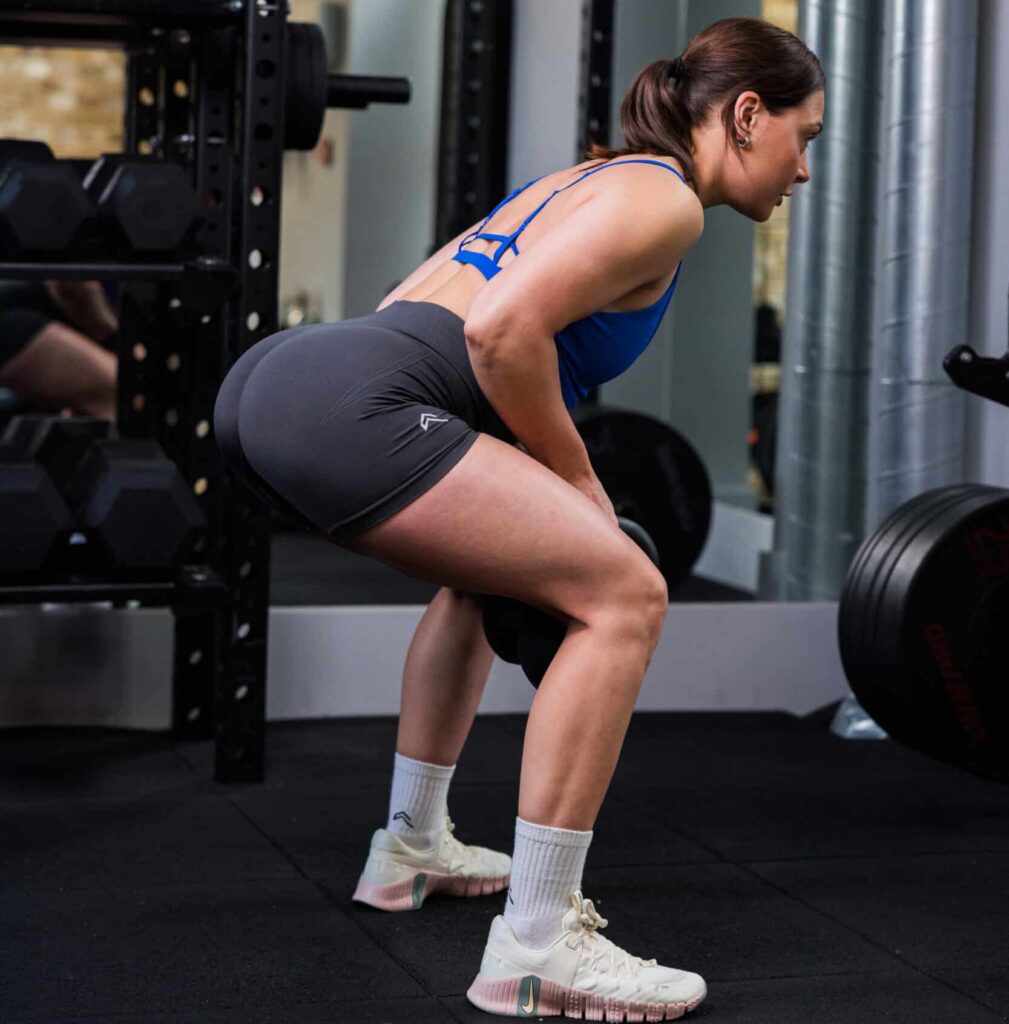
Is Soreness Normal? (Yes, Usually)
When Soreness Is Expected and Normal
Situation 1: Starting a new exercise programme
You’re brand new to strength training. Your first few weeks will produce significant DOMS because your muscles have never encountered this specific stress.
Why this is normal: Your muscles aren’t adapted to resistance training yet. Every exercise creates microtrauma that triggers soreness.
What to expect: Severe soreness for weeks 1-3, gradually decreasing through weeks 4-8 as your body adapts.
Situation 2: Returning after a break
You trained regularly but took 3+ weeks off (holiday, illness, life). Your first session back produces significant soreness.
Why this is normal: Muscle adaptations fade during detraining. You’ve temporarily lost some conditioning, so resuming training creates DOMS again.
What to expect: Moderate-severe soreness for 1-2 weeks, then soreness returns to previous minimal levels.
Situation 3: New exercises or movement patterns
You’ve been training for months but add Bulgarian split squats (never done before). Despite being adapted to squats and lunges, you experience DOMS specifically in glutes and quads.
Why this is normal: Each movement pattern stresses muscles at different lengths and angles. A new exercise = new stimulus = DOMS.
What to expect: Moderate soreness for 1-2 sessions, minimal soreness by session 3-4 of that exercise.
Situation 4: Significant increase in training volume
You normally do 3 sets per exercise. You increase to 5 sets. Despite being adapted to training, increased volume creates DOMS.
Why this is normal: Volume (total sets × reps × weight) is a training variable. Sudden increases stress muscles beyond their current adaptation.
What to expect: Moderate soreness for 1-2 weeks as you adapt to higher volume.
Situation 5: Significantly increased intensity
You’ve been squatting 50kg comfortably. You jump to 65kg (30% increase). Despite squatting regularly, the heavier load creates soreness.
Why this is normal: Larger jumps in intensity require muscular adaptation.
What to expect: Mild-moderate soreness for 1 session, minimal soreness when you repeat 65kg the following week.
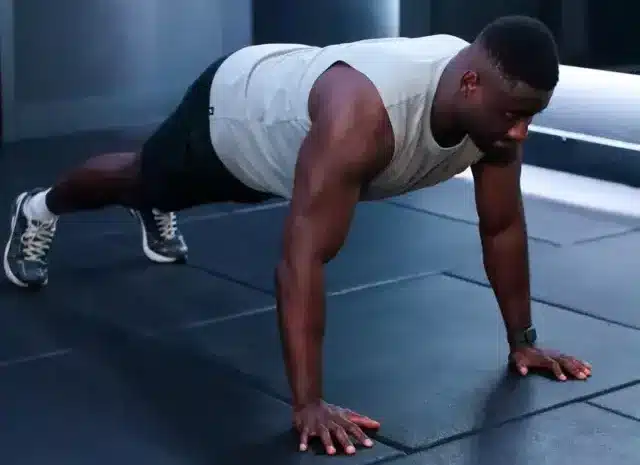
Common Soreness Patterns by Muscle Group
Most soreness-prone:
- Glutes (especially from hip thrusts, deadlifts)
- Quadriceps (squats, lunges, leg press)
- Hamstrings (Romanian deadlifts, leg curls)
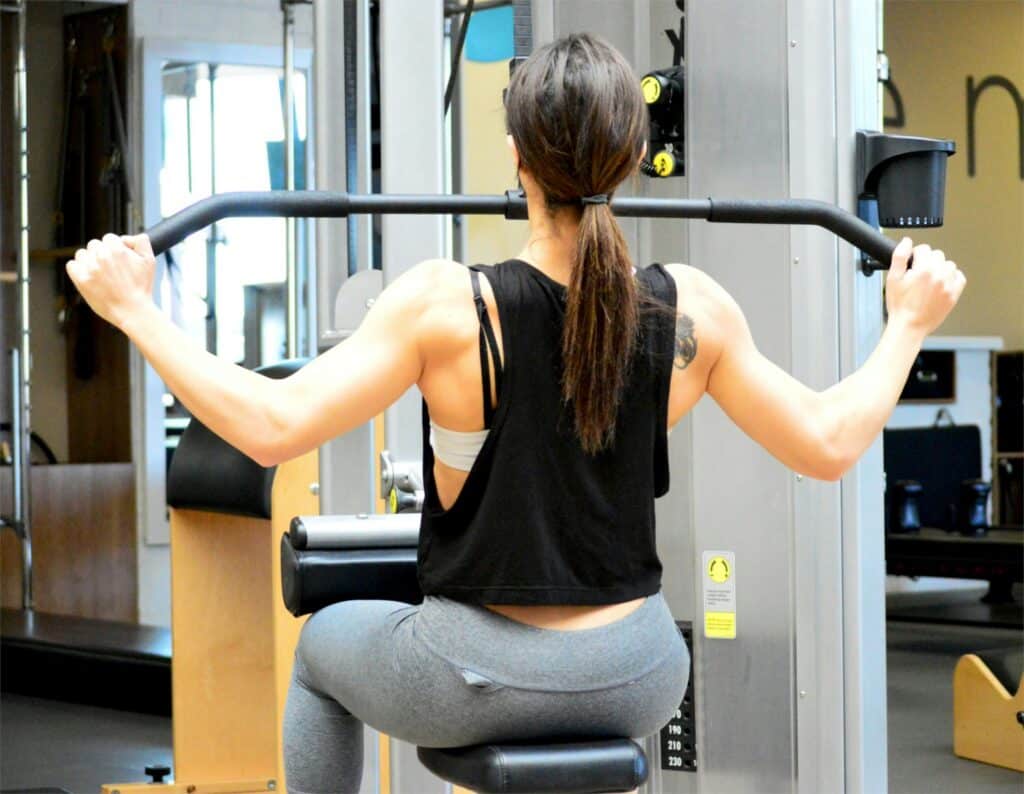
- Lats (pull-ups, rows when starting out)
Moderate soreness:
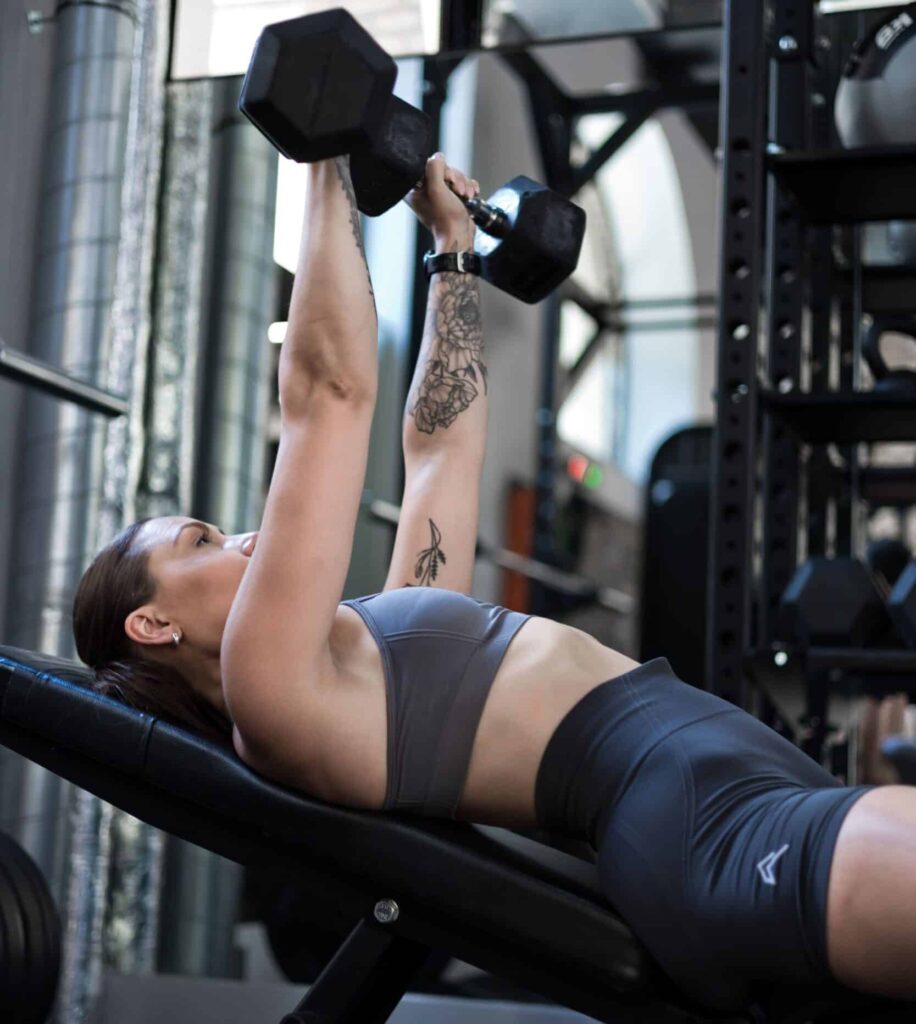
- Chest (bench press, push-ups)
- Shoulders (overhead press, lateral raises)
- Triceps (dips, close-grip pressing)
Least soreness-prone:
- Biceps
- Calves
- Abs
Why the difference: Larger muscle groups with significant eccentric components produce more DOMS. Smaller muscles and muscles frequently used in daily life (calves for walking) adapt more quickly.
When Soreness Becomes Concerning
DOMS vs Injury: Key Differences
UW Medicine’s guide on workout pain explains the crucial difference between normal muscle soreness and injury.
NORMAL DOMS:
✅ Bilateral (both legs/arms equally affected)
✅ Dull, aching pain across entire muscle
✅ Starts 12-24 hours post-exercise
✅ Peaks day 2-3, resolves by day 5-7
✅ Improves with movement after warming up
✅ No sharp, stabbing sensations
✅ No pain at rest (only when using muscle)
✅ Full range of motion possible (though uncomfortable)
POTENTIAL INJURY:
❌ Unilateral (one side only, or one side significantly worse)
❌ Sharp, localized pain at specific point
❌ Starts during or immediately after exercise
❌ Worsens over days rather than improving
❌ Pain at rest (constant, not just when moving)
❌ Limited range of motion (physically can’t move through full range)
❌ Significant swelling, bruising, or visible deformity
❌ Pain that prevents basic daily activities (getting dressed, walking normally)
Red Flags Requiring Medical Attention
Seek medical care immediately if you experience:
1. Severe pain preventing basic movement
You literally cannot stand up, cannot bend knee past 45 degrees, cannot lift arm above shoulder height—not due to discomfort, but physical inability.
2. Dark or cola-coloured urine
This can indicate rhabdomyolysis (rhabdo)—a serious condition where muscle proteins leak into bloodstream, potentially causing kidney damage.
Houston Methodist’s guide on muscle soreness notes that rhabdo is rare but requires immediate medical attention.
Additional rhabdo symptoms:
- Extreme muscle weakness
- Nausea or vomiting
- Confusion
- Irregular heartbeat
- Decreased urination
Who’s at higher risk: People doing extreme high-intensity workouts (CrossFit, military-style boot camps, HIIT) after prolonged breaks from training.
3. Pain lasting beyond 7-10 days
Normal DOMS resolves within 5-7 days maximum. Pain persisting beyond 10 days suggests injury rather than simple soreness.
4. Pain that worsens daily (instead of improving after day 3)
DOMS follows predictable pattern: peaks day 2-3, improves day 4+. If pain intensifies every day, it’s not DOMS.
5. Localized sharp pain at a specific point
DOMS is diffuse (spread across entire muscle). Sharp pain at a tendon, ligament, or joint suggests strain, tear, or other structural injury.
When to Modify Training (But Not Stop)
You don’t need medical attention, but you should adjust your approach:
Scenario 1: Soreness so severe you cannot maintain proper form
Your quads are so sore from Monday’s squats that Wednesday’s deadlift form suffers because you can’t achieve proper hip hinge.
Action: Train different muscle groups today (upper body), allow lower body to recover another 1-2 days.
Scenario 2: Soreness limits range of motion significantly
You can only squat to 90 degrees instead of full depth due to quad/glute soreness.
Action: Train that movement with lighter weight or bodyweight, focusing on regaining full range of motion gently.
Scenario 3: Unusual soreness patterns
Every muscle group recovers normally except one area (right shoulder) that remains sore for 2+ weeks.
Action: Avoid exercises stressing that specific area. Consult physiotherapist if persists beyond 3 weeks.
The Truth About Soreness and Progress
Myth 1: “No soreness = no gains”
FALSE.
Soreness indicates unfamiliar stimulus, not effectiveness of training for muscle growth.
Research shows: You can build significant muscle and strength with minimal or zero soreness once adapted to a training programme.
A 2013 study in the Journal of Strength and Conditioning Research found that muscle growth occurred equally in subjects who experienced significant DOMS vs those who experienced minimal DOMS, as long as training volume and intensity were matched.
What matters for gains:
- Progressive overload (increasing weights, reps, or sets over time)
- Adequate training volume (enough sets per muscle group weekly)
- Sufficient protein intake
- Adequate recovery
Soreness is irrelevant to these factors.
Myth 2: “Soreness means muscle growth is happening”
FALSE.
Soreness indicates microtrauma and inflammation—which are part of the adaptation process—but soreness magnitude doesn’t predict growth magnitude.
You can experience:
- Severe soreness with minimal muscle growth (e.g., running downhill creates brutal quad soreness but builds little muscle)
- Minimal soreness with significant muscle growth (advanced trainees building muscle consistently whilst rarely sore)
Conclusion: Soreness and muscle growth are correlated initially but not causally linked.
Myth 3: “I should chase soreness”
FALSE—and potentially counterproductive.
Intentionally seeking maximal soreness often means:
- Excessive volume (too many sets, causing unnecessary fatigue)
- Poor recovery (training sore muscles again before adaptation complete)
- Injury risk (pushing through severe pain to “prove” you worked hard)
Better approach: Train hard enough to stimulate adaptation (progressive overload), recover adequately, and accept that soreness will diminish as you adapt—that’s success, not failure.
The “Repeated Bout Effect”
Key principle: After experiencing DOMS from a specific exercise, your muscles rapidly adapt to prevent the same degree of soreness when that exercise is repeated.
Timeline: Usually evident by session 2-3 of a new exercise. By session 4-5, soreness is minimal even with similar intensity/volume.
What this means:
- Week 1 squats: brutally sore for 4 days
- Week 2 squats: moderately sore for 2 days
- Week 3 squats: mildly sore for 1 day
- Week 4+ squats: minimal or no soreness
This is positive adaptation, not reduced training effectiveness.
How to Reduce and Manage DOMS
According to research reviewed in Physiopedia’s comprehensive DOMS analysis, some recovery strategies are evidence-based whilst others have little scientific support.
Evidence-Based Strategies That Actually Help
1. Light Active Recovery (MOST EFFECTIVE)
What: Low-intensity movement using sore muscles (walking, gentle cycling, swimming, light bodyweight exercises, yoga).
Why it works: Increases blood flow to affected muscles without creating additional microtrauma. More blood flow = faster delivery of nutrients, faster removal of inflammatory byproducts.
How to implement:
- 20-30 minutes of walking
- Gentle cycling at easy pace
- Swimming with relaxed strokes
- Light yoga or stretching routine
When: Daily during DOMS recovery period
Evidence: Multiple studies show active recovery significantly reduces DOMS pain perception and improves range of motion recovery.
2. Massage (MODERATELY EFFECTIVE)
What: Manual manipulation of sore muscles, either professional massage or self-massage/foam rolling.
Why it works: Similar mechanism to active recovery—increased blood flow, reduced muscle tightness, temporary pain relief.
How to implement:
- Self-massage with hands: knead and squeeze sore muscles for 5-10 minutes
- Foam rolling: 30-60 seconds per muscle group, gentle pressure
- Professional sports massage: 30-60 minute session
When: 24-48 hours post-workout
Evidence: Research shows massage applied 24-48 hours post-exercise reduces DOMS intensity and improves recovery of muscle function.
3. Proper Warm-Up (PREVENTATIVE)
What: Gradual increase in intensity before training, including light cardio and dynamic stretching.
Why it works: Prepares muscles for work by increasing temperature, blood flow, and neural activation. Doesn’t prevent DOMS entirely but may reduce severity.
How to implement:
- 5-10 minutes light cardio (stationary bike, treadmill walk)
- 5 minutes dynamic stretches specific to muscles you’ll train
- Several warm-up sets of your first exercise (start light, gradually increase)
Example warm-up for squats:
- Empty bar × 10 reps
- 40kg × 8 reps
- 50kg × 6 reps
- 60kg × 4 reps
- Working sets at 70kg × 8 reps
4. Progressive Overload (PREVENTATIVE)
What: Gradually increasing training stress over weeks, rather than massive jumps in volume/intensity.
Why it works: Gives muscles time to adapt to each increase before adding more stress.
How to implement:
- Increase weight by 2.5-5kg only when you’ve mastered current weight
- Increase sets by 1 per exercise, not 3 all at once
- Increase training frequency by 1 day per week, not 3 days immediately
Bad: 0 days training → jump to 6 days training (massive DOMS) Good: 0 days → 2 days (week 1) → 3 days (week 3) → 4 days (week 6)
5. Adequate Protein and Nutrition (SUPPORTS RECOVERY)
What: Consuming sufficient protein (1.8-2.2g/kg bodyweight) and overall calories to support muscle repair.
Why it works: Protein provides amino acids for muscle reconstruction. Adequate calories ensure body has energy for repair processes.
How to implement:
- Calculate protein target: bodyweight (kg) × 2.0g
- Distribute protein across 3-4 meals daily
- Ensure total calories support goals (surplus for muscle gain, maintenance for recomp)
During DOMS period: Maintain normal protein intake. Don’t reduce calories thinking “I didn’t train hard enough if I’m this sore.”
6. Sleep (CRITICAL FOR RECOVERY)
What: 7-9 hours of quality sleep nightly.
Why it works: Majority of muscle repair and adaptation occurs during deep sleep. Growth hormone secretion peaks during sleep.
How to implement:
- Consistent sleep schedule (same bedtime/wake time)
- Dark, cool bedroom environment
- Avoid screens 1 hour before bed
- Avoid caffeine after 2pm
During DOMS: Prioritise sleep even more. Consider 8-9 hours if you can.
Strategies With Limited or Mixed Evidence
Compression garments: Some evidence for reduction in DOMS severity. Not harmful, may help some individuals. Worth trying if affordable.
Cold water immersion (ice baths): Mixed evidence. May reduce DOMS slightly but may also blunt some training adaptations. Not necessary for recreational trainees.
Hot baths/Epsom salts: Feels good, aids relaxation, may temporarily reduce pain perception. Limited evidence for accelerating recovery but not harmful.
NSAIDs (ibuprofen, aspirin): Reduce pain perception but may interfere with muscle adaptation. Habitual use not recommended. Occasional use acceptable for severe DOMS affecting sleep/daily function.
Strategies That Don’t Work
❌ Static stretching (pre-workout): Doesn’t prevent DOMS. May temporarily impair strength.
❌ Static stretching (post-workout): Doesn’t reduce DOMS severity or duration.
❌ Cryotherapy chambers: Expensive, minimal evidence for DOMS reduction.
❌ Ultrasound therapy: No evidence for DOMS reduction.
❌ Electrical stimulation: No evidence for DOMS reduction.
Should You Train Whilst Sore?
The Nuanced Answer: It Depends
General principle: Yes, you can train whilst experiencing mild-moderate DOMS, but you should modify training to avoid the same muscle groups at high intensity.
Example scenario:
Monday: Intense leg training (squats, deadlifts, lunges) Tuesday: Mild leg soreness begins Wednesday: Moderate-severe leg soreness (peak DOMS) Question: Should I train Wednesday?
Answer: Yes, but train upper body. Give legs another 1-2 days.
Thursday: Leg soreness improving but still present Question: Can I train legs again Thursday?
Answer: Depends on soreness severity.
- Mild soreness (3-4/10 pain): Yes, you can train legs. Warm up thoroughly. You may be slightly weaker but can complete workout safely.
- Moderate soreness (5-6/10 pain): Train legs with reduced volume/intensity (2 sets instead of 4, lighter weight).
- Severe soreness (7+/10 pain): Skip leg training. Train upper body instead.
When Training Whilst Sore Is Acceptable
1. Different muscle groups
Sore legs don’t prevent upper body training. Sore chest doesn’t prevent leg training.
2. Active recovery workouts
Light cardio, yoga, mobility work—even using sore muscles—is beneficial.
3. Mild residual soreness
If you’re 90% recovered and just have slight residual stiffness, training normally is fine.
4. Soreness improves significantly after warm-up
If soreness is 6/10 initially but drops to 2/10 after proper warm-up, proceeding with training is acceptable.
When You Should NOT Train Whilst Sore
1. Severe soreness preventing proper form
If soreness forces compensations or form breakdowns that increase injury risk, skip that session.
2. Soreness in stabilising muscles affecting main lifts
Example: Sore lower back (from previous deadlift session) preventing safe squat form today.
3. Accumulated soreness across multiple muscle groups
If every muscle group is sore simultaneously, you’re likely overtraining. Take complete rest day or active recovery only.
4. Soreness accompanied by other recovery issues
Poor sleep + high stress + severe soreness = recipe for overtraining. Prioritise recovery over training.
Frequency Considerations
Beginners (0-6 months training):
- Expect significant DOMS initially
- Train each muscle group 2x weekly maximum
- Allow 48-72 hours between training same muscles
- Structure: Monday legs, Wednesday upper, Friday legs, Sunday upper
Intermediate (6-24 months training):
- DOMS should be minimal by this point
- Can train muscle groups 2-3x weekly if recovered
- Residual mild soreness acceptable if not impairing performance
Advanced (24+ months training):
- Rarely experience significant DOMS unless trying completely new exercises
- Can train muscle groups 3-4x weekly with high frequency programmes
- Soreness is no longer limiting factor for training frequency

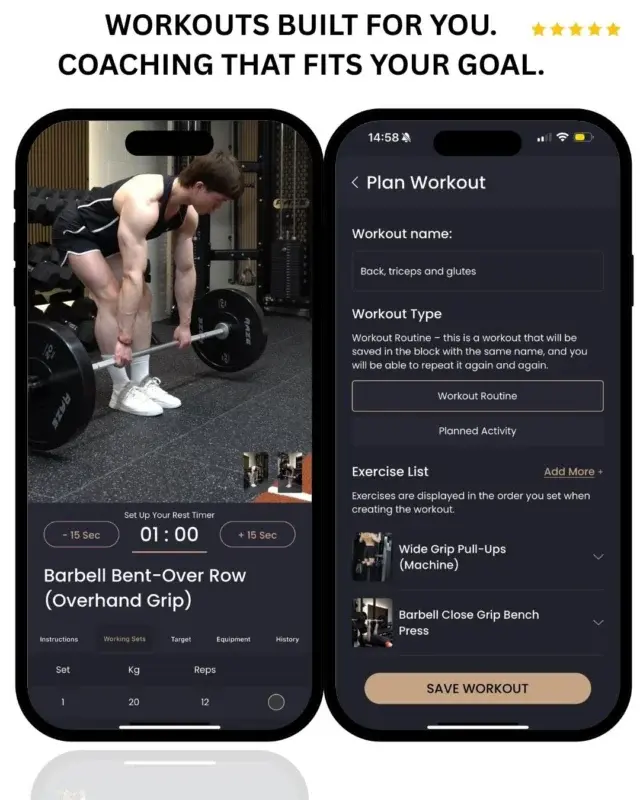
How 12REPS Handles DOMS and Recovery
Understanding soreness is one thing. Actually, programming training around appropriate recovery whilst ensuring progressive overload continues is another.
12REPS handles recovery intelligently:
1. Appropriate training splits: For beginners, the app programmes full body workouts 2-3x weekly, ensuring 48-72 hours between training same muscle groups—allowing DOMS to resolve.
2. Progressive volume: The app doesn’t jump from 3 sets to 6 sets overnight. Volume increases gradually over weeks, minimising DOMS severity whilst maintaining progression.
3. Built-in deload weeks: Every 5-8 weeks, the app automatically programmes a deload (reduced volume/intensity), allowing accumulated fatigue and residual soreness to clear.
4. Exercise variety over time: The app progresses you from easier variations (bodyweight squats) to harder variations (barbell squats) gradually, minimising DOMS from sudden exercise changes.
5. Adaptation tracking: If you consistently report difficulty completing workouts or excessive fatigue, the app adjusts programming to improve recovery.
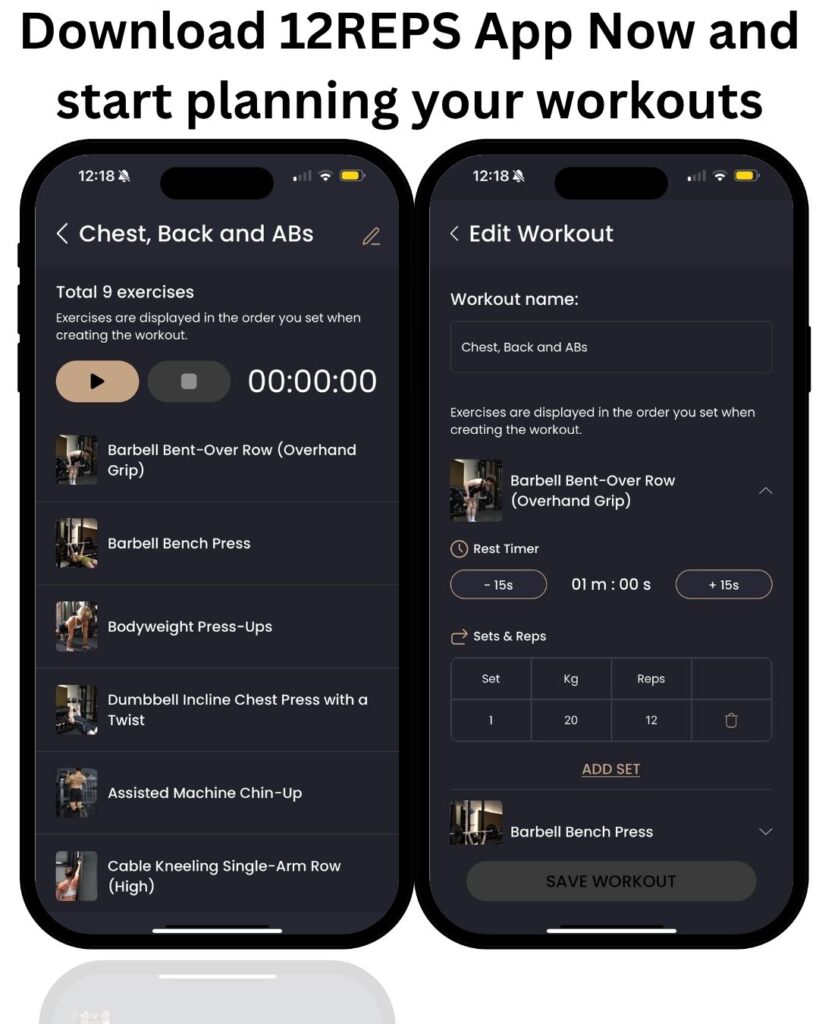
Try 12REPS free for 7 days. Stop worrying about whether you’re recovered enough to train—follow programming designed to balance progressive overload with appropriate recovery.
The Bottom Line
Muscle soreness after workouts is normal, expected, and not a reliable indicator of training effectiveness.
When DOMS is normal:
✅ Starting new training programme (weeks 1-4)
✅ Returning after 3+ weeks off
✅ New exercises or movement patterns
✅ Significant increase in volume or intensity
✅ Bilateral, diffuse muscle aching
✅ Peaks day 2-3, resolves by day 5-7
When to worry:
❌ Unilateral (one-sided) sharp pain
❌ Pain during or immediately after exercise
❌ Pain worsening daily instead of improving
❌ Dark urine, extreme weakness, confusion
❌ Pain preventing basic daily activities
❌ Lasting beyond 7-10 days
Key truths about soreness:
- Soreness ≠ effectiveness (you build muscle without soreness once adapted)
- Soreness ≠ muscle growth (magnitude of soreness doesn’t predict gains)
- Reducing soreness over time = positive adaptation, not reduced effort
- The “repeated bout effect” means exercises cause less soreness each time
Managing DOMS effectively:
✅ Light active recovery (most effective—walking, gentle cycling, swimming)
✅ Massage or foam rolling (moderately effective)
✅ Adequate sleep (7-9 hours, critical for recovery)
✅ Sufficient protein (1.8-2.2g/kg bodyweight)
✅ Progressive overload (gradual increases prevent excessive soreness)
Training whilst sore:
✅ Different muscle groups: always acceptable
✅ Mild soreness (3-4/10): can train affected muscles with thorough warm-up
✅ Moderate soreness (5-6/10): reduce volume/intensity or skip
✅ Severe soreness (7+/10): train different muscles only
Women who build the most muscle and strength aren’t those chasing maximal soreness—they’re those who train consistently, recover appropriately, and understand that diminishing soreness indicates successful adaptation, not reduced effectiveness.
Soreness is a temporary side effect of progress, not the goal itself.
References
- Cheung, K., Hume, P. and Maxwell, L. (2003). Delayed Onset Muscle Soreness: Treatment Strategies and Performance Factors. Sports Medicine, 33(2), pp.145-164. https://doi.org/10.2165/00007256-200333020-00005
- Connolly, D.A.J., Sayers, S.P. and McHugh, M.P. (2003). Treatment and Prevention of Delayed Onset Muscle Soreness. Journal of Strength and Conditioning Research, 17(1), pp.197-208. https://doi.org/10.1519/00124278-200302000-00030
- Flann, K.L., LaStayo, P.C., McClain, D.A., Hazel, M. and Lindstedt, S.L. (2011). Muscle Damage and Muscle Remodeling: No Pain, No Gain? The Journal of Experimental Biology, 214(4), pp.674-679. https://doi.org/10.1242/jeb.050112
- Schoenfeld, B.J. (2012). Does Exercise-Induced Muscle Damage Play a Role in Skeletal Muscle Hypertrophy? Journal of Strength and Conditioning Research, 26(5), pp.1441-1453. https://doi.org/10.1519/JSC.0b013e31824f207e
- Torres, R., Ribeiro, F., Alberto Duarte, J. and Cabri, J.M.H. (2012). Evidence of the Physiotherapeutic Interventions Used Currently After Exercise-Induced Muscle Damage: Systematic Review and Meta-Analysis. Physical Therapy in Sport, 13(2), pp.101-114. https://doi.org/10.1016/j.ptsp.2011.07.005