

You’re standing by the lat pulldown machine. Or staring up at the pull-up bar. And you’re wondering: should I even bother? Will I ever be able to do a proper pull-up? Is the lat pulldown good enough?
Here’s what usually happens: you attempt the lat pulldown with poor form, feel it in your arms instead of your back, and conclude that “back exercises just aren’t for me.”
Or you try a pull-up, fail spectacularly, and decide pull-ups are impossible for women.
Neither is true.
I’m Will Duru, a personal trainer with over 10 years’ experience working with women in London. I’ve coached dozens of women from “can’t feel my back at all” to performing multiple strict pull-ups.
This guide explains both movements: how to perform lat pulldowns with proper technique so you actually feel your back working, and a realistic progression plan for achieving your first pull-up.
Why Vertical Pulling Matters
Before discussing technique, understand why these movements deserve space in your programme.
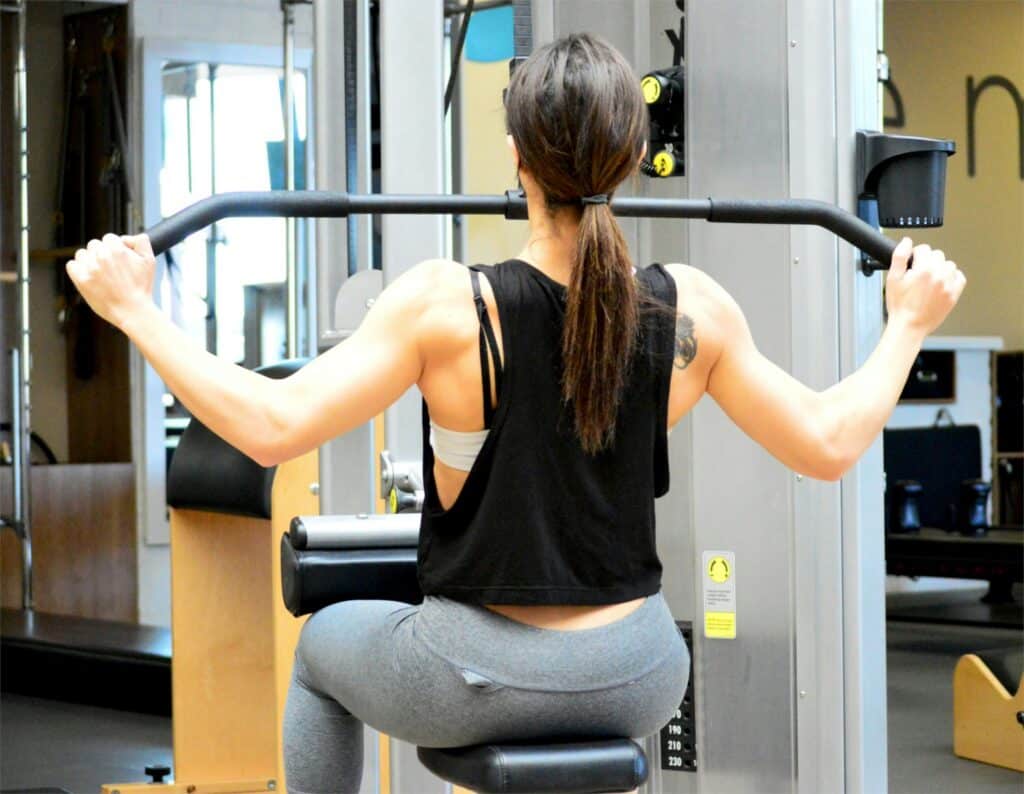
Lat pulldowns and pull-ups develop:
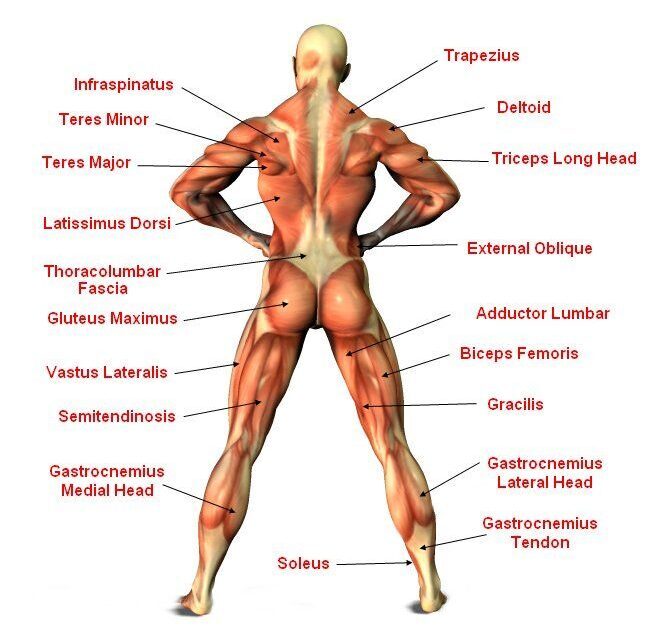
- Latissimus dorsi (the large back muscles creating the “V” shape)
- Rhomboids and trapezius (upper/mid-back muscles)
- Biceps and forearms
- Core stability
- Grip strength
Practical benefits:
- Improved posture (counteracts rounded shoulders from desk work)
- Stronger pulling capacity (carrying shopping bags, lifting overhead)
- Shoulder stability and health
- Better performance in other exercises (rows, deadlifts)
- Increased confidence in your physical capabilities
Research shows the latissimus dorsi is activated most effectively during vertical pulling movements compared to horizontal rowing variations. If you want strong, developed lats, vertical pulls are essential.
Lat Pulldown: Complete Breakdown
The lat pulldown is where most women should start. It allows you to use appropriate resistance rather than immediately attempting to pull your entire bodyweight.
Setup
1. Adjust the thigh pad: Snug against your thighs when seated. Prevents you lifting off the seat during the movement.
2. Select your grip width: Slightly wider than shoulder-width (about 5-10cm outside shoulders on each side). Not excessively wide.
3. Choose your starting weight: Conservative. Most women starting out: 15-25kg. You should complete 8-10 reps with good form whilst feeling challenged.
4. Sit with feet flat: Full contact with floor. Torso upright with slight backward lean (10-15 degrees, not 45 degrees).
Perfect Technique
Starting position:
- Arms fully extended overhead
- Shoulders slightly elevated (bar pulling you into a stretch)
- Chest up, core engaged
- Eyes forward, not up at the bar
The pull:
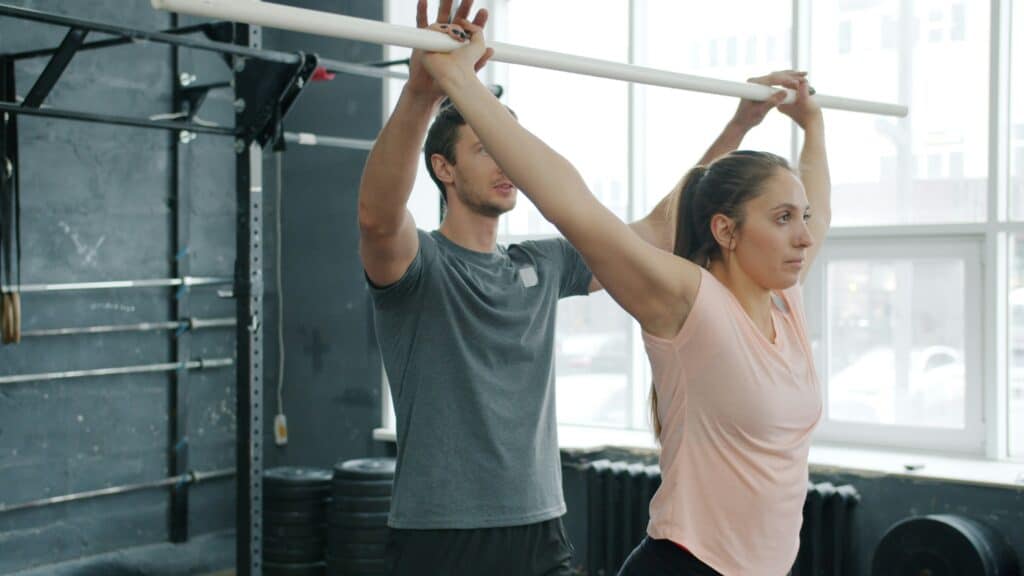
- Initiate with your back, not your arms: Think “pull your elbows down and back towards your hips” rather than “pull the bar down.”
- Slight lean back (10-15 degrees): Gets your head out of the bar’s path. Not excessive—you’re not performing a row.
- Pull the bar to upper chest level: Somewhere between collarbone and upper chest. NOT to your belly button.
- Squeeze your shoulder blades together: At the bottom of the movement, pause briefly whilst squeezing.
- Controlled release: 2-3 seconds to return to starting position. Don’t let the weight pull your arms back explosively.
Throughout the movement:
- Maintain tension on your lats—don’t fully relax at the top
- Avoid excessive torso movement or “swinging”
- Keep your shoulders down (not up by your ears)
- Drive with your elbows, not your hands
Common Mistakes
Mistake 1: Pulling the bar too low
You pull the bar down to your stomach or belly button. This turns the movement into a row and reduces lat activation.
Fix: Stop when the bar reaches your upper chest. Check by recording yourself from the side—the bar should stop just below your chin.
Mistake 2: Using momentum and swinging
Your torso rocks back and forth dramatically. You’re essentially using momentum to complete reps you’re not strong enough to perform.
Fix: If you can’t control the movement, reduce the weight by 20-30%. Your back muscles should move the weight, not momentum.
Mistake 3: Pulling with your arms
You initiate the movement by bending your elbows. Your biceps fatigue before your back does. You don’t “feel it” in your back at all.
Fix: Before each rep, think “drive elbows down and back.” Imagine your hands are hooks—they’re just holding the bar, not actively pulling.
Mistake 4: Losing the stretch at the top
At the top of each rep, you maintain bent elbows and don’t allow your shoulders to elevate. You’re missing the full range of motion.
Fix: Each rep should start with arms fully extended and shoulders slightly elevated. You should feel a stretch across your lats. Then initiate the pull.
Mistake 5: Shoulders up by ears
Throughout the movement, your shoulders are hunched up toward your ears, creating neck tension.
Fix: Before each set, practice the “shoulder pack” cue: hang from the bar (or hold it overhead), allow shoulders to rise, then actively pull them down and back. This is your starting position.
Grip Variations
Standard overhand grip (pronated): Palms facing away, hands just outside shoulder-width. Best overall lat activation. Start here.
Close grip: Hands shoulder-width or narrower. Emphasises biceps and lower lats slightly more. Good variation.
Underhand grip (supinated/chin-up grip): Palms facing you. Increases bicep involvement. Many women find this easier initially—perfectly fine to use if struggling with standard grip.
Neutral grip (palms facing each other): Uses parallel handles. More comfortable for some shoulders. Less lat emphasis, more mid-back.
Wide grip: Hands significantly wider than shoulders. Contrary to popular belief, research shows no significant advantage over medium-width grip for lat activation. Often reduces range of motion.
Research from the Journal of Strength and Conditioning Research shows the lat is activated similarly across grip widths, though individual comfort varies. Use the grip that allows you to feel your lats working best—usually a medium overhand grip.
Starting Weights and Progression
Realistic starting points for women:
- Complete beginner: 10-20kg
- Some training experience: 20-30kg
- Regular strength training: 30-40kg
Progressive timeline (training 2x weekly):
Months 1-3: 20kg → 30kg Months 4-6: 30kg → 40kg Months 7-12: 40kg → 50kg Year 2: 50kg → 60kg
After 2 years of consistent training, many women perform lat pulldowns with 55-70kg for sets of 8-10 reps.
How to progress:
- Increase reps: 3 sets of 8 → 3 sets of 12 with same weight
- Once hitting 3×12, increase weight by 2.5-5kg
- Drop back to 3×8 with new weight
- Repeat cycle
Programming Guidelines
Frequency: 1-2 times per week Sets: 3-4 per session Reps: 8-12 (can go higher, 12-15, for variation) Tempo: 2 seconds down, 1 second pause, 2-3 seconds up
Include lat pulldowns on any upper body or back-focused training day. Pair well with horizontal rows for complete back development.
Pull-Ups: The Reality Check
Pull-ups are significantly more difficult than lat pulldowns. You’re pulling your entire bodyweight against gravity with no ability to adjust resistance.
Statistics: Only about 30% of women can perform an unassisted pull-up without specific training. This isn’t because women “can’t do pull-ups”—it’s because pull-ups require specific strength that most people, regardless of gender, haven’t developed.
Why pull-ups are difficult:
- You’re lifting 100% of your bodyweight
- Requires significant lat, bicep, and grip strength
- Demands core stability and body control
- Minimal transfer from other exercises
The good news: With systematic training, most women can achieve their first pull-up within 6-12 months. Some faster, some slower, depending on starting strength and consistency.
Pull-Up Progression Plan
This isn’t a 30-day miracle programme. Developing pull-up strength requires months of consistent work. Anyone promising faster results is lying.
Phase 1: Foundation (Weeks 1-8)
Goal: Develop basic back strength and movement pattern.
Exercises:
- Lat pulldowns – 3 sets of 10-12 reps, 2x weekly. Follow technique guide above. Your primary strength builder.
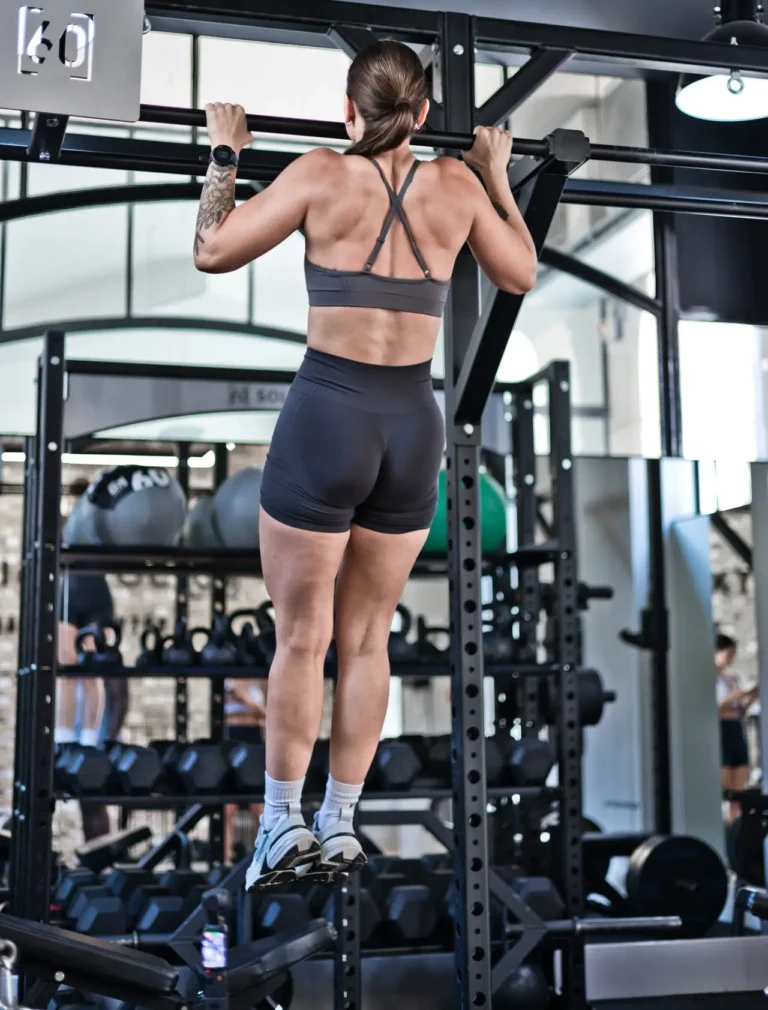
- Dead hangs – 3 sets of 20-30 seconds, 2x weekly. Simply hang from the pull-up bar with arms extended, shoulders packed down and back. Develops grip strength and shoulder stability.
- Inverted rows – 3 sets of 8-12 reps, 2x weekly. Set a barbell in a rack at hip height. Lie underneath, grasp bar, pull chest to bar whilst keeping body rigid. Adjust height to make easier (higher) or harder (lower).
Performance test (end of week 8): Complete lat pulldowns with 60% of bodyweight for 3 sets of 10 reps. For a 65kg woman, this means 40kg pulldowns.
If you can’t achieve this, continue Phase 1 for another 4 weeks.
Phase 2: Progression (Weeks 9-16)
Goal: Handle heavier loads and introduce assisted pull-up variations.
Exercises:
- Weighted lat pulldowns – 3 sets of 8-10 reps, 2x weekly. Increase weight beyond Phase 1. Target 70-80% of bodyweight.
- Band-assisted pull-ups – 3 sets of 5-8 reps, 2x weekly. Loop resistance band over pull-up bar, place one foot in band. Use the lightest band that allows 5-8 controlled reps. Resistance bands typically provide 15-40kg assistance depending on thickness.
- Negative pull-ups – 3 sets of 3-5 reps, 2x weekly. Jump or step up to top position (chin over bar), lower yourself as slowly as possible (aim for 5+ seconds). This eccentric phase builds tremendous strength.
- Dead hangs – Progress to 3 sets of 45-60 seconds
- Performance test (end of week 16): Complete band-assisted pull-ups with a light band for 3 sets of 8 reps, OR perform 3 negative pull-ups with 8+ second descents.
Phase 3: Pull-Up Achievement (Weeks 17-24)
Goal: Perform first unassisted pull-up.
Exercises:
- Assisted pull-ups with progressively lighter bands – 4 sets of 6-8 reps, 2x weekly. Every 2-3 weeks, switch to lighter band. When using lightest band, attempt unassisted reps.
- Negative pull-ups – 3 sets of 5 reps with 8-10 second descents, 2x weekly.
- Lat pulldowns – Maintain these! 3 sets of 8-10 reps at 80-90% bodyweight, 1x weekly.
- Max effort pull-up attempts – Once weekly, attempt 1-3 unassisted pull-ups at start of session when fresh. Use complete rest between attempts (3-5 minutes)
Week 20-24: Most women achieve their first complete pull-up during this period.
Phase 4: Multiple Pull-Ups (Months 7-12)
Goal: Progress from 1 pull-up to multiple reps.
Approach: Grease the groove method. Perform multiple sets of 1-2 pull-ups throughout the week (not to failure). Volume builds strength.
Sample week:
- Monday: 5 sets of 1-2 pull-ups (rest 5 minutes between sets)
- Wednesday: 4 sets of 1 pull-up + 3-5 band-assisted pull-ups
- Friday: Max effort: 1 set to failure (aim for 2-3), then 3 sets of negatives
Within 6-12 months: Progress to 3-5 consecutive pull-ups.
Pull-Up vs Chin-Up: What's the Difference?
Pull-up: Overhand grip (palms away). More lat emphasis.
Chin-up: Underhand grip (palms toward you). More bicep involvement.
Which is easier: Chin-ups are typically easier due to increased bicep assistance. If pull-ups feel impossible, try chin-ups first. The progression plan works for both.
Which should you do: Both. But start with whichever allows you to complete the most reps with good form.
Alternative Exercises (If No Pull-Up Bar Access)
At home without bar:
- Inverted rows using sturdy table
- Resistance band pull-downs (band anchored overhead)
- Towel-assisted rows
At gym:
- Lat pulldowns (obviously)
- Assisted pull-up machine (use progressively less assistance)
- Cable straight-arm pulldowns
Whilst alternatives help build strength, nothing fully replicates the pull-up. If your goal is pull-ups, you need access to a bar—even just 2x weekly at a gym.
Common Questions
“I can’t feel my back working during lat pulldowns, only my arms. What’s wrong?”
This is the most common issue. Your biceps are dominating the movement.
Solutions:
- Reduce weight by 30-40%. Yes, significantly lighter.
- Use the cue “pull elbows to hips” before each rep
- Try a wider grip (harder to use biceps with wider grip)
- Pause for 2 seconds at the bottom of each rep and consciously squeeze your lats
- Consider trying the underhand grip initially—paradoxically, some women feel their lats better despite increased bicep involvement
“Should I use the assisted pull-up machine at the gym?”
It’s better than nothing but not optimal. The assisted pull-up machine has limitations:
Problems:
- The kneepad provides support throughout the movement, including the easiest portion (bottom)
- Doesn’t teach proper body tension and core engagement
- Easier to “cheat” by pushing harder with legs
Better alternatives: Band-assisted pull-ups and negative pull-ups provide superior transfer to unassisted pull-ups.
If the machine is your only option, use it. But prioritise negatives and bands when possible.
“How long will it take to do a pull-up?”
Realistic timeframes:
- Already training with basic back strength: 3-6 months
- Starting from scratch with no training history: 6-12 months
- Inconsistent training or higher bodyweight: 12-18 months
These are averages. Some women progress faster, some slower. Consistency matters more than timeline.
“I’m 35/45/55 years old. Is it too late?”
No. I’ve coached women in their 40s and 50s to their first pull-ups. It may take slightly longer due to slower strength gains, but absolutely achievable with consistent training.
Age affects recovery more than absolute strength potential. Train smart, recover adequately, be patient.
“Should I lose weight to make pull-ups easier?”
If you’re significantly overweight, losing fat whilst building muscle will help. But don’t use “I need to lose weight first” as an excuse to delay training.
Better approach: Train for pull-ups NOW whilst eating in a slight deficit if fat loss is a goal. Build strength and lose fat simultaneously.
Pull-ups are a strength-to-weight ratio exercise. You can improve the ratio by increasing strength OR decreasing weight OR both.
“My grip gives out before my back fatigues. What should I do?”
Grip strength is often the limiting factor, especially for beginners.
Solutions:
- Include dead hangs (3-4 sets of 30-60 seconds)
- Farmer’s carries with heavy dumbbells (30-45 seconds per set)
- Fat Gripz attachments on lat pulldown bar (increases grip demand)
- Simply more volume—grip strengthens quickly with consistent training
If grip is genuinely limiting your back training, consider lifting straps temporarily whilst continuing specific grip work.
Integration with Your Training Programme
Where in Your Workout
Pull-ups: First exercise of the session when you’re freshest. Pull-ups demand maximum effort.
Lat pulldowns: Early-to-middle of session. Can be performed effectively even with some fatigue.
Sample back workout:
- Pull-ups or pull-up progression work: 4-5 sets
- Barbell rows: 3-4 sets of 8-10 reps
- Lat pulldowns: 3 sets of 10-12 reps
- Face pulls: 3 sets of 15 reps
Frequency
While building towards first pull-up: 2-3x weekly pull-up-specific work (bands, negatives, dead hangs)
Once achieving pull-ups: 2x weekly to maintain and build reps
Lat pulldowns: 1-2x weekly, can continue even after achieving pull-ups for additional volume
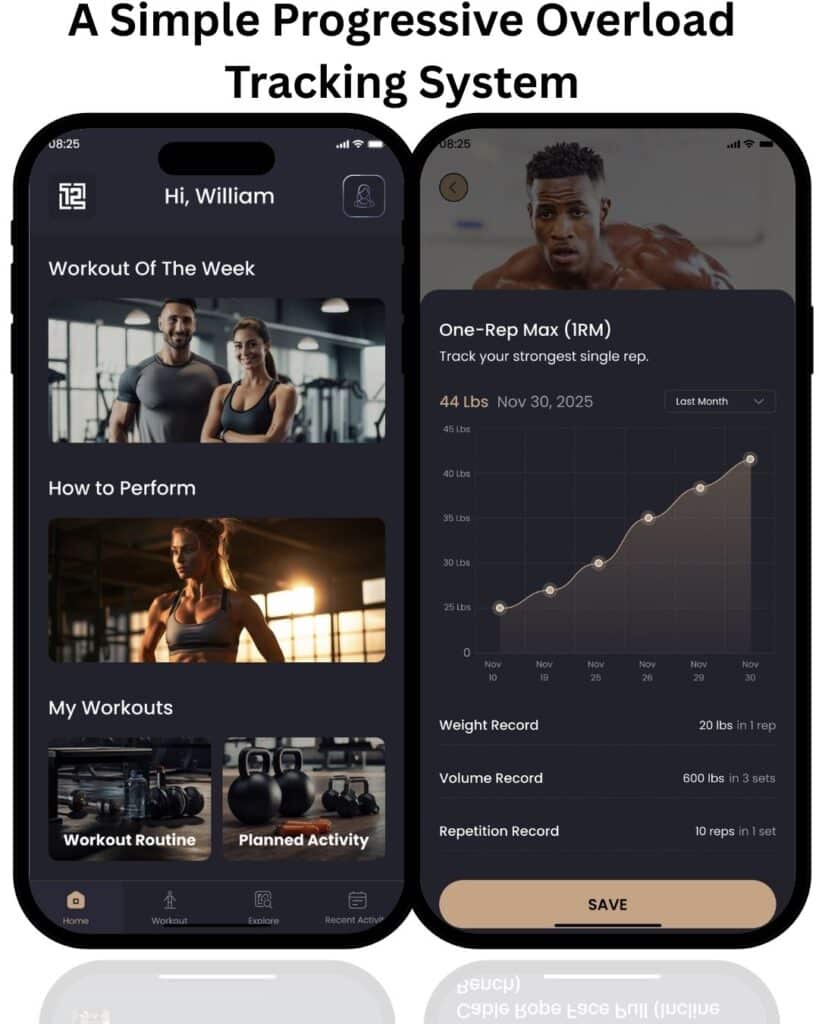
Tracking Your Progress
For lat pulldowns:
- Weight used for 3×10
- Can you perform 3×12 with current weight?
- Video to check form remains consistent as weight increases
For pull-up progression:
- Band resistance level (track when you reduce to lighter band)
- Negative pull-up descent time (5 seconds → 8 seconds → 10 seconds)
- Dead hang duration
- Date of first unassisted pull-up (celebrate this!)
- Max consecutive pull-ups
Progress isn’t always linear. Some weeks you’ll hit new personal bests. Other weeks you’ll struggle to match previous performance. This is normal. Focus on long-term trends over 4-8 weeks.
The Bottom Line
Lat pulldowns and pull-ups develop your back more effectively than almost any other movement.
For lat pulldowns:
✅ Grip slightly outside shoulder-width
✅ Pull to upper chest, not stomach
✅ Drive with elbows, not hands
✅ Control the eccentric (2-3 seconds up)
✅ If you can’t feel your back, reduce weight significantly
For pull-up progression:
✅ Expect 6-12 months for first pull-up
✅ Master lat pulldowns first (60-70% bodyweight for sets of 10)
✅ Prioritise band-assisted pull-ups and negatives over assisted machine
✅ Include dead hangs for grip and shoulder stability
✅ Be patient and consistent.
Most women never attempt pull-ups because they assume they can’t do them. With systematic training, most women absolutely can.
Start with lat pulldowns. Build your back strength systematically. Progress through assisted variations. Achieve your first pull-up.
It’s harder than Instagram makes it look. It takes longer than clickbait articles promise. But it’s absolutely achievable.
And when you finally get your chin over that bar unassisted for the first time? Worth every rep you put in to get there.
References
- Andersen, V., Fimland, M.S., Wiik, E., Skoglund, A. and Saeterbakken, A.H. (2014). Effects of Grip Width on Muscle Strength and Activation in the Lat Pull-Down. Journal of Strength and Conditioning Research, 28(4), pp.1135-1142. https://doi.org/10.1519/JSC.0b013e3182a1b25a
- Doma, K., Deakin, G.B. and Ness, K.F. (2013). Kinematic and Electromyographic Comparisons Between Chin-Ups and Lat Pull-Down Exercises. Sports Biomechanics, 12(3), pp.302-313. https://doi.org/10.1080/14763141.2012.760106
- Augustsson, J., Esko, A., Thomeé, R. and Svantesson, U. (1998). Weight Training of the Thigh Muscles Using Closed Versus Open Kinetic Chain Exercises: A Comparison of Performance Enhancement. Journal of Orthopaedic & Sports Physical Therapy, 27(1), pp.3-8. https://doi.org/10.2519/jospt.1998.27.1.3
- Signorile, J.F., Zink, A.J. and Szwed, S.P. (2002). A Comparative Electromyographical Investigation of Muscle Utilization Patterns Using Various Hand Positions During the Lat Pull-Down. Journal of Strength and Conditioning Research, 16(4), pp.539-546. https://doi.org/10.1519/00124278-200211000-00011
- Schoenfeld, B.J., Grgic, J., Ogborn, D. and Krieger, J.W. (2017). Strength and Hypertrophy Adaptations Between Low- vs. High-Load Resistance Training: A Systematic Review and Meta-analysis. Journal of Strength and Conditioning Research, 31(12), pp.3508-3523. https://doi.org/10.1519/JSC.0000000000002200