


By Will Duru, BSc (Hons) Sport and Exercise Science, Award-winning Personal Trainer with over 10 years of experience in strength training and optimising recovery.
Muscle loss after 40 is common, and you can rebuild strength at this age. From midlife, muscle mass and strength fall slowly, and for women the menopause years can speed this up. Regular strength training that gets gradually harder, plus enough protein, is the best-supported way to rebuild it.
Many women I train in their 40s and 50s describe the same feeling. They feel softer where they used to feel firm and weaker where they used to feel strong. Some say their body has “gone to mush”.
If that sounds like you, it is not a personal failure. It is a normal change that responds to training. This guide is not about chasing the body you had at 25. It is about building a strong, capable body for this stage of your life.

What is really going on? Muscle loss after 40 explained
That “softer” feeling is usually a change in body composition. Body composition is the mix of fat mass and lean mass (muscle, bone, organs and water) in your body. When you lose some muscle and gain some fat, you can look and feel different even if the scale barely moves.
The gradual, age-related loss of muscle mass, strength and function is called sarcopenia. It starts slowly. A 2012 quantitative review found that strength is lost faster than muscle size. In studies that measured both, strength fell 2 to 5 times faster than muscle mass. That helps explain why everyday jobs, such as carrying shopping or getting up from the floor, can start to feel harder.
The menopause effect
Hormone changes around menopause play a part for women. A follow-up study of 234 Finnish women aged 47 to 55 found that muscle mass fell across the menopausal transition. More physically active women kept more of their muscle.
Is it your metabolism?
Many people blame a “slow metabolism” after 40. The evidence is weaker than you might think. A large 2021 study in Science found that daily energy expenditure stays stable from age 20 to 60, then declines in older adults. That result was adjusted for body size and lean mass. So midlife changes in body shape are not simply down to a metabolism that suddenly slowed. For more on this, read what happens to your body when you try to lose weight in your 40s.
The good news: muscle still responds to training at this age. A Cochrane review of 121 trials found that older adults who did progressive strength training got stronger and became better at everyday tasks such as climbing stairs.
How to rebuild strength after 40: lift, progress, eat
Rebuilding strength comes down to two jobs. Give your muscles a reason to adapt, and give your body the protein to do it.
1. Lift weights that challenge you
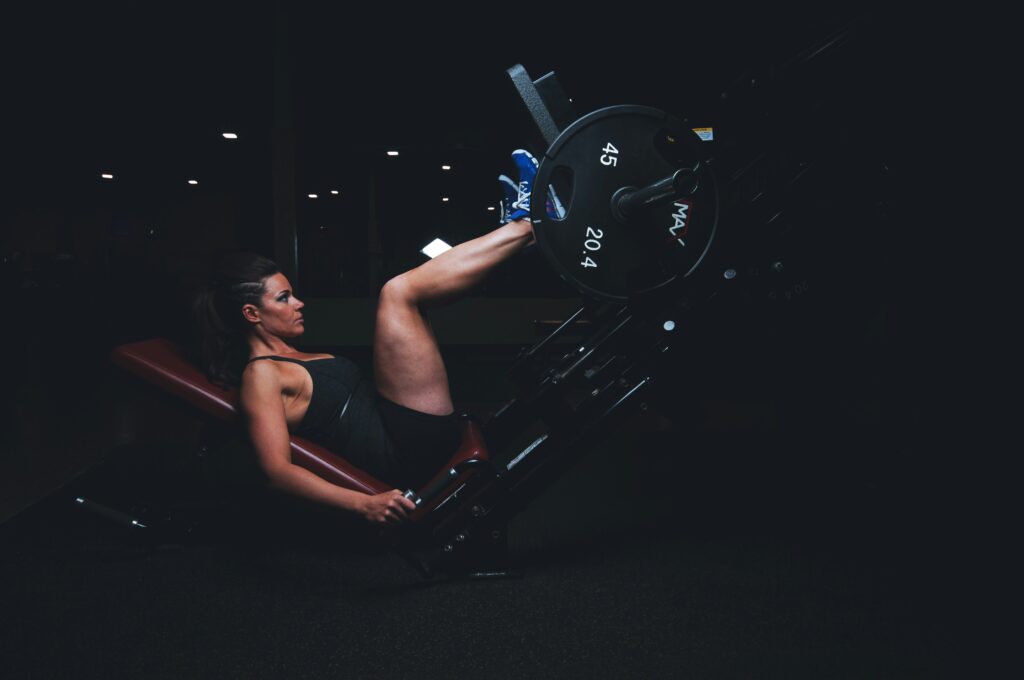
To rebuild muscle, the work has to feel hard by the last few reps. I am not talking about the lightest dumbbells on the rack forever. I mean a structured plan built on progressive overload.
Progressive overload means slowly increasing the demand on your muscles over time. You might lift a little more weight, do one more rep or add a set. For beginners, the American College of Sports Medicine position stand suggests loads you can lift for about 8 to 12 reps, on 2 to 3 days a week. The NHS guidelines recommend strength work on at least 2 days a week, covering all the major muscle groups.
Video: Free weights or machines? If you are returning to the gym after a long break, this clip helps you decide where to start.
2. Eat enough protein
If lifting is the signal, protein is the raw material. In a 2018 meta-analysis of 49 trials, protein supplements added to strength-training gains. Extra gains stopped at a total intake of about 1.6 g of protein per kg of body weight a day. The benefit was smaller in older people, so aim for a steady supply rather than relying on one big meal.
A simple habit is to build each meal around a protein food, such as eggs, Greek yogurt, fish, chicken, beans, lentils or tofu. Our guide to how much protein women need for strength training explains how to work out your own target. If you have kidney disease or another health condition, check with your GP or a dietitian first.
Measure strength, not just the scale
Changing your body composition is one part of this. The other is changing how you judge your body. For many years, women have been taught to measure their worth by their weight or dress size. I would rather you focus on what your body can do.
Strength training gives you clear wins. The first full push-up. A heavier dumbbell than last month. Carrying all the shopping in one trip. These are real signs of progress, and they do not depend on the scale.
There is some evidence for this shift. In a community program with 341 rural women (average age 62), body image scores improved after strength training classes, and the women lifted more weight. The study had no comparison group, so it cannot prove the classes caused the change. But it matches what many women tell me once they start lifting.
Video: How women should track progress. This clip compares the scale with progress photos as ways to see change.
If walking into the weights area feels daunting, our 5-step guide to building gym confidence can help.
Getting started: your first few weeks
- Book two sessions a week. Treat them like appointments.
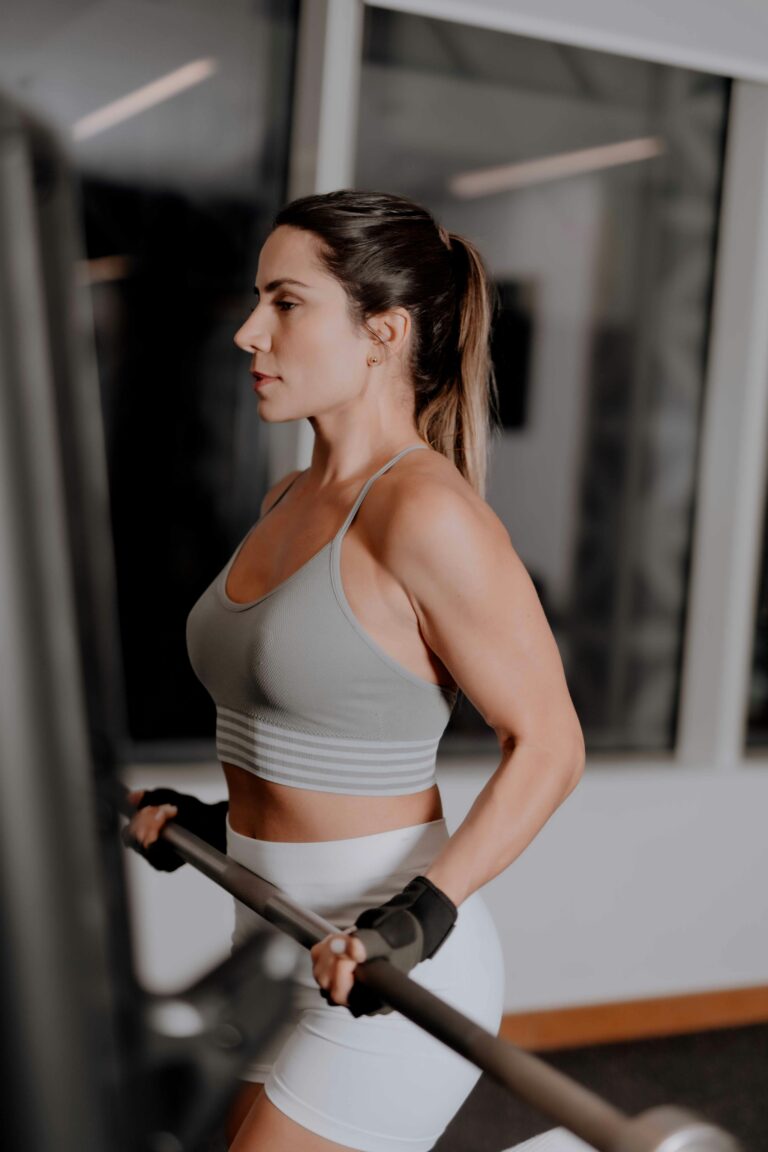
- Work the whole body. Include a squat or leg press, a hip hinge, a push, a pull and a core exercise.
- Start lighter than you think. Learn each movement first, then add load.
- Write everything down. Weights and reps give you a number to beat next time.
- Judge progress over months. Look at your strength, how your clothes fit and how daily tasks feel.
If you have menopause symptoms that worry you, a health condition or you take regular medication, speak to your GP before you start. The NHS menopause symptoms page also explains when to see a GP to discuss your options.
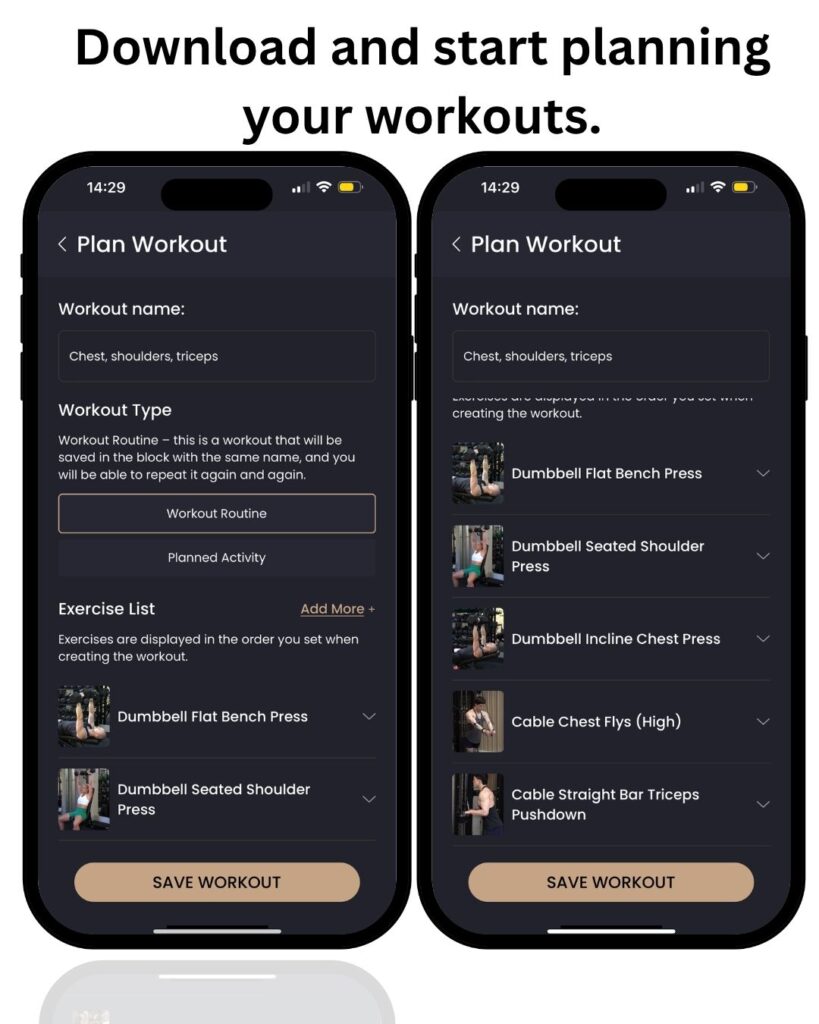
A plan takes the guesswork out of each session. 12REPS builds your training around your goal, equipment and time, shows a trainer demonstration for every exercise and tracks your sets, reps and weights. You can also log your body weight and keep private progress photos to compare over time.
Want the research on how much muscle you can gain? Read is it too late to build muscle after 40? For a plan written for women, see strength training for women over 40, and for symptom-specific tips, strength training in perimenopause.
Sources
- Muscle tissue changes with aging. Volpi E, Nazemi R, Fujita S. Current Opinion in Clinical Nutrition and Metabolic Care, 2004. https://doi.org/10.1097/01.mco.0000134362.76653.b2
- Sarcopenia, dynapenia, and the impact of advancing age on human skeletal muscle size and strength; a quantitative review. Mitchell WK, Atherton PJ, Williams J, et al. Frontiers in Physiology, 2012. https://doi.org/10.3389/fphys.2012.00260
- Role of Menopausal Transition and Physical Activity in Loss of Lean and Muscle Mass: A Follow-Up Study in Middle-Aged Finnish Women. Juppi HK, Sipila S, Cronin NJ, et al. Journal of Clinical Medicine, 2020. https://doi.org/10.3390/jcm9051588
- Daily energy expenditure through the human life course. Pontzer H, et al. Science, 2021. https://doi.org/10.1126/science.abe5017
- Progressive resistance strength training for improving physical function in older adults. Liu CJ, Latham NK. Cochrane Database of Systematic Reviews, 2009 (Cochrane summary page 2022). https://www.cochrane.org/evidence/CD002759_progressive-resistance-strength-training-improving-physical-function-older-people
- American College of Sports Medicine position stand. Progression models in resistance training for healthy adults. American College of Sports Medicine. Medicine & Science in Sports & Exercise, 2009. https://pubmed.ncbi.nlm.nih.gov/19204579/
- Physical activity guidelines for adults aged 19 to 64. NHS, 2024. https://www.nhs.uk/live-well/exercise/physical-activity-guidelines-for-adults-aged-19-to-64/
- A systematic review, meta-analysis and meta-regression of the effect of protein supplementation on resistance training-induced gains in muscle mass and strength in healthy adults. Morton RW, Murphy KT, McKellar SR, et al. British Journal of Sports Medicine, 2018. https://bjsm.bmj.com/content/52/6/376
- Strength Training Improves Body Image and Physical Activity Behaviors Among Midlife and Older Rural Women. Seguin RA, Eldridge G, Lynch W, Paul LC. Journal of Extension, 2013. https://archives.joe.org/joe/2013august/a2.php
- Symptoms of menopause and perimenopause. NHS, 2026. https://www.nhs.uk/conditions/menopause-and-perimenopause/symptoms/