


By Will Duru, BSc (Hons) Sport and Exercise Science, Award-winning Personal Trainer with over 10 years of experience in strength training and optimising recovery
Wearable tech, such as an Apple Watch, Garmin or Fitbit, can support your strength training by tracking heart rate, sleep and recovery trends. The data is most useful for spotting patterns over weeks. It is less reliable for single numbers, such as the calories you burned in one session.
12REPS is a strength training app that plans your sessions and logs your sets, reps and weights. This guide explains what your wearable can and can’t tell you, what research says about accuracy, and how to use the data alongside 12REPS.
What Wearables Can Tell You About Strength Training
Modern wearables do much more than count steps. Here is what the main metrics mean for lifting, and how far you can trust them.
Heart rate: effort and recovery between sets
Your heart rate rises during a hard set and falls while you rest. Watching how fast it comes down between sets gives you a rough sense of how you’re recovering. Over time, a quicker drop at the same workload can be a sign of better fitness.
Accuracy matters here. A systematic review of wearables found that heart rate was within 3% of the reference in about 57% of lab comparisons. Apple Watch and Garmin were among the most accurate brands, and Fitbit tended to underestimate. A study of cycling and resistance exercise found that devices increasingly underestimated heart rate as intensity rose. A Polar H7 chest strap met the accuracy threshold in both types of exercise.
So use heart rate as one guide, alongside how the set felt. For example, if your heart rate stays high for longer than usual, you might rest a little longer before the next set. For more detail, see how long to rest between sets.
Calorie burn: a rough estimate only
Wearables estimate calories from your heart rate, your movement and personal details such as age, height and weight. These estimates are much less accurate than heart rate.
In the same review, no brand measured energy expenditure accurately, and only about 9% of lab comparisons were within 3%. In the resistance exercise study, no device gave a valid energy expenditure reading.
Use calorie numbers for broad trends, not exact food targets. If you’re adjusting your diet for fat loss or muscle gain, your body weight trend over several weeks is a better guide. Our beginner’s guide to tracking macros explains how to set up your intake.
Recovery Metrics: HRV, Sleep and Readiness Scores
Your muscles adapt in the time between sessions, so recovery matters. Many wearables now report recovery metrics. Here is how to read them.
Heart rate variability (HRV): HRV is the variation in time between your heartbeats. A healthy heart does not beat like a metronome. Lower HRV is linked with stress and poorer health, but higher is not always better. HRV also changes with age, breathing, resting heart rate and fitness (Frontiers in Public Health, 2017). Compare your readings with your own usual range, not with other people’s.
Sleep tracking: Sleep matters for recovery and performance. Wearables track how long you sleep and estimate your sleep stages (light, deep and REM). A study of seven consumer sleep trackers found they were good at detecting sleep, but less accurate at detecting time awake. Sleep stage results were inconsistent, and the devices did worse on nights of disrupted sleep. So focus on how long and how regularly you sleep, rather than the nightly stage breakdown. Read more about strength training and sleep.
Daily readiness scores: Some devices combine sleep, activity and HRV into one daily score. Each brand calculates it differently. Treat the score as a prompt to check how you feel, not as an instruction.
Together, these trends can help you decide when to push and when to take an easier day. They work best alongside how you feel and how you’re performing in the gym. See how to know if you’re training hard enough.
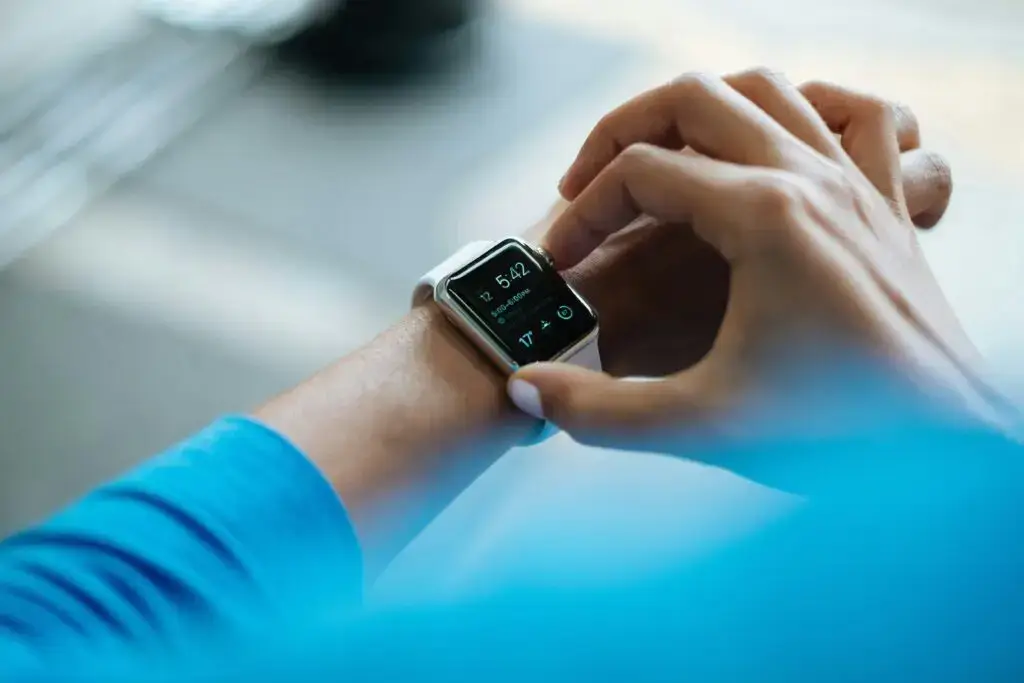
Rep counting and form feedback: Some wearables try to recognize exercises and count reps using motion sensors. In a study of a wrist-worn monitor, rep counting was most accurate at a fairly fast lifting pace, with an average error of about 14%. Accuracy dropped at slower speeds. A wrist sensor can’t see your whole body, so treat any form feedback as a rough guide. A trainer demonstration, or filming your set, is a better way to check your technique.
12REPS and Your Wearable: How They Work Together
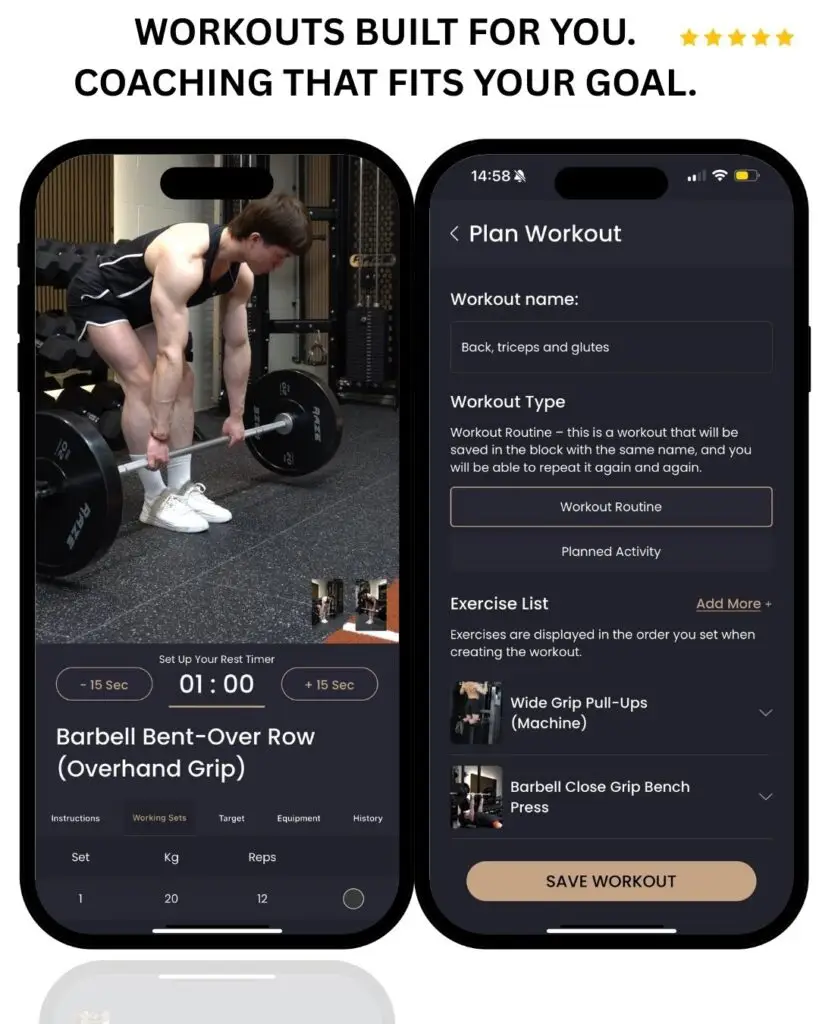
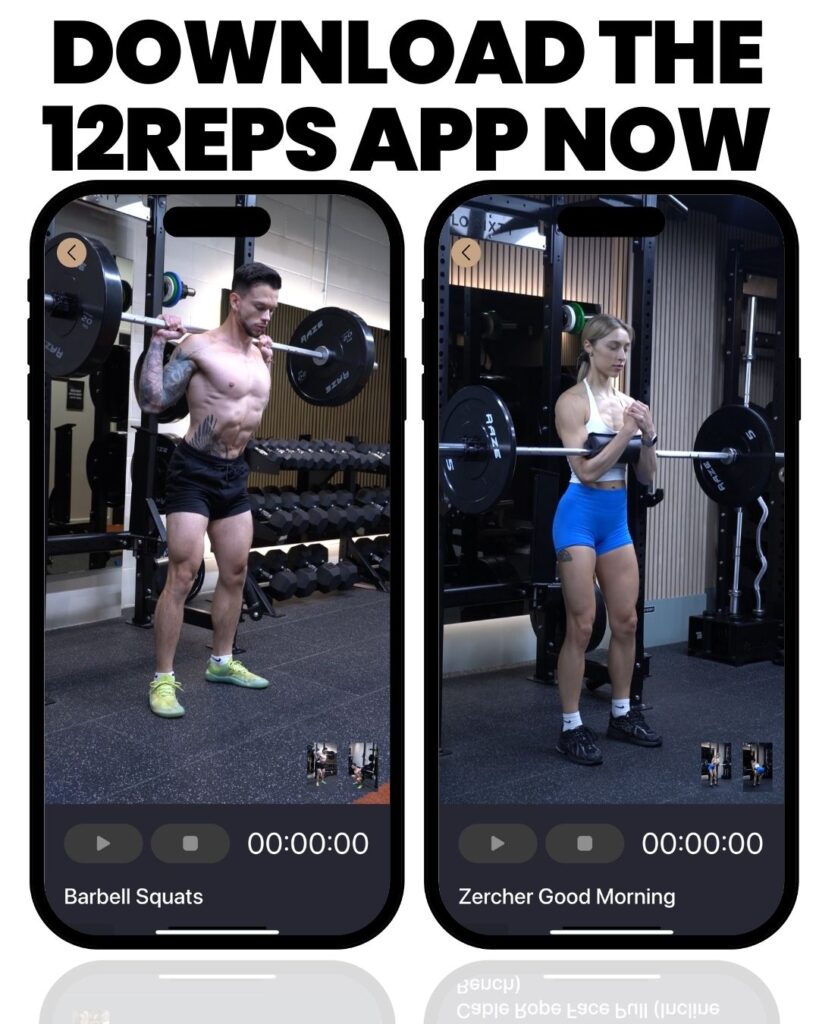
12REPS is a strength training app built around your goal, your equipment and the time you have. Open the app and your workout is ready. Each exercise has a demonstration from a qualified personal trainer. You enter your reps and weight for each set, and the app remembers what you lifted so you have a number to beat next time.
Your wearable and 12REPS do different jobs. Your wearable shows how your body responds, through heart rate, sleep and recovery trends. 12REPS records what you did in the gym: your workouts, sets, reps, weights and streaks. This guide assumes you check your wearable data in its own app and log your training in 12REPS. Looking at both gives you a fuller picture.
How to use wearable data with 12REPS
The insights from your wearable can inform the choices you make in 12REPS:
Review after each workout: Compare your heart rate and recovery data in your wearable’s app with the sets you logged in 12REPS. For example, if your heart rate ran higher than usual for the same weights, and the session felt harder, make a note. You might choose a slightly lighter load next time or take an extra rest day.
Check in before training: Has your sleep been short, or your HRV below your usual range, for a few days? If you also feel run down, consider an easier day. With Build your own in 12REPS, you choose the muscle, the equipment and the time, so you can set up a shorter session.
Fuel your training: Treat calorie numbers as rough. Base your eating on your goal and your body weight trend over several weeks.
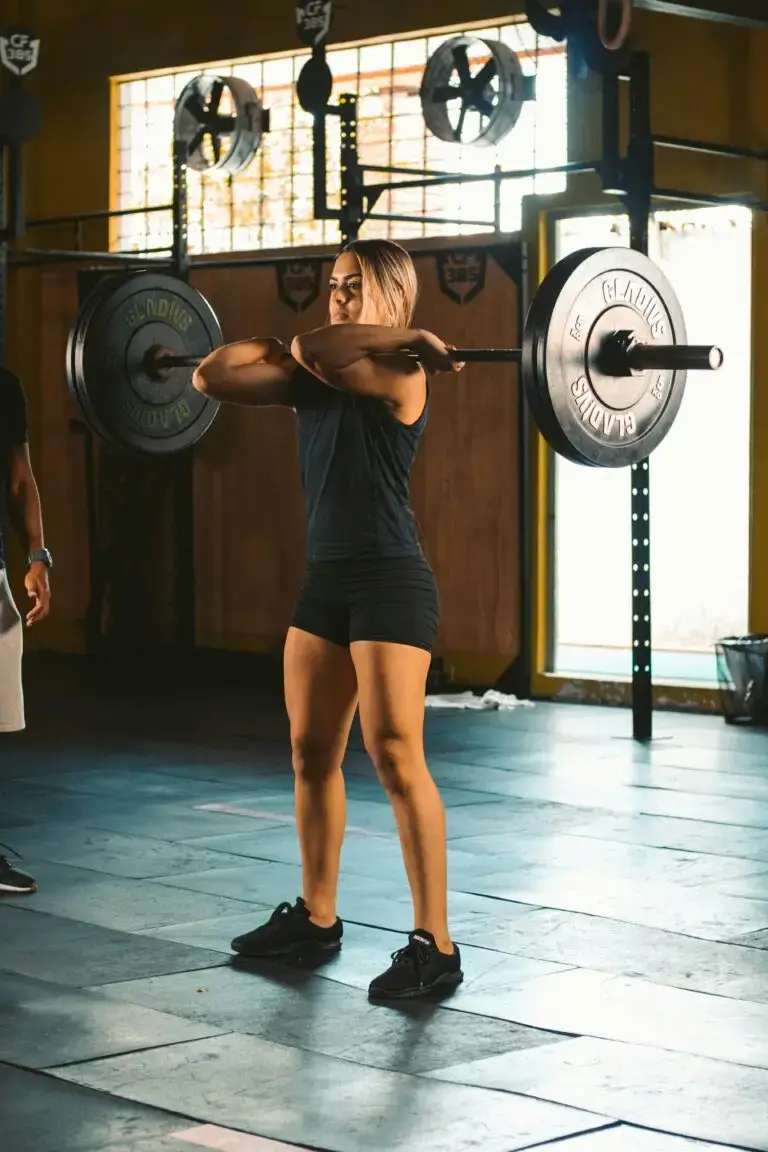
Adjusting for recovery
If your recovery data and how you feel both suggest you’re not fully recovered, you can:
- Lower the intensity: Use lighter weights for the day, or build a shorter session.
- Add rest: Take an extra rest day before your next strength session. If fatigue has built up over weeks, a deload week may help.
- Prioritize sleep and nutrition: Aim for regular sleep and enough food to support your training.
Tracking progress with both
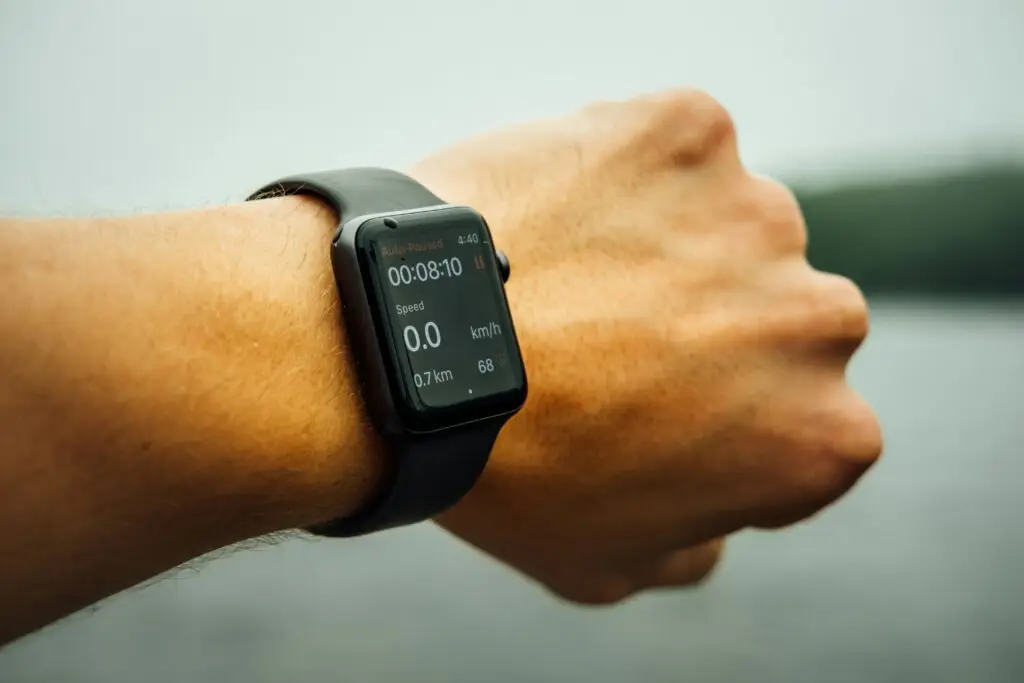
12REPS logs every workout, and you can also log your body weight to see your trend and take private progress photos. Your wearable shows your heart rate and sleep trends. Together, you can:
- Compare performance with recovery: See whether stronger lifts in 12REPS line up with steadier sleep or a lower resting heart rate.
- Spot signs of too much fatigue: Your lifts may stall or drop for a few weeks while your wearable shows poor sleep or a raised resting heart rate. If so, it may be time to reduce your training load for a while.
- See the bigger picture: Strength gains, your body weight trend and your cardio fitness together tell you more than any single number. Steady progressive overload is still what drives strength over time.
Practical Tips for Combining Wearables and 12REPS
- Wear it consistently: Wear your device during workouts and sleep so your trends are based on enough data.
- Learn your metrics: Read your manufacturer’s guidance on what each number means and how it is calculated.
- Listen to your body: Data should support your judgment, not replace it. If your wearable says you’re recovered but you feel exhausted, rest.
- Look at trends: Review your data weekly. Look for patterns rather than one-off readings, and compare them with your 12REPS log.
- Use 12REPS for structure: Follow your plan, log every set and use your wearable to see how your body responds.
- Set realistic goals: Whether your goal is fat loss, muscle gain or better endurance, set targets you can reach and celebrate small wins.
If you also use heart rate zones for cardio, see what Zone 2 cardio is and why zone definitions differ.
Conclusion
Wearables give useful insight into how your body responds to training. Heart rate and sleep duration trends are the most dependable. Calorie estimates, sleep stages and rep counts are rough. Use the data for patterns over time, and combine it with how you feel and how you’re lifting.
For the training side, 12REPS gives you a plan built around your goal, equipment and time. Trainer demos and a log of every set help you see your progress.
Sources
- Reliability and validity of commercially available wearable devices for measuring steps, energy expenditure, and heart rate: systematic review. JMIR mHealth and uHealth (Fuller D, et al.), 2020. https://mhealth.jmir.org/2020/9/e18694
- Validity of wearable activity monitors during cycling and resistance exercise. Medicine and Science in Sports and Exercise (Boudreaux BD, et al.), 2018. https://read.qxmd.com/read/29189666/validity-of-wearable-activity-monitors-during-cycling-and-resistance-exercise
- An overview of heart rate variability metrics and norms. Frontiers in Public Health (Shaffer F, Ginsberg JP), 2017. https://www.frontiersin.org/journals/public-health/articles/10.3389/fpubh.2017.00258
- Performance of seven consumer sleep-tracking devices compared with polysomnography. Sleep (Chinoy ED, et al.), 2021. https://pesquisa.bvsalud.org/bvsvs/resource/es/mdl-33378539
- Validity of a wrist-worn activity monitor during resistance training exercises at different movement speeds. J Meas Phys Behav (Conger SA, et al.), 2019. https://experts.boisestate.edu/en/publications/validity-of-a-wrist-worn-activity-monitor-during-resistance-train/