

Walk into any commercial gym and you’ll see a pattern: women dominate the leg equipment whilst men crowd around the bench press and pull-up bars.
The weight room’s unspoken geography: women train lower body, men train upper body.
This isn’t just observation, it’s backed by behaviour. Most women will programme three glute sessions weekly but treat upper body training as an afterthought. Maybe one half-hearted session with 3kg dumbbells. Maybe some push-ups on knees. Maybe nothing at all.
The result? Women with strong, developed legs and glutes but weak, underdeveloped upper bodies. Unable to do a single pull-up. Struggling with a 20kg overhead press. Avoiding rows entirely because they “don’t know how.”
I’m Will Duru, a personal trainer with over 10 years’ experience in London. I’ve trained hundreds of women, and the pattern is consistent: they’re brilliant at lower body training and terrible at upper body training.
Not because they lack capability. Because they’ve been taught (implicitly and explicitly) that upper body strength doesn’t matter for women. That focusing on arms and back will make them “bulky.” That upper body training is for men.
All of that is rubbish.
Here’s why you should train upper body seriously, how most women get it wrong, and how to actually build meaningful strength.
The Problem: Women Neglect Upper Body Training
Let’s establish the facts.
Average strength imbalance in women I’ve trained:
- Can hip thrust 60-80kg for reps
- Can barely overhead press 12kg dumbbells
- Can Romanian deadlift 50-70kg
- Struggle with 3 proper push-ups
- Can Bulgarian split squat 15kg per hand
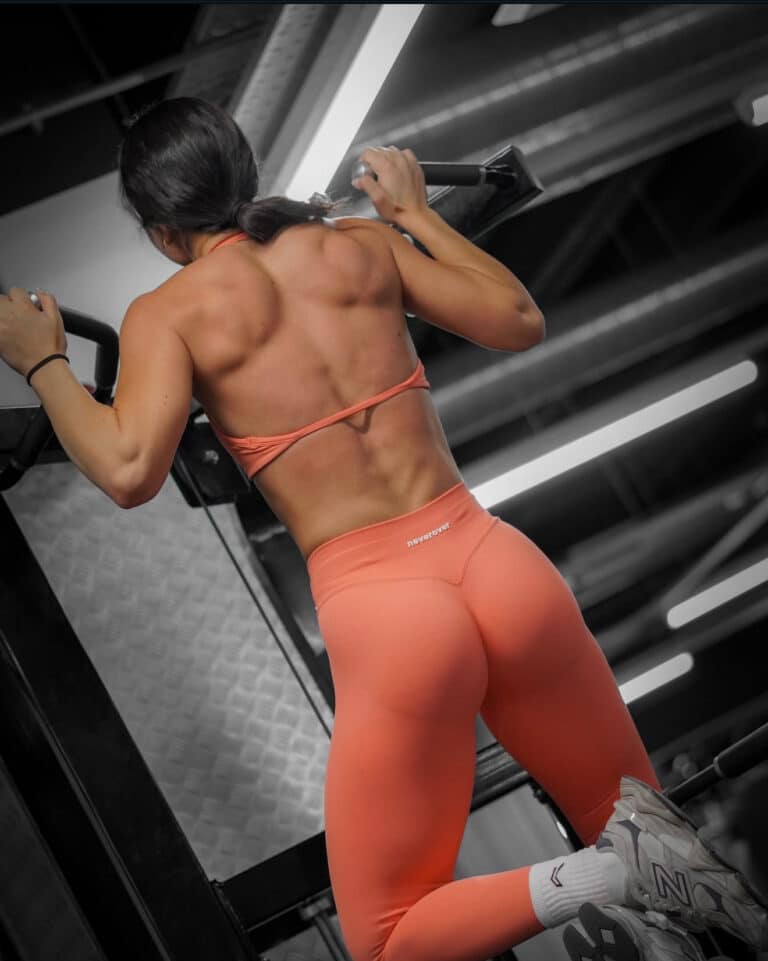
- Can’t do a single pull-up (or even hang from the bar for 10 seconds)
The lower-to-upper body strength ratio is dramatically skewed. This isn’t genetic. It’s training prioritisation.
Women spend 70-80% of their training time on lower body and maybe 20-30% on upper body. Often less. Some women train upper body zero times weekly.
Compare this to men, who often do the opposite: obsess over chest and arms whilst neglecting legs entirely.
Both approaches are flawed. But women’s upper body neglect creates specific problems.
Why Upper Body Strength Actually Matters
Before we discuss technique, let’s address why this matters beyond aesthetics.
Functional Strength for Daily Life
Upper body strength enables:
- Lifting children (toddlers weigh 12-15kg and don’t hold still)
- Carrying shopping bags from car to house
- Moving furniture when rearranging rooms
- Lifting suitcases into overhead compartments
- Opening stuck jars without asking for help
- Pushing heavy doors or stalled cars
- Pulling yourself up from the floor or out of a pool
I trained a woman in her late 30s who couldn’t lift her 3-year-old out of the bath safely. Her legs were strong from years of spin classes, but her upper body was so weak she genuinely struggled with a 14kg child. We fixed that in three months of proper upper-body programming.
Posture and Spine Health
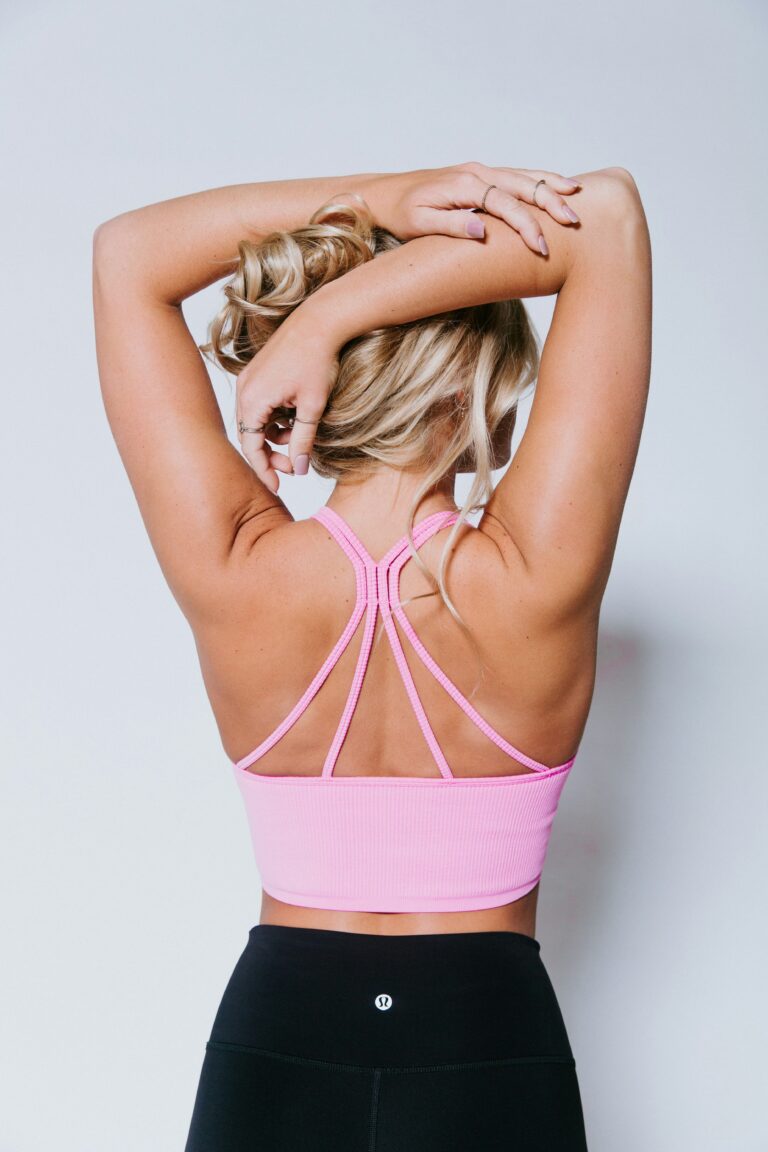
Weak upper back muscles (traps, rhomboids, rear delts) lead to:
- Rounded shoulders
- Forward head position
- Upper back pain
- Neck tension
- Poor posture that makes you look smaller and less confident
Strong upper back muscles pull your shoulders back, open your chest, and create upright posture. This isn’t just aesthetic, it reduces pain and improves breathing.
I’ve had clients whose chronic neck and upper back pain disappeared within weeks of starting proper upper body training. Strengthening the muscles that hold your spine in proper alignment solves problems that massage and physiotherapy only temporarily address.
Injury Prevention
Weak shoulders and back muscles increase injury risk during:
- Overhead movements (reaching for high shelves)
- Lifting anything heavy
- Sports that involve throwing, catching, or swinging
- Falls (you can’t catch yourself properly with weak arms)
Strong shoulders, back, and arms create stability that protects your joints and spine.
Metabolic Benefits
Muscle is metabolically active tissue. Building upper body muscle increases your resting metabolic rate.
Most women focus exclusively on lower body because they think “bigger muscles = more calories burnt.” Correct logic. Wrong application.
Your upper body has substantial muscle mass available to develop:
- Lats (largest back muscle)
- Pecs (chest)
- Deltoids (shoulders – three distinct muscles)
- Trapezius (upper back and neck)
- Biceps and triceps
Building all of this muscle contributes meaningfully to total muscle mass and metabolic rate.
Balanced Physique
Aesthetically, strong shoulders and back create:
- Broader shoulder line
- More defined waist (via shoulder-to-waist ratio)
- Better posture that makes you look taller and more confident
- Visible back and shoulder definition in dresses and tops
Many women obsess over glute development whilst completely ignoring that shoulder development creates equally impressive aesthetic changes.
How Most Women Train Upper Body Wrong
Right, let’s address what’s actually happening in most women’s “upper body” sessions.
Mistake 1: Too Light, Too Many Reps
The typical approach:
- 3kg or 5kg dumbbells
- 15-20 reps per set
- Finishes set feeling like she could do 20 more reps
- Never increases weight
This creates muscular endurance, not strength or meaningful muscle development.
Research consistently shows muscle growth requires training close to failure (within 2-3 reps) with adequate resistance. If you can do 20 reps easily, the weight is too light.
I’ve trained women who used 3kg dumbbells for YEARS because they were terrified of getting “too bulky.” Meanwhile, they hip thrust 70kg without concern. The double standard is remarkable.
Mistake 2: No Progressive Overload
Most women’s upper body training looks identical week after week, month after month.
Same exercises, same weights, same reps. No systematic progression.
Without progressive overload, gradually increasing weight, reps, or sets, your body has no reason to adapt. You maintain current strength but don’t build new strength.
Compare this to lower body training where many women track hip thrust progression obsessively, adding weight weekly. That same intensity should apply to upper body.
Mistake 3: Neglecting Back Entirely
Walk into a gym and watch women train upper body. You’ll see:
- Bicep curls
- Tricep extensions
- Maybe some shoulder raises
- Occasionally chest press
What you won’t see:
- Rows
- Pull-ups (or progressions toward them)
- Lat pulldowns
- Reverse flies
Back training is completely absent from most women’s programmes. This creates the rounded shoulder, weak posture problem mentioned earlier.
Your back muscles are larger and more important than your biceps. Neglecting them whilst doing endless arm isolation work is backwards.
Mistake 4: Avoiding “Men’s” Exercises
Many women won’t do:
- Pull-ups (or assisted pull-up progressions)
- Overhead press with meaningful weight
- Bench press
- Heavy rows
These exercises are perceived as “masculine” or “bulky-making.” So women avoid them and stick to light dumbbell work.
This is utterly backwards. These compound movements build functional strength far more effectively than isolation exercises with tiny dumbbells.
I trained a woman who’d never done a pull-up progression because “women can’t do pull-ups.” We started with dead hangs, then negatives, then band-assisted pull-ups. Six months later she did her first unassisted pull-up. She cried. Not because pull-ups matter existentially, but because she’d been told her entire life that certain things weren’t for women.
Mistake 5: Training Upper Body Once Weekly (or Less)
Frequency matters for strength development. Training a muscle group once weekly is suboptimal for most people.
Yet many women do:
- 3 lower body sessions weekly
- 1 upper body session weekly (maybe)
This frequency imbalance perpetuates the strength imbalance.
Upper body should be trained 2-3 times weekly for optimal strength development, just like lower body.
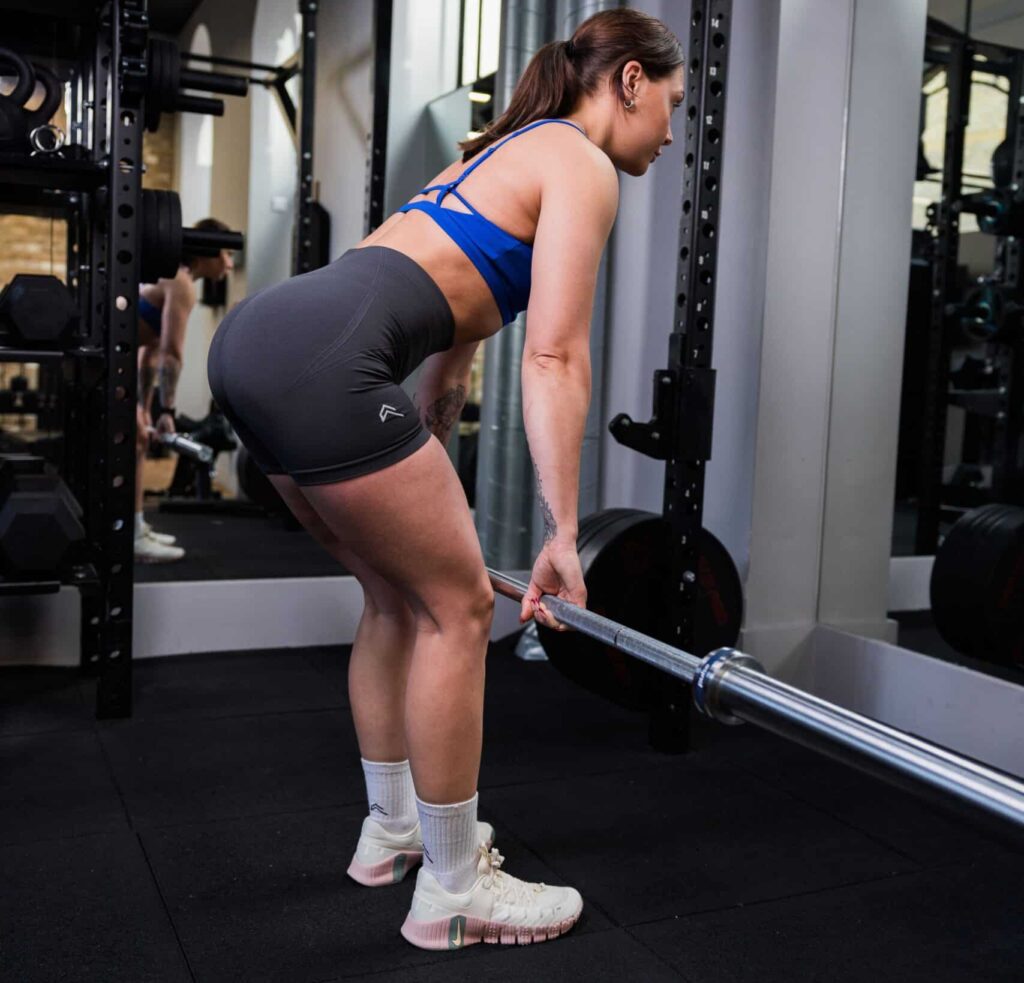
The Exercises That Actually Build Upper Body Strength
Let’s get practical. These are the movements that produce results.
For Back: Horizontal Pulling
Dumbbell Rows
The single most important upper body exercise for women who’ve neglected back training.
Targets: Lats, rhomboids, traps, rear delts
How to do it properly:
- Hinge at hips, torso roughly 45 degrees from vertical
- Let dumbbell hang straight down from shoulder
- Pull dumbbell to ribcage, driving elbow back and up
- Squeeze shoulder blade toward spine at top
- Lower with control
Start: 8kg dumbbells, 3 sets of 8-10 reps Progress to: 16-20kg dumbbells, 3 sets of 8-10 reps
I programme rows before any arm isolation work. Your back is larger and more important. Train it first whilst you’re fresh.
Seated Cable Rows
If available at your gym, these are brilliant for back development.
Sit upright, pull handle to sternum, squeeze shoulder blades together. This builds upper back thickness and pulls shoulders back into proper posture.
For Back: Vertical Pulling
Lat Pulldowns
Targets: Lats (creates that “V” taper from shoulders to waist)
Critical for building pull-up strength. Most women need to build pulling strength via lat pulldowns before attempting pull-ups.
Start: Whatever weight allows 8-10 controlled reps Progress systematically until you’re pulling bodyweight minus 10kg
Then transition to assisted pull-up work.
Pull-Up Progressions
Eventually, you want to work toward unassisted pull-ups. Not because pull-ups are mandatory, but because the strength required to do them creates comprehensive upper body development.
Progression:
- Dead hangs (just hanging from bar, 10-30 seconds)
- Negative pull-ups (jump to top position, lower slowly over 5 seconds)
- Band-assisted pull-ups
- Unassisted pull-ups
This takes months, sometimes over a year. That’s normal. Stick with it.
For Shoulders: Vertical Pressing
Dumbbell Overhead Press
The king of shoulder exercises. Builds strength through full shoulder range of motion.
Start standing, dumbbells at shoulder height, press overhead until arms fully extended, lower with control.
Start: 6-8kg dumbbells, 3 sets of 8-10 reps Progress to: 12-16kg dumbbells, 3 sets of 8-10 reps
This exercise reveals actual shoulder strength. Most women are shocked how weak their overhead press is compared to lower body lifts.
For Shoulders: Lateral Development
Lateral Raises
Isolation work for side deltoids. Creates shoulder width.
Hold dumbbells at sides, raise arms out laterally to shoulder height, lower with control.
These require lighter weights than pressing movements. 4-8kg dumbbells for most women.
Don’t ego-lift this exercise. Control and full range of motion matter more than weight.
For Chest: Horizontal Pressing
Dumbbell Bench Press
Yes, women should bench press. No, it won’t make your chest disappear. Quite the opposite—it builds the pec muscles that support breast tissue and improve chest appearance.
Lie on bench, dumbbells at chest level, press up until arms extended, lower with control.
Start: 8-10kg dumbbells, 3 sets of 8-10 reps Progress to: 14-18kg dumbbells, 3 sets of 8-10 reps
Push-Ups
The best bodyweight chest exercise. Trains chest, shoulders, triceps, and core simultaneously.
If you can’t do proper floor push-ups yet, start elevated (hands on bench). Progress to floor push-ups, then eventually add difficulty (feet elevated, weighted vest).
Proper form:
- Hands slightly wider than shoulders
- Body in straight line from head to heels
- Lower until chest nearly touches floor
- Push back up
Most women do push-ups with poor form (hips sagging, limited range of motion). Film yourself to check.
For Arms: Direct Work
Bicep Curls
Stand, dumbbells at sides, curl weights toward shoulders, lower with control.
Nothing complicated here. Just use adequate weight (8-12kg for most women) and train close to failure.
Tricep Extensions
Overhead tricep extensions or cable pushdowns both work.
Triceps are the largest arm muscle. Training them builds more arm size than biceps work alone.
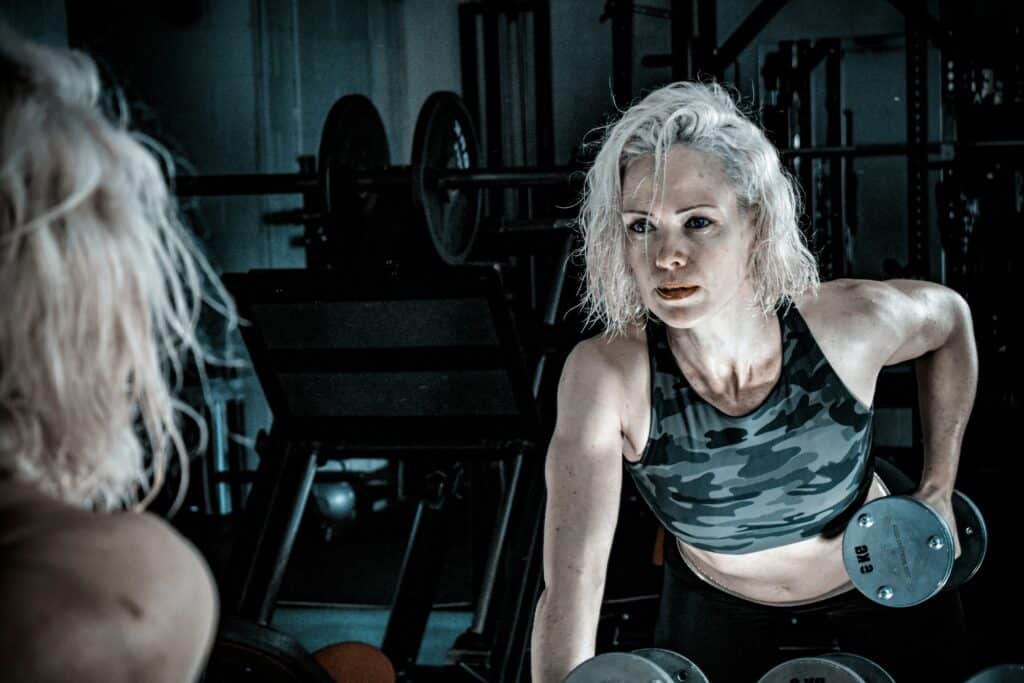
Sample Upper Body Programmes
Beginner (2x Weekly)
Session A: Push Focus
- Dumbbell bench press: 3 sets x 8-10 reps
- Dumbbell overhead press: 3 sets x 8-10 reps
- Tricep cable pushdowns: 3 sets x 10-12 reps
- Lateral raises: 2 sets x 12-15 reps
Session B: Pull Focus
- Dumbbell rows: 3 sets x 8-10 reps per arm
- Lat pulldowns: 3 sets x 8-10 reps
- Bicep curls: 3 sets x 10-12 reps
- Reverse flies: 2 sets x 12-15 reps
Intermediate (3x Weekly)
Session A: Horizontal Push/Pull
- Dumbbell bench press: 4 sets x 6-10 reps
- Dumbbell rows: 4 sets x 8-10 reps per arm
- Dips (or bench dips): 3 sets x 8-12 reps
- Cable rows: 3 sets x 10-12 reps
Session B: Vertical Push/Pull
- Dumbbell overhead press: 4 sets x 6-10 reps
- Lat pulldowns: 4 sets x 8-10 reps
- Lateral raises: 3 sets x 12-15 reps
- Face pulls: 3 sets x 12-15 reps
Session C: Arms + Shoulders
- Arnold press: 3 sets x 8-10 reps
- Pull-up progressions: 3 sets x max reps
- Bicep curls: 3 sets x 10-12 reps
- Overhead tricep extension: 3 sets x 10-12 reps
Progressive Overload for Upper Body
Track every session. Write down weights and reps.
Session 1: Dumbbell rows, 12kg x 10 reps Session 2: Dumbbell rows, 12kg x 11 reps (added one rep) Session 3:Dumbbell rows, 12kg x 12 reps (added another rep) Session 4: Dumbbell rows, 14kg x 8 reps (increased weight, reps dropped) Session 5: Dumbbell rows, 14kg x 9 reps (rebuilding reps at new weight)
This is systematic progression. Small improvements session to session accumulate into significant strength over months.
I trained a woman whose overhead press went from 6kg dumbbells to 14kg dumbbells over six months. That’s not luck—that’s consistent progressive overload.
Training Upper and Lower Body: The Balance
You don’t need to abandon lower body training to fix upper body weakness. You need balanced frequency.
Balanced weekly split:
- 2-3 lower body sessions
- 2-3 upper body sessions
- 1-2 full-body sessions (optional)
Example week:
- Monday: Lower body
- Tuesday: Upper body (push focus)
- Wednesday: Rest or light activity
- Thursday: Lower body
- Friday: Upper body (pull focus)
- Saturday: Optional full-body or rest
- Sunday: Rest
This accumulates similar volume for upper and lower body, producing balanced development.
The “I Don’t Want to Get Bulky” Myth
Let’s address this head-on.
Lifting heavy weights will NOT make you bulky. Building significant muscle mass requires:
- Years of consistent training
- Calorie surplus (eating more than you burn)
- Often specific focus on hypertrophy (muscle growth)
Accidentally getting “too muscular” doesn’t happen. Building noticeable muscle is HARD and requires dedicated effort.
What WILL happen if you train upper body properly:
- Shoulders become more defined
- Back develops visible muscle
- Arms show tone and shape
- Posture improves
- You look more athletic and confident
None of this is “bulky.” It’s strong, healthy, and attractive.
I’ve trained women for years who lift heavy. None have become bulky. They’ve become lean, strong, and confident. The ones who complain about getting too big? It’s never happened.
How 12REPS Programmes Upper Body Intelligently
The challenge with balanced upper/lower programming is managing:
- Frequency for each body part
- Volume distribution across week
- Progressive overload tracking for multiple exercises
- Recovery between sessions
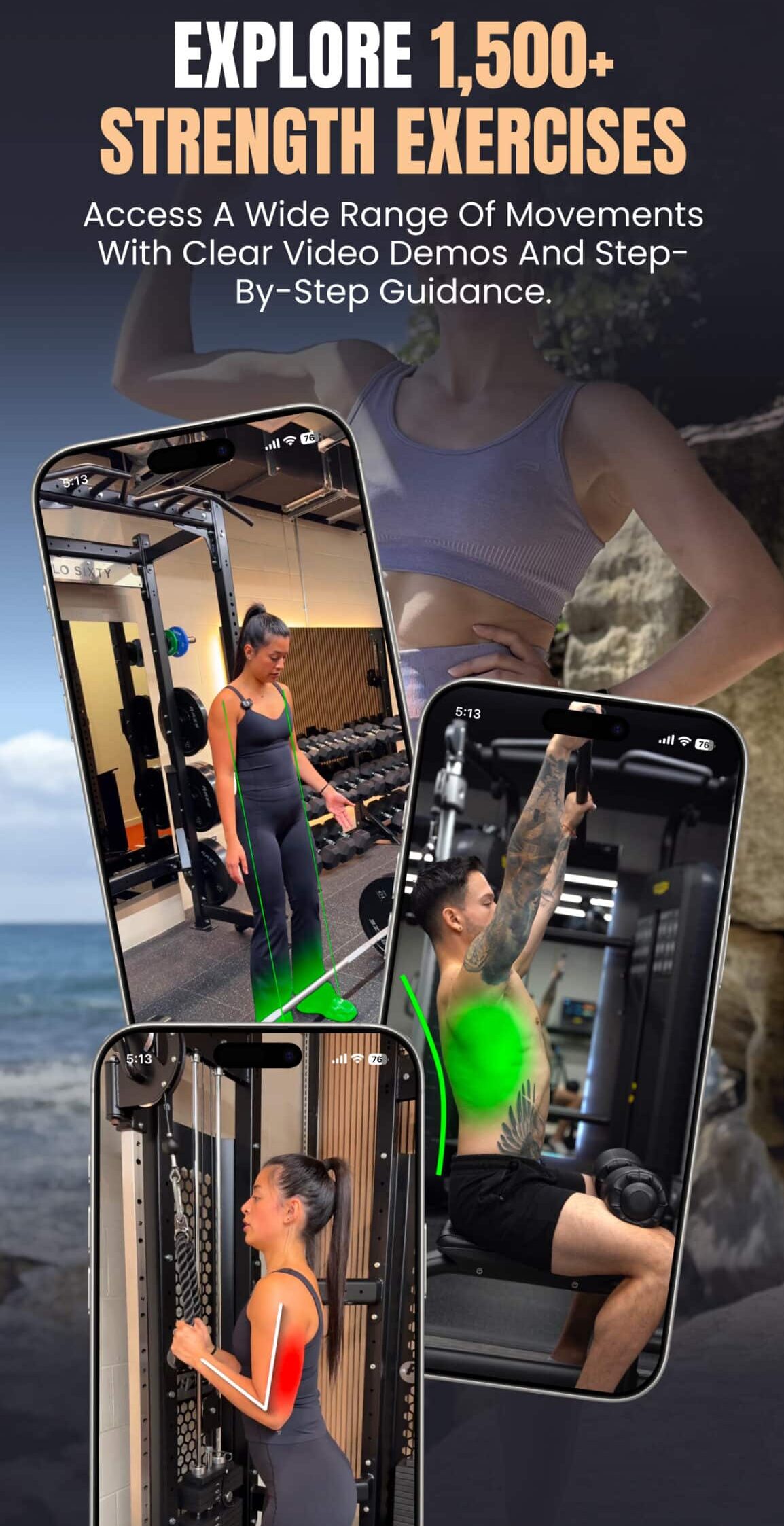
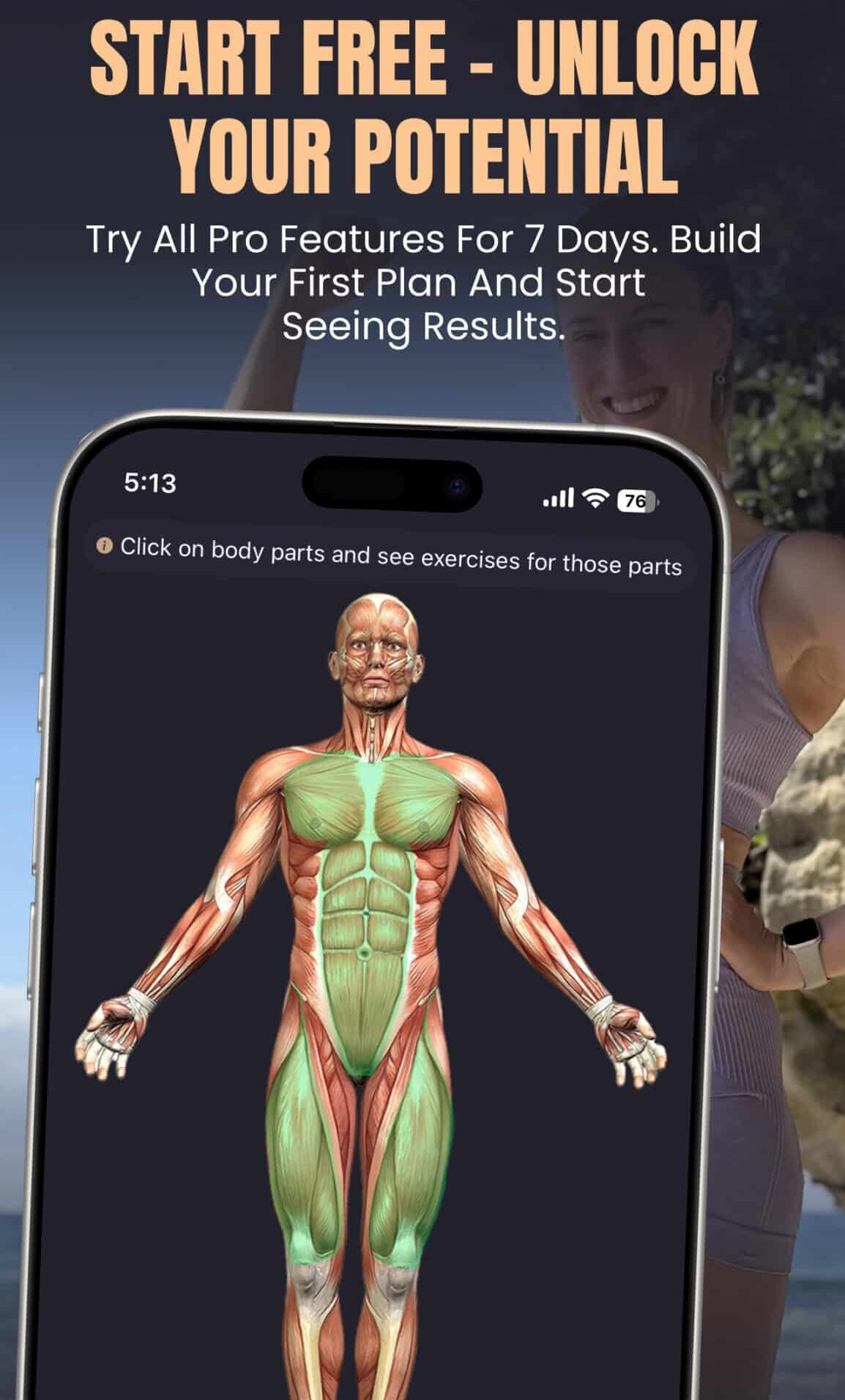
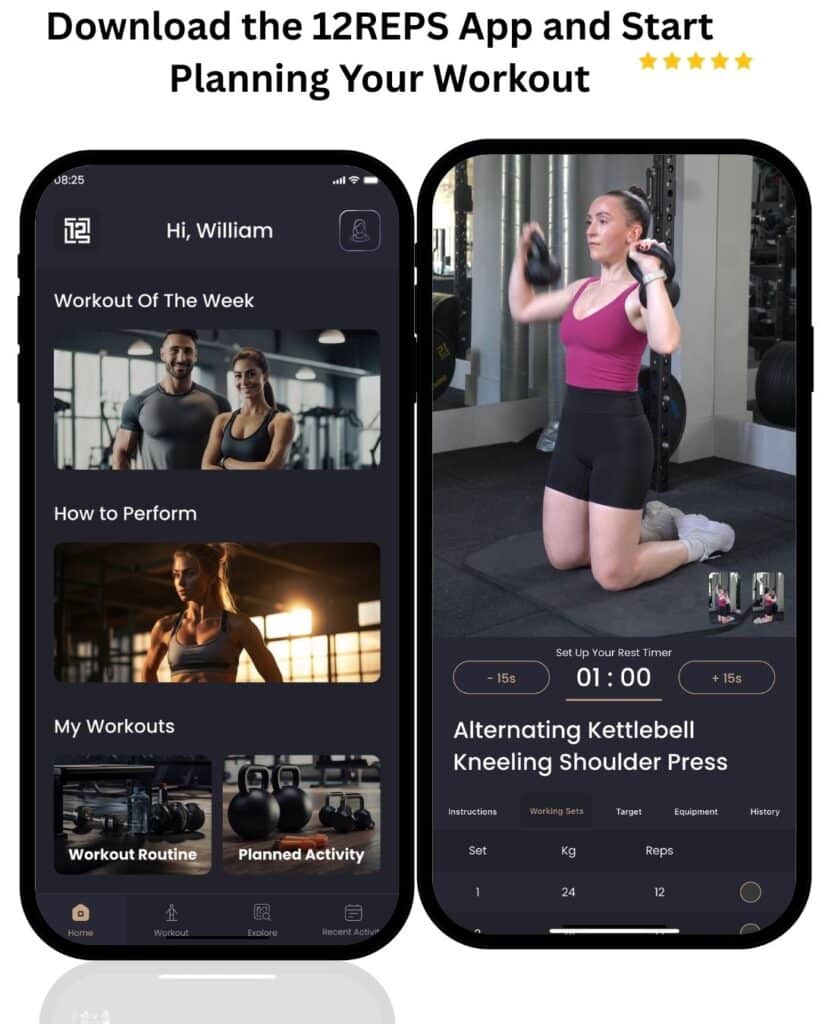
12REPS handles this automatically.
Balanced frequency: The app ensures you train upper body 2-3 times weekly, matching lower body frequency. No more 3 leg days and 1 half-hearted arm day.
Exercise variety: The app programmes horizontal pushing, vertical pushing, horizontal pulling, and vertical pulling across your week. This ensures comprehensive upper body development, not just bicep curls.
Progressive overload: Every lift is tracked. The app systematically increases weights when you hit target reps. You can see your dumbbell row progression from 10kg to 18kg over three months.
Recovery management: After a heavy upper body push session, the app won’t programme another heavy push session the next day. It might schedule lower body or upper body pull work, allowing proper recovery.
For women training both at gyms and at home, this is particularly valuable. Heavy barbell work happens at the gym. Lighter dumbbell and bodyweight work happens at home. The app distributes these appropriately across your week.
Starting From Scratch: Your First 8 Weeks
If you’ve neglected upper body training entirely, here’s a realistic 8-week introduction.
Weeks 1-2: Learning Movement Patterns
- Focus: Perfect form with moderate weight
- Frequency: 2x weekly
- Key exercises: Rows, overhead press, push-ups (elevated if needed)
- Volume: 3 sets x 8-10 reps per exercise
- Goal: Learn what proper back engagement feels like
Weeks 3-4: Building Base Strength
- Focus: Establishing baseline strength
- Frequency: 2x weekly
- Add: Lat pulldowns, bench press
- Volume: 3 sets x 8-10 reps
- Goal: Find weights that challenge you in 8-10 rep range
Weeks 5-6: Increasing Volume
- Focus: More total work
- Frequency: 2-3x weekly (add third session if recovering well)
- Volume: 3-4 sets x 8-10 reps
- Goal: Start tracking weights and intentionally progressing
Weeks 7-8: Systematic Progression
- Focus: Progressive overload
- Frequency: 3x weekly
- Goal: Add reps or weight every session
- Assessment: Film exercises to check form remains solid
After 8 weeks, most complete beginners will:
- Overhead press 8-12kg dumbbells (from 4-6kg)
- Row 10-14kg dumbbells (from 6-8kg)
- Perform 5-10 proper push-ups (from zero or elevated)
- Feel significantly stronger in daily activities
The Bottom Line on Upper Body Training
Most women train upper body wrong because they’ve been taught, implicitly and explicitly, that upper body strength doesn’t matter for women.
This is categorically false.
Upper body strength matters for:
- Functional daily activities
- Posture and spine health
- Injury prevention
- Metabolic health
- Balanced physique
- Confidence and capability
To actually build upper body strength:
- Train 2-3 times weekly (not once weekly as an afterthought)
- Use weights heavy enough to challenge you in 6-12 rep range
- Prioritise compound movements (rows, pulldowns, presses) over isolation work
- Progressive overload systematically, just like you would with lower body
- Track every session
You don’t need to abandon glute training. You need to stop treating upper body as optional.
Two years from now, you could be doing unassisted pull-ups, overhead pressing 15kg dumbbells, and rowing 20kg. Or you could still be doing endless bicep curls with 3kg dumbbells wondering why your arms haven’t changed.
The choice is yours. Upper body strength is available to every woman willing to train for it properly.
References
- Schoenfeld, B.J., Grgic, J., Ogborn, D. and Krieger, J.W. (2017). Strength and Hypertrophy Adaptations Between Low- vs. High-Load Resistance Training: A Systematic Review and Meta-Analysis. Journal of Strength and Conditioning Research, 31(12), pp.3508-3523. https://doi.org/10.1519/JSC.0000000000002200
- Ivey, F.M., Roth, S.M., Ferrell, R.E., Tracy, B.L., Lemmer, J.T., Hurlbut, D.E., Martel, G.F., Siegel, E.L., Fozard, J.L., Jeffrey Metter, E., Fleg, J.L. and Hurley, B.F. (2000). Effects of Age, Gender, and Myostatin Genotype on the Hypertrophic Response to Heavy Resistance Strength Training. The Journals of Gerontology Series A: Biological Sciences and Medical Sciences, 55(11), pp.M641-M648. https://doi.org/10.1093/gerona/55.11.M641
- Gentil, P., Soares, S.R. and Pereira, M.C. (2015). Effect of Adding Single-Joint Exercises to a Multi-Joint Exercise Resistance-Training Program on Strength and Hypertrophy in Untrained Subjects. Applied Physiology, Nutrition, and Metabolism, 40(8), pp.822-826. https://doi.org/10.1139/apnm-2015-0109
- Schoenfeld, B.J. (2010). The Mechanisms of Muscle Hypertrophy and Their Application to Resistance Training. Journal of Strength and Conditioning Research, 24(10), pp.2857-2872. https://doi.org/10.1519/JSC.0b013e3181e840f3
- American College of Sports Medicine (2009). Progression Models in Resistance Training for Healthy Adults. Medicine & Science in Sports & Exercise, 41(3), pp.687-708. https://doi.org/10.1249/MSS.0b013e3181915670
- Ratamess, N.A., Alvar, B.A., Evetoch, T.K., Housh, T.J., Kibler, W.B., Kraemer, W.J. and Triplett, N.T. (2009). Progression Models in Resistance Training for Healthy Adults. Medicine & Science in Sports & Exercise, 41(3), pp.687-708. https://doi.org/10.1249/MSS.0b013e3181915670
- Kraemer, W.J., Ratamess, N.A., Fry, A.C., French, D.N. (2006). Strength Training: Development and Evaluation of Methodology. In: Maud P.J., Foster C. (eds) Physiological Assessment of Human Fitness. Human Kinetics, pp.119-150.