



You’re about to train. You’re standing in your kitchen. And you’re wondering: should I eat something first? What exactly? How much? When?
Then after training, the same questions arise. Should you eat immediately? Can you wait? What helps recovery?
Here’s the confusion: some sources say eat before training. Others say train fasted. Some claim you need food within 30 minutes post-workout. Others say timing doesn’t matter.
You’re left guessing.
I’m Will Duru, a personal trainer with over 10 years’ experience in London. I’ve answered these questions hundreds of times for women who want clear, practical guidance on workout nutrition.
This guide explains exactly what to eat before and after strength training sessions, backed by research rather than fitness mythology.
Why Workout Nutrition Matters
Before diving into specifics, understand why pre and post-workout nutrition affects training.
Pre-workout nutrition prevents: Training in a depleted state, poor performance, excessive fatigue, and inability to complete planned volume.
Post-workout nutrition supports: Muscle recovery, glycogen replenishment, muscle protein synthesis, and adaptation to training stimulus.
Getting these right doesn’t magically transform your results. But getting them wrong can impair training quality and recovery.
Pre-Workout Nutrition: The Fundamentals
The Goal
Provide your body with sufficient energy to train effectively without causing digestive discomfort.
Timing Matters
How far before training you eat determines what and how much you can consume.
2-3 hours before training: Full meal containing carbs, protein, and moderate fat.
1-2 hours before training: Smaller meal or substantial snack, mostly carbs with some protein, minimal fat.
30-60 minutes before training: Light snack, easily digestible carbs, minimal protein, no fat.
<30 minutes before training: Very light option if needed, simple carbs only.
The closer to training, the lighter and more carb-focused your food should be. Fat and fibre slow digestion—fine when you have hours, problematic when you have minutes.
What to Eat 2-3 Hours Before Training
This is a proper meal providing sustained energy.
Good options:
- Chicken breast with rice and vegetables
- Salmon with sweet potato and salad
- Turkey sandwich on wholemeal bread with fruit
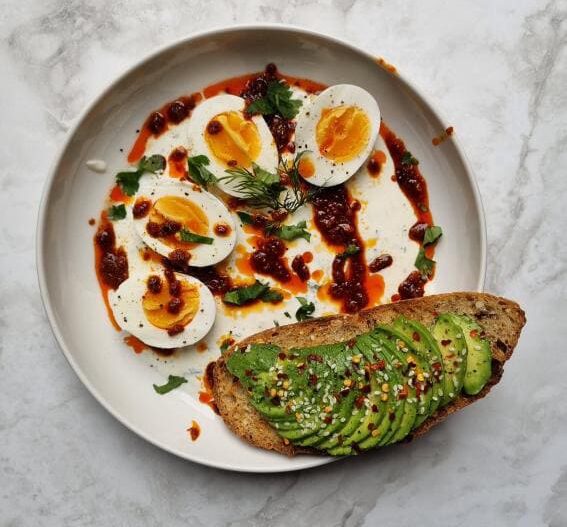
- Eggs on toast with avocado
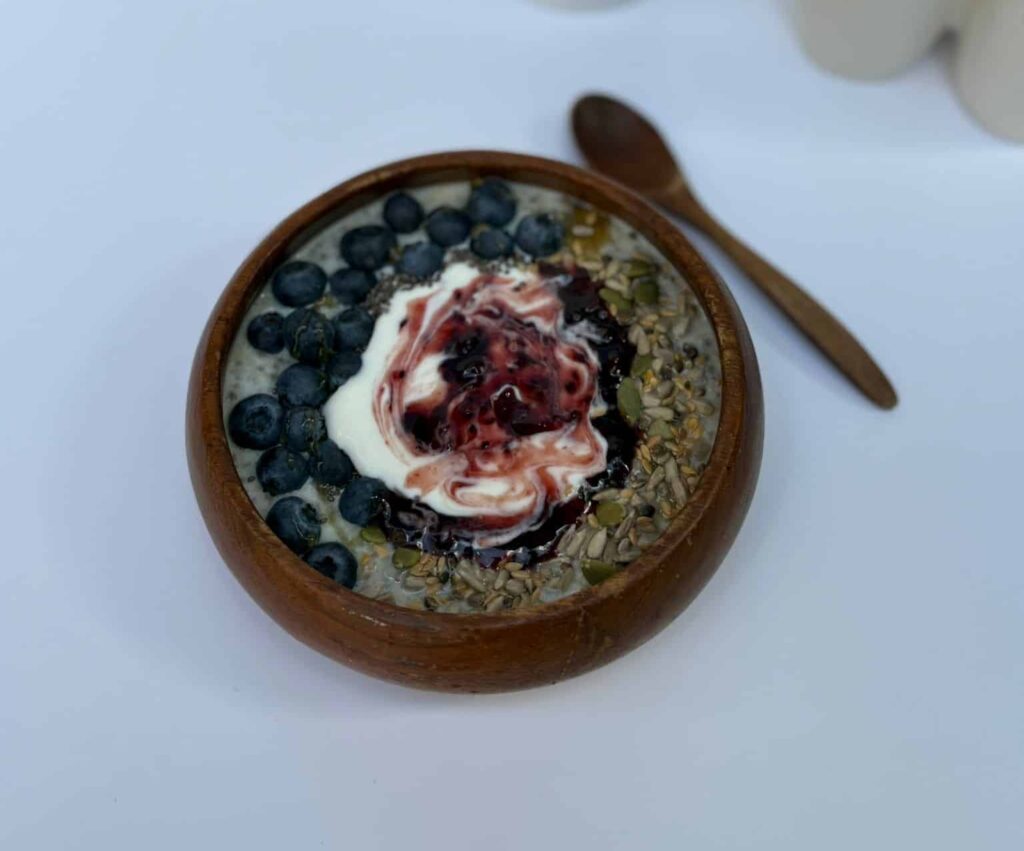
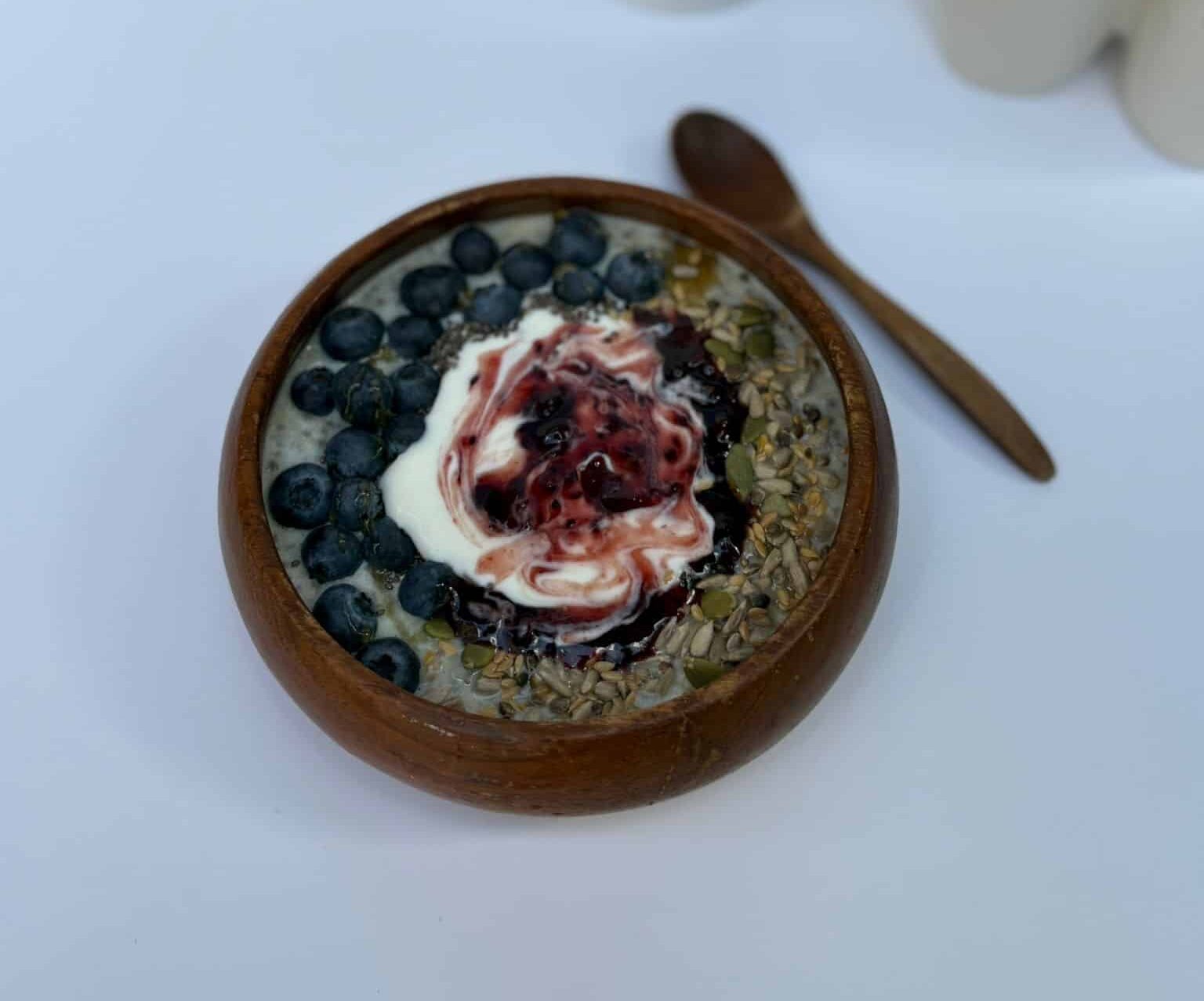
- Greek yoghourt with granola and berries
- Porridge with banana and peanut butter
Macronutrient targets for 65kg woman:
- Carbs: 40-60g
- Protein: 20-30g
- Fat: 10-15g
- Total calories: 350-500
Why this works: Sufficient time for digestion. Won’t cause stomach discomfort. Provides sustained energy throughout your session.
What to Eat 1-2 Hours Before Training
A lighter meal or substantial snack.
Good options:
- Bagel with jam and banana
- Rice cakes with peanut butter and honey
- Protein smoothie with fruit
- Toast with honey and berries
- Apple with almond butter
- Overnight oats with fruit
Macronutrient targets for 65kg woman:
- Carbs: 30-40g
- Protein: 10-20g
- Fat: 5-10g
- Total calories: 200-350
Why this works: Enough time for partial digestion. Provides readily available energy. Less risk of digestive issues than larger meals.
What to Eat 30-60 Minutes Before Training
Quick-digesting carbs with minimal protein, no fat.
Good options:
- Banana
- Rice cakes with jam
- Handful of dried fruit
- Energy bar (low fat, low fibre)
- Toast with honey
- Applesauce
Macronutrient targets for 65kg woman:
- Carbs: 15-30g
- Protein: 0-5g
- Fat: 0-5g
- Total calories: 100-150
Why this works: Quickly digested. Provides immediate energy boost. Minimal risk of stomach discomfort.

Should You Train Fasted?
This depends on your goals and training type.
Training fasted (no food 8+ hours) may work if:
- Your session is low intensity
- You’re training for less than 45 minutes
- You personally feel fine training fasted
- You’re doing steady-state cardio rather than strength training
Training fasted is problematic for:
- Intense strength training sessions
- Workouts over 60 minutes
- Sessions with high volume (10+ sets per muscle group)
- Training for muscle growth rather than just maintenance
Research shows: Training completely fasted can reduce workout performance, particularly for high-intensity efforts. You may complete fewer reps, lift less weight, or fatigue earlier.
For strength training specifically, consuming at least 15-30g of carbs within 1-3 hours before training improves performance compared to training completely fasted.
Practical recommendation: If you train first thing in the morning and genuinely have zero appetite, at minimum consume a banana or toast with jam 15-30 minutes pre-workout.
Pre-Workout Hydration
Often overlooked but critical.
Starting 2-3 hours before training: Drink 400-600ml of water.
Starting 10-20 minutes before training: Drink another 200-300ml.
During training: Sip water throughout, aiming for 200-300ml per 20 minutes of training.
Dehydration of even 2% bodyweight impairs strength and endurance. A 65kg woman losing just 1.3kg of water through sweat experiences measurable performance decline.
Signs you’re insufficiently hydrated:
- Dark yellow urine
- Headache during training
- Excessive fatigue
- Dizziness
- Cramping
Post-Workout Nutrition: The Fundamentals
The Goals
- Replenish muscle glycogen stores
- Provide protein for muscle repair and growth
- Rehydrate
The “Anabolic Window” Controversy
You’ve heard you must eat within 30 minutes post-workout or “waste” your session. This is oversimplified.
Research reality: Muscle protein synthesis remains elevated for 24-48 hours post-training. The immediate post-workout window isn’t as narrow as once believed.
However: Consuming carbs and protein within 2 hours post-workout does optimise glycogen replenishment and muscle protein synthesis compared to delaying 4-6 hours.
Practical takeaway: Eat within 2 hours post-workout. Ideally within 60-90 minutes. But if you can’t eat immediately, don’t panic—you haven’t ruined everything.
What to Eat Post-Workout
Focus on carbs and protein in roughly 3:1 or 2:1 ratio.
For a 65kg woman after strength training:
- Protein: 20-30g
- Carbs: 40-90g
- Total calories: 300-500
Good post-workout meals:
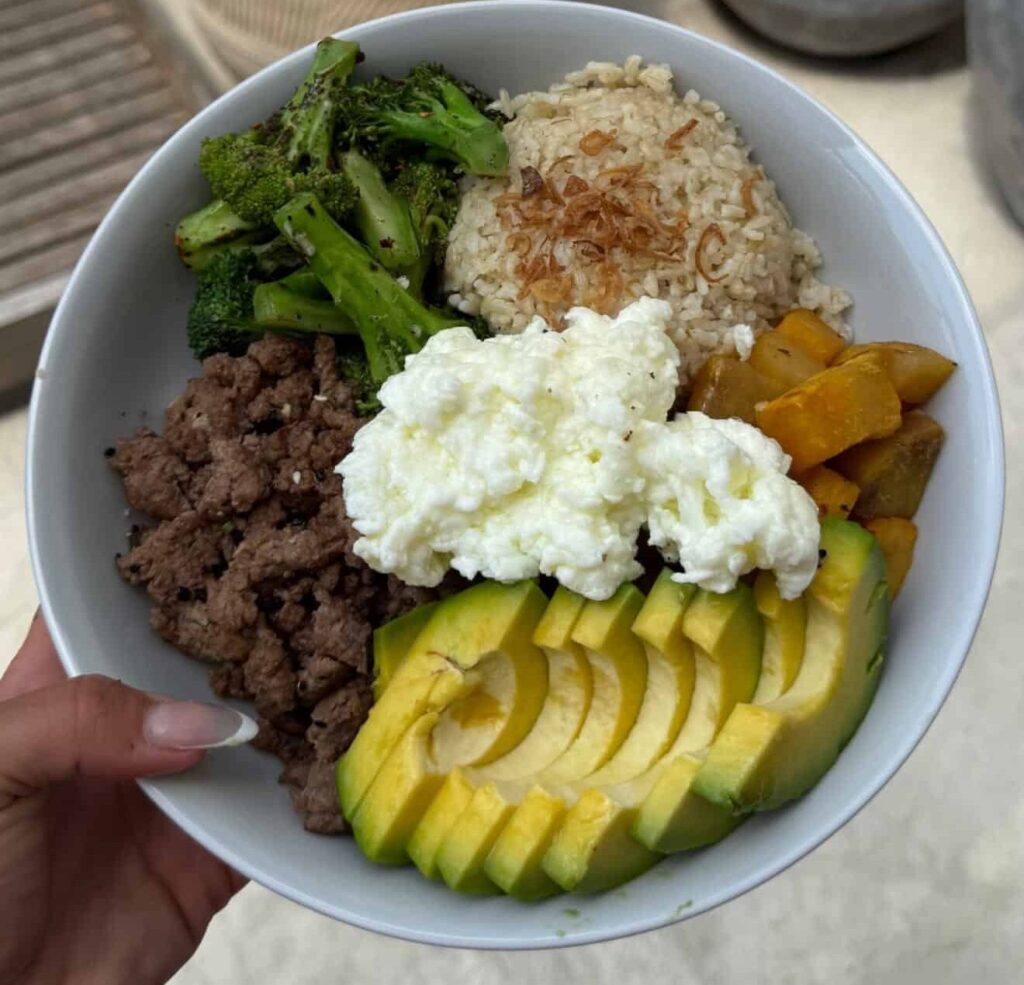
- Chicken breast with rice and vegetables (30g protein, 60g carbs)
- Salmon with sweet potato and salad (28g protein, 50g carbs)
- Turkey sandwich with fruit (25g protein, 55g carbs)
- Protein shake with banana and oats (25g protein, 45g carbs)
- Greek yoghourt with granola and berries (20g protein, 50g carbs)
- Eggs on toast with avocado and fruit (22g protein, 45g carbs)
Why these ratios: Carbs replenish glycogen. Protein provides amino acids for muscle repair. The combination stimulates insulin release, which helps drive nutrients into muscle cells.
Can You Just Have a Protein Shake?
Yes, but it’s not optimal alone.
Protein shakes provide amino acids but lack sufficient carbs for glycogen replenishment. If convenience demands it, add carbs:
Better protein shake options:
- Whey protein + banana + oats blended
- Whey protein + fruit + honey
- Whey protein + juice instead of water
- Protein shake + separate carb source like rice cakes
Aim for 20-25g protein plus 40-60g carbs total.
Post-Workout Hydration
You’ve lost fluid through sweat. Replace it.
Rough guideline: Drink 500-750ml of water within 2-3 hours post-workout.
More precise method: Weigh yourself before and after training. For every 1kg lost, drink 1.5 litres of water. (The extra accounts for continued fluid loss through urination.)
Most women lose 0.5-1.5kg during a 60-minute strength session. This represents 750ml-2.25L of fluid that needs replacing.
Plain water is sufficient for strength training sessions under 90 minutes. You don’t need sports drinks or electrolyte supplements unless training is extremely intense or you’re in hot conditions.

Common Mistakes
Mistake 1: Eating Too Close to Training
You eat a large meal 30 minutes before training. Your stomach feels heavy. You’re nauseous during squats.
Solution: Large meals need 2-3 hours digestion time. If training soon, eat light snacks only.
Mistake 2: Training Completely Fasted for Intense Sessions
You train at 6am without eating anything since 8pm the previous night. Your workout feels terrible. You’re weak, exhausted, can’t complete planned volume.
Solution: At minimum, consume a banana or toast 15-30 minutes pre-workout.
Mistake 3: Skipping Post-Workout Nutrition
You finish training, rush to work, don’t eat for 5 hours. Recovery suffers. You feel exhausted all day.
Solution: Prepare post-workout food in advance. Even a protein shake with banana is better than nothing.
Mistake 4: Consuming Excessive Fat Pre-Workout
You eat avocado toast with salmon 45 minutes before training. Your stomach feels heavy throughout your session.
Solution: Save high-fat meals for 3+ hours pre-workout or post-workout. Keep pre-workout foods relatively low-fat.
Mistake 5: Overthinking Everything
You spend 20 minutes calculating exact macros for your pre-workout meal. You’re stressed about whether 35g or 40g of carbs is “correct.”
Solution: Close enough is good enough. Aim for the general guidelines without obsessing over precision.
Mistake 6: Copying Someone Else’s Approach
Your training partner eats a massive meal pre-workout and feels great. You do the same and feel awful.
Solution: Individual tolerance varies. Experiment to find what works for YOUR digestion and energy levels.

Do You Need Supplements?
Protein powder: Convenient but not essential. You can meet protein needs through whole foods. Use if convenient, don’t stress if you prefer real food.
Pre-workout supplements: Not necessary for most women. Caffeine from coffee provides similar benefits if you want a performance boost. Avoid pre-workouts with excessive caffeine (300mg+) or proprietary blends.
BCAAs: Unnecessary if you’re consuming adequate protein throughout the day. Save your money.
Creatine: Actually useful. 5g daily (timing doesn’t matter) improves strength and muscle growth slightly. One of the few supplements with robust evidence.
Electrolyte drinks: Unnecessary for strength training sessions under 90 minutes. Plain water suffices.
Special Considerations
Training Early Morning
Challenge: No appetite upon waking. Eating feels impossible.
Solution: Start very light. Banana and water minimum. Over weeks, you may adapt to eating more. But if you genuinely can’t, ensure your previous evening’s dinner is substantial and carb-focused.
Training Immediately After Work
Challenge: Last meal was lunch, 6-7 hours ago. Starving and exhausted.
Solution: Have a substantial snack 60-90 minutes before leaving work. Apple with peanut butter, protein bar, yoghourt with fruit—something to prevent training depleted.
Training Late Evening
Challenge: Training at 8pm. Should you eat a large meal before bed after training?
Solution: Yes, eat post-workout even if it’s late. Muscle recovery doesn’t pause because it’s 10pm. Eating carbs before bed won’t cause fat gain—total daily calories matter, not meal timing.
Training for Fat Loss
Challenge: Worried eating pre/post-workout will “cancel out” calories burned.
Solution: Time meals around training rather than adding extra meals. If training at 6pm, make your dinner your post-workout meal rather than eating dinner + a separate post-workout meal.
Sample Daily Schedules
Training at 6:30am (Before Work)
5:45am: Wake, drink 300ml water 6:00am: Banana with honey (25g carbs) 6:30-7:30am: Train 7:45am: Protein shake with oats (25g protein, 50g carbs) 10:30am: Mid-morning snack 1:00pm: Lunch 4:00pm: Afternoon snack 7:00pm:Dinner
Training at 12:30pm (Lunch Break)
7:30am: Breakfast – porridge with berries (40g carbs, 15g protein) 11:00am: Pre-workout snack – rice cakes with peanut butter (30g carbs, 10g protein) 12:30-1:15pm: Train 1:30pm: Lunch/post-workout – chicken with rice and vegetables (30g protein, 60g carbs) 4:00pm: Afternoon snack 7:30pm: Dinner
Training at 6:30pm (After Work)
7:30am: Breakfast 10:30am: Mid-morning snack 1:00pm: Lunch 5:00pm: Pre-workout snack – banana and yoghourt (35g carbs, 15g protein) 6:30-7:30pm: Train 8:00pm: Dinner/post-workout – salmon with sweet potato (28g protein, 50g carbs)
The Bottom Line
Workout nutrition doesn’t need to be complicated.
Pre-workout essentials:
✅ Eat 1-3 hours before training (timing depends on meal size)
✅ Focus on easily digestible carbs
✅ Include some protein if eating 2+ hours before
✅ Avoid excessive fat and fibre close to training
✅ Drink 400-600ml water 2-3 hours before
✅ At minimum, consume 15-30g carbs if training fasted
Post-workout essentials:
✅ Eat within 2 hours (ideally 60-90 minutes)
✅ Consume 20-30g protein
✅ Consume 40-90g carbs
✅ Rehydrate with 500-750ml water
✅ Don’t stress if timing isn’t perfect
Most important: Total daily nutrition matters far more than precise workout nutrition timing. If you’re eating adequate protein (1.6-2.2g per kg), sufficient carbs (3-5g per kg), and appropriate total calories, your training nutrition is probably fine even if not perfectly optimised.
Stop overthinking. Eat something carb-focused before training. Eat protein and carbs after training. Stay hydrated. That’s 90% of what matters.
References
- Kerksick, C.M., Arent, S., Schoenfeld, B.J., Stout, J.R., Campbell, B., Wilborn, C.D., Taylor, L., Kalman, D., Smith-Ryan, A.E., Kreider, R.B. and Willoughby, D. (2017). International Society of Sports Nutrition Position Stand: Nutrient Timing. Journal of the International Society of Sports Nutrition, 14(1), 33.
- Schoenfeld, B.J., Aragon, A.A. and Krieger, J.W. (2013). The Effect of Protein Timing on Muscle Strength and Hypertrophy: A Meta-Analysis. Journal of the International Society of Sports Nutrition, 10(1), 53.
- Thomas, D.T., Erdman, K.A. and Burke, L.M. (2016). American College of Sports Medicine Joint Position Statement: Nutrition and Athletic Performance. Medicine & Science in Sports & Exercise, 48(3), pp.543-568.
- Aragon, A.A. and Schoenfeld, B.J. (2013). Nutrient Timing Revisited: Is There a Post-Exercise Anabolic Window? Journal of the International Society of Sports Nutrition, 10(1), 5.
- Sawka, M.N., Burke, L.M., Eichner, E.R., Maughan, R.J., Montain, S.J. and Stachenfeld, N.S. (2007). American College of Sports Medicine Position Stand: Exercise and Fluid Replacement. Medicine & Science in Sports & Exercise, 39(2), pp.377-390.