

Over the years, some of the strongest and most impressive transformations I’ve seen in the gym have come from petite women. Not the tallest. Not the heaviest. The ones who showed up consistently, trained with intention, and stopped being afraid of the weights section.
But before we get into the program, I want to address something I hear almost every week from clients when I was on the gym floor.
“Will, I don’t want to get bulky.”
I understand why women say this. The fitness industry has spent decades telling women to stay small, stick to cardio, and avoid anything heavier than a five-kilogram dumbbell. That advice has done a lot of damage.
Here’s the truth. Building significant muscle mass is genuinely hard. It takes years of dedicated training, eating in a calorie surplus, and in many cases, favourable genetics. For women, it’s even harder because testosterone, the hormone that drives muscle growth, is naturally much lower than in men.
What strength training does for most women is build lean, defined muscle that improves their shape, increases their metabolism, and makes them physically stronger in every area of their life. If anything, lifting weights will make you look leaner, not bigger.
Now let’s talk about what it takes to build that muscle, and why the approach is slightly different for petite women.
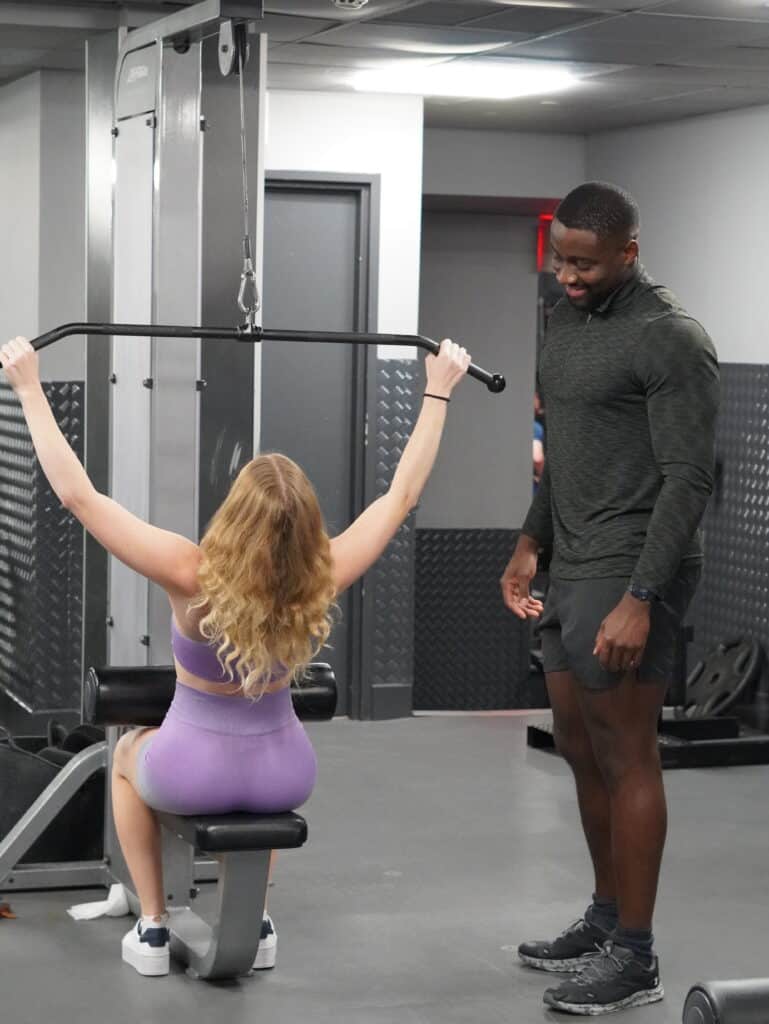
Why petite women need to train smart
When I say differently, I don’t mean easier. I mean smarter.
Petite women tend to have a smaller frame, shorter limbs, and a lower body weight. This means the load placed on your muscles during exercise is naturally lower, which is good for your joints but also means you need to be more deliberate about how you train. You cannot rely on bodyweight alone for long. You need to add resistance consistently and track your progress over time.
The other thing I see with many petite women is under-eating. Building muscle requires fuel. You don’t need to eat huge amounts, but you do need enough protein and overall calories to support the work you’re putting in. Aim for between 1.6 and 2 grams of protein per kilogram of body weight every day. Without enough protein, your body simply cannot build the muscle you’re training for, no matter how hard you work in the gym.
Recovery matters just as much as training. Muscle is not built during the workout. It’s built over the hours and days that follow. Sleep, nutrition, and rest days are not optional. They are part of the programme.
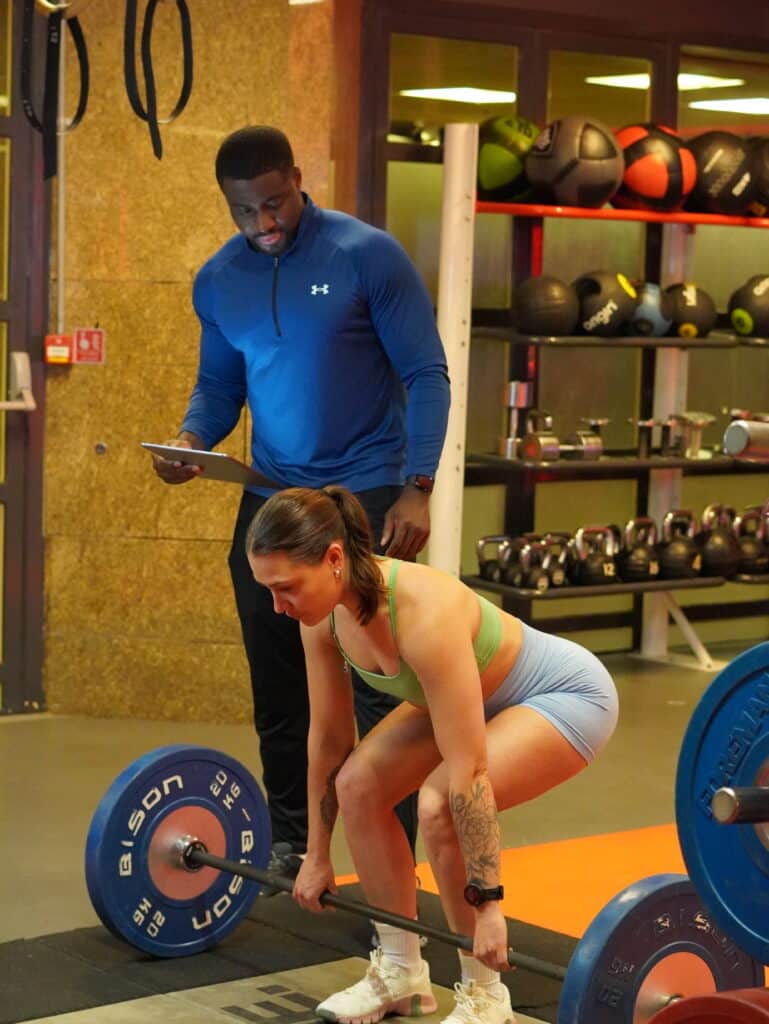
Progressive overload is the most important principle in this program
If there is one thing I want you to take away from this article, it’s this: progressive overload is the key to seeing results.
Progressive overload simply means making your workouts slightly harder over time. Your muscles grow when they are forced to do more than they’re used to. If you lift the same weight, for the same reps, in the same way, week after week, your body has no reason to change. It has already adapted.
There are several ways to apply progressive overload throughout this 12-week programme:
Add weight. When a set starts to feel comfortable, and you can complete all the reps with good form, increase the weight slightly—even by 1 or 2 kg. Small increases add up significantly over twelve weeks.
Add reps. If you’re not ready to increase the weight, try doing one or two more reps than last week. Once you consistently hit the top of the rep range, it’s time to add weight.
Reduce rest time. Shortening your rest periods makes the same workout harder without changing the weight.
Improve form. Going deeper in a squat, slowing down the lowering phase of a curl, or pausing at the bottom of a hip thrust all increase the demand on the muscle. Better form means the right muscles are working harder.
Here’s how I want you to approach the three phases of this programme:
Weeks 1 to 4 — Focus entirely on learning the movements. Use a weight that feels manageable. Get the form right. This phase is your foundation.
Weeks 5 to 8 — Start adding weight progressively each week. Even small increases. Log everything so you know exactly what you lifted last session.
Weeks 9 to 12 — Push the intensity. Heavier loads, shorter rest, maximum effort on your final sets. This is where the real change happens.
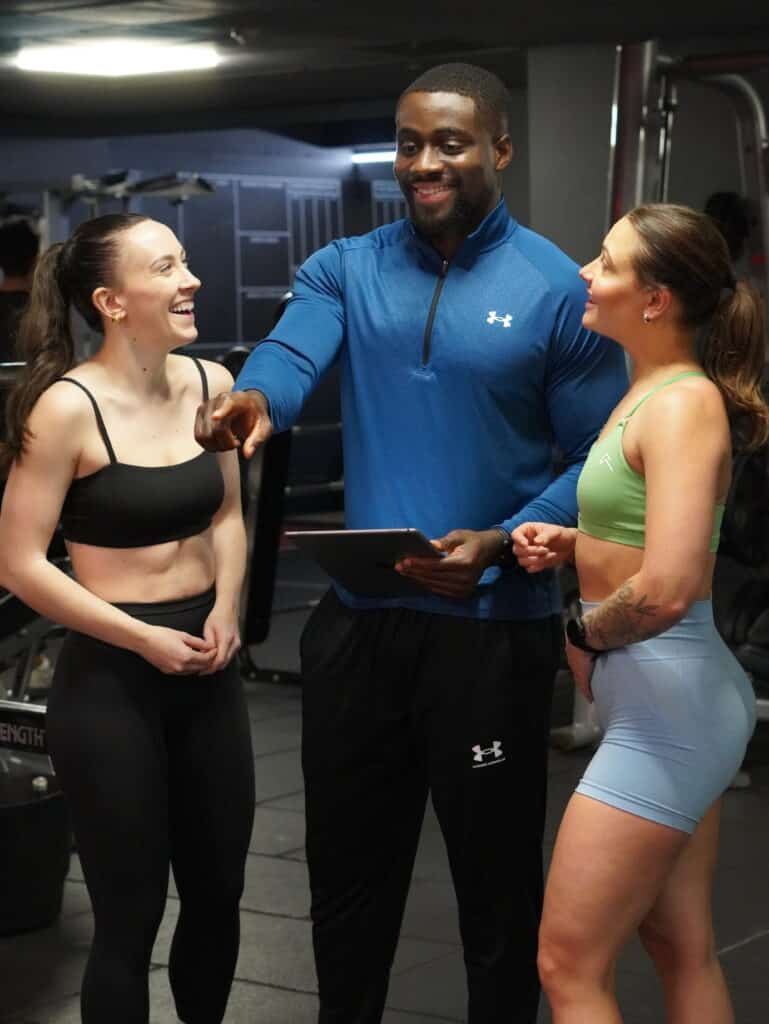
The 12-week push, pull, legs and core program
This is a three-day split, meaning you train three days per week with rest days in between. The three sessions are:
Push, chest, shoulders, and triceps. Pull, back and biceps. Legs and Core, lower body and core stability.
Each session starts with a five-minute warm-up. Do not skip it.
Day 1 — Push (Chest, Shoulders, Triceps)
Warm-Up — 5 minutes Cat-cow, arm circles, band pull-aparts, and two light sets of dumbbell shoulder press with no weight to warm up the joints.
Exercise | Sets | Reps | Rest |
Dumbbell Chest Press | 4 | 10 | 60 secs |
Dumbbell Shoulder Press | 3 | 10 | 60 secs |
Incline Dumbbell Press | 3 | 12 | 60 secs |
Lateral Raise | 3 | 15 | 45 secs |
Triceps Rope Push-Down | 3 | 12 | 45 secs |
Dumbbell Front Raise | 3 | 12 | 45 secs |
Progressive overload tip for this session: The lateral raise and front raise are shoulder isolation exercises. Start light, most people go too heavy here and end up using momentum rather than the shoulder. Once you can complete all 15 reps with clean form, add half a kilogram and repeat.
Day 2 — Pull (Back and Biceps)
Warm-Up — 5 minutes Thoracic rotation, band pull-aparts, scapular retractions, and two light sets of lat pull-down to wake up the back muscles.
Exercise | Sets | Reps | Rest |
Lat Pull-Down | 4 | 10 | 60 secs |
Seated Cable Row | 3 | 10 | 60 secs |
Single-Arm Dumbbell Row | 3 | 10 each side | 60 secs |
Face Pull | 3 | 15 | 45 secs |
Dumbbell Bicep Curl | 3 | 12 | 45 secs |
Hammer Curl | 3 | 12 | 45 secs |
Progressive overload tip for this session: The lat pull-down is your main strength builder here. Track the weight every single week. Even adding 2.5 kg over 8 weeks means you’re pulling significantly more than when you started. That’s real progress
Day 3 — Legs and Core
Warm-Up — 5 minutes: Hip circles, glute bridges, bodyweight squats, and lateral band walks to activate the glutes before adding any load.
Exercise | Sets | Reps | Rest |
Goblet Squat or Barbell Squat | 4 | 10 | 90 secs |
Romanian Deadlift | 3 | 10 | 90 secs |
Reverse Lunge | 3 | 10 each leg | 60 secs |
Hip Thrust | 3 | 12 | 60 secs |
Plank to Shoulder Tap | 3 | 20 | 45 secs |
Dead Bug | 3 | 10 each side | 45 secs |
Progressive overload tip for this session: The hip thrust is one of the best exercises for building your glutes. Start with a dumbbell across your hips and progress to a barbell as you get stronger. The squat and Romanian deadlift are your two biggest compound movements, these are where you should be focusing your efforts to add weight week on week.
How to get the most from this program
Following a program is one thing. Executing it correctly is another. This is where most people fall short, not because they aren’t working hard, but because they have no way of knowing whether their form is right, whether their progression is on track, or whether their program needs adjusting for their body and goals.
That’s exactly why I built 12REPS the way I did.
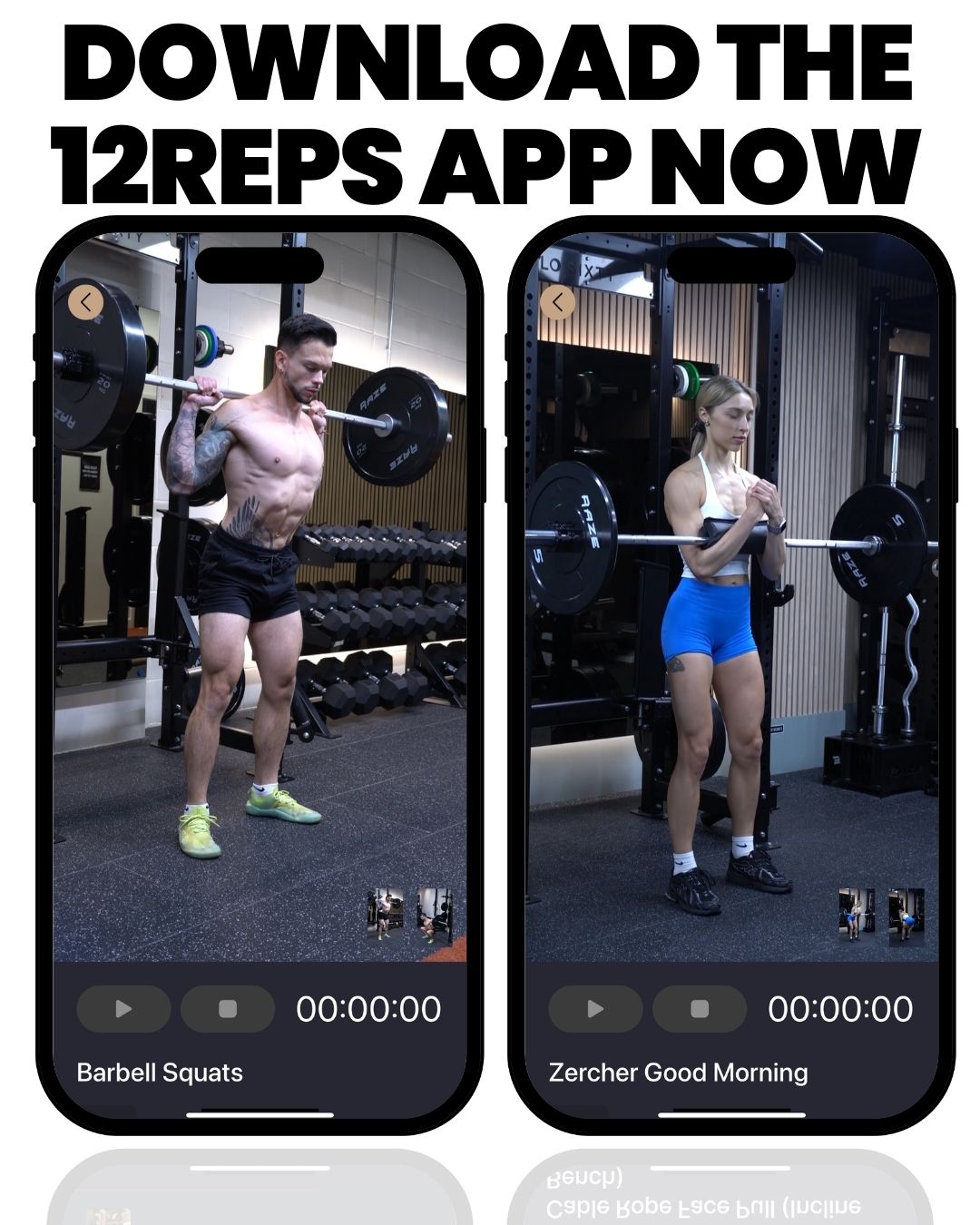
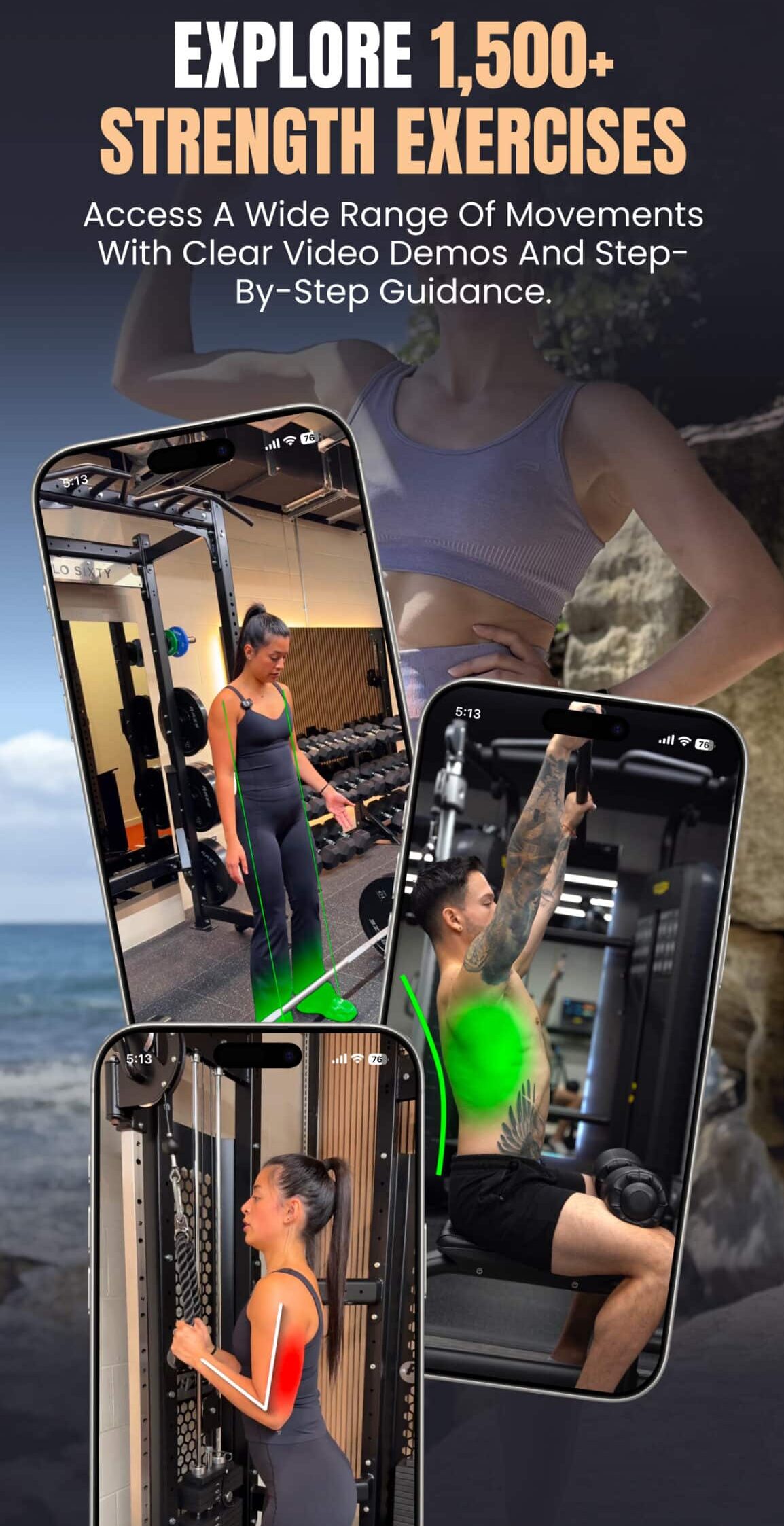
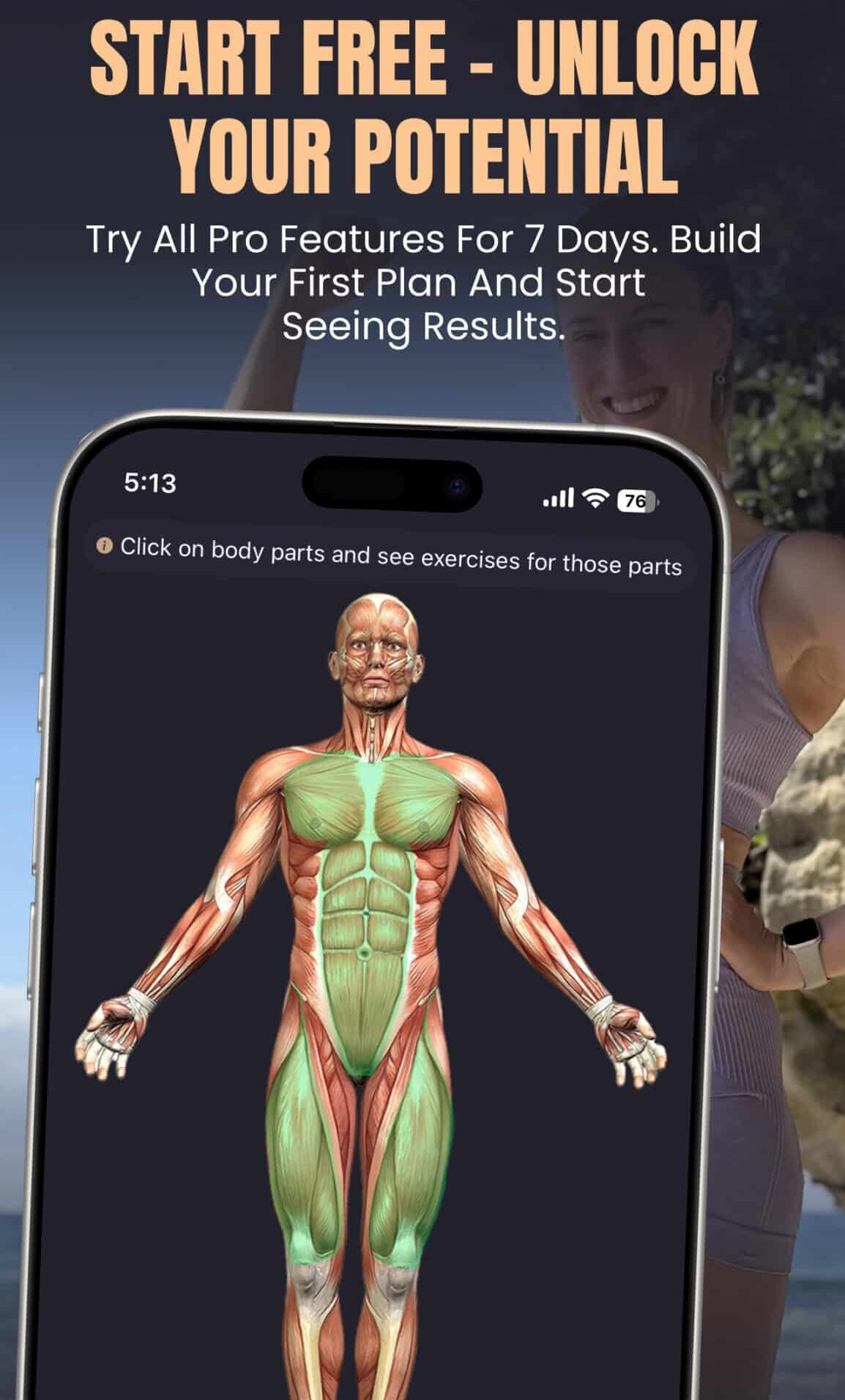
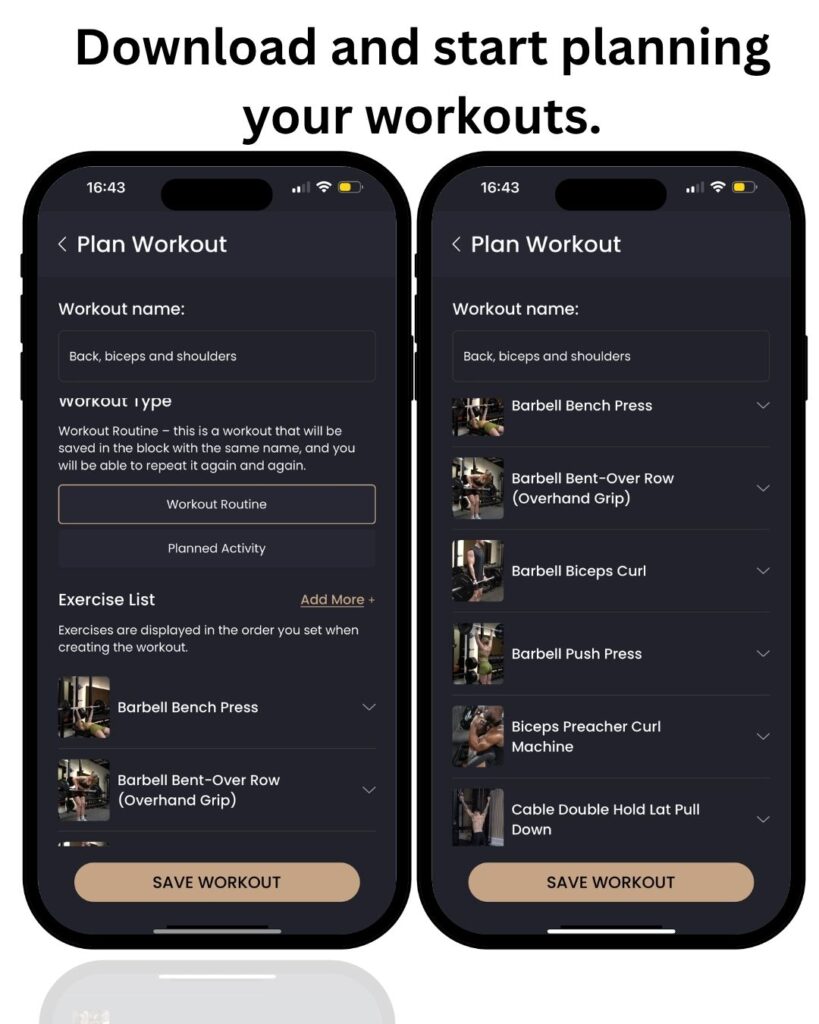
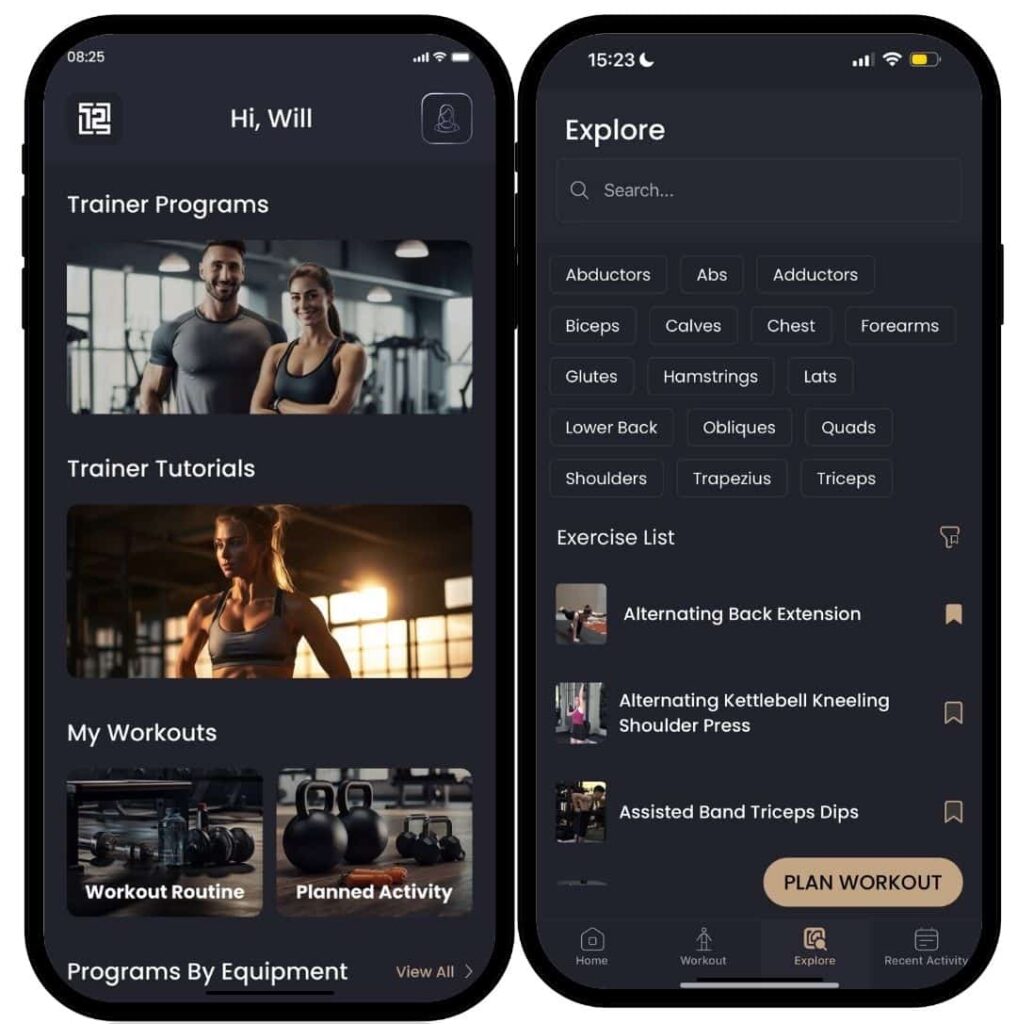
Inside the app, this entire 12-week program is ready for you to follow and track. You can log your sets, reps, and weights after every session so you can see your progress clearly across the full twelve weeks. No guessing, no trying to remember what you lifted last week. Everything is right there.
Chat directly with me. At any point during this program, you can message me directly inside the app. If something doesn’t feel right with your squat, if you’re unsure whether to increase the weight, or if you’re struggling to feel a muscle working, ask me, and I’ll answer. This is the part that makes the real difference. It’s the difference between someone who follows a program and someone who truly understands how to train.
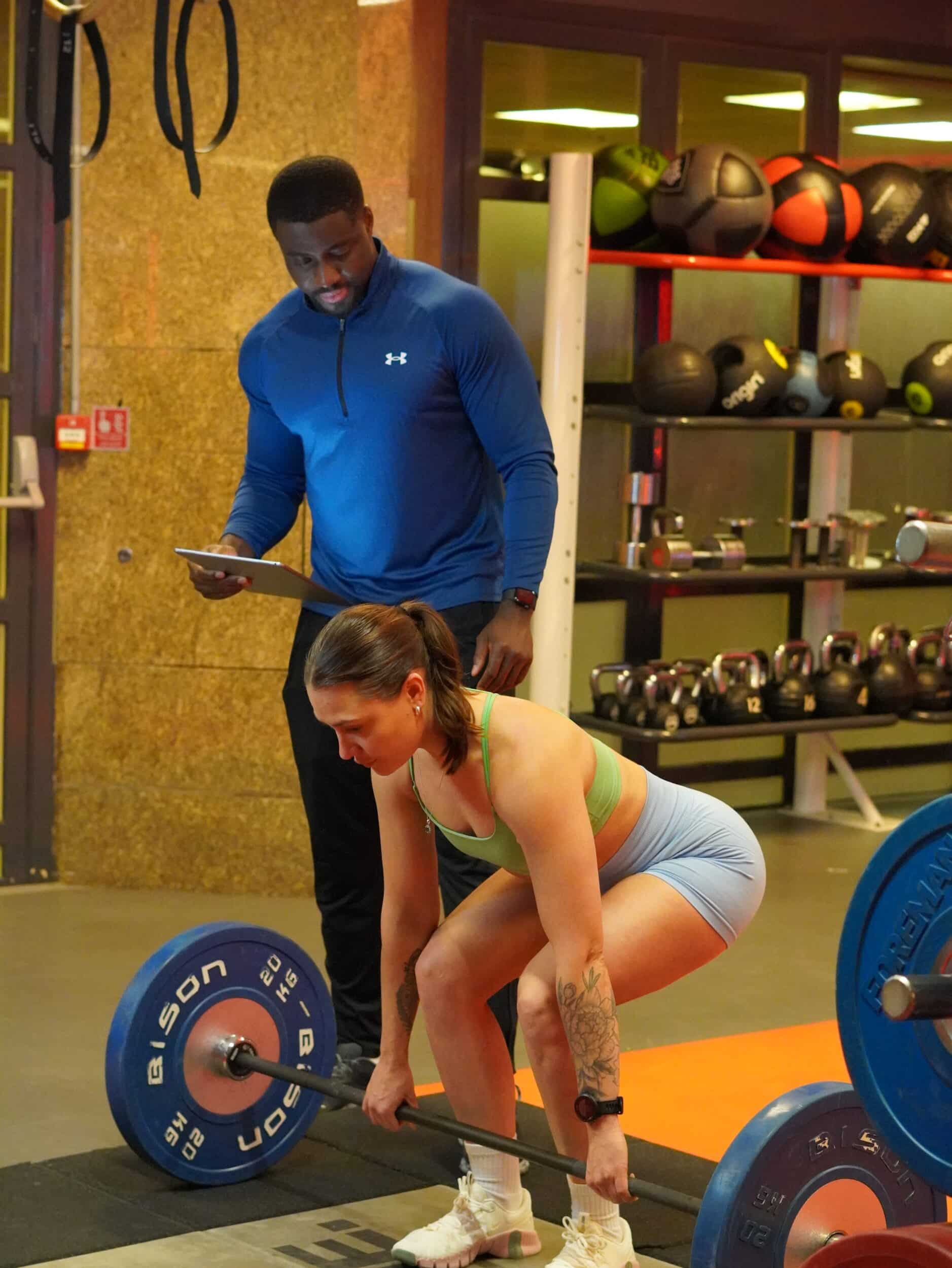
Send me a video for a form check. This one is a game-changer. Record yourself performing any exercise and send it to me inside the app. I’ll watch it, tell you exactly what to correct, and explain why it matters. Getting your form right isn’t just about staying safe; it determines which muscles are doing the work. Small technical adjustments make an enormous difference over twelve weeks, and you don’t need to wait until your next PT session to get that feedback. You can do it from your phone, in your own gym, any time
A final word
If you’ve been told that strength training isn’t for you, or that you should stick to lighter weights and more reps, I want you to challenge that. The women I’ve seen make the most dramatic changes to their bodies, confidence, and overall health are the ones who stopped avoiding the weights section and started taking their training seriously.
Twelve weeks is enough time to build a foundation that will serve you for life. You don’t need to be the biggest person in the gym. You just need to be consistent, add a little more each week, and be willing to learn.
I’ll be with you the whole way.
Will Duru, Co-Founder & Head Trainer, 12REPS